A Day in a Traditional Tausug Household and Community Life
Tausug Culture is one of the richest and most vibrant cultural identities in the Philippines. It reflects centuries of tradition, strong family values, artistic expression, and resilience shaped by the coastal and island communities of Sulu. Daily life within Tausug communities is deeply connected to faith, respect, hospitality, and close family relationships. These traditions continue to influence how families live, work, celebrate, and support one another while preserving a strong sense of cultural identity across generations.
Understanding Tausug Culture offers a meaningful look into the customs and social practices that shape everyday life in Sulu. From morning prayers and shared meals to storytelling, music, and community gatherings, each activity reflects values that remain important within Tausug society. This article explores a detailed day inside a traditional Tausug household while highlighting the traditions, responsibilities, and cultural practices that help preserve Tausug Culture for future generations.
If you want to explore Tausug traditions more deeply, read our master guide, Complete Guide to Tausug Culture and Traditional Life in Sulu, where we discuss Tausug history, customs, traditional arts, food, beliefs, celebrations, and the rich cultural heritage that continues to shape communities across Sulu today.
Table of Contents
Quick Summary (TL;DR)
- Tausug Culture is rooted in strong family values, faith, respect, and community unity.
- Traditional Tausug homes are built from wood and nipa, raised on stilts for safety and ventilation.
- Daily life often begins with prayer, family meals, and household responsibilities.
- Fishing, farming, and small businesses support many Tausug families and preserve cultural traditions.
- Traditional foods like Tiulah Itum, Satti, and Piyanggang Manok play an important role in family gatherings.
- Respect for elders and cooperation within the community remain central values in Tausug Culture.
- Music, dance, weaving, and storytelling help preserve Tausug identity and heritage.
- Celebrations such as weddings and Kanduli strengthen family bonds and cultural pride.
- Elders guide younger generations by teaching traditions, values, and life lessons.
- Despite modernization, Tausug communities continue working to preserve their culture and traditions for future generations.
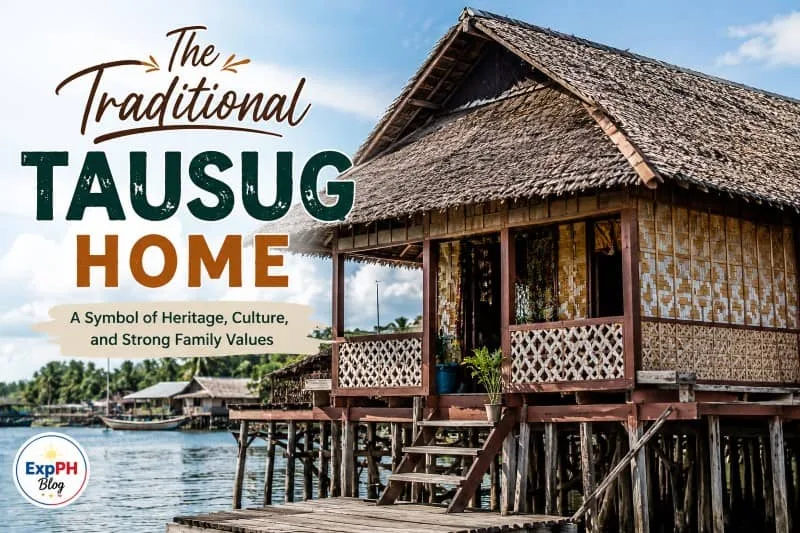
1. The Traditional Tausug Home
The traditional Tausug home reflects the values, lifestyle, and close family ties that shape Tausug Culture. Built with practical designs suited for island living, these homes provide comfort, safety, and space for daily activities. Every part of the house supports family connection, hospitality, and strong community relationships.
Architecture and Daily Living Spaces
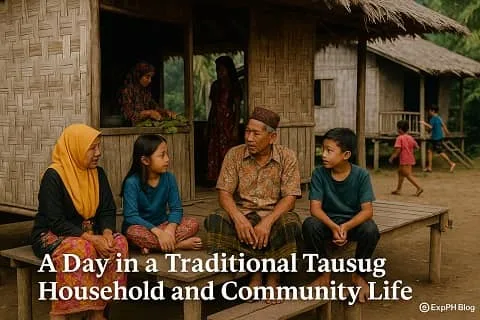
A traditional Tausug house is often called a bay. It is usually built from wood and nipa, elevated on sturdy posts that protect the family from floods and provide ventilation. The structure of the home is a reflection of Tausug Culture, emphasizing practicality, unity, and connection with nature.
The Living Area
The main part of the house serves as a living room, dining place, and sometimes a sleeping area for younger children. The simplicity of the space speaks loudly about Tausug Culture, where family closeness matters more than material decoration.
The Kitchen
Most daily activities happen near the kitchen or dapun. Here, cooking is done using firewood or charcoal. The aroma of spices like turmeric, ginger, and coconut fills the air, reminding everyone of the rich flavors that define Tausug Culture.
The Balcony or Lungus
This semi open space is where neighbors often gather. Many stories, laughter, and community insights are shared here, strengthening the bond that is so important in Tausug Culture, bringing everyone closer together.
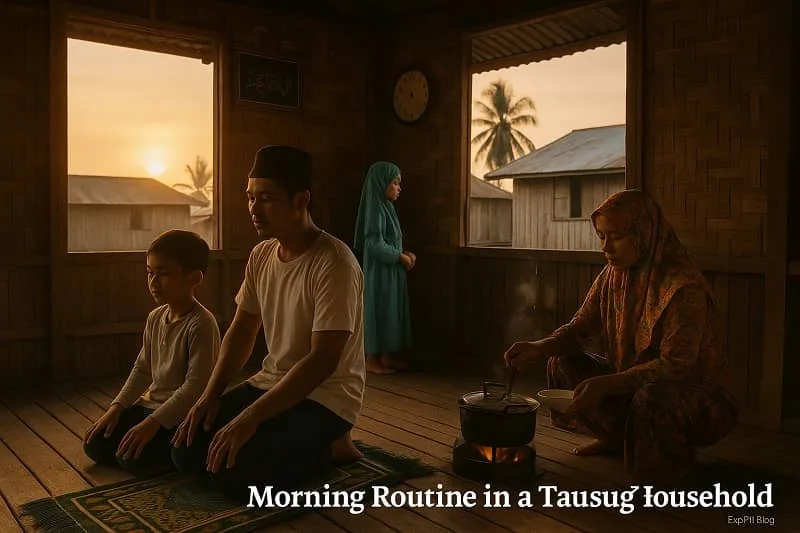
2. Morning Routine in a Tausug Household
The morning routine in a Tausug household reflects the strong values of unity, discipline, and responsibility in everyday life. Early activities often include prayer, meal preparation, and household chores. These simple routines strengthen respect, cooperation, and togetherness while preserving traditions deeply connected to Tausug Culture.
A Day Begins with Faith and Family
Mornings in a Tausug household often begin with prayer, quiet preparation, and shared responsibilities among family members. Spiritual devotion helps create a peaceful atmosphere at home while guiding daily actions and relationships. These early moments strengthen family bonds and reflect the values that remain important in Tausug Culture.
The Call to Prayer
A typical Tausug day begins early. The call to prayer from the masjid awakens the community. Faith plays a central role in Tausug Culture, and starting the day with devotion brings a sense of peace and purpose, guiding families with spiritual clarity.
Preparing the Morning Meal
Mothers or grandmothers usually prepare traditional breakfast dishes.
Common favorites include:
- Pastil wrapped rice
- Fried fish with spices
- Hot native coffee or kahawa sug
Preparing food for the family is considered a loving duty and is deeply woven into Tausug Culture, reflecting care, honoring tradition, strengthening bonds, and preserving meaningful practices shared through generations.
Children and Their Morning Tasks
Younger members of the household have simple chores that teach responsibility. Cleaning the yard, feeding chickens, or helping prepare water for washing strengthens discipline and respect, two values strongly upheld in Tausug Culture.
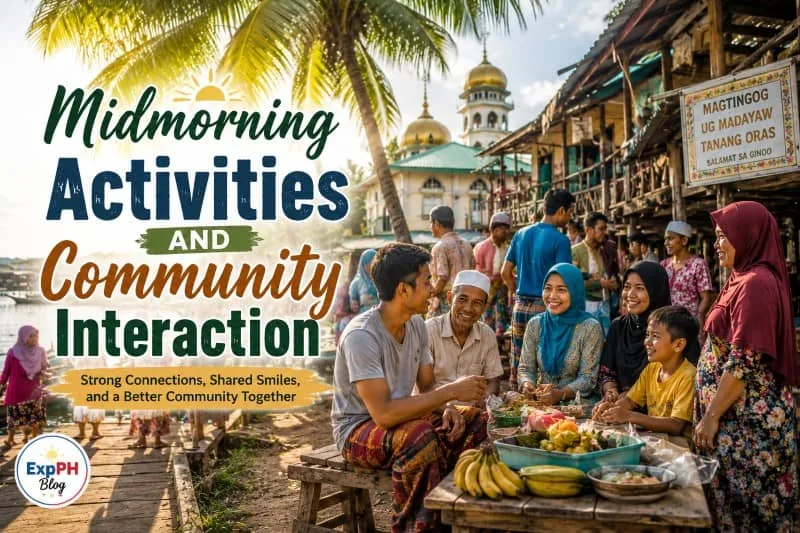
3. Midmorning Activities and Community Interaction
Midmorning activities in Tausug communities focus on livelihood, cooperation, and daily responsibilities that support family life. Fishing, farming, and small businesses remain important sources of income and cultural identity. These routines strengthen community relationships while helping preserve traditional skills, local knowledge, and the hardworking values connected to Tausug Culture.
Agriculture, Fishing, and Small Trade
The livelihood of many Tausug families depends on skills passed down for generations, shaping daily routines, preserving cultural knowledge, strengthening community ties, and supporting sustainable traditions that continue to guide their way of life.
Fishing and Sea Harvesting
Fishing is one of the oldest traditions in Tausug Culture. Many men head to the sea before sunrise, returning midmorning with fresh catch. Fish, crabs, or shells are either sold in the local market or used for the day’s meals, supporting families across generations.
Farming and Gardening
For inland families, tending crops like coconut, cassava, and banana is common. These simple tasks keep Tausug Culture rooted in the land and the sea which nourish their daily life, supporting tradition, strengthening identity, and connecting families to their environment.
Women in Entrepreneurship
Women often sell homemade delicacies like:
- Daral
- Pitis patani
- Bangbang sug (Tausug snacks)
Their entrepreneurship strengthens the household economy and preserves Tausug Culture through food and tradition, supporting community growth, inspiring younger generations, promoting cultural pride, and keeping valuable culinary practices alive every day.
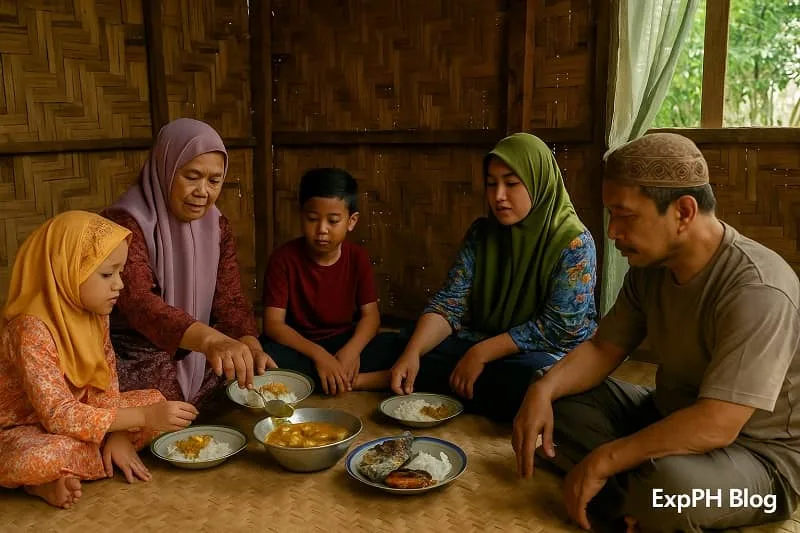
4. Lunch Time in a Tausug Home
Lunch in a Tausug household is an important time for family bonding, shared traditions, and meaningful conversations. Meals often feature flavorful local dishes prepared with spices, coconut, and fresh ingredients. Gathering together during lunchtime strengthens respect, unity, and the close family relationships that remain central to Tausug Culture.
Flavorful Dishes that Celebrate Tausug Culture
Lunch is usually the biggest meal of the day. The dining area fills with warm, comforting dishes seasoned with coconut milk, spices, and local ingredients, creating a shared moment families always look forward to, strengthening their connection daily.
Common Tausug Dishes
- Tiulah Itum, a black broth with rich spices
- Kiyaliya, a flavorful beef curry
- Satti, grilled meat served with spicy sauce
- Piyanggang Manok, chicken cooked in burnt coconut
Every meal becomes an opportunity to pass on Tausug Culture from one generation to the next, strengthening family traditions, encouraging meaningful conversations, preserving recipes, and reinforcing the values that guide daily life.
Eating Together as a Family Tradition
Meals are shared on the floor or low wooden tables. Elders are served first as a sign of respect. These simple customs reflect the values of Tausug Culture that prioritize harmony and connection, bringing families closer each day.
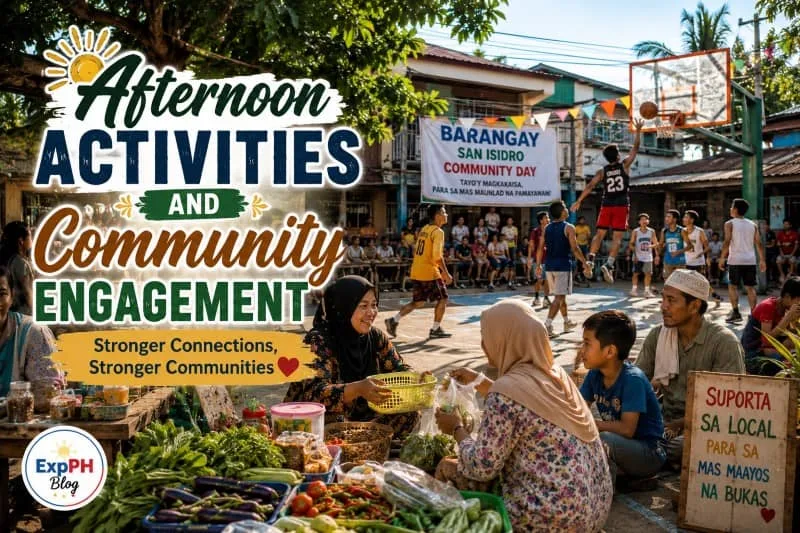
5. Afternoon Activities and Community Engagement
Afternoons in a Tausug community are often filled with learning, social interaction, and shared responsibilities. Children spend time playing traditional games while older family members practice useful skills and household tasks. These daily activities strengthen relationships, encourage cooperation, and help preserve the traditions and values connected to Tausug Culture.
Learning, Play, and Skills Development
Afternoons in a Tausug community are lively, filled with energetic activities, meaningful conversations, playful laughter, shared responsibilities, and vibrant interactions that strengthen relationships and keep cultural traditions alive within the neighborhood every day.
Children at Play
Kids often play traditional games like tug of war, skipping rope, or running around open fields. Their playtime nurtures creativity and social bonding, both important in Tausug Culture, supporting healthy growth and happiness.
Teenagers Learning Adult Skills
Older children learn practical skills such as weaving mats, fishing techniques, or helping prepare ingredients for dinner. Skill transfer keeps Tausug Culture strong and alive.
Women Gathering for Social Activities
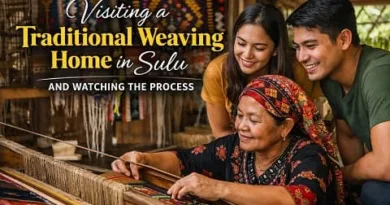
Many women gather during the afternoon to weave, share stories, or help one another with household tasks. These social circles are essential because they pass down oral traditions and strengthen sisterhood within Tausug Culture.
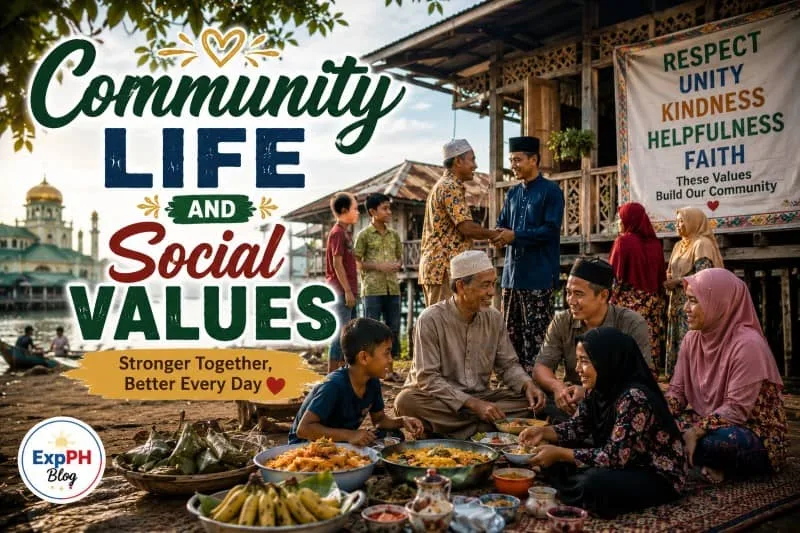
6. Community Life and Social Values
Community life in Tausug Culture is built on respect, cooperation, and strong social connections. Families and neighbors support one another during daily activities, celebrations, and difficult times. Traditions such as helping the community and sharing stories strengthen unity while teaching younger generations the values that guide responsible and respectful living.
Respect and Cooperation in Tausug Culture
Respect for elders, hospitality, and mutual support form the core of Tausug Culture. Community members help each other through daily challenges, celebrations, and even personal struggles, strengthening unity across the community.
The Spirit of Bayanihan
Although commonly associated with Tagalog culture, the concept of helping neighbors exists strongly in Tausug Culture. Whether harvesting crops or preparing for weddings, everyone contributes joyfully, strengthening unity within the community.
Oral Traditions and Storytelling
Elders often share stories of bravery, history, and moral lessons. These stories preserve the wisdom of Tausug Culture and guide young people in their daily decisions, helping them understand values and make thoughtful choices every day.
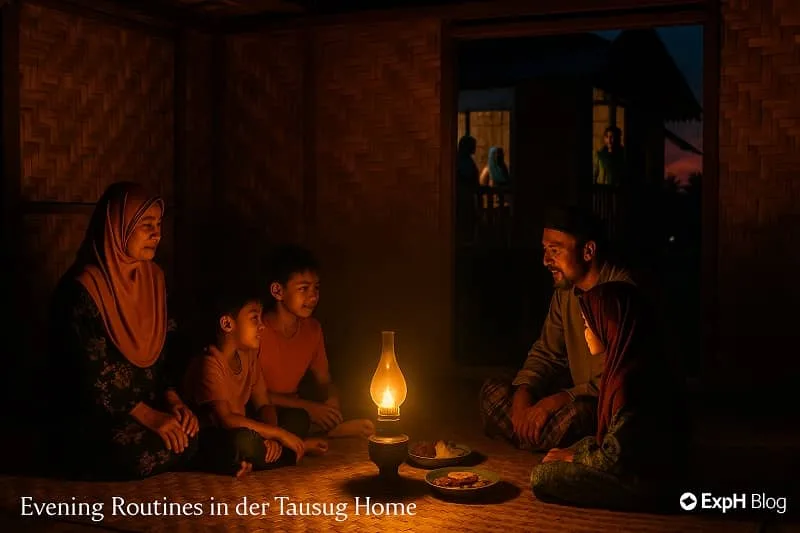
7. Evening Routines in the Tausug Household
Evenings in a Tausug household are centered on family connection, reflection, and peaceful routines after a busy day. Families gather for dinner, share conversations, and spend quiet time together before evening prayers. These meaningful moments strengthen relationships, encourage gratitude, and reflect the strong spiritual and family values within Tausug Culture.
Dinner Preparation and Family Time
The evening meal is simple but meaningful. Families gather again to enjoy fish, vegetables, rice, and local delicacies, sharing stories, strengthening bonds, celebrating traditions, and appreciating the comfort that familiar flavors bring to their homes each night.
Household Bonding
After dinner, families talk about the day, plan for tomorrow, or relax on the balcony. These calm moments highlight the warmth and closeness valued in Tausug Culture, creating deeper connections that families cherish and remember throughout life.
Night Prayers and Reflection
Nighttime brings a sense of peace. The community prepares for evening prayers. Faith plays an important role in Tausug Culture, shaping how people think, act, and live while strengthening unity, encouraging reflection, supporting traditions, and guiding daily choices across generations for many.
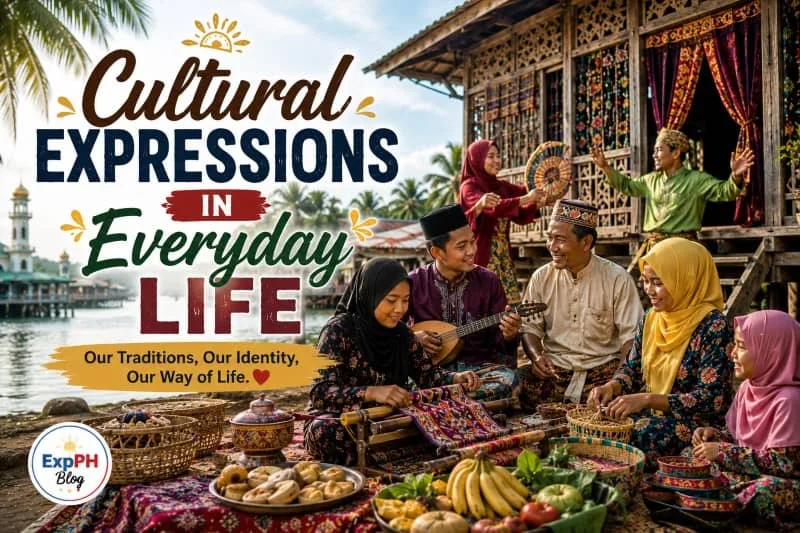
8. Cultural Expressions in Everyday Life
Cultural expression plays an important role in preserving Tausug identity and traditions. Music, dance, crafts, and storytelling are part of daily life and community celebrations. These artistic practices strengthen cultural pride, encourage creativity, and help younger generations appreciate the heritage, values, and traditions that continue to shape Tausug Culture.
Music, Dance, and Traditional Arts
Tausug Culture is known for its artistic expressions, which include traditional dances, vibrant music, intricate crafts, and storytelling that reflect community values, celebrate heritage, strengthen identity, and connect generations through shared creative traditions.
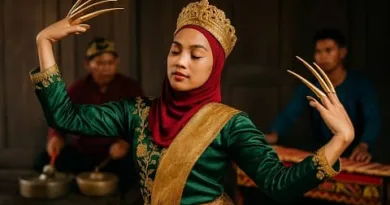
Pangalay Dance
This elegant dance performed during celebrations represents grace and heritage. Learning pangalay teaches discipline, creativity, and appreciation for Tausug Culture, helping younger generations connect deeply with meaningful cultural traditions.
Kulingtangan Music
The sound of metal gongs fills the air during festivals. This music is a symbol of unity and joy in Tausug Culture, inspiring lively gatherings, strengthening community bonds, and celebrating important cultural moments with pride and harmony.
Crafts and Handwoven Art
Mats, baskets, and accessories are often handmade with vibrant colors. These crafts preserve Tausug Culture and support local livelihoods, highlighting creativity, sustaining traditional skills, and strengthening community identity through meaningful artistic work.
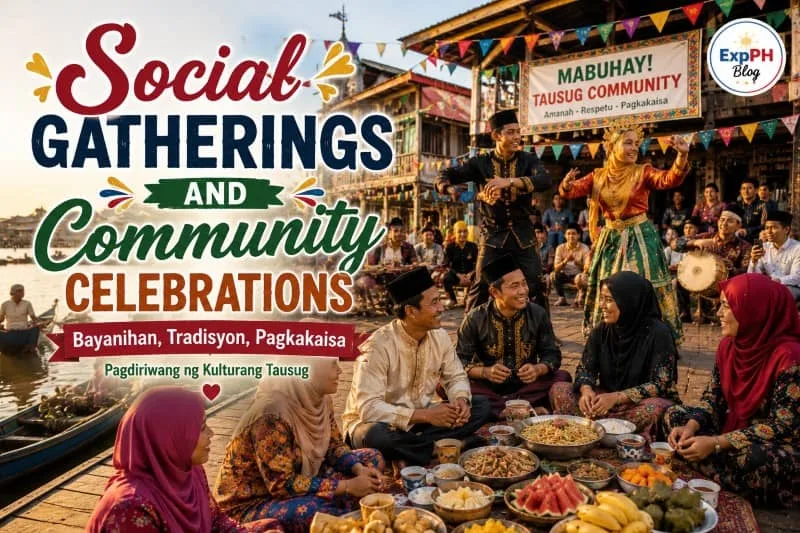
9. Social Gatherings and Community Celebrations
Social gatherings and celebrations are important parts of Tausug Culture that strengthen family ties and community relationships. Events such as weddings, birthdays, and thanksgiving feasts bring people together through shared meals, prayers, music, and traditions. These occasions promote unity, gratitude, hospitality, and cultural pride across generations.
Weddings, Birthdays, and Festivals
Tausug celebrations are lively and filled with tradition, bringing families together to honor shared values, showcase cultural performances, enjoy meaningful rituals, and strengthen community bonds across generations.
Weddings
A Tausug wedding includes rituals, gifts, and symbolic gestures that honor Tausug Culture. Families from both sides work together to prepare food, music, and decorations, creating joyful celebrations that highlight lasting cultural traditions.
Kanduli or Thanksgiving Feast
This gathering celebrates blessings and milestones. Neighbors are invited to share food, prayers, and stories. Kanduli is a strong expression of Tausug Culture centered on gratitude and community, strengthening unity and meaningful cultural connections.
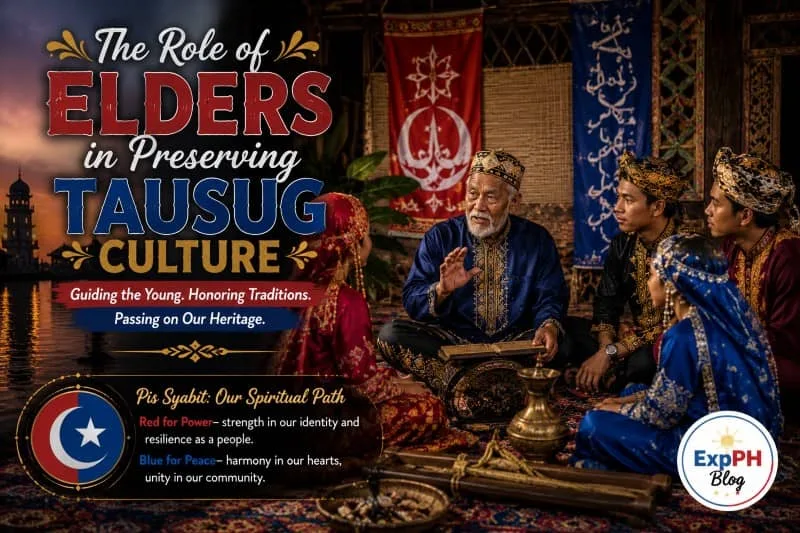
10. The Role of Elders in Preserving Tausug Culture
Elders hold an important place in Tausug communities because they serve as guides, teachers, and protectors of tradition. They share wisdom, teach cultural values, and help younger generations understand their responsibilities within the family and community. Their guidance helps preserve Tausug Culture despite changing times and modern influences.
Guidance and Wisdom
Elders are highly respected. They guide younger generations, settling disputes and teaching values. Their role is essential because they protect the foundations of Tausug Culture with dedication, wisdom, and enduring commitment.
Passing Down Traditions
Through storytelling, skill training, and rituals, elders ensure that Tausug Culture remains intact despite modern changes, guiding younger generations with wisdom, strengthening traditions, and preserving community values for the future.
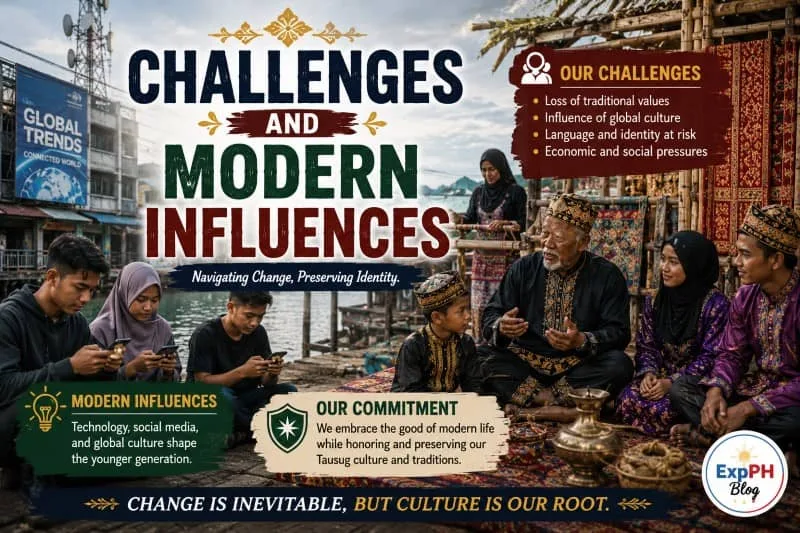
11. Challenges and Modern Influences
Modern changes continue to influence Tausug communities as technology, migration, and new opportunities shape daily life. While many families adapt to changing environments, they also work hard to preserve their traditions, language, and cultural identity. Education, community programs, and cultural activities help keep Tausug Culture meaningful for future generations.
Balancing Tradition and Change
As technology, trends, and migration grow, Tausug communities adapt while trying to preserve their identity, finding new approaches to protect traditions, strengthen cultural bonds, promote awareness, and ensure their heritage remains meaningful for future generations everywhere.
Education and Work Opportunities
Many young Tausug study or work outside Sulu. While this brings better opportunities, they also carry Tausug Culture wherever they go, proudly sharing traditions, values, and stories that strengthen awareness and appreciation among diverse communities worldwide.
Cultural Preservation Efforts
Schools, families, and cultural organizations are working hard to protect Tausug Culture by promoting language learning, traditional arts, and documentation of historical practices, ensuring these treasured customs continue inspiring younger generations across communities today.
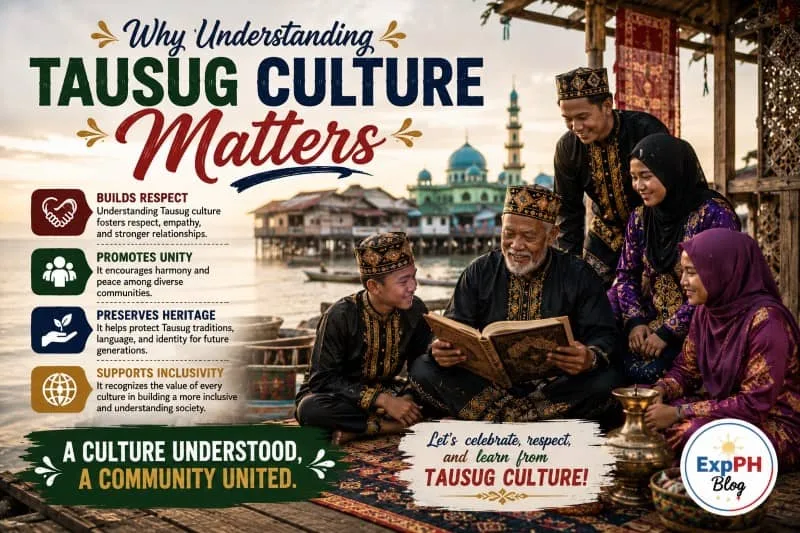
12. Why Understanding Tausug Culture Matters
Understanding Tausug Culture helps people appreciate the rich diversity, traditions, and values found in the Philippines. It highlights the strength, resilience, and deep cultural identity of the Tausug people while encouraging respect for their heritage. Preserving and sharing these traditions also inspires future generations to value and protect their cultural roots.
A Heritage Worth Celebrating
Learning about Tausug Culture helps Filipinos appreciate the diversity of our country. It allows the world to understand the beauty of Sulu’s people and their deep connection to tradition, and recognize their enduring strength, resilience, and cultural unity today.
Inspiration for Future Generations
By sharing stories and promoting awareness, blogs like ExpPH Blog help keep Tausug Culture alive. This ensures that future Filipinos can continue to honor their heritage with pride while gaining deeper understanding and appreciation of their cultural identity.
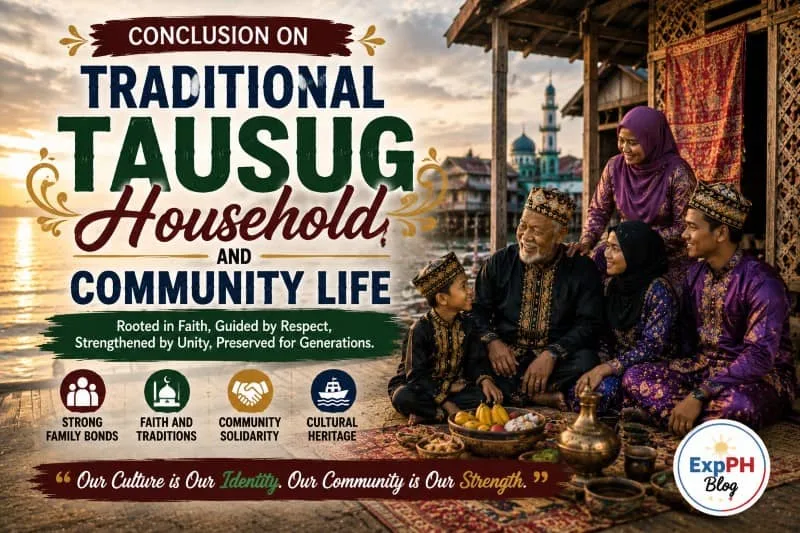
Conclusion on Traditional Tausug Household and Community Life
A day in a traditional Tausug household is a journey through time, values, and community. Daily routines may seem simple, but every action reflects Tausug Culture. From morning prayers to evening storytelling, from home cooked meals to community events, the Tausug way of life is filled with meaning, strength, and love. Tausug Culture remains one of the Philippines most treasured identities, and understanding it helps us embrace the diversity and richness of our nation.
A traditional Tausug home is built from wood and nipa, raised on stilts for ventilation and safety. The design reflects practical living and harmony with nature, which are important elements of Sulu heritage and continue to influence community lifestyles, cultural values, and everyday household routines across many islands in the region.
These elevated homes also protect families from seasonal floods, allow cool winds to circulate inside, and create shaded areas used for storage or small gatherings. Their structure supports social connections, daily chores, and family activities. This simple yet meaningful architectural style remains a proud symbol of identity within Tausug communities today.
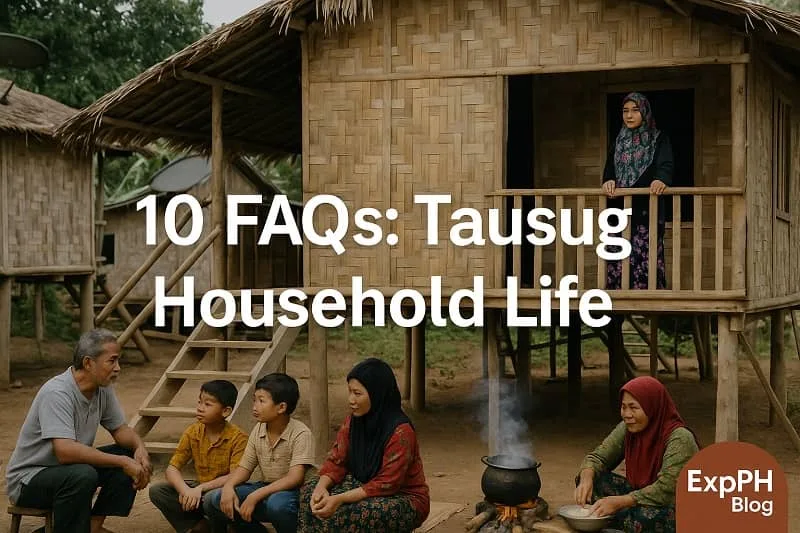
10 FAQs about A Day in a Traditional Tausug Household and Community Life
What makes the Tausug traditions unique in daily family life?
Tausug traditions are unique because they blend faith, family unity, and cultural values in every activity. From morning prayers to shared meals, the daily routine emphasizes respect for elders, cooperation, and strong social bonds.
How is a traditional Tausug home structured?
A traditional Tausug home is built from wood and nipa, raised on stilts for ventilation and safety. The design reflects practical living and harmony with nature, which are important elements of Sulu heritage.
What role does faith play in the Tausug way of life?
Faith shapes the entire Tausug way of life, guiding daily routines, social interactions, and community decisions. The day usually begins and ends with prayers that strengthen family and spiritual values.
What are the common morning activities in a Tausug community?
Common activities include preparing breakfast, cleaning the yard, feeding animals, and getting ready for work or school. These tasks help teach discipline and responsibility as part of Tausug community practices.
What foods are typically served in a Tausug household?
Meals often include dishes such as Tiulah Itum, Piyanggang Manok, Kiyaliya, and fresh seafood. These foods highlight the strong connection between daily cooking and traditional Sulu heritage.
How do children learn cultural values in Tausug communities?
Children learn through chores, storytelling, prayer routines, and hands-on activities like fishing or weaving. These learning experiences help preserve Tausug community practices for the next generation.
What are the common livelihood activities in Tausug villages?
Fishing, farming, and small trade are the most common livelihoods. These activities support families and maintain the traditional Tausug way of life that relies on skill, cooperation, and resourcefulness.
Why are storytelling and oral traditions important in Sulu heritage?
Storytelling preserves wisdom, history, and moral lessons. Elders share stories that guide younger members and keep Sulu heritage alive through language, memory, and shared identity.
What social values are highlighted in a typical Tausug community?
Respect for elders, hospitality, cooperation, and strong family ties are key values. These guide daily decisions and interactions, strengthening overall community harmony.
How is evening time usually spent in a Tausug household?
Evening time is peaceful and spent sharing meals, talking with family, relaxing on the balcony, and performing night prayers. These routines bring families closer and reflect the calm rhythm of the traditional Tausug way of life.
Want to continue exploring the beauty of Tausug heritage?
Read our content pillar, Inside Traditional Tausug Lifestyle and Community Practices, where you can discover more about family traditions, daily routines, cultural values, social customs, local practices, and the strong community relationships that continue to shape Tausug life in Sulu today.
Read more supporting articles below
- Daily Life of Fishermen in Sulu
- Storytelling Sessions with Local Elders in Sulu
- Experiencing Quranic Recitation Learning with Tausug Teachers
For source validation, click the link below
- National Commission for Culture and the Arts (NCCA)
- National Museum of the Philippines Ethnology Division
- Department of Tourism Bangsamoro Region Information
Explore Tausug Culture Through This Quiz
Test your knowledge of traditional routines, cultural values, and daily activities found within Tausug communities. Each question has four short answer choices for easy viewing on mobile.
Results


#1. What signals the start of a Tausug day?
#2. What is the traditional Tausug house called?
#3. What cooking area is common in Tausug homes?
#4. Which dish is a black broth?
#5. What value guides family respect?
#6. What activity teaches responsibility to children?
#7. What musical instrument is used in gatherings?
#8. What dance shows Tausug grace?
#9. What social event shows gratitude?
#10. Who preserves oral traditions?
We appreciate your time and interest in Tausug community life
Share your score and comment about your experience with us.

A Filipino web developer with a background in Computer Engineering. Founder of ExpPH Blog and ExpPH Business Guide, creating practical content on OFW guidance, business, finance, freelancing, travel, and lifestyle. Passionate about helping Filipinos grow, he shares insights that educate, empower, and inspire readers nationwide.