

Best Productivity Habits and Work-Life Balance Tips for Filipinos and OFWs
Productivity is not about staying busy every minute of the day. It is about using your time and energy wisely so you can finish important tasks, care for your health, and make room for the people and activities that matter most.
For many Filipinos, balancing work and personal life can be challenging. Employees may deal with long commutes, demanding schedules, family responsibilities, and rising living costs. Overseas Filipino workers (OFWs) face additional challenges, including long shifts, different time zones, homesickness, and the pressure to support loved ones back home.
When work takes up most of your day, it becomes easy to postpone rest, personal goals, and family time. Over time, this routine can leave you feeling exhausted, distracted, and less motivated, even when you are working hard.
The good news is that small, consistent changes can make a meaningful difference. Developing better Productivity Habits and Work-Life Balance can help you manage responsibilities, protect your well-being, and make more time for the people and activities that matter most.
Whether you are working in the Philippines, employed overseas, managing a household, studying while working, or building a side business, the right habits can help you regain control of your schedule.
Building better productivity habits helps you create a healthier, more balanced life. Whether you work locally or overseas, small changes can improve your time management and well-being. For more practical lifestyle advice, explore The Complete Lifestyle Guide for Filipinos and OFWs.
Quick Summary (TL;DR)
Discover how Filipinos and OFWs can improve productivity, manage responsibilities, and create a healthier balance between work, family, and personal well-being.
- Prioritize important tasks: Identify your most valuable responsibilities instead of trying to complete everything at once.
- Plan your day: Use a simple schedule or task list to organize work, errands, and personal commitments.
- Reduce distractions: Set limits on social media, unnecessary notifications, and interruptions during focused work.
- Protect your health: Make time for adequate sleep, regular movement, nutritious meals, and relaxation.
- Set healthy boundaries: Separate work time from personal time whenever your job and circumstances allow.
- Stay connected with family: Make communication meaningful and realistic, especially when working abroad.
- Learn practical skills: Improve time management, communication, and organization through continuous learning.
- Review your progress: Adjust your routine when your workload, family responsibilities, or personal goals change.
Key takeaway: Productivity should help you live better, not keep you busy all the time. With realistic routines and healthy boundaries, you can accomplish more while protecting your well-being and relationships.
Table of Contents

Why Productivity Habits and Work-Life Balance Matter for Filipinos and OFWs
Productivity habits and work-life balance help Filipinos and OFWs manage their responsibilities while protecting their health, relationships, and personal time. By organizing tasks and focusing on meaningful priorities, workers can reduce unnecessary stress, use their time more effectively, and create a healthier balance between work and everyday life.
The challenges Filipino workers commonly face
Many Filipino workers balance employment with responsibilities at home. Some help support parents, raise children, pay household bills, or contribute to the education of younger family members.
Long commutes, shifting schedules, overtime, and financial pressure can make it difficult to maintain a consistent routine. Even after work ends, responsibilities such as preparing meals, caring for children, and handling household tasks may continue.
For employees working remotely, the challenge can be different. When the home also becomes the workplace, the boundaries between professional responsibilities and personal time may become unclear.
These circumstances require practical solutions rather than unrealistic expectations. A useful routine should fit your actual working hours, household responsibilities, available resources, and energy levels.
Why OFWs need a different approach
OFWs may experience additional demands that affect their daily routines. Depending on their occupation and destination, they may work long shifts, rotating schedules, physically demanding jobs, or hours that differ from their family’s schedule in the Philippines.
They may also feel pressure to maximize their time abroad because of financial obligations and the desire to provide a better future for their loved ones.
While these responsibilities are understandable, consistently sacrificing sleep, health, and personal time can make daily life harder to manage.
OFWs can benefit from productivity habits that account for their actual work schedules, protect their recovery time, and help them maintain realistic connections with family members back home.
The goal is not to follow the same routine as everyone else. It is to develop a routine that works for your situation.

1. Set Clear Priorities Before Starting Your Day
Setting clear priorities helps you focus on important tasks before daily demands take over your schedule. By identifying your main responsibilities and limiting distractions, you can use your time more effectively, reduce unnecessary stress, and make steady progress toward your work and personal goals.
Identify your three most important tasks
At the beginning of your day or before going to bed, identify three tasks that deserve priority.
These might include finishing a work assignment, paying an important bill, preparing for an examination, or completing an essential household responsibility.
Choose tasks that are realistic for the time and energy you have available. If you work a long shift, your list may need to be shorter than it would be on a day off.
Completing three meaningful tasks can be more valuable than creating a long list that leaves you feeling unsuccessful when several items remain unfinished.
Separate urgent tasks from important ones
Urgent tasks demand immediate attention, while important tasks contribute to longer-term goals.
For example, responding to an unexpected work issue may be urgent. Updating your resume, studying a new skill, or reviewing your budget may be important even when nobody is asking you to do them today.
Both types of tasks deserve attention, but urgent requests should not automatically take priority over everything else.
Set aside time for important activities before your schedule fills with other people’s demands, whenever your circumstances allow.
Learn to say no respectfully
Taking on too many responsibilities can weaken your productivity and affect your personal life.
You may not always have the authority to refuse additional work, especially when you have contractual obligations or depend on your income. However, you can sometimes clarify deadlines, explain your current workload, or ask which task should take priority.
For personal commitments, a respectful response such as, “I cannot commit to that today, but I may be available another time,” can help you protect your time without damaging relationships.
Developing good productivity habits and work-life balance practices starts with identifying priorities and setting realistic expectations for each day.

2. Build a Daily Routine That Fits Your Real Life
Building a daily routine that fits your real life helps you stay organized without feeling overwhelmed by a strict schedule. By preparing for the day ahead, choosing realistic morning habits, and creating a simple closing routine after work, you can manage responsibilities more effectively and make time for personal well-being.
Prepare for the day ahead
Spend five to ten minutes preparing for the following day. Review your commitments, identify essential tasks, and gather what you need for work.
If you commute, prepare your bag, work clothes, identification, meals, or transportation arrangements in advance when practical.
OFWs working in demanding environments can use the same principle by preparing essentials before sleeping, particularly when they need to leave early or have limited time between shifts.
Small preparations can reduce morning confusion and help you start the day with fewer decisions to make.
Create a realistic morning routine
A morning routine does not need to involve waking up at 5 a.m., exercising for an hour, and completing several personal development activities before work.
If your shift starts early, a simple routine might involve getting ready, eating breakfast, checking your schedule, and leaving on time.
For night-shift workers, the equivalent routine may happen in the afternoon or evening after waking up.
Focus on habits that support your energy and readiness rather than copying routines designed for people with different schedules.
Establish a closing routine after work
Work can continue occupying your thoughts long after you leave the workplace. A short closing routine can help you transition into personal time.
You might review unfinished tasks, note what needs attention tomorrow, organize your workspace, and then stop checking work messages when appropriate.
If your job requires availability outside normal hours, establish the clearest boundaries possible within your employment conditions.
The aim is to avoid repeatedly thinking about unfinished work when there is nothing useful you can do about it at that moment.

3. Use Time Management Techniques That Actually Help
Time management techniques help you organize tasks realistically while making room for breaks and unexpected responsibilities. Methods such as time blocking and the Pomodoro technique can improve focus when they suit your work. Estimating task duration accurately also helps reduce pressure and maintain a healthier balance between work and personal life.
Try time blocking
Time blocking involves assigning specific periods to particular activities.
For example, you might reserve the first hour of your workday for an important assignment, use another period for messages, and schedule personal errands after work.
A parent working from home might reserve a realistic period for focused work while arranging childcare or household responsibilities around it.
Your schedule should also include breaks and buffer time. If every minute is allocated, one unexpected problem can disrupt the entire day.
Use the Pomodoro technique when appropriate
The Pomodoro technique commonly involves working for 25 minutes and taking a short break before starting another session.
This approach can help when you are studying, writing, completing administrative work, or handling other tasks that benefit from uninterrupted attention.
It may not suit every occupation. Workers in healthcare, construction, hospitality, manufacturing, and other service roles often need to follow operational schedules and safety requirements instead.
Use the technique when it fits your work rather than forcing it into situations where frequent breaks are impractical.
Estimate task duration more realistically
People often underestimate how long tasks take, especially when they forget to account for preparation, communication, travel, and interruptions.
If an assignment usually takes two hours, do not automatically schedule it for completion in thirty minutes.
Track how long recurring tasks actually require. Over time, this information can help you create a more realistic schedule and reduce unnecessary pressure.
Remember that estimates are planning tools, not guarantees. Some days will be more demanding than others.

4. Reduce Distractions and Protect Your Focus
Reducing distractions helps you maintain concentration and complete important tasks more efficiently. By managing phone notifications, keeping your workspace organized and focusing on one task at a time, you can protect your attention and improve productivity while balancing work responsibilities with family communication and personal needs.
Manage your phone notifications
You do not need to respond to every notification immediately.
During focused work, consider silencing nonessential alerts, placing your phone out of reach, or checking personal messages during planned breaks.
However, follow workplace communication requirements and remain reachable for genuinely urgent responsibilities.
For OFWs, phone boundaries can be particularly complicated because family members in the Philippines may have limited opportunities to communicate due to time differences. Agreeing on convenient contact periods can help everyone manage expectations.
Keep your workspace organized
A cluttered workspace can make it harder to find important documents, tools, or supplies.
Keep frequently used items within reach and remove unnecessary materials from your immediate work area.
If you share a room or live in limited accommodation, you do not need a separate office. A small, consistently organized area may be enough to support focused work.
For digital tasks, organize files into clearly named folders and keep essential documents easy to locate.
Focus on one task when possible
Multitasking can feel productive, but frequently switching between unrelated tasks makes it harder to maintain concentration.
Try completing one meaningful task before moving to the next, particularly when the work requires careful thinking or attention to detail.
Some activities can be combined sensibly, such as listening to an educational audio program while doing a routine household chore. However, avoid combining activities when doing so could compromise safety or the quality of your work.
The objective is not to eliminate every interruption. It is to reduce avoidable distractions and give important tasks the attention they need.

5. Protect Your Health to Maintain Productivity
Protecting your health is essential for maintaining productivity and managing daily responsibilities. Getting enough sleep, staying active, eating regularly and drinking enough water can support your physical and mental well-being. Recognizing when you need rest or professional support also helps you build sustainable habits without sacrificing your health.
Make sleep a priority
Adequate sleep supports attention, memory, mood, and everyday functioning. Adults generally need at least seven hours of sleep per night, although individual needs vary.
Shift workers may need to protect their sleep during daylight hours by reducing noise, limiting unnecessary interruptions, and keeping their sleeping environment as comfortable as possible.
If you cannot control your work schedule, focus on the factors you can influence, such as maintaining a consistent sleep opportunity and avoiding unnecessary activities that cut into rest.
For general information about healthy sleep and well-being, consult the World Health Organization.
Include movement in your day
Physical activity does not always require a gym membership or a complicated exercise program.
Walking, stretching, taking movement breaks, or participating in a preferred recreational activity can help you include more movement in your routine.
If your job already involves heavy physical labor, prioritize appropriate recovery rather than assuming that more exercise is always better.
Choose activities suited to your health, physical condition, work demands, and available time.
Eat regularly and stay hydrated
Skipping meals to finish work faster can leave you feeling tired or distracted.
Prepare simple meals or snacks when possible, especially if your shifts make regular meal breaks difficult. Keep drinking water accessible when your workplace permits it.
OFWs living in shared accommodation may find meal planning helpful because it can reduce last-minute decisions and make it easier to manage food expenses.
You do not need a perfect diet to build better habits. Consistency and practical choices matter more than following an unnecessarily complicated routine.
Recognize when you need support
Persistent exhaustion, emotional distress, or difficulty managing everyday responsibilities should not automatically be treated as a lack of discipline.
Consider talking with a qualified healthcare professional or another trusted source of support when difficulties continue or interfere with daily life.
Productivity methods can help organize responsibilities, but they cannot replace appropriate support when health concerns arise.
Healthy productivity habits and work-life balance include getting enough rest, eating regularly, staying active, and recognizing when you need a break.

6. Create Healthy Work-Life Boundaries
Creating healthy work-life boundaries helps you meet your responsibilities without sacrificing personal time and well-being. By setting realistic work hours, protecting family connections and allowing yourself to rest, you can build a sustainable routine that adapts to your occupation, financial needs and changing life circumstances.
Define when your workday ends
If your job has predictable hours, establish a clear stopping point whenever possible.
Avoid routinely extending work into personal time simply because there is always another task to complete. Review your workload and discuss priorities with your supervisor if deadlines consistently exceed the time available.
For self-employed workers and freelancers, boundaries may require more deliberate planning because there may be no fixed time when work officially ends.
Set a reasonable stopping time, communicate availability to clients, and avoid accepting every request at the expense of rest.
Protect personal and family time
Family responsibilities are important for many Filipinos, but meaningful relationships also require attention and communication.
You might reserve time for dinner with your household, a regular conversation with your parents, an activity with your children, or a personal hobby.
If you are an OFW, maintaining family connections may involve coordinating calls across different schedules. A predictable conversation can be more helpful than repeatedly promising to call when you are free.
The goal is to create realistic opportunities for connection rather than adding another impossible obligation to your schedule.
Avoid feeling guilty about rest
Rest is not a reward that you must earn by completing every task.
Household responsibilities, financial obligations, and work demands may sometimes leave little free time. Even so, short periods of rest can help you recover and return to responsibilities with greater clarity.
If you cannot take a full day off, look for small opportunities to pause, relax, or enjoy an activity that helps you recharge.
A sustainable routine recognizes that people have limits and that recovery is part of maintaining long-term performance.
Maintaining productivity habits and work-life balance requires setting boundaries that protect personal time while meeting essential work responsibilities.
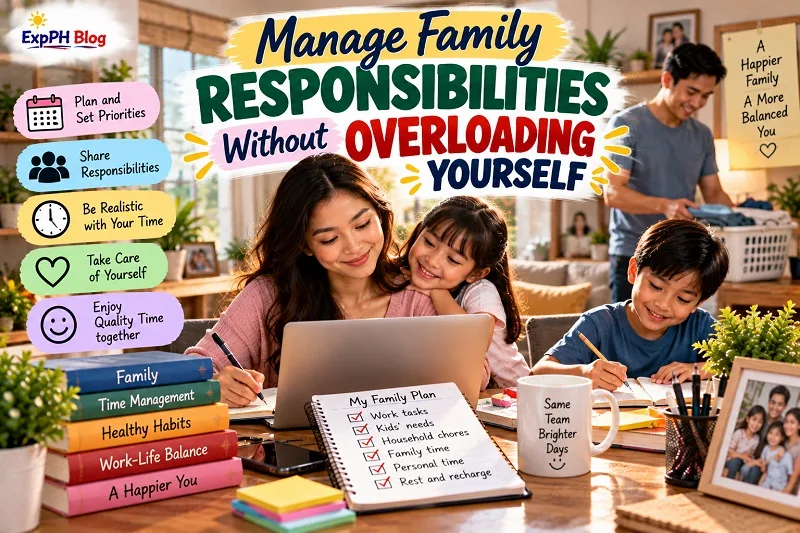
7. Manage Family Responsibilities Without Overloading Yourself
Managing family responsibilities starts with clear communication and realistic expectations. By sharing household tasks, setting boundaries around your availability and planning family expenses carefully, you can support your loved ones without neglecting your own needs. This approach helps reduce stress and maintain a healthier balance between work and family life.
Discuss responsibilities openly
If you live with family, discuss how household tasks can be divided according to everyone’s abilities, schedules, and circumstances.
A working parent may need help with meal preparation or childcare. An adult child living with parents may agree on specific responsibilities rather than trying to handle everything independently.
Sharing responsibilities does not mean caring less. It can help prevent one person from becoming overwhelmed.
Set realistic expectations about availability
Family members may assume that working from home means you are always available, or that being abroad means you can respond to every message immediately.
Explain your schedule clearly and identify suitable times for calls, errands, or conversations.
For OFWs, it can be useful to tell family members when you are working, sleeping, or recovering after a shift. This helps reduce misunderstandings and protects the time you need to rest.
Plan family expenses and commitments
Financial pressure can make it difficult to relax, particularly when several people depend on your income.
A household budget can help you understand which expenses are essential, which commitments are manageable, and where adjustments may be necessary.
If you send money home, agree on realistic expectations whenever possible. Clear financial arrangements can reduce repeated requests and help you protect money for your own needs and future plans.

8. Use Technology to Simplify Everyday Tasks
Using technology wisely can simplify daily responsibilities and help you stay organized without adding unnecessary distractions. Digital calendars and task lists can keep important commitments visible while automated reminders help you remember recurring tasks. Choosing reliable tools and protecting personal information also makes your routine more efficient and secure.
Use a calendar and task list
A digital calendar can help you remember meetings, deadlines, appointments, and family commitments.
A simple task list can help you identify what needs to be completed today and what can wait.
You can use a phone calendar, a computer application, or a paper notebook. The best option is the one you will actually maintain.
For OFWs, calendars can also help coordinate calls with family in the Philippines, especially when different time zones make scheduling difficult.
Automate recurring reminders
Reminders can help you remember bill payments, medication schedules prescribed by a healthcare professional, household tasks, and recurring work deadlines.
Use automation for predictable activities, but review reminders regularly so that outdated notifications do not clutter your day.
Avoid creating alerts for every small activity. Too many reminders can become another source of interruption.
Protect your personal information
Productivity tools should make your life easier without exposing sensitive information.
Use reputable services, strong passwords, and appropriate privacy settings. Be careful about entering employer information, personal documents, financial details, or family data into unfamiliar applications.
For workplace tools, follow your employer’s rules about approved software and confidential information.

9. Improve Your Skills to Work More Efficiently
Improving your professional skills can help you complete daily tasks more efficiently and prepare for future opportunities. Strengthening communication, digital skills and organization can reduce mistakes and save time. By identifying areas for improvement and learning at a manageable pace, you can build useful skills without sacrificing rest.
Identify skills that would make your work easier
Think about the activities that repeatedly take more time than they should.
Perhaps you struggle with spreadsheets, writing professional emails, organizing files, planning projects, or communicating with clients.
Choose one skill that could make a meaningful difference and practice it consistently.
For example, learning basic spreadsheet formulas may reduce repetitive calculations. Improving written communication may help you avoid misunderstandings and unnecessary follow-up messages.
Learn in manageable sessions
You do not need to study for several hours every day to develop a new skill.
Short learning sessions may be easier to maintain alongside a demanding job. You could study for fifteen or twenty minutes during a suitable period, review what you learned, and apply it to a real task.
Choose a schedule that does not reduce essential sleep or recovery time.
Learn practical time management and professional skills
If you want structured guidance, consider online courses that focus on time management, communication, organization, and professional development.
Choose courses that address a specific need rather than enrolling in several programs at once. Applying one useful technique to your daily routine is often more valuable than collecting lessons you never use.
You can explore Udemy’s online courses to find learning options that fit your goals and schedule.
Start with a manageable course and set aside realistic study periods. The purpose is to make your work more effective and your opportunities stronger, not to fill every free hour with another obligation.
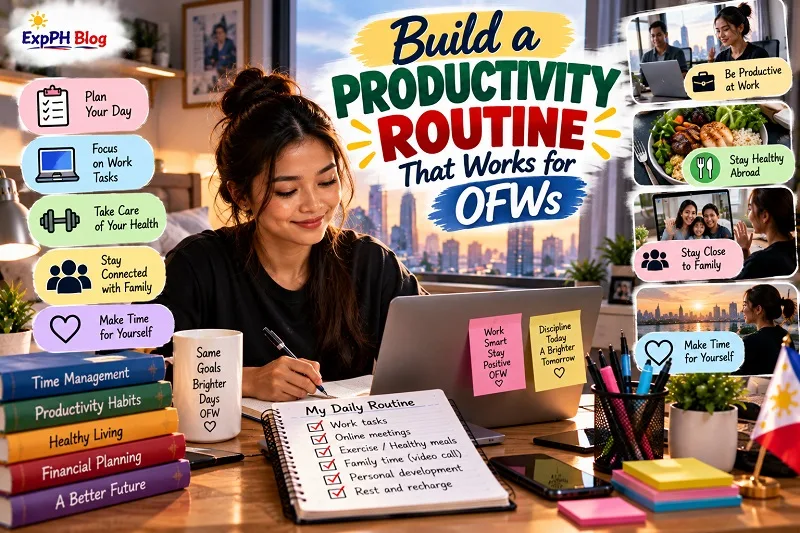
10. Build a Productivity Routine That Works for OFWs
Building a productivity routine as an OFW requires flexibility to accommodate work shifts, living arrangements and family commitments. By adapting your schedule to protect rest, maintaining meaningful communication with loved ones and making time for personal development, you can manage daily responsibilities while working toward your long-term goals.
Adapt your routine to your shift
If you work during the day, you may be able to complete personal tasks before or after your shift.
If you work at night, your routine may need to begin in the afternoon and include protected daytime sleep.
For workers with rotating schedules, flexibility becomes even more important. Instead of following the exact same timetable every day, identify a few essential habits that can move with your schedule.
These might include preparing for work, reviewing priorities, eating regularly, and protecting sufficient time for rest.
Make family communication manageable
Being separated from family can create emotional pressure, especially when loved ones want to speak while you are working or sleeping.
Agree on convenient times for calls and messages when possible. Share important updates and let family members know when your schedule changes.
If you cannot have a long conversation every day, shorter but meaningful interactions may help you stay connected without compromising your recovery.
Remember that communication should support your relationships, not become another source of constant pressure.
Keep your long-term goals visible
Many OFWs work abroad to support their families, build savings, develop careers, or prepare for a future return to the Philippines.
Connect your daily habits to those goals. You might dedicate time to learning a skill, reviewing your finances, or preparing for a future career move.
However, avoid treating every free moment as an opportunity to earn more money. Your health and relationships are also important parts of a successful future.
A sustainable routine supports your goals while recognizing that your life has value beyond work.
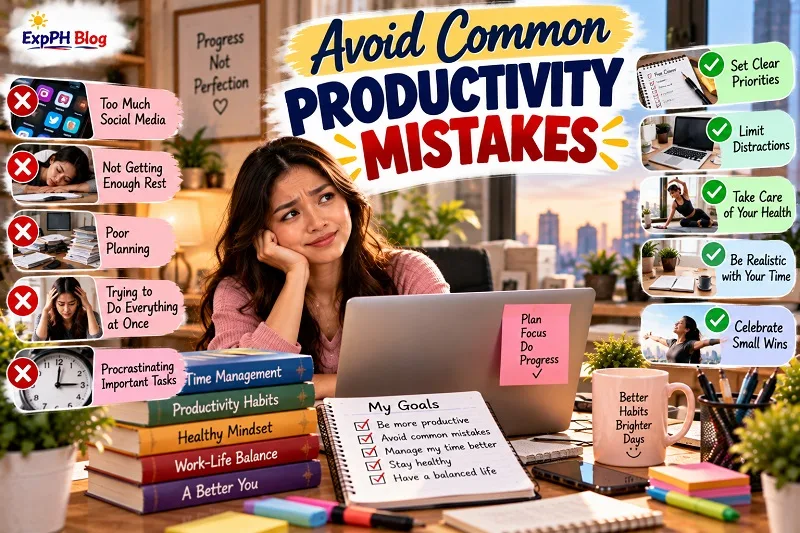
11. Avoid Common Productivity Mistakes
Avoiding common productivity mistakes helps you build habits that remain practical during busy periods. Changing too much at once, overplanning, confusing busyness with progress and sacrificing sleep can make routines harder to maintain. Focus on realistic improvements that fit your circumstances and support steady progress without neglecting your well-being.
Trying to change everything at once
Starting a new exercise program, changing your sleep schedule, learning a skill, reorganizing your finances, and creating a strict work routine at the same time can be overwhelming.
Begin with one or two changes that address your biggest challenges.
Once those habits become easier to maintain, introduce another improvement if needed.
Planning too much and doing too little
Detailed schedules can feel productive, but planning has limited value if it prevents you from starting the work itself.
Keep planning simple. Identify your priorities, decide when to begin, and take the first step.
Review your schedule when necessary rather than repeatedly redesigning it.
Confusing busyness with progress
A full calendar does not automatically mean you are achieving meaningful results.
You may spend an entire day responding to requests without making progress on an important project, personal goal, or family responsibility.
At the end of the day, consider what you accomplished and whether your time supported your priorities.
Sacrificing sleep to get more done
Staying up late to finish tasks may occasionally be unavoidable, but making it a regular habit can undermine your energy and concentration.
If your workload repeatedly requires you to sacrifice sleep, review your priorities, available resources, and deadlines. When possible, seek help or discuss a more manageable workload.
Long-term productivity depends on maintaining your ability to function well, not simply extending your working hours.
Comparing your routine with other people
Social media often presents highly organized routines without showing the responsibilities, resources, or difficulties behind them.
Your circumstances may be very different from those of a person who has flexible working hours, household assistance, or a dedicated home office.
Focus on improvements that make sense for your situation. A simple, consistent routine is more valuable than an impressive routine you cannot sustain.
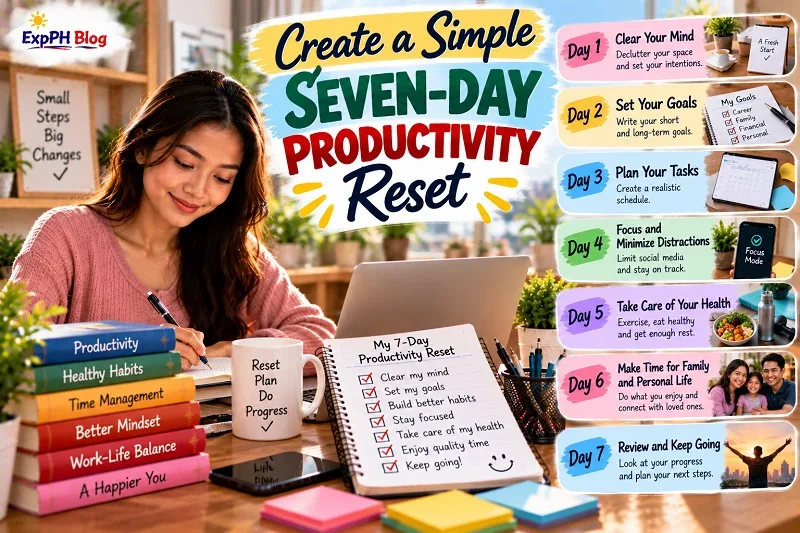
12. Create a Simple Seven-Day Productivity Reset
A seven-day productivity reset can help you identify practical improvements without changing your entire routine at once. By reviewing your habits, setting priorities, organizing your workspace and protecting your well-being, you can discover what works best for your schedule and build a more manageable daily routine.
Day 1: Review your current routine
Write down your main responsibilities and consider how you spend a typical day.
Identify recurring distractions, tasks that take longer than expected, and activities that leave you feeling rushed.
Do not criticize yourself for what you discover. The purpose is to understand your current situation.
Day 2: Choose your priorities
Select three important tasks for the day.
Complete the most meaningful task when your energy and schedule allow, and postpone nonessential activities if necessary.
Notice whether having fewer priorities makes your day easier to manage.
Day 3: Organize your workspace
Spend a short period organizing your desk, work bag, digital files, or frequently used supplies.
Remove unnecessary distractions and make essential items easier to find.
Choose improvements that save time rather than attempting to make everything perfect.
Day 4: Introduce focused work periods
Choose one task and work on it without unnecessary interruptions for a realistic period.
Try a timer if it helps, or simply set a clear goal for the session.
Observe what improves your concentration and what continues to interrupt you.
Day 5: Protect your personal time
Identify one period that you can reserve for rest, family, exercise, or a personal interest.
Set realistic boundaries around work messages and other demands where possible.
Even a short period of intentional personal time can help you notice what your current routine is missing.
Day 6: Review your health habits
Consider whether your schedule provides enough opportunity for sleep, regular meals, movement, and relaxation.
Choose one practical improvement, such as preparing meals ahead of time or reducing unnecessary late-night screen use.
Avoid making changes that conflict with essential work requirements or your health needs.
Day 7: Review and adjust
Look back at the previous six days.
Identify which changes were helpful, which were difficult to maintain, and what needs to change.
Keep the habits that fit your life and revise the ones that do not. Your routine should continue evolving as your responsibilities and goals change.
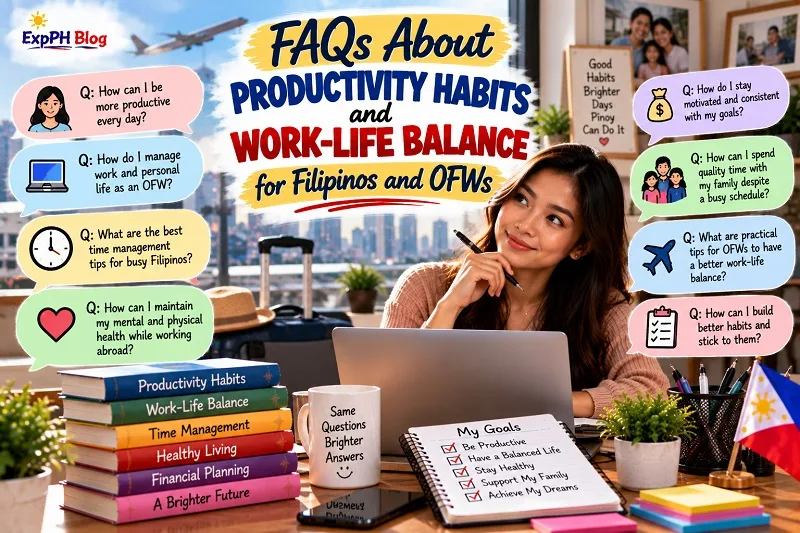
FAQs About Productivity Habits and Work-Life Balance for Filipinos and OFWs
1. What are the best productivity habits for Filipino workers?
The best habits include prioritizing tasks, planning schedules, reducing distractions, taking breaks, maintaining healthy routines, and reviewing progress regularly to improve efficiency without sacrificing personal well-being.
2. How can OFWs maintain work-life balance while working abroad?
OFWs can protect sleep, schedule family calls, organize responsibilities, set realistic boundaries, and reserve time for personal needs whenever their employment conditions and schedules allow.
3. How can I become more productive at work?
Identify important tasks, focus on one activity at a time, limit unnecessary interruptions, organize your workspace, and evaluate which methods consistently help you complete work efficiently.
4. How do I balance work and family responsibilities?
Communicate openly, share household duties, schedule meaningful family time, establish realistic expectations, and seek practical support when responsibilities become difficult to manage independently.
5. What time management technique works best for busy employees?
Time blocking works well for many employees because it assigns periods to specific tasks. Adjust the schedule for interruptions, breaks, and unexpected responsibilities.
6. How can OFWs avoid burnout from demanding work schedules?
OFWs can protect recovery time, maintain healthy routines, seek support, communicate workload concerns when possible, and consult qualified professionals when persistent exhaustion affects daily functioning.
7. Is multitasking good for productivity?
Multitasking can interrupt concentration when tasks require attention. Completing one important activity at a time often improves focus, accuracy, and efficiency for demanding responsibilities.
8. How can I improve productivity when working from home?
Create a designated workspace, establish realistic working hours, manage notifications, organize tasks, communicate availability, and take appropriate breaks to separate work from personal responsibilities.
9. Can online courses help improve productivity skills?
Yes. Relevant courses can teach time management, communication, organization, and digital skills. Choose practical lessons that address your needs and apply them consistently.
10. How can I maintain work-life balance with limited free time?
Start with small changes, prioritize essential responsibilities, protect available rest periods, reduce avoidable distractions, and choose manageable habits that fit your actual schedule.
Conclusion: Build Better Productivity Habits for a More Balanced Life
The best productivity habits and work-life balance practices for Filipinos and OFWs are not about working constantly or following a perfect schedule. They are about making thoughtful decisions with the time, energy, and resources available to you.
Start by setting clear priorities, creating realistic routines, reducing distractions, and protecting your health. Learn to manage responsibilities without allowing every task to take over your personal life. When possible, establish healthy boundaries that give you time for family, rest, and personal development.
For OFWs, productivity should also support the reasons for working abroad, whether that means providing for loved ones, developing professional skills, building financial security, or preparing for life after overseas employment.
You do not need to change everything overnight. Begin with one habit that addresses a genuine challenge in your daily life. Practice it consistently, review your progress, and make adjustments as needed.
Remember that a productive life is not measured only by completed tasks or hours worked. It is also reflected in your health, relationships, personal growth, and ability to work toward meaningful goals.
When you build habits that support both your responsibilities and your well-being, you create a stronger foundation for a more balanced and fulfilling future, whether you are working in the Philippines or pursuing opportunities abroad.
Building better productivity habits takes consistency and a realistic approach to daily life
Whether you work locally or overseas, remember to protect your health and make time for what matters. For more practical advice, read our guide to Best Work-Life Balance Tips for Filipinos and OFWs in 2026 and discover ways to create a healthier balance between work and personal life.
Related content continues just below this point
- Best Daily Habits to Build a Better Life in 2026
- Filipino Morning Habits That Lead to Success
- Healthy Evening Routines to End Your Day Right
- Tips to Stay Motivated When Working from Home
- How to Stay Productive When Working from Home
- Best Productivity Habits Filipinos and OFWs Should Practice in 2026
- Productivity Habits for Filipinos Working Overseas
- How to Create a Productive Workspace at Home
- The Art of Saying No
Test Your Productivity and Work-Life Balance Knowledge!
Results


#1. What should you do before starting your day?
#2. What is the main purpose of time blocking?
#3. Which habit helps reduce distractions?
#4. How much sleep do adults generally need nightly?
#5. What is a healthy work-life boundary?
#6. How can families reduce household stress?
#7. What is a useful way to manage tasks?
#8. What is a practical way to learn new skills?
#9. What should OFWs consider when planning routines?
#10. What is the first step in a seven-day reset?
Thank you for taking the quiz
Keep learning, stay consistent and take care of yourself!

A Filipino web developer with a background in Computer Engineering. Founder of ExpPH Blog and ExpPH Business Guide, creating practical content on OFW guidance, business, finance, freelancing, travel, and lifestyle. Passionate about helping Filipinos grow, he shares insights that educate, empower, and inspire readers nationwide.



Pingback: 10 Healthy Evening Routines to End Your Day Right Each Night
Pingback: Saying No Without Guilt 7 Powerful Ways to Set Boundaries.
Pingback: 10 Tips to Stay Motivated When Working from Home Effectively
Pingback: 11 Smart Strategies to Stay Productive When Working from Home
Pingback: 10 Easy Ways to Create a Productive Workspace at Home Today!