

How OFWs Can Build a Better Life During and After Overseas Work
Working overseas can create valuable opportunities for Filipinos who want to support their families, improve their finances, and build a more secure future. For many Overseas Filipino Workers (OFWs), employment abroad provides access to income and experiences that may be difficult to obtain at home. However, working in another country also brings challenges, including separation from loved ones, living expenses, employment uncertainty, and the pressure to provide financial support.
Building a better future requires more than earning a salary abroad. It involves making thoughtful decisions about money, career development, family relationships, personal well-being, and long-term plans. Without a clear direction, an OFW may spend years working overseas without achieving the financial security or personal goals that originally motivated the decision to leave home.
The good news is that small, consistent actions can make a meaningful difference. Whether you are preparing to work abroad, currently employed overseas, or planning to return to the Philippines, you can take practical steps toward a more stable and fulfilling life.
This guide explains how OFWs can build a better life during and after overseas work through financial planning, continuous learning, responsible family support, career development, and preparation for life beyond an overseas contract.
Explore our The Complete Lifestyle Guide for Filipinos and OFWs for more practical tips on improving your health, managing finances, strengthening family relationships, and building a more balanced and fulfilling life in the Philippines or abroad.
Quick Summary (TL;DR)
How OFWs can build a better life during and after overseas work depends on making practical decisions that support both present responsibilities and future goals.
- Manage your income: Create a budget that covers living expenses, remittances, savings, and debt payments.
- Build an emergency fund: Prepare for unexpected expenses, employment interruptions, and emergencies.
- Support your family sustainably: Agree on realistic financial responsibilities and communicate openly about money.
- Develop valuable skills: Continue learning to improve your employment options and prepare for alternative careers.
- Plan for life after overseas work: Set clear goals for returning home, starting a business, or finding employment in the Philippines.
- Protect your well-being: Make time for rest, relationships, and healthy routines.
- Understand your rights: Use official government resources to check employment requirements and available assistance.
- Take consistent action: Review your progress regularly and adjust your plans as circumstances change.
Key takeaway: Your overseas employment can be a stepping stone toward long-term stability when you use your income, experience, and time to prepare for the future.
Table of Contents

Understanding What a Better Life Means for OFWs
A better life means different things to OFWs depending on their family responsibilities and personal goals. It may involve paying off debts, funding education, purchasing a home, starting a business, or returning to the Philippines with greater financial security. Defining these priorities helps you plan your overseas employment more effectively.
Define your personal and family goals
It is easy to become focused on monthly salary payments, remittances, and immediate expenses. These responsibilities matter, but they should not completely replace your long-term plans.
Start by identifying three types of goals.
- Short-term goals may include paying outstanding bills, completing employment documents, or saving for an emergency.
- Medium-term goals may include finishing a professional qualification, purchasing essential household equipment, or saving for a family member’s education.
- Long-term goals may include returning home permanently, starting a small business, purchasing a property, or transitioning into a different career.
Write down your goals and assign realistic time frames to each one. You do not need to achieve everything simultaneously. Prioritize what matters most and determine how much money, time, and effort each goal requires.
Separate your goals from other people’s expectations
Many OFWs feel pressure to demonstrate success through expensive purchases, large celebrations, or financial assistance that exceeds their actual capacity.
Family support is important, but your financial decisions should reflect your real income and obligations. You can care deeply about your loved ones without agreeing to every financial request.
Explain your priorities respectfully. When your family understands that you are saving for emergencies, education, or a future livelihood, it may become easier to establish realistic expectations.
A better life is not measured only by possessions or salary. It also includes peace of mind, financial resilience, meaningful relationships, and the freedom to make future decisions.

Build a Strong Financial Foundation While Working Abroad
Building a strong financial foundation helps OFWs manage their earnings and prepare for a more secure future. By creating a realistic budget, building emergency savings, managing debt, and setting clear financial goals, you can make better use of your income and reduce financial stress while working abroad.
Create a realistic monthly budget
Start by calculating your take-home pay after applicable deductions. Then list your regular expenses, including housing, food, transportation, utilities, insurance, communication, and other essential costs.
Next, account for your responsibilities in the Philippines, such as remittances, family bills, tuition, and existing loans.
Finally, include your personal savings and future goals.
Your budget should reflect your actual circumstances. An OFW living in an expensive city may have different financial priorities from someone whose employer provides accommodation and meals.
Consider using a simple monthly budget:
- Essential living expenses overseas
- Family support and remittances
- Debt repayments
- Emergency savings
- Long-term savings and investments
- Personal spending and recreation
Review your spending at the end of each month. If your expenses consistently exceed your income, identify areas where you can make adjustments without compromising your health, safety, or essential needs.
Build an emergency fund before taking major financial risks
An emergency fund provides money for unexpected situations, such as illness, urgent travel, delayed salary payments, or a sudden employment interruption.
Without savings, an unexpected expense may force you to borrow money or depend on relatives. This can increase financial pressure at a time when you need stability.
Start with a manageable target. Your first goal might be enough to cover one month of essential expenses. After reaching that amount, gradually work toward a larger reserve that reflects your circumstances, employment stability, and family responsibilities.
Keep emergency money accessible and separate from funds intended for investments or planned purchases.
Remember that an emergency fund is not the same as money for vacations, celebrations, or routine family requests. Giving these categories separate budgets helps protect the money you have set aside for genuine emergencies.
Manage debt carefully
Debt can become a serious obstacle when repayments consume a large portion of your salary.
List each outstanding loan, its balance, interest rate, payment schedule, and any applicable fees. Make required payments on time and identify which debts should receive additional payments first.
Paying down high-interest debt can reduce the amount of money lost to interest over time. However, avoid using all your available savings to repay loans if doing so would leave you without money for essential expenses or emergencies.
Be cautious about borrowing to finance luxury purchases, speculative investments, or business ideas that have not been properly evaluated.
If repayments have become difficult, contact the lender to understand your available options. Do not ignore payment notices or assume that another loan will automatically solve the problem.
Save for specific goals instead of saving without direction
A clear savings goal can make it easier to stay consistent.
You might establish separate savings targets for an emergency fund, a child’s education, retirement, a future business, or your return to the Philippines.
Estimate the amount required and divide it into manageable monthly contributions. If your income changes, adjust the schedule rather than abandoning the goal entirely.
For example, if you want to save ₱120,000 over two years, you would need to set aside approximately ₱5,000 per month, excluding interest and fees. If this amount is unrealistic, extend the time frame or revise the target.
The important thing is to create a plan that fits your financial situation.

Make Family Support Sustainable and Meaningful
Supporting your family while working overseas requires clear communication and realistic financial boundaries. By planning remittances, encouraging responsible household budgeting, and managing financial requests carefully, OFWs can provide meaningful support without compromising their savings or long-term financial goals.
Establish a clear remittance plan
Determine how much you can regularly send home after covering your living expenses, savings, debt repayments, and other commitments.
Discuss the amount with your family and explain which expenses it should cover. Depending on your circumstances, these may include food, utilities, education, healthcare, or household necessities.
A planned remittance amount gives your family a more predictable budget and helps you avoid making financial decisions under pressure.
If you receive overtime pay, a bonus, or another additional payment, decide in advance how much should go toward savings, debt, or family support. Avoid assuming that every increase in income must result in a permanent increase in monthly remittances.
Encourage financial responsibility at home
Family members who manage household spending can play an important role in your long-term financial goals.
Where appropriate, involve them in preparing a household budget. Discuss regular expenses, upcoming school payments, emergency needs, and opportunities to reduce unnecessary spending.
If your family has access to a suitable income opportunity, explore it carefully together. A small livelihood or home-based service may help diversify household income, although it should not be treated as a guaranteed source of profit.
The objective is not to place additional pressure on your loved ones. It is to help the household become more financially organized and less dependent on one person’s overseas salary.
Set respectful boundaries around money
Financial requests can be difficult to refuse, especially when they come from parents, siblings, or other relatives.
However, repeatedly providing money beyond your capacity may undermine the same future you are working to build.
Prepare a respectful explanation of what you can afford. You might explain that your current budget includes rent, food, savings, and existing obligations, so additional support may not be possible.
Where possible, distinguish between essential needs and optional expenses. Urgent medical treatment or basic necessities may require a different response from requests for nonessential purchases.
You can remain caring and supportive while being honest about your limits.

Protect Your Health and Emotional Well-Being
Protecting your health and emotional well-being is essential for OFWs facing demanding work schedules and separation from loved ones. By maintaining healthy routines, staying connected with family, and seeking support when needed, you can manage stress and build a more balanced life while working abroad.
Establish healthy routines
Try to maintain regular sleep, balanced meals, physical activity, and time for relaxation.
Your work schedule may make a perfect routine impossible, particularly if you work shifts or perform physically demanding tasks. Focus instead on realistic habits that fit your circumstances.
You might take short walks, prepare simple meals when possible, stretch during breaks, or maintain a consistent bedtime on days when your schedule allows.
Avoid treating exhaustion as proof of dedication. Rest and recovery help you maintain the energy needed to work, make decisions, and manage responsibilities.
Stay connected with loved ones
Regular communication can help maintain family relationships across distance.
Arrange calls or messages at times that work for everyone. Share ordinary experiences, celebrate important milestones, and listen to family members’ concerns.
Communication should not focus exclusively on money, problems, or requests. Talking about daily life and personal experiences can help relationships feel more natural and supportive.
At the same time, respect differences in schedules and availability. You and your family members may have responsibilities that make immediate responses difficult.
Recognize when you need additional support
Persistent sadness, severe stress, sleep difficulties, or a sense of isolation can affect your daily life. If these feelings become difficult to manage, consider speaking with a qualified healthcare professional or a trusted support service.
If you experience unsafe working conditions, threats, abuse, or serious employment-related problems, seek appropriate assistance rather than assuming you must handle everything alone.
Depending on your location and circumstances, relevant Philippine government offices, labor authorities, or the Philippine embassy or consulate may help direct you toward available services.
Asking for assistance is a practical step toward protecting your safety and well-being.

Develop Your Career and Skills for Long-Term Opportunities
Developing your career and skills helps OFWs prepare for better employment opportunities during and after overseas work. By building transferable skills, pursuing relevant training, and organizing professional documents, you can strengthen your qualifications and prepare for a smoother transition into future careers in the Philippines or abroad.
Identify the skills you want to develop
Begin by reviewing your current work and identifying areas where you could improve.
Depending on your occupation, useful skills might include communication, leadership, customer service, technical maintenance, bookkeeping, project coordination, digital marketing, computer applications, or industry-specific qualifications.
Consider which abilities are requested in job advertisements for positions you may want in the future.
You can also speak with experienced colleagues, supervisors, or professionals in your preferred industry to understand which skills are valuable.
Choose a realistic learning target rather than attempting to master several unrelated subjects at once. Consistent progress in one relevant area may be more useful than collecting certificates without a clear purpose.
Build transferable skills through your overseas experience
Transferable skills are abilities that can be applied across different jobs or industries.
For example, an OFW who regularly coordinates tasks, resolves customer concerns, manages schedules, or trains new employees may have experience that can support future supervisory roles.
Keep a record of your responsibilities, achievements, training, and professional development. When permitted, maintain copies of relevant employment documents and certificates.
Describe your experience in terms of the work you performed and the results you achieved. This can help employers understand the value of your overseas background.
Do not assume that only office-based jobs develop useful skills. Technical, service, caregiving, construction, hospitality, and domestic work can all involve practical abilities that may support future career development.
Explore online learning that matches your goals
Online courses can provide a flexible way to learn while working abroad. Depending on your schedule and internet access, you may be able to study during rest periods or days off.
Choose training that addresses a specific need. For instance, someone interested in administrative work may benefit from learning spreadsheet applications, while a worker exploring freelancing may need to improve writing, design, or client communication skills.
Explore Udemy courses for practical career development
If structured lessons would help you reach your learning goals, Udemy’s online courses cover subjects such as business, technology, communication, and professional development. Review the course outline, instructor information, learner feedback, and price before enrolling. Choose a course that matches your current ability, available study time, and career plans rather than purchasing training simply because it is discounted.
After completing a course, put your new knowledge into practice. Build a small project, improve an existing work process, or create a portfolio where appropriate. Practical application helps you determine whether the skill is useful and gives you something concrete to discuss with potential employers.
Prepare your professional documents
Do not wait until your overseas contract ends to organize your career records.
Keep your résumé updated and maintain a list of your qualifications, training, work responsibilities, and accomplishments. Store copies of important documents securely, including employment records and certificates that may be needed for future applications.
Check the requirements for your intended occupation in the Philippines. Some professions require specific licenses, recognized qualifications, or additional training.
If you plan to work in a different country in the future, research the relevant requirements before spending money on courses or application services.
Preparation can reduce delays when a suitable opportunity becomes available.

Explore Additional Income Opportunities Carefully
Exploring additional income opportunities can help OFWs prepare for life after overseas employment and reduce dependence on a single salary. By choosing a suitable business, researching costs, agreeing on family responsibilities, and keeping business finances separate, you can manage risks and build a more sustainable source of income.
Consider a business that matches your resources
Start with your existing skills, interests, available capital, and family circumstances.
Possible options include online selling, food products, repair services, bookkeeping, digital services, or a small local business. The right choice depends on local demand, competition, operating costs, regulations, and the people available to manage the work.
Do not choose a business only because another OFW appears successful in the same industry. Their circumstances, customer base, and available resources may be very different from yours.
Before investing, research potential customers and estimate the cost of materials, delivery, marketing, equipment, and other expenses. Start small when practical and avoid risking money needed for emergencies or essential family expenses.
Agree on responsibilities with family members
If a business will operate in the Philippines while you remain overseas, decide who will manage daily activities, record sales, purchase supplies, and handle customer concerns.
Discuss how money will be accounted for and how often you will review the business’s performance.
Clear responsibilities help reduce misunderstandings and make it easier to identify problems early.
Remember that family members may already have work, caregiving, or household responsibilities. Do not assume they can manage a business without discussing the time and effort required.
Separate business money from personal savings
Keep business income and expenses separate from household funds wherever possible.
Record purchases, sales, debts, and operating costs. Review whether the business is generating a genuine profit after expenses rather than judging success by sales alone.
Avoid borrowing heavily to expand before you understand the business model. If the business performs poorly, reassess the approach instead of automatically investing more money.
A small, carefully managed operation may be more appropriate than a large business that creates excessive financial pressure.

Prepare Financially for Returning to the Philippines
Preparing financially for returning to the Philippines helps OFWs manage the transition from overseas employment to life at home. By estimating living expenses, protecting savings, researching local job opportunities, and checking available reintegration support, you can reduce financial uncertainty and make more confident decisions about your future.
Estimate your return-home expenses
List the costs you may face during the first several months after returning.
These could include transportation, housing, food, utilities, healthcare, education, job applications, professional training, and business expenses.
Consider whether you will have an immediate source of income or need time to find work.
If you plan to live with relatives temporarily, discuss the arrangement in advance. Clarify expected contributions to household expenses and determine how long the arrangement may last.
A realistic estimate helps you decide how much money to save before leaving overseas employment.
Avoid spending your savings immediately after returning
After years of working abroad, you may want to celebrate your return, improve your home, purchase a vehicle, or fulfill long-delayed family plans.
These goals may be meaningful, but avoid committing a large portion of your savings before evaluating your financial position.
First, identify your essential expenses, existing debts, emergency reserve, and likely income sources. Then determine how much you can safely allocate to major purchases.
If you intend to renovate a house or start a business, prepare a separate budget and include a contingency amount for unexpected costs.
Protecting your financial reserves gives you more time to make informed decisions after returning.
Research employment options before your contract ends
If you plan to find a job in the Philippines, start researching the market early.
Look at current job advertisements, identify the qualifications employers request, and compare expected salaries with your household expenses.
Reach out to professional contacts when appropriate and prepare your application documents before returning.
If your overseas experience is in a specialized field, investigate whether local employers recognize your qualifications and whether additional certification is necessary.
You may also consider related roles that use your existing skills. Flexibility can increase your options, especially if your previous occupation has limited openings in your home area.
Understand available reintegration support
OFWs may be eligible for government programs or services that support employment, livelihood development, training, or reintegration. Eligibility and availability depend on the program and individual circumstances.
Visit the official Overseas Workers Welfare Administration (OWWA) website to review current information about services for eligible OFWs and their families.
You can also consult the Department of Migrant Workers (DMW) for official information relevant to migrant workers and overseas employment.
Confirm requirements directly with the appropriate office before making financial commitments based on a program you expect to receive. Do not assume that assistance is automatic or that every applicant qualifies.

Protect Yourself From Financial Scams and Risky Offers
Protecting yourself from financial scams is essential for OFWs who want to preserve their hard-earned savings and secure their future. Learning to recognize suspicious investment offers, safeguard personal information, and verify recruitment opportunities can help you avoid financial losses and make safer decisions.
Be cautious of guaranteed profits
Treat promises of guaranteed high returns, urgent investment deadlines, and pressure to recruit other people as warning signs.
Before investing, understand how the opportunity operates, what risks are involved, how money can be withdrawn, and which organization is responsible.
Never invest money simply because a friend, relative, or social media personality recommends it. Even well-intentioned people can share inaccurate information.
For investment-related concerns, consult official information from the Securities and Exchange Commission Philippines and verify whether the relevant company or activity has the necessary authorization.
Protect your banking and personal information
Use unique passwords for important accounts and enable multifactor authentication when available.
Avoid sharing one-time passwords, PINs, or banking credentials with anyone who contacts you unexpectedly. Banks and legitimate service providers should not require you to disclose sensitive authentication codes through suspicious messages or calls.
When using public Wi-Fi, be careful about accessing sensitive accounts. Keep your phone and applications updated and review account activity regularly.
If you suspect that an account has been compromised, contact the relevant financial institution or service provider through its official channels as soon as possible.
Verify recruitment and employment offers
Before accepting an overseas job offer, verify the recruitment agency, employer, contract terms, and applicable requirements.
Be wary of individuals who demand unusual payments, refuse to provide written details, or pressure you to surrender important documents without a clear legal basis.
Use official government resources to check the relevant recruitment and employment information. Requirements may vary according to the country, occupation, and type of employment.
Taking time to verify an offer can help protect your money, documents, and personal safety.
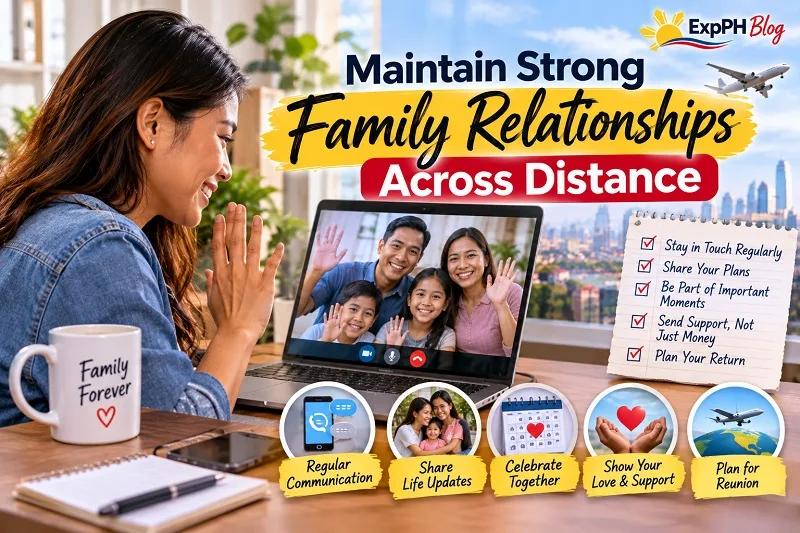
Maintain Strong Family Relationships Across Distance
Maintaining strong family relationships across distance requires consistent communication and emotional support. OFWs can strengthen family bonds by staying involved in loved ones’ lives, sharing important decisions, and planning for reunification. These efforts help reduce misunderstandings and preserve meaningful connections despite physical separation.
Make communication consistent and meaningful
Choose a communication routine that works with everyone’s schedule.
You might arrange regular video calls, send updates during breaks, or share photos and messages throughout the week. Consistency can be more valuable than long conversations that happen only occasionally.
Ask family members about their experiences, concerns, and plans. Listen without assuming that sending money resolves every problem.
For parents working overseas, staying involved in children’s education and everyday milestones can help maintain a sense of connection. Agree with the caregiver at home about how to discuss important decisions and manage responsibilities.
Share decisions rather than giving instructions from abroad
Family members who live together may have a clearer view of daily household needs than the person working overseas.
Invite them to discuss financial choices, school concerns, healthcare, and other major matters. Explain your perspective while considering the information they share.
This approach can reduce misunderstandings and help family members feel respected.
If disagreements arise, focus on the issue rather than assigning blame. Difficult conversations may take time, particularly when people have different expectations about money and responsibility.
Plan for family reunification
If your long-term goal is to live together again, begin discussing the practical requirements.
Consider employment options, housing, children’s schooling, healthcare, and the financial adjustments that may follow a return to the Philippines.
If reunification involves moving to another country, verify the relevant visa and family migration rules through official government sources.
A shared plan can help family members understand what needs to happen and which steps are realistic. Even if the timeline changes, having a common goal may make the separation easier to manage.
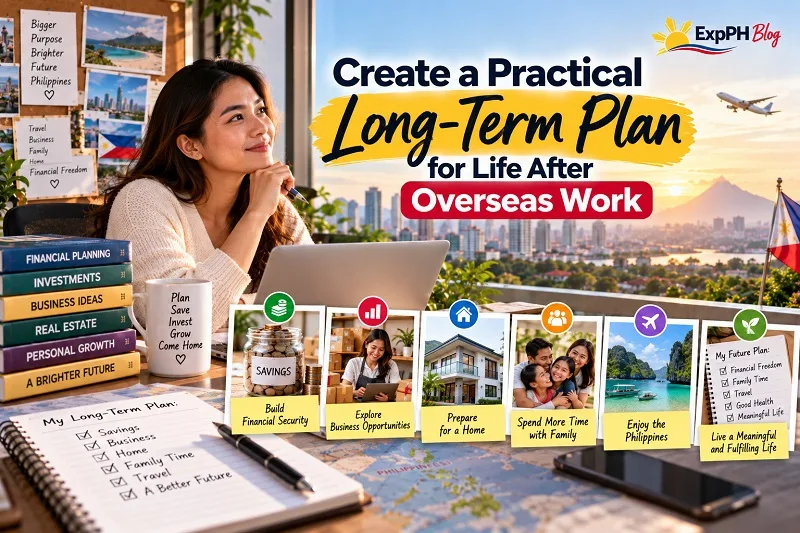
Create a Practical Long-Term Plan for Life After Overseas Work
Creating a practical long-term plan helps OFWs prepare for life after overseas employment with greater confidence. By setting realistic timelines, considering alternative career paths, and reviewing progress regularly, you can adapt to changing circumstances while working toward financial stability and meaningful personal goals.
Choose a realistic timeline
Decide whether you intend to work overseas for a specific period, renew your contract, pursue a higher position, or return home when certain goals are reached.
Your timeline should account for your financial obligations and personal circumstances. Avoid setting a return date based entirely on pressure from others or on an optimistic business forecast.
Review your progress every few months. If you are falling behind, identify the reason and adjust your budget or schedule.
Changing a target does not necessarily mean failure. It may mean that you are responding responsibly to new information.
Build a plan with several possible paths
Your future may not follow one predictable route. An overseas contract could end unexpectedly, a job opportunity might arise in the Philippines, or family needs could change.
Consider preparing more than one option.
- Plan A: Continue overseas employment while meeting savings and career goals.
- Plan B: Return to the Philippines and seek local employment using your existing experience.
- Plan C: Return home and gradually develop a business or freelance service while maintaining adequate financial reserves.
These options are examples, not guarantees. Their feasibility depends on your skills, finances, local opportunities, and responsibilities.
Having alternatives can help you respond more calmly when circumstances change.
Review your progress regularly
Set aside time each month to review your finances, savings, career development, and family goals.
Ask yourself whether you are making progress, whether your current approach remains realistic, and what needs to change.
Celebrate milestones such as paying off a loan, completing a qualification, reaching a savings target, or securing a better position.
Recognizing progress can help maintain motivation during a long period of overseas employment.
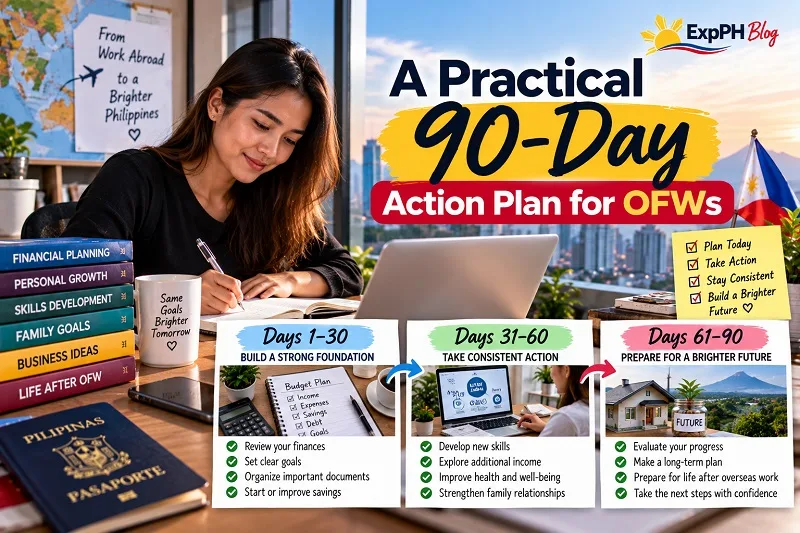
A Practical 90-Day Action Plan for OFWs
A practical 90-day action plan helps OFWs turn long-term goals into manageable steps. By reviewing your finances, establishing healthy habits, developing useful skills, and evaluating your progress, you can build a realistic foundation for a more secure future during and after overseas employment.
Days 1 to 30: Understand your current situation
During the first month, focus on gathering information and organizing your priorities.
- List your income, expenses, debts, and regular remittances.
- Identify your three most important financial or personal goals.
- Review your existing savings and calculate your essential monthly expenses.
- Discuss realistic family support arrangements with your loved ones.
- Update your résumé and list your existing skills and qualifications.
- Identify one area of your health or daily routine that needs attention.
By the end of the first month, you should have a clearer understanding of your current situation and the areas that need improvement.
Days 31 to 60: Establish consistent habits
Use the second month to turn your priorities into manageable actions.
- Begin following a monthly budget.
- Set up a regular contribution to your emergency fund.
- Choose one skill to develop based on your career goals.
- Research employment opportunities or business ideas for the future.
- Review account security and protect important personal documents.
- Establish a regular schedule for communicating with your family.
Keep your commitments realistic. A modest habit that you maintain consistently can be more useful than an ambitious plan that becomes difficult to sustain.
Days 61 to 90: Review and adjust your plan
During the final month, evaluate what has worked and what needs improvement.
Compare your spending with your budget. Check whether your savings are increasing and whether you have made progress toward your learning goal.
If you are preparing to return to the Philippines, estimate your likely expenses and identify the documents, employment options, or support services you need to research.
If you plan to remain overseas, review your contract timeline, career development opportunities, and long-term financial targets.
At the end of the 90 days, write down your next three priorities. Continue reviewing them regularly rather than treating the plan as a one-time exercise.
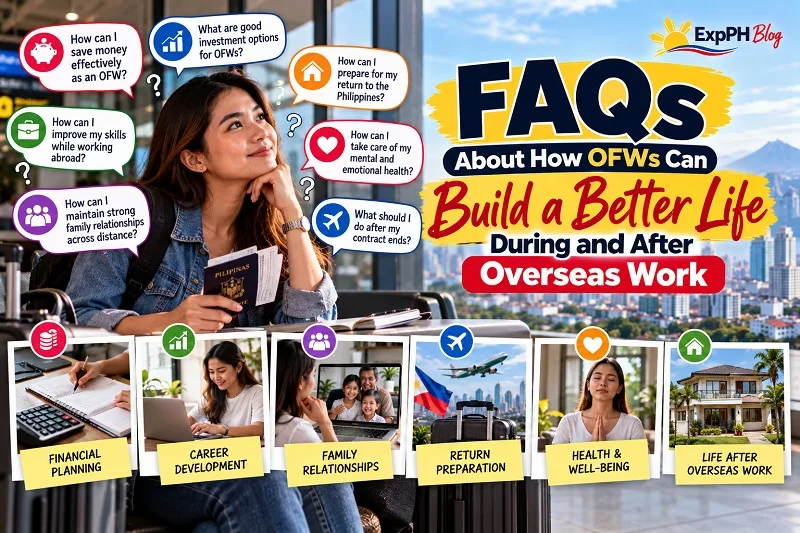
FAQs About How OFWs Can Build a Better Life During and After Overseas Work
1. How can OFWs build a better life while working abroad?
OFWs can improve their future by budgeting carefully, saving consistently, supporting families responsibly, developing useful skills, protecting health, and preparing realistic plans for returning home.
2. How much should OFWs save every month?
The amount depends on income, living costs, debts, and family responsibilities. Start with an affordable target and increase contributions when your financial situation improves.
3. Why is an emergency fund important for OFWs?
An emergency fund helps cover unexpected expenses, employment interruptions, urgent travel, and essential needs without immediately relying on loans or financial assistance from relatives.
4. How can OFWs manage remittances responsibly?
OFWs should agree on realistic remittance amounts, prioritize essential household expenses, communicate openly with family members, and protect savings intended for emergencies and future goals.
5. What skills should OFWs learn before returning home?
OFWs should develop skills relevant to their preferred careers, such as communication, technical abilities, digital literacy, bookkeeping, leadership, or qualifications requested by potential employers.
6. When should OFWs start preparing for returning to the Philippines?
Preparation should begin well before the planned return date. Review savings, estimate living expenses, research employment options, organize documents, and discuss plans with family members.
7. Can OFWs start a business while working overseas?
Yes, some OFWs can prepare a business while overseas, provided they research demand, understand legal requirements, manage risks, and establish reliable arrangements for daily operations.
8. How can OFWs avoid financial scams?
OFWs should verify companies, question unrealistic promises, protect banking credentials, avoid pressured decisions, and consult official authorities before investing or accepting unfamiliar financial offers.
9. How can OFWs maintain strong family relationships across distance?
Regular communication, shared decision-making, emotional support, realistic expectations, and consistent involvement in family matters can help maintain meaningful relationships despite physical separation.
10. What is the first step toward a better future after overseas work?
Start by reviewing your finances, identifying your most important goals, and creating a realistic plan that connects current responsibilities with future employment, savings, and family needs.
Conclusion: Build a Better Future Beyond Your Overseas Salary
Learning how OFWs can build a better life during and after overseas work begins with recognizing that overseas employment is one part of a larger personal and financial journey.
Your salary can help support your family, reduce debt, and fund future goals, but lasting stability also depends on how you manage your resources, develop your skills, protect your well-being, and prepare for change.
Start by creating a realistic budget, establishing an emergency fund, and setting clear financial priorities. Communicate openly with your family, continue learning, and explore future employment or business opportunities carefully. Before returning to the Philippines, estimate your expenses and research the options available to you.
Most importantly, do not compare your progress with another person’s circumstances. Every OFW has different responsibilities, resources, and opportunities.
You do not need to achieve every goal at once. Focus on the next practical step, review your progress, and make adjustments when necessary.
A better life is built through consistent decisions made over time. By using your overseas experience to strengthen your finances, skills, relationships, and long-term plans, you can work toward a future with more choices, greater security, and a clearer sense of direction.
Building a better life after overseas employment involves more than financial preparation
Read our guide on How OFWs Can Prepare Emotionally for Life After Overseas Work to learn how to manage emotional changes, adjust to life back home, and approach your next chapter with greater confidence.
Related Articles:
- How OFWs Can Use Overseas Experience to Increase Value
- Managing Big Life Transitions Without Stress
- Confidence-Building Habits for Filipinos Overseas
- How to Build Confidence and Achieve Your Goals
- Best Mindset Shifts Filipinos and OFWs Need in 2026
- How to Maintain a Positive Mindset During Tough Times
Test your knowledge of OFW finances, family, careers, and future planning with these 10 questions
Results


#1. What should OFWs create to manage their income?
#2. What is the main purpose of an emergency fund?
#3. How can OFWs manage remittances responsibly?
#4. What can help OFWs prepare for better jobs?
#5. What should OFWs do before starting a business?
#6. When should OFWs prepare to return home?
#7. How can OFWs protect online accounts?
#8. What helps maintain family relationships across distance?
#9. What should OFWs do before accepting job offers?
#10. What makes long-term goals more achievable?
Share your experience with us in the comments!
What is one step you are taking to build a better life during or after overseas work? Your experience may inspire other OFWs and their families.

A Filipino web developer with a background in Computer Engineering. Founder of ExpPH Blog and ExpPH Business Guide, creating practical content on OFW guidance, business, finance, freelancing, travel, and lifestyle. Passionate about helping Filipinos grow, he shares insights that educate, empower, and inspire readers nationwide.



Pingback: 10 Ways to Maximize OFW Overseas Experience for Success Today
Pingback: 12 Simple Ways to Manage Big Life Transitions Without Stress
Pingback: 16 Powerful Tips for Life After Overseas Work for OFWs at Home
Pingback: 18 Powerful Confidence-Building Habits for OFWs Abroad Today
Pingback: 12 Powerful Tips to Build Confidence and Achieve Your Goals.