

Family Lifestyle and Relationship Tips for Filipinos and OFW Families
Family is an important part of Filipino life. Many families value close relationships, shared responsibilities, respect for elders, and the desire to provide a better future for their loved ones. However, maintaining strong family connections can become challenging when work schedules, financial responsibilities, personal differences, and overseas employment affect everyday life.
For Overseas Filipino Workers (OFWs), these challenges can be especially difficult. Working abroad may provide opportunities to support loved ones, save money, and improve a family’s future, but physical distance can make ordinary moments together harder to maintain. Parents may miss their children’s milestones, spouses may struggle with communication, and relatives at home may need to manage responsibilities without the OFW’s daily presence.
Fortunately, families do not need to live under one roof to maintain meaningful relationships. Consistent communication, realistic expectations, thoughtful financial planning, shared responsibilities, and quality time can help families remain connected despite changing circumstances.
These Family Lifestyle and Relationship Tips can help Filipino households strengthen their relationships, improve communication, manage responsibilities, and create a healthier family environment. Whether you are working overseas, raising children in the Philippines, supporting aging parents, or preparing for family reunification, small and consistent efforts can make a meaningful difference.
Building stronger family relationships is an important part of a balanced lifestyle. Explore our The Complete Lifestyle Guide for Filipinos and OFWs for practical advice on personal growth, healthy habits, financial stability, and creating a happier life for you and your family.
Quick Summary (TL;DR)
Family relationships become stronger when Filipinos and OFWs communicate openly, respect each other’s needs, and work together toward shared goals. Applying practical family lifestyle and relationship tips can help households remain connected while managing everyday responsibilities.
- Prioritize Family Communication: Maintain regular conversations and discuss important decisions honestly, even when family members live in different countries.
- Make Quality Time Count: Create meaningful family moments through shared activities, video calls, meals, and simple traditions.
- Strengthen Marriage and Partnerships: Build trust, express appreciation, discuss concerns calmly, and make important decisions together.
- Support Children’s Emotional Needs: Stay involved in children’s daily lives, recognize their feelings, and provide consistent guidance.
- Manage Family Finances Together: Establish realistic budgets, agree on financial priorities, and communicate clearly about household expenses and savings.
- Share Household Responsibilities: Avoid placing every responsibility on one person and recognize the efforts of family members at home and abroad.
- Set Healthy Boundaries: Balance family obligations with personal well-being, work demands, and financial limitations.
- Prepare for Life Changes: Discuss overseas employment, returning home, family reunification, and other transitions before they happen.
- Build a Supportive Home Environment: Encourage mutual respect, emotional safety, cooperation, and healthy daily routines.
- Keep Improving Family Relationships: Address disagreements constructively and make small, consistent efforts to stay connected.
Key takeaway: Strong Filipino and OFW families are built through trust, communication, cooperation, and shared responsibility. Distance and busy schedules can create challenges, but families can protect their relationships by making time for one another and approaching difficulties as a team.
Table of Contents

Understanding Family Lifestyle and Relationships in Filipino Households
Family life in the Philippines is shaped by cultural traditions, personal values, and shared responsibilities. Family relationships often extend beyond parents and children to include grandparents, siblings, and other relatives. These connections provide emotional support and practical help, but differing expectations can sometimes create challenges.
The Importance of Family in Filipino Culture
Many Filipino families emphasize respect, cooperation, shared experiences, and helping relatives during difficult times. Children may grow up learning to respect older family members, contribute to household responsibilities, and consider how personal decisions affect the wider family.
These values can strengthen relationships when everyone feels respected and supported. For example, siblings may help care for younger children, grandparents may provide guidance, and relatives may assist one another during financial difficulties.
However, family traditions should not prevent people from expressing their needs. Respect does not mean accepting every request without discussion. Healthy family relationships allow members to maintain cultural values while recognizing personal boundaries, individual goals, and different circumstances.
How OFW Employment Changes Family Dynamics
Overseas employment can change how a family communicates, makes decisions, and divides responsibilities. When one parent or spouse works abroad, the family members remaining at home may need to handle school activities, household expenses, childcare, and unexpected problems independently.
Meanwhile, the OFW may face demanding work schedules, unfamiliar surroundings, homesickness, and pressure to provide financial support.
Both sides may feel tired or misunderstood. The family at home might feel that the OFW is unavailable, while the OFW might feel that their sacrifices are not fully recognized.
Recognizing these different experiences helps families avoid unnecessary blame. Instead of assuming that someone does not care, discuss the practical challenges each person faces and agree on realistic ways to remain involved.

Building Strong Family Communication Across Distances
Strong family communication helps Filipinos and OFWs share concerns, understand expectations, and maintain emotional closeness despite physical distance. By adapting conversations to work schedules and time differences, families can build trust, discuss important decisions, and stay connected through realistic communication routines.
Establish a Realistic Communication Routine
Regular communication helps family members feel included in one another’s lives. However, a useful routine does not need to involve lengthy video calls every day.
Families can agree on a schedule that works for everyone. This might include a short daily message, a longer video call several times a week, or a weekly family conversation about important matters.
Consistency is more important than creating a demanding schedule that becomes difficult to maintain.
If an OFW cannot answer immediately because of work, family members should understand the agreed expectations. A simple message explaining when the person will be available can prevent unnecessary worry or misunderstandings.
Listen Before Offering Advice
Family conversations sometimes become difficult because people respond too quickly. A child may want to explain a school problem, a spouse may need emotional support, or an older parent may want someone to listen to their concerns.
Immediately offering solutions can make the other person feel unheard.
Practice listening without interrupting. Ask questions when something is unclear, acknowledge the person’s feelings, and discuss possible solutions only when appropriate.
For example, instead of saying, “You should not worry about that,” try saying, “I understand why this is difficult for you. Let’s talk about what we can do.”
This approach encourages honest communication and helps family members feel that their experiences matter.
Discuss Important Decisions Together
Major family decisions should involve the people who will be affected whenever possible. These decisions may include changing schools, managing household expenses, caring for elderly parents, purchasing property, or making plans for an OFW’s return.
Avoid making promises or commitments before discussing their practical consequences.
Create a habit of sharing relevant information, explaining concerns, and agreeing on the next steps. When immediate decisions are necessary, establish who can make them and how other family members will be informed.
Clear communication reduces confusion and helps families maintain trust even when they cannot discuss every issue face to face.

Making Quality Family Time Meaningful
Meaningful family time helps Filipinos and OFWs strengthen relationships despite busy schedules and physical distance. Simple traditions, thoughtful conversations, and shared activities can help loved ones feel valued without requiring expensive outings or long periods together. The key is making time for one another consistently and realistically.
Create Simple Family Traditions
Family traditions give relatives something familiar to share. These traditions can be as simple as eating dinner together, preparing a favorite meal on weekends, celebrating birthdays, or sharing weekly updates.
For families separated by overseas employment, traditions can continue through technology.
An OFW might read a bedtime story during a video call, join a child’s birthday celebration online, or watch a family member’s school performance remotely when possible.
The goal is not to recreate every experience perfectly. It is to create opportunities for family members to participate in one another’s lives.
Focus on Attention Rather Than Expensive Activities
Some families feel pressured to spend money on special outings or gifts to demonstrate love. While celebrations can be enjoyable, meaningful relationships also grow through everyday attention.
Parents can spend time asking children about their interests. Couples can set aside time to discuss their day without distractions. Siblings can help one another with practical responsibilities.
For families living together, eating a meal without phones or completing a household activity together can provide an opportunity to reconnect.
For OFWs, a thoughtful conversation or a message sent at the right time may mean more than a costly gift that does not address a loved one’s emotional needs.
Respect Everyone’s Need for Rest
Quality time should not become another source of pressure. Family members may have different work schedules, school commitments, health needs, and energy levels.
Agree on activities that fit the family’s circumstances. If a scheduled call must be postponed, communicate respectfully and arrange another time when possible.
A flexible approach makes it easier to maintain family traditions without creating unnecessary guilt or frustration.

Strengthening Marriage and Romantic Relationships Among OFW Couples
Maintaining a strong marriage or romantic relationship can be challenging when OFW couples live in different countries. Physical distance can limit affection and shared experiences, making honest communication, mutual trust, and clear expectations essential for staying emotionally connected and managing relationship challenges together.
Build Trust Through Consistent Actions
Trust grows when people follow through on commitments, communicate honestly, and treat one another with respect.
For couples living apart, trust may involve explaining changes in work schedules, discussing financial decisions, and maintaining agreed communication routines.
However, trust should not require constant monitoring, demanding passwords, or expecting immediate responses to every message. Healthy relationships allow both partners reasonable privacy and independence.
If concerns arise, discuss the specific behavior that caused worry rather than immediately making accusations. Calm conversations are more likely to identify misunderstandings and produce practical solutions.
Discuss Financial Expectations Without Blame
Money can become a sensitive subject when one partner works abroad and the other manages household responsibilities.
The OFW may feel pressure to send more money, while the partner at home may face expenses that are difficult to predict. Both may believe their contributions are not fully understood.
Schedule regular financial discussions to review income, expenses, savings, debts, and upcoming needs. Explain the reasons behind important spending decisions and acknowledge the work involved in managing the household.
Financial conversations should focus on shared priorities rather than assigning blame. A realistic plan can help couples make decisions with greater confidence and reduce avoidable disagreements.
Keep Emotional Intimacy Alive
Emotional intimacy involves sharing thoughts, concerns, hopes, and experiences. Couples can maintain this connection even when they cannot spend time together physically.
Ask about one another’s day, discuss future plans, remember important occasions, and express appreciation for everyday efforts.
It is also important to talk about difficult feelings, including loneliness, frustration, jealousy, or uncertainty. These conversations should be respectful and should not be used to threaten, shame, or control the other person.
When conflicts become persistent or difficult to resolve, couples may benefit from a qualified counselor or another appropriate professional who can help them communicate more constructively.
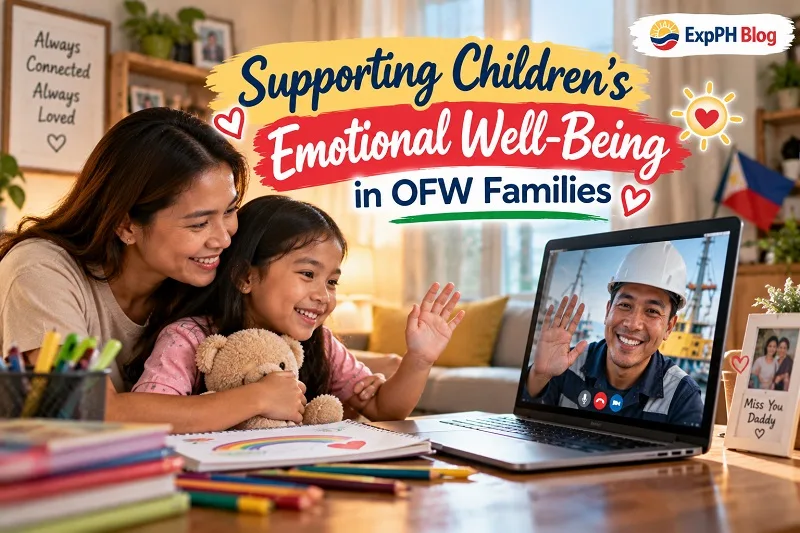
Supporting Children’s Emotional Well-Being in OFW Families
Children in OFW families may experience sadness, confusion, or longing when a parent works overseas. Providing emotional support and consistent guidance helps them feel secure despite the distance. Parents and caregivers can work together to maintain routines, encourage open communication, and support children’s emotional needs.
Stay Involved in Everyday Experiences
An overseas parent can remain involved in a child’s life by asking about school, friendships, hobbies, and personal interests.
Instead of focusing every conversation on grades or behavior, ask open questions such as, “What was the best part of your day?” or “Is there anything you want to talk about?”
These questions create opportunities for children to share their experiences without feeling that every conversation is an evaluation.
When possible, participate in school events remotely, remember important dates, and celebrate progress. Children benefit from knowing that their parent remains interested in their lives even when they are physically absent.
Maintain Consistent Rules and Expectations
Children need age-appropriate boundaries, predictable routines, and guidance from the adults responsible for their care.
When parents live apart, discuss important household rules privately so children receive consistent messages. Agree on expectations regarding schoolwork, screen time, chores, sleep, and behavior.
Avoid asking children to take sides when parents disagree. Adult conflicts should be handled through respectful conversations rather than making children responsible for resolving them.
Consistency does not mean every household must operate identically. It means the adults work together to provide clear, reasonable expectations that support the child’s development.
Recognize Children’s Feelings About Separation
Children may miss an overseas parent even when they understand why that parent left. They might become quiet, ask repeated questions about the parent’s return, or express frustration during calls.
Listen without dismissing their feelings. Explain the situation in language appropriate to their age, and avoid making promises about return dates unless the plans are reasonably confirmed.
Encourage children to maintain meaningful relationships with trusted caregivers, relatives, teachers, and other supportive adults.
If emotional or behavioral difficulties persist or interfere with daily activities, consider consulting a qualified child health or mental health professional.

Managing Family Finances While Protecting Relationships
Managing family finances helps Filipinos and OFWs meet household needs while protecting important relationships. Clear budgets, realistic financial expectations, and shared savings goals can reduce misunderstandings and prevent money-related conflicts. By planning together, families can work toward greater financial stability while supporting one another’s needs.
Create a Shared Family Budget
A family budget helps everyone understand what money is available and how it should be used.
Start by identifying essential expenses such as food, housing, utilities, education, transportation, healthcare, debt payments, and other necessary commitments. Then consider savings, emergency funds, and longer-term goals.
An OFW and the family at home should discuss which expenses take priority and how unexpected costs will be handled.
Review the budget regularly because prices, household needs, and employment circumstances can change. A realistic budget should reflect the family’s actual income rather than an ideal amount that is difficult to maintain.
Set Clear Expectations About Financial Support
Family members may assume that an OFW can provide money whenever someone requests it. In reality, overseas workers also have living expenses, transportation costs, personal needs, and future financial goals.
Discuss the amount of support that can reasonably be provided and explain any limits clearly.
This does not mean ignoring family needs. It means distinguishing urgent necessities from expenses that can be delayed, reduced, or planned for later.
Relatives should also be encouraged to discuss major purchases in advance. Clear agreements can help prevent resentment and protect relationships from repeated financial misunderstandings.
Make Saving a Shared Goal
Saving money becomes easier when the family understands why it matters.
A shared goal might include building an emergency fund, preparing for children’s education, paying off debt, improving the family home, or preparing for the OFW’s return.
Break large goals into manageable steps. Discuss how much can be saved each month without compromising essential expenses.
Recognize that progress may be slower during difficult periods. The purpose is to develop a sustainable approach to financial security, not to create unrealistic expectations that increase stress.

Sharing Household Responsibilities Fairly
Sharing household responsibilities fairly helps Filipino and OFW families manage daily tasks while reducing stress and resentment. Recognizing each person’s contributions, dividing duties according to individual circumstances, and asking for help when needed can encourage cooperation and create a more balanced family environment.
Recognize the Work Done at Home and Abroad
An OFW’s work abroad may involve long shifts, demanding conditions, and separation from loved ones. Family members at home may handle childcare, household management, school responsibilities, and unexpected problems.
Both forms of contribution matter, even though they look different.
Avoid treating financial support as the only meaningful contribution or assuming that the person at home has unlimited time because they are not employed overseas.
Regularly acknowledge one another’s efforts. Appreciation can help family members feel respected and encourage cooperation.
Divide Tasks According to Ability and Availability
A fair division of responsibilities does not always mean everyone performs the same amount of work. It means tasks are assigned with consideration for age, health, work schedules, skills, and other commitments.
Children can take on age-appropriate chores, adults can coordinate household duties, and relatives may help when they are willing and able.
For OFW families, it is useful to discuss who will handle school meetings, medical appointments, repairs, and emergencies before problems occur.
Revisit these arrangements when circumstances change. A plan that works during one season of life may need adjustments when children grow older or family members change jobs.
Ask for Help Before Becoming Overwhelmed
Some people hesitate to ask for assistance because they believe they should manage everything independently.
However, asking for help can be a practical way to protect family relationships and personal well-being.
Be specific about what support is needed. Rather than saying, “I need more help,” explain which task needs to be shared and when assistance would be useful.
Family members may not recognize the full extent of another person’s workload until it is discussed openly.

Setting Healthy Boundaries With Extended Family
Setting healthy boundaries helps Filipino and OFW families maintain supportive relationships while managing personal needs and responsibilities. Communicating limits respectfully and avoiding comparisons can reduce misunderstandings, protect financial stability, and encourage relatives to respect one another’s circumstances and contributions.
Communicate Limits Respectfully
Healthy boundaries help people understand what they can reasonably offer.
For example, a family may be willing to help with an emergency but unable to provide money for every nonessential expense. A parent may welcome visits but need advance notice to manage work and childcare.
Explain limits calmly and consistently. Whenever possible, offer an alternative that fits your circumstances.
Setting boundaries does not mean rejecting relatives or disregarding cultural values. It means making family support sustainable so that assistance does not repeatedly compromise essential needs, personal well-being, or important commitments.
Avoid Comparing Family Contributions
Comparisons can create resentment between siblings, cousins, or other relatives. One person may earn more, have fewer responsibilities, or be in a better position to provide assistance.
Instead of measuring everyone’s contribution against someone else’s, discuss responsibilities according to individual circumstances.
Appreciate different forms of support, including caregiving, emotional encouragement, practical help, and financial assistance.
A healthy family environment allows people to contribute in different ways without turning every act of support into a competition.

Creating a Supportive and Comfortable Family Home
Creating a supportive and comfortable family home helps Filipinos and OFWs build a healthier living environment. Practical use of shared spaces, respectful communication, and consistent daily routines can promote comfort, cooperation, and stronger family relationships without requiring expensive changes or a large living space.
Make Shared Spaces Comfortable and Functional
Consider how the family uses its living space. Children may need a quiet place to study, adults may need space to work, and everyone benefits from areas where they can relax.
Simple improvements can make a difference. Organize frequently used items, improve lighting where possible, reduce unnecessary clutter, and create a comfortable area for shared meals or conversations.
In homes with limited space, flexible storage and clear agreements about shared areas can help reduce frustration.
Encourage Respectful Conversations at Home
A supportive home allows family members to express concerns without fear of humiliation or intimidation.
Encourage everyone to speak respectfully, listen to different opinions, and resolve disagreements without insults or threats.
Parents can model these behaviors by apologizing when they make mistakes, acknowledging children’s feelings, and discussing rules clearly.
Respectful communication does not eliminate every disagreement. It helps families address differences in ways that preserve dignity and make practical solutions easier to find.
Build Healthy Daily Routines Together
Family routines can support rest, organization, and cooperation. Examples include preparing meals together, establishing regular sleep schedules, planning weekly household tasks, and setting aside time for recreation.
Choose routines that fit the family’s actual circumstances. An OFW working night shifts may have different availability from relatives living in the Philippines, so shared activities may require flexibility.
The goal is to make daily life more manageable rather than creating a strict schedule that everyone finds difficult to follow.

Learning and Growing Together as a Family
Learning and growing together helps Filipino and OFW families adapt to changing responsibilities and life circumstances. By developing useful skills, encouraging personal growth, and supporting children’s independence, family members can improve communication, understand one another better, and build stronger relationships over time.
Encourage Personal Development Without Pressure
Personal development can include improving communication, learning practical skills, strengthening parenting habits, or becoming more confident when managing responsibilities.
Family members should be encouraged to pursue realistic goals based on their interests, available time, and resources.
For example, parents may learn better ways to communicate with teenagers, couples may explore conflict-resolution techniques, or an OFW may develop skills that support future career plans.
Learning should be a source of growth rather than another obligation that creates pressure.
Explore Online Courses That Support Family and Personal Growth
Online learning can provide structured lessons for people who want to improve communication, parenting knowledge, personal development, or practical life skills.
When choosing a course, consider whether the topic addresses a genuine need, whether the lessons fit your schedule, and whether the cost is reasonable for your budget. You do not need to enroll in several courses at once to make progress.
You can explore relevant learning opportunities through Udemy, including courses related to communication, personal development, and other useful skills. Choose content that supports your goals and apply what you learn gradually in everyday life.
Online courses are optional resources. Honest conversations, patience, shared experiences, and consistent effort remain important parts of building stronger relationships.
Help Children Develop Responsibility and Independence
Children can gradually learn how to organize their belongings, manage school tasks, contribute to household chores, and communicate their needs.
The level of responsibility should match the child’s age and abilities. Give clear instructions, provide guidance when needed, and recognize effort rather than expecting perfection.
For OFW parents, discussing responsibilities during regular calls can help maintain involvement in children’s development. However, the parent or caregiver physically present should handle immediate supervision and discipline.
The aim is to help children build confidence while ensuring they continue to receive appropriate care and support.

Managing Family Conflict in Healthy Ways
Managing family conflict in healthy ways helps Filipino and OFW families address disagreements while protecting their relationships. Respectful communication, calm discussions, and clear boundaries can reduce misunderstandings and encourage practical solutions. When conflicts persist or become harmful, seeking appropriate professional support can help protect everyone’s well-being.
Address Problems Before Resentment Builds
Small misunderstandings can become larger problems when people avoid discussing them.
If a concern keeps returning, choose a suitable time to talk. Explain what happened, describe how it affected you, and identify what you would like to change.
Focus on specific behavior rather than making sweeping statements about someone’s character.
For example, instead of saying, “You never listen to me,” explain which conversation left you feeling unheard and what would help you feel more included.
Specific requests make it easier for the other person to understand the problem and respond constructively.
Learn When to Pause a Difficult Conversation
Family members may become too upset or tired to communicate productively. Continuing an argument under these circumstances can make the situation worse.
Agree to take a break when necessary and return to the discussion at a reasonable time. A pause should be used to calm down, not to punish the other person through prolonged silence.
When the conversation resumes, focus on understanding the issue and identifying practical next steps.
If a relationship involves threats, violence, coercion, or serious emotional harm, ordinary communication strategies may not be enough. Prioritize safety and seek appropriate professional or local support rather than attempting to resolve dangerous situations alone.
Consider Professional Support When Needed
Some family problems persist despite repeated attempts to resolve them. Couples may struggle with trust, parents may need help responding to a child’s emotional difficulties, or relatives may face ongoing conflict related to caregiving and financial responsibilities.
A qualified counselor or mental health professional may help family members communicate more effectively and explore possible solutions.
Seeking assistance does not mean a family has failed. It can be a practical step toward understanding difficult situations and protecting everyone’s well-being.

Preparing for Major Family Life Transitions
Major family life transitions can change the responsibilities and relationships of Filipino and OFW families. Planning ahead for overseas employment, family reunification, or returning home helps reduce uncertainty. Open communication and realistic expectations allow family members to prepare for changes and adjust together.
Prepare the Family Before an OFW Leaves
Before an OFW departs, discuss practical matters such as household expenses, childcare arrangements, emergency contacts, important documents, and communication routines.
Explain the plans to children in an age-appropriate way. Allow them to ask questions and express concerns without making them feel responsible for adult decisions.
Agree on realistic expectations about communication and financial support. Work schedules and living conditions abroad may change, so families should understand that adjustments could become necessary.
Preparation cannot remove every difficulty, but it gives family members a clearer starting point.
Plan for an OFW’s Return Home
Returning home after years abroad can bring excitement and relief, but it may also involve adjustment.
Family members may have developed different routines, responsibilities, and expectations during the separation. An OFW might expect to resume an earlier role, while the household may already have established new ways of managing daily life.
Discuss expectations before the return whenever possible. Talk about employment, household responsibilities, savings, housing, childcare, and how family decisions will be made.
Allow everyone time to adjust. Rebuilding everyday closeness may take patience, especially when children have grown or family roles have changed.
Prepare for Changes in Income and Responsibilities
A return to the Philippines may involve a different income level or a period of job searching. Families should consider these possibilities before making major financial commitments.
Review savings, essential expenses, outstanding debts, and realistic employment options. Discuss how responsibilities will be divided during the transition.
Avoid assuming that every returning OFW will immediately find suitable work or maintain the same income earned overseas.
A practical plan helps families manage uncertainty while protecting relationships from financial pressure and unrealistic expectations.

Protecting Mental Wellness While Maintaining Family Relationships
Protecting mental wellness helps Filipino and OFW families manage stress while maintaining healthy relationships. Work demands, homesickness, caregiving, and financial responsibilities can affect emotional well-being. Making time for self-care, maintaining supportive connections, and seeking professional help when needed can help families manage these challenges more effectively.
Make Space for Personal Well-Being
Healthy family relationships require attention to individual needs as well as shared responsibilities.
Encourage family members to get adequate rest, maintain supportive friendships, pursue enjoyable activities, and ask for assistance when necessary.
OFWs can use available breaks to rest, stay connected with trusted people, and maintain routines that fit their working conditions. Relatives at home should also have opportunities to recharge rather than carrying every responsibility alone.
Self-care is not a rejection of family obligations. It can help people manage those obligations more sustainably.
Recognize When Stress Needs Additional Support
Occasional stress is a common response to difficult circumstances, but persistent emotional difficulties may require more attention.
If anxiety, sadness, sleep problems, or other concerns continue to interfere with daily life, consider speaking with a qualified health or mental health professional.
Families can help by listening without judgment and encouraging appropriate support rather than dismissing concerns as weakness.
For general information about mental health and available resources, the World Health Organization provides information about mental health and well-being.
If someone is in immediate danger or experiencing a mental health emergency, seek urgent local assistance.

A Simple Weekly Plan for Stronger Family Relationships
Improving family relationships does not require changing every habit at once. A simple weekly plan can help families make time for communication, shared responsibilities, and meaningful connection. These family lifestyle and relationship tips work best when families practice them consistently and adjust them to their needs.
Monday: Check In With One Another
Start the week by asking how everyone is feeling and what responsibilities or concerns they expect to face.
For OFW families, a short message or scheduled call can help identify important needs before they become urgent.
Tuesday: Share Responsibilities
Review household tasks, school commitments, caregiving needs, and other responsibilities. Discuss whether anything needs to be reassigned or adjusted.
Recognize the people who are contributing and ask whether anyone needs additional help.
Wednesday: Make Time for Personal Connection
Set aside time for a meaningful conversation that is not focused entirely on money, problems, or obligations.
Ask about hobbies, interests, recent experiences, or future hopes. These conversations help family members remain connected as individuals.
Thursday: Review Family Finances
If appropriate, review upcoming bills, household expenses, savings goals, and planned purchases.
Keep the discussion practical and respectful. The goal is to understand the family’s financial situation and agree on priorities rather than criticize individual spending without context.
Friday: Express Appreciation
Take a moment to acknowledge something another family member has done.
Appreciation can be expressed through a message, a conversation, or a simple act of kindness. Specific recognition often feels more meaningful than a general statement.
Saturday: Enjoy a Shared Activity
Choose an activity that suits the family’s budget, schedule, and energy level. This might be preparing a meal, playing a game, walking together, or having a relaxed video call with an OFW.
The activity does not need to be elaborate to create a meaningful experience.
Sunday: Reflect and Prepare for the Week Ahead
Discuss what worked well and what needs improvement. Identify any upcoming responsibilities, important dates, or concerns that require attention.
Keep the review flexible. If the family cannot complete every activity, choose one or two habits to maintain consistently.

Conclusion: Building Stronger and Happier Filipino and OFW Families
Strong family relationships develop through everyday actions, honest conversations, shared responsibilities, and a willingness to understand one another. For Filipinos and OFWs, maintaining these connections may require extra effort when work, distance, and financial pressure affect family life.
These family lifestyle and relationship tips can help you make realistic plans, express appreciation, communicate openly, and create a more supportive home environment. You do not need a perfect household or unlimited free time to build healthier relationships. Start with small, consistent efforts that fit your family’s circumstances.
For OFWs, staying involved in family life means more than sending financial support. It also involves maintaining emotional connections, understanding the needs of loved ones, and making time for meaningful conversations whenever possible.
For family members at home, recognizing the OFW’s challenges while communicating their own needs can encourage greater understanding and cooperation. Everyone’s contribution matters, whether it involves earning income, caring for children, managing the household, or providing emotional support.
Remember that healthy family relationships also require boundaries. Supporting loved ones should not mean ignoring personal well-being, accepting harmful behavior, or making promises that cannot reasonably be kept.
As your family’s circumstances change, continue reviewing your routines, expectations, and shared goals. Be patient when adjustments take time, and seek appropriate help when problems become difficult to manage alone.
Ultimately, the best family lifestyle is one that supports connection, respect, personal growth, and shared responsibility. With consistent effort, Filipino and OFW families can build stronger relationships and create a more balanced future together.

FAQs About Family Lifestyle and Relationship Tips for Filipinos and OFW Families
1. How can OFWs maintain strong relationships with their families?
OFWs can maintain strong relationships through regular communication, emotional support, shared decisions, consistent involvement in family activities, and realistic expectations about schedules and responsibilities.
2. How often should OFWs communicate with their families?
Families should choose a communication schedule that suits their work hours, time differences, internet access, and personal needs while maintaining consistent and meaningful contact.
3. How can OFW parents stay involved in their children’s lives?
OFW parents can ask about school, friendships, interests, and feelings, celebrate milestones remotely, maintain agreed routines, and coordinate important decisions with caregivers.
4. How can couples manage long-distance relationship challenges?
Couples can strengthen trust by communicating honestly, discussing expectations, resolving disagreements respectfully, sharing financial decisions, and making time for emotional connection despite physical separation.
5. How can Filipino families reduce money-related arguments?
Families can reduce money-related arguments by creating shared budgets, discussing expenses openly, agreeing on priorities, setting realistic limits, and reviewing financial goals regularly together.
6. How can families balance responsibilities fairly?
Families can balance responsibilities by discussing workloads, considering everyone’s abilities and schedules, sharing household tasks, recognizing contributions, and adjusting arrangements when circumstances change.
7. How can OFW families help children cope with separation?
Families can help children cope through age-appropriate explanations, regular contact, predictable routines, emotional reassurance, trusted caregivers, and opportunities to express feelings without judgment.
8. How can families resolve disagreements more effectively?
Families can resolve disagreements by listening carefully, discussing specific concerns calmly, avoiding personal attacks, respecting boundaries, and seeking qualified professional support when problems persist.
9. How can OFWs prepare for returning home?
OFWs can prepare by reviewing finances, discussing employment plans, clarifying household responsibilities, managing expectations, and allowing family members time to adjust to changing routines.
10. What helps Filipino families maintain a healthy lifestyle?
Filipino families benefit from open communication, shared responsibilities, realistic financial planning, meaningful activities, healthy routines, mutual respect, personal boundaries, and consistent emotional support.
Explore More Family Lifestyle Practices
Want to build a stronger and happier family despite the challenges of overseas work? Read our guide to Best Family Lifestyle Practices for Filipinos With OFW Members in 2026 for practical ways to strengthen family connections, manage responsibilities, and support your loved ones.
More informative article related to this subject follow
Test your knowledge of family relationships, communication, finances, and emotional well-being for Filipino and OFW families
Results


#1. What helps families maintain strong relationships across distances?
#2. What makes family time meaningful?
#3. What helps OFW couples maintain trust?
#4. How can parents support children living apart from an OFW parent?
#5. What can reduce money-related family conflicts?
#6. What promotes fair household responsibilities?
#7. Why are healthy boundaries important with extended family?
#8. What is a healthy way to manage family conflict?
#9. What helps families prepare for major life transitions?
#10. What can help protect family mental wellness?
Thank you for taking this quiz!
Share your experience with us in the comments!

A Filipino web developer with a background in Computer Engineering. Founder of ExpPH Blog and ExpPH Business Guide, creating practical content on OFW guidance, business, finance, freelancing, travel, and lifestyle. Passionate about helping Filipinos grow, he shares insights that educate, empower, and inspire readers nationwide.