

Practical Life Goals and Money Habits for Filipinos and OFWs
Building a better life starts with knowing what matters most and making everyday choices that support your future. For Filipinos and Overseas Filipino Workers (OFWs), developing practical Life Goals and Money Habits can make it easier to manage household expenses, support loved ones, prepare for emergencies, and work toward long-term financial stability.
Many Filipino families balance several responsibilities at once. They may need to pay bills, support children’s education, help parents, repay debts, save for a home, or prepare for retirement. OFWs often face additional challenges, including living far from family, adjusting to another country, and deciding how much of their income to send home.
The good news is that you do not need a perfect salary or a complicated financial plan to start improving your situation. Clear priorities, realistic goals, regular saving, and honest family conversations can help you make steady progress. The key is to develop Life Goals and Money Habits that fit your income, responsibilities, and current stage of life.
This guide explores how Filipinos and OFWs can set meaningful goals, manage money wisely, build useful skills, and develop habits that support a more secure and fulfilling future.
For a broader approach to improving your daily routine, personal well-being, and financial stability, explore our guide to The Complete Lifestyle Guide for Filipinos and OFWs. Discover practical tips for building healthier habits, managing responsibilities, strengthening family relationships, and creating a more balanced and fulfilling life.
Quick Summary (TL;DR)
Building practical life goals and healthy money habits helps Filipinos and OFWs manage expenses, support their families, and prepare for a more secure future. Simple financial routines can help households balance daily needs with long-term goals.
- Set Practical Life Goals: Identify clear, realistic goals for savings, education, debt repayment, career growth, and future financial security.
- Create a Realistic Budget: Track income and expenses, prioritize essential needs, and allocate money for savings, debt payments, and personal spending.
- Develop Healthy Saving Habits: Save consistently, even in small amounts, and gradually build an emergency fund for unexpected expenses.
- Manage Debt Responsibly: Understand repayment terms, prioritize costly debts, and avoid unnecessary borrowing that could affect your financial stability.
- Plan Family Remittances Wisely: Agree on household priorities, communicate financial limits, and balance family support with your own needs and savings.
- Make Smarter Spending Decisions: Compare prices, distinguish needs from wants, and avoid impulse purchases that interfere with important financial goals.
- Invest in Useful Skills: Explore learning opportunities that may support career development, personal growth, or additional income opportunities.
- Prepare for Additional Income: Research business ideas carefully, estimate costs, and avoid risking essential savings on untested opportunities.
- Prepare for Life After Overseas Work: Estimate future living expenses, build transition savings, and explore realistic employment or business options in the Philippines.
- Protect Your Money and Review Progress: Watch for financial scams, review your budget monthly, and adjust your goals when your circumstances change.
Key takeaway: Strong Life Goals and Money Habits develop through realistic planning, consistent saving, responsible spending, and clear family communication. Small, practical steps can help Filipinos and OFWs build greater financial stability and prepare for a more secure future.
Table of Contents

Understanding Life Goals and Money Habits for Filipinos and OFWs
Practical life goals help Filipinos and OFWs plan for a better future through debt repayment, education, savings, career growth, and preparation for life after overseas employment. Developing healthy Life Goals and Money Habits connects everyday financial decisions with personal priorities and family responsibilities.
Why practical goals matter
Without clear goals, it can be difficult to decide where your money should go. You might save occasionally but spend the money before reaching your target. You might also agree to financial requests that leave too little for your own needs or future plans.
A clear goal gives each financial decision a purpose. If you want to build an emergency fund, for example, you can set a monthly savings target and make it part of your budget. If you want to return to the Philippines and start a business, you can research costs, identify the skills you need, and establish a realistic timeline.
Goals should reflect your real circumstances. A household supporting several dependents will have different priorities from a single worker who has fewer financial obligations. Neither situation is automatically better. What matters is creating a plan that works for you.
The connection between habits and long-term progress
A goal describes what you want to achieve. A habit describes what you regularly do to make it happen.
Saving for a home is a goal. Transferring money to a dedicated savings account every payday is a habit. Reducing debt is a goal. Reviewing balances and making scheduled payments is a habit.
Small actions may appear insignificant when viewed individually. However, repeating them consistently can make your progress easier to track and maintain.
You do not need to change every part of your life at once. Start with one or two habits that address your most important needs, then add more when your routine becomes manageable. These simple actions can gradually strengthen your Life Goals and Money Habits.

Setting Realistic Life Goals for Filipino Families and OFWs
A useful financial plan starts with understanding what financial stability means for your household. Consider your current responsibilities, essential expenses, and future needs so you can choose achievable targets that fit your circumstances and provide a clear direction for your financial decisions.
Identify your most important priorities
Write down the goals that matter most to you. These may include paying essential bills on time, reducing credit card balances, saving for a child’s education, helping your parents, improving your professional skills, or preparing to return home from overseas work.
Next, separate your goals into three groups:
- Immediate priorities: Food, housing, utilities, transportation, essential medical needs, and overdue bills.
- Short-term goals: Building initial emergency savings, paying down expensive debt, or saving for school expenses.
- Long-term goals: Retirement, home ownership, business development, and financial preparation for life after overseas employment.
This simple exercise helps you distinguish urgent responsibilities from goals that can be pursued gradually.
When setting Life Goals and Money Habits, begin with priorities that match your income, responsibilities, and current financial situation.
Use realistic timelines
A goal becomes more manageable when you know how much it will cost and when you hope to achieve it.
Suppose you want to save ₱12,000 for an important household expense in one year. If your circumstances allow, you could aim to set aside approximately ₱1,000 each month. If that amount is too high, extend the timeline or identify expenses you can reasonably reduce.
Do not set a target simply because someone else achieved it. Your income, dependents, living costs, and financial obligations may be different.
For OFWs, plans should also account for employment uncertainty, currency conversion, travel costs, contract renewals, and possible periods without work. A flexible plan is often more useful than one that assumes everything will go perfectly.
Turn goals into monthly actions
Break each major goal into smaller tasks. If you want to prepare for returning to the Philippines, your monthly actions might include estimating living expenses, researching employment opportunities, saving for travel, and reviewing possible business costs.
Choose a date each month to check your progress. If your income changes or an unexpected expense arises, revise your plan instead of abandoning it completely.
Progress is not always linear. What matters is returning to your priorities after setbacks and making decisions based on your current situation.

Building a Practical Budget That Fits Your Income
Managing your money starts with understanding your income and expenses. A clear budget helps you cover household needs, plan savings, repay debts, and control personal spending while keeping your financial priorities realistic and manageable.
Track your income and expenses
Begin by identifying your take-home income, which is the amount available after required deductions. If you are an OFW, consider your income in the currency you receive and the amount that will realistically be available after conversion and transfer costs.
Record expenses for at least one month. Include fixed bills, groceries, transportation, remittances, loan payments, subscriptions, school costs, and occasional purchases.
Separate expenses into categories:
- Essential household needs
- Family support and remittances
- Debt payments
- Savings and emergency funds
- Personal spending
- Irregular or annual expenses
Tracking helps reveal patterns that are easy to overlook. You may discover that several small purchases add up to a substantial amount, or that annual fees regularly disrupt your monthly budget.
The goal is not to feel guilty about every purchase. It is to understand your spending and decide which expenses genuinely support your priorities.
Choose a budgeting method you can maintain
Some people prefer a spreadsheet, while others use a notebook or budgeting application. The best method is one you can update consistently.
You can also assign your income to categories as soon as you receive it. Set aside money for essential expenses, planned savings, debt payments, and reasonable personal spending. This approach helps you avoid treating the remaining balance as money that can be spent without a plan.
A percentage-based budget can provide a starting point, but it should not become a rigid rule. If rent, family support, or transportation consumes a large portion of your income, adjust the percentages to fit your actual obligations.
Plan for expenses that do not happen every month
Some costs occur only a few times each year, including school enrollment, insurance premiums, annual travel, vehicle maintenance, and holiday spending.
Estimate these expenses in advance and divide the total into manageable monthly amounts where possible. This reduces the likelihood of relying on debt whenever a predictable expense arrives.
For example, if you expect to spend ₱6,000 on a school-related expense in six months, you could aim to save ₱1,000 monthly. If your budget cannot support that amount, begin with what is affordable and explore other ways to prepare.

Developing Healthy Saving Habits
Developing a consistent savings routine helps Filipinos and OFWs prepare for unexpected expenses and future needs. By setting aside an affordable amount regularly and building an emergency fund over time, you can protect your financial stability without neglecting essential household responsibilities.
Start with an amount you can sustain
If your budget is tight, begin with a small amount that does not prevent you from meeting essential needs. The first goal is to establish consistency, not to reach an impressive savings balance immediately.
You can increase your contributions when your income rises, a debt is paid off, or an expense decreases. Even small contributions can help you practice the routine of saving regularly.
Avoid saving an amount so large that you repeatedly need to withdraw it to cover ordinary bills. A realistic contribution that you maintain is often more useful than an ambitious target you cannot sustain.
Build an emergency fund
An emergency fund helps cover unexpected expenses, such as urgent home repairs, medical needs, temporary unemployment, or an essential trip.
Begin by saving for a small emergency buffer. Once you have that initial amount, gradually work toward a fund that could cover several months of essential expenses, depending on your circumstances and responsibilities.
OFWs may need to consider employment gaps, contract changes, repatriation costs, and the needs of family members who rely on their remittances. A larger buffer may be useful when income is uncertain, but the right target depends on what you can realistically save.
Keep emergency savings accessible and separate from money intended for shopping, travel, or planned purchases. Understand the account’s fees, withdrawal conditions, and other terms before choosing where to keep the money.
Automate savings when practical
If your bank or financial service offers scheduled transfers, you may be able to move a chosen amount into savings shortly after payday. This can reduce the temptation to spend the money first.
Check your balance and upcoming bills before setting an automatic transfer. Make sure the transfer will not cause you to miss essential payments or incur fees.
If automatic transfers are not suitable, create a recurring reminder and move your savings manually. The important part is following the plan regularly.
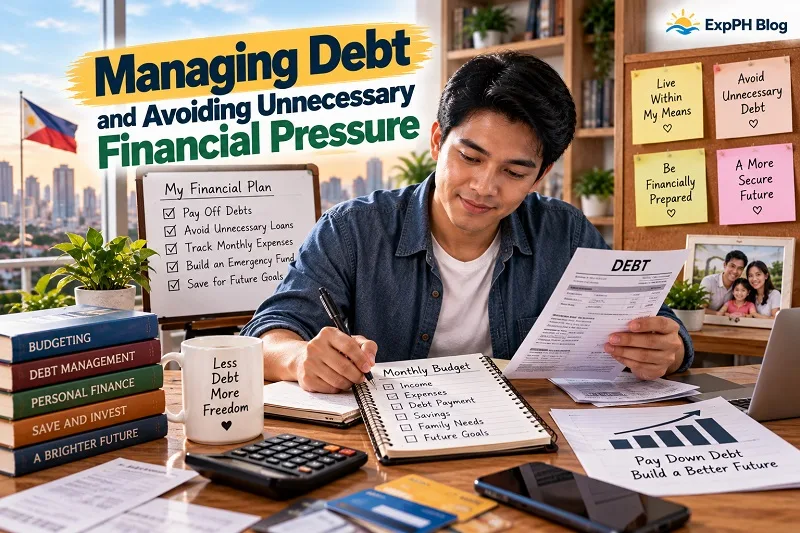
Managing Debt and Avoiding Unnecessary Financial Pressure
Managing debt responsibly helps Filipinos and OFWs maintain financial stability and avoid unnecessary pressure. By tracking outstanding balances, choosing a suitable repayment strategy, making payments on time, and borrowing carefully, you can protect your budget and keep your financial goals within reach.
Know what you owe
Make a list of your debts, including outstanding balances, interest rates, payment dates, minimum payments, and any applicable fees. Include formal loans, credit cards, installment purchases, and money borrowed from people you know.
Having the details in one place makes it easier to understand your total obligations and decide what to address first.
If you are struggling to make payments, contact the lender through its official channels to ask about available options. Do not ignore overdue notices or assume that a payment problem will resolve itself.
Choose a debt repayment strategy
Two common approaches are the highest-interest method and the smallest-balance method.
With the highest-interest method, you make required payments on all debts and direct extra money toward the debt with the highest interest rate. This may reduce the total interest you pay, depending on the terms.
With the smallest-balance method, you focus additional payments on the debt with the lowest balance while maintaining required payments on the others. Paying off a smaller debt may provide motivation to continue.
Choose the approach that suits your circumstances, and review fees or early repayment conditions before making additional payments.
Be careful with borrowing for lifestyle spending
It can be tempting to borrow money for a new phone, expensive celebration, or purchase that appears affordable through small installments. However, several installment payments can accumulate and leave little room for emergencies.
Before borrowing, calculate the full repayment amount, interest, fees, payment schedule, and effect on your monthly budget. Ask yourself whether the purchase is essential and whether you could wait until you have saved enough.
For OFWs, be cautious about borrowing to meet social expectations or to maintain a lifestyle that does not match your actual income. Protecting your financial stability is more important than appearing successful to other people.
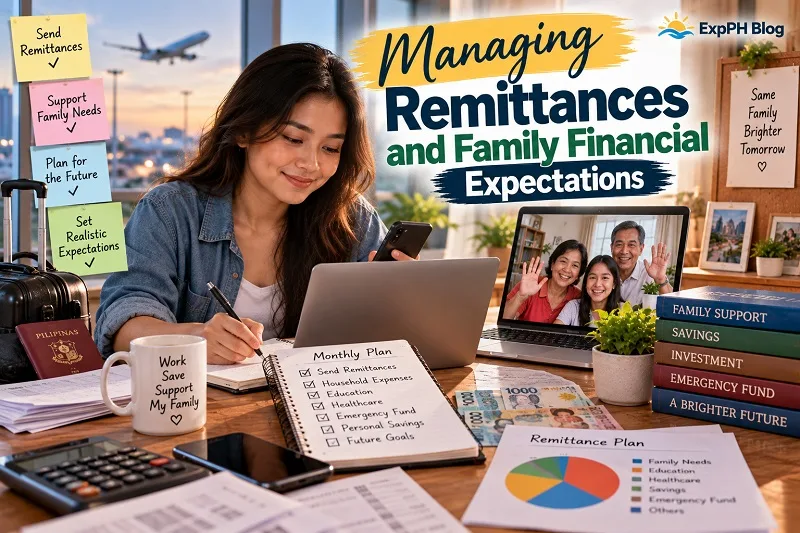
Managing Remittances and Family Financial Expectations
Managing remittances effectively helps OFWs support their families while protecting their own financial well-being. By planning household expenses, sharing financial responsibilities, and setting respectful boundaries, families can avoid misunderstandings and build a sustainable approach to money that supports both immediate needs and long-term goals.
Create a clear remittance plan
Discuss the household’s regular expenses with the family members who manage money at home. Identify how much is needed for food, housing, utilities, school costs, transportation, healthcare, and debt payments.
Agree on a practical amount and schedule for remittances. If your income changes, communicate early rather than promising an amount you may not be able to provide.
A clear plan also helps family members distinguish essential needs from optional purchases. It can reduce misunderstandings about where the money goes and why certain requests may need to wait.
Encourage shared responsibility
Financial planning should not fall entirely on the OFW. Family members at home can help by tracking expenses, comparing prices, avoiding unnecessary borrowing, and discussing major purchases before committing to them.
If several adults contribute to the household, discuss how each person can help according to their circumstances. Contributions do not always need to be financial. Managing bills, preparing meals, caring for children, and maintaining a household budget also require time and effort.
Shared responsibility helps families work toward common goals rather than treating remittances as an unlimited source of money.
Set respectful financial boundaries
You can care deeply about your family while still recognizing your own needs. OFWs also need money for food, accommodation, transportation, healthcare, savings, and future plans in their host country or after returning home.
If a request is beyond your budget, explain what you can afford and when you may be able to help. Be kind but clear, and avoid making commitments that require taking on harmful debt.
Family discussions may be uncomfortable at first, especially when relatives have different expectations. Consistent communication and a transparent budget can help everyone understand the limits and responsibilities involved.

Making Better Spending Decisions
Making thoughtful spending choices helps Filipinos and OFWs manage their income without losing sight of important financial goals. By distinguishing needs from wants, delaying unnecessary purchases, and comparing product value, you can avoid impulse spending and direct more money toward essential expenses and future priorities.
Separate needs from wants
Needs are expenses required for basic living and important responsibilities. Wants are purchases that may improve comfort or enjoyment but can usually be delayed.
The distinction depends on the situation. A phone may be essential for an OFW who needs it for work and communication, while an expensive upgrade may be optional if the current device works well.
Before making a purchase, consider whether it solves a real problem, fits your budget, and supports your priorities. If it does not, waiting may be the wiser choice.
Use a waiting period for nonessential purchases
When you want to buy something expensive, wait a day or longer before deciding. Use that time to compare prices, read product details, and consider whether the purchase would delay an important goal.
For online shopping, avoid making decisions based only on countdown timers, limited-time promotions, or pressure from social media. A discount does not save money if you buy something you do not need.
Keep a list of planned purchases and revisit it when you have checked your budget. This helps you distinguish a considered decision from an impulse.
Compare value, not just price
The cheapest option is not always the most economical over time. Consider quality, durability, maintenance, delivery costs, warranties, and whether the item meets your needs.
At the same time, do not assume a higher price guarantees better value. Read reliable reviews, compare specifications, and check seller information before buying.
For OFW households, discuss major purchases with the family members who will use or maintain them. Shared decisions can prevent duplicate purchases and help ensure that household spending supports the family’s actual priorities.

Investing in Skills and Career Development
Investing in skills and career development can strengthen your Life Goals and Money Habits by connecting learning to practical outcomes. Choosing relevant courses, building a consistent study routine, and applying new knowledge can help you prepare for career advancement or explore additional income opportunities.
Identify skills that fit your goals
Start by asking what you want to achieve. You may want to qualify for a promotion, change industries, improve your digital skills, learn bookkeeping, develop communication abilities, or prepare to operate a small business after returning to the Philippines.
Research the skills required for your intended path. Review job descriptions, talk with people working in the field, and look for reputable training resources.
Do not enroll in a course simply because it promises quick success. Check the curriculum, instructor background, reviews, course requirements, and total cost. Free resources may be enough for some learning goals, while structured training may be useful for others.
Build a learning routine around your schedule
OFWs may have demanding shifts, changing schedules, and limited free time. Choose a learning routine that fits your actual responsibilities instead of one that leaves you exhausted.
You might study for a short period several times a week, complete one lesson on a day off, or practice a skill during a manageable part of your routine.
Apply what you learn through small projects or practical exercises. For example, a bookkeeping learner could create a sample household budget, while someone learning digital marketing could practice writing a content plan.
The purpose of learning is not simply to collect certificates. It is to develop useful knowledge and skills that connect to your goals.
Explore Online Courses That Support Your Life Goals
If you want structured lessons to help develop practical skills, explore Udemy online courses. You can look for courses related to budgeting, productivity, digital skills, communication, career development, or entrepreneurship, depending on your needs.
Before enrolling, review the course outline, instructor information, learner feedback, access terms, and price. Choose a course that fits your schedule and has a clear connection to a goal you are actively pursuing. Completing a suitable course and practicing the skills may be more useful than buying several courses you never finish.
Connect learning to a practical outcome
Give each learning activity a purpose. If you are studying a digital skill, identify a small project that lets you practice it. If you are learning about business, research startup costs and customer needs before spending money.
Keep track of completed lessons, practice activities, and skills you can demonstrate. This can help you decide whether to continue, change direction, or seek more advanced training.
Remember that additional income is not guaranteed by taking a course. Results depend on many factors, including your experience, the market, available opportunities, and how effectively you apply what you learn.

Planning for a Small Business or Additional Income
Some Filipinos and OFWs want to build another source of income to support family goals or prepare for the future. A side business may be an option, but it should be planned carefully rather than treated as a guaranteed solution to financial pressure.
Start with a problem you can solve
Think about the needs of potential customers and the skills or resources you already have. Depending on your situation, possible ideas might include food products, tutoring, repair services, digital services, or a small retail operation.
Research the market before investing. Talk to potential customers, compare competitors, estimate costs, and check whether there is a realistic demand for what you plan to offer.
Avoid buying large quantities of inventory before you understand how much you can sell. A small test may help you learn about customer interest without placing too much of your savings at risk.
Separate business money from household money
If you start a business, keep clear records of sales, expenses, inventory, and money taken out for personal use. Separating business funds from household spending makes it easier to see whether the activity is actually sustainable.
Calculate the cost of supplies, packaging, transport, platform fees, taxes where applicable, and other operating expenses. Revenue is not the same as profit, and money received from customers may need to cover future costs.
If you work overseas, check your employment contract and relevant local rules before operating a business or taking on additional work. Do not assume that every activity is permitted under your visa or employment arrangements.
Avoid risking money you cannot afford to lose
Do not use essential household funds or emergency savings for an untested business idea. Be cautious about opportunities that promise guaranteed returns, demand immediate payment, or pressure you to recruit others.
Take time to understand the risks and obligations before committing. If you need advice about legal, tax, or registration requirements, consult the appropriate official agency or a qualified professional.
A modest business that grows gradually may be more manageable than a large venture funded by debt. The goal is to make informed decisions that support your future rather than create additional financial pressure.

Building Healthy Daily Habits That Support Financial Goals
Building consistent daily routines can help you maintain financial discipline and stay focused on your Life Goals and Money Habits. Regularly reviewing your budget, planning how to use your income, and protecting your time and energy can make financial progress more manageable and sustainable.
Schedule a weekly money check
Choose a regular time to review your account balances, upcoming bills, recent spending, and savings progress. A brief review can help you catch problems early and make adjustments before the next payday.
If you share household finances with a partner or family member, consider reviewing the budget together. Keep the conversation focused on practical decisions rather than blame.
For OFWs, this review can also include upcoming remittance dates, transfer costs, exchange rates, and any changes in income or work arrangements.
Plan before payday
Before receiving your next salary, decide how the money will be allocated. List essential expenses, debt payments, savings contributions, family support, and personal spending.
Planning ahead can reduce the pressure to make many financial decisions at once. It also helps you recognize when a request or purchase would require sacrificing a more important priority.
If your income varies, base your essential budget on a conservative estimate rather than assuming every month will be equally profitable.
Protect your time and energy
Personal goals should not focus only on money. Rest, relationships, health, and time with loved ones also contribute to a fulfilling life.
A plan that requires constant overtime, inadequate sleep, or the complete removal of enjoyable activities may be difficult to sustain. Make room for realistic rest and meaningful connections while working toward financial goals.
OFWs may find it especially helpful to establish regular times to communicate with family and maintain friendships and routines in their host country. A sustainable lifestyle supports your ability to keep working toward long-term goals.
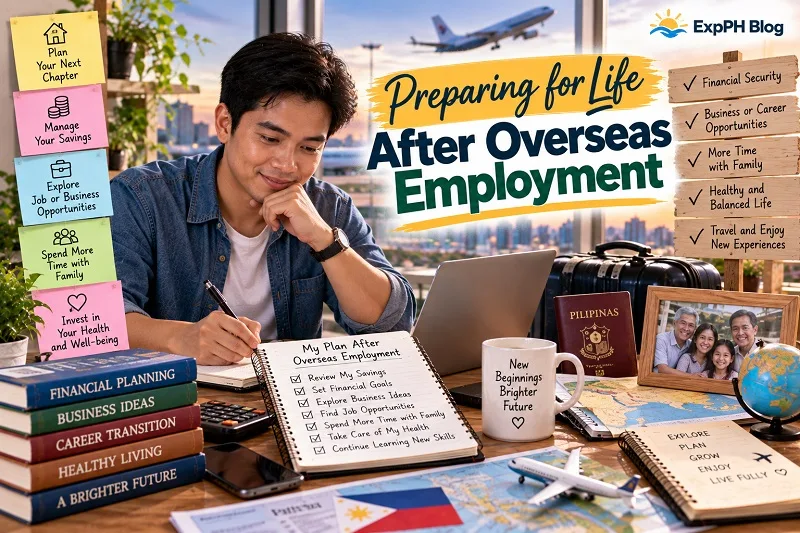
Preparing for Life After Overseas Employment
Preparing for life after overseas employment requires realistic financial planning and clear personal priorities. Estimating future living costs, building a transition fund, and exploring employment or business opportunities can help you manage changing responsibilities and create a more secure path for your return to the Philippines.
Estimate your future living costs
Before returning, estimate the cost of housing, food, utilities, transportation, healthcare, education, and other essential needs in the place where you plan to live.
Compare those costs with your expected income or available savings. If you plan to seek local employment, research realistic job opportunities and possible salary ranges. If you intend to start a business, prepare a separate budget and research demand before investing.
Do not base your plan entirely on an optimistic estimate. Consider delays, unexpected expenses, and the possibility that it may take time to find suitable work.
Prepare a transition fund
Keep money aside for travel, temporary accommodation if needed, essential purchases, job searching, and other costs associated with returning home.
This fund is different from savings intended for a business, a home purchase, or long-term investment. Separating the money can help you avoid spending resources needed for your immediate transition.
If possible, discuss the plan with your family before returning. Agree on expected contributions, living arrangements, and responsibilities so that everyone understands what may change.
Build a life plan beyond employment
Think about what you want your life to look like after overseas work. You may want to spend more time with family, pursue local employment, continue learning, care for relatives, or operate a modest business.
Write down your priorities and identify the steps required to reach them. These might include updating your résumé, developing local professional connections, researching training, or reviewing household expenses.
Returning home is not simply a financial event. It is a change in routine and identity that may require patience and adjustment. A realistic plan can help you approach the transition with greater confidence.

Protecting Your Money and Avoiding Financial Scams
Protecting your savings and personal information is an essential part of maintaining healthy Life Goals and Money Habits. By verifying payment requests, securing financial accounts, and checking unfamiliar offers carefully, you can reduce the risk of scams and make more informed financial decisions.
Verify before sending money
Be cautious when someone contacts you unexpectedly and asks for money, passwords, one-time PINs, or account information. Scammers may pretend to represent a bank, delivery company, government office, relative, or employer.
Verify requests through an independent, trusted contact method. Do not rely only on the phone number, link, or message provided by the person requesting payment.
For remittances, use legitimate services and check the recipient details, total fees, and amount that will arrive before confirming a transfer.
Use secure account practices
Use strong, unique passwords for financial accounts and enable additional security features where available. Never share one-time PINs or passwords with another person, even if they claim they need them to solve an account problem.
Avoid logging into financial accounts through links in unexpected messages. Open the official application or type the known website address yourself.
If you suspect unauthorized access or a fraudulent transaction, contact the financial provider promptly using its official contact information. Keep records of relevant messages and transaction details.
Check information before making financial decisions
Be skeptical of offers that promise guaranteed high returns, risk-free profits, or unusually fast wealth. Understand how a product works, what it costs, and how you could lose money before committing.
For major decisions involving investments, loans, insurance, or business arrangements, seek information from appropriate official sources and qualified professionals. Never invest money needed for essential expenses simply because an opportunity appears urgent.
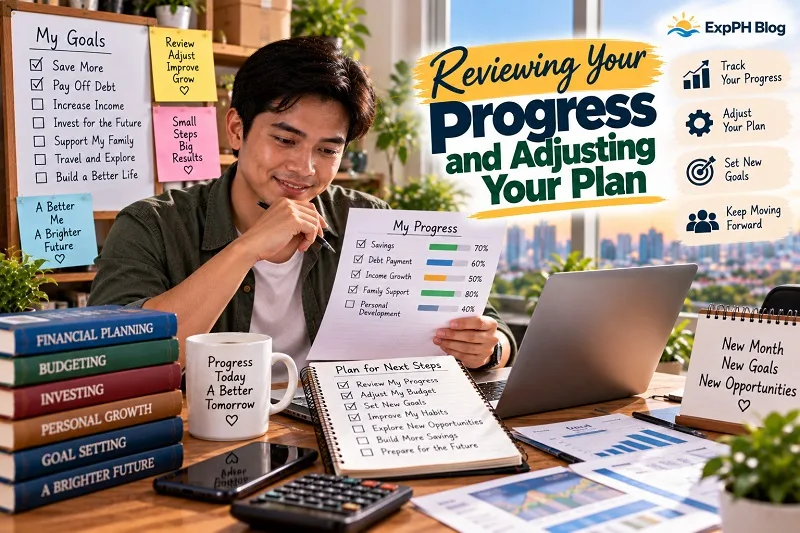
Reviewing Your Progress and Adjusting Your Plan
A financial plan should change when your circumstances change. A new job, a change in family responsibilities, a medical expense, or a shift in exchange rates may affect what you can reasonably achieve.
Review your goals every month
At the end of each month, ask yourself a few simple questions:
- Did I cover my essential expenses?
- Did I save the amount I planned?
- Did my debt balance change?
- Were there unexpected expenses?
- Do I need to adjust next month’s budget?
- Am I still working toward the goals that matter most?
Use your answers to make practical adjustments. If you consistently miss a savings target, the amount may be unrealistic, or another expense may need attention. If you regularly have money left over, you may be able to increase savings or accelerate debt repayment.
Recognize progress beyond money
Progress can include learning a useful skill, avoiding unnecessary borrowing, having a productive family budget discussion, or making a realistic plan for returning home.
These steps may not immediately change your bank balance, but they can improve your decisions and make future progress more manageable.
Avoid comparing your financial situation with social media posts or the achievements of relatives and friends. You may not know their debts, responsibilities, or personal circumstances.
Treat setbacks as information
If an emergency forces you to use savings, review what happened and rebuild the fund when possible. If your income decreases, prioritize essentials and contact lenders or service providers when you need to discuss payment options.
A setback does not erase the habits you have already developed. Use it to understand what needs to change, then continue with a plan that fits your new circumstances.

FAQs About Life Goals and Money Habits for Filipinos and OFWs
1. What are practical life goals for Filipinos and OFWs?
Practical goals include building emergency savings, reducing debt, funding education, improving career skills, preparing for retirement, and planning a secure return home after overseas employment.
2. How can OFWs manage their money more effectively?
OFWs can track income, budget expenses, plan remittances, save regularly, manage debt carefully, and review financial goals whenever their responsibilities or employment circumstances change.
3. How much should I save every month?
Save an affordable amount after essential expenses and required payments. Increase contributions gradually as income improves, debts decrease, or household spending becomes more manageable.
4. Why is an emergency fund important for OFWs?
An emergency fund helps cover unexpected expenses, employment interruptions, urgent travel, or family needs without relying immediately on expensive loans or borrowing from others.
5. How can Filipino families manage remittances wisely?
Families can agree on household priorities, track expenses, plan remittances together, discuss large purchases, and communicate openly about changing financial needs and limits.
6. What is the best way to start budgeting?
Record your income and expenses, identify essential costs, set realistic savings goals, plan debt payments, and review your budget regularly to make necessary adjustments.
7. How can I avoid unnecessary debt?
Compare borrowing costs, understand repayment terms, avoid impulse purchases, prioritize essential needs, and borrow only when repayment fits your realistic budget and financial circumstances.
8. Can learning new skills improve financial stability?
Learning useful skills may support career development or new opportunities. Results depend on experience, demand, practical application, and opportunities available in your chosen field.
9. How can OFWs prepare financially for returning home?
Estimate future living costs, build transition savings, research employment options, discuss family responsibilities, and avoid investing essential funds in untested business ideas.
10. How often should I review my financial goals?
Review your goals monthly and whenever income, expenses, employment, or family responsibilities change. Adjust targets realistically while maintaining progress toward your most important priorities.
Conclusion: Building a More Secure Future Through Life Goals and Money Habits
Building strong Life Goals and Money Habits takes consistency, realistic planning, and patience. You do not need to change everything overnight. A realistic budget, regular saving, thoughtful spending, responsible debt management, and clear family communication can help you build a stronger foundation for the future.
For OFWs, financial planning also means balancing support for loved ones with personal needs and preparing for life beyond overseas employment. Family members can contribute by tracking expenses, setting shared goals, and discussing financial expectations openly.
Remember that progress looks different for every household. Focus on what you can control, review your decisions regularly, and adjust your plan when life changes. Small habits, repeated consistently, can help you move toward greater stability and a more fulfilling life.
Start with one practical step today. Set a clear goal, review your spending, or begin saving an amount you can maintain. Over time, these Life Goals and Money Habits can help you create a future that better reflects your values, responsibilities, and hopes for your family.
Continue Building Better Money Habits
Building financial stability takes consistency and discipline. To strengthen the habits you have learned, read our guide on Discipline-Building Habits That Improve Financial Stability. Discover practical ways to develop self-discipline, manage your spending, and stay committed to your financial goals.
- Best Life Goals Filipinos Should Set for 2026
- Best Life Goals for Filipinos and OFWs to Set in 2026
- How to Create a Budget Plan for Today and the Years Ahead
- How to Budget Wisely in 2026: A Complete Guide to Financial Success
Test your knowledge of budgeting, saving, debt management, remittances, smart spending, career growth, and financial security.
Results


#1. What should you do first when setting financial goals?
#2. What is the main purpose of a budget?
#3. What can an emergency fund help cover?
#4. Which debt repayment method targets the highest interest first?
#5. What should families discuss before sending remittances?
#6. What is a smart response to an impulse purchase?
#7. How should you choose an online course?
#8. What can help prepare you for returning home?
#9. What should you do with a suspicious financial request?
#10. When should you review your financial plan?
We appreciate you spending time learning about practical life goals and money habits
We look forward to hearing about your experiences and progress. Your story could encourage someone else to take the first step toward a healthier financial future!

A Filipino web developer with a background in Computer Engineering. Founder of ExpPH Blog and ExpPH Business Guide, creating practical content on OFW guidance, business, finance, freelancing, travel, and lifestyle. Passionate about helping Filipinos grow, he shares insights that educate, empower, and inspire readers nationwide.



Pingback: Best Life Goals for Filipinos and OFWs to Set in 2026 Guide!
Pingback: Best Life Goals for Filipinos 2026 Practical Planning Guide.
Pingback: 12 Powerful Financial Discipline Habits for True Stability.
Pingback: 10 Smart Ways on How to Create a Budget Plan Today and Beyond
Pingback: How to Budget Wisely in 2026: 15 Practical Financial Guide Tips