
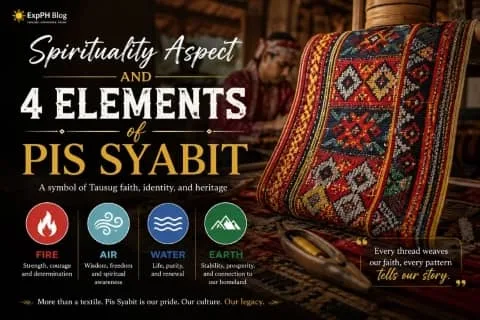
Spirituality Aspect and 4 Elements of Pis Syabit
Pis Syabit is one of the most treasured cultural symbols of the Tausug people of Sulu. Renowned for its vibrant colors, intricate geometric patterns, and exceptional craftsmanship, this traditional handwoven textile represents far more than artistic beauty. Pis Syabit embodies the spirituality, cultural identity, and enduring heritage of the Tausug community. Through generations, it has remained a powerful expression of faith, honor, and tradition.
The Spiritual Aspect of Pis Syabit
The spiritual significance of Pis Syabit is deeply rooted in the Islamic faith and cultural values of the Tausug people. More than a decorative cloth, it serves as a symbol of dignity, respect, and connection to ancestral heritage.
Connection to Islamic Faith
The Tausug people are predominantly Muslim, and many of the patterns woven into Pis Syabit reflect Islamic artistic traditions. Rather than depicting human or animal figures, the textile features geometric motifs, stars, and symmetrical forms that express order, balance, and beauty.
At a deeper level, these interconnected patterns can be associated with the Islamic concept of Tawhid, the belief in the oneness and unity of God. Through repeated shapes and harmonious designs, the cloth reflects the idea that all creation is connected under a single divine order.
Symbol of Identity and Respect
Traditionally, Pis Syabit was worn primarily by Tausug men as a headcloth or draped over the shoulder. It often signified honor, social standing, and cultural pride. Today, it is also worn by women and younger generations during cultural celebrations and special occasions.
Wearing Pis Syabit can symbolize:
- Respect for Tausug traditions
- Pride in ancestry and heritage
- Spiritual connection to faith and community
- Honor and dignity
Because of its cultural significance, Pis Syabit remains an important symbol during weddings, festivals, religious gatherings, and community events.
Spiritual Meaning of Weaving
Traditional weaving is more than a craft. It is a cultural inheritance passed from one generation to the next. The process requires patience, discipline, concentration, and creativity.
For many weavers, creating Pis Syabit is a way of preserving ancestral knowledge and honoring the traditions of their community. Each completed textile reflects not only technical skill but also dedication to cultural continuity.
Cultural Preservation and National Recognition
The importance of Pis Syabit extends beyond Sulu. The tradition has gained national recognition through the work of master weavers such as Darhata Sawabi, a recipient of the Gawad sa Manlilikha ng Bayan (GAMABA), the Philippines’ highest honor for traditional folk artists.
Through the efforts of cultural institutions and local communities, the art of Pis Syabit weaving continues to be preserved for future generations, ensuring that this remarkable tradition remains a living part of Philippine heritage.
The Four Elements of Pis Syabit
In traditional interpretations of Pis Syabit design, the four identical inner corner squares are often associated with the four classical elements of nature. These elements symbolize balance, harmony, and the interconnectedness of life.
1. Fire
- Fire symbolizes strength, courage, energy, and determination. It reflects the bravery and resilience that have long been valued within Tausug culture.
2. Air
- Air represents wisdom, freedom, communication, and spiritual awareness. It symbolizes the movement of ideas and the connection between individuals and their community.
3. Water
- Water symbolizes life, purity, adaptability, and renewal. As a people with strong ties to the sea, the Tausug community has long recognized the importance of water in sustaining life and livelihood.
4. Earth
- Earth represents stability, prosperity, endurance, and connection to one’s homeland. It reflects the deep roots of the Tausug people and their enduring cultural traditions.
Together, these four elements create a symbolic representation of balance and harmony, reinforcing the spiritual themes found throughout Pis Syabit.
Key Features of Pis Syabit
Beyond its symbolic meanings, Pis Syabit is distinguished by several important characteristics.
Vibrant Colors
Pis Syabit is known for its striking color combinations. Red and black are particularly significant because they form the traditional warp threads that provide the textile’s structural foundation.
Common color meanings include:
- Red for courage and strength
- Green for peace and Islamic identity
- Yellow or gold for honor and prestige
- Black for dignity and resilience
Geometric Patterns
The intricate geometric motifs of Pis Syabit showcase the remarkable skill of Tausug weavers. The patterns often cover the entire surface of the cloth, creating a visually rich design that reflects precision, discipline, and artistic excellence.
Traditional Weaving Technique
Pis Syabit is handwoven using techniques that require years of practice to master. The complexity of the weaving process demonstrates the dedication and craftsmanship passed down through generations.
Cultural Significance
More than a textile, Pis Syabit serves as a symbol of Tausug identity, heritage, spirituality, and community pride. It continues to play an important role in ceremonies, celebrations, and cultural preservation efforts.
Conclusion
Pis Syabit is far more than a traditional woven cloth. It is a living expression of Tausug spirituality, identity, and artistic excellence. Through its connection to Islamic values, its symbolic four elements, its intricate patterns, and its masterful weaving techniques, Pis Syabit continues to preserve and celebrate the rich cultural heritage of Sulu.
Learn More About Pis Syabit Making
Interested in how this remarkable textile is created? Read our guide, Learning the Art of Tausug Pis Syabit Making, and discover the traditional weaving techniques, craftsmanship, and cultural knowledge behind one of the most treasured symbols of Tausug heritage.

A Filipino web developer with a background in Computer Engineering. Founder of ExpPH Blog and ExpPH Business Guide, creating practical content on OFW guidance, business, finance, freelancing, travel, and lifestyle. Passionate about helping Filipinos grow, he shares insights that educate, empower, and inspire readers nationwide.