
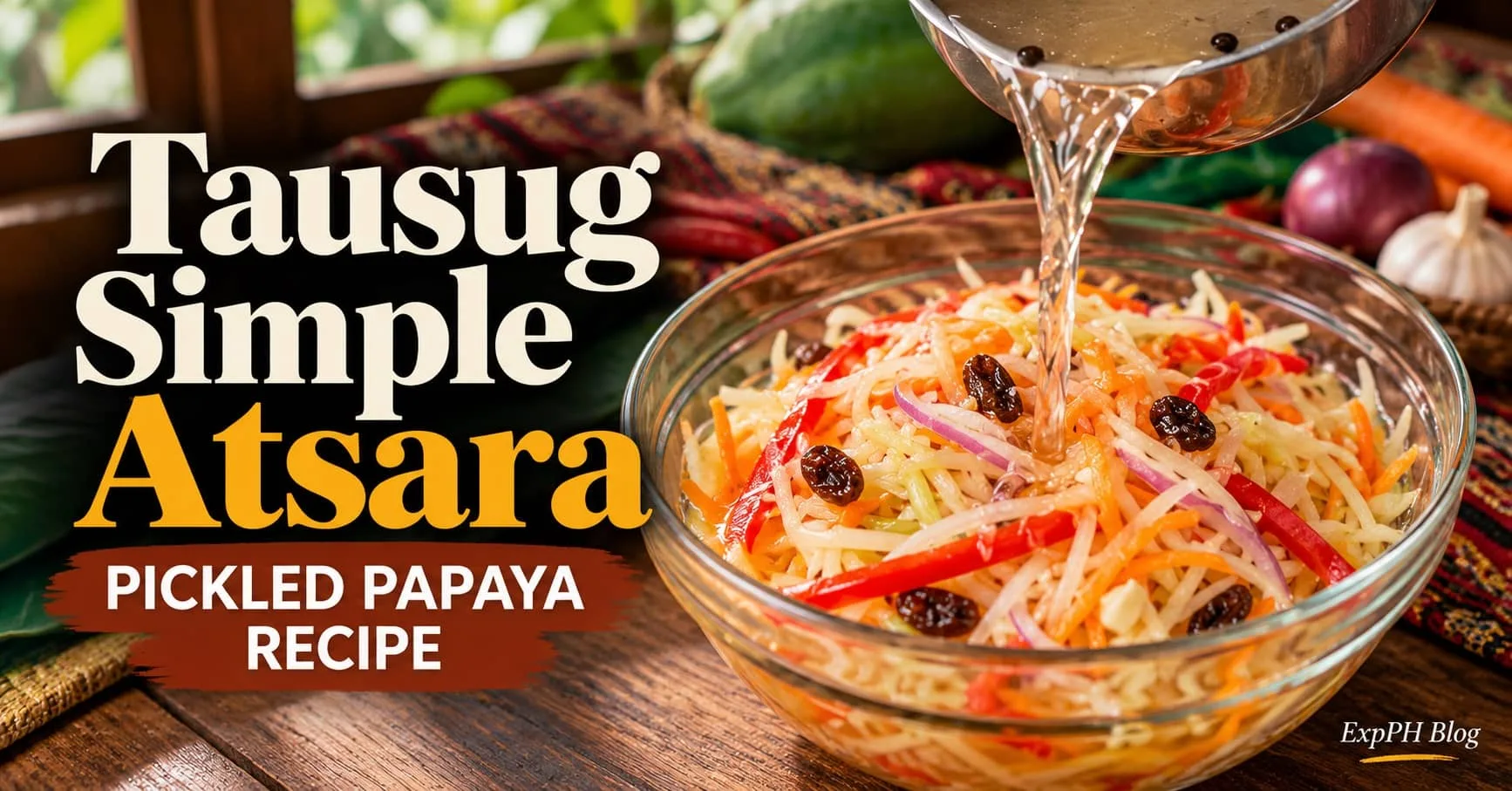
Tausug Simple Atsara (Pickled Papaya) Recipe
Atsara is a classic Filipino side dish known for its tangy, lightly sweet and mildly spicy flavor. In Tausug cuisine it is often served with fried or grilled dishes to balance rich savory meals. The crisp texture of green papaya brings freshness to the plate and cuts through oily or heavily seasoned food. Its bright taste adds contrast and makes simple rice meals more satisfying and enjoyable for everyday dining.
For the Tausug people of Mindanao, papaya is valued not only for its taste but also for its natural sweetness, firm texture and health benefits. This simple Tausug atsara recipe is easy to prepare and uses minimal ingredients that are widely available. It is practical for busy families and even for OFWs who want a quick taste of home. As a side dish it adds flavor, nutrition and cultural meaning to everyday meals.
Beyond its refreshing taste, atsara reflects the simplicity and resourcefulness of traditional Filipino home cooking. Using locally available ingredients and straightforward preparation methods, this pickled papaya dish complements the rich culinary heritage of Sulu. Whether served at family gatherings or everyday meals, it offers a delicious way to appreciate Tausug-inspired flavors and keep culinary traditions alive.
Discover more authentic Tausug dishes, traditional recipes, and Sulu delicacies in our guide to Traditional Tausug Food: A Complete Guide to Sulu Cuisine and Cultural Delicacies.
Quick Summary (TL;DR)
- What it is: Tausug simple atsara is a tangy, crunchy pickled green papaya side dish that complements savory Filipino meals.
- Main ingredients: Green papaya, garlic, red chilies, salt, vinegar, and water.
- Preparation time: Approximately 15–20 minutes, plus at least 1 hour of chilling.
- How to make it: Grate and salt the papaya, squeeze out excess moisture, mix with garlic and chilies, then pour over a boiled vinegar-and-water mixture. Cool and refrigerate before serving.
- Best served with: Fried fish, grilled chicken, pork barbecue, and steamed rice.
- Storage: Keep refrigerated in a clean, covered container and consume within 5–7 days as a conservative guideline for this quick-pickle recipe.
- Why try it: This simple side dish adds refreshing acidity and crunch to everyday meals while offering a taste of Tausug-inspired home cooking.
Table of Contents
A Brief History of Atsara in Tausug Cuisine
Atsara traces its roots to traditional Filipino preservation methods influenced during the Spanish colonial period. Over time, local communities adapted pickling techniques using available ingredients. In Mindanao, the Tausug incorporated green papaya, native chilies, garlic, and vinegar to create their own version.
In Tausug households, atsara reflects balance in flavor. Tangy, crisp, and slightly spicy elements complement grilled fish, fried meats, and rice based meals. Preparing atsara is often a shared household activity, strengthening family bonds while preserving culinary traditions.
Tausug cuisine is deeply rooted in the cultural heritage of the Bangsamoro region. For more information about the region and its cultural background, visit the official website of the Bangsamoro Autonomous Region in Muslim Mindanao at https://bangsamoro.gov.ph/.
For Tausug OFWs living overseas, making atsara is a meaningful way to keep family traditions alive and share Mindanao flavors with friends and coworkers.
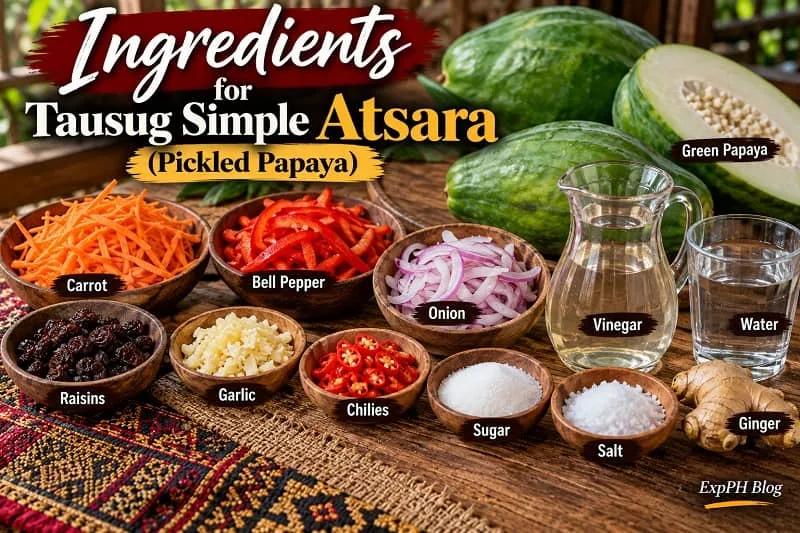
Ingredients for Tausug Simple Atsara (Pickled Papaya)
Prepare fresh and simple ingredients to achieve the crisp texture and balanced flavor of Tausug atsara. These items are affordable and easy to find in local markets or Asian stores abroad, making the recipe practical for families and OFWs who want a quick homemade side dish.
- 2 cups grated green papaya
- 2 to 3 cloves garlic, minced
- 1 to 2 red chilies, sliced
- 1 teaspoon salt
- ½ cup vinegar, white or cane
- ½ cup water
Optional Additions
You may enhance color, texture, and flavor by adding extra vegetables. These ingredients are optional but help create a more vibrant and visually appealing dish while maintaining the traditional Tausug taste and crisp texture.
- Grated carrots
- Thinly sliced bell peppers
For a slightly sweeter version, add 1 to 2 tablespoons of sugar to the vinegar mixture before pouring it over the papaya.
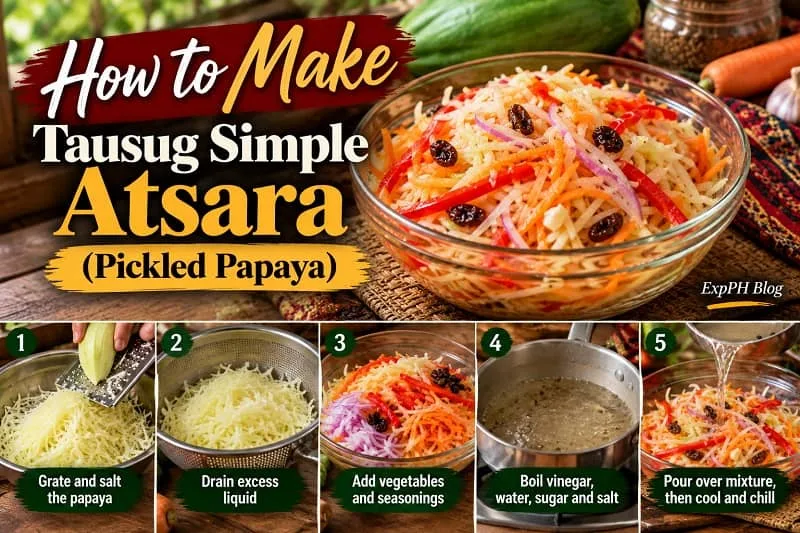
How to Make Tausug Simple Atsara (Pickled Papaya)
Making Tausug simple atsara is easy with fresh green papaya, garlic, chilies, vinegar, and a few basic ingredients. The process involves preparing the papaya, mixing the seasonings, and adding the pickling liquid. Follow these simple steps to create a crisp and tangy side dish that pairs well with traditional Tausug meals.
1. Prepare the Papaya
Peel the green papaya and grate it into thin strips. Place the grated papaya in a bowl and sprinkle with salt. Let it rest for 10 to 15 minutes to remove excess moisture. Squeeze out the liquid before mixing to keep the texture crisp. Green papaya contains digestive enzymes and antioxidants, making this side dish both refreshing and nutritious.
2. Add Garlic and Chilies
Combine the drained papaya with minced garlic and sliced red chilies. Mix thoroughly to distribute the flavors evenly. Garlic adds aroma and depth while chilies provide mild heat. Adjust the amount of chilies depending on your spice preference and desired flavor balance.
3. Prepare the Pickling Liquid
In a small saucepan, combine vinegar and water. Bring the mixture to a gentle boil then remove from heat. This pickling liquid serves as the preserving base and enhances the natural flavor of the papaya while maintaining its crisp texture.
4. Combine and Marinate
Carefully pour the hot vinegar mixture over the papaya mixture. Stir well to ensure all ingredients are evenly coated. Allow it to cool to room temperature before refrigerating. Use a heat resistant glass or ceramic bowl to prevent any reaction with the vinegar.
5. Chill and Serve
Refrigerate the atsara for at least one hour before serving to allow the flavors to develop fully. Atsara tastes best when properly chilled and lightly marinated.
Serve with:
- Fried fish
- Grilled meats
- Pork barbecue
- Rice meals
Its crisp texture and tangy flavor balance rich dishes and add freshness to every bite.

Health Benefits of Tausug Atsara
Tausug atsara is more than a flavorful side dish. It offers nutritional benefits that support overall wellness while keeping meals light and balanced. Made from fresh ingredients, it provides natural nutrients that complement protein rich dishes and simple rice meals.
- Rich in fiber which supports healthy digestion
- Low in calories suitable for balanced diets
- Immune supporting compounds from garlic and chilies
- Vitamins A C and E from green papaya
- Natural antioxidants that promote overall wellness
Including atsara in daily meals adds refreshing flavor and meaningful nutritional value.

Serving Suggestions for Tausug Simple Atsara
Tausug atsara pairs well with many Filipino dishes because its crisp texture and tangy flavor balance rich and savory meals. It adds freshness to heavy dishes and enhances simple home cooked food, making everyday meals more satisfying and enjoyable for families and OFWs.
Tausug atsara pairs well with:
- Fried bangus or tilapia
- Grilled chicken or pork
- Crispy pork belly
- Garlic rice or steamed rice
- Local style sandwiches as a tangy filling
Its refreshing crunch enhances simple meals and brings balance to every bite.
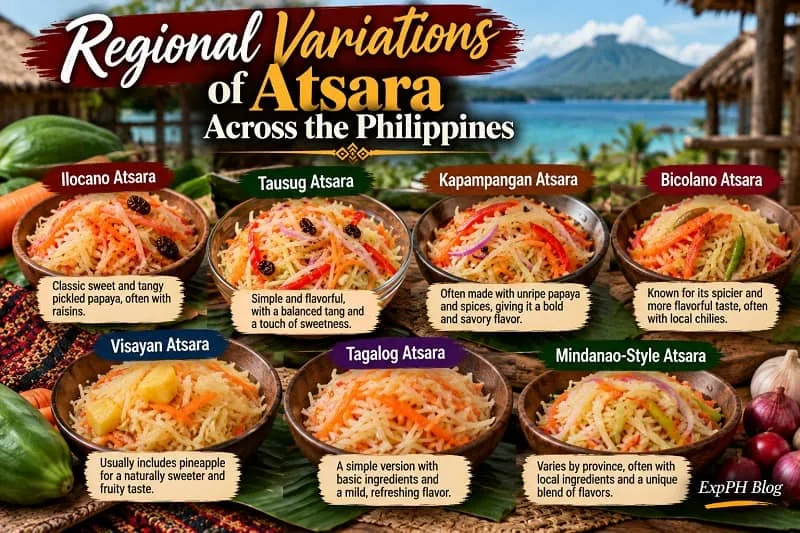
Regional Variations of Atsara Across the Philippines
Atsara is prepared differently across the Philippines, reflecting local ingredients and taste preferences. While the base remains green papaya and vinegar, each region adds distinct elements that shape flavor and texture. These variations highlight the diversity of Filipino culinary traditions.
Different regions prepare atsara in unique ways:
- Ilocano style includes carrots ginger and sometimes pineapple
- Tagalog style may add raisins and bell peppers
- Visayan versions balance vinegar and sugar for a sweeter profile
The Tausug version stands out for its simplicity and clean balanced flavor.
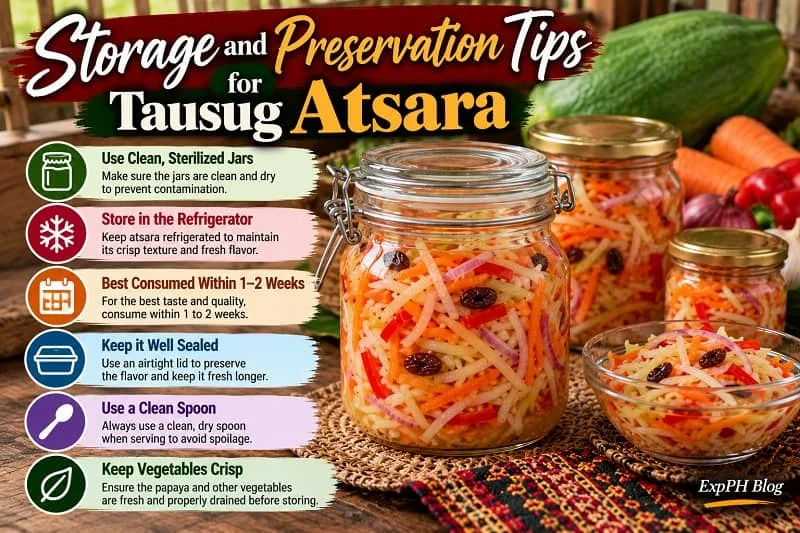
Storage and Preservation Tips for Tausug Atsara
Proper storage keeps Tausug atsara safe to eat and preserves its crisp texture. Clean containers and correct refrigeration help maintain freshness and prevent spoilage. Following simple handling steps ensures the flavor remains balanced while extending shelf life for several days.
To store properly:
- Store in a sterilized glass jar
- Keep refrigerated at all times
- Consume within 5 to 7 days
- Ensure papaya is properly drained to maintain crunch
Freshness and careful storage protect both quality and safety.
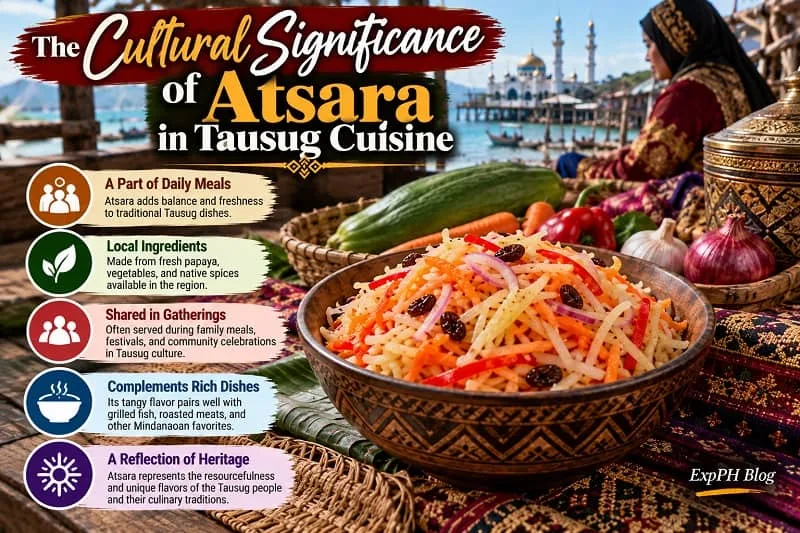
The Cultural Significance of Atsara in Tausug Cuisine
In Tausug homes, atsara is commonly served during family gatherings, celebrations, and everyday meals. Its refreshing taste and crisp texture reflect the community’s appreciation for fresh ingredients and balanced flavors, complementing traditional dishes and bringing variety to the dining table.
Preparing atsara at home also helps preserve culinary traditions passed down through generations. For Tausug families, including OFWs living abroad, making this simple side dish offers a meaningful way to stay connected to their cultural roots while sharing the flavors of Sulu with family and friends.
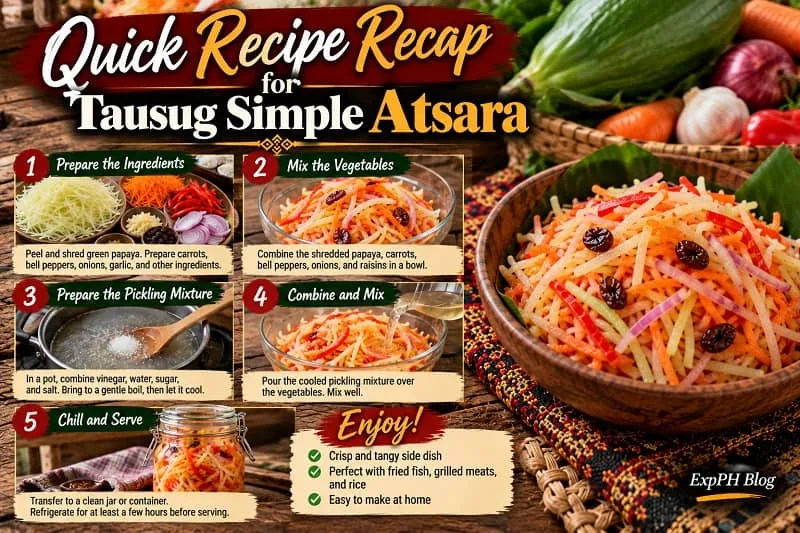
Quick Recipe Recap for Tausug Simple Atsara
This quick recap summarizes the essential steps for preparing Tausug atsara. The process is simple and practical, making it easy for families and OFWs to prepare a refreshing side dish at home. Follow each step carefully to achieve the best texture and balanced flavor.
- Grate green papaya and salt it
- Drain excess liquid
- Mix with garlic and chilies
- Boil vinegar and water
- Pour over mixture then cool chill and serve
Simple ingredients and strong flavor define this culturally rich Tausug side dish.
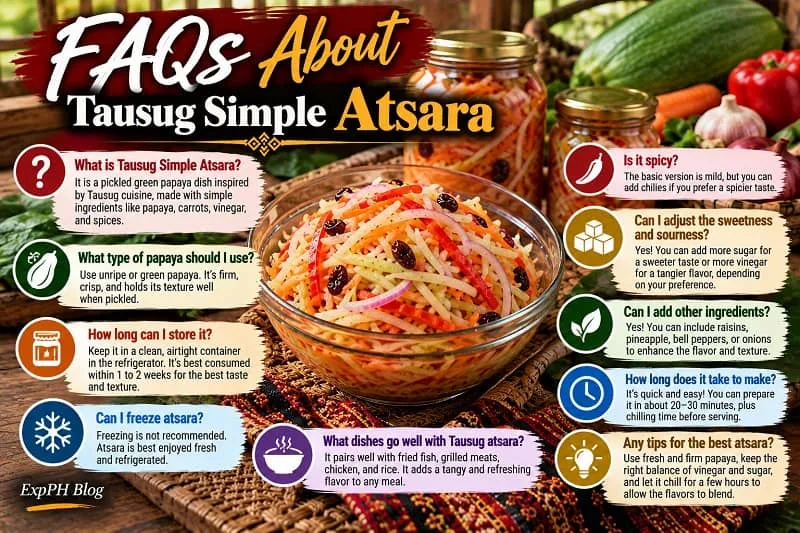
FAQs About Tausug Simple Atsara
What makes Tausug atsara different from other Filipino atsara versions?
Tausug atsara is simpler and less sweet than other versions. It highlights crisp green papaya, vinegar, garlic, and chilies, focusing on clean, balanced, and refreshing flavors.
Can I use ripe papaya instead of green papaya?
Ripe papaya is not recommended because it is soft and sweet. Green papaya provides the firm texture and mild flavor needed for proper pickling.
How long should I salt the grated papaya?
Salt the grated papaya for about 10 to 15 minutes. This process removes excess moisture and helps maintain the crunchy texture after pickling.
Can I adjust the level of spiciness?
Yes, you can easily adjust the spice level. Add more chilies for extra heat or reduce them if you prefer a milder flavor.
Is sugar necessary in Tausug atsara?
Sugar is optional and depends on preference. Traditional Tausug atsara is less sweet, but adding small amounts creates a balanced sweet and tangy flavor.
How long does Tausug atsara last in the refrigerator?
When stored in a clean, airtight container and properly refrigerated, Tausug atsara can last up to one week while maintaining freshness and crunch.
Can I prepare atsara in advance for gatherings?
Yes, atsara can be prepared one day ahead. Allowing it to marinate overnight enhances flavor and improves the overall taste and texture.
What dishes pair best with Tausug atsara?
Tausug atsara pairs well with fried fish, grilled meats, barbecue, roasted dishes, and simple rice meals that benefit from a refreshing contrast.
Is Tausug atsara healthy?
Yes, it contains fiber, vitamins, and antioxidants from green papaya, garlic, and chilies, making it a nutritious and low calorie side dish.
Can OFWs easily prepare this recipe abroad?
Yes, most ingredients are available in Asian markets abroad, making this recipe practical and accessible for OFWs wanting traditional Filipino flavors.
Final Thoughts on Tausug Simple Atsara (Pickled Papaya)
Tausug Simple Atsara is more than a side dish. It reflects the rich culinary identity of Mindanao and the Tausug appreciation for balance in flavor and texture. Its crisp bite and bright acidity bring contrast to savory meals and enhance even the simplest rice dishes. This humble preparation shows how basic ingredients can create something refreshing and culturally significant that continues to be enjoyed across generations.
Preparing this dish at home is a meaningful way to connect with Tausug heritage and preserve tradition. Whether you are cooking for family or sharing a meal with friends abroad, atsara carries memories of home and community. For OFWs it can serve as a comforting reminder of Filipino roots while building new experiences in another country.
Explore the Authentic Flavors of Sulu
Discover more traditional dishes, signature flavors, and culinary heritage of the Tausug people in our guide to Flavors of Sulu: The Ultimate Guide to Authentic Tausug Cuisine.
Explore more traditional Filipino dishes and regional specialties:
- Pyanggang Manok Authentic Tausug Blackened Chicken
- Tiyula Itum is Mindanao’s Fascinating Tausug Black Soup
- Siyagul A Classic Tausug Seafood Delicacy
Learning Hub Quiz!
Test your knowledge of Tausug Simple Atsara (Pickled Papaya), including its ingredients, preparation, storage, and serving suggestions. Discover how this refreshing side dish reflects the culinary traditions of Sulu and Mindanao.
Results


#1. What main ingredient is used in Tausug atsara?
#2. What ingredient helps preserve the papaya?
#3. Why is salt added to grated papaya?
#4. What gives atsara its mild heat?
#5. How long should papaya sit with salt?
#6. Where is Tausug cuisine primarily rooted?
#7. How long can atsara last refrigerated?
#8. What texture defines good atsara?
#9. What optional ingredient adds color?
#10. What makes atsara OFW-friendly?
We appreciate you spending time learning about Tausug cuisine
Your support helps preserve and promote Filipino food traditions, especially for OFWs around the world. If you tried this recipe, we would love to hear from you. Share your experience in the comments and tell us how your atsara turned out.

A Filipino web developer with a background in Computer Engineering. Founder of ExpPH Blog and ExpPH Business Guide, creating practical content on OFW guidance, business, finance, freelancing, travel, and lifestyle. Passionate about helping Filipinos grow, he shares insights that educate, empower, and inspire readers nationwide.