

A Filipino and OFW Guide to Mental Wellness, Stress Relief and Self-Care
Life can become overwhelming when you are balancing work, family responsibilities, financial pressure, and personal expectations. For Filipinos and Overseas Filipino Workers (OFWs), these challenges may feel even heavier when work takes them away from home, keeps them on demanding schedules, or leaves little time to rest.
Many Filipinos are used to putting their families first. Parents work hard to provide for their children, OFWs send money home to support loved ones, and employees often push through exhaustion to meet their responsibilities. While these sacrifices can come from love and commitment, constantly ignoring your own needs can make it harder to maintain your health, relationships, and quality of life.
Mental wellness does not mean feeling happy every day or never experiencing stress. It means learning to recognize your emotions, respond to challenges in healthier ways, build supportive relationships, and seek help when you need it. Self-care is not selfish, and asking for support does not make you weak.
This guide explores practical ways to improve mental wellness, manage everyday stress, and build a self-care routine that fits the realities of Filipino life, whether you live in the Philippines or work overseas.
Mental wellness, stress relief, and self-care are essential parts of a healthier and more balanced lifestyle. For more practical guidance on healthy routines, personal growth, family relationships, financial well-being, and everyday life, explore our master guide, The Complete Lifestyle Guide for Filipinos and OFWs.
Quick Summary (TL;DR)
Mental wellness is an important part of living a healthy and balanced life. For Filipinos and OFWs, work demands, financial responsibilities, family expectations, and homesickness can contribute to stress. By building healthy routines, practicing stress relief, maintaining supportive relationships, and seeking help when needed, you can protect your well-being while managing everyday responsibilities.
- Understand Mental Wellness: Recognize how your emotions, thoughts, physical health, and daily experiences affect your overall well-being.
- Recognize Stress Early: Pay attention to changes in your mood, sleep, energy, concentration, and relationships so you can respond before stress becomes overwhelming.
- Practice Simple Stress Relief: Use comfortable breathing exercises, grounding techniques, short breaks, and enjoyable activities to manage everyday pressure.
- Build Healthy Self-Care Habits: Make time for adequate rest, balanced meals, physical activity, relaxation, and activities that help you recharge.
- Manage Family and Financial Pressure: Set realistic expectations, communicate openly about money, and establish healthy boundaries without feeling guilty.
- Stay Connected With Loved Ones: Maintain supportive relationships with family, friends, coworkers, and trusted community members, especially when living or working overseas.
- Create a Flexible Daily Routine: Choose realistic habits that fit your work schedule, personal responsibilities, health needs, and available resources.
- Know When to Seek Help: Consider professional mental health support when emotional difficulties persist, worsen, or interfere with daily activities.
Key takeaway: Mental wellness starts with small, consistent steps that support your emotional and physical well-being. Filipinos and OFWs do not have to manage every challenge alone. By practicing self-care, setting healthy boundaries, staying connected, and seeking support when necessary, you can build a more balanced and sustainable life.

Understanding Mental Wellness for Filipinos and OFWs
Mental wellness helps Filipinos and OFWs manage stress, understand their emotions, and maintain healthy relationships while balancing work and family responsibilities. By recognizing personal limits and responding to challenges in healthier ways, they can better protect their well-being and know when to seek support.
What Mental Wellness Really Means
Mental wellness includes your emotional, psychological, and social well-being. It influences how you understand your feelings, relate to other people, and respond to the demands of daily living.
A person who takes care of their mental wellness can still experience sadness, worry, frustration, or disappointment. These feelings are normal responses to many life situations. Good mental wellness involves recognizing emotions without automatically judging yourself for having them.
For example, feeling lonely after moving abroad does not mean you are failing to adjust. Feeling anxious before an important work decision does not mean you are incapable. These experiences can be signals that you need support, preparation, rest, or time to process what is happening.
Mental wellness also involves knowing your limits. You can be hardworking and responsible without accepting every request or ignoring your physical and emotional needs.
Why Mental Wellness Matters in Filipino Culture
Family relationships, community connections, and mutual support are important parts of life for many Filipinos. These connections can provide encouragement during difficult times. However, family expectations and social pressure can sometimes make it difficult to talk honestly about emotional struggles.
Some people worry that admitting stress will disappoint their parents, concern their children, or make them appear ungrateful for their opportunities. OFWs may feel additional pressure because relatives depend on their income or expect them to remain strong while working overseas.
It is possible to appreciate your family while acknowledging that you feel tired. You can be grateful for your job while recognizing that its demands are affecting your well-being. You can love your family while setting reasonable boundaries.
Mental wellness becomes easier to protect when emotional struggles are treated as human experiences rather than personal failures.
The Difference Between Stress and a Mental Health Concern
Stress is a response to pressure or demands. It may occur before an examination, during a busy work period, while managing household expenses, or when preparing to travel overseas. Short-term stress can sometimes motivate you to prepare or solve a problem.
However, stress that continues for a long time may affect sleep, concentration, relationships, and physical health. Persistent sadness, overwhelming worry, loss of interest in activities, or difficulty managing everyday responsibilities may indicate that additional support would be helpful.
You do not need to diagnose yourself to take your feelings seriously. If symptoms persist, worsen, or interfere with daily life, consider speaking with a qualified healthcare or mental health professional.
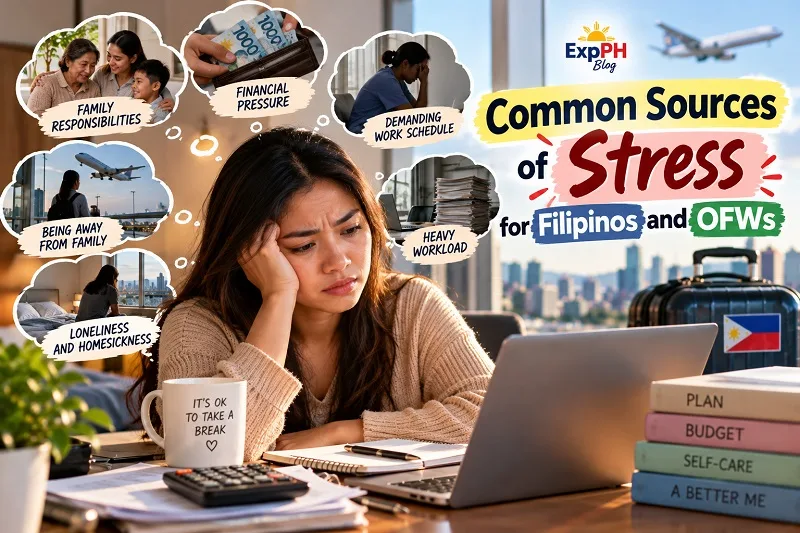
Common Sources of Stress for Filipinos and OFWs
Stress among Filipinos and OFWs can come from financial responsibilities, family expectations, demanding work schedules, homesickness, and social pressure. Recognizing these challenges helps you understand your stress and choose practical ways to manage responsibilities, maintain supportive relationships, and protect your mental well-being.
Financial Responsibilities and Family Expectations
Money is a common source of worry for people supporting households, paying debts, saving for education, or preparing for emergencies. OFWs may experience added pressure when relatives depend on regular remittances.
An unexpected expense at home can create anxiety, especially when you are already managing your own living costs overseas. You may feel that you must solve every financial problem, even when your income and circumstances have limits.
Start by separating essential expenses from optional spending. Discuss financial priorities with family members and establish realistic amounts for regular support. When possible, plan for emergencies rather than relying entirely on your next paycheck.
Remember that your financial contribution is only one part of your relationship with your family. Your health, presence, encouragement, and long-term stability also matter.
Workload, Long Hours, and Job Insecurity
Long working hours, demanding supervisors, limited breaks, and uncertainty about employment can contribute to stress. Some workers also struggle with unclear expectations or difficulty separating work from personal time.
For OFWs, workplace challenges may be harder to manage when they have limited local support or worry about the consequences of raising concerns. Domestic workers, healthcare staff, seafarers, hospitality employees, and other overseas workers may face schedules that leave little time for rest or communication with family.
Where possible, identify the specific demands affecting you. You might need clearer priorities, a more realistic schedule, a conversation with a supervisor, or help understanding available workplace support. If the environment is unsafe or abusive, prioritize your safety and seek appropriate assistance.
Self-care should not be used as an excuse to ignore harmful working conditions. Employers and institutions also have responsibilities for creating safer, healthier environments.
Homesickness and Separation From Loved Ones
Living away from family can create a complicated mix of pride, hope, loneliness, and sadness. You may be working toward important goals while missing ordinary moments, such as eating dinner together, attending birthdays, or helping your children with schoolwork.
Video calls can help, but they may not fully replace physical presence. Time-zone differences, busy schedules, and unreliable internet connections can make communication difficult.
Give yourself permission to miss home. Keep meaningful traditions when practical, share updates with loved ones, and schedule conversations that fit both sides. Photos, familiar recipes, music, or small cultural routines can also provide comfort.
If homesickness becomes intense or begins to affect your ability to function, reach out to someone you trust. You do not have to manage the experience alone.
Social Pressure and the Need to Appear Strong
Some Filipinos grow up hearing that they should endure hardship quietly, avoid burdening others, or put family needs ahead of their own. Although perseverance can be valuable, the belief that you must always remain strong can make it harder to seek support.
You do not need to share every personal difficulty with everyone. However, choosing one trustworthy person to speak with can help reduce isolation and give you another perspective.
Being honest about your limits is not the same as giving up. It is a way of understanding what you can reasonably manage and where you may need help.

Recognizing the Signs of Stress Before It Builds Up
Recognizing the signs of stress early can help Filipinos and OFWs understand changes in their emotions, physical health, behavior, and relationships. By noticing these changes and responding with healthy habits or seeking appropriate support, you can prevent stress from becoming harder to manage.
Emotional and Mental Signs
You may notice that you feel impatient, unusually worried, discouraged, restless, or emotionally drained. Small problems may seem harder to manage than usual, and you might find yourself expecting the worst.
Some people withdraw from conversations, lose interest in enjoyable activities, or struggle to make ordinary decisions. Others keep busy to avoid thinking about their worries.
These changes do not automatically indicate a mental health condition. They are reasons to pause and consider what has changed in your life, how long you have felt this way, and whether you need additional support.
Physical Signs
Stress can affect the body as well as the mind. You might experience muscle tension, headaches, fatigue, stomach discomfort, or changes in appetite and sleep.
These symptoms can have many causes, so avoid assuming that stress explains every physical problem. If symptoms are persistent, severe, unusual, or concerning, seek appropriate medical advice.
Basic habits such as eating regularly, drinking enough water, getting suitable rest, and moving your body can support general well-being. They are helpful foundations, but they are not substitutes for medical care when it is needed.
Changes in Behavior and Relationships
Stress can influence how you interact with family, friends, and coworkers. You may become more withdrawn, argue more often, miss commitments, or rely on habits that provide short-term relief but create additional problems later.
Notice patterns without using them to criticize yourself. Instead of saying, “I am becoming a bad parent,” consider whether exhaustion or pressure is making it harder to respond calmly.
When you recognize a pattern, choose one manageable change. You might take a break before replying to a difficult message, ask someone to help with a task, or set aside time to rest before an important conversation.

Practical Stress Relief Techniques You Can Use Every Day
Practical stress relief techniques can help Filipinos and OFWs manage daily pressure without requiring expensive activities or major lifestyle changes. Simple habits such as slow breathing, grounding exercises, short breaks, and enjoyable activities can support emotional well-being and make everyday challenges easier to handle.
Practice Slow, Comfortable Breathing
When you feel overwhelmed, pause and take a few gentle, unhurried breaths. Allow your breathing to remain comfortable rather than forcing yourself to take unusually deep breaths.
You can try breathing in gently through your nose and breathing out slowly. Repeat for a short period while keeping your attention on the movement of your breath.
If focusing on breathing makes you uncomfortable, stop and try another grounding activity, such as noticing objects around you or feeling your feet against the floor.
The purpose is not to force every uncomfortable emotion to disappear. It is to create a brief pause that helps you respond more deliberately.
Use Grounding to Return Your Attention to the Present
Worry often pulls attention toward what might happen in the future or what went wrong in the past. Grounding exercises can help bring your attention back to your current surroundings.
Look around and name five things you can see, four things you can feel, three things you can hear, two things you can smell, and one thing you can taste. You can adjust the exercise if some senses are unavailable or uncomfortable.
Another option is to describe a familiar object in detail. Notice its shape, texture, color, and position. This simple activity can give your mind a practical point of focus when your thoughts feel crowded.
For additional guidance, the World Health Organization provides a free illustrated resource, Doing What Matters in Times of Stress, with practical self-help techniques for coping with adversity.
Take Short Breaks From Demanding Tasks
When your schedule is busy, it can feel as though every available minute must be productive. However, working continuously without adequate recovery may leave you tired and less able to concentrate.
Where your job and responsibilities allow, take brief breaks between demanding tasks. Stand up, stretch, get water, step outside safely, or look away from your screen.
If you work in a setting where you cannot choose your breaks freely, use the opportunities that are available and follow workplace safety requirements. Do not put yourself or others at risk to complete a relaxation exercise.
Even a short pause can provide a chance to check your needs before continuing.
Make Time for Activities That Help You Feel Like Yourself
Self-care can include simple activities that bring comfort, enjoyment, or a sense of meaning. You might listen to music, cook a familiar meal, read, garden, draw, pray if that is meaningful to you, or spend time outdoors.
Choose activities that suit your circumstances rather than following a routine simply because it is popular online. A relaxing activity should not become another obligation that makes you feel guilty when you cannot complete it.
If you have only ten minutes, use those ten minutes for something restorative. Small moments of enjoyment can help make a demanding week feel more manageable.

Building a Self-Care Routine That Fits Your Life
Building a self-care routine helps Filipinos and OFWs protect their well-being while managing work, family, and financial responsibilities. By prioritizing sleep, healthy habits, physical activity, and regular rest, you can create a flexible routine that supports your needs and adapts to changing circumstances.
Start With the Basics
Begin by checking four areas: rest, nourishment, movement, and connection.
Are you getting enough opportunity to sleep? Are you eating regularly? Do you have chances to move your body in a way that suits your abilities? Have you spoken with someone you trust recently?
You do not need to improve everything at once. Choose the area that needs the most attention and make one realistic adjustment.
For example, you might prepare a simple breakfast the night before, take a short walk after work, or schedule a call with a close friend. Once the habit becomes manageable, consider adding another.
Protect Your Sleep and Recovery Time
Sleep supports physical health, concentration, emotional regulation, and daily functioning. Yet it can be difficult to protect when you work night shifts, share accommodation, care for children, or live in a busy household.
Try to create a consistent sleep opportunity that fits your schedule. Reduce unnecessary interruptions, make your sleeping space as comfortable as your circumstances allow, and establish a brief wind-down routine.
If you work rotating shifts, your sleep schedule may need to change from week to week. Focus on protecting adequate rest rather than forcing yourself to follow a conventional bedtime.
Persistent sleep difficulties deserve attention, particularly when they affect your work, safety, mood, or ability to function. A healthcare professional can help you explore possible causes and appropriate options.
Move Your Body in Ways You Enjoy
Physical activity can support general health and may help some people manage stress. It does not need to involve an expensive gym membership or an intense workout.
You could walk in a safe area, stretch gently, dance to a favorite song, use stairs when appropriate, or follow a beginner-friendly exercise routine. Choose an activity that fits your health, ability, environment, and schedule.
If you spend most of your shift sitting, small movement breaks may be a practical starting point. If your job is physically demanding, recovery and gentle movement may be more appropriate than adding strenuous exercise.
The goal is to find a sustainable way to care for your body, not to compare your routine with someone else’s.
Make Room for Rest Without Guilt
Rest is a basic need, not a reward that must be earned after every task is complete. Household responsibilities, work assignments, and financial goals can make it tempting to postpone rest indefinitely.
Try identifying a realistic stopping point for the day. Decide which tasks truly need immediate attention and which can wait. If appropriate, share responsibilities with other household members rather than assuming that you must do everything yourself.
Rest may involve sleep, quiet time, a hobby, or an activity that does not demand constant attention. What matters is that it gives you an opportunity to recover.

Managing Family Responsibilities and Financial Pressure
Managing family responsibilities and financial pressure can be challenging for Filipinos and OFWs who support loved ones while meeting their own needs. Open communication, realistic financial planning, healthy boundaries, and shared responsibilities can help reduce stress and create a more balanced approach to family life.
Talk Openly About Money and Expectations
Financial conversations can be uncomfortable, especially when family members have different ideas about what support should look like. Avoiding the discussion may create repeated misunderstandings and additional pressure.
Where possible, explain your income, essential expenses, savings goals, and limits in a calm and respectful way. Agree on a realistic amount for regular family support and discuss how unexpected expenses will be handled.
For OFWs, this may mean explaining that overseas employment also involves living costs, transportation, insurance, debts, and preparation for the future. Sending money home is important for many families, but planning for your own needs is also necessary.
A realistic financial plan can reduce uncertainty and make difficult decisions easier to discuss.
Learn to Set Healthy Boundaries
Boundaries help you communicate what you can reasonably provide, when you are available, and which responsibilities you cannot take on.
For example, you might explain that you cannot respond to nonurgent calls during your sleeping hours, lend money beyond your budget, or accept additional work every time someone asks.
Boundaries do not have to be harsh. You can show care while being honest about your limits.
Try using clear, respectful statements such as, “I want to help, but I can only contribute this amount right now,” or, “I need to rest after my shift, so can we talk tomorrow?”
Not everyone will immediately agree with your boundaries. Stay respectful while recognizing that protecting your health and stability is a reasonable need.
Share Responsibilities Instead of Carrying Everything Alone
Household tasks, caregiving, financial planning, and family communication can become exhausting when one person is expected to handle everything.
Discuss what each person can realistically contribute. Children can take on age-appropriate chores, partners can divide household responsibilities, and relatives can coordinate practical support when necessary.
For OFWs, family members at home may need to handle local errands, school matters, appointments, or household decisions without waiting for instructions from overseas. Clear communication can help everyone understand their responsibilities.
Sharing tasks does not mean you care less. It can help build a more sustainable arrangement for the entire family.

Mental Wellness Tips for Filipinos Working Overseas
Mental wellness is especially important for Filipinos working overseas as they adjust to unfamiliar environments, demanding schedules, and separation from loved ones. Building flexible routines, maintaining supportive relationships, preserving familiar traditions, and seeking help when necessary can help OFWs manage stress and protect their well-being.
Build a Routine Around Your Actual Work Schedule
Some overseas workers have regular daytime schedules, while others work nights, rotating shifts, long contracts, or irregular hours. A routine that works for one person may be unrealistic for another.
Identify the parts of your day that you can control. This might include a short meal break, a few minutes of stretching, a regular time to contact family, or a calming activity before sleep.
If your work schedule changes frequently, create a flexible routine with a few essentials rather than a strict timetable. Protect sleep and safety first, then add other habits when practical.
Stay Connected With People You Trust
Communication with loved ones can provide comfort, but it can also become stressful when calls turn into arguments about money or unmet expectations.
Consider balancing practical discussions with conversations about ordinary life. Ask about a family member’s day, share a small achievement, or talk about something enjoyable you experienced.
It can also help to build connections where you currently live. Depending on your circumstances, this might mean getting to know a trusted coworker, joining a community group, participating in a cultural activity, or keeping in contact with supportive friends.
Choose relationships that respect your boundaries and make you feel safer, not those that increase pressure or expose you to exploitation.
Create Small Reminders of Home
Familiar routines can make an unfamiliar environment feel more comfortable. You might prepare a Filipino dish when ingredients and facilities are available, listen to familiar music, celebrate special occasions with friends, or keep family photos in your room.
These activities do not erase homesickness, and you do not need to pretend that life overseas is always easy. They can simply provide moments of familiarity during a period of adjustment.
You can also create new traditions that fit your current life. A weekly call, a regular day off activity, or a shared meal with trusted friends may help give your routine a sense of stability.
Seek Help When Work or Living Conditions Become Unsafe
Stress management cannot solve every problem. Harassment, abuse, unsafe working conditions, withheld documents, threats, or exploitation require attention beyond individual self-care.
If you feel unsafe, consider contacting appropriate local emergency services, a trusted support organization, your embassy or consulate, or the relevant labor assistance channel for your situation. Use a safe communication method if you are worried that someone may monitor your phone or messages.
Avoid confronting a potentially dangerous person if doing so could increase the risk to you. Seek advice from qualified support services about safe options based on your location and circumstances.
Your safety and dignity matter. You do not have to treat harmful conditions as a normal part of working overseas.
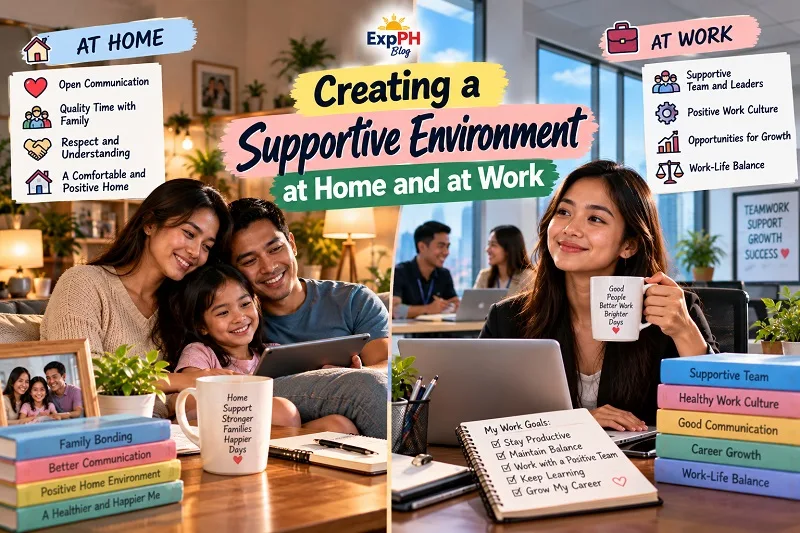
Creating a Supportive Environment at Home and at Work
Creating a supportive environment at home and work can help Filipinos and OFWs manage stress and protect their mental well-being. By making living spaces more comfortable, reducing digital distractions, and encouraging healthier workplace communication, you can create surroundings that support rest, concentration, and a more balanced daily routine.
Make Your Space More Restful
A calming space does not need expensive furniture or a complete redesign. Keep essential items accessible, reduce clutter where possible, improve lighting when practical, and choose a comfortable place to rest.
If you share a bedroom or accommodation, consider small changes that respect other people’s needs. Earplugs, an eye mask, a fan, or a simple routine for reducing interruptions may help some people, depending on their environment and safety needs.
If you have little control over your living space, focus on one manageable area, such as a bedside table, a small storage box, or a designated place for your personal belongings.
The aim is not to create a perfect home. It is to make daily life a little easier within your available resources.
Reduce Digital Overload
Phones and online platforms help OFWs communicate with loved ones and allow families to stay connected across distances. However, constant notifications, upsetting news, online comparisons, and pressure to respond immediately can add to stress.
Consider muting nonessential notifications during rest periods and choosing specific times to check messages. You can also unfollow accounts that repeatedly make you feel inadequate or overwhelmed.
You do not need to disconnect from family or important updates. Instead, decide how to use technology in ways that support your needs rather than interrupting every quiet moment.
If you rely on your phone for work or emergencies, keep essential contacts accessible and adjust only the notifications you can safely manage.
Encourage Healthier Conversations at Work
Workplace well-being is not only an individual responsibility. Workload, job security, discrimination, harassment, limited control, and poor management can all contribute to mental strain.
The World Health Organization explains that workplace conditions can affect mental health and identifies measures employers can take to prevent risks and support workers. Read its official guidance on mental health at work.
Where it is safe and appropriate, discuss workload concerns, unclear expectations, or available support with a supervisor or relevant workplace representative. You may find it helpful to describe the specific issue and suggest a practical change.
If you are a manager or business owner, consider whether schedules, communication practices, breaks, and workload expectations allow employees to work safely. A healthier workplace benefits both individuals and the wider team.

Personal Growth, Learning, and Emotional Resilience
Personal growth, continuous learning, and emotional resilience can help Filipinos and OFWs manage challenges and adapt to change. By setting realistic goals, practicing self-compassion, developing useful skills, and recognizing personal limits, you can build confidence and strengthen your well-being without adding unnecessary pressure.
Set Realistic Goals for Your Well-Being
Start with a specific goal that fits your current circumstances. Instead of promising to eliminate stress, you could aim to take a short break during your workday, maintain a more consistent sleep opportunity, or speak with a trusted person once a week.
Choose goals you can evaluate without criticizing yourself. If your schedule changes or a family emergency interrupts your routine, adjust the plan rather than treating the interruption as failure.
Small steps help you learn what works. Over time, you can develop a collection of habits that support your well-being in different situations.
Practice Self-Compassion Instead of Constant Self-Criticism
Self-compassion means responding to your difficulties with understanding while still taking responsibility for your choices. It does not mean ignoring problems or refusing to improve.
If you make a mistake at work, acknowledge what happened and identify what you can learn. If you struggle to follow a routine, consider whether it was realistic for your schedule. If you feel overwhelmed, recognize the pressure you are facing before deciding what to do next.
You might ask yourself, “What would I say to a friend dealing with this situation?” That question can help you replace harsh self-judgment with a more balanced response.
You deserve the same patience and respect that you try to offer other people.
Learn New Skills at a Manageable Pace
Learning can give you a sense of progress, especially when you want to prepare for career changes, improve communication, or explore personal interests. However, learning should fit your available time, energy, and budget.
Start by identifying a skill that supports a real goal. You might want to improve workplace communication, develop digital skills, learn a creative hobby, or prepare for future employment.
Explore Online Courses That Support Personal Growth
If you enjoy structured learning, online courses can help you explore subjects at your own pace. Choose a course that matches your interests, experience level, schedule, and budget. Look for clear learning objectives, useful course content, and realistic expectations about what the course can provide.
You can explore relevant learning options through Udemy, including courses related to personal development, communication, and practical skills. Treat online learning as one possible resource, not a requirement for becoming healthier or more successful.
Avoid enrolling in more courses than you can reasonably complete. A short lesson practiced consistently may be more useful than an ambitious learning plan that adds pressure to an already demanding week.
Build Emotional Resilience Without Expecting Yourself to Endure Everything
Resilience is the ability to adapt, recover, and find ways forward during difficult experiences. It does not mean that you never feel hurt, ask for help, or need time away from a stressful situation.
You can strengthen resilience by recognizing your limits, maintaining supportive relationships, learning from experience, and seeking practical solutions. Sometimes resilience means continuing with a goal. At other times, it means changing direction, taking a break, or leaving a harmful environment when it is safe to do so.
Do not measure your resilience by how much hardship you can tolerate in silence. A healthier measure is whether you can respond to challenges while protecting your dignity and well-being.

When to Seek Professional Mental Health Support
Professional mental health support can help Filipinos and OFWs manage persistent stress and emotional difficulties that affect daily life. Recognizing when self-care is not enough and knowing where to find qualified assistance can help you protect your well-being and receive appropriate care when needed.
Signs That Additional Support May Help
Consider speaking with a qualified professional if you experience persistent sadness, overwhelming anxiety, recurring panic, major changes in sleep or appetite, loss of interest in activities, difficulty concentrating, or problems carrying out everyday responsibilities.
You may also benefit from support if relationship conflicts, grief, trauma, substance use, or work-related stress feel unmanageable.
You do not need to wait until your situation becomes severe. A healthcare professional can help you understand what you are experiencing and discuss appropriate options.
Finding Support in the Philippines
Depending on your needs and location, support may be available through a primary healthcare provider, a hospital, a licensed psychologist, a psychiatrist, or a community mental health service.
Before booking an appointment, you can ask about qualifications, fees, available services, confidentiality, and whether remote consultations are offered. If cost is a concern, ask whether lower-cost services or public options are available.
For urgent emotional distress, use an appropriate crisis service or local emergency service. Check the official information for your location to confirm current availability and contact details.
Getting Support While Living Overseas
If you are an OFW, available options will depend on the country where you live, your language preferences, insurance coverage, work arrangements, and local healthcare system.
You may be able to contact a local healthcare provider, employee assistance service, community organization, or qualified mental health professional. Your embassy or consulate may also be able to direct you to relevant local resources, although services vary by country.
If you are concerned about privacy at work or in shared accommodation, ask a provider how appointments and records are handled before sharing sensitive information.
You deserve access to respectful support regardless of where you work or how much you earn.
What to Do if You Are in Immediate Danger
If you believe you may harm yourself or someone else, or you cannot keep yourself safe, seek immediate help through local emergency services or the nearest emergency department. If possible, contact a trusted person who can stay with you while you get help.
If you are supporting someone in crisis, listen without judgment, take their concerns seriously, and help them connect with qualified support. Do not promise secrecy if someone’s immediate safety is at risk.
Self-help articles are not a substitute for urgent care. Safety comes first.
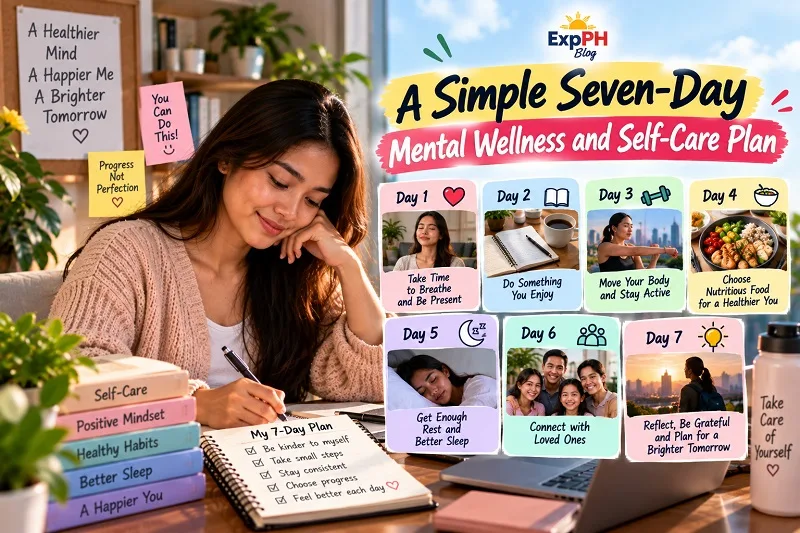
A Simple Seven-Day Mental Wellness and Self-Care Plan
A seven-day mental wellness and self-care plan can help Filipinos and OFWs develop healthier habits without adding unnecessary pressure. By checking in with yourself, practicing stress relief, improving daily routines, connecting with others, and reflecting on your progress, you can build a flexible approach to well-being.
Day 1: Check In With Yourself
Set aside a few quiet minutes to notice how you have been feeling. Ask yourself what has been stressful, what has helped, and what you need more of this week.
Choose one area to focus on, such as rest, family communication, or managing your workload. You do not need to solve every problem today.
Day 2: Create One Moment of Calm
Try a comfortable breathing exercise, a grounding activity, or a short break away from your usual tasks. Notice which activity feels helpful and which does not suit you.
Keep the practice brief enough that it does not create more pressure.
Day 3: Improve One Daily Habit
Choose one practical habit related to sleep, meals, movement, hydration, or organization. Prepare something the night before, take a short walk if appropriate, or establish a wind-down routine.
Focus on making the habit realistic rather than perfect.
Day 4: Connect With Someone Supportive
Reach out to a friend, relative, coworker, or trusted community member. Share a meaningful update, ask how they are doing, or explain that you have been under pressure.
If you are not ready to discuss your feelings, a simple conversation can still help you maintain connection.
Day 5: Review Your Boundaries
Think about one responsibility or request that has been making your schedule difficult. Decide whether you can clarify expectations, ask for help, or set a reasonable limit.
If the issue involves safety, abuse, or a serious workplace problem, consider appropriate professional or organizational support instead of trying to manage it alone.
Day 6: Do Something Enjoyable
Choose an activity that helps you feel refreshed or connected to your interests. You could listen to music, prepare a favorite meal, read, spend time outdoors, or enjoy a hobby.
You do not need to earn this time by completing every task on your list.
Day 7: Reflect and Adjust
Review the week without judging yourself. Which activities felt useful? What was difficult to maintain? What needs to change to make the next week more manageable?
Keep the practices that suit your life and leave out those that add unnecessary pressure. Your self-care routine should evolve with your needs.
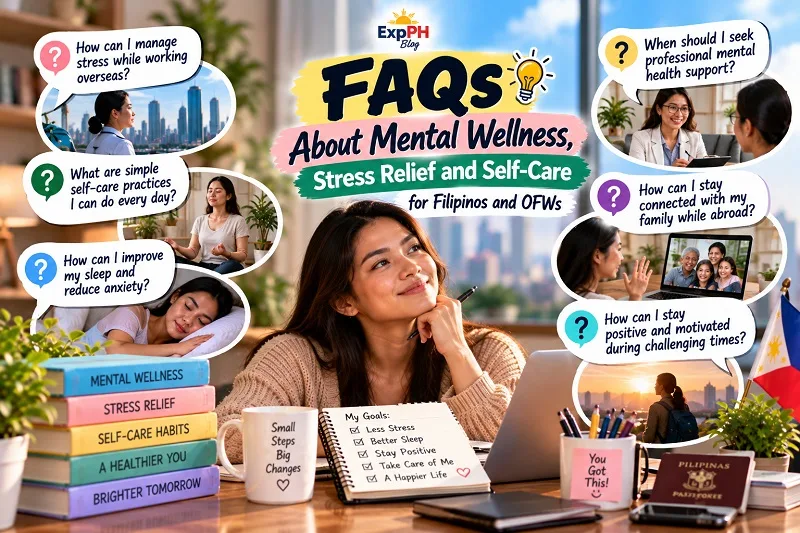
FAQs About Mental Wellness, Stress Relief and Self-Care for Filipinos and OFWs
1. What is mental wellness, and why is it important for Filipinos and OFWs?
Mental wellness helps people manage emotions, handle everyday stress, maintain supportive relationships, make decisions, and care for themselves while balancing work and family responsibilities.
2. What are simple ways to relieve stress every day?
Try comfortable breathing, short breaks, gentle movement, enjoyable hobbies, regular meals, adequate rest, and conversations with trusted people to support your daily well-being.
3. How can OFWs manage homesickness while working abroad?
Schedule meaningful family calls, maintain familiar traditions, build supportive local friendships, explore enjoyable activities, and seek professional help when loneliness becomes overwhelming or persistent.
4. How can I practice self-care with a busy schedule?
Choose small, realistic habits such as stretching, taking brief breaks, preparing meals, protecting sleep, and connecting with loved ones whenever your schedule allows.
5. Is self-care selfish when my family depends on me?
No. Caring for yourself helps protect your well-being and supports sustainable family responsibilities. Healthy boundaries allow you to help others without neglecting essential personal needs.
6. How can Filipinos manage financial stress and family expectations?
Discuss income and expenses honestly, agree on realistic support, prioritize essential needs, plan for emergencies, and communicate boundaries respectfully with family members.
7. When should I seek professional mental health support?
Seek qualified support when emotional difficulties persist, worsen, disrupt daily activities, affect relationships, or make work and ordinary responsibilities increasingly difficult to manage.
8. Can online courses improve mental wellness and personal growth?
Relevant courses may support learning and personal development, but they cannot replace professional mental health care when symptoms require assessment, treatment, or specialized support.
9. How can I build a healthier self-care routine?
Start with one manageable habit, observe how it affects your well-being, adjust it to your circumstances, and gradually add other practices that remain realistic.
10. What should I do if stress becomes overwhelming or I feel unsafe?
Contact a trusted person, qualified mental health professional, crisis service, or local emergency service. If immediate danger exists, seek urgent help without delay.
Building a Healthier Future Through Everyday Self-Care
Mental wellness is not a destination you reach once and maintain forever. It is an ongoing part of life that changes with your responsibilities, relationships, health, and circumstances.
For Filipinos and OFWs, caring for mental wellness can mean learning to manage financial pressure, adjusting to life away from home, setting healthier boundaries, maintaining supportive relationships, and recognizing when professional help is needed.
You do not need to change everything in one day. Start with a small step that addresses a real need. Give yourself permission to rest, speak honestly about your limits, and ask for support when life becomes difficult.
Remember that being responsible does not mean carrying every burden alone. Supporting your family and pursuing your goals are important, but your own well-being matters too. A healthier life can begin with simple, consistent choices that respect both your responsibilities and your needs.
If stress feels overwhelming, you do not have to handle it alone. Reach out to someone you trust or seek qualified professional support. Taking care of your mental wellness is a meaningful part of building a more balanced and sustainable life.
Finding Peace of Mind While Living Abroad
Maintaining mental wellness while living overseas starts with finding practical ways to manage stress and create peace of mind. For more helpful guidance on handling homesickness, adjusting to life abroad, and protecting your emotional well-being, read our guide on How OFWs Can Create Peace of Mind While Living Abroad.
Continue with more informative reading below
- Self-Care Tips for Busy Filipinos Working Abroad
- How Journaling Can Improve Your Mental Health
- How to Manage Stress Through Mindful Breathing
- Healthy Routines for Filipinos Working Long Hours Overseas
Test your knowledge of mental wellness, stress relief, and self-care for Filipinos and Overseas Filipino Workers
Results


#1. What is mental wellness?
#2. Which may cause stress for OFWs?
#3. What can grounding exercises help you do?
#4. Which habit supports self-care?
#5. How can OFWs stay connected with family?
#6. What is a healthy financial boundary?
#7. What should you do if stress persists?
#8. What is emotional resilience?
#9. What is the best approach to self-care?
#10. What is a healthy stress relief technique?
Thank you for taking our mental wellness and self-care quiz!
Share your experience with us!
Table of Contents

A Filipino web developer with a background in Computer Engineering. Founder of ExpPH Blog and ExpPH Business Guide, creating practical content on OFW guidance, business, finance, freelancing, travel, and lifestyle. Passionate about helping Filipinos grow, he shares insights that educate, empower, and inspire readers nationwide.