

Common Money Mistakes New Business Owners Must Avoid
Starting a business is exciting, empowering, and often life-changing. For many aspiring entrepreneurs, especially Overseas Filipino Workers (OFWs) planning long-term stability or family-based ventures back home, business ownership represents freedom and opportunity. However, one hard truth remains consistent across industries and countries: most new businesses fail because of money mistakes, not because the idea is bad.
Understanding Business Money Mistakes early can mean the difference between growth and burnout, between sustainability and shutdown. Many first-time business owners underestimate how small financial decisions compound over time. A single ignored expense, a delayed record, or a poor pricing decision can slowly drain a business until recovery becomes impossible.
This guide is written for real people building real businesses. Whether you are an OFW planning to open a shop in the Philippines, launching an online service, or starting a small side hustle with big dreams, this article will walk you through the most common money mistakes new business owners must avoid, and more importantly, how to fix them before they become fatal.
Avoiding financial mistakes is just one part of building a successful business,
check out How to Start a Home-Based Business in the Philippines and learn how to plan, launch, and manage your business the right way.
Quick Summary (TL;DR)
Running a small business in the Philippines can be challenging when financial mistakes go unnoticed. This guide highlights common business money mistakes that can affect your profits, cash flow, and long-term growth, along with practical ways to manage your finances and make smarter financial decisions.
- Mixing Personal and Business Finances: Keep personal spending separate from business transactions to track your actual earnings, expenses, and profits more accurately.
- Failing to Track Expenses: Record daily transactions, monitor operating costs, and review financial reports regularly to identify unnecessary spending and protect your profit margins.
- Ignoring Cash Flow: Monitor money coming in and going out to ensure you have enough funds for inventory, supplier payments, bills, and other business expenses.
- Setting Prices Incorrectly: Calculate the full cost of your products or services, including materials, labor, packaging, and overhead, before setting prices that support sustainable profits.
- Overspending and Poor Budgeting: Create a realistic business budget, prioritize essential expenses, and avoid unnecessary purchases that could reduce your available working capital.
- Neglecting Emergency Savings: Set aside part of your earnings to prepare for unexpected expenses, slow sales periods, and other financial challenges.
- Taking on Too Much Debt: Evaluate repayment terms, interest rates, and your ability to repay before borrowing money to fund business operations or expansion.
- Neglecting Tax and Bookkeeping Responsibilities: Maintain organized financial records, keep supporting documents, and comply with applicable Bureau of Internal Revenue (BIR) requirements and deadlines.
- Expanding Too Quickly: Assess customer demand, cash flow, and available resources before hiring employees, opening another location, or investing in additional inventory.
- Failing to Review Financial Performance: Regularly check sales, expenses, profit margins, and savings to identify problems early and make informed business decisions.
Key takeaway: Avoiding common business money mistakes starts with disciplined budgeting, accurate recordkeeping, and careful cash flow management. By separating personal and business finances, pricing products correctly, controlling expenses, and planning for unexpected costs, small business owners in the Philippines can protect their profits and build a stronger foundation for sustainable growth.
Table of Contents

1. Misunderstanding Cash Flow From Day One
Many new business owners misunderstand how money moves in a business, which leads to early financial stress. They often rely on sales or profit without checking actual cash availability. This creates gaps between income and obligations, making daily operations harder to sustain and weakening long term stability.
Confusing profit with cash flow
One of the most common business money mistakes is thinking profit equals available cash. Profit shows earnings on paper, while cash flow reflects real money movement. A business can look profitable but still struggle with payments due to timing gaps, delayed collections, and ongoing expenses.
Key risks include:
- Paying bills before receiving customer payments
- Overestimating available cash from sales reports
- Ignoring timing differences in income and expenses
- Relying on profit instead of actual cash balance
How to avoid this mistake
To avoid this issue, focus on managing cash flow consistently and with clear tracking. Simple habits help prevent shortages and improve financial control, especially for OFWs handling remote operations.
Effective actions include:
- Track cash flow weekly instead of monthly
- Create a simple forecast of incoming and outgoing money
- Separate profit tracking from actual cash monitoring
- Schedule payments based on available cash timing
- Check if spending affects next month’s essential expenses

2. Not Separating Business and Personal Money
Mixing personal and business finances creates confusion and weakens financial control. Many entrepreneurs treat all money as one pool, which hides the true performance of the business. This habit makes planning difficult and increases the risk of errors, poor decisions, and long term financial instability.
Treating the business as a personal wallet
Many business owners use one account for both personal and business expenses, which quickly leads to disorganized records. This business money mistake makes it harder to track expenses, measure profit, and understand real performance. Over time, it can also cause tax issues and unclear financial reporting.
Common risks include:
- Inaccurate tracking of income and expenses
- Confusion in financial reporting and decision making
- Difficulty preparing taxes and financial records
- Misuse of business funds for personal spending
For OFWs managing businesses remotely, this problem becomes more serious. Family members or partners may struggle to track spending properly, which can lead to errors, misunderstandings, and reduced control over business finances.
How to avoid this mistake
To prevent this issue, separate personal and business finances from the beginning. Clear systems improve visibility, discipline, and decision making.
Practical steps include:
- Open a dedicated business bank account early
- Pay yourself a fixed and consistent amount
- Record all business expenses separately
- Avoid using business funds for personal needs
- Treat your business as a separate financial entity
By separating finances, you gain clearer insights, stronger control, and better decisions. This simple habit helps protect your business and supports steady long term growth.

3. Underpricing Products or Services
Setting prices too low is a common mistake that limits growth and weakens business sustainability. Many entrepreneurs focus on attracting customers instead of protecting profit margins. This approach leads to overwork, financial pressure, and difficulty maintaining consistent operations over time.
Believing low prices attract success
Many new entrepreneurs believe that charging less will bring more customers. While competitive pricing matters, underpricing is a serious business money mistake. It reduces profit and increases workload, making it harder to sustain the business.
Common issues include:
- Working longer hours for lower returns
- Struggling to cover operating costs and expenses
- Attracting price sensitive clients instead of loyal customers
- Lower perceived value of products or services
How to avoid this mistake
To avoid underpricing, focus on value and sustainability instead of competing on price alone. Proper pricing helps protect your time, effort, and long term growth.
Effective steps include:
- Calculate true costs including time, tools, and taxes
- Set prices that ensure profit and support future growth
- Focus on delivering value instead of being the cheapest option
- Adjust pricing as your skills and services improve
- Choose clients who respect your rates and quality

4. Ignoring Financial Records and Bookkeeping
Failing to maintain proper financial records is a serious mistake that weakens control and decision making. Many business owners delay bookkeeping, which leads to confusion and hidden issues. Without clear records, it becomes difficult to monitor performance, manage expenses, and maintain long term financial stability.
Relying on memory or delayed tracking
Another common business money mistake is relying on memory or postponing bookkeeping tasks. Many owners plan to organize finances later, but delays allow errors to accumulate over time. This creates inaccurate records and makes it harder to fix problems once they grow.
Common risks include:
- Missing or forgotten transactions
- Inaccurate tracking of income and expenses
- Difficulty identifying unnecessary spending
- Errors in tax preparation and reporting
How to avoid this mistake
To prevent this issue, maintain consistent and organized financial tracking from the start. Simple systems can provide clarity and improve control, even for small businesses.
Effective actions include:
- Record all transactions weekly for accuracy
- Use spreadsheets or basic accounting tools
- Keep receipts, invoices, and expense records organized
- Review financial data regularly to spot issues early
- Ensure clear documentation for taxes and reporting

5. Failing to Budget for Taxes and Compliance
Ignoring taxes and compliance can quickly damage a business, even if sales are strong. Many owners focus on income and expenses but forget required obligations. This creates financial pressure when payments become due, making it harder to manage cash flow and maintain stable operations.
Assuming taxes can be handled later
One of the most costly business money mistakes is delaying tax planning. Many entrepreneurs assume taxes can be managed later, but liabilities build over time. When deadlines arrive, the required payments can overwhelm available cash and disrupt operations.
Common risks include:
- Unexpected large tax payments
- Penalties and interest from late filings
- Cash shortages due to unprepared obligations
- Compliance issues that affect business credibility
Tax requirements vary by country, and OFWs handling cross border businesses face added complexity. Different regulations, reporting rules, and timelines can increase the risk of errors. According to the U.S. Small Business Administration, poor tax planning is a major cause of financial distress because liabilities can grow unnoticed until they become difficult to manage.
How to avoid this mistake
To prevent tax related problems, treat taxes as a regular and planned expense. Consistent preparation helps reduce stress and protects your business from unexpected financial strain.
Practical steps include:
- Set aside a fixed percentage of every sale for taxes
- Learn basic tax rules that apply to your business
- Keep records organized for accurate reporting
- Track deadlines to avoid penalties and delays
- Seek professional advice when handling complex tax situations

6. Overspending on Tools, Equipment, and Branding Too Early
Spending too much at the beginning is a common mistake that reduces financial flexibility and increases risk. Many new entrepreneurs invest in tools, branding, or setups before confirming demand. This drains capital that should support operations, testing, and customer acquisition during the most critical early stage.
Buying before earning
Many business owners spend heavily on logos, equipment, software, or office space before earning consistent income. This business money mistake creates pressure on cash flow and limits the ability to adjust. Instead of supporting growth, early overspending often slows progress and increases financial stress.
Common risks include:
- Running out of capital before generating steady revenue
- Investing in tools that do not directly produce income
- Prioritizing appearance over actual customer value
- Reducing flexibility to adapt or improve the business
For OFWs funding businesses from personal savings, this risk becomes higher. Spending may feel like commitment, but it often increases exposure without improving results. Without careful control, funds can be depleted before the business becomes stable or profitable.
How to avoid this mistake
To avoid overspending, focus on building a lean and efficient business from the start. Prioritize spending that supports revenue and real growth instead of unnecessary upgrades.
Effective actions include:
- Start with essential tools that directly generate income
- Delay branding and upgrades until demand is proven
- Test products or services before making large investments
- Track spending carefully to protect working capital
- Focus on customer results instead of expensive setups

7. Not Preparing for Emergencies or Slow Months
Failing to prepare for unexpected situations can put a business at serious risk. Income is rarely consistent, especially in the early stages. Without a safety buffer, even small disruptions can affect operations, delay payments, and create stress that impacts long term stability.
Assuming income will be consistent
Many entrepreneurs assume that income will remain steady once the business starts earning. This business money mistake ignores the reality of slow months, unexpected costs, and market changes. Without preparation, these situations can quickly disrupt cash flow and daily operations.
Common risks include:
- Sudden drops in sales or customer demand
- Unexpected repairs or emergency expenses
- Delayed payments from clients or customers
- Inability to cover fixed monthly costs
For OFW backed businesses, the risk can be higher. Changes in overseas employment or urgent family needs may interrupt funding. Without a backup plan, even short disruptions can threaten business continuity and financial stability.
How to avoid this mistake
To protect your business, build a financial buffer that can support operations during difficult periods. Preparation helps reduce stress and ensures continuity when income slows down.
Practical steps include:
- Create a dedicated emergency fund for the business
- Save at least three months of operating expenses
- Keep emergency funds separate from daily cash flow
- Use the fund only for real emergencies or income gaps
- Review and replenish the fund regularly

8. Taking on Debt Without a Clear Repayment Plan
Taking on debt without proper planning can quickly create financial pressure and limit business growth. While loans can support expansion, they also add fixed obligations. Without clear repayment strategies, debt can disrupt cash flow, increase stress, and weaken overall financial stability.
Borrowing based on hope, not numbers
Many business owners borrow money without fully understanding repayment terms or cash flow impact. This business money mistake often leads to missed payments and growing financial strain. Instead of solving problems, debt becomes a temporary fix that hides deeper issues.
Common risks include:
- Taking loans without clear repayment timelines
- Ignoring interest rates and total repayment costs
- Using debt to cover ongoing losses instead of fixing them
- Relying on future income that is not guaranteed
Over time, this approach creates a cycle of dependency on borrowed funds. Instead of improving the business, owners struggle to keep up with payments, which reduces flexibility and increases financial risk.
How to avoid this mistake
To manage debt responsibly, focus on using it as a tool for growth rather than a short term solution. Careful planning ensures that borrowing supports stability instead of creating pressure.
Effective actions include:
- Borrow only for activities that generate income
- Calculate how and when the loan will be repaid
- Understand interest rates and total loan costs
- Avoid using debt for personal expenses
- Do not rely on loans to cover continuous business losses

9. Skipping Financial Education
Avoiding financial education can limit a business owner’s ability to make informed decisions. Many entrepreneurs feel that finance is too complex, so they ignore it. This leads to repeated mistakes, poor planning, and weak control over money, which can affect long term business growth and stability.
Assuming business finance is too complicated
Many entrepreneurs avoid learning financial basics because the topic feels overwhelming. This business money mistake leads to blind decision making and repeated errors that could be avoided with simple knowledge. Understanding core concepts improves confidence and control.
Common issues include:
- Lack of understanding of cash flow and budgeting
- Poor pricing decisions due to limited financial insight
- Weak planning for expenses and future growth
- Dependence on guesswork instead of clear data
Basic financial skills do not require advanced training. With consistent learning and practice, business owners can gain better control over operations and avoid costly mistakes that affect long term success.
Learning the basics before mistakes multiply
Building financial knowledge early helps prevent problems before they grow. Structured learning allows entrepreneurs to understand key concepts and apply them directly to daily operations. Practical education improves decision making and strengthens business foundations.
Helpful actions include:
- Study basic topics like cash flow, pricing, and budgeting
- Apply lessons directly to your current business setup
- Use beginner friendly courses for guided learning
- Focus on practical knowledge instead of complex theory
- Continue learning as your business grows
For OFWs and new entrepreneurs, simple finance courses can build confidence and reduce risk. Platforms like Udemy offer beginner friendly lessons that explain money management clearly. Learning these skills helps avoid costly mistakes and supports a more stable and sustainable business.

10. Not Reviewing Financial Performance Regularly
Failing to review financial performance regularly can leave a business without clear direction. Many owners focus on daily operations and ignore financial data. This limits visibility and delays important decisions, allowing small issues to grow into serious problems that affect stability and long term growth.
Operating blindly
Many business owners operate without reviewing their financial performance consistently. This business money mistake hides warning signs and delays corrective action. Without regular checks, problems remain unnoticed until they become difficult to manage.
Common risks include:
- Missing signs of declining profit or rising costs
- Overlooking cash flow issues before they worsen
- Making decisions based on assumptions instead of data
- Failing to identify trends that affect business performance
When financial data is ignored, even a stable business can face sudden challenges. Lack of visibility increases risk and reduces the ability to respond quickly to changing conditions.
How to avoid this mistake
To stay in control, review financial performance consistently and use the data to guide decisions. Regular analysis helps identify issues early and supports better planning.
Effective steps include:
- Review income, expenses, and profit every month
- Focus on trends instead of single data points
- Compare current performance with past results
- Use financial reports to guide business decisions
- Adjust strategies based on actual data, not assumptions
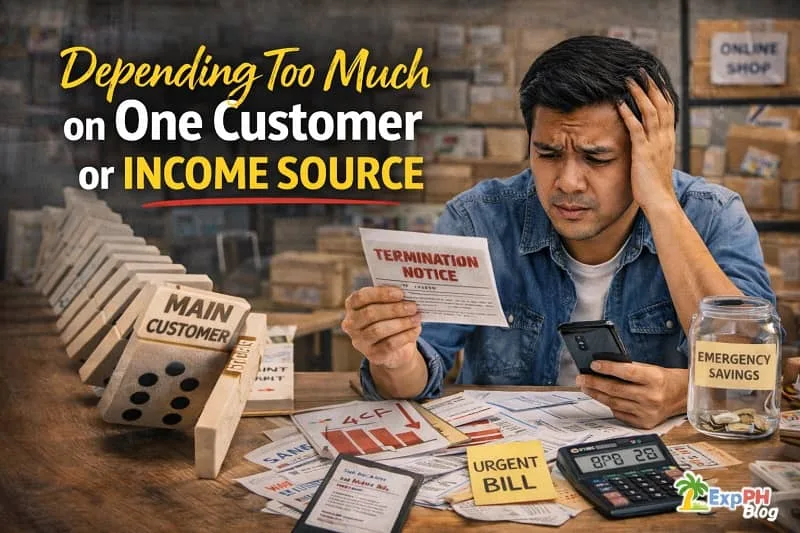
11. Depending Too Much on One Customer or Income Source
Relying on a single source of income can put a business in a fragile position. When most revenue comes from one client or platform, stability becomes uncertain. Any sudden change can disrupt operations, reduce cash flow, and threaten the long term survival of the business.
Putting all financial eggs in one basket
Many entrepreneurs depend heavily on one major client or platform for income. This business money mistake limits growth and increases risk because control is placed outside the business. If that source disappears, income can drop instantly.
Common risks include:
- Sudden loss of primary income source
- Limited opportunities for business growth
- Increased pressure to meet one client’s demands
- Lack of financial security and stability
This situation is common among freelancers, online sellers, and service providers. Over time, dependence reduces flexibility and makes it harder to adapt when changes happen.
How to avoid this mistake
To reduce risk, focus on building multiple income streams and expanding your customer base. Diversification improves stability and supports long term growth.
Practical steps include:
- Work with multiple clients instead of relying on one
- Explore different platforms to reach more customers
- Offer additional products or services
- Build long term relationships with various clients
- Monitor income sources to ensure balanced revenue distribution
By spreading income across different sources, you protect your business from sudden losses and create a more stable financial foundation.

12. Ignoring Currency Risks for OFW-Funded Businesses
Currency fluctuations can quietly affect business performance, especially for OFWs funding operations across borders. Small changes in exchange rates may seem minor at first, but over time they can reduce income value, increase costs, and disrupt financial planning and cash flow stability.
Overlooking exchange rate impact
Many OFWs underestimate how exchange rates influence business finances. This business money mistake can lead to unexpected losses and weaker budgeting. When income and expenses use different currencies, even small shifts can affect profitability.
Common risks include:
- Reduced value of remittances due to exchange changes
- Higher costs for supplies or services paid in foreign currency
- Unstable cash flow caused by fluctuating rates
- Difficulty planning budgets with inconsistent currency value
Without proper monitoring, these effects can accumulate and create gaps that impact daily operations and long term stability.
How to avoid this mistake
To manage currency risks, build awareness and include buffers in financial planning. Simple strategies can reduce exposure and improve stability in cross border operations.
Effective actions include:
- Monitor exchange rates regularly before transferring funds
- Add buffer margins when planning budgets and pricing
- Keep part of funds in local currency for stable expenses
- Schedule transfers during favorable exchange periods
- Track how currency changes affect overall profitability
By planning for currency movements, OFWs can protect their business from unexpected losses and maintain more consistent financial control.

13. Not Planning for Growth Costs
Growth can improve a business, but it also brings higher expenses that must be managed carefully. Many owners focus on expansion without preparing financially. This creates pressure on cash flow and operations, making it harder to maintain stability during periods of increased demand.
Assuming growth is always positive
Many entrepreneurs believe growth automatically leads to success, but this business money mistake ignores rising costs. Expanding too quickly without financial planning can strain resources and disrupt operations. Instead of strengthening the business, unmanaged growth can create instability.
Common risks include:
- Increased expenses before profits are realized
- Cash flow shortages due to higher operating costs
- Overexpansion without sufficient financial support
- Difficulty maintaining quality and efficiency during rapid growth
Without proper planning, growth can overwhelm the business and reduce its ability to sustain operations effectively.
How to avoid this mistake
To manage growth successfully, plan expenses carefully and expand at a controlled pace. Strong financial preparation ensures that growth supports stability instead of creating risk.
Practical steps include:
- Forecast all costs related to expansion before starting
- Increase operations gradually instead of scaling too fast
- Monitor cash flow closely during growth phases
- Ensure revenue can support additional expenses
- Adjust plans based on actual financial performance
By planning for growth costs, business owners can expand with confidence while protecting stability and long term success.

14. Failing to Seek Advice or Mentorship
Trying to manage every aspect of a business alone can limit growth and increase mistakes. Many entrepreneurs avoid seeking help, which reduces learning opportunities and delays better decisions. Without guidance, it becomes harder to identify risks early and improve financial strategies over time.
Trying to do everything alone
Many new business owners believe they must handle everything themselves. This business money mistake leads to repeated errors and missed opportunities for improvement. Without outside input, decision making becomes limited and less effective.
Common risks include:
- Repeating avoidable financial mistakes
- Missing better strategies or solutions
- Slower business growth due to limited knowledge
- Increased stress from handling everything alone
Working in isolation reduces perspective and makes it harder to adapt. Guidance from experienced individuals can provide clarity and practical insights that improve decision making.
How to avoid this mistake
To grow effectively, seek advice and learn from others with experience. Support and guidance can strengthen your decisions and reduce costly errors.
Practical steps include:
- Connect with experienced entrepreneurs or mentors
- Learn from trusted educational resources
- Ask for advice when facing important decisions
- Join business communities or networks
- Apply insights from others to improve your strategies
By seeking guidance, you gain valuable knowledge, avoid common mistakes, and build a stronger and more confident business foundation.

Conclusion: Build Financial Discipline Before It Is Too Late
Every business faces challenges, but many financial problems are preventable with the right habits. Understanding and avoiding Business Money Mistakes gives new business owners a clear advantage. When finances are managed properly, owners gain better control, make smarter decisions, and reduce stress. Strong financial discipline allows a business to respond to challenges with confidence instead of reacting out of fear or confusion.
For OFWs, financial discipline matters even more because money is often earned through personal sacrifice and time away from family. A business should protect those efforts, not put them at risk. Start with awareness and build good habits early. Track your numbers, continue learning, and base decisions on clear data rather than emotion. A strong financial foundation gives your business the best chance to grow, survive, and support your long-term goals.

FAQs About Business Money Mistakes
What is the most common money mistake new business owners make?
Most new businesses fail due to poor cash flow management, lack of budgeting, underpricing, mixed finances, and ignoring taxes, not because business idea is weak.
Why is cash flow more important than profit?
Cash flow determines whether a business can pay expenses on time, while profit is theoretical. Many profitable businesses fail simply because cash is unavailable.
Should new business owners separate personal and business money?
Yes, separating finances improves tracking, simplifies taxes, prevents confusion, and helps owners understand real business performance, especially when managing operations remotely or with partners.
How does underpricing hurt a new business?
Underpricing reduces profit margins, causes burnout, limits growth, and signals low value, making it harder to sustain operations or invest in improvements long-term.
Why is bookkeeping essential for small businesses?
Bookkeeping provides financial clarity, helps monitor expenses, supports tax compliance, and prevents unnoticed losses that slowly damage business stability and decision-making.
What tax mistake do new business owners often overlook?
Many owners fail to set aside money for taxes, leading to penalties, cash shortages, and stress when tax payments suddenly become due.
Is taking loans early a bad decision?
Loans are risky when taken without repayment plans. Borrowing should support income growth, not cover poor planning or ongoing business losses.
Why should businesses prepare for slow months?
Income fluctuates, especially early. Emergency funds help businesses survive unexpected downturns, seasonal drops, or unforeseen expenses without shutting down operations.
How can financial education help prevent money mistakes?
Learning basic business finance improves budgeting, pricing, and planning, helping owners make informed decisions instead of repeating costly mistakes through trial and error.
How often should new business owners review finances?
Monthly financial reviews help detect problems early, track performance trends, and guide smarter decisions before small issues become serious financial crises.
Recommended Reading from ExpPH Blog.
- Cash Management Tips for New Business Owners
- Best Savings and Investment Tips for Small Business Owners in 2026
Learning Hub Quiz: Common Business Money Mistakes
Test your understanding of the most common financial mistakes that new business owners make.
Results


#1. What mistake causes profitable businesses to fail?
#2. What should always be separated in business?
#3. Why is underpricing dangerous?
#4. What happens when bookkeeping is ignored?
#5. What expense do owners forget to save for?
#6. Why is emergency funding important?
#7. What makes early business debt risky?
#8. What mistake happens when money is unmanaged?
#9. Why should finances be reviewed monthly?
#10. What helps prevent repeated money mistakes?
We appreciate you spending time learning smarter business practices.
Your growth mindset matters. Leave a comment and share your experience or what surprised you most. Your feedback helps us improve future Learning Hub content.

A Filipino web developer with a background in Computer Engineering. Founder of ExpPH Blog and ExpPH Business Guide, creating practical content on OFW guidance, business, finance, freelancing, travel, and lifestyle. Passionate about helping Filipinos grow, he shares insights that educate, empower, and inspire readers nationwide.