
The Rise of Robotics in the Philippines
How Automation and Smart Technology Are Transforming Filipino Industries
The Rise of Robotics in the Philippines marks the country’s position at the forefront of an exciting industrial evolution known as Industry 4.0 the global shift toward automation, connectivity, and data-driven decision-making. At the heart of this transformation is robotics, which is redefining how Filipinos work, produce, and innovate.
From manufacturing lines and hospitals to logistics hubs and agricultural fields, the Rise of Robotics in the Philippines is steadily becoming an essential driver of progress. Robots now handle complex tasks that once required human labor enhancing accuracy, efficiency, and consistency while allowing people to focus on higher-value and creative roles. This technological shift is already visible across many workplaces, as repetitive, dangerous, or ergonomically stressful tasks are being transferred to machines, and human employees are taking on new roles in oversight, quality assurance, programming, and customer engagement.
But this isn’t merely a technological revolution it’s also a human story within the ongoing Rise of Robotics in the Philippines. As machines take over repetitive tasks, Filipino workers are adapting, upskilling, and discovering new opportunities in programming, maintenance, and digital management. This collaboration between human skill and machine precision is shaping a new kind of workforce one that blends human empathy and creativity with robotic intelligence. For many workers, this transition has led to better working conditions and promising new career pathways; for others, it has required retraining, flexibility, and a willingness to embrace new technologies.
This transformation is no longer optional it is a defining part of the Rise of Robotics in the Philippines. As global markets demand faster production and smarter systems, Filipino businesses must evolve to stay competitive. Robotics isn’t just about keeping up; it’s about leading the next generation of innovation that will shape the nation’s future economy. At the same time, companies and policymakers must manage the social impacts responsibly, ensuring that technological progress translates into better opportunities and improved livelihoods for ordinary Filipinos.
Discover how robotics connects with broader innovations by exploring our complete guide on Future Technology in the Philippines: AI, Robotics, and 5G Trends. See how these technologies work together to drive progress and digital transformation.
Table of Contents

1. The Historical Roots and Rise of Robotics in the Philippines
The Rise of Robotics in the Philippines began in the 1990s, when large manufacturing companies first introduced robotic arms into their production lines. These early machines were primarily used in the electronics and automotive sectors, handling repetitive or hazardous tasks such as welding, component assembly, and packaging. This initial wave of automation marked the country’s first steps toward industrial modernization setting the stage for today’s expanding robotics landscape.
This early stage of automation marked a significant chapter in the Rise of Robotics in the Philippines, leading to measurable improvements in production precision, reduced errors, and safer working conditions. Yet, while robots made factories more efficient, many Filipino workers initially feared job loss. Over time, however, companies discovered that automation also created new technical and supervisory roles a pattern that continues today. Many former line workers transitioned into positions such as robot operators, maintenance assistants, and production data analysts. The human story here is one of adaptation: as routine tasks became automated, Filipino workers found new ways to add value through oversight, creativity, and problem-solving.
By the early 2000s, the Rise of Robotics in the Philippines began extending beyond factory floors, as the country started experimenting with warehouse automation and robotics in logistics and transport. However, adoption remained limited due to high costs and a shortage of trained professionals. For many local communities, this created uneven benefits large exporters gained efficiency, while small-scale producers struggled to keep pace. These early disparities underscored the urgent need for accessible training programs and financing options to ensure that the advantages of robotics reach a wider population.
By the 2010s, the momentum behind the Rise of Robotics in the Philippines accelerated. Universities began offering specialized courses in mechatronics, artificial intelligence, and robotics, while the Department of Science and Technology (DOST) and private innovators launched pilot programs that integrated robotics with IoT and cloud systems. These educational investments built a strong local talent pool of engineers and technicians capable of bridging the gap between machines and human workers making robotic implementation smoother, smarter, and more relevant to Philippine industries.
By the late 2010s, the Rise of Robotics in the Philippines expanded beyond factories and into hospitals, service centers, and even schools. This shift gave birth to a thriving local robotics ecosystem blending technology, education, and entrepreneurship to propel the nation into the age of Industry 4.0. The impact extended beyond the economy: students gained hands-on STEM experience, startups launched local maintenance and Robotics-as-a-Service (RaaS) solutions, and communities began to see robotics as a tool for inclusive growth rather than a threat to livelihoods.
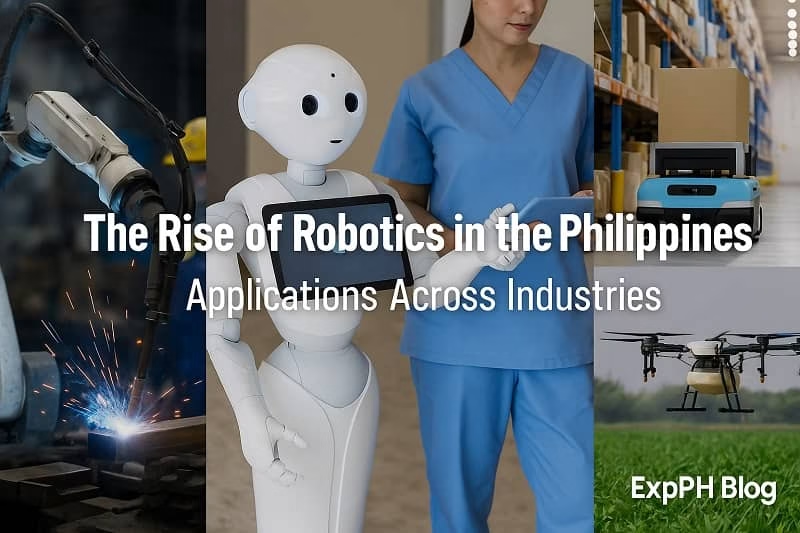
2. The Rise of Robotics in the Philippines: Applications Across Industries
The rise of robotics in the Philippines is transforming major industries by improving efficiency, accuracy, and productivity. From manufacturing and healthcare to logistics and agriculture, robotics helps businesses modernize operations while creating new opportunities for Filipino workers. As technology continues to advance, robotics is becoming an important part of the country’s economic growth and long-term development.
1. Manufacturing: Robots That Build the Nation
Manufacturing remains the leading sector in the Rise of Robotics in the Philippines. In this industry, robots perform tasks such as welding, cutting, assembly, painting, and inspection with unmatched speed, accuracy, and consistency boosting productivity while maintaining high quality standards.
- Assembly Lines: Robots work tirelessly, ensuring high precision in repetitive processes. Their consistency reduces rework and allows human technicians to focus on troubleshooting and process improvement.
- Quality Control: Vision-guided robots identify micro-defects invisible to the human eye. Human QA teams then interpret this data, make decisions, and design corrective actions, combining machine detection with human judgment.
- Material Handling: Automated vehicles transport components safely, improving workflow. Workers benefit from reduced physical strain, fewer injuries, and a safer shop floor.
In the ongoing Rise of Robotics in the Philippines, robots in factories don’t eliminate human jobs they transform them. Workers now manage robotic systems, handle programming, perform maintenance, and analyze production data. This transformation enables employees to shift from manual labor to higher-paying, tech-oriented roles. Many forward-thinking companies have also introduced cross-training programs, allowing assembly line staff to learn basic coding, PLC operations, and preventive maintenance valuable skills that strengthen job security and open paths for career advancement.
Moreover, as part of the ongoing Rise of Robotics in the Philippines, manufacturing firms that integrate robotic systems often experience a 30–40% improvement in output and enhanced global competitiveness. As demand for locally produced goods continues to grow, these advanced systems enable the Philippines to compete more effectively with industrial leaders such as Japan, South Korea, and Singapore. The human impact is twofold: improved company performance leads to higher wages and stronger job stability, while the workforce steadily develops advanced technical skills that prepare them for the future of Industry 4.0.
2. Logistics and Warehousing: Automating the Flow of Goods
In the Rise of Robotics in the Philippines, logistics has become one of the most dynamic fields of innovation. In this sector, time and precision mean everything. The country’s booming e-commerce industry driven by platforms like Shopee, Lazada, and TikTok Shop demands speed and accuracy that only robotics and intelligent automation can deliver.
- Inventory Management: Robots now track goods in real time, reducing stock errors. Human inventory managers use this accurate data to plan promotions and reduce waste.
- Warehouse Automation: Autonomous machines pick, sort, and transport packages 24/7. Night shifts and repetitive lifting are reduced, improving worker health and lowering turnover.
- Last-Mile Delivery: Drones and robotic couriers are being tested to reduce congestion and costs. These technologies can complement delivery drivers rather than replace them, enabling longer delivery ranges and safer drop-offs.
For Filipino workers, the Rise of Robotics in the Philippines within the logistics sector doesn’t mean job displacement it means improved working conditions and new career opportunities. Robots now handle heavy lifting and hazardous tasks, allowing human staff to focus on higher-level operations, planning, and customer management. Many companies have found that combining human intelligence with robotic precision results in greater productivity, higher employee satisfaction, and fewer workplace injuries. Training programs for logistics staff now include equipment calibration, system monitoring, and customer communication roles that highlight human strengths such as empathy, adaptability, and problem-solving.
3. Healthcare: Healing with Precision and Compassion
The healthcare sector represents one of the most inspiring examples in the Rise of Robotics in the Philippines, where technology is directly transforming and improving human lives.
In key urban centers such as Metro Manila, Cebu, and Davao, the Rise of Robotics in the Philippines is clearly visible in the healthcare sector. Hospitals have introduced robot-assisted surgical systems that enable doctors to perform operations with smaller incisions and greater precision. These advancements significantly reduce patient pain, recovery time, and hospital stays. Families also benefit from faster recoveries and lower long-term care costs clear evidence of how robotics contributes to improved human welfare.
Robots also play key roles in:
- Rehabilitation therapy, where assistive robots help patients regain mobility and track progress with precise metrics. Therapists use these metrics to personalize care, blending technological consistency with human empathy.
- Medical logistics, managing medication delivery and sterilization processes so nurses can spend more time with patients.
- Diagnostics, with AI-powered robotic systems assisting doctors in imaging and analysis for faster and more accurate diagnoses.
Importantly, the Rise of Robotics in the Philippines in healthcare doesn’t replace doctors or nurses it supports them. Robots take over routine and physically demanding tasks, allowing healthcare professionals to dedicate more time to patient care, empathy, and emotional support. In many clinics, nurses have reported reduced burnout as automated systems handle logistics, medication delivery, and lifting duties enabling them to focus on providing higher-quality bedside care.
The combination of human empathy and robotic precision is a defining feature of the Rise of Robotics in the Philippines, helping the nation’s healthcare system reach global standards. As hospitals adopt these advanced systems, medical professionals are gaining new technical competencies from operating robotic surgical suites to interpreting AI-assisted diagnostics making them more skilled, versatile, and globally competitive.
4. Agriculture: Smart Machines Cultivating a Sustainable Future
In agriculture, the Rise of Robotics in the Philippines offers a vital lifeline to an industry challenged by labor shortages and an aging farming population.
As part of the Rise of Robotics in the Philippines, modern farms are now using drones, automated tractors, and robotic harvesters to boost productivity, increase crop yields, and enhance overall efficiency.
- Precision Farming: Robots collect real-time data on soil quality and moisture, enabling farmers to apply water, fertilizer, and pesticides only where needed. This reduces costs and environmental impact.
- Automated Harvesting: Drones monitor plant health and assist in targeted pest control, while robotic harvesters reduce the physical burden on laborers.
- Post-Harvest Automation: Machines handle sorting and packaging, reducing waste and ensuring higher quality produce for the market.
While some fear that automation could replace farmworkers, the reality in the Rise of Robotics in the Philippines is quite the opposite: robotics helps sustain agricultural productivity even with fewer workers. Farmers are taking on new roles as technology operators, drone pilots, and data analysts merging traditional farming experience with modern digital expertise. Across many provinces, community-level training programs now teach even older farmers how to interpret drone data and operate semi-autonomous tractors, fostering intergenerational knowledge transfer and preserving rural livelihoods.
This blend of tradition and technology lies at the heart of the Rise of Robotics in the Philippines, shaping the future of agriculture to be sustainable, data-driven, and human-centered. By reducing physical strain and improving access to market-quality outputs, robotics strengthens farm families’ incomes while inspiring younger generations to pursue rewarding careers in modern agritech.

3. Robot as a Service (RaaS) and Cost Considerations
One of the biggest challenges in the rise of robotics in the Philippines is the high cost of automation. Industrial robots require large investments for installation, operation, and maintenance. Many Filipino businesses, especially small companies, struggle to adopt robotics because of the financial risks involved in full system ownership.
Robot-as-a-Service (RaaS) is changing the rise of robotics in the Philippines by allowing businesses to lease robotic systems instead of purchasing them outright. Companies only pay for the services they use, making automation more affordable, flexible, and accessible for businesses that want to modernize operations without major capital expenses.
Benefits of RaaS
- No large upfront investment required
- Flexible solutions for small and medium enterprises
- Maintenance and technical support handled by providers
- Access to modern robotic technology with lower financial risk
RaaS is helping small and medium enterprises participate in the rise of robotics in the Philippines. Many workers now see robots as helpful tools that reduce physical strain and improve workplace safety. Businesses can also test automated systems during busy seasons without committing to permanent robotic installations.
Agricultural groups can lease robotic harvesters during peak farming periods, while small manufacturers can use automated packing systems during periods of high demand. This flexibility supports wider adoption of robotics across industries and allows more Filipino businesses to benefit from modern automation technologies.
The growth of service-based automation is accelerating the rise of robotics in the Philippines by helping businesses and workers adapt gradually to technological change. Employees gain practical experience in system monitoring, troubleshooting, and equipment management, strengthening their skills and improving long-term career opportunities in an increasingly automated economy.
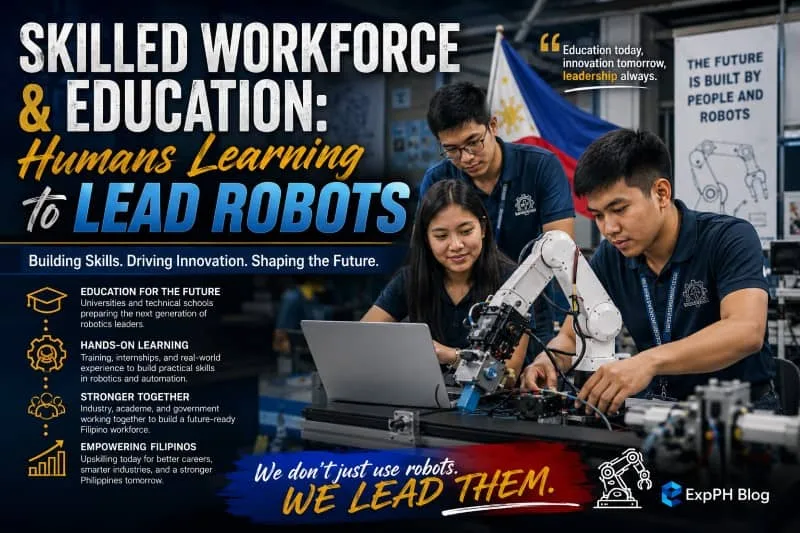
4. Skilled Workforce and Education: Humans Learning to Lead Robots
The success of the rise of robotics in the Philippines depends heavily on skilled people who can design, operate, and maintain intelligent systems. Engineers, technicians, educators, and innovators play important roles in helping industries adopt robotics while ensuring workers remain prepared for the country’s growing digital economy.
The Philippines continues to invest in education and technical training to support the rise of robotics in the country. Universities, government agencies, and private companies are developing programs that help students and workers gain practical skills in robotics, automation, artificial intelligence, and advanced manufacturing technologies.
Educational and Training Programs
- Universities such as the University of the Philippines, Ateneo de Manila University, and De La Salle University offer robotics, AI, and mechatronics programs
- TESDA and DOST provide automation and machine operation training with recognized certifications
- Industry partnerships support internships, workshops, and robotics competitions for hands-on learning
University robotics programs combine classroom learning with industry exposure to prepare graduates for technical careers. Students gain practical experience through internships and laboratory training, helping them understand real-world industrial systems and modern automation technologies before entering the workforce.
The rise of robotics in the Philippines is encouraging workers to improve digital literacy, technical knowledge, and problem-solving skills. Many employees are moving into supervisory, engineering, and system management positions. This transition shows that technology can create new career opportunities when supported by proper education and continuous training.
The rise of robotics in the Philippines also highlights the importance of retraining and workplace learning. Employees can transition into higher-value positions that combine technical expertise with human decision-making. Scholarships, mentorship programs, and employer-sponsored training initiatives continue expanding access to careers in robotics and automation.
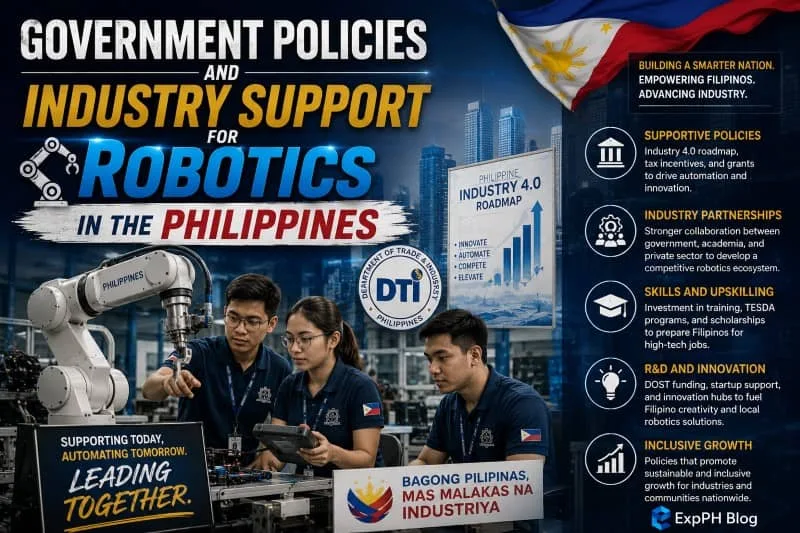
5. Government Policies and Industry Support for Robotics in the Philippines
The Philippine government recognizes the growing importance of the rise of robotics in the Philippines and continues to support Industry 4.0 initiatives. Various programs encourage innovation, improve workforce readiness, and help businesses adopt automation technologies that strengthen productivity, competitiveness, and long-term economic growth across multiple industries.
Government Support Initiatives
- Tax incentives and grants for companies adopting automation technologies
- An Industry 4.0 roadmap developed by the Department of Trade and Industry
- DOST funding for robotics research, development, and startup incubation
- Technology hubs established in Manila, Cebu, and Davao to support innovation
These government initiatives play an important role in the rise of robotics in the Philippines by helping companies modernize operations while supporting Filipino workers. Training and upskilling programs help employees transition from physically demanding jobs into digital, technical, and analytical roles suited for advanced industries and automation systems.
Government agencies are also exploring worker support programs that promote inclusive growth during technological transition periods. These measures may include temporary financial assistance, retraining vouchers, and career development programs designed to help workers adapt to automation while maintaining stable employment opportunities and long-term economic security.
The rise of robotics in the Philippines continues to benefit from cooperation between government institutions, educational sectors, and private industries. By combining investment incentives with human-centered workforce development, the country is building a stronger foundation for sustainable innovation, technological advancement, and inclusive economic progress.
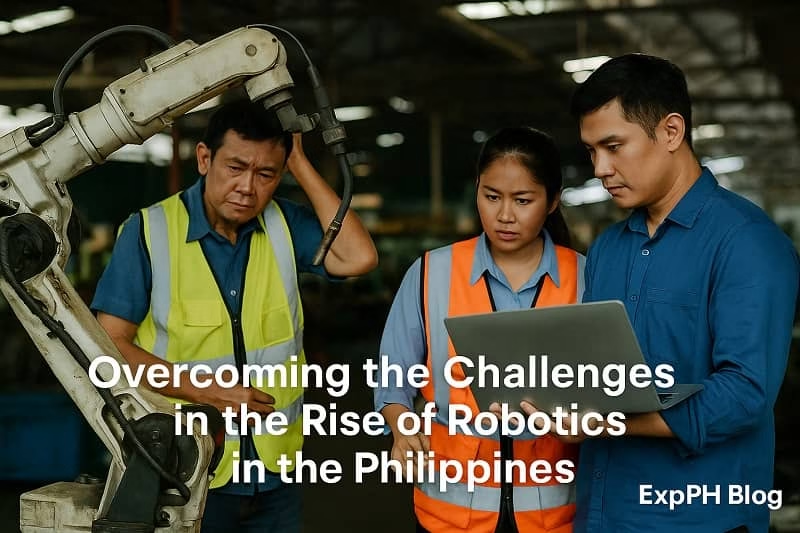
6. Overcoming the Challenges in the Rise of Robotics in the Philippines
The rise of robotics in the Philippines continues to grow, but several challenges still limit wider adoption across industries. Businesses, government agencies, and educational institutions must work together to address financial, technical, and social barriers that affect companies, workers, and communities adapting to automation technologies.
Major Challenges Facing Robotics Adoption
- High initial costs and limited financing options
- Skill gaps among local workers and technicians
- Infrastructure issues such as unstable internet connectivity
- Cultural resistance and fear of automation
- Outdated regulations involving robotics safety and data protection
One of the biggest concerns in the rise of robotics in the Philippines is the fear of job displacement. Many workers worry that automation may replace human labor entirely. However, robotics often creates new technical and supervisory positions that require advanced skills, training, and stronger collaboration between workers and technology.
To reduce these concerns, many companies now invest in retraining and workforce transition programs. Employees can move into roles involving technical support, quality assurance, equipment monitoring, and robotic system supervision. Clear communication about automation plans also helps workers understand future opportunities and reduces workplace uncertainty.
The rise of robotics in the Philippines also faces practical infrastructure challenges. Small businesses need better access to affordable financing, while rural areas require stable electricity and reliable internet connections to support automated systems and digital operations across industries such as agriculture, logistics, and manufacturing.
Public-private partnerships can help solve these barriers by supporting shared technology facilities, mobile Robot-as-a-Service programs, and cooperative automation models. These efforts help distribute costs and benefits more fairly while encouraging wider participation in modern technology adoption among businesses and local communities.
Overcoming the challenges in the rise of robotics in the Philippines requires long-term planning, collaboration, and social responsibility. Government agencies, private companies, schools, and workers must cooperate to ensure automation improves productivity while creating inclusive opportunities that support economic growth and protect Filipino livelihoods.
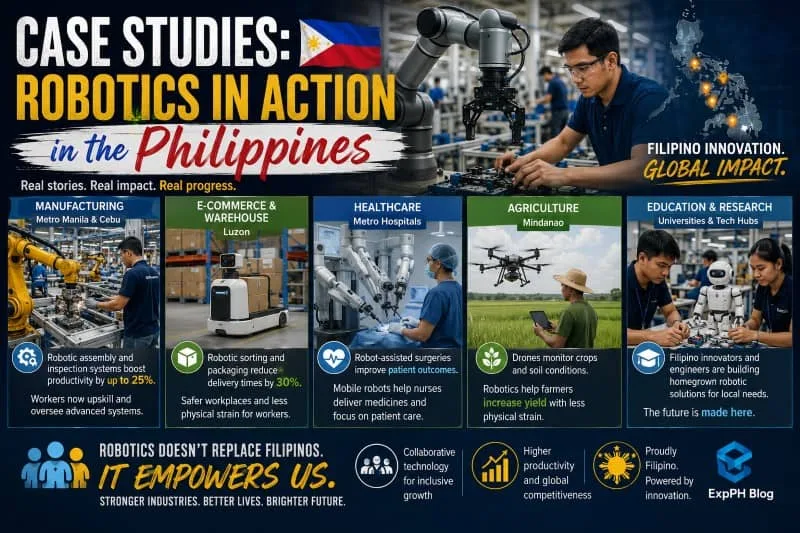
7. Case Studies: Robotics in Action in the Philippines
Real-world examples across the country show how the rise of robotics in the Philippines is improving productivity, workplace safety, and operational efficiency. Different industries are adopting robotic technologies to solve labor challenges, modernize systems, and create new opportunities for Filipino workers through automation and digital transformation.
Manufacturing Innovation in Metro Manila and Cebu
- Electronics manufacturers in Metro Manila and Cebu have improved productivity after adopting robotic assembly and inspection systems. Human employees now supervise automated operations instead of performing repetitive tasks. Many workers have also gained new opportunities in robotics maintenance, programming, and technical system management.
E-Commerce and Warehouse Robotics
- Robotic sorting and packaging technologies have helped warehouses process orders faster and improve delivery efficiency. Workers now focus more on quality control, inventory supervision, and logistics coordination. Employees also experience less physical strain, creating safer workplaces and reducing staff turnover within large distribution centers.
Healthcare Robotics in Metro Hospitals
- Hospitals in major cities are using robot-assisted surgical systems to improve medical precision and patient recovery times. Mobile robotic units also support nurses by handling medication delivery and routine transport tasks. These technologies reduce workload pressure and allow healthcare workers to spend more time with patients.
Agricultural Robotics in Mindanao
- Farmers in Mindanao use drones and automated monitoring systems to track soil conditions, crop health, and irrigation needs. Robotics helps older farmers manage larger agricultural areas with less physical effort. Cooperative farming groups also share robotic services seasonally, making advanced technology more accessible to smaller farms.
These examples demonstrate that the rise of robotics in the Philippines can strengthen human capability rather than replace it. Successful automation depends on inclusive implementation, proper workforce training, and strong collaboration between technology providers, businesses, government agencies, and local communities adapting to modern industrial transformation.

8. Future Outlook: A Collaborative Future Between Humans and Robots
The future of robotics in the Philippines will focus on collaboration between humans and intelligent machines. Automation and artificial intelligence are expected to transform industries by improving productivity, supporting innovation, and creating new technical careers rather than completely replacing human workers across major sectors of the economy.
What the Future Holds
- AI and robotics integration for smarter and more adaptive systems
- Expansion of Robot-as-a-Service solutions for small businesses
- Growth of local robotics startups led by Filipino engineers
- Development of green robotics that support sustainability and energy efficiency
AI-powered robotics systems will become more advanced and capable of adapting to changing tasks in real time. These technologies will support human decision-making in industries such as manufacturing, healthcare, logistics, and agriculture, helping businesses operate more efficiently while improving overall productivity and service quality.
The expansion of Robot-as-a-Service programs will make automation more affordable for small and medium enterprises across the Philippines. Businesses will gain flexible access to robotic systems during peak seasons or specialized operations without the financial burden of purchasing expensive equipment and long-term maintenance services.
Local startups are also expected to play an important role in the future of robotics in the Philippines. Filipino engineers and innovators are developing robotic technologies designed for local industries, languages, and business environments. These solutions can help address unique national challenges while strengthening the country’s growing technology sector.
Green robotics will become increasingly important as industries focus on sustainability and environmental responsibility. Energy-efficient machines, automated waste reduction systems, and eco-friendly manufacturing technologies can help businesses lower environmental impact while supporting long-term economic growth and sustainable industrial development.
In the future, Filipino workers will increasingly take on roles such as robot supervisors, AI analysts, and innovation managers. Collaboration between humans and robotics systems may become a major competitive advantage for the Philippines in Southeast Asia, especially if education, lifelong learning, and community-based workforce development remain national priorities.

Final Thoughts on the Rise of Robotics in the Philippines
The Rise of Robotics in the Philippines symbolizes more than machines it represents a partnership between human potential and artificial intelligence. From factories and hospitals to farms and delivery hubs, robots are reshaping the nation’s economy while empowering people to do more meaningful work.
While challenges like cost and skills development remain, the synergy of education, government policy, and industry collaboration ensures that robotics will enhance, not replace the Filipino workforce. Companies that prioritize people-first implementation by investing in training, safety, and equitable access will lead this transformation ethically and sustainably.
The key is balance: letting robots handle precision and repetition, while humans lead with creativity, emotion, and critical thought. By embracing this future, the Philippines is not just participating in the Industry 4.0 revolution it is leading it, building a smarter, more resilient, and human-centered future for all.
FAQs for the Rise of Robotics in the Philippines Driving Industry 4.0 Innovation
What is “The Rise of Robotics in the Philippines” about?
Answer: This phrase describes the growing adoption of robotic technologies across Philippine industries from factories and warehouses to hospitals and farms. It highlights how automation, AI, and IoT are being used to boost productivity, improve safety, and create new types of jobs. Importantly, it also frames how this growth reshapes human roles: workers move from repetitive tasks into supervisory, technical, and creative positions.
How will robotics affect jobs in the Philippines?
Answer: Robotics will shift the job landscape rather than simply remove jobs. Repetitive, dangerous, or ergonomically stressful tasks are likely to be automated, while new roles in robot operation, programming, maintenance, and data analysis will emerge. With the right training and policy support, workers can transition to higher-skilled positions with better pay and safer conditions.
Can small businesses and farmers in the Philippines afford robotics?
Answer: Direct purchase of industrial robots can be expensive, but models like Robot as a Service (RaaS), cooperatives, and shared robotics hubs make access more affordable. Seasonal leasing and community-based machines help smallholders and MSMEs experiment with automation without huge upfront cost, improving productivity while preserving livelihoods.
Will robots replace doctors and nurses in Philippine hospitals?
Answer: No, robots are tools that augment healthcare professionals. Robot-assisted surgery, rehabilitation devices, and logistic robots help doctors and nurses deliver care more efficiently and safely. This reduces workload and burnout, enabling medical staff to spend more time on patient-centered tasks that require human judgment and empathy.
What kinds of training do Filipino workers need to work with robots?
Answer: Workers benefit from training in basic programming, machine operation, preventive maintenance, system monitoring, and data interpretation. Universities, TESDA, and DOST programs along with industry-led upskilling initiatives provide certifications, hands-on training, and internships that prepare workers for technical and supervisory roles.
How does robotics improve safety and working conditions?
Answer: Robots can take over hazardous, heavy, and repetitive tasks (e.g., lifting heavy loads, handling toxic materials), lowering workplace injuries and long-term musculoskeletal problems. Humans then move into oversight, quality control, and ergonomically safer roles, improving overall worker well-being and job satisfaction.
What are the main barriers to robotics adoption in the Philippines?
Answer: Primary barriers include high initial costs, limited financing, skill gaps, inconsistent internet/electricity in some areas, and regulatory or cultural resistance. Addressing these requires financing innovations (RaaS, subsidies), robust training programs, infrastructure investments, and inclusive policy design that protects workers during transitions.
How do robotics and sustainability fit together in Philippine industries?
Answer: Robotics supports sustainability by enabling precision agriculture (reduced chemical use), optimized energy use in factories (less waste), and improved supply chain efficiency (less spoilage). When deployed thoughtfully, automation can lower environmental footprints while improving productivity and farmer incomes.
Are there local robotics startups and innovations in the Philippines?
Answer: Yes, a growing number of Filipino startups, university labs, and SMEs are developing low-cost, locally tailored robots (e.g., agricultural drones, pick-and-place systems for SMEs, or low-cost cobots). These homegrown solutions are often better suited to local languages, climates, and cost constraints, and they create skilled jobs locally.
How can policymakers make robotics adoption inclusive for Filipino workers?
Answer: Policymakers can combine incentives for businesses (tax breaks, grants) with strong investments in education and reskilling, portable benefits or transition funds, and pilot programs that prioritize marginalized communities. Public-private partnerships, mobile training units, and cooperative RaaS models help distribute benefits and reduce the social risk of automation.
Want to understand how robotics fits into the bigger picture of technology growth in the Philippines?
Read our complete guide on Technology in the Philippines Strong Progress, Key Opportunities, and Future Innovations and discover how advancements are shaping industries and future opportunities.
Explore similar topics through the links below
- Future of Robotics in the Philippines
- Revolutionary Robotics in the Philippines Driving Industry 4.0 Innovation
For official resources, visit DOST Philippines
Learning Hub Quiz!
See how much you know about how robotics and automation are shaping the Philippines’ Industry 4.0 revolution. Each question has one correct answer good luck and enjoy learning!
Results


#1. When did robotics first appear in Philippine manufacturing?
#2. Which sector leads in robotics adoption?
#3. What does “RaaS” stand for?
#4. What key benefit do robots bring to factories?
#5. Which government agency funds robotics R&D?
#6. What industry uses drones and smart tractors?
#7. What’s the main human benefit of robotics?
#8. What challenge slows robotics adoption?
#9. What do robots improve in healthcare?
#10. What is the core goal of Industry 4.0?
Whether you got a perfect score or learned something new, remember every click, every question, every insight brings us closer to innovation. Share your quiz score and thoughts in the comments below tell us what surprised you most or what you’d like to learn next!

A Filipino web developer with a background in Computer Engineering. Founder of ExpPH Blog and ExpPH Business Guide, creating practical content on OFW guidance, business, finance, freelancing, travel, and lifestyle. Passionate about helping Filipinos grow, he shares insights that educate, empower, and inspire readers nationwide.