
Technology in the Philippines Strong Progress, Key Opportunities, and Future Innovations
Last updated: 2026
Technology in the Philippines has become one of the most powerful engines driving the Philippines’ economic and social transformation. Over the last two decades, the country has moved from being largely dependent on agriculture and traditional industries to becoming one of the rising digital hubs in Southeast Asia. The proliferation of ICT services, the rapid expansion of its digital economy, and the growing adoption of artificial intelligence, smart agriculture, fintech, and e-mobility mark the beginning of a new technological era. Technology has become one of the strongest driving forces in the Philippines’ development story.
Despite this progress, significant obstacles remain. Infrastructure gaps, uneven access to digital tools, cybersecurity vulnerabilities, and a persistent digital divide continue to slow down progress. Yet, the Philippines is uniquely positioned to address these challenges. With its young population, innovative entrepreneurs, and strong international partnerships, the nation stands on the brink of major technological breakthroughs.
This article explores the historical evolution of technology in the Philippines, the industries leading innovation, the role of government and private players, ongoing challenges, and the promising future that lies ahead.
Progress is driven by innovation. To understand the infrastructure and intelligence powering our growth, dive into our deep dive on Future Technology in the Philippines: AI, Robotics, and 5G Trends.
Table of Contents
Historical Perspective
Technology in the Philippines has grown rapidly through digital innovation, expanding internet access, and modern technologies. This progress continues to create strong opportunities and future innovations across business, education, and everyday life.
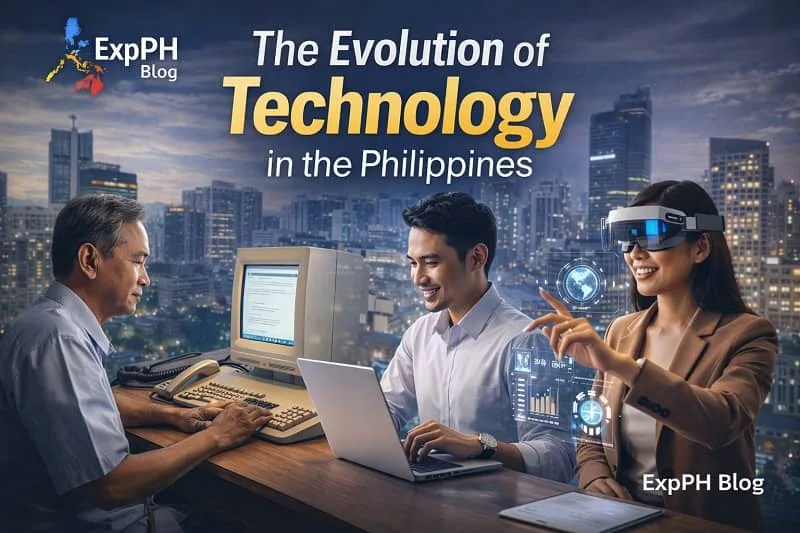
The Evolution of Technology in the Philippines
The evolution of technology in the Philippines shows the transition from early communication tools and basic computers to modern internet, mobile, and digital innovations that shape business and daily life today.
Pre-digital era (before the 1990s)
In the decades before the information age, technology in the Philippines was primarily concentrated in agriculture, broadcasting, and light manufacturing. Radios and televisions dominated households, serving as the most advanced mass communication tools. Mechanized farm equipment was slowly being introduced, though many rural areas still depended on manual labor and traditional practices.
During the 1970s and 1980s, state-owned telecommunications, dominated by the Philippine Long Distance Telephone Company (PLDT), offered very limited connectivity. Landline services were expensive and inaccessible for most households. Owning a telephone was considered a status symbol, and waiting periods for installation stretched to years. This technological lag hindered early modernization but also created pent-up demand for more efficient services, which later catalyzed the rapid adoption of ICT in the 2000s.
The rise of ICT and BPO (2000s)
The 2000s became a turning point. The Philippines emerged as one of the world’s top outsourcing destinations, particularly in customer service, medical transcription, and back-office operations. Call centers sprouted across Makati, Ortigas, and Cebu, generating millions of jobs and transforming the business landscape.
Government initiatives, such as the Special Economic Zone Act (1995) and the creation of the Information Technology and E-Commerce Council, played an important role in positioning the country as a global outsourcing hub. The Filipino workforce’s fluency in English and cultural compatibility with Western markets gave the country a competitive edge. ICT revenues soon became a pillar of the economy, contributing billions of dollars annually.
The digital shift (2010s)
The introduction of affordable smartphones, coupled with the explosive growth of social media, reshaped everyday life. Internet cafés flourished, becoming centers of digital literacy for students and young professionals. E-commerce gained ground, while online banking and video streaming began influencing consumer behavior.
Overseas Filipino Workers (OFWs) also benefited from digitalization. Mobile apps like PayPal and later GCash revolutionized how remittances were sent and received. Meanwhile, social media cemented its role in Filipino society. With some of the highest daily usage rates in the world, the Philippines earned the title of “social media capital of the world.”
The innovation era (2020s–present)
The COVID-19 pandemic accelerated digital adoption. Schools shifted to online learning, companies implemented work-from-home setups, and businesses quickly moved into e-commerce and digital payments. Today, innovations in artificial intelligence, smart agriculture, fintech, renewable energy, and robotics are pushing the country toward a more technologically advanced society.
This period marks the most significant transformation yet for technology in the Philippines, showing how fast adaptation can reshape industries and daily life.
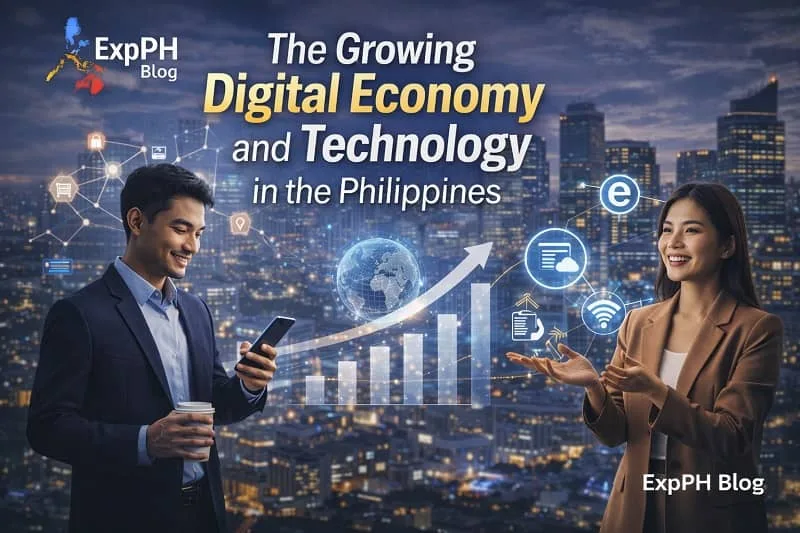
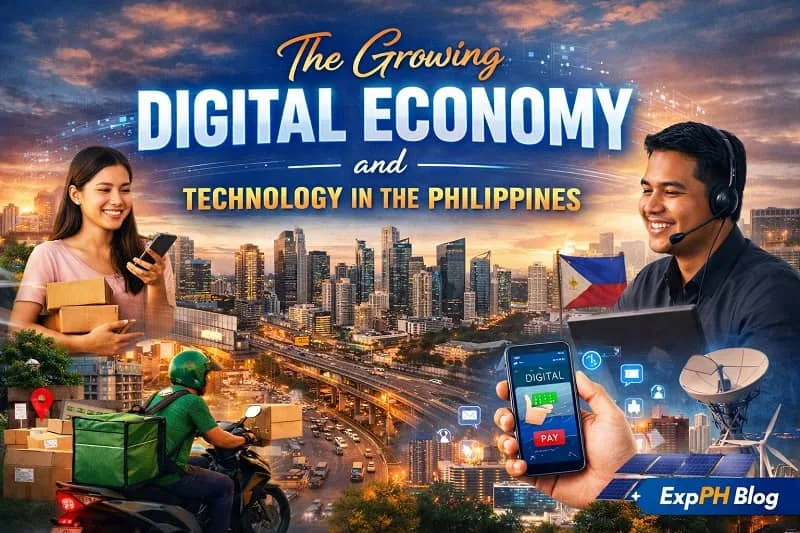
The Growing Digital Economy and Technology in the Philippines
The digital economy and technology in the Philippines are expanding at an impressive rate. By the mid-2020s, the Philippine digital economy is projected to reach around $35 billion, driven largely by e-commerce, fintech, and online services. Long-term forecasts estimate it could exceed $100 billion by 2030 as infrastructure improves and more Filipinos join the digital ecosystem. The Department of Information and Communications Technology (DICT) has been at the forefront of improving connectivity through its Free Wi-Fi for All program (DICT.gov.ph).
Drivers of growth:
- E-commerce platforms such as Lazada, Shopee, and Zalora, along with homegrown startups, have made online shopping mainstream.
- Digital banking and fintech solutions are transforming how Filipinos manage money. Mobile apps like GCash and Maya allow users to pay bills, transfer funds, and even invest, all from a smartphone.
- Social media platforms have become powerful marketing channels, shaping consumer habits and boosting small business growth.
Impact on society
The expansion of the digital economy has opened new opportunities for microentrepreneurs and freelancers. Small enterprises that once relied solely on brick-and-mortar stores now thrive through Facebook Marketplace, Instagram Shops, and TikTok Shop, gaining national and sometimes international reach.
This democratization of access means that a sari-sari store owner in a rural town can market goods online, while a young designer in Mindanao can offer services to clients in Europe all powered by technology in the Philippines.
The digital economy has therefore become more than just a growth engine it is a tool for democratizing access and uplifting communities.
ICT Services: A Global Outsourcing Hub
The Business Process Outsourcing (BPO) industry continues to be a cornerstone of the Philippine economy, employing over 1.5 million people and contributing nearly 10% of GDP.
Strengths of the Philippine ICT sector:
- A large, English-proficient workforce
- Cost advantages compared to Western countries
- Cultural affinity with English-speaking clients
- Government support through incentives and training programs
Expansion to regional hubs
ICT development is no longer confined to Metro Manila. Cities like Cebu, Davao, Iloilo, and Bacolod have become new outsourcing centers. This decentralization helps balance economic growth and spreads the benefits of technology in the Philippines to more regions.
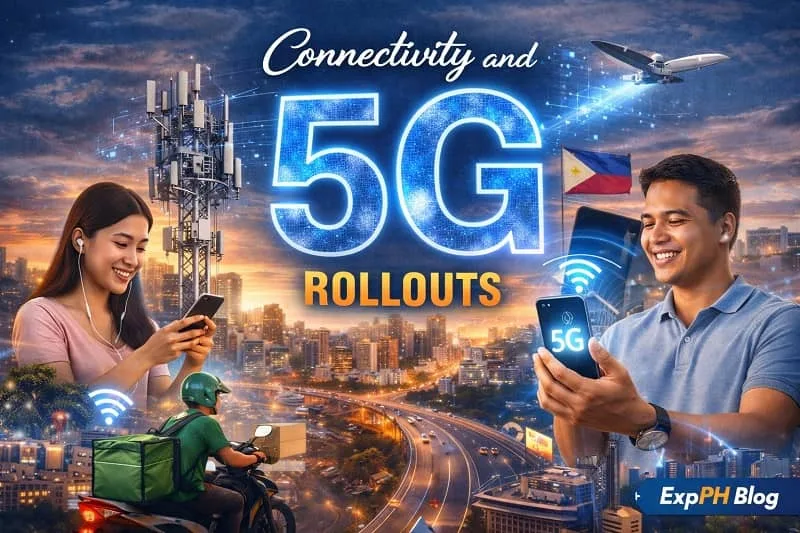
Connectivity and 5G Rollouts
Internet speed and reliability have long been points of frustration for Filipinos. However, the last few years have seen major improvements:
- 5G expansion by Globe, Smart, and DITO is delivering faster mobile internet nationwide.
- The Free Wi-Fi for All Program, spearheaded by the DICT, aims to provide connectivity in public spaces, schools, and government offices.
- Partnerships with global providers, including SpaceX’s Starlink, are bringing satellite internet to underserved communities.
These improvements make technology in the Philippines more accessible, supporting education, healthcare, remote work, and e-government services.
Adoption of Emerging Technologies
The Philippines is steadily adopting emerging technologies such as artificial intelligence, cloud computing, fintech, and digital platforms. These innovations help businesses improve efficiency, create new services, and support the country’s growing digital economy.

Artificial Intelligence (AI)
Artificial Intelligence is transforming industries in the Philippines by improving finance security, supporting healthcare diagnostics, and enhancing education through personalized learning. As AI adoption grows, developing digital skills is becoming increasingly important for professionals and students.
AI is revolutionizing industries:
Finance
- Fraud detection systems and chatbots enhance security and efficiency.
Healthcare
- AI aids in diagnostics and patient record management.
Education
- Adaptive learning platforms personalize lessons for students.
These innovations highlight the diversity of technology in the Philippines, beyond just outsourcing.
As AI adoption expands across finance, healthcare, and education, continuous skills development has become increasingly important. Platforms such as Udemy provide accessible courses on artificial intelligence, programming, data analysis, and cybersecurity, helping Filipinos and Overseas Filipino Workers build practical, job-ready digital skills.
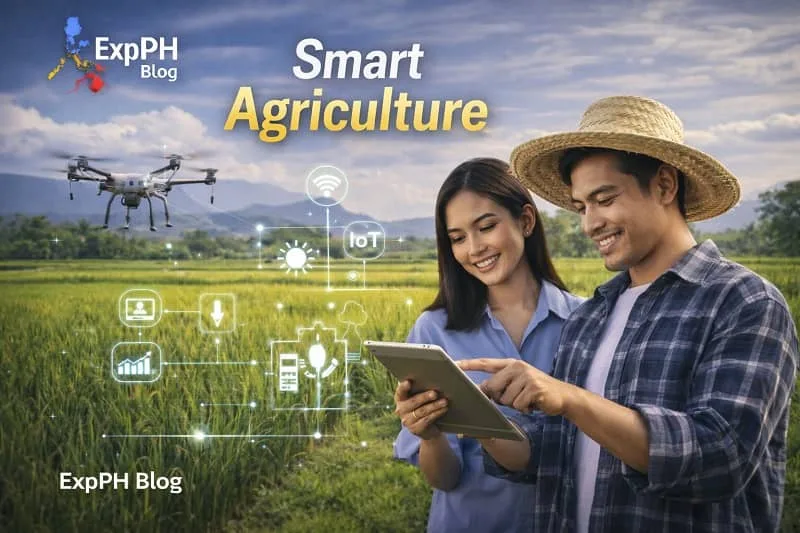
Smart Agriculture
Smart agriculture is transforming farming practices in the Philippines by integrating modern technology into traditional agricultural methods. These innovations help farmers improve productivity, monitor crops more efficiently, and connect more easily with buyers.
Examples include:
- IoT-based soil monitoring systems
- Drone-assisted precision farming
- Online platforms connecting farmers directly to markets
These technological advancements are helping Filipino farmers increase efficiency, reduce costs, and improve market access, supporting a more sustainable and competitive agricultural sector.
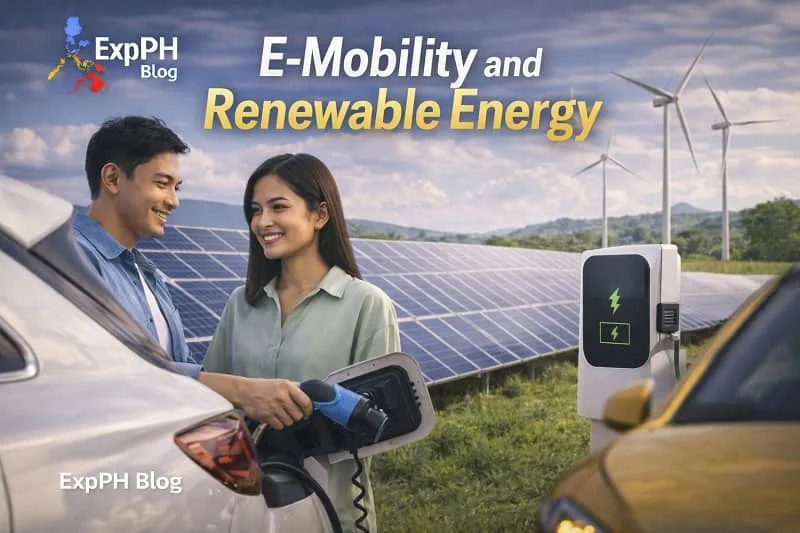
E-Mobility and Renewable Energy
The Philippines is expanding e mobility and renewable energy initiatives to support cleaner transportation and sustainable power generation. These efforts help reduce pollution, improve energy efficiency, and strengthen the country’s transition toward a greener future.
To combat pollution and reduce reliance on fossil fuels, initiatives include:
- Deployment of electric jeepneys and buses in Metro Manila
- Expansion of EV charging networks
- Large-scale investment in solar farms and wind energy in Ilocos and Mindoro
These initiatives demonstrate the Philippines’ growing commitment to sustainable development, helping modernize transportation and expand the use of renewable energy across the country.
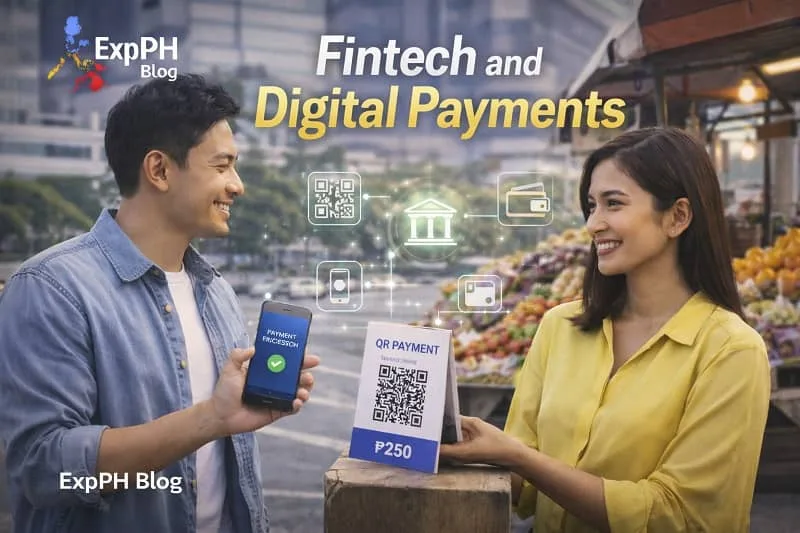
Fintech and Digital Payments
The Philippines is one of the fastest growing fintech markets in Asia, supported by more than 70 million active GCash users. Digital wallets are expanding financial access by allowing millions of Filipinos to send money, pay bills, and manage everyday transactions through simple mobile platforms.
Key developments include:
- Growth of mobile wallets such as GCash and Maya
- Expansion of QR code payment systems for small businesses
- Digital banking services reaching unbanked communities
These developments are improving financial inclusion and modernizing the Philippine payment ecosystem
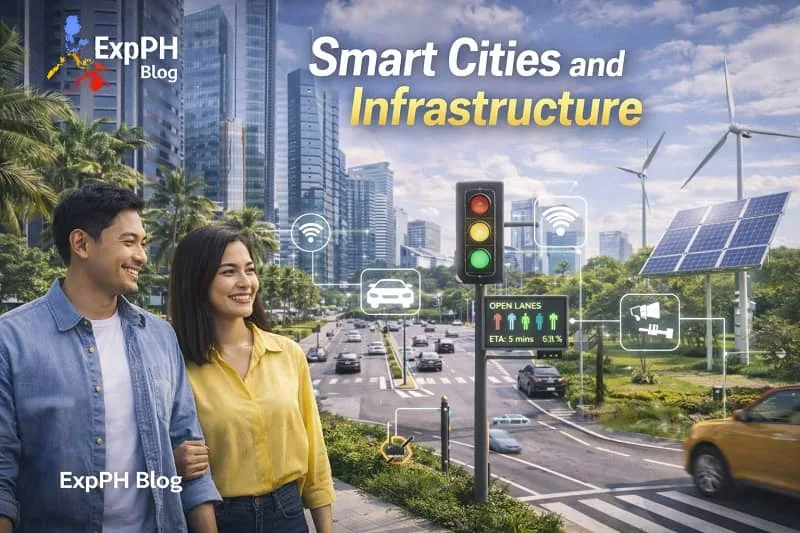
Smart Cities and Infrastructure
Urban centers in the Philippines are adopting smart technologies to improve transportation, energy efficiency, and public safety. Cities such as Bonifacio Global City and Clark Global City use digital systems and connected infrastructure to support sustainable development and better services for residents, businesses, and visitors.
Key initiatives include:
- Intelligent traffic management systems
- Smart energy and sustainable power solutions
- Digital monitoring for public safety and city services
These developments help cities operate more efficiently while improving urban living standards.
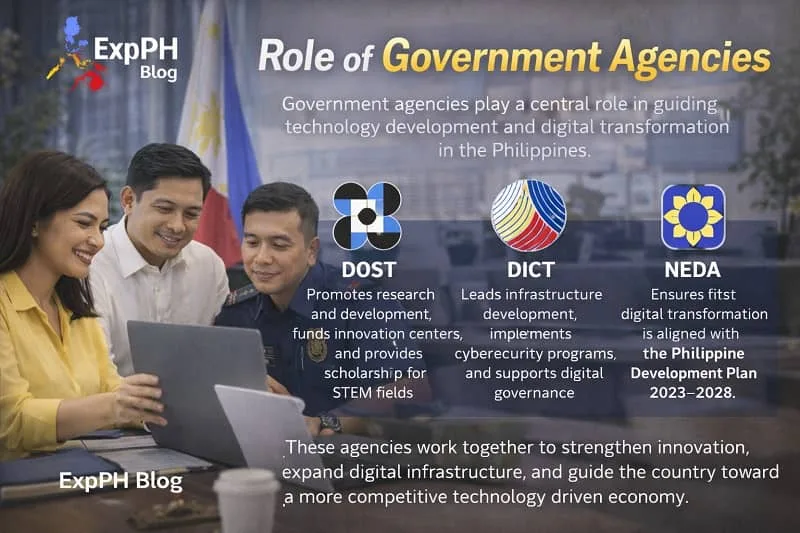
Role of Government Agencies
Government agencies play a key role in guiding technology development and digital transformation in the Philippines. Through national programs, policy planning, and infrastructure projects, these institutions support innovation, strengthen digital systems, and ensure that technology growth benefits businesses, communities, and future industries.
Key agencies include:
DOST (Department of Science and Technology)
- Promotes research and development, funds innovation centers, and provides scholarships that support STEM education and scientific advancement.
DICT (Department of Information and Communications Technology)
- Leads digital infrastructure development, implements cybersecurity programs, and promotes digital governance to improve connectivity and online public services.
NEDA (National Economic and Development Authority)
- Ensures that digital transformation initiatives align with the Philippine Development Plan 2023 to 2028 and support long term economic development.
These agencies work together to strengthen innovation, expand digital infrastructure, and guide the country toward a more competitive technology driven economy.
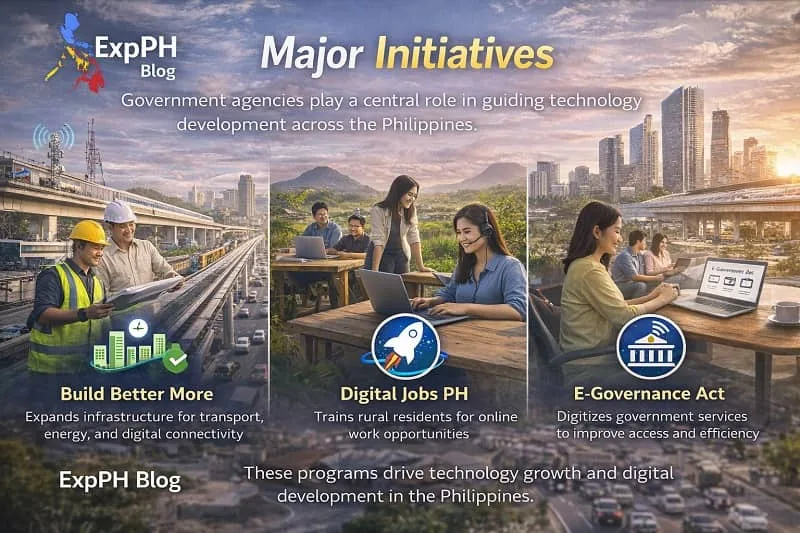
Major Initiatives
Government programs support digital transformation and infrastructure development across the Philippines. These initiatives strengthen connectivity improve public services and create new economic opportunities. By combining policy support technology investment and workforce training the government helps build a stronger and more inclusive digital economy.
Key initiatives include:
Build Better More
- Expands national infrastructure through major investments in transportation energy and digital connectivity that support long term economic growth and modernization.
Digital Jobs PH
- Trains rural residents and job seekers with digital skills that prepare them for online work remote employment and freelancing opportunities.
E-Governance Act
- Moves essential government services online to improve efficiency transparency and access for citizens and businesses.
These programs show how government policy continues to drive technology growth and digital development in the Philippines.

Industry Players and Startups
The Philippine startup ecosystem continues to grow as local companies and global technology firms invest in digital innovation. These businesses expand financial services strengthen e commerce platforms and support cloud infrastructure. Their growth helps accelerate entrepreneurship job creation and technology development across the country.
Key industry players include:
Mynt (GCash)
- A leading fintech company that dominates mobile finance and digital payments across the Philippines.
Kumu
- A Filipino live streaming platform that connects creators and audiences with growing global reach.
Great Deals E-commerce
- A major logistics and e commerce enabler that supports online brands and marketplace operations.
Global technology companies also contribute to industry growth:
- Investing in digital skills programs and cloud infrastructure
Amazon Web Services
- Expanding cloud services and technology training
Microsoft
- Supporting digital transformation and enterprise cloud solutions
These companies strengthen the Philippine technology ecosystem and support innovation across startups businesses and digital platforms.
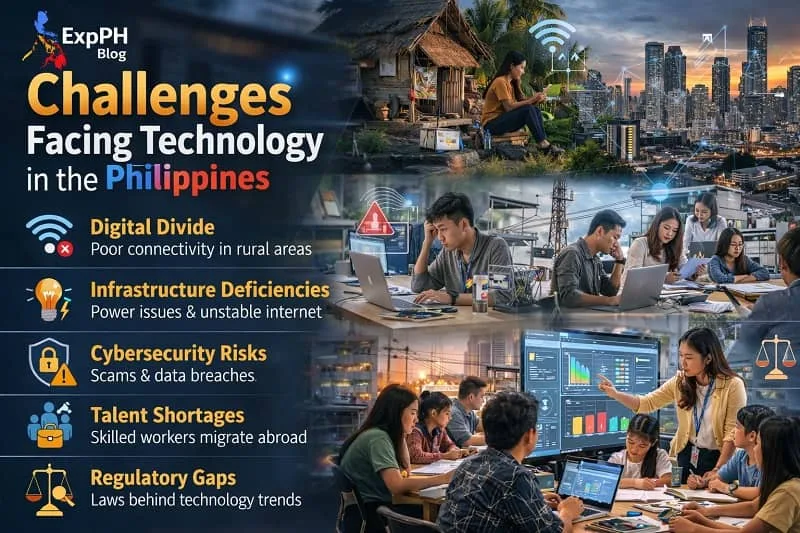
Challenges Facing Technology in the Philippines
Despite rapid growth in the digital economy, the Philippines still faces several challenges that affect technology development. Addressing these issues is important for building a stronger digital infrastructure, improving access to innovation, and ensuring that technology benefits businesses communities and future industries across the country.
Key challenges include:
Digital Divide
- Many rural areas still experience limited internet access and lower levels of digital literacy, which restricts participation in online education, digital services, and technology based employment.
Infrastructure Deficiencies
- Power interruptions and unstable internet connectivity remain common in some regions, affecting productivity and slowing technology adoption.
Cybersecurity Risks
- Online scams, identity theft, and data breaches continue to grow as digital platforms expand across businesses and government services.
Talent Shortages
- The technology sector faces skill gaps as many experienced IT professionals pursue higher paying opportunities overseas.
Regulatory Gaps
- Some policies and laws struggle to keep pace with fast changing technologies and digital business models.
Overcoming these challenges will help strengthen the country’s digital ecosystem and support long term technology growth in the Philippines.
Opportunities Ahead
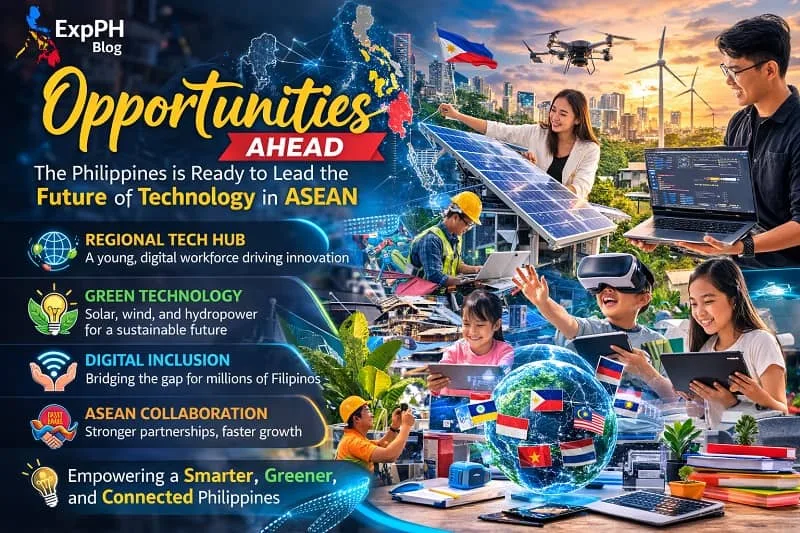
The Philippines has strong potential to expand its technology sector and strengthen its role in the regional digital economy. A young workforce growing digital adoption and increasing investment in infrastructure create new opportunities for innovation sustainable development and stronger partnerships across Southeast Asia.
Key opportunities include:
ASEAN Collaboration
- Stronger partnerships with neighboring countries can accelerate technology growth support regional innovation and expand economic cooperation.
Regional Tech Hub
- The country’s young and digitally skilled population creates strong potential for innovation entrepreneurship and technology development within the ASEAN region.
Green Technology
- Expansion of solar wind and hydropower projects can support energy security reduce environmental impact and open new economic opportunities.
Digital Inclusion
- Improving internet access and digital literacy can empower millions of Filipinos to participate in education business and online employment.
Technology in the Philippines Beyond 2026
As the Philippines moves deeper into the second half of the decade, the focus of technology development is shifting toward advanced skills, digital resilience, and global competitiveness. Demand is rising for AI-literate workers, cybersecurity professionals, and digitally skilled freelancers who can operate in remote, international environments.
Digital freelancing and remote work continue to expand, allowing Filipinos and Overseas Filipino Workers to participate in global projects without leaving home. At the same time, accelerated government digitization is improving access to public services, strengthening cybersecurity frameworks, and increasing efficiency across agencies.
This forward-looking transition positions the Philippines not only as a global services hub, but as an emerging creator of digital solutions, innovation, and talent for the international market.
The Future of Technology in the Philippines
The future of technology in the Philippines shows strong potential as digital transformation accelerates across industries. Continued investment in innovation education and infrastructure will support economic growth. These developments can strengthen the country’s role in Southeast Asia’s technology landscape and create new opportunities for businesses and professionals.
Experts predict the Philippines will:
Grow the digital economy beyond 100 billion dollars by 2030
- Rapid expansion of e commerce fintech and digital services is expected to drive this growth.
Lead fintech adoption in Southeast Asia
- Mobile payments digital banking and financial technology platforms will continue expanding nationwide.
Develop AI driven and robotics based industries
- Artificial intelligence automation and data driven technologies will support productivity and innovation.
Expand smart and eco friendly cities
- Urban planning will integrate sustainable energy smart infrastructure and digital services.
Produce globally competitive talent through STEM education reforms
- Strengthening science technology engineering and mathematics programs will prepare future professionals for global technology careers.
These trends highlight the country’s potential to become a stronger technology hub in the region.
Social Impact of Technology
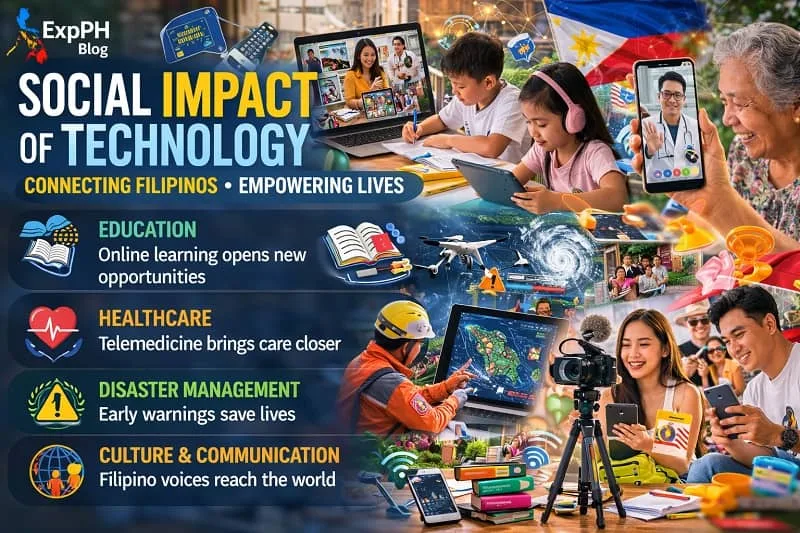
Technology continues to reshape everyday life in the Philippines by improving access to information services and communication. Digital platforms support learning healthcare and disaster response while also expanding creative expression. At the same time technology highlights challenges such as unequal access to devices reliable internet and digital skills.
Key areas of social impact include:
Education
- Online learning platforms expand access to lessons and training programs. However differences in device ownership and internet connectivity still create learning gaps among students in urban and rural communities.
Healthcare
- Telemedicine services allow patients to consult doctors remotely. This improves access to healthcare for people living in remote areas where hospitals and medical specialists are limited.
Disaster Management
- Satellite monitoring weather forecasting and early warning systems help communities prepare for natural disasters. These technologies support faster response and improve public safety during emergencies.
Culture and Communication
- Social media platforms give Filipino creators influencers and advocacy groups a global stage to share ideas stories and cultural expression.
Technology continues to shape society while creating opportunities to improve education healthcare communication and public safety across the Philippines.
FAQs About Technology in the Philippines
What is the importance of technology in the Philippines?
Technology in the Philippines drives growth, improves public services, expands digital jobs, supports education, strengthens connectivity, and enables innovation across business, government, healthcare, and life.
What are the main drivers of technological growth in the Philippines?
Key drivers include a young population, widespread smartphone use, strong BPO industry, expanding internet access, government digital programs, foreign investments, and demand for online services.
How does technology affect daily life in the Philippines?
Technology improves education through online learning, healthcare via telemedicine, finance through digital wallets, disaster response using data systems, and communication through social media platforms nationwide.
What role does the BPO industry play in Philippine technology?
The BPO sector provides millions of jobs, attracts foreign investment, boosts exports, develops digital skills, and positions the Philippines as a competitive global outsourcing destination.
What challenges limit technology development in the Philippines?
Major challenges include uneven internet access, infrastructure gaps, cybersecurity risks, digital skills shortages, regulatory delays, and the persistent digital divide between urban and rural communities.
Can technology help small businesses in the Philippines grow?
Yes, technology enables online selling, freelancing, digital payments, remote services, and global market access, allowing small Filipino businesses to scale efficiently with lower startup costs.
How does the government support technology in the Philippines?
Government agencies support technology through infrastructure projects, digital governance, free public Wi-Fi, skills training, innovation grants, cybersecurity programs, and long-term national development planning initiatives nationwide.
What emerging technologies are shaping the Philippines today?
Emerging technologies include artificial intelligence, fintech, smart agriculture, renewable energy, electric mobility, cloud computing, and smart city solutions transforming industries and public services nationwide adoption.
How does technology benefit Overseas Filipino Workers?
Technology benefits OFWs through digital remittances, online banking, remote work opportunities, skills training, business management tools, and easier communication with families in the Philippines abroad.
What is the future of technology in the Philippines?
The future points toward stronger connectivity, expanded digital economy, AI-driven industries, inclusive innovation, smarter cities, greener technology, and globally competitive Filipino talent across sectors nationwide.
Final Thoughts on Technology in the Philippines
Technology in the Philippines has reached a decisive moment. The country has moved beyond traditional industries and built a strong foundation through ICT outsourcing, digital services, and expanding innovation. Progress in artificial intelligence, fintech, smart agriculture, renewable energy, and digital governance shows how technology is shaping economic growth and daily life. The digital economy continues to expand as more Filipinos adopt online platforms for work, business, education, and communication.
These developments reflect a nation that is increasingly connected, adaptable, and prepared to compete in a fast changing global technology landscape. Businesses, startups, and government initiatives continue to push digital transformation across many sectors. As technology becomes more integrated into everyday activities, it creates new opportunities for productivity, entrepreneurship, and national development.
Challenges such as the digital divide and infrastructure limitations still affect progress, especially in rural areas. Even so, the Philippines benefits from a young workforce, strong entrepreneurial culture, and growing government support for digital transformation. With continued investment in digital skills, stronger connectivity, and inclusive long term policies, the country can unlock broader opportunities and strengthen its position as a rising digital economy in Asia.
More Technology Resources
If you found this article helpful, you can explore more related insights about technology and innovation in the Philippines. The topics below discuss emerging technologies, robotics development, digital communities, and innovative startups shaping the country’s future. These articles will help you understand how technology continues to influence growth, opportunities, and digital transformation across different industries.
Get more insights by checking the section below.
- Digital Opportunities for OFWs: Remote Work, Freelancing, and Online Platforms
- Best Tech Devices for Filipinos: Smartphones and Laptops for Work and Productivity
- Philippine Tech Industry and Startups: Growth, BPO, and Innovation
- Digital Platforms and Online Communities for Filipinos
- Technology for Social Impact in the Philippines
Ready to turn these tech trends into your next big break?
Whether you’re working locally or abroad, discover the high-demand expertise you need in Tech Careers and Skills for Filipinos and OFWs in 2026.
Learning Hub Quiz!
Test your knowledge about Technology in the Philippines.
Results


#1. What industry drives digital jobs growth?
#2. Which factor boosted digital adoption fastest?
#3. What technology supports cashless payments?
#4. Which agency leads digital infrastructure?
#5. What limits rural technology access?
#6. Which sector benefits from smart farming?
#7. What technology improves disaster response?
#8. Which city uses smart infrastructure?
#9. What skill demand is rising fastest?
#10. What drives future tech growth?
Your time and curiosity help support quality educational content for the Filipino community.
We would love to hear from you. Please comment below and share your quiz experience with us.

A Filipino web developer with a background in Computer Engineering. Founder of ExpPH Blog and ExpPH Business Guide, creating practical content on OFW guidance, business, finance, freelancing, travel, and lifestyle. Passionate about helping Filipinos grow, he shares insights that educate, empower, and inspire readers nationwide.