
Artificial Intelligence in the Philippines Transforming Everyday Life
Every day, the lives of many Filipinos are changing through the growing influence of artificial intelligence or AI. What once seemed like advanced future technology is now part of normal daily routines across the country. People use AI when shopping online, watching videos, using navigation apps, or communicating through digital platforms. Businesses rely on AI to improve operations and customer service while schools and government offices explore smarter digital systems. Artificial intelligence in the Philippines is no longer just a popular topic because it is becoming part of everyday life.
In this blog, we will explore how artificial intelligence is transforming industries and communities across the Philippines. We will discuss the opportunities AI creates for education, business, healthcare, and employment while also examining challenges such as privacy concerns, digital inequality, and workforce changes. More importantly, this guide will explain how Filipinos can use AI responsibly and adapt to a fast-changing digital environment. Understanding artificial intelligence in the Philippines can help individuals and communities prepare for a smarter and more connected future.
Get a broader view of how innovation is shaping the country by exploring our complete guide on Future Technology in the Philippines: AI, Robotics, and 5G Trends. Discover how artificial intelligence connects with robotics and 5G to drive digital transformation.
Table of Contents
1. Why Artificial Intelligence in the Philippines Matters
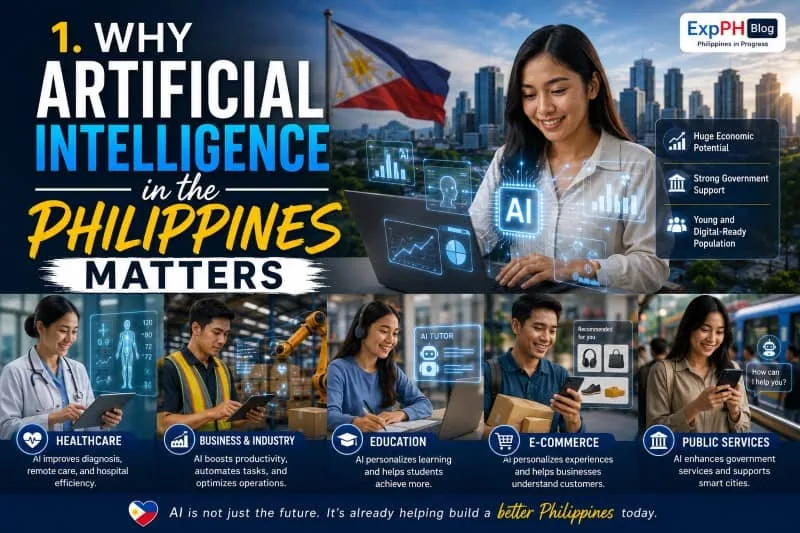
Artificial intelligence is becoming a major force in the Philippines. It affects businesses, education, healthcare, and public services. As more industries adopt digital systems, AI can improve productivity, create jobs, and support economic growth. Understanding its impact helps Filipinos prepare for a more technology-driven future.
A Growing Market and Huge Potential
Artificial intelligence is no longer limited to large technology companies. Many Philippine businesses now use AI tools to improve customer service, automate tasks, and analyse data faster. Experts believe AI could contribute trillions of pesos to the economy by 2030 while helping local industries become more competitive in Southeast Asia.
Government and Policy Support
The Philippine government recognises the importance of innovation and digital transformation. Programs linked to the Philippine Innovation Act and developing AI strategies aim to support research, technology adoption, and digital infrastructure. These efforts encourage businesses, schools, and institutions to explore responsible AI development and long-term growth.
A Young, Digital-Ready Population
Filipinos are among the most active internet and social media users in the world. Young people adapt quickly to new technology and already use AI-powered applications for communication, entertainment, and learning. This strong digital culture helps accelerate AI adoption across schools, workplaces, and everyday life in the Philippines.
2. How AI Is Changing Everyday Life in the Philippines
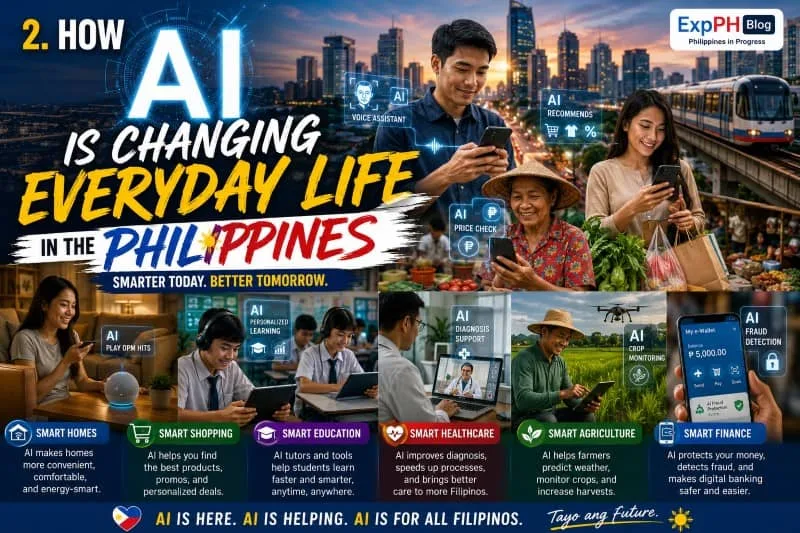
Artificial intelligence already influences how Filipinos study, work, shop, and communicate. Many digital services now depend on AI systems that improve speed, convenience, and personalisation. As technology becomes more accessible, AI continues transforming everyday routines and modern lifestyles across the country.
Homes and Consumer Tech
AI-powered devices and applications help Filipinos manage tasks more efficiently. Voice assistants answer questions, streaming platforms recommend content, and online stores personalise shopping experiences. Banks and mobile applications also use AI to detect suspicious activity and improve security, making digital services safer and more convenient for users.
Education and Learning
Students and teachers increasingly rely on AI tools for research, lesson preparation, and online learning. Applications such as ChatGPT support writing, idea generation, and tutoring. AI-driven learning systems also adapt lessons to different skill levels, helping students study at their own pace and improving access to educational support.
Work and Employment
Many workplaces now use AI to automate repetitive tasks and improve efficiency. While some routine jobs may decline, new opportunities continue emerging in technology, digital marketing, and data analysis. Workers who develop digital and analytical skills are more likely to benefit from the changing employment landscape created by AI.
Health and Public Services
Hospitals and clinics use AI systems to analyse medical information, assist doctors, and improve patient care. Telemedicine platforms also help connect healthcare providers with patients in remote areas. Government agencies are exploring AI solutions to improve public services, reduce delays, and make systems more efficient for citizens.
Industry and the Economy
Businesses in retail, logistics, manufacturing, and finance increasingly use AI to improve operations and customer service. AI helps companies forecast demand, manage inventory, and analyse market trends faster. As adoption expands, artificial intelligence may become one of the strongest drivers of economic growth in the Philippines.
3. The Benefits of Artificial Intelligence for Filipinos
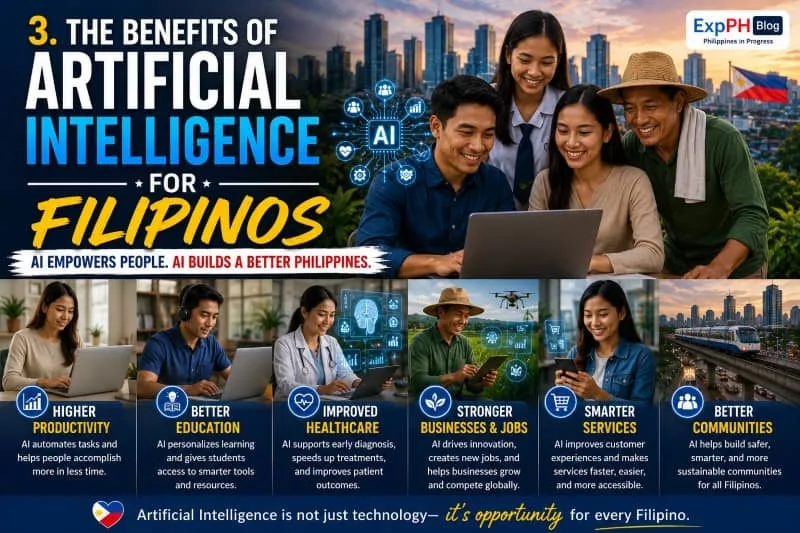
Artificial intelligence offers several advantages for individuals, businesses, and communities. It improves efficiency, supports innovation, and provides easier access to information and services. When used responsibly, AI can help Filipinos save time, increase productivity, and improve the quality of daily life.
Faster and Smarter Services
AI helps businesses and organisations provide quicker and more accurate services. Chatbots answer customer questions instantly while automated systems process transactions efficiently. These improvements reduce waiting times and create smoother digital experiences for users in banking, online shopping, healthcare, and customer support industries.
Improved Productivity
Automation allows workers and businesses to complete tasks more efficiently. AI tools can organise information, analyse large amounts of data, and simplify repetitive processes. This gives employees more time to focus on creative thinking, decision-making, and higher-value responsibilities that require human skills and experience.
Better Learning Opportunities
AI-powered educational tools help students access information more easily and receive personalised support. Adaptive learning systems identify strengths and weaknesses, allowing learners to improve specific skills. These technologies can support students in both urban and rural areas when reliable internet access and digital resources are available.
Economic Growth and Innovation
AI encourages innovation by helping businesses develop new products, services, and digital solutions. Small businesses can also use affordable AI tools for marketing and customer management. As industries become more efficient, the country may attract more investments and strengthen its position in the regional digital economy.
More Convenient Daily Life
Artificial intelligence simplifies many everyday activities. Navigation apps suggest faster travel routes while smart applications organise schedules and automate reminders. AI also improves online entertainment and communication platforms. These technologies save time and make daily tasks easier for many Filipino households and working professionals.
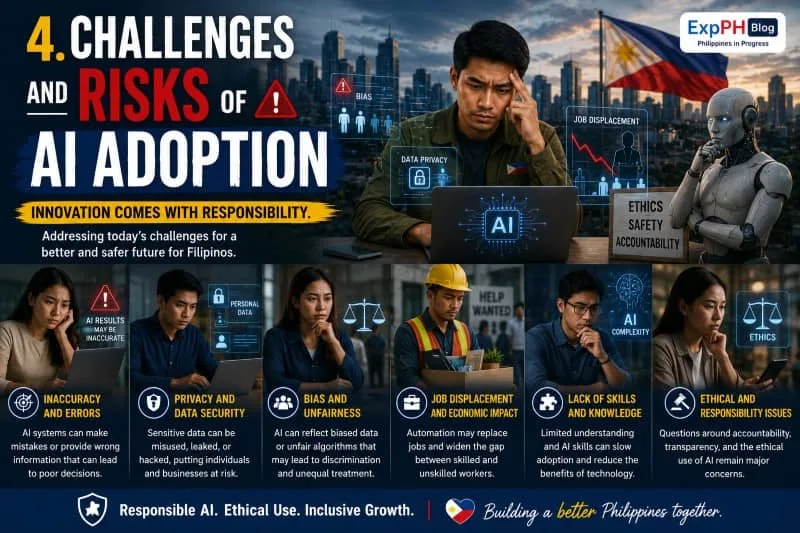
4. Challenges and Risks of AI Adoption
Although artificial intelligence provides many benefits, it also creates challenges that require careful management. Concerns about privacy, job security, and unequal access remain important issues. Addressing these risks responsibly will help ensure AI development benefits more people across the Philippines.
The Digital Divide
Not all Filipinos have equal access to stable internet connections, devices, or digital training. Rural communities often face slower connectivity and fewer technology resources. Without proper investment in infrastructure and education, some areas may struggle to benefit from artificial intelligence and broader digital transformation efforts.
Ethics, Privacy, and Governance
AI systems collect and process large amounts of personal information. This raises concerns about privacy, data misuse, and unfair decision-making. Strong policies and ethical standards are necessary to ensure AI technologies remain transparent, secure, and respectful of people’s rights while protecting users from harmful practices.
Workforce Readiness
Many workers still need training to adapt to AI-related changes in the workplace. Companies and educational institutions must provide opportunities for upskilling and reskilling. Learning digital skills, critical thinking, and data literacy can help employees remain competitive as industries continue adopting automated technologies.
Job Displacement vs. Augmentation
Some repetitive jobs may become automated as businesses adopt AI systems. However, technology can also create new roles that require human creativity, communication, and technical expertise. The challenge is helping workers transition into emerging careers while ensuring automation improves productivity without increasing unemployment and inequality.
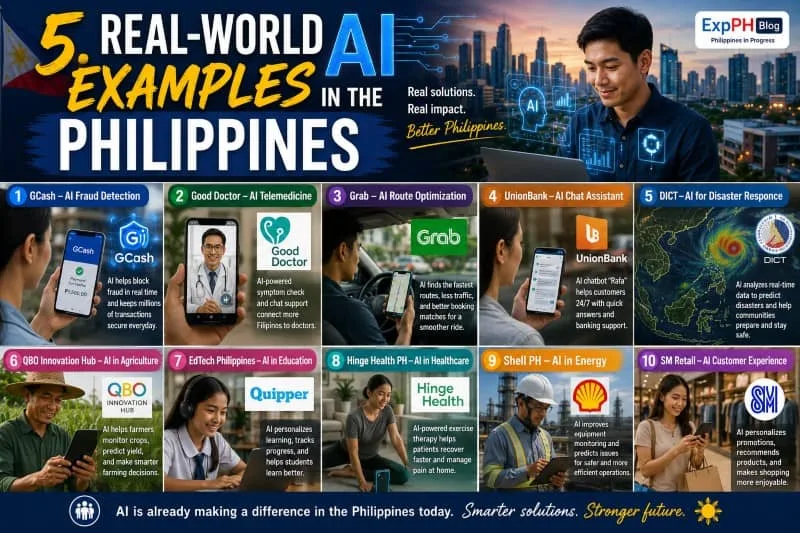
5. Real-World AI Examples in the Philippines
Artificial intelligence is already being used across different sectors in the Philippines. Businesses, schools, hospitals, and financial institutions continue testing AI systems to improve services, increase efficiency, and support digital transformation in both private and public organisations.
BPO and Service Sector
The business process outsourcing industry uses AI tools to improve customer support and automate routine inquiries. Chatbots and virtual assistants help companies manage high volumes of requests more efficiently. Workers are also learning new technical and analytical skills to remain valuable in a changing industry.
Higher Education
Universities and schools now integrate AI tools into teaching and research activities. Students use digital platforms for writing assistance, data analysis, and online collaboration. Educators also encourage responsible AI use while preparing learners for careers that increasingly depend on technology and digital problem-solving skills.
Healthcare Efforts
Healthcare institutions are exploring AI technologies for diagnostics, patient monitoring, and telemedicine services. These systems help doctors analyse information more quickly and improve medical decision-making. AI may also support healthcare access in remote areas where medical professionals and facilities remain limited.
Consumer Finance
Banks and financial technology companies use AI to improve fraud detection and customer service. Automated systems help monitor transactions, identify unusual activity, and provide financial recommendations. These technologies improve security while making digital banking and online financial services more accessible for Filipino consumers.
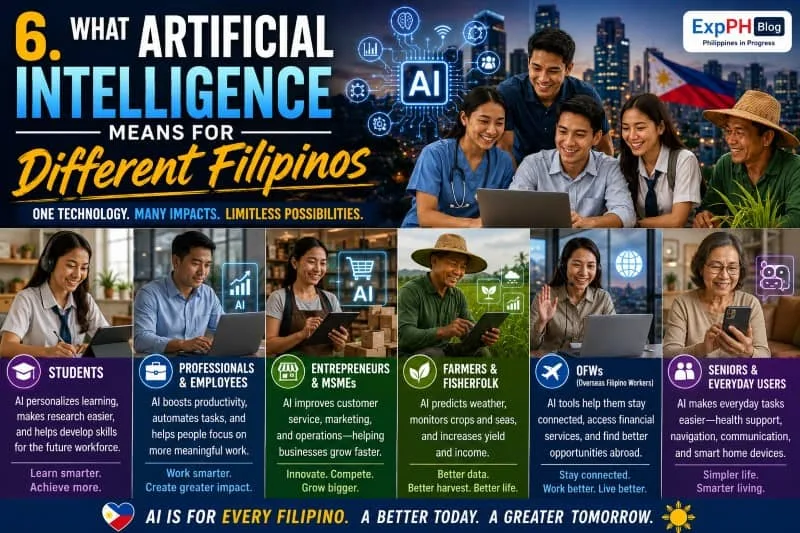
6. What Artificial Intelligence Means for Different Filipinos
Artificial intelligence affects people differently depending on their roles, industries, and access to technology. Students, workers, entrepreneurs, and rural communities each face unique opportunities and challenges as AI becomes more common in Philippine society.
Students and Young People
Young Filipinos can use AI tools to improve learning, research, and creativity. However, responsible use remains important because overreliance on automation may weaken critical thinking and originality. Developing digital literacy and problem-solving skills helps students prepare for future careers influenced by advanced technologies.
Workers and Professionals
Professionals who understand digital tools and AI systems may gain better career opportunities. Skills related to data analysis, communication, and technology management are becoming increasingly valuable. Workers who continue learning and adapting are more likely to succeed in industries affected by automation and digital transformation.
Households and Consumers
AI applications help households manage finances, communication, and entertainment more efficiently. Smart technologies simplify online shopping, transportation, and daily scheduling. Consumers should still remain careful about privacy and data sharing by choosing trusted platforms and understanding how personal information is collected and used.
Rural Communities
Artificial intelligence can support agriculture, education, and healthcare in rural areas through smart systems and remote services. However, many communities still face limited internet access and digital infrastructure. Expanding connectivity and training programs is essential so rural populations can benefit from technological progress equally.
Business and Entrepreneurs
Entrepreneurs can use AI tools to improve marketing, customer service, and business operations. Small businesses now have access to affordable technologies that help analyse customer behaviour and automate routine tasks. Understanding AI trends also creates opportunities to build innovative products and digital services for local markets.
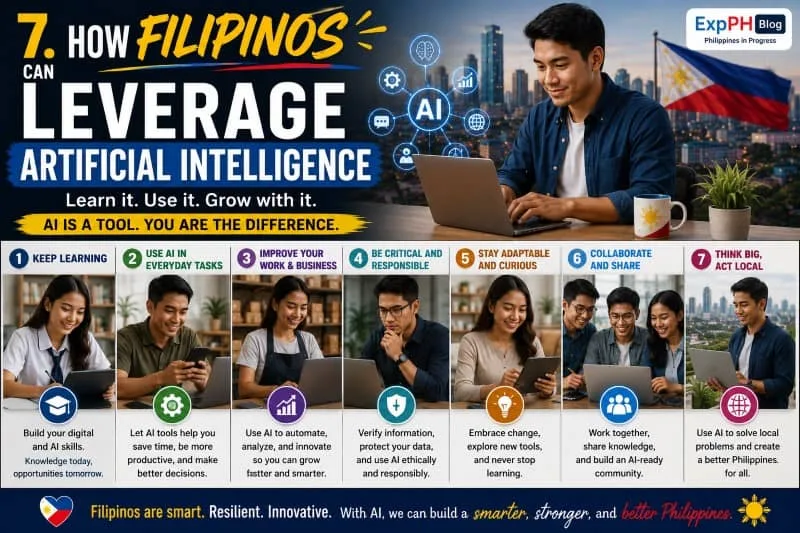
7. How Filipinos Can Leverage Artificial Intelligence
Filipinos can benefit more from artificial intelligence by learning digital skills, understanding responsible technology use, and exploring practical AI applications. Preparation and awareness are important to ensure individuals and communities adapt successfully to the changing digital environment.
Get Familiar with AI Tools
Using AI applications regularly helps people understand how these technologies work. Students can explore educational tools while professionals can test productivity applications that automate repetitive tasks. Familiarity with AI systems builds confidence and helps users identify practical ways technology can support daily responsibilities.
Upskill and Reskill
Learning new digital skills is important in an AI-driven economy. Online courses, workshops, and training programs can help workers improve technical knowledge and adapt to industry changes. Continuous learning increases employability and prepares individuals for future jobs that combine human expertise with advanced technologies.
Stay Ethical
Responsible AI use requires awareness of privacy, fairness, and transparency. Users should understand how applications collect data and avoid relying completely on automated systems. Ethical practices encourage safer technology adoption while protecting people from misinformation, bias, and misuse of personal information.
Use Local Context
AI systems work best when they reflect local languages, culture, and community needs. Filipino developers and entrepreneurs can create solutions designed for local industries such as tourism, agriculture, and education. Localised technology improves accessibility and makes AI more useful for everyday Filipino experiences.
Monitor Policy
AI regulations and digital policies continue evolving in the Philippines. Staying informed about technology laws, privacy rules, and ethical standards helps individuals and businesses use AI responsibly. Understanding these policies also protects users and encourages safer participation in the growing digital economy.
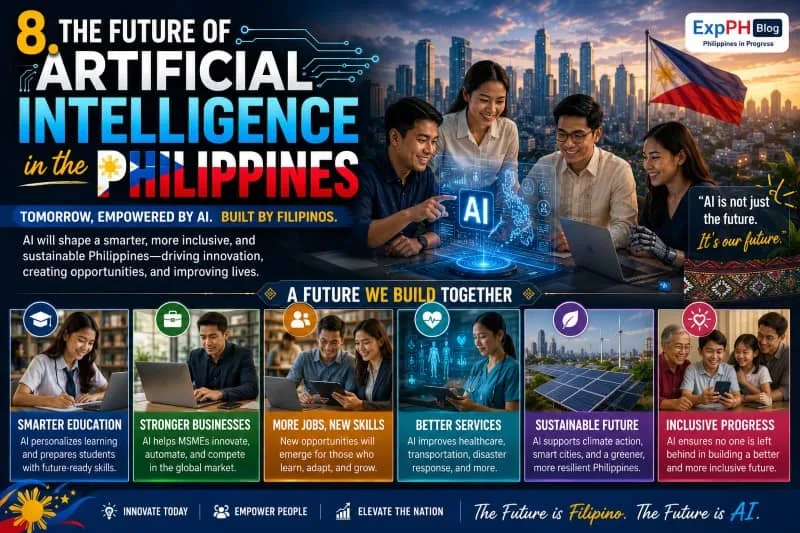
8. The Future of Artificial Intelligence in the Philippines
Artificial intelligence will likely continue shaping the Philippine economy, workforce, and digital society for many years. Future developments may create new opportunities for innovation, education, healthcare, and entrepreneurship while also requiring stronger ethical standards and responsible governance.
Emerging Growth Areas
Technologies such as generative AI, robotics, and natural language processing are expected to expand rapidly. Businesses and institutions will continue investing in digital solutions that improve efficiency and innovation. These developments may help position the Philippines as an emerging technology hub in Southeast Asia.
Jobs of the Future
New careers connected to AI operations, cybersecurity, data analysis, and technology management are expected to grow. Workers who adapt early and develop relevant digital skills may find stronger career opportunities. Education and training programs will play a major role in preparing the future workforce.
Inclusive Growth
Artificial intelligence has the potential to improve access to healthcare, education, and financial services across different communities. However, inclusive growth depends on expanding internet access and reducing technology gaps between urban and rural areas. Equal opportunities remain important for long-term national development.
Responsible AI
As AI systems become more powerful, ethical concerns will continue increasing. Governments, businesses, and communities must work together to address issues involving privacy, bias, misinformation, and accountability. Responsible AI development can help ensure technology benefits society while reducing harmful and unfair outcomes.
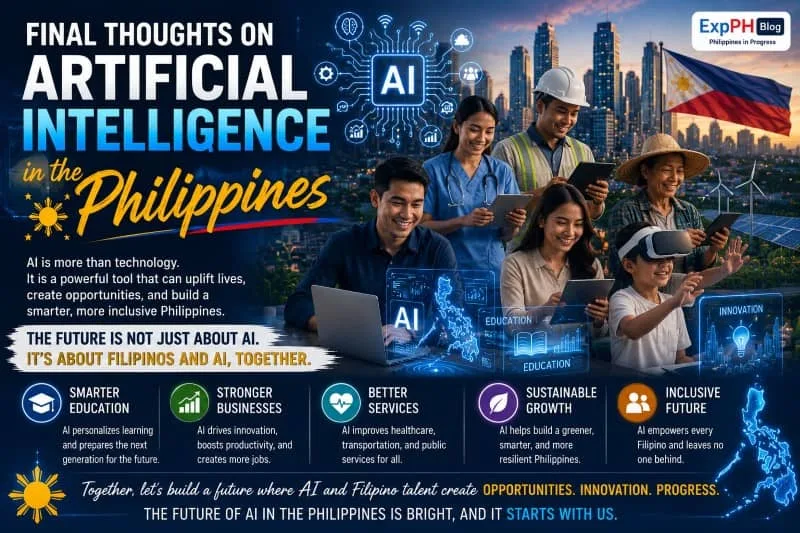
Final Thoughts on Artificial Intelligence in the Philippines
Artificial intelligence is no longer a concept limited to science fiction or advanced technology companies. It has already become part of everyday life in the Philippines. Filipinos now use AI in online shopping, banking, education, transportation, and communication. Schools rely on AI-powered learning tools while businesses use automation to improve efficiency and customer service. Hospitals and public institutions are also adopting digital systems that help analyse information and deliver services faster. As technology continues evolving, artificial intelligence in the Philippines will play a larger role in shaping how people live and work.
To ensure these benefits reach more Filipinos, the country must continue investing in reliable internet access, digital infrastructure, and technology education. Strong ethical standards and responsible AI policies are also necessary to protect privacy, reduce bias, and promote fair access to digital opportunities. Communities in rural areas should receive the same support and training available in major cities so nobody is left behind. For readers of ExpPH Blog, the message is clear: stay curious, continue learning, and use artificial intelligence in the Philippines wisely as a tool that supports progress, creativity, and long-term growth.
Top 10 FAQs about Artificial Intelligence in the Philippines
1. What is artificial intelligence in the Philippines?
Artificial intelligence in the Philippines refers to the use of smart technologies such as machine learning, automation, and data analytics to improve daily life, businesses, and public services. It includes AI applications in education, healthcare, finance, customer service, and government systems.
2. How is artificial intelligence transforming everyday life in the Philippines?
Artificial intelligence in the Philippines is making daily life easier and more efficient. Filipinos are using AI for virtual assistants, online shopping recommendations, digital banking, personalized learning, and healthcare diagnostics improving both productivity and convenience.
3. What industries benefit the most from artificial intelligence in the Philippines?
The top industries using artificial intelligence in the Philippines include:
- Business Process Outsourcing (BPO)
- Education and e-learning
- Healthcare and telemedicine
- Banking and finance
- Retail and e-commerce
These sectors use AI to automate processes, improve customer experience, and cut operational costs
4. Is artificial intelligence taking over jobs in the Philippines?
While some routine jobs are being automated, artificial intelligence in the Philippines is also creating new opportunities in data science, AI engineering, and digital marketing. The key is upskilling learning to work with AI instead of being replaced by it.
5. What is the government doing to support artificial intelligence in the Philippines?
The Philippine government is developing a National AI Strategy and has launched programs under the Department of Trade and Industry (DTI) to promote innovation, digital transformation, and ethical use of AI. These efforts aim to make artificial intelligence in the Philippines inclusive and sustainable.
6. Are Filipinos ready for artificial intelligence in daily life?
Yes, the Philippines has one of the youngest and most tech-savvy populations in Asia. Many Filipinos already use artificial intelligence in the Philippines through mobile apps, online learning platforms, and smart home devices, showing strong adaptability to new technologies.
7. What are the challenges of artificial intelligence in the Philippines?
The main challenges include:
- Limited internet access in rural areas
- Lack of AI experts and digital skills training
- Data privacy and ethical concerns
- Uneven adoption across industries
These issues slow down the full potential of artificial intelligence in the Philippines.
8. How can students benefit from artificial intelligence in the Philippines?
Students can use artificial intelligence in the Philippines through tools like chatbots, adaptive learning systems, and online tutoring platforms. These help personalize lessons, improve learning outcomes, and prepare students for tech-driven careers.
9. What are examples of artificial intelligence being used in the Philippines today?
Examples of artificial intelligence in the Philippines include:
- AI chatbots in banks like BPI and UnionBank
- AI-powered translation tools in government websites
- Telehealth apps using AI for diagnosis
- Smart farming systems for agriculture
- ChatGPT and AI learning tools used by Filipino students
10. What is the future of artificial intelligence in the Philippines?
The future of artificial intelligence in the Philippines is bright. By 2030, experts predict AI could add billions of pesos to the economy, create thousands of new jobs, and boost digital inclusion transforming how Filipinos live, work, and learn every day.
Want to explore the bigger picture of digital growth in the country?
Read our complete guide on Technology in the Philippines Strong Progress, Key Opportunities, and Future Innovations and discover how advancements are creating new opportunities for Filipinos.
Explore more insights through the related guides below:
- Future of Robotics in the Philippines
- Revolutionary Robotics in the Philippines Driving Industry 4.0 Innovation
To explore more about innovation and digital transformation, visit the DICT website.
Test how much you’ve learned from our post
Each question has one correct answer short, simple, and perfect for mobile users. Ready? Let’s go!
Results


#1. What does AI stand for?
#2. Which law supports innovation in the Philippines?
#3. Where is AI commonly used at home?
#4. How many Filipino students used AI tools in Cebu study?
#5. Which sector faces high AI exposure?
#6. How does AI help healthcare?
#7. What’s one major risk of AI use?
#8. What’s key to AI readiness?
#9. By 2030, AI could add how much to PH economy?
#10. AI’s main goal for the Philippines?
Thank you for taking the time to read this article about artificial intelligence in the Philippines
Your support, insights, and shared experiences help make ExpPH Blog a valuable learning community for everyone interested in technology and digital progress. We truly appreciate your time and engagement.

A Filipino web developer with a background in Computer Engineering. Founder of ExpPH Blog and ExpPH Business Guide, creating practical content on OFW guidance, business, finance, freelancing, travel, and lifestyle. Passionate about helping Filipinos grow, he shares insights that educate, empower, and inspire readers nationwide.