
Vegetable Farming and Organic Produce: A Sustainable Business Idea for OFWs Returning Home
Returning home after years of working abroad is a major life decision for many Overseas Filipino Workers. One of the biggest questions is how to build a stable and sustainable source of income in the Philippines. Among the many options available, starting an organic vegetable farming business Philippines stands out as a practical, profitable, and meaningful path.
This business idea is not only about earning income. It is also about food security, health, and long-term sustainability. With rising demand for chemical-free produce and increasing awareness of healthy living, organic farming is no longer just a trend. It is a growing industry with real opportunities, especially for returning OFWs who want to invest wisely.
In this guide, you will learn everything you need to know about starting your own organic vegetable farming business, from planning and setup to marketing and scaling.
Explore more opportunities beyond farming.
Check out our guide on Top 10 Profitable Agribusiness Philippines Ideas for Beginners and OFWs to discover other practical business ideas you can start when you return home.
Table of Contents
Why This Business Matters for OFWs
Starting an organic vegetable farming business Philippines goes beyond income generation. It offers returning OFWs a chance to build a stable life at home while staying close to family. This type of business supports both financial security and personal fulfillment in a meaningful way.
- A healthier lifestyle through fresh and chemical-free food
- A stable future for your family with consistent income
- A meaningful way to contribute to your local community
Many OFWs are searching for a business that provides both purpose and long-term stability. Organic farming allows them to invest their savings wisely while creating a livelihood that benefits their household and supports sustainable food production.
1. Why Organic Vegetable Farming is Ideal for OFWs
Many OFWs return home with savings but face uncertainty when choosing the right business. An organic vegetable farming business Philippines offers a practical solution that combines manageable capital, steady demand, and long-term growth. It allows returning workers to build income while staying close to family and community.
Growing Demand for Organic Produce
Filipinos are becoming more health-conscious and selective about food quality. Many consumers now prefer vegetables grown without harmful chemicals. Restaurants, supermarkets, and online sellers actively look for reliable organic suppliers. This growing demand makes an organic vegetable farming business Philippines a timely and profitable opportunity.
Sustainable and Scalable Income
Unlike short-term ventures, organic farming can provide consistent income throughout the year. Once your system is established, you can harvest regularly and plan future crop cycles with confidence. You can begin with a small setup and gradually expand operations based on your available resources.
Perfect for Family-Based Business
Many OFWs want a business that their family can manage at home while they transition back to local life. Vegetable farming supports this goal by offering a flexible setup that can involve household members and create a stable source of income over time.
- Involves family members in daily farm activities
- Builds a reliable and long-term livelihood
- Strengthens household financial stability
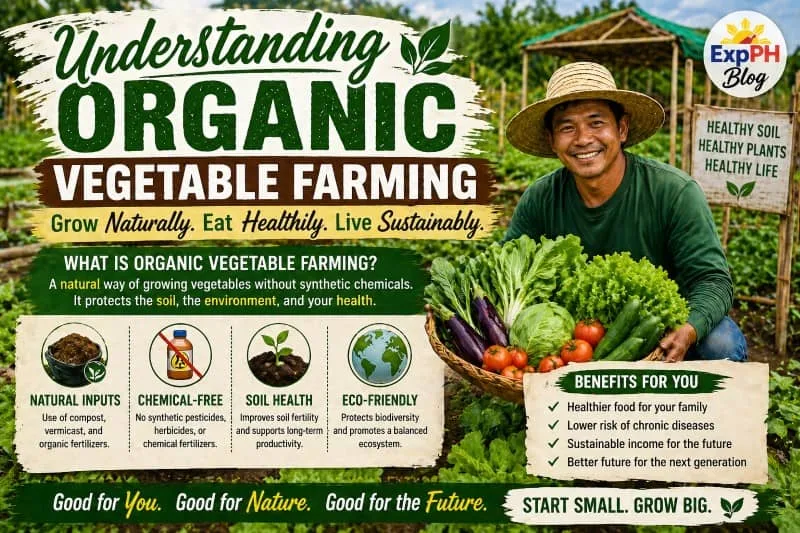
2. Understanding Organic Vegetable Farming
Before starting, it is important to understand what makes farming truly organic. This approach focuses on natural processes, soil health, and safe food production. For OFWs planning an organic vegetable farming business Philippines, learning these basics helps build a strong and sustainable foundation from the beginning.
What is Organic Farming?
Organic farming avoids synthetic chemicals such as pesticides and fertilizers. Instead, it relies on natural methods that support plant growth and protect the environment. These practices improve soil quality and ensure that vegetables remain safe, fresh, and nutritious for consumers.
- Natural compost for soil enrichment
- Biological pest control using natural predators
- Crop rotation to maintain soil balance
The main goal is to protect soil health while producing clean and high-quality food for the market.
Why Organic Matters in the Philippines
The Philippines has fertile land and a tropical climate, which are ideal for vegetable farming. However, heavy use of chemical inputs in conventional farming has raised concerns about long-term health effects and environmental damage, making organic methods a more sustainable and responsible choice.
According to the Department of Agriculture, promoting sustainable agriculture helps protect farmers, consumers, and the environment while improving productivity over time.
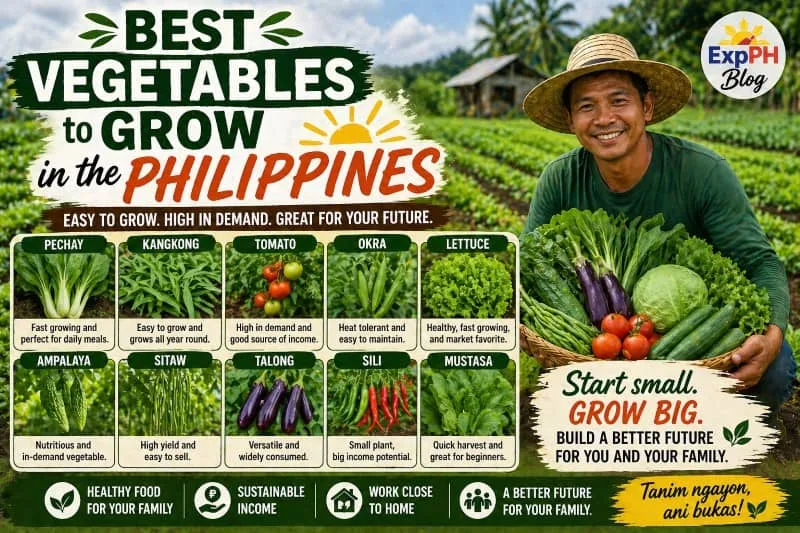
3. Best Vegetables to Grow in the Philippines
Choosing the right crops is essential for building a successful organic vegetable farming business Philippines. Your selection affects yield, demand, and profitability. Focus on vegetables that grow well in the local climate and have strong market demand to ensure steady income and efficient farm management.
High-Demand Vegetables
Start with vegetables that are commonly used in Filipino households. These crops are easy to grow, have short harvest cycles, and sell quickly in local markets. They are ideal for beginners who want consistent sales and faster returns from their farming efforts.
- Pechay
- Kangkong
- Talong
- Okra
- Tomatoes
- Lettuce
These vegetables are reliable choices because they are part of daily meals and remain in demand throughout the year.
High-Value Crops
If you want to increase your earnings, consider planting high-value vegetables. These crops are often sold at higher prices and are popular among restaurants, health-conscious buyers, and urban consumers who prefer premium organic produce.
- Cherry tomatoes
- Bell peppers
- Herbs such as basil and parsley
- Salad greens
These options can help boost your profit margins while positioning your organic vegetable farming business Philippines as a premium and quality-focused supplier.
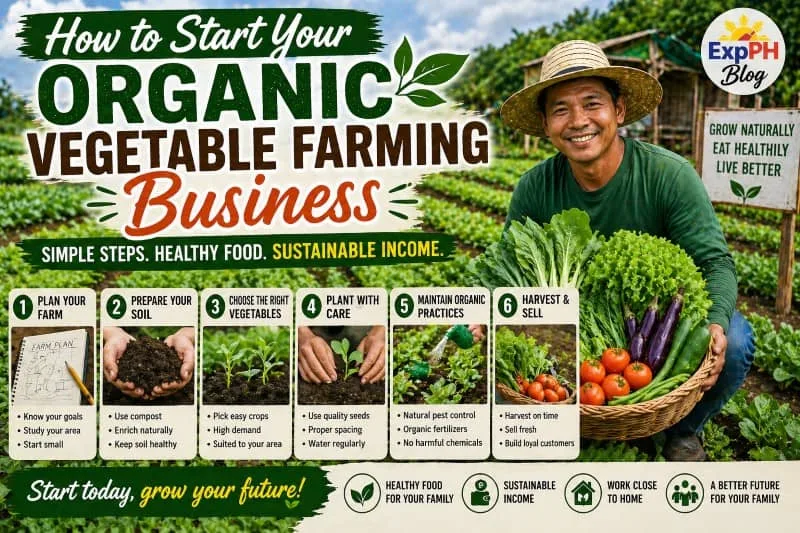
4. How to Start Your Organic Vegetable Farming Business
Starting an organic vegetable farming business Philippines does not need to be complicated. Focus on building a strong foundation from the beginning. With proper planning and simple systems, you can create a sustainable farm that grows steadily and supports long-term income.
Step 1: Choose Your Location
Selecting the right location is crucial for successful farming. Your land should support healthy plant growth and allow easy daily management. Even a small backyard can work if the basic conditions are present and properly maintained.
- Access to a reliable water source
- Good sunlight exposure throughout the day
- Proper drainage to prevent flooding
A well-chosen location reduces problems and improves overall productivity.
Step 2: Prepare the Soil
Healthy soil is the foundation of organic farming. It provides nutrients that help plants grow strong and produce quality vegetables. Using natural inputs improves soil structure and supports long-term fertility without harming the environment.
- Compost made from organic waste
- Vermicast for nutrient-rich soil enhancement
- Organic fertilizers for balanced plant nutrition
Avoid chemical inputs to maintain the integrity of your organic vegetable farming business Philippines.
Step 3: Plan Your Crop Cycle
Proper crop planning helps maintain soil health and ensures continuous production. Rotating crops prevents nutrient depletion and reduces pest problems. A well-organized planting schedule also allows you to harvest regularly and meet market demand more consistently.
- Rotate crops to maintain soil nutrients
- Avoid planting the same crop repeatedly
- Plan harvest timing for steady supply
This approach improves yield and supports sustainable farming.
Step 4: Set Up Irrigation
Water management plays a key role in plant growth and overall farm success. Consistent watering keeps vegetables healthy and productive. Choose a system that matches your farm size, budget, and available resources for easier maintenance.
- Manual watering for small-scale setups
- Drip irrigation systems for efficient water use
Consistency is essential to ensure strong plant development and reliable harvests.
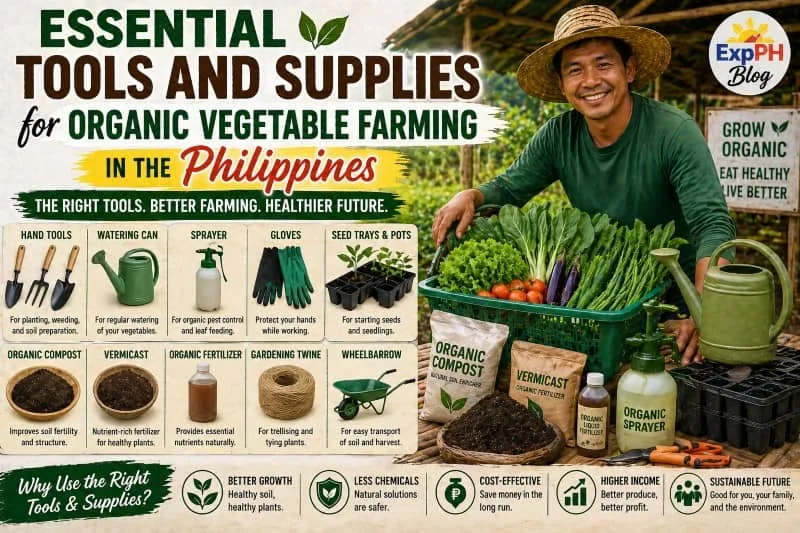
5. Essential Tools and Supplies for Organic Vegetable Farming in the Philippines
Starting your farm requires the right tools and materials to support daily operations. For an organic vegetable farming business Philippines, having reliable equipment helps improve efficiency and ensures better crop results. Begin with basic items that are easy to use and suitable for small-scale farming setups.
Basic Equipment You Will Need
You do not need expensive tools when starting out. Focus on essential items that support planting, maintenance, and harvesting. These tools help you manage your farm effectively while keeping your initial investment practical and manageable.
- Gardening tools such as trowels and hoes
- Seed trays and planting containers
- Organic seeds suited for local climate
- Compost materials for soil enrichment
- Watering systems for consistent irrigation
These basic tools provide a strong starting point for your organic farming journey.
Where to Get Affordable Farming Supplies
Finding affordable and reliable supplies is important for beginners who want to manage costs. Many OFWs prefer convenient options that allow them to compare products and purchase items without spending too much time traveling or searching in different physical stores.
Helpful Resource for Farming Tools and Supplies
If you are building your organic vegetable farming business Philippines, you can easily source seeds, tools, compost kits, and irrigation supplies online through Shopee.
Start your farming journey with affordable tools here: https://shopee.ph/
This platform allows you to compare prices, read customer reviews, and choose products that match your budget, making it easier to set up your farm efficiently from home.
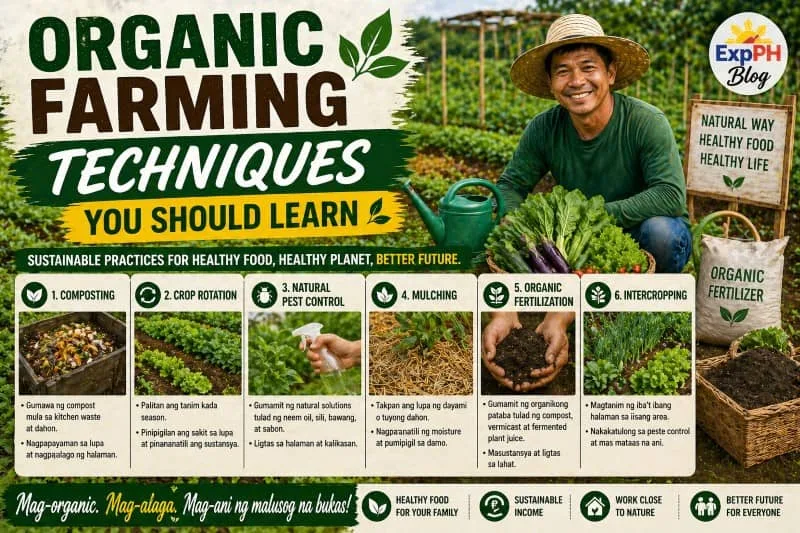
6. Organic Farming Techniques You Should Learn for Beginners in the Philippines
To succeed in an organic vegetable farming business Philippines, you need to apply practical techniques that support plant health and soil quality. These methods improve productivity while protecting the environment, helping you build a sustainable system that produces consistent and safe vegetable harvests.
Composting
Composting transforms organic waste into nutrient-rich fertilizer that supports healthy plant growth. It improves soil structure and provides essential nutrients without relying on synthetic inputs. This method is simple to apply and works well for both small and large farming setups.
- Kitchen scraps such as vegetable peels
- Animal manure from livestock
- Dry leaves and plant residues
Regular composting helps maintain fertile soil and supports long-term farming success.
Natural Pest Control
Organic farming avoids chemical pesticides and instead uses natural solutions to protect crops. These methods reduce harm to the environment and ensure that your vegetables remain safe for consumption while keeping pest populations under control.
- Neem oil for repelling insects
- Garlic spray as a natural deterrent
- Companion planting to protect crops
These approaches help maintain balance in your farm ecosystem.
Crop Rotation
Crop rotation involves planting different crops in the same area over time. This technique prevents soil nutrient depletion and reduces the risk of pests and diseases. It also supports healthier plant growth and improves overall farm productivity.
- Rotate crops based on nutrient needs
- Avoid repeating the same crop in one area
- Plan planting cycles carefully
Proper rotation strengthens soil health and supports sustainable farming practices.
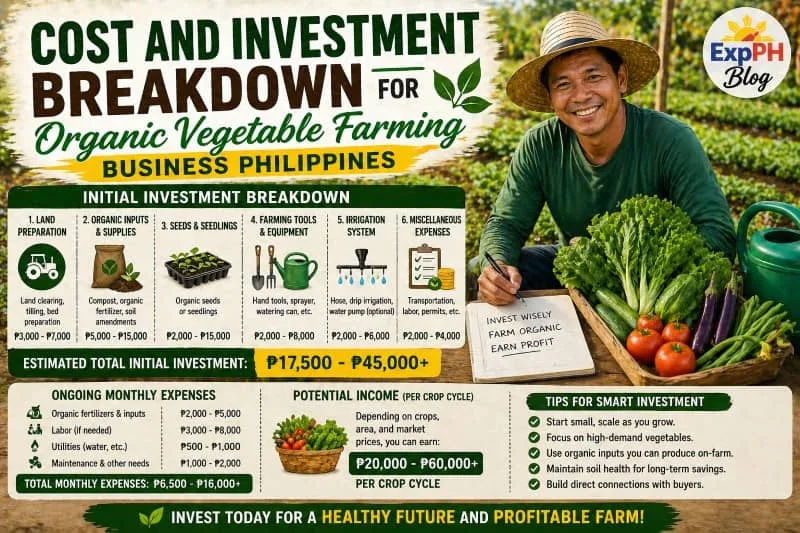
7. Cost and Investment Breakdown for Organic Vegetable Farming Business Philippines
One reason many OFWs choose farming is the manageable startup cost. An organic vegetable farming business Philippines can begin with a modest budget while offering long-term income potential. Careful planning helps you control expenses and build a stable foundation without taking unnecessary financial risks.
Estimated Startup Costs
For a small-scale setup, initial expenses remain affordable and flexible based on your farm size. Starting small allows you to learn the process while minimizing risk. As your experience grows, you can gradually invest more and expand your operations.
- Seeds: ₱1,000 to ₱3,000
- Tools: ₱3,000 to ₱5,000
- Soil preparation: ₱2,000 to ₱5,000
- Irrigation setup: ₱3,000 to ₱10,000
You can start with around ₱10,000 to ₱20,000 depending on your chosen scale and available resources.
Monthly Expenses
Ongoing costs are relatively low compared to many other businesses. Regular expenses focus on maintaining your farm and ensuring consistent production. Keeping these costs under control helps improve your overall profitability and long-term sustainability.
- Water and basic utilities
- Organic inputs such as compost and natural fertilizers
- Labor costs if additional help is needed
With proper management, these expenses remain manageable and support steady business growth.
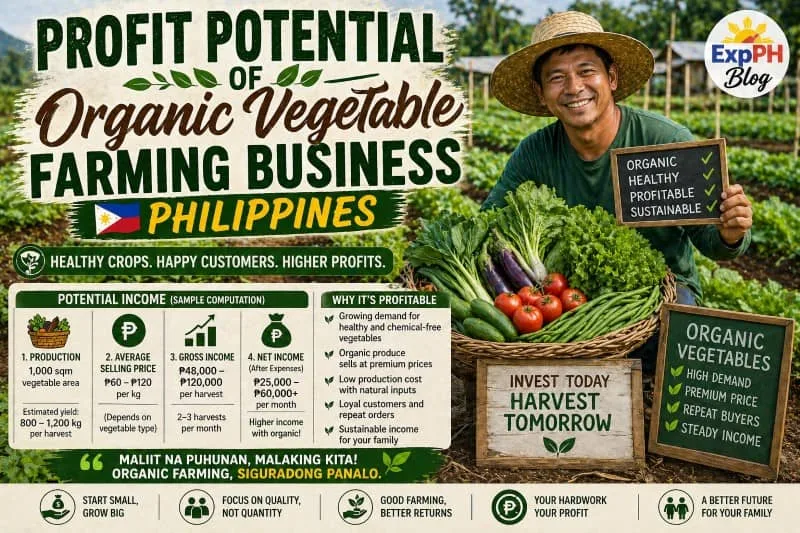
8. Profit Potential of Organic Vegetable Farming Business Philippines
An organic vegetable farming business Philippines can provide consistent income when managed with proper planning and discipline. With steady demand for fresh produce, farmers can generate regular cash flow while building a reliable livelihood that grows stronger over time.
Income Sources
You can earn from different sales channels depending on your location and target market. Diversifying your income sources helps reduce risk and ensures steady sales even when demand changes in one channel.
- Direct selling to consumers in your community
- Supplying local wet markets and small stores
- Partnering with restaurants and food businesses
- Online selling through social media platforms
These options allow you to reach more customers and increase your overall earning potential.
Expected Returns
Many vegetables grow quickly and can be harvested within 20 to 45 days. This allows multiple planting and harvesting cycles each year, creating more opportunities for income and faster recovery of your initial investment.
With consistent effort and proper management, you can achieve stable profits and gradually expand your organic vegetable farming business Philippines into a larger and more productive operation.
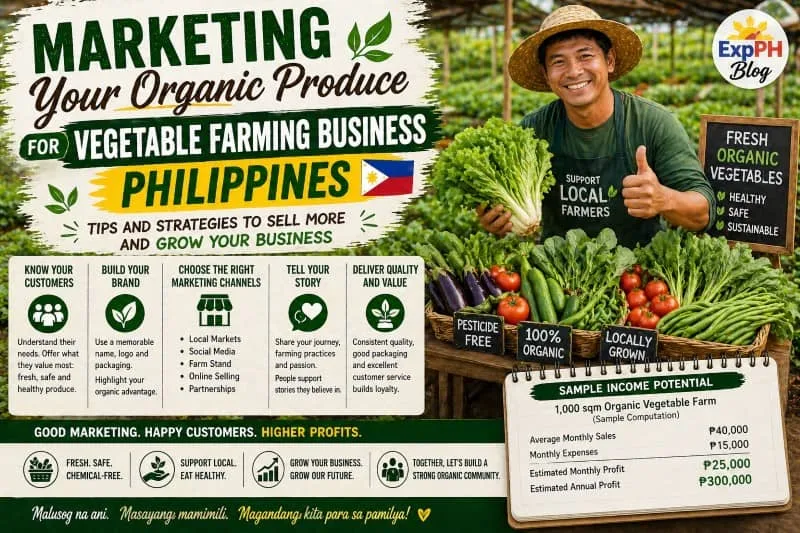
9. Marketing Your Organic Produce for Vegetable Farming Business Philippines
Growing vegetables is only part of your success. Selling them effectively is just as important for building a profitable organic vegetable farming business Philippines. A simple and consistent marketing approach helps you attract loyal customers and maintain steady demand for your harvest.
Build a Local Customer Base
Start by selling within your community where trust is easier to build. Local customers value fresh and affordable produce, making them ideal for your first sales. Strong relationships can lead to repeat buyers and consistent income over time.
- Neighbors who prefer fresh vegetables
- Local markets with regular buyers
- Small stores that need daily supply
Word of mouth works well in both rural and suburban areas.
Use Social Media
Online platforms help you reach more customers without high marketing costs. Social media allows you to showcase your farm and connect directly with buyers who are interested in organic produce and healthy food options.
- Share photos and videos of your farm
- Post regular harvest updates
- Respond to customer inquiries quickly
Platforms like Facebook and TikTok are effective tools for promoting your products.
Offer Subscription Boxes
Subscription vegetable boxes provide a reliable income stream and help you plan your harvest more efficiently. Customers pay in advance and receive fresh produce on a regular schedule, which supports both your cash flow and production planning.
- Weekly vegetable bundles for families
- Pre-order systems for consistent demand
- Flexible package sizes based on customer needs
This strategy builds customer loyalty and ensures steady sales for your organic vegetable farming business Philippines.
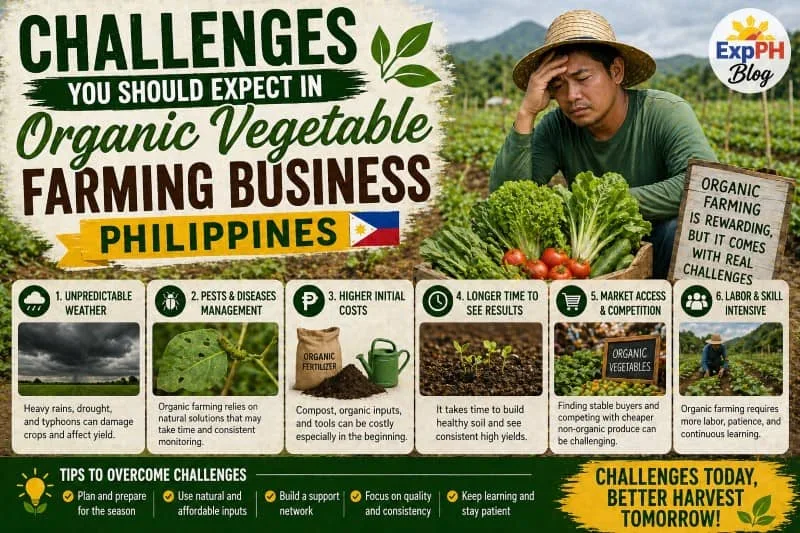
10. Challenges You Should Expect in Organic Vegetable Farming Business Philippines
No business is perfect, and every farming venture comes with challenges. Being prepared helps you respond quickly and protect your investment. For an organic vegetable farming business Philippines, understanding common risks allows you to plan better and maintain steady production throughout the year.
Weather Conditions
Weather is one of the biggest challenges in farming, especially in the Philippines where typhoons and heavy rains are common. These conditions can damage crops and affect your harvest if you are not prepared with protective measures.
- Raised beds to prevent waterlogging
- Protective covers to shield plants from heavy rain
- Proper drainage systems to control excess water
Planning for weather risks helps reduce losses and maintain crop quality.
Pest and Disease Management
Organic farming avoids chemical pesticides, which means pest control requires more attention and consistency. Natural methods are effective but need regular monitoring to prevent infestations from spreading and damaging your crops.
- Regular inspection of plants
- Early removal of infected leaves
- Use of natural pest control solutions
Patience and consistency are essential to protect your farm.
Market Competition
As more people enter farming, competition continues to grow. Standing out in the market requires more than just producing vegetables. You need to focus on quality and build a strong identity for your products.
- High-quality and chemical-free produce
- Freshness and proper handling
- Clear branding and presentation
These factors help your organic vegetable farming business Philippines attract loyal customers and remain competitive.
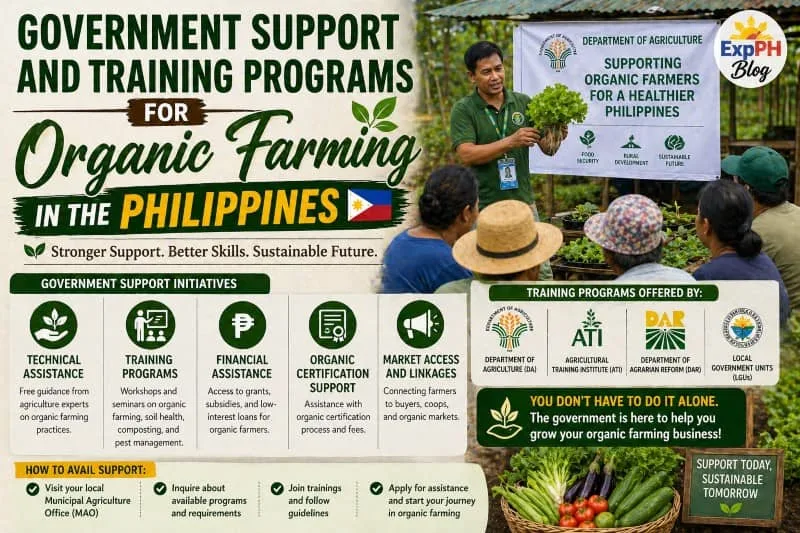
11. Government Support and Training Programs for Organic Farming in the Philippines
The Philippine government actively supports agricultural businesses through training, funding, and technical assistance. For anyone starting an organic vegetable farming business Philippines, these programs provide valuable guidance and resources that can help improve productivity, reduce risks, and strengthen long-term sustainability.
Training and Assistance
The Agricultural Training Institute offers structured programs focused on organic farming, agribusiness management, and modern agricultural practices. These trainings help beginners understand proper techniques while giving experienced farmers opportunities to improve their operations and expand their knowledge.
You can also explore official resources from the Department of Agriculture here:
https://ati2.da.gov.ph/ati-main/content/
These programs help you develop practical skills, access government support, and build a stronger foundation for your organic vegetable farming business Philippines.
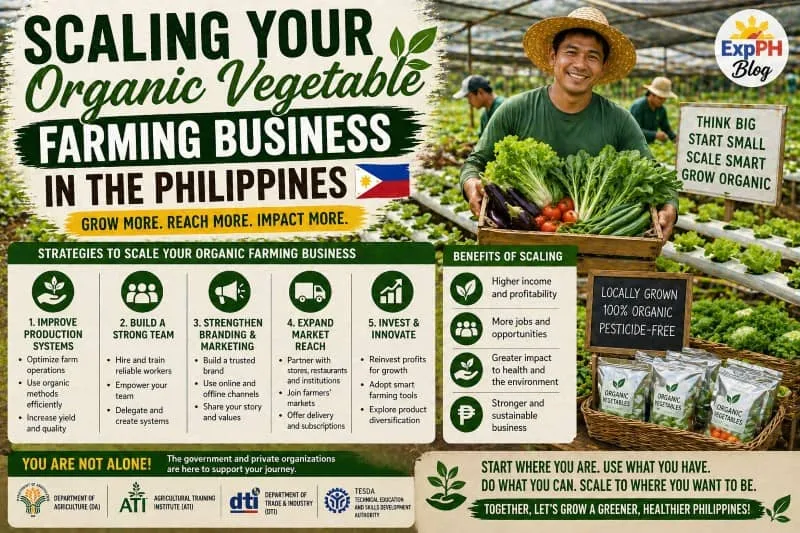
12. Scaling Your Organic Vegetable Farming Business in the Philippines
Once your farm becomes stable, you can begin expanding your operations to increase income and efficiency. Scaling an organic vegetable farming business Philippines requires careful planning and gradual investment. Focus on strategies that improve production while maintaining quality and sustainability.
Add More Crops
Diversifying your crops helps reduce risk and increases your earning potential. Offering different vegetables allows you to reach more customers and respond better to changing market demand. It also improves soil health when combined with proper crop rotation practices.
- Introduce new vegetable varieties gradually
- Balance fast-growing and high-value crops
- Adjust planting based on seasonal demand
This approach strengthens your income stability over time.
Invest in Technology
Using simple agricultural technology can improve efficiency and productivity. These tools help you manage resources better while reducing manual labor. Investing in the right systems allows your farm to grow without sacrificing quality or consistency.
- Greenhouses for controlled growing conditions
- Automated irrigation for efficient water use
- Soil testing tools to monitor nutrient levels
Technology supports better decision-making and higher yields.
Partner with Businesses
Building partnerships helps you secure consistent buyers and expand your market reach. Supplying directly to businesses allows you to sell larger volumes and establish long-term relationships that support business growth.
- Restaurants that need fresh organic produce
- Grocery stores looking for reliable suppliers
- Online sellers who distribute fresh vegetables
Scaling through partnerships increases both revenue and long-term sustainability for your organic vegetable farming business Philippines.
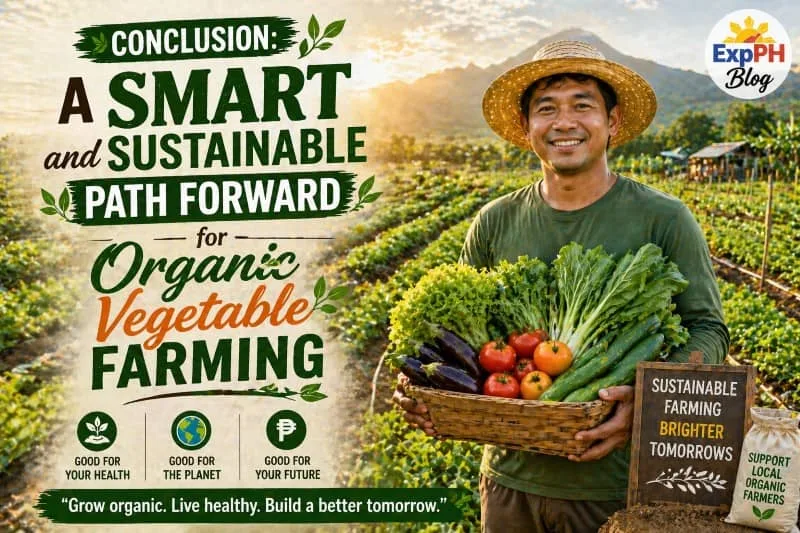
Conclusion: A Smart and Sustainable Path Forward for Organic Vegetable Farming
Returning home marks a new chapter that requires careful planning and wise decisions. Choosing the right business can shape your long-term stability and your family’s future. An organic vegetable farming business Philippines offers a practical path that balances income, sustainability, and personal fulfillment.
- Low startup cost that fits many returning OFWs
- Growing market demand for healthy organic produce
- Sustainable income through regular harvest cycles
- Long-term scalability with proper planning
With consistent effort and the right approach, you can build a business that supports your household while contributing to local food security. Organic farming is not just a livelihood, it is a long-term investment in your future.
If you are an OFW looking for a practical and meaningful business, this path offers both stability and purpose while helping you reconnect with your community.
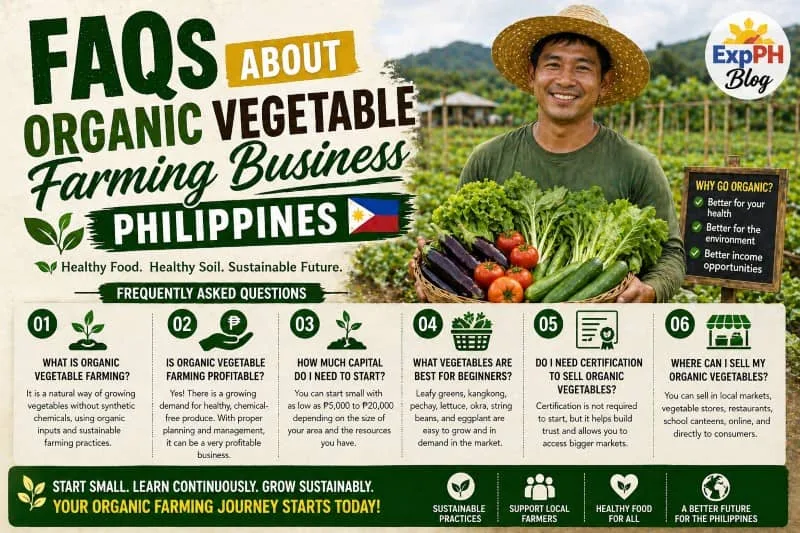
FAQs About Organic Vegetable Farming Business Philippines
What is an organic vegetable farming business in the Philippines?
An organic vegetable farming business Philippines grows crops without synthetic chemicals, using natural methods. It focuses on producing safe, healthy vegetables while maintaining soil fertility and environmental balance.
Is organic vegetable farming profitable for OFWs returning home?
Yes, organic vegetable farming can be profitable for OFWs with proper planning. Growing demand for healthy produce allows steady income through direct selling, local markets, and long-term customer relationships.
How much capital is needed to start vegetable farming?
Starting vegetable farming in the Philippines can require around ₱10,000 to ₱20,000. Costs depend on farm size, tools, seeds, and irrigation setup for basic operations.
What are the best vegetables to grow for beginners?
Beginners can start with easy vegetables like pechay, kangkong, tomatoes, and okra. These crops grow quickly, require simple care, and have consistent demand in local markets.
How long does it take to harvest vegetables?
Most vegetables can be harvested within 20 to 45 days depending on the crop. Fast growth allows multiple harvest cycles each year, helping farmers earn regularly.
Where can I sell my organic vegetables?
You can sell organic vegetables in local markets, to neighbors, small stores, restaurants, or through social media platforms. Direct selling helps build trust and increase profit margins.
Do I need training before starting organic farming?
Training is helpful but not required. Many government programs and online resources provide guidance. Learning basic techniques improves productivity and helps avoid common mistakes in farming.
What are the common challenges in organic farming?
Common challenges include weather changes, pests, and market competition. Organic methods require patience, regular monitoring, and proper planning to maintain crop health and consistent production.
Can I start vegetable farming in a small space?
Yes, you can start vegetable farming in a small backyard or limited space. Proper planning, container gardening, and efficient use of space allow productive small-scale farming.
Why is organic farming important in the Philippines?
Organic farming protects soil, reduces chemical exposure, and supports sustainable food production. It helps farmers produce healthier vegetables while preserving the environment for future generations and communities.
Ready to explore more opportunities beyond organic farming?
Check out our Best Business Ideas for Filipinos in 2026 and our master guide Top 10 Small Business Ideas in the Philippines for 2026 to discover profitable and practical ventures you can start today.
Related Guides
- Poultry Farming Business for OFWs: Step-by-Step Guide to Starting a Profitable Chicken Farm in the Philippines
- Best Home-Based Business Ideas for Returning OFWs in 2026
Organic Farming Quiz for OFWs
Test your knowledge about starting an organic vegetable farming business Philippines. This quick quiz will help you understand the basics, opportunities, and practical steps before starting your own sustainable farm.
Results


#1. What makes farming organic?
#2. Why is organic produce in demand?
#3. Which vegetable is beginner-friendly?
#4. What is compost used for?
#5. Ideal startup budget range?
#6. Best place to sell vegetables?
#7. What helps control pests naturally?
#8. Why rotate crops?
#9. Which platform helps marketing?
#10. Why is farming good for OFWs?
Thank You for Taking the Quiz
We appreciate your time and effort in learning something new today. Keep growing, keep learning, and take one step closer to your own successful farming business.

A Filipino web developer with a background in Computer Engineering. Founder of ExpPH Blog and ExpPH Business Guide, creating practical content on OFW guidance, business, finance, freelancing, travel, and lifestyle. Passionate about helping Filipinos grow, he shares insights that educate, empower, and inspire readers nationwide.