Tausug Pastil: A Deep Fried Savory Pastry from Sulu
Tausug Pastil is one of the most distinctive traditional delicacies from the southern Philippines. Deeply rooted in local culture and culinary heritage, this deep fried savory pastry from Sulu reflects history, creativity, and community values. While the word pastil is often associated with rice wrapped in banana leaves elsewhere in Mindanao, this version is entirely different in form, preparation, texture, and taste, highlighting regional identity, family tradition, and enduring pride passed through generations within households today across coastal communities widely.
This article explores Tausug Pastil in depth, covering its origins, cultural importance, ingredients, preparation methods, and meaningful variations, including versions filled with pansit and enriched with flavorful sauce. Readers interested in authentic Filipino food traditions will gain insight into history, technique, and identity, helping them understand why this pastry deserves wider recognition, appreciation, and preservation across the country today for future generations, culinary education, cultural pride, regional storytelling, and deeper respect for community heritage, local knowledge, traditions, and shared experiences.
Want to explore more authentic flavors from Sulu?
Discover the rich culinary heritage of the Tausug people in our comprehensive guide, Flavors of Sulu: The Ultimate Guide to Authentic Tausug Cuisine. Read the full guide and experience the true taste of Sulu.
Table of Contents
Quick Summary (TL;DR)
Tausug Pastil is a traditional deep-fried savory pastry from Sulu that showcases the rich culinary heritage of the Tausug people. Unlike the rice-based pastil found in other parts of Mindanao, this version features handmade dough filled with seasoned meat, pansit, and flavorful sauce before being fried until golden and crispy.
More than just a snack, Tausug Pastil represents family traditions, hospitality, and cultural identity. It is commonly prepared during weddings, religious gatherings, and community celebrations, where sharing food strengthens relationships and preserves heritage. Through its unique preparation, distinctive flavor, and deep cultural roots, Tausug Pastil remains an important symbol of Tausug cuisine and a treasured part of Sulu’s food traditions.
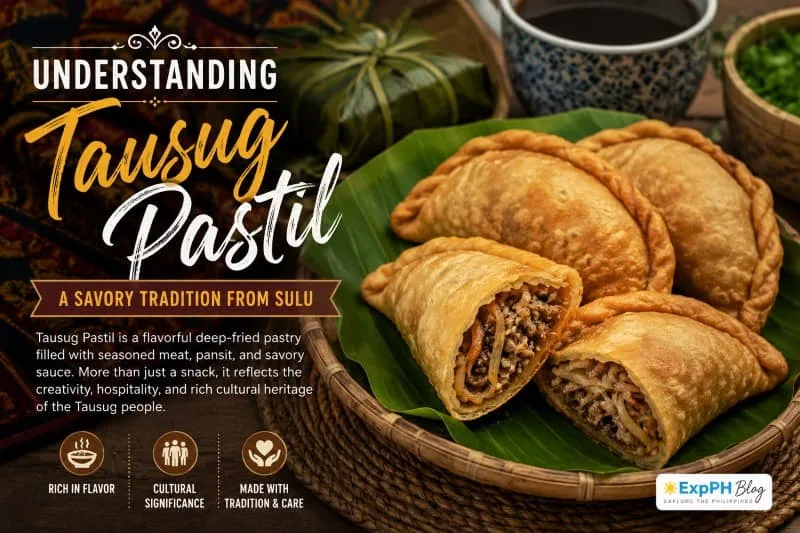
1. Understanding Tausug Pastil
Tausug Pastil is a distinctive traditional delicacy from Sulu that combines simple ingredients with rich cultural significance. Known for its crispy pastry shell and savory filling, it reflects the creativity of Tausug cuisine while serving as a symbol of hospitality, family traditions, and community identity passed down through generations.
What Makes Tausug Pastil Unique
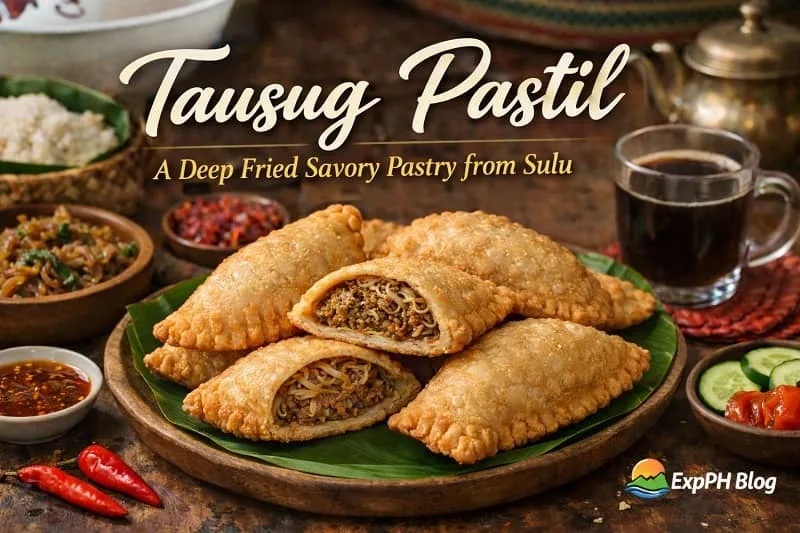
Pastil stands out because it is a deep fried pastry rather than a rice based dish. It uses handmade dough filled with savory ingredients, sealed carefully, then fried until golden and crisp, creating an appealing contrast between crunchy pastry and flavorful, satisfying filling inside.
What defines this Pastil most is its layered flavor profile. The filling is never dry or bland, seasoned carefully, enriched with sauce, and sometimes combined with pansit, which absorbs seasoning well and adds texture, making the dish comforting, rich, and memorable for many local diners.
The Meaning of Pastil in Tausug Culture
In local culture, food represents more than nourishment alone. It reflects hospitality, respect, shared identity, and strong family connection. Pastil is commonly prepared during meaningful occasions such as weddings, religious gatherings, and family celebrations, where food sharing expresses care, unity, tradition, and social belonging together.
Preparing Pastil is often a shared family activity passed through generations. Relatives gather to knead dough, cook savory filling, assemble pastries, and fry them together. This collaborative process strengthens relationships, preserves culinary knowledge, and helps maintain cultural traditions within the community over many years continually.

2. The Origins of Tausug Pastil in Sulu
The story of Tausug Pastil is closely tied to the history, culture, and daily life of the people of Sulu. Understanding its origins reveals how generations of Tausug families transformed simple ingredients into a beloved traditional dish that continues to reflect local identity, heritage, and community values today.
Historical Background
Sulu has long been a crossroads of trade and cultural exchange. Through centuries of interaction with neighboring regions and foreign traders, local cuisine developed unique characteristics. Pastil likely evolved from early meat filled pastries influenced by Malay styles, later adapted to local taste and ingredients.
Over time, Pastil became a recognizable dish in Sulu, shaped by local preferences and cooking methods. Home cooks refined recipes, adjusted seasoning, and improved techniques through daily practice, ensuring the pastry remained familiar, comforting, and deeply connected to community meals and shared traditions over generations.
Connection to Tausug Identity
Pastil represents identity and pride within the community. Recipes are rarely written down, instead passed orally from elders to younger generations. Each household prepares Pastil slightly differently, yet the core technique, flavor balance, and purpose of the dish remain consistent across families over many years.
Cooking Pastil is a meaningful way for families to preserve history and express cultural continuity. Through shared preparation, storytelling, and repeated practice, knowledge is transferred across generations, allowing traditions to survive changing times while strengthening relationships and reinforcing a strong sense of belonging within communities.
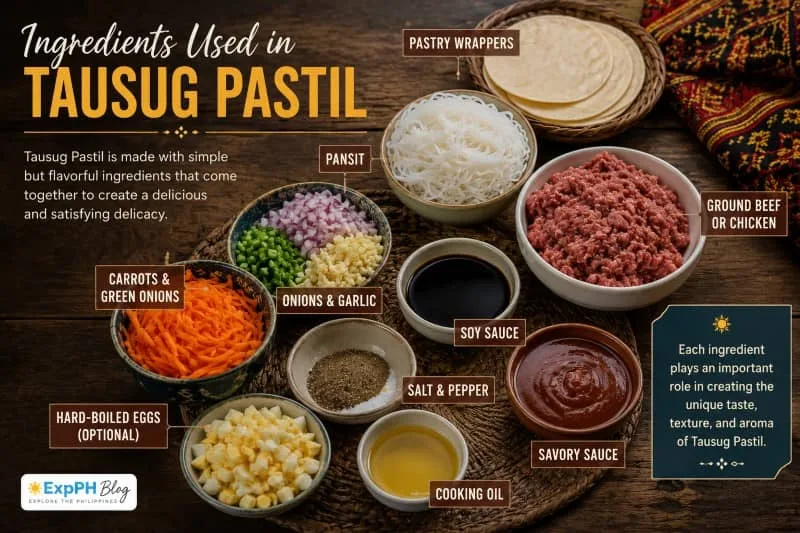
3. Ingredients Used in Tausug Pastil
The unique taste and texture of Tausug Pastil come from a combination of simple yet carefully prepared ingredients. From the dough and savory filling to the flavorful sauce, each component plays an important role in creating the rich, satisfying character that makes this traditional Sulu delicacy memorable and well loved.
Core Ingredients
Traditional Tausug Pastil uses simple, accessible ingredients, including:
- All-purpose flour
- Water and salt
- Cooking oil for deep frying
- Meat such as chicken, beef, or goat
- Garlic and onions
These basic ingredients are transformed through careful preparation into a deeply satisfying dish that reflects patience, skill, and tradition. Each step, from mixing dough to seasoning filling, contributes to balanced flavor, texture, and consistency that define Pastil as a comforting and memorable local food.
Pansit as a Filling Component
In many local households, Pastil is filled not only with meat but also with pansit. Adding noodles makes the filling more substantial, helps absorb sauce and seasonings effectively, and creates a balanced texture that feels hearty, satisfying, and practical for shared meals during gatherings together.
The pansit is usually chopped into shorter strands and lightly sautéed with meat, garlic, and onions before assembly. This method creates a cohesive filling that remains moist, well seasoned, and flavorful after frying, ensuring Pastil delivers consistent taste and texture in every bite served warm.
The Importance of the Sauce
The sauce is one of the most important elements of Pastil because it provides much of the overall flavor. It is commonly cooked together with meat and pansit, allowing each ingredient to absorb savory depth, aroma, and richness throughout the cooking process evenly and slowly.
Without the sauce, Pastil would feel incomplete and less memorable for many diners. The sauce adds richness, moisture, and a distinctive savory character that separates this pastry from other fried snacks, giving it depth, comfort, and lasting appeal across meals for families and communities everywhere.
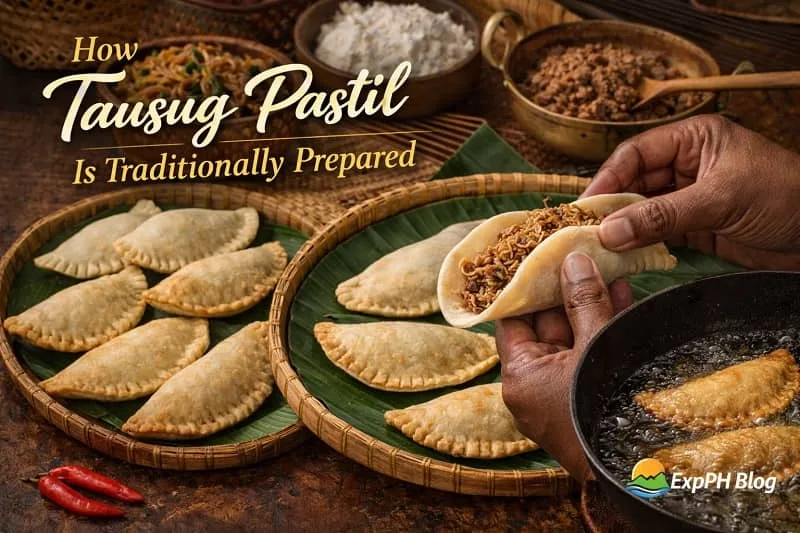
4. How Tausug Pastil Is Traditionally Prepared
Making Tausug Pastil requires patience, attention to detail, and traditional cooking techniques passed down through generations. From preparing the dough and savory filling to carefully shaping and frying each piece, every step contributes to the pastry’s distinctive texture, rich flavor, and lasting appeal within Tausug cuisine.
Dough Preparation
The dough for Pastil is kneaded until smooth and elastic to develop structure and flexibility. Proper kneading helps the pastry puff slightly and crisp evenly during frying, creating a balanced texture that holds the filling well and delivers a satisfying bite once cooked completely.
After kneading, the dough is rested for a short period. Resting relaxes the gluten, making the dough easier to shape and preventing tearing during filling. This step ensures smoother assembly, better sealing, and more consistent frying results for each piece of Pastil prepared carefully.
Preparing the Filling
The filling is prepared separately to control flavor and moisture. Meat is sautéed with garlic and onions until aromatic, then pansit is added and mixed thoroughly. Sauce is incorporated next, allowing the mixture to simmer gently until flavorful, cohesive, and evenly seasoned throughout.
This careful balance ensures the filling remains rich without becoming watery. Proper moisture control helps maintain crispness after frying, prevents soggy pastry, and allows Pastil to retain structure while delivering savory flavor and satisfying texture with every bite served fresh and warm.
Shaping and Frying
Small portions of dough are flattened evenly, filled generously, and sealed tightly to prevent leakage. Each piece of Pastil is carefully lowered into hot oil and fried until golden brown, allowing the pastry to crisp properly while the filling heats through evenly inside.
Maintaining correct oil temperature is essential during frying. Oil that is too cool causes greasiness, while excessive heat burns the exterior. Proper control produces Pastil with a crisp outer layer and a moist, flavorful interior that remains satisfying and enjoyable for diners.
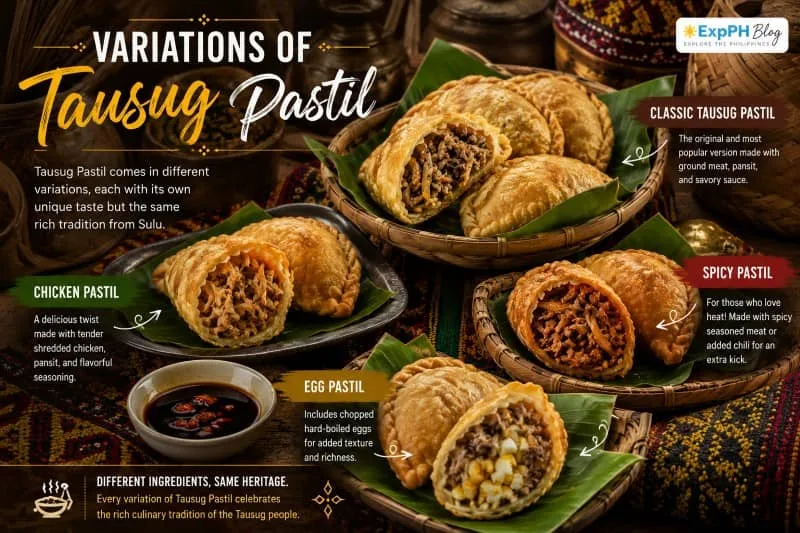
5. Variations of Tausug Pastil
Over time, Tausug Pastil has evolved into several variations that reflect local preferences, available ingredients, and family traditions. While the traditional recipe remains widely appreciated, different fillings and modern adaptations continue to showcase the versatility of this beloved Sulu delicacy without losing its cultural identity and distinctive flavor.
Meat-Based Variations
While chicken is commonly used, some families prefer beef or goat meat for Pastil. Coastal communities may also choose fish as filling, reflecting availability and preference. Each variation offers distinct flavor while preserving the dish’s identity, preparation method, and comforting appeal within local households today.
Pansit-Filled Tausug Pastil
The pansit filled version of Pastil is especially popular during large gatherings and celebrations. Adding pansit stretches the filling, absorbs sauce effectively, and enhances overall flavor, making this option practical, satisfying, and well suited for sharing among families and guests during community meals together locally.
This variation highlights a local tradition of maximizing ingredients without sacrificing taste or quality. Combining noodles with meat creates balance, improves texture, and ensures Pastil remains filling, economical, and flavorful, especially when prepared in large quantities for communal occasions shared celebrations and family gatherings events.
Modern Interpretations
Some modern cooks experiment with vegetables, cheese, or spiced fillings when preparing Pastil. These interpretations appeal to younger audiences and evolving tastes, while still respecting traditional techniques, familiar flavors, and cultural roots that define the dish across generations within local communities and shared family kitchens.

6. Tausug Pastil Compared to Other Filipino Pastries
Tausug Pastil shares some similarities with other Filipino pastries, but its ingredients, preparation method, and cultural significance make it uniquely its own. Understanding these differences helps highlight why this traditional Sulu delicacy continues to stand out among the many savory snacks enjoyed across the Philippines.
Differences from Empanadas and Similar Snacks
Although Pastil may resemble empanadas, it differs in flavor, texture, and cultural background significantly. Empanadas often use slightly sweet dough, while Pastil focuses entirely on savory elements, handmade preparation, and filling balance that emphasizes richness, seasoning, and satisfying mouthfeel rather than sweetness for many diners.
The use of sauce and pansit within the filling further distinguishes Pastil from other pastries. These components add moisture, depth, and texture, creating a savory profile that feels heartier, more complex, and more filling than typical fried snacks found elsewhere in many local communities.
Why Tausug Pastil Stands Out
Pastil remains deeply rooted in home cooking rather than large scale commercial production. Its authenticity, cultural value, and family centered preparation make it special among Filipino snacks, representing tradition, identity, and everyday meals shared within households across generations through consistent practice and communal memory together.
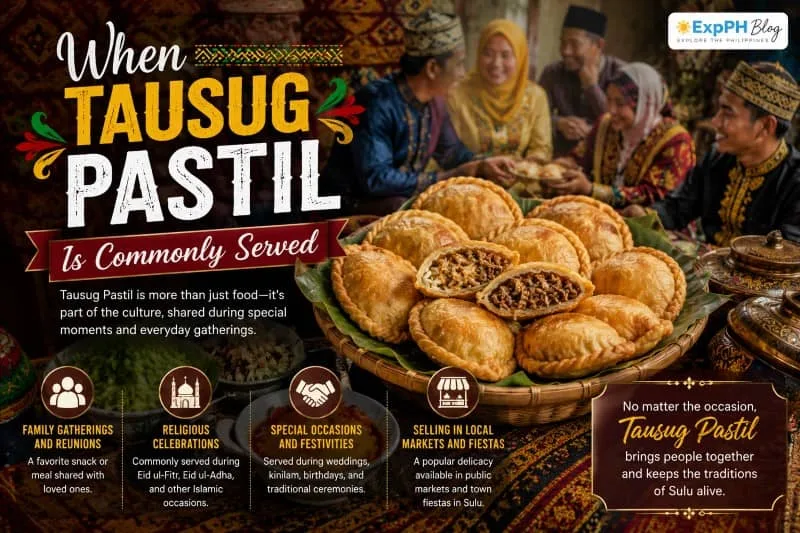
7. When Tausug Pastil Is Commonly Served
Tausug Pastil is enjoyed in a variety of settings, from important celebrations to everyday meals. Its versatility, satisfying flavor, and cultural significance make it a popular choice for family gatherings, community events, and casual dining, allowing people to enjoy and share this traditional delicacy on many occasions.
Special Occasions and Celebrations
Pastil is frequently prepared for weddings, religious holidays, and community events where sharing food strengthens relationships. Large batches are cooked together and distributed among guests, reinforcing social ties, cooperation, hospitality values, and collective celebration through meals that encourage conversation, gratitude, and lasting communal memories shared.
Everyday Food and Street Snack
In some parts of Sulu, Pastil is sold as a street snack enjoyed daily. It is commonly eaten warm with coffee or tea, providing a quick, satisfying meal option that suits busy routines, local tastes, affordability needs, and casual social moments within communities today locally.
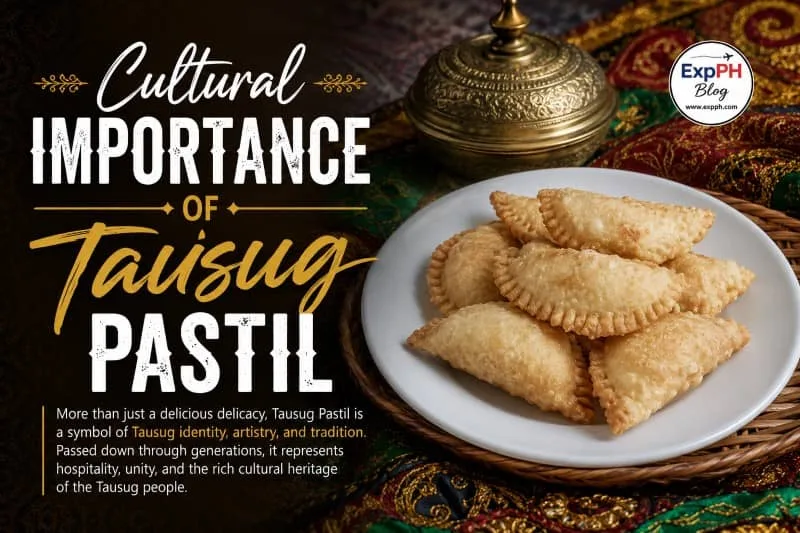
8. Cultural Importance of Tausug Pastil
Tausug Pastil is more than a traditional pastry. It reflects the values, customs, and shared experiences of the Tausug people. Through its preparation and consumption, Pastil helps preserve cultural identity, strengthen community bonds, and pass important traditions from one generation to the next.
A Symbol of Hospitality
Offering Pastil to guests is a gesture of warmth and respect within local communities. The time and effort involved in preparing it show care, generosity, and sincerity, strengthening relationships, honoring visitors, and reinforcing shared values that define hospitality through food during meaningful social interactions together.
Preserving Culinary Heritage
As modern food trends grow, traditional dishes risk being forgotten over time. Sharing stories and recipes of Pastil helps preserve culinary heritage, supports cultural continuity, educates younger generations, and ensures valuable cooking knowledge remains alive, relevant, and practiced within households and communities for future families.
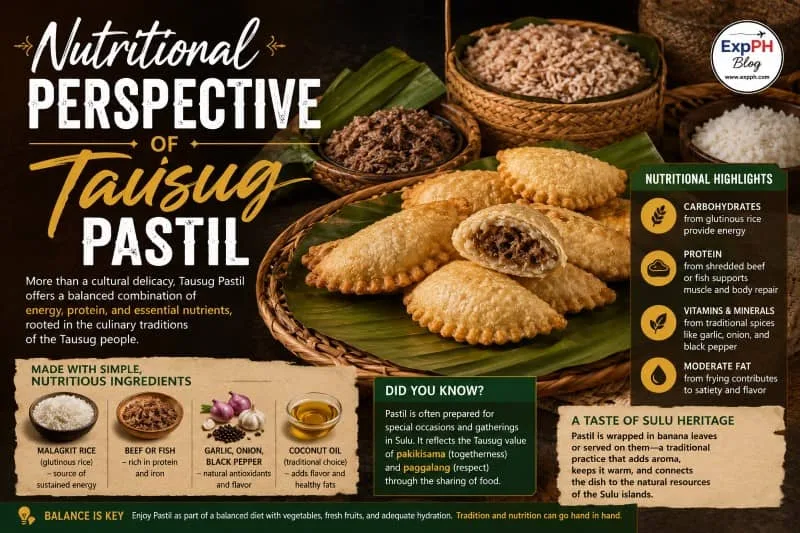
9. Nutritional Perspective of Tausug Pastil
Beyond its cultural significance and rich flavor, Tausug Pastil also provides important nutrients that contribute to energy and satisfaction. Understanding its nutritional value can help diners appreciate how this traditional delicacy fits into a balanced diet while continuing to enjoy it as part of everyday meals and special occasions.
Energy and Satisfaction
Pastil provides energy through carbohydrates and protein, making it suitable for active days and demanding routines. The combination of dough, meat, pansit, and sauce creates a filling meal that supports satiety, delivers sustained energy, and keeps diners satisfied for longer periods after eating comfortably daily.
Enjoying in Moderation
Because it is deep fried, Pastil is best enjoyed in moderation as part of a balanced diet. Pairing it with vegetables or fresh fruit helps create nutritional balance, supports digestion, and allows diners to appreciate flavor while maintaining mindful, healthy eating habits long-term wellness goals.
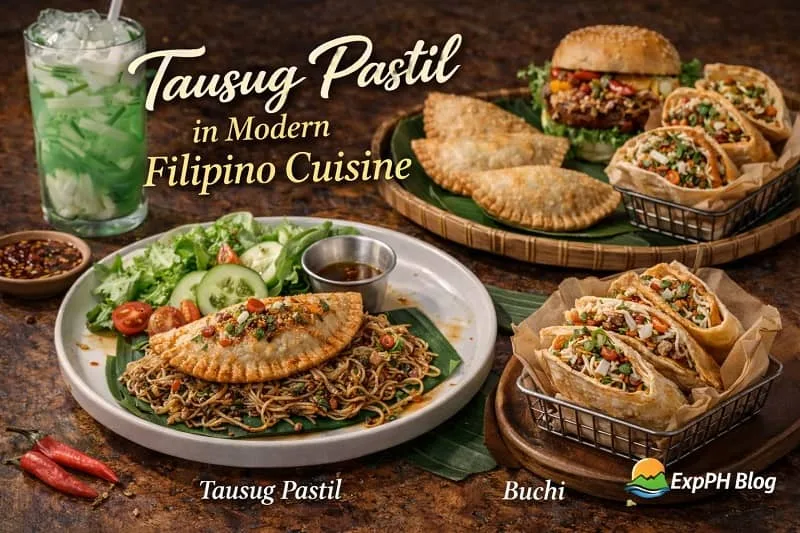
10. Tausug Pastil in Modern Filipino Cuisine
As interest in regional Filipino food continues to grow, Tausug Pastil is finding a place in broader culinary discussions beyond Sulu. Its unique flavors, cultural significance, and traditional preparation methods make it an excellent example of the diverse food heritage that contributes to the richness of Filipino cuisine today.
Growing Interest in Regional Food
There is growing appreciation for regional Filipino dishes as people seek authentic local flavors. Pastil is gaining attention among food enthusiasts, cultural advocates, and travelers who value traditional preparation, unique taste, and stories behind community based cuisine across different parts of the Philippines.
Potential for Wider Recognition
With proper documentation and thoughtful promotion, Pastil could gain wider recognition beyond Sulu. Its distinctive flavor, cultural depth, and traditional preparation make it worthy of national attention, inclusion in food tourism initiatives, and greater appreciation within mainstream Filipino culinary conversations and educational platforms nationwide.
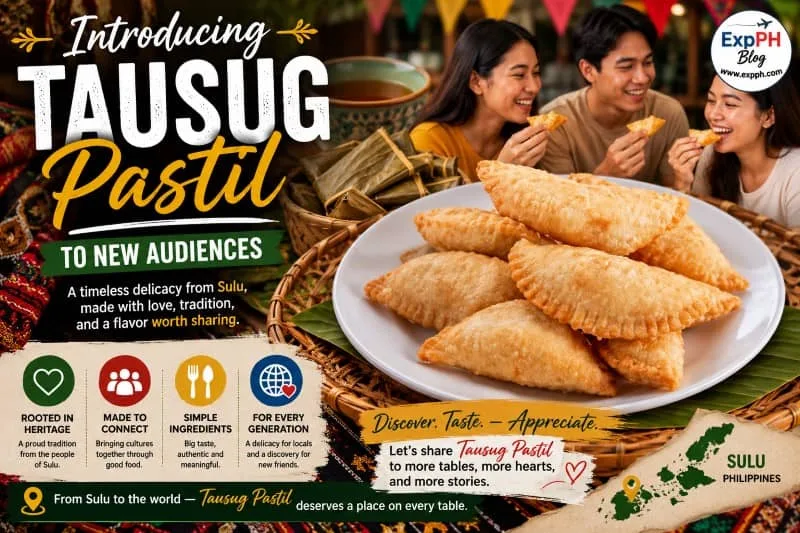
11. Introducing Tausug Pastil to New Audiences
As interest in regional Filipino cuisine continues to grow, Tausug Pastil has the opportunity to reach a broader audience beyond Sulu. Through food tourism, cultural events, and digital storytelling, more people can discover its unique flavors, cultural significance, and the traditions that have kept this beloved delicacy alive for generations.
Food Tourism Opportunities
Food tourism plays a key role in preserving local dishes and culinary traditions. Including Pastil in cultural events, festivals, and guided food tours helps introduce it to travelers, supports local communities, encourages heritage appreciation, and strengthens regional identity through shared dining experiences worldwide.
Digital Storytelling and Blogs
Digital platforms like ExpPH Blog allow traditional dishes such as Pastil to reach wider audiences. Sharing its story through articles, images, and educational content adds meaning beyond taste, promotes cultural understanding, and helps preserve culinary traditions through accessible storytelling and online community engagement.
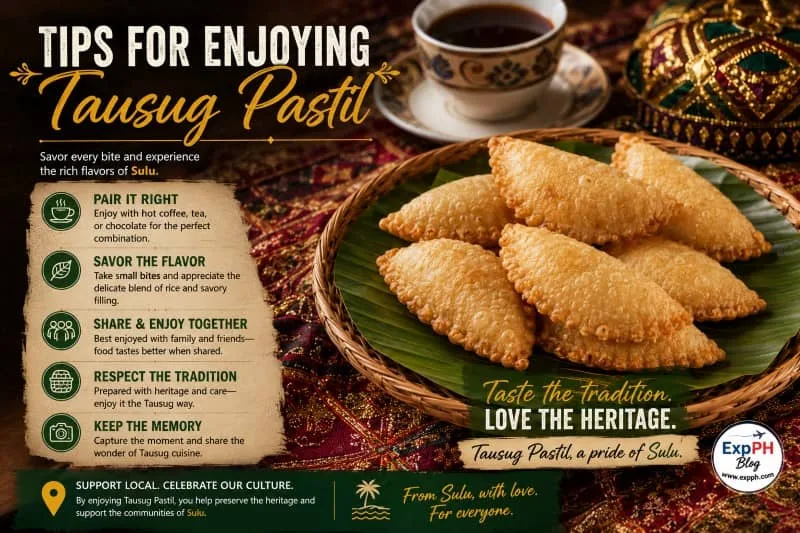
12. Tips for Enjoying Tausug Pastil
To fully appreciate the flavors and textures of Tausug Pastil, it helps to serve and enjoy it the traditional way. From eating it fresh and warm to pairing it with complementary beverages or condiments, a few simple tips can make this classic Sulu delicacy even more enjoyable and satisfying.
Best Way to Eat It
Pastil is best eaten fresh while still warm, allowing the pastry to remain crisp and the filling savory. Enjoying it immediately highlights texture contrast, aroma, and flavor balance, making each bite satisfying, comforting, and memorable during casual meals or shared moments with family and friends.
Pairing Suggestions
Many people enjoy Pastil with coffee or tea, which complements its richness well. Others prefer light dipping sauces or spicy condiments to enhance flavor, add warmth, and personalize the eating experience according to taste preferences, occasion, and mood during meals with family or close friends.
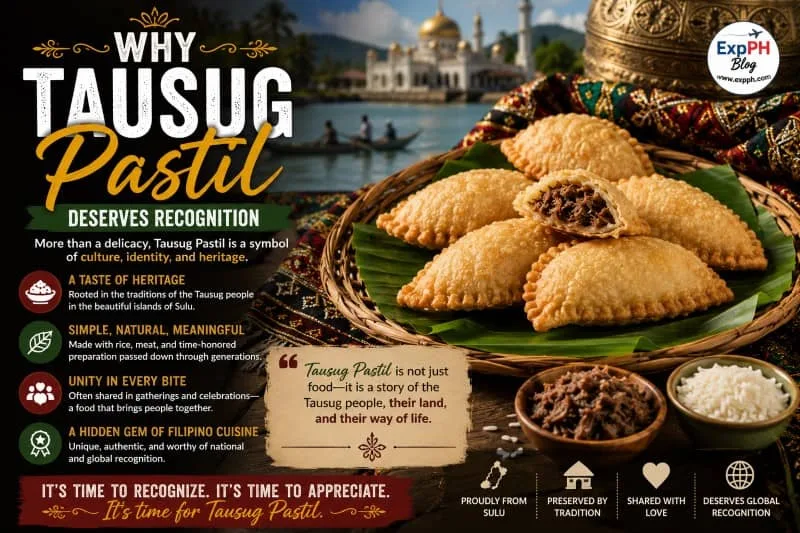
13. Why Tausug Pastil Deserves Recognition
Tausug Pastil is more than a traditional pastry from Sulu. It represents the creativity, resilience, and cultural heritage of the Tausug people. By understanding and appreciating its unique flavors, preparation methods, and historical significance, more people can help preserve this remarkable dish and celebrate its place in Filipino culinary traditions.
A Reflection of Tausug Creativity
Pastil shows how simple ingredients can be transformed into something special through thoughtful preparation and balance. The use of pansit and sauce reflects creativity and practicality, stretching resources while enhancing flavor, texture, and satisfaction for families who cook and share this dish regularly together locally.
A Dish Worth Preserving
Every traditional dish carries history and meaning across generations. Pastil tells the story of Sulu and its people through taste, technique, and shared memories. Preserving it means honoring culture, protecting knowledge, and ensuring future families can experience the same flavors, values, and connections together again.
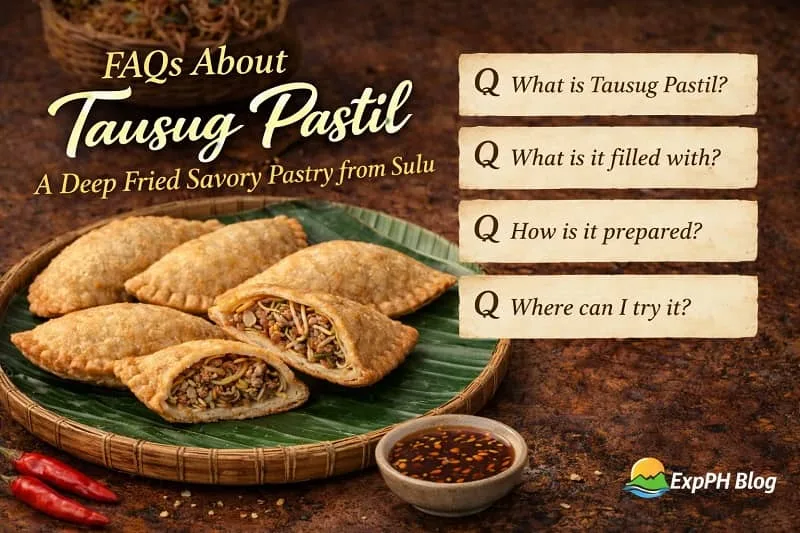
14. FAQs About Tausug Pastil A Deep Fried Savory Pastry from Sulu
What is Tausug Pastil?
Tausug Pastil is a traditional deep fried pastry from Sulu, filled with savory meat, pansit, and sauce, reflecting Tausug culture, history, hospitality, and culinary creativity passed through generations.
How is Tausug Pastil different from other pastil dishes?
Unlike rice based pastil elsewhere, Tausug Pastil uses dough, is deep fried, includes meat, pansit, and sauce, and delivers a crisp exterior with rich flavor enjoyed across Sulu households.
What fillings are commonly used in Tausug Pastil?
Common fillings for Tausug Pastil include chicken, beef, or goat, combined with pansit and cooked in a savory sauce for moisture, aroma, and taste balance loved by many local families.
When is Tausug Pastil usually served?
Tausug Pastil is popular during weddings, religious gatherings, family celebrations, and community events, where sharing food strengthens relationships, tradition, identity, and social bonds togetherness unity.
Why is the sauce important in Tausug Pastil?
The sauce gives Tausug Pastil its signature flavor, adding richness, moisture, and depth, ensuring the filling remains savory, aromatic, satisfying, and never dry inside always.
Is Tausug Pastil eaten as street food?
Yes, Tausug Pastil can be enjoyed as street food in Sulu, often eaten warm with coffee or tea as a filling everyday snack locally popular among residents and visitors alike.
How should Tausug Pastil be eaten for best taste?
Tausug Pastil is best eaten fresh while hot, allowing the pastry to stay crisp and the filling of meat, pansit, and sauce flavorful inside fully for optimal taste enjoyment during shared family moments.
Are there modern versions of Tausug Pastil?
Modern cooks adapt Tausug Pastil with vegetables or cheese, but traditional versions with meat, pansit, and sauce remain the most culturally valued dishes today everywhere.
Why is Tausug Pastil culturally important?
Tausug Pastil reflects Tausug identity by preserving family recipes, communal cooking, hospitality values, and culinary knowledge passed across generations through tradition culture history daily life.
How can Tausug Pastil reach wider audiences?
Tausug Pastil can be introduced through food tourism, cultural festivals, blogs, and storytelling that highlight Sulu heritage, flavors, traditions, and local experiences authentically respectfully worldwide.
Final Thoughts on Tausug Pastil
Tausug Pastil is more than a deep fried savory pastry from Sulu. It stands as a cultural treasure reflecting tradition, family, identity, and shared memory. From crisp dough to flavorful filling of meat, pansit, and sauce, the dish captures community values, patience, and skill. Every preparation moment, from kneading to frying, highlights heritage, creativity, and care, making Pastil a meaningful symbol of local cuisine and everyday celebration that endures across generations, strengthens bonds, and inspires pride within households everywhere today.
By learning about Tausug Pastil and sharing its story, people help keep tradition alive and relevant. For readers of ExpPH Blog, the dish serves as a reminder that meaningful Filipino food thrives in local communities. Passed through generations, prepared with intention, and rooted in culture, Pastil connects history with modern appreciation, encouraging respect for heritage, curiosity, and continued support for regional culinary traditions nationwide while fostering education, pride, sustainability, and awareness among readers, families, travelers, and future storytellers everywhere today.
Enjoyed learning about Tausug Pastil?
Explore more traditional dishes, cultural delicacies, and authentic flavors from Sulu in our complete guide, Traditional Tausug Food: A Complete Guide to Sulu Cuisine and Cultural Delicacies.
You may also enjoy the topics below
- Panganan A Traditional Filipino Sweet Deep Fried Snack
- Bangbang Sug: Traditional Sulu Snack Assortment You Should Try
- Kiyaliya The Crispy and Savory Fried Beef Rolls of Sulu
For confirmation details, click the link below
- Bangsamoro Autonomous Region in Muslim Mindanao Official Website
- National Historical Commission of the Philippines (NHCP)
- National Museum of the Philippines
Test your knowledge about Tausug Pastil, the deep fried savory pastry from Sulu
Results


#1. Where does Tausug Pastil originate?
#2. What cooking method is used for Tausug Pastil?
#3. What type of wrapper does Tausug Pastil use?
#4. Which ingredient is commonly added with meat?
#5. Why is sauce important in Tausug Pastil?
#6. When is Tausug Pastil often served?
#7. Which culture does Tausug Pastil represent?
#8. What texture describes Tausug Pastil?
#9. How is Tausug Pastil usually enjoyed?
#10. What does Tausug Pastil symbolize?
Your interest helps preserve and celebrate the rich food traditions of Sulu and the Tausug people
Please comment below and share your experience, memories, or thoughts about Tausug Pastil with us.

A Filipino web developer with a background in Computer Engineering. Founder of ExpPH Blog and ExpPH Business Guide, creating practical content on OFW guidance, business, finance, freelancing, travel, and lifestyle. Passionate about helping Filipinos grow, he shares insights that educate, empower, and inspire readers nationwide.