How OFWs Can Prepare to Start a Profitable Goat Farming Business in the Philippines
Starting a goat farming business in the Philippines can be an opportunity for Overseas Filipino Workers (OFWs) who want to invest in livestock production. However, raising goats requires suitable land, proper housing, reliable animal care, and a clear selling plan. Goat Farming Preparation for OFWs helps aspiring entrepreneurs understand what to arrange before investing their savings in a livestock operation.
Whether you plan to raise goats for meat, breeding, or both, understanding the basic requirements and daily responsibilities can help you make better business decisions.
This guide is part of our complete resource on:
Goat Farming Business: Low-Cost Livestock Investment Guide for OFWs
5 Important Preparations for Goat Farming Preparation for OFWs
Before purchasing goats or building a shelter, evaluate the resources and responsibilities involved in managing a goat farm.
1. Assess Your Available Land and Farm Location
Your first step is to identify a suitable location for raising goats. Goats need enough space for movement, feeding, resting, and protection from harsh weather.
Evaluate the land’s drainage, accessibility, vegetation, and available water supply. A location that becomes muddy during heavy rainfall may create sanitation and animal health concerns.
If you are an OFW planning to establish a farm in your hometown, ask a trusted family member to inspect the property. Check whether the available space can support your intended herd size before making any purchases.
2. Choose the Right Goat Farming Purpose
Decide what type of goat farming operation you want to establish. Your business purpose will influence the animals you purchase, the facilities you need, and how you plan to earn income.
- Meat production: Focuses on raising goats for sale to meat buyers, traders, and local markets.
- Breeding: Focuses on raising quality breeding animals that may be sold to other livestock raisers.
- Combined production: Involves managing breeding activities while raising selected goats for meat production.
Consider your available capital, experience, local demand, and management capacity before choosing your approach.
3. Prepare Proper Goat Housing and Feeding Facilities
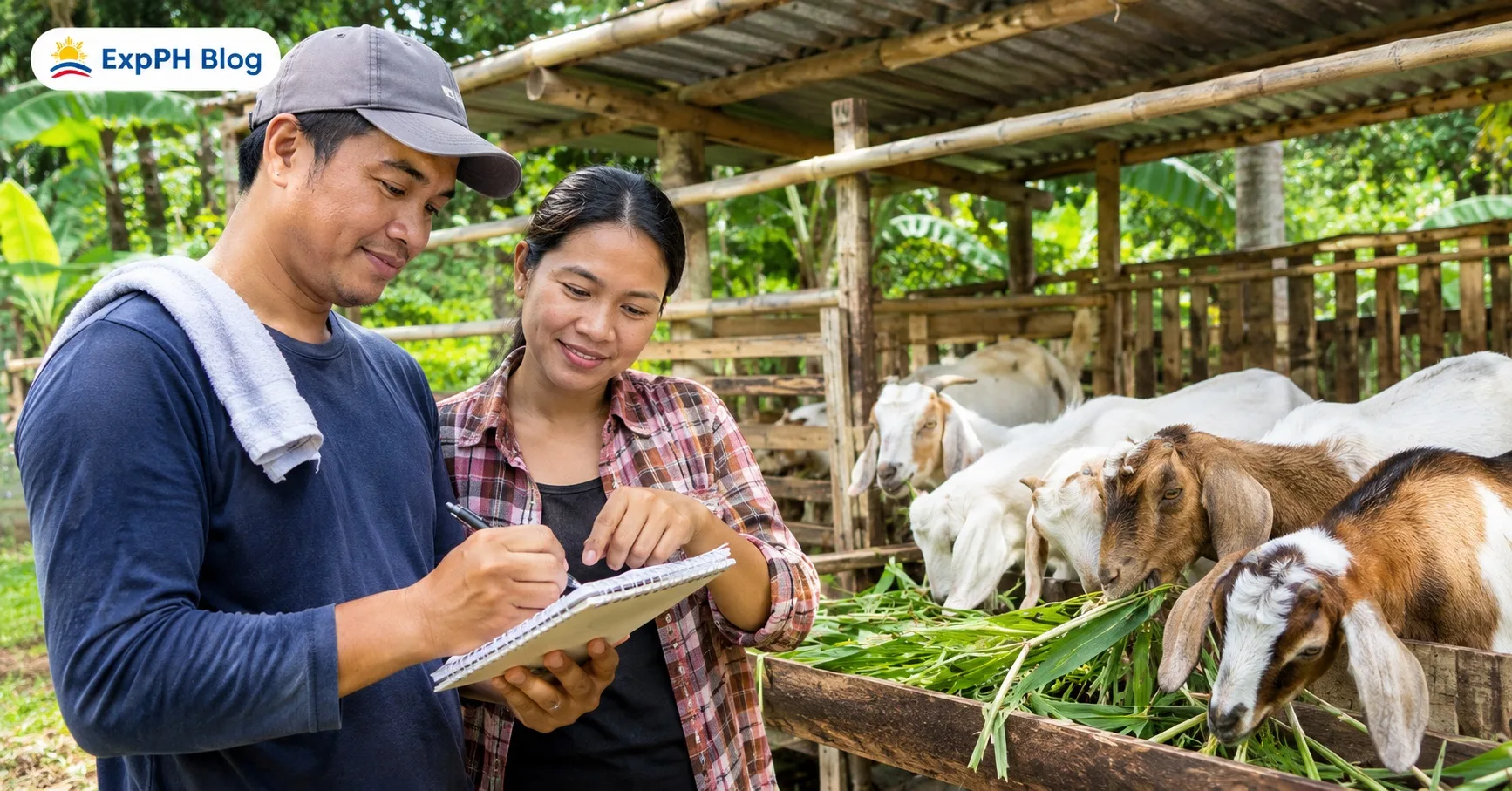
Goat housing should provide protection from rain, excessive heat, and strong winds. Good ventilation, adequate floor space, proper drainage, and regular cleaning are important for maintaining a suitable environment.
You should also plan how to provide feed throughout the year. Depending on your location, goats may consume suitable grasses, forage, leaves, and supplementary feeds.
Prepare feeding areas, clean water containers, and secure fencing. Your facilities should match the number of goats you can realistically manage rather than the herd size you hope to have in the future.
4. Calculate Startup and Operating Expenses
Goat farming involves more than purchasing animals. Prepare a budget covering:
- Goat purchases
- Housing and fencing materials
- Feeding supplies and forage preparation
- Water facilities
- Veterinary care and health management
- Labor and transportation
- Farm maintenance
Also set aside funds for recurring expenses and unexpected animal health concerns. OFWs should avoid using their entire savings for the initial setup because the farm will need financial support while the goats are being raised.
5. Identify Potential Buyers Before Expanding
A goat farming business needs a clear market for its animals. Potential buyers may include local livestock traders, meat vendors, restaurants, and other farmers interested in breeding stock.
Research the demand in your area and ask potential buyers about their preferred goat types, sizes, and purchasing arrangements.
Understanding local market conditions can help you decide how many goats to raise and whether your planned production model is suitable for your location.
One Practical Tip: Start With a Manageable Number of Goats
Begin with a small herd that matches your available land, budget, and ability to provide daily care. This allows you to gain experience with feeding, housing, animal health, and farm management before increasing production.
Keep records of animal purchases, feeding expenses, health treatments, breeding activities, and sales. Reviewing these records can help you understand your actual operating costs and make better decisions when considering expansion.
One Common Mistake: Buying Goats Without Preparing Proper Housing
Purchasing goats before preparing suitable housing and feeding facilities can create unnecessary problems. Animals need a secure and clean environment, dependable access to water, and adequate protection from weather conditions.
Prepare the shelter, fencing, feeding areas, and water facilities before bringing goats to the property. This helps you establish a more organized operation from the beginning.
Conclusion
Starting a goat farm requires more than purchasing livestock and finding available land. Goat Farming Preparation for OFWs involves assessing your location, choosing a production purpose, preparing suitable facilities, calculating expenses, and identifying potential buyers. Start with a manageable herd, establish reliable farm supervision, and expand gradually as you gain experience.
If you want a complete roadmap for long-term success, read:
Top 10 Small Business Ideas in the Philippines for 2026
Related Guides
- Top 10 Profitable Agribusiness Philippines Ideas for Beginners and OFWs
- Livestock Farming Business: How OFWs Can Start a Profitable Pig or Cattle Farm
Table of Contents

A Filipino web developer with a background in Computer Engineering. Founder of ExpPH Blog and ExpPH Business Guide, creating practical content on OFW guidance, business, finance, freelancing, travel, and lifestyle. Passionate about helping Filipinos grow, he shares insights that educate, empower, and inspire readers nationwide.