
The Business Process Outsourcing (BPO) Sector in the Philippines
The Business Process Outsourcing (BPO) industry in the Philippines has become one of the strongest contributors to the country’s economy. Over the past two decades, the industry has expanded rapidly by providing cost-effective and high-quality services to companies worldwide. It has also created millions of employment opportunities for Filipinos in customer service, information technology, finance, healthcare, and other professional sectors. The continuous growth of the BPO industry has helped strengthen economic activity and improve the financial stability of many Filipino families.
Several factors have contributed to the success of the Philippine BPO industry in the global market. The country is known for its skilled workforce, strong English communication skills, and customer-oriented culture. Government support, modern business infrastructure, and reliable technology systems have also encouraged foreign companies to invest in outsourcing operations in the Philippines. These advantages continue to position the country as one of the leading BPO destinations in the world while supporting long-term business growth and global competitiveness.
To get a complete overview of how the industry is evolving,
read our full guide on Philippine Tech Industry and Startups: Growth, BPO, and Innovation and discover the key trends, opportunities, and innovations shaping the future of technology in the Philippines.
Historical Background of BPO in the Philippines
The BPO sector in the Philippines traces its origins to the late 1990s and early 2000s, following the global trend of outsourcing non-core business functions to lower-cost countries. The first major BPO company in the Philippines was the American call center giant, NCR (National Cash Register) Corporation, which set up operations in Manila during the 1990s. NCR’s entry demonstrated the potential of the Philippines as an outsourcing destination and paved the way for other multinational companies to establish BPO centers in the country.
Initially, the industry focused on call center services and customer support for multinational corporations. Over time, however, it diversified to include a wide range of services such as IT support, human resources outsourcing, finance and accounting, healthcare information management, and digital marketing services.
Government support has been instrumental in the sector’s growth. The Philippine Economic Zone Authority (PEZA) and the Information Technology and Business Process Association of the Philippines (IBPAP) have offered incentives, streamlined policies, and programs to encourage foreign investment in BPO. These initiatives have helped position the Philippines as a preferred outsourcing destination in the Asia-Pacific region.
Future Outlook of the BPO Industry in the Philippines
The Philippine BPO industry continues to evolve, with trends indicating growth in higher-value services, including knowledge process outsourcing, digital marketing, AI-enabled support, and IT consulting. The government’s continued support, combined with the workforce’s adaptability and commitment to excellence, positions the Philippines as a global leader in outsourcing for years to come.
Companies are increasingly exploring remote work and flexible arrangements, opening opportunities for talent in provinces outside traditional BPO hubs. This expansion not only diversifies the industry’s geographic footprint but also helps address congestion and cost pressures in major cities.
1. Key Drivers of BPO Growth in the Philippines
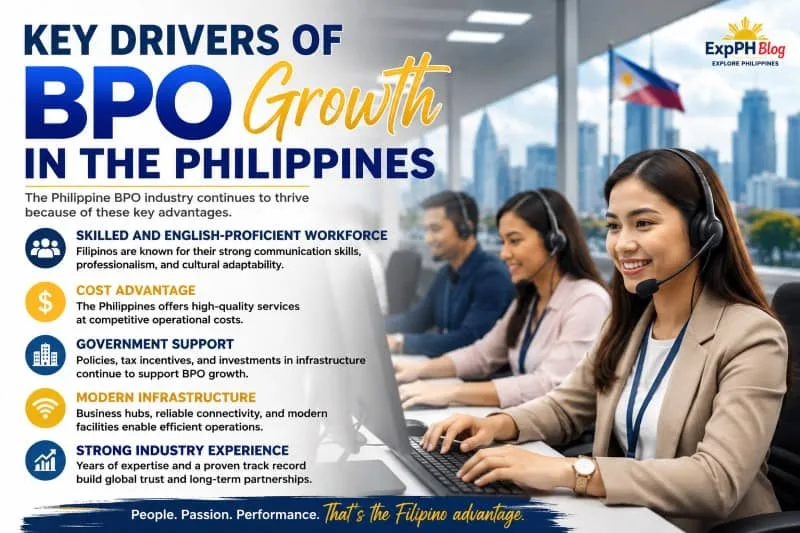
The Philippines continues to strengthen its position as one of the world’s leading BPO destinations. Several factors contribute to the industry’s rapid expansion, including a skilled workforce, cost-efficient operations, and strong government support. These advantages help companies maintain high-quality services while improving business efficiency and global competitiveness.
1. Highly Skilled and English-Proficient Workforce
One of the Philippines’ greatest advantages in the global BPO market is its workforce. With over 90 million people, the country has a young, dynamic, and educated labor pool. English is an official language, making Filipinos naturally proficient in communication, both written and spoken. This linguistic capability allows companies to provide seamless customer interactions and support services to English-speaking markets, particularly the United States, the United Kingdom, and Australia.
Moreover, the Filipino workforce is known for its cultural adaptability, strong work ethic, and customer service orientation, traits highly valued by multinational companies. These factors make it easier for BPO firms to train and deploy employees quickly for various functions, from technical support to creative marketing campaigns.
2. Cost-Effectiveness and Operational Efficiency
Cost savings remain a major factor attracting foreign companies to the Philippines. Operating a BPO office in the Philippines can be significantly more cost-effective than establishing one in the US or Europe. The lower labor costs, combined with high productivity, create an ideal environment for outsourcing both routine and specialized business processes.
Companies can scale operations flexibly without compromising quality, thanks to a well-developed support infrastructure. Moreover, BPO firms leverage cloud technology, digital collaboration tools, and process automation to further enhance efficiency and reduce operational costs.
3. Favorable Business Environment and Government Support
The Philippine government has consistently supported the BPO sector through tax incentives, special economic zones, and investment-friendly policies. Programs like the BPO Roadmap and PEZA-registered IT parks have facilitated the establishment of world-class office spaces, modern telecommunication facilities, and reliable power and internet services.
Additionally, the government invests in education and training programs, particularly in IT and business management, to ensure a continuous supply of qualified talent for the industry. Public-private partnerships have also strengthened industry standards, ensuring competitiveness and sustainability.
2. Services Offered by the Philippine BPO Industry
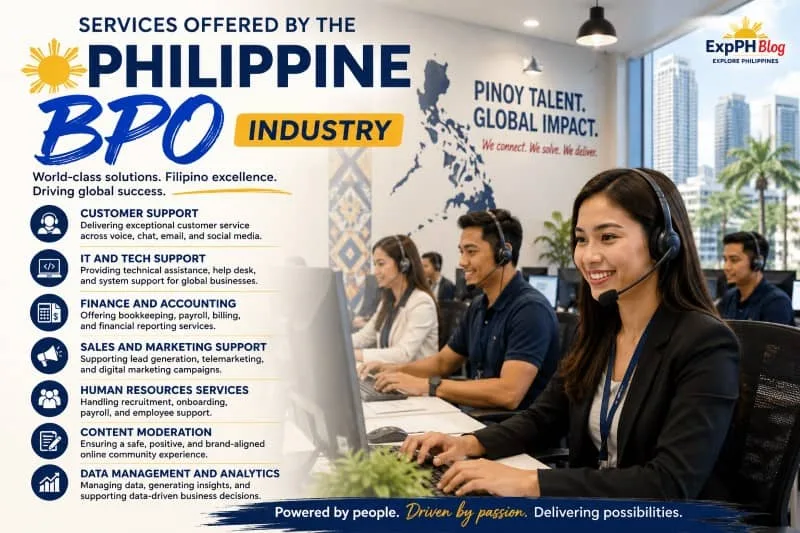
The Philippine BPO industry now provides a wide range of services beyond traditional call center operations. Companies offer customer support, IT solutions, administrative services, digital marketing, and specialized outsourcing functions. This diversification allows the industry to meet changing global business demands while supporting growth across different sectors.
1. Customer Service and Contact Center Solutions
Call centers remain a backbone of the industry. These centers handle inbound and outbound calls, technical support, helpdesk services, and customer relationship management. The industry has embraced omnichannel communication, offering assistance via email, chat, social media, and video conferencing.
2. Information Technology and Software Support
IT outsourcing is a growing segment. Filipino BPOs provide software development, IT support, system maintenance, cybersecurity, and cloud services. Many firms collaborate with tech giants to offer innovative solutions, from app development to AI-powered analytics.
3. Back-Office Operations
Back-office BPO services handle essential but non-customer-facing tasks, including finance and accounting, payroll processing, data entry, HR management, and procurement services. These functions allow client companies to focus on their core business activities while maintaining accuracy and efficiency in administrative processes.
4. Digital Marketing and Creative Services
The rise of digital marketing has opened new opportunities for Philippine BPOs. Services include social media management, content creation, search engine optimization (SEO), graphic design, and online advertising campaigns. Filipino professionals combine creativity with analytical skills, delivering marketing solutions that drive results for international clients.
5. Knowledge Process Outsourcing (KPO)
KPO involves higher-value processes that require specialized knowledge and expertise. In the Philippines, KPO services include market research, legal process outsourcing, medical transcription, financial analysis, and business intelligence. This segment is expanding rapidly as companies seek more strategic support from their outsourcing partners.
3. Major BPO Hubs in the Philippines
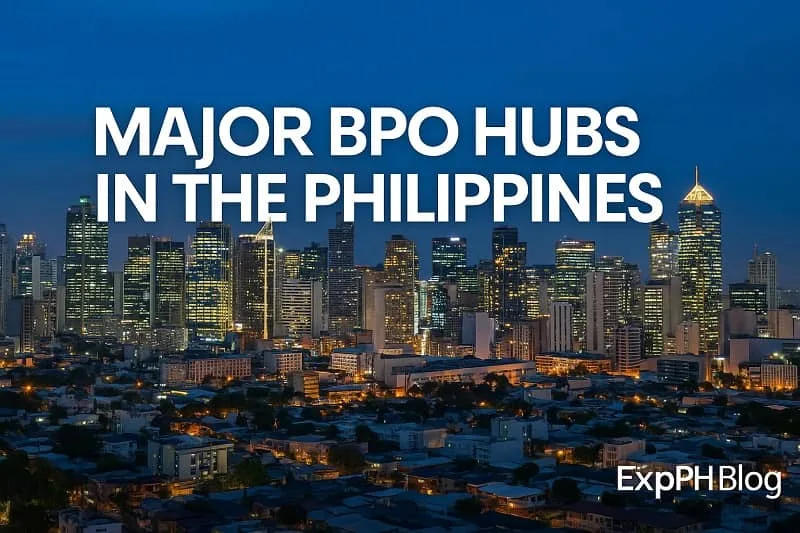
Several cities in the Philippines have developed into major BPO hubs because of their modern infrastructure, skilled workforce, and business-friendly environment. These locations support various outsourcing services, including customer support, IT solutions, and back-office operations. Their continued growth strengthens the country’s position in the global outsourcing industry.
1. Manila
Manila, particularly Makati, Bonifacio Global City (BGC), and Quezon City, serves as the primary BPO hub in the country. The region hosts a mix of global giants and local firms, providing a broad spectrum of services from customer support to IT outsourcing. Its strategic location, modern office spaces, and access to a large workforce make Manila highly attractive for BPO investments.
2. Cebu
Cebu City and its surrounding areas, including Mandaue and Lapu-Lapu, have become a prominent BPO destination in Visayas. Cebu offers a lower operational cost than Manila while maintaining high-quality infrastructure and a skilled workforce. It is popular among companies seeking multilingual support, particularly in English and Japanese, for customer service and IT solutions.
3. Davao
Davao City, in Mindanao, is rapidly gaining attention for BPO operations. Known for its peaceful environment, affordable office spaces, and growing talent pool, Davao is ideal for back-office operations, IT support, and customer service centers.
4. Other Emerging Hubs
Other cities like Iloilo, Bacolod, and Clark are also developing as BPO centers. These cities provide an attractive alternative to Metro Manila, offering lower costs, less congestion, and access to untapped talent pools.
4. Prominent BPO Companies Operating in the Philippines
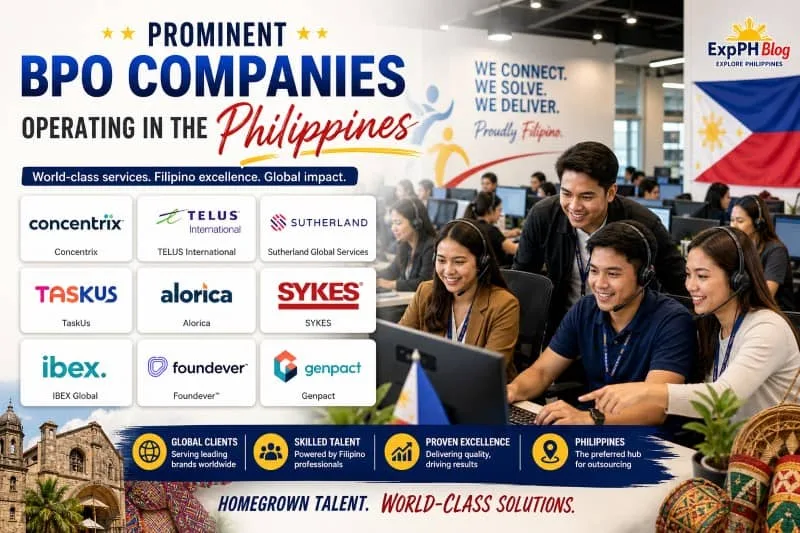
The Philippines hosts many well-known multinational BPO companies that provide outsourcing services to global clients. These companies continue to expand because of the country’s skilled workforce, strong English communication skills, and cost-efficient business environment. Their presence also creates employment opportunities and strengthens the Philippine outsourcing industry.
1. Accenture
- Accenture is one of the largest BPO and consulting companies operating in the Philippines. The company provides consulting, information technology, digital transformation, and outsourcing services across different industries. It supports businesses through advanced technology solutions, process improvement strategies, and customer-focused operations for international clients.
2. Teleperformance
- Teleperformance is a leading provider of customer experience management and technical support services in the Philippines. The company handles customer interactions through voice, chat, email, and digital communication platforms. Its operations focus on improving customer satisfaction while helping businesses maintain efficient and reliable support services.
3. Concentrix
- Concentrix offers customer engagement, technology support, and analytics services for businesses worldwide. The company helps organizations improve customer relationships through digital solutions and operational support. Its Philippine operations continue to grow because of increasing demand for customer service, technical assistance, and business process management services.
4. IBM Philippines
- IBM Philippines provides information technology outsourcing, software development, and business consulting services. The company works with organizations that require advanced technology solutions, cloud services, and digital transformation support. Its operations in the Philippines contribute to the country’s growing reputation as a reliable technology outsourcing destination.
5. Foundever and Alorica
- Foundever and Alorica are recognized for providing customer support and digital outsourcing solutions. These companies manage customer service operations for international brands through voice and non-voice communication channels. Their strong presence in the Philippines highlights the country’s importance in delivering quality customer experience services worldwide.
Local Philippine BPO companies are also expanding their operations and partnerships with foreign clients. Many firms now provide specialized outsourcing services while maintaining competitive pricing and service quality. Their continued growth supports job creation, regional development, and the long-term success of the Philippine BPO industry.
5. Economic and Social Impact of BPO in the Philippines
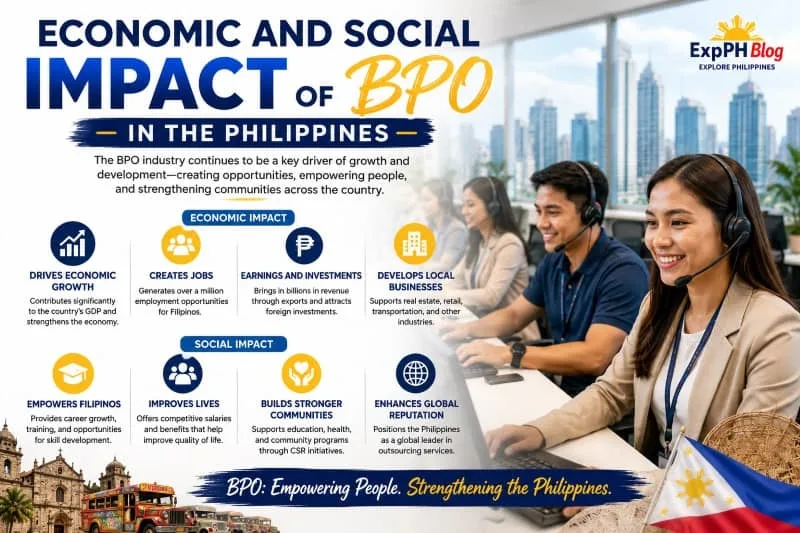
The BPO industry has greatly influenced the Philippine economy and society by creating jobs, increasing foreign exchange earnings, improving workforce skills, and supporting urban development. Its continued expansion benefits millions of Filipinos while strengthening the country’s economy, infrastructure, and long-term competitiveness in the global outsourcing industry.
1. Employment Generation
- The Philippine BPO industry employs more than 1.3 million Filipinos across customer service, information technology, finance, and administrative sectors. These opportunities provide stable income, career growth, and professional experience for workers from different educational and professional backgrounds while supporting employment growth in many regions nationwide.
2. Foreign Exchange Earnings
- The BPO sector contributes significantly to the country’s foreign exchange earnings through international outsourcing contracts and global business partnerships. Revenue generated by the industry helps strengthen economic stability, support national development programs, and maintain the Philippines’ position as one of the leading outsourcing destinations in Asia.
3. Skill Development
- Employees in the BPO industry gain valuable exposure to international business practices and professional work environments. Many workers improve their communication, technical, analytical, and problem-solving skills through continuous training and hands-on experience, helping them become more competitive in both local and international career opportunities.
4. Urban Development
- The expansion of BPO operations has encouraged urban development in many Philippine cities. Growing business districts now include modern office spaces, residential communities, transportation systems, and commercial establishments designed to support outsourcing activities and the increasing demand for business-related infrastructure and public services.
Beyond economic benefits, the BPO industry has improved social mobility for many Filipino families. Stable employment opportunities help workers support education, healthcare, and better living conditions. The industry continues to strengthen the middle class while improving financial security and overall quality of life in many communities.
6. Challenges Facing the Philippine BPO Industry
The Philippine BPO industry continues to expand, but several challenges may affect its long-term growth and competitiveness. Companies must address increasing global competition, workforce retention issues, technological disruption, and infrastructure limitations while maintaining service quality and operational efficiency for international clients and outsourcing partners.
1. Rising Competition
The Philippines faces increasing competition from countries such as India, Vietnam, and Malaysia, which also offer skilled workers and competitive outsourcing costs. These emerging outsourcing destinations continue to attract international companies looking for alternative locations for customer service, technical support, and business process management operations.
2. Talent Retention
Talent retention remains a challenge for many BPO companies because of high employee turnover and strong competition among employers. Many workers seek better salaries, career growth opportunities, or overseas employment. Companies continue investing in employee training, workplace benefits, and engagement programs to improve job satisfaction and workforce stability.
3. Technological Disruption
Automation, artificial intelligence, and machine learning continue to transform traditional BPO operations and outsourcing services worldwide. Many companies now require more specialized digital skills as automated systems handle repetitive tasks. Philippine BPO firms must continue adapting by offering higher-value services, advanced technology solutions, and stronger digital capabilities.
4. Infrastructure and Connectivity
Infrastructure and internet connectivity issues still affect some outsourcing operations in the Philippines. Although many business districts now have modern facilities and reliable communication systems, certain regions continue to experience unstable internet connections and occasional power interruptions that may disrupt customer service, technical support, and daily business activities.
Final Thoughts on the BPO Sector in the Philippines
The Business Process Outsourcing (BPO) sector in the Philippines has firmly established itself as a cornerstone of the country’s economy. Its success stems from a highly skilled, English-proficient workforce, cost-effective operations, supportive government policies, and a culture that values excellence in service. From customer care to digital solutions, IT support, and knowledge process outsourcing, the Philippine BPO industry continues to adapt, innovate, and deliver world-class services to clients across the globe.
As the industry faces challenges such as technological disruption and global competition, it also presents enormous opportunities for growth, skill development, and economic advancement. With its strategic vision, investment in human capital, and commitment to innovation, the Philippines is poised to remain a preferred destination for outsourcing services in the decades ahead.
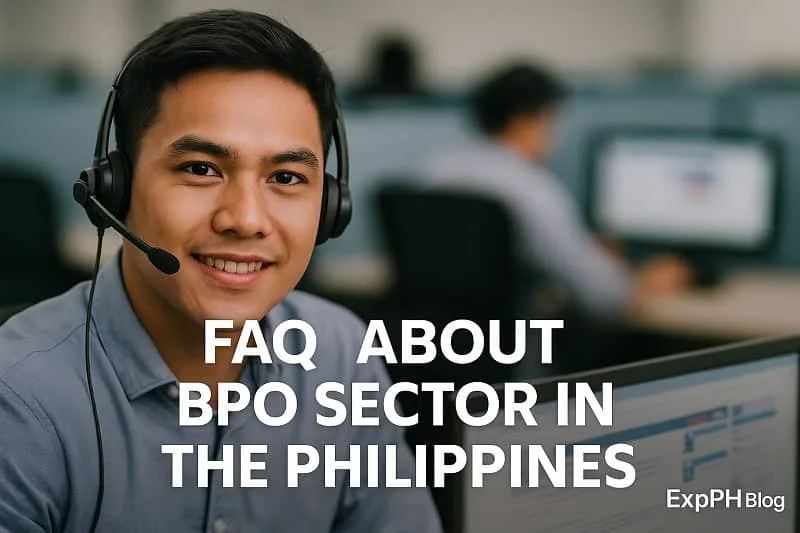
FAQ About BPO Sector in the Philippines
What is the BPO sector in the Philippines and why is it important?
The BPO sector is an industry that handles outsourced tasks such as customer service, IT support, back office work, and creative services for global companies. It is important because it contributes billions to the economy, generates over a million jobs, and strengthens the country’s global competitiveness.
When did the BPO industry start growing in the Philippines?
The industry began its rapid growth in the late 1990s and early 2000s when global companies started outsourcing non core business functions. The entry of NCR and other multinational firms showed the potential of the Philippines as a reliable outsourcing destination.
Why do global companies choose the Philippines for outsourcing?
Companies choose the Philippines due to its skilled workforce, strong English proficiency, cultural compatibility, cost effective operations, and government incentives. These advantages allow businesses to deliver high quality service at lower costs.
What types of services do BPO companies in the Philippines offer?
Philippine BPO companies offer customer service, IT and software support, finance and accounting, human resources, back office tasks, digital marketing, creative content, and knowledge process outsourcing such as research and analytics.
What qualifications do Filipinos need to work in the BPO industry?
Most BPO roles require good English communication skills, basic computer literacy, and at least a high school or college level education. Specialized roles may require technical skills, certifications, or industry experience.
Which cities are the main BPO hubs in the Philippines?
Major hubs include Metro Manila, Cebu, and Davao. Emerging hubs such as Iloilo, Bacolod, Clark, and Baguio are also growing rapidly due to improved infrastructure and strong talent pools.
What are the biggest challenges the BPO industry faces today?
The industry faces challenges such as global competition from countries offering similar services, high employee turnover, technological disruption from AI and automation, and issues with internet stability and infrastructure in some regions.
How does the BPO sector contribute to the Philippine economy?
The sector generates large scale employment, improves foreign exchange earnings, boosts consumer spending, and supports urban development. It has also helped raise the standard of living for many Filipino families.
What major companies operate BPO centers in the Philippines?
Top players include Accenture, Teleperformance, Concentrix, IBM Philippines, Sitel Group, and Alorica. Many local companies also provide specialized outsourcing services for international clients.
What is the future outlook for the BPO sector in the Philippines?
The future remains strong, with more companies seeking higher value services such as digital marketing, AI enabled support, knowledge process outsourcing, and IT consulting. Remote work and provincial expansion will continue to open new opportunities for Filipino talent.
Want to see how BPO fits into the country’s bigger digital transformation?
Read our complete guide on Technology in the Philippines: Strong Progress, Key Opportunities, and Future Innovations to understand the trends, opportunities, and future of the tech industry.
To learn more about the latest trends and innovations in the Philippines’ tech landscape, please visit the link below:
For official references, please visit the link below.
- Philippine Economic Zone Authority (PEZA)
- Information Technology and Business Process Association of the Philippines (IBPAP)
- Department of Information and Communications Technology (DICT)
- National Economic and Development Authority (NEDA)
Learning Hub Quiz!
Test your knowledge about the BPO Sector in the Philippines and see how well you understand its growth, impact, and opportunities. Choose the best answer for each question.
Results


#1. What makes the Philippines a top BPO choice?
#2. Which city is the largest BPO hub?
#3. What service started the BPO boom?
#4. Who supports the BPO sector?
#5. What challenge affects the BPO sector?
Thank you for taking the quiz
Your participation helps support the ExpPH Blog mission to inform and empower Filipino learners. Please comment your experience with us.

A Filipino web developer with a background in Computer Engineering. Founder of ExpPH Blog and ExpPH Business Guide, creating practical content on OFW guidance, business, finance, freelancing, travel, and lifestyle. Passionate about helping Filipinos grow, he shares insights that educate, empower, and inspire readers nationwide.