
Best Reintegration Plans for Returning OFWs in 2026
Returning home after years of working abroad is both exciting and overwhelming. For many Overseas Filipino Workers, coming back to the Philippines in 2026 means starting a new chapter that involves financial decisions, career transitions, family adjustments, and long-term stability. This is where a clear and well-structured OFW Reintegration Program becomes essential.
A reintegration plan is not just about finding a job or opening a small business. It is about rebuilding life at home in a sustainable way, using the skills, savings, and experience gained overseas. This guide is written for real OFWs and their families who want practical, realistic, and future-ready reintegration strategies.
This long-form guide will help you understand the best reintegration plans for returning OFWs in 2026, what programs to consider, what mistakes to avoid, and how to prepare before, during, and after your return.
Understanding the OFW Reintegration Program in 2026
An OFW Reintegration Program is a structured plan that helps returning OFWs rebuild life in the Philippines. It covers employment options, small business preparation, financial management, skills development, and emotional support. The goal is to make the transition home smoother, more stable, and sustainable for both the OFW and family.
In 2026, reintegration goes beyond simply returning home. It focuses on creating income sources that can adapt to change. OFWs are encouraged to build flexible skills, realistic career paths, and practical financial systems that can withstand economic shifts and support long-term security.
Why Reintegration Planning Matters More Than Ever
The global job market is changing fast. Automation, remote work, and digital skills now shape how people earn. OFWs who return without preparation often struggle with unstable income, shrinking savings, and difficulty adjusting to local workplaces that differ greatly from overseas environments.
A strong OFW Reintegration Program helps you achieve the following goals:
- Avoid rushed financial decisions
- Protect your hard-earned savings
- Transition into sustainable income sources
- Prepare your family for long-term stability
Common Challenges Faced by Returning OFWs
Many returning OFWs encounter similar challenges when they come home. These issues often affect finances, emotions, and family relationships. Without planning, these problems can delay reintegration and create long-term stress for the household.
Common challenges include:
- Pressure to support extended family
- Poor business planning that leads to losses
- Difficulty finding local jobs with comparable pay
- Emotional adjustment after years abroad
Recognizing these challenges early helps OFWs plan smarter, set boundaries, and avoid costly reintegration mistakes.
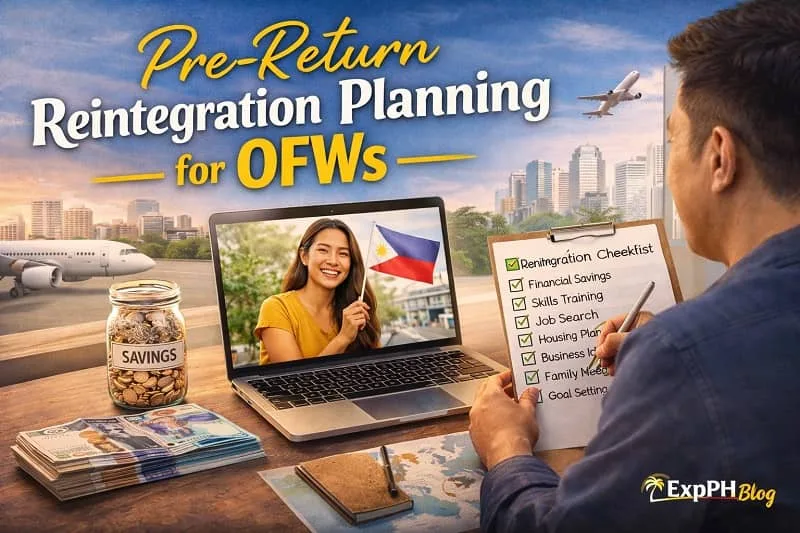
Pre-Return Reintegration Planning for OFWs
The most successful reintegration plans start before an OFW returns home. Early preparation gives you better control over finances, career choices, and family expectations. Planning ahead reduces pressure, prevents rushed decisions, and allows you to return with clearer goals and realistic options.
Financial Readiness and Budget Reset
Before returning, review your financial situation honestly. Look at savings, debts, investments, and regular obligations. Knowing your true financial position helps you avoid overconfidence and protects your funds during the transition period after coming home.
Ask yourself these important questions:
- How long can my savings support my family without income?
- Do I have emergency funds separate from business capital?
- What expenses will increase once I return home?
Creating a clear budget helps align reintegration goals with reality and long-term stability.
Aligning Family Expectations Early
Family expectations can strongly affect reintegration success. Many returning OFWs feel pressured to provide or invest immediately. Open communication is essential. Clearly explain your timeline, income plans, and limits. A strong OFW Reintegration Program treats family as partners in planning, not just recipients of support.
Government-Supported OFW Reintegration Programs
Government-backed programs remain an important foundation for reintegration, especially for livelihood support and skills development. These programs are designed to help returning OFWs restart responsibly, gain direction, and access basic assistance while adjusting to life back in the Philippines.
OWWA and DMW Reintegration Support
The Overseas Workers Welfare Administration and the Department of Migrant Workers provide reintegration services for returning OFWs. These include livelihood assistance, training programs, business guidance, and counseling support that help ease the transition from overseas work to local settlement.
For official and updated reintegration programs, OFWs should refer to the Department of Migrant Workers website for verified information and guidance. This ensures decisions are based on accurate, current, and policy-approved support.
What Government Programs Can and Cannot Do
Government programs are helpful but not complete solutions. They usually provide the following forms of support:
- Seed capital assistance
- Short-term skills training
- Basic business orientation
However, these programs do not guarantee profits or long-term income. A strong OFW Reintegration Program uses government support as a starting point, combined with personal planning, discipline, and realistic expectations for sustainable success.
Employment-Based Reintegration Plans for Returning OFWs
Not all returning OFWs choose entrepreneurship. Many prefer employment because it offers predictable income and structure. Employment-based reintegration works well for OFWs seeking stability, routine, and gradual adjustment. With proper planning, this path can support financial security while rebuilding life in the Philippines.
Local Employment Opportunities in 2026
Several industries in the Philippines continue to grow and welcome experienced workers. Returning OFWs often gain an advantage when they align overseas skills with local job requirements and adjust expectations to local salary levels and work culture.
Growing industries include:
- Healthcare and caregiving
- Construction and technical trades
- Logistics and supply chain
- Education and training
This approach improves employability and supports a smoother employment-based reintegration.
Remote and Hybrid Work as a Reintegration Path
Remote work remains a strong reintegration option in 2026. It allows OFWs to earn competitive income while living in the Philippines. This setup supports flexibility, reduces relocation pressure, and helps maintain work-life balance during the reintegration period.
Skills-based remote work often includes:
- Virtual assistance
- Online customer support
- IT and development roles
- Digital marketing
This approach supports smoother adjustment while maintaining income continuity.
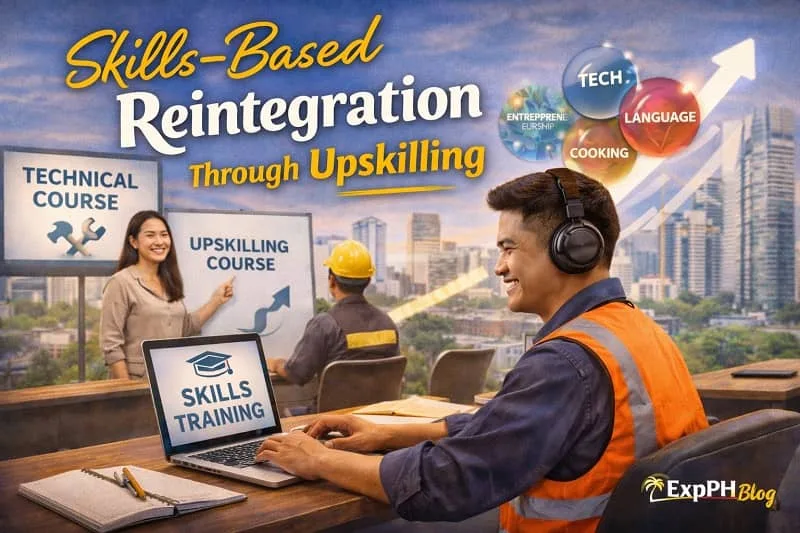
Skills-Based Reintegration Through Upskilling
Upskilling is one of the strongest pillars of a modern OFW Reintegration Program. It allows returning OFWs to create income using knowledge and experience rather than large capital. Skills-based paths offer flexibility, lower risk, and better long-term adaptability in a changing job market.
Why Skills Matter More Than Capital
Many returning OFWs lose savings by investing in businesses they do not fully understand. Skills-based income lowers risk because it depends on personal expertise, not inventory or rental costs. This approach provides more control and steady earning potential.
Skills can be monetized through:
- Freelancing
- Consulting
- Teaching
- Service-based businesses
Recommended Upskilling Areas for Returning OFWs
In 2026, several skills remain in high demand and suitable for reintegration. These skills support local employment, remote work, and independent income while allowing OFWs to adapt to market changes.
High-value upskilling areas include:
- Digital marketing
- Freelancing and online services
- Bookkeeping and virtual accounting
- Web development and design
- E-commerce management
Using Online Learning Platforms for Reintegration
To support skill-based reintegration, structured learning is essential. After understanding what skills match your experience and goals, online courses can help bridge the gap efficiently.
One practical option is enrolling in targeted online courses that focus on freelancing, digital skills, or career transition. Platforms like Udemy offer flexible courses that allow returning OFWs to learn at their own pace while preparing for income opportunities aligned with reintegration goals. This approach works well because it minimizes risk while maximizing employability.

Business and Livelihood Reintegration Plans
Entrepreneurship remains a popular reintegration option for returning OFWs, but it requires careful planning and realistic expectations. Business-based reintegration works best when it is approached gradually, with clear goals, controlled risk, and proper separation between personal and business finances.
Low-Risk Business Ideas for Returning OFWs
Instead of large investments, returning OFWs should focus on small and manageable ventures. These options allow testing the market, learning operations, and adjusting strategies without risking all savings at once.
Low-risk business options include:
- Service-based businesses
- Online selling with limited inventory
- Family-assisted operations
- Skills-based consultancy
Mistakes to Avoid in OFW Business Reintegration
Many OFWs struggle because of avoidable mistakes during reintegration. These errors often lead to financial loss and stress, especially during the early stages of business setup.
Common reintegration mistakes include:
- Investing all savings at once
- Following trends without research
- Mixing family finances with business funds
- Expecting fast returns
A sustainable OFW Reintegration Program values patience, planning, and steady growth over speed.
Financial Management as a Reintegration Foundation
No reintegration plan succeeds without strong financial discipline. Managing money wisely helps returning OFWs protect savings, reduce stress, and avoid setbacks. Financial control supports stability during transition and ensures that reintegration efforts lead to sustainable income and long-term security.
Separating Personal and Business Finances
Financial separation is often overlooked but very important. Keeping funds separate helps prevent confusion, overspending, and unexpected losses. It also protects household needs when business income becomes unstable or delayed.
Always maintain the following:
- A personal emergency fund
- A separate business capital fund
- Clear tracking of income and expenses
This structure protects your household from unnecessary financial risk.
Long-Term Financial Goals After Returning Home
Reintegration planning should support long-term financial goals, not just immediate income. Clear priorities help guide decisions and prevent short-term choices from harming future stability.
Common long-term goals include:
- Home ownership
- Children’s education
- Retirement planning
- Health security
Every reintegration decision should align with these priorities for lasting success.

Mental and Emotional Reintegration for OFWs
Reintegration is not only about income and finances. Emotional adjustment plays a major role in long-term success. Returning OFWs often face stress, uncertainty, and identity changes. Addressing mental well-being early helps improve decision-making, relationships, and overall reintegration stability.
Reverse Culture Shock and Adjustment
Many returning OFWs experience reverse culture shock. Life at home can feel unfamiliar after years abroad. This reaction is normal and temporary. Allow yourself time to adjust, observe changes, and avoid making major life or financial decisions during emotional transitions.
Building a Support System at Home
A strong support system makes reintegration easier. Reconnecting with trusted friends, family members, and fellow returning OFWs provides emotional balance and guidance. Shared experiences reduce isolation and stress. A healthy OFW Reintegration Program includes emotional resilience and consistent mental well-being support.
Creating a Personalized OFW Reintegration Program
There is no one-size-fits-all reintegration plan. Each OFW has different skills, savings, family responsibilities, and goals. A personalized approach helps returning OFWs make realistic choices, avoid unnecessary pressure, and build a reintegration path that supports long-term stability and personal well-being.
Step-by-Step Reintegration Framework
A clear framework helps organize decisions and reduce confusion during reintegration. Following structured steps allows OFWs to move gradually while protecting finances and emotional balance.
Key reintegration steps include:
- Assess finances and timeline
- Identify income path, employment, skills, or business
- Upgrade or align skills before returning
- Secure emergency funds
- Transition gradually and adjust as needed
Monitoring and Adjusting Your Reintegration Plan
Reintegration is an ongoing process, not a one-time action. Reviewing your plan every six months helps you respond to changes, correct mistakes, and seize new opportunities. Flexibility allows OFWs to stay resilient and make better decisions over time.
Final Thoughts on OFW Reintegration Program Success in 2026
A successful OFW Reintegration Program in 2026 is grounded in preparation, realistic expectations, and informed choices. Whether you pursue employment, freelancing, or entrepreneurship, sustainability matters more than speed. Careful planning helps protect your savings, manage family expectations, and avoid rushed decisions that can lead to stress or loss. Reintegration works best when goals are clear, income paths are realistic, and adjustments are made gradually based on actual results.
Years of working abroad have built your skills, discipline, and resilience. With a well-planned reintegration approach, those strengths can support a stable and meaningful life back home. Reintegration is not an ending but a new chapter. It requires patience, self-awareness, and confidence in your ability to adapt, grow, and succeed in the Philippines.
You may also find these related guides helpful.
- Best Retirement Plans for OFWs in 2026
- Why Minimalist Living Works for Filipinos
- Best Countries to Settle In After OFW Life in 2026
- How to Stay Productive When Working from Home
- How OFWs Can Prepare for Life After Working Abroad in 2026

FAQs About OFW Reintegration Program
What is a reintegration plan for returning OFWs?
A reintegration plan helps returning OFWs manage finances, choose income paths, adjust emotionally, and build long term stability using skills, savings, and goals at home.
Why should OFWs plan reintegration before returning home?
Planning before returning allows OFWs to protect savings, prepare family expectations, upskill early, and avoid rushed decisions that often cause financial stress after coming home.
Are government programs enough for OFW reintegration?
Government reintegration programs offer training, livelihood support, counseling, and guidance, but they work best when combined with personal planning, financial discipline, and realistic income strategies.
Can returning OFWs choose employment instead of business?
Yes, many returning OFWs choose local employment or remote work, especially if they align overseas experience with growing industries or digital roles available in 2026.
Why is upskilling important in OFW reintegration plans?
Upskilling is crucial because skills create flexible income options, reduce business risk, support freelancing or employment, and help OFWs stay competitive in the job market.
Do all returning OFWs need to start a business?
Not all OFWs need businesses. Employment, freelancing, consulting, or service based work can provide steadier income with lower risk than capital heavy ventures for families.
What are common reintegration mistakes OFWs should avoid?
Common mistakes include investing all savings, skipping research, trusting trends blindly, mixing family finances, and expecting quick returns instead of sustainable long term growth plans.
Why is emotional adjustment part of reintegration planning?
Emotional reintegration matters because returning OFWs often face reverse culture shock, identity shifts, and stress, which can affect decisions, relationships, and financial stability at home.
How can OFWs create a personalized reintegration plan?
A personalized reintegration plan should consider savings, skills, family needs, income goals, health, and timeline, allowing OFWs to transition smoothly without unnecessary pressure and stress.
How do you measure a successful OFW reintegration in 2026?
Success means achieving stable income, controlled expenses, emotional balance, and progress toward long term goals while living sustainably and confidently after returning home with family.
Test your understanding of smart and sustainable reintegration planning for returning OFWs in 2026.
Results


#1. What is the main goal of an OFW reintegration plan?
#2. When should OFWs start reintegration planning?
#3. Which factor is most important before reintegration?
#4. Which option reduces reintegration financial risk?
#5. What is a common reintegration mistake?
#6. Which work option allows foreign income locally?
#7. Why is upskilling important for OFWs?
#8. What should be separated financially?
#9. What non financial factor affects reintegration success?
#10. What defines successful reintegration in 2026?
Thank you for taking your time with us.
Please comment below and share your experience so other OFWs can learn from your journey too.

A Filipino web developer with a background in Computer Engineering. Founder of ExpPH Blog and ExpPH Business Guide, creating practical content on OFW guidance, business, finance, freelancing, travel, and lifestyle. Passionate about helping Filipinos grow, he shares insights that educate, empower, and inspire readers nationwide.



Pingback: Best Work-Life Balance Tips for Filipinos and OFWs in 2026.
Pingback: Best OFW Life Planning Checklist for 2026 Complete Pro Guide
Pingback: Ultimate OFW Roadmap for a Better Future in 2026 | OFW Guide
Pingback: Best Tech Career Roadmap for Filipinos and OFWs in 2026 Now!