Traditional Tausug Wedding Practices Explained
The Traditional Tausug Wedding is one of the most meaningful and visually rich cultural celebrations in the southern Philippines. Rooted in Islamic faith and Tausug customs, this wedding tradition reflects deep respect for family, community, and religious values. This detailed guide explores every stage of the Traditional Tausug Wedding, from pre marriage negotiations to post wedding celebrations, carefully explaining the symbolism, rituals, and cultural importance behind each practice for readers seeking understanding, appreciation, and cultural insight.
This article is designed to be educational, friendly, and easy to understand, especially for readers who want to learn more about Tausug culture or help preserve this heritage for future generations. It presents traditions clearly, respectfully, and accurately, making cultural knowledge accessible to students, families, researchers, and enthusiasts. By sharing these practices, the article supports awareness, appreciation, and continuity of Tausug identity while encouraging responsible learning, respect for diversity, and pride in Filipino cultural heritage today.
Interested in learning more about Tausug heritage and traditions?
Explore our complete cultural guide, “Complete Guide to Tausug Culture and Traditional Life in Sulu,” where you can discover Tausug history, customs, traditional clothing, food, language, celebrations, arts, and daily life across the southern Philippines.
Quick Summary (TL;DR)
- The Traditional Tausug Wedding is a culturally rich marriage tradition rooted in Islamic faith and Tausug customs.
- It emphasizes family unity, respect for elders, community involvement, and cultural identity.
- Important stages include Pagpanilas (initial inquiry), Pagpangasawa (formal proposal), engagement rituals, dowry negotiations, and the Nikah ceremony.
- The dowry or mahr symbolizes the groom’s sincerity, responsibility, and commitment to marriage.
- Traditional attire, food, music, and cultural performances reflect Tausug heritage and artistic traditions.
- Elders play an important role by guiding negotiations, preserving customs, and offering marital advice and blessings.
- Post wedding traditions strengthen family relationships, unity, and long term community support.
- Modern weddings may adapt certain practices while still preserving core Tausug traditions and Islamic values.
- The Traditional Tausug Wedding helps preserve Tausug identity, cultural heritage, and intergenerational traditions in modern society.
Understanding the Cultural Roots of the Traditional Tausug Wedding
The Traditional Tausug Wedding originates from the Tausug people of Sulu, Tawi Tawi, Basilan, and nearby Mindanao areas. Tausug communities are predominantly Muslim, so Islamic teachings strongly influence wedding rites, prayers, and obligations. At the same time, ancestral customs, regional symbolism, and long practiced traditions remain deeply integrated, creating ceremonies that honor faith, heritage, identity, and community continuity, values, history.
Marriage in Tausug society is not only a union between two individuals but also a lasting bond between families and clans. This belief appears throughout the Traditional Tausug Wedding, where elders, relatives, and community leaders actively participate, guide negotiations, witness rituals, offer blessings, and ensure respect, harmony, shared responsibility, and cultural continuity for future generations, strengthening trust, unity, identity, togetherness.
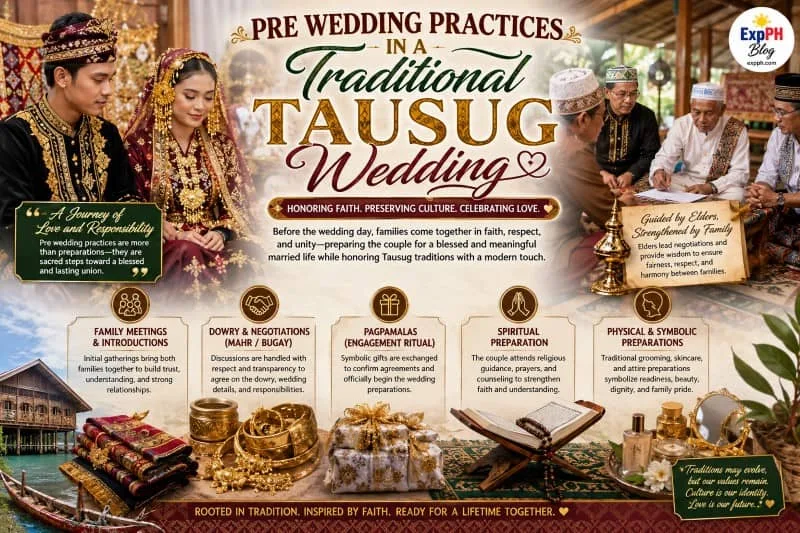
1. Pre Wedding Practices in a Traditional Tausug Wedding
Pre wedding practices in a Traditional Tausug Wedding focus on respect, family involvement, and proper communication before marriage arrangements are finalized. These early customs help strengthen trust between families while ensuring that courtship and marriage discussions follow Tausug cultural values, Islamic guidance, and long respected community traditions passed through generations.
Pagpanilas or Initial Inquiry
The first step in a Traditional Tausug Wedding is Pagpanilas, an informal inquiry led by the groom’s family. Elders or trusted relatives visit the bride’s household to politely ask about her availability for marriage, ensuring discretion, courtesy, and respect for family reputation and community values.
This step is important because it demonstrates respect, protects both families from embarrassment, and maintains social harmony. A Traditional Tausug Wedding values dignity, patience, and proper conduct, especially during courtship, where careful communication helps preserve honor, trust, and mutual understanding within the wider community itself.
Pagpangasawa or Formal Proposal
Once the inquiry is accepted, the next stage in a Traditional Tausug Wedding is Pagpangasawa, the formal proposal. The groom’s family returns with senior relatives to officially request the bride’s hand, confirming serious intentions, family readiness, and commitment to marriage traditions and long respected customs.
During this meeting, both families discuss expectations, family background, responsibilities, and intentions for the future. Respectful language, patience, and calm dialogue are essential, reflecting Tausug values of harmony, mutual respect, collective decision making, and peaceful relationships between families and their extended communities across generations, together.
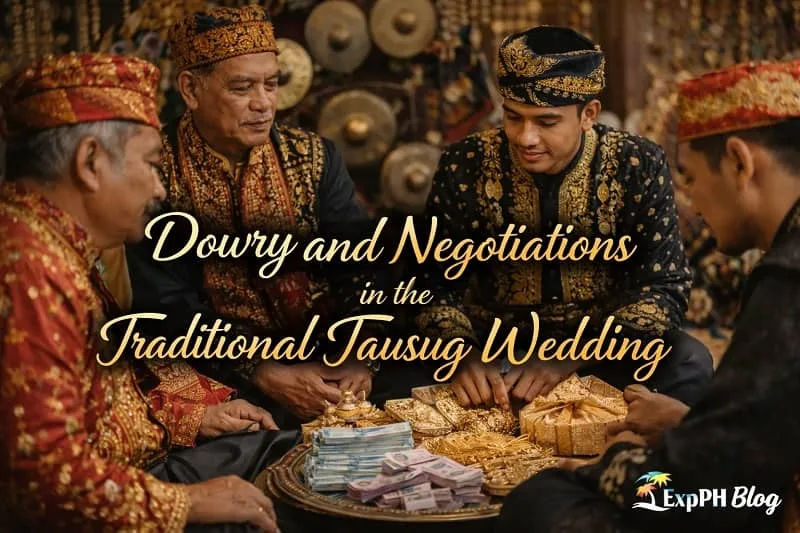
2. Dowry and Negotiations in the Traditional Tausug Wedding
Dowry discussions in a Traditional Tausug Wedding reflect respect, responsibility, and fairness between both families. Guided by Islamic teachings and Tausug customs, these negotiations help establish mutual understanding before marriage. The process also highlights family cooperation, sincerity, and the importance of preserving harmony, dignity, and cultural traditions throughout the wedding preparations.
The Meaning of the Dowry
In a Traditional Tausug Wedding, the dowry is called the mahr or bugay. It is a mandatory Islamic requirement symbolizing the groom’s responsibility, sincerity, and commitment to marriage. The dowry may include money, gold, land, livestock, or valuable items mutually agreed upon by both families through respectful discussion, reflecting honor, trust, and shared cultural values within Tausug community traditions practices.
Negotiation Process
Dowry negotiations are handled carefully in a Traditional Tausug Wedding, guided by elders who ensure balance and fairness. The goal is not to burden the groom but to honor the bride and her family. Discussions also cover wedding expenses, gifts, responsibilities, and timelines, with patience, transparency, and mutual respect emphasized throughout the entire process to preserve harmony and cultural integrity.
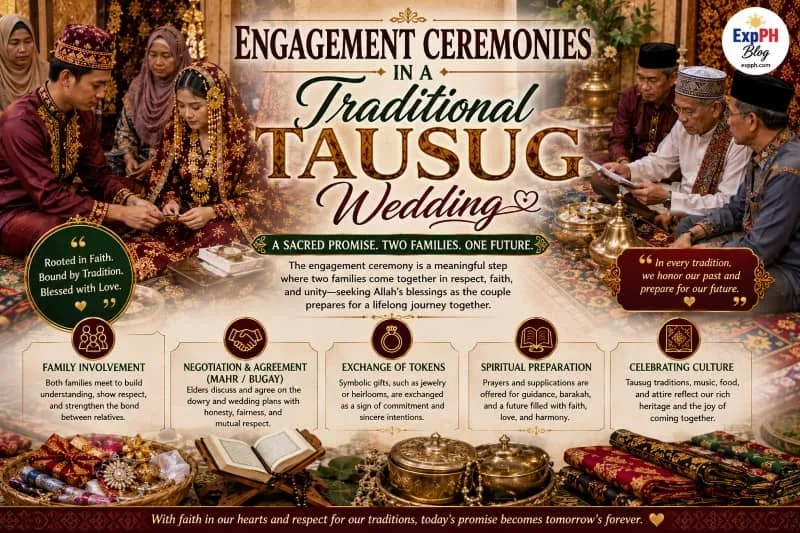
3. Engagement Ceremonies in a Traditional Tausug Wedding
Engagement ceremonies in a Traditional Tausug Wedding formally strengthen the connection between both families before the marriage takes place. These gatherings highlight trust, respect, and community participation through symbolic rituals, shared blessings, and family involvement. They also mark the beginning of official wedding preparations guided by Tausug customs and cultural values.
Pagpamalas or Engagement Ritual
The engagement stage in a Traditional Tausug Wedding often includes Pagpamalas, a meaningful ritual that formally confirms agreements between families. Symbolic gifts such as jewelry, clothing, food, or traditional items are exchanged respectfully. This gathering strengthens family ties, builds trust, and clearly signals that wedding preparations have officially begun with shared commitment, responsibility, and collective approval from elders present today.
Community Involvement
A Traditional Tausug Wedding is rarely private, because marriage involves the wider community. Neighbors, relatives, friends, and elders are informed early, offering guidance, labor, and moral support. Engagement ceremonies allow everyone to acknowledge the union, share blessings, and express goodwill, reinforcing social bonds, cultural continuity, and collective responsibility for the couple’s future together within families and villages across generations locally.
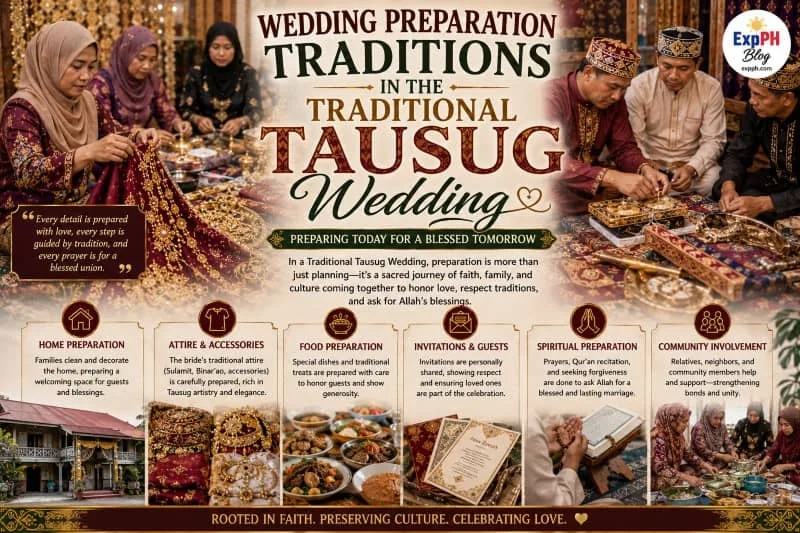
4. Wedding Preparation Traditions in the Traditional Tausug Wedding
Wedding preparations in a Traditional Tausug Wedding involve spiritual guidance and symbolic customs that prepare the couple for married life. These traditions emphasize faith, responsibility, dignity, and respect while helping both families support the transition into marriage. The preparation process also reflects Tausug values of cultural identity, family honor, and lifelong commitment.
Spiritual Preparation
Before the wedding day, spiritual preparation is strongly emphasized in a Traditional Tausug Wedding. The couple may attend religious guidance sessions, prayer gatherings, or counseling led by an imam or respected elder. These sessions focus on marital responsibilities, patience, mutual respect, and faith, helping both partners prepare mentally and spiritually for lifelong commitment and shared religious obligations together.
Physical and Symbolic Preparations
The bride undergoes physical and symbolic preparations that reflect readiness for marriage. Traditional skincare practices, hair preparation, and careful grooming are observed. In a Traditional Tausug Wedding, beauty represents dignity, respect, and preparedness for a new role. These rituals also symbolize family pride, cultural identity, and honoring tradition while welcoming change within the community and household life.
5. Wedding Attire in the Traditional Tausug Wedding
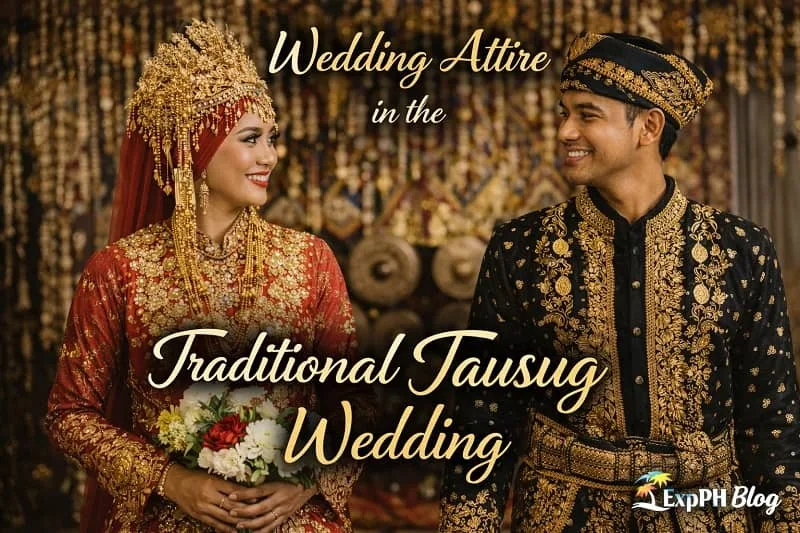
Wedding attire in a Traditional Tausug Wedding reflects cultural pride, dignity, and respect for Tausug heritage. The clothing worn by the bride and groom symbolizes honor, responsibility, and readiness for marriage. Rich fabrics, traditional accessories, and detailed designs also highlight the importance of identity, family status, and long preserved cultural traditions.
Bride’s Traditional Clothing
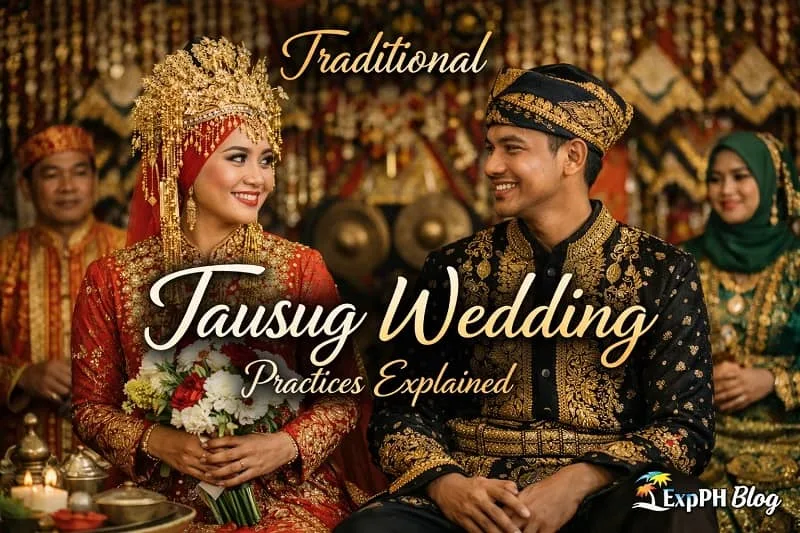
The bride in a Traditional Tausug Wedding wears an elegant outfit featuring rich colors, fine fabrics, and detailed embroidery. Gold jewelry is commonly worn to symbolize prosperity, honor, and family status. Every accessory, from the headpiece to the bracelets, carries cultural meaning, reflecting beauty, dignity, readiness for marriage, and respect for long preserved Tausug traditions and heritage.
Groom’s Traditional Clothing
The groom wears traditional attire often paired with formal fabric and a head covering that reflects cultural identity. His clothing in a Traditional Tausug Wedding symbolizes responsibility, leadership, and maturity as a husband. The outfit represents readiness to provide, protect, and uphold family values, while honoring faith, tradition, and the expectations placed upon him by elders and the wider community.
6. The Nikah Ceremony in a Traditional Tausug Wedding
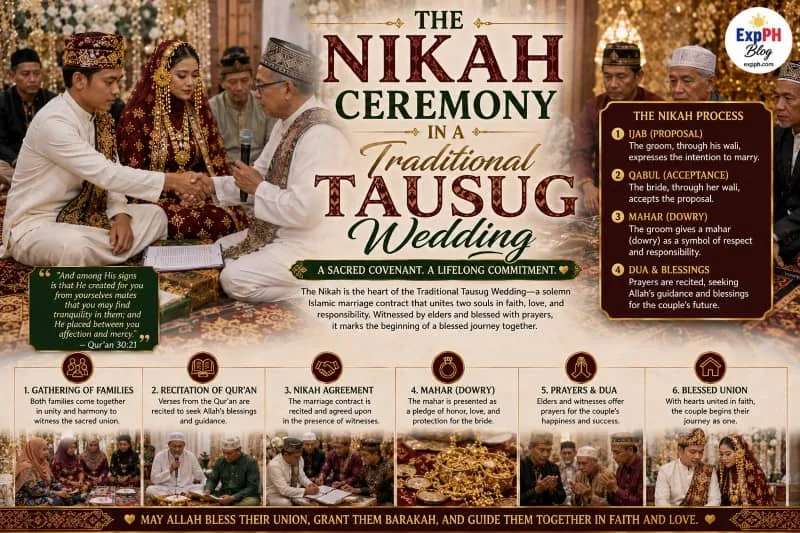
The Nikah ceremony is the central religious rite in a Traditional Tausug Wedding, officially uniting the couple through Islamic marriage traditions. Guided by faith and witnessed by family members, the ceremony emphasizes mutual consent, responsibility, and spiritual commitment while seeking blessings, harmony, and guidance for a strong and respectful married life together.
Religious Foundation of the Marriage
The Nikah is the heart of the Traditional Tausug Wedding and serves as its religious foundation. This Islamic marriage contract is officiated by an imam and witnessed by elders and family members. Clear consent from both the bride and groom is mandatory, ensuring mutual agreement, respect, accountability, and lawful union guided by faith, tradition, and moral responsibility.
Recitation and Blessings
During the Nikah, Quranic verses and heartfelt prayers are recited to seek blessings for the couple. These recitations are believed to bring harmony, guidance, and spiritual protection throughout married life. A Traditional Tausug Wedding places strong importance on faith as the foundation of family life, encouraging patience, devotion, unity, and trust in divine wisdom for enduring relationships.
7. Wedding Feast and Celebration in the Traditional Tausug Wedding
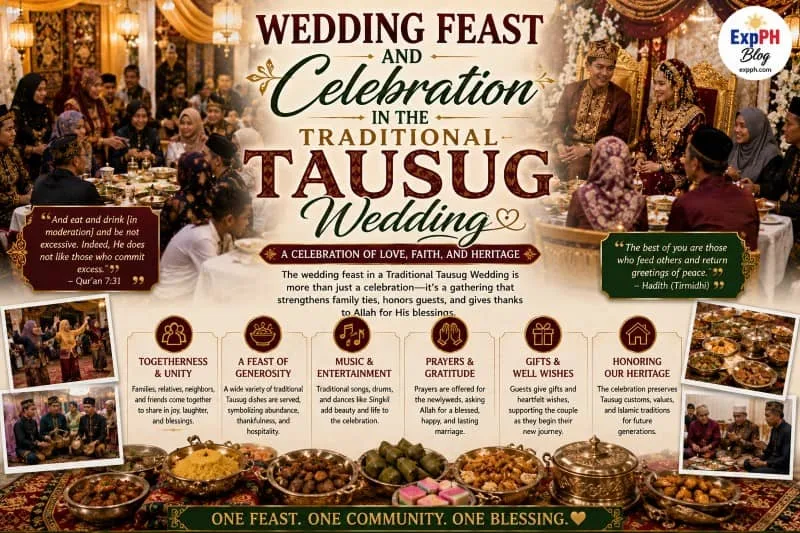
Wedding feasts and celebrations in a Traditional Tausug Wedding bring families and communities together through food, music, and cultural performances. These joyful gatherings reflect hospitality, unity, and gratitude while honoring Tausug artistic traditions and shared identity. The celebration also strengthens social bonds and creates meaningful memories for the couple and their guests.
Traditional Tausug Dishes
Food is a major highlight of a Traditional Tausug Wedding, reflecting hospitality and generosity. Signature dishes such as tiyula itum, flavorful beef or chicken delicacies, rice cakes, and local sweets are prepared in large quantities. Sharing food symbolizes gratitude, unity, and abundance, allowing families, guests, and community members to celebrate together while strengthening bonds through communal dining traditions.
Music and Cultural Performances
Music and cultural performances add vibrancy to a Traditional Tausug Wedding celebration. Traditional dances such as Pangalay may be featured, expressing joy, elegance, and cultural pride. Rhythmic music and graceful movements bring life to the gathering, honoring Tausug artistic heritage, storytelling traditions, and shared identity while creating joyful memories for families, guests, and the newlyweds alike.
8. Role of Elders in the Traditional Tausug Wedding
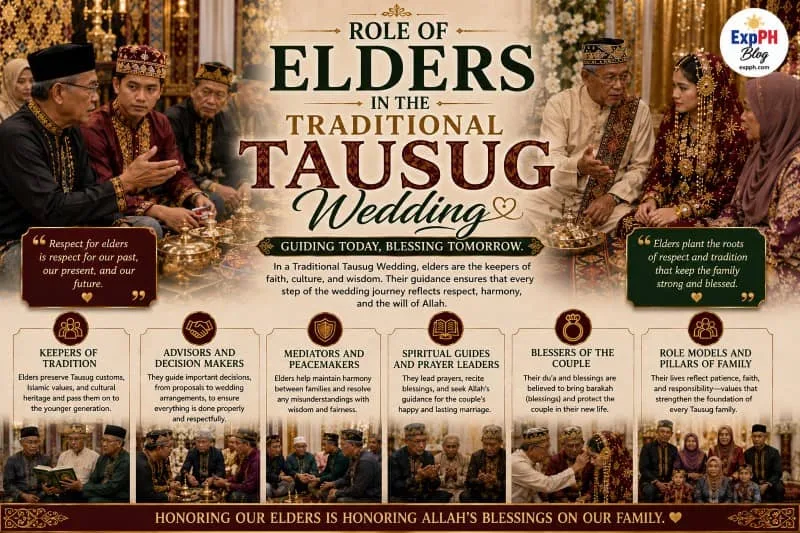
Elders play an important role in a Traditional Tausug Wedding by guiding families, preserving customs, and ensuring that traditions are respectfully followed. Their wisdom and experience help maintain harmony during negotiations and ceremonies. Elders also provide blessings and marital advice that encourage unity, responsibility, patience, and strong family relationships throughout married life.
Guidance and Authority
Elders hold a respected position in a Traditional Tausug Wedding, serving as guides, mediators, and guardians of custom. They oversee negotiations, resolve misunderstandings, and ensure traditions are properly followed with fairness. Their presence reflects the Tausug value of wisdom, patience, and respect for experience, providing stability, authority, and continuity that strengthens family trust and community harmony across generations.
Blessings and Advice
After the ceremony, elders offer advice to the newlyweds, drawing from lived experience and religious understanding. Their words emphasize patience, unity, faith, and responsibility, reinforcing moral guidance within marriage. These blessings encourage mutual respect, cooperation, and perseverance, reminding couples to honor family, uphold values, and seek harmony during challenges throughout married life with wisdom compassion commitment and enduring hope together.
9. Post Wedding Traditions in the Traditional Tausug Wedding
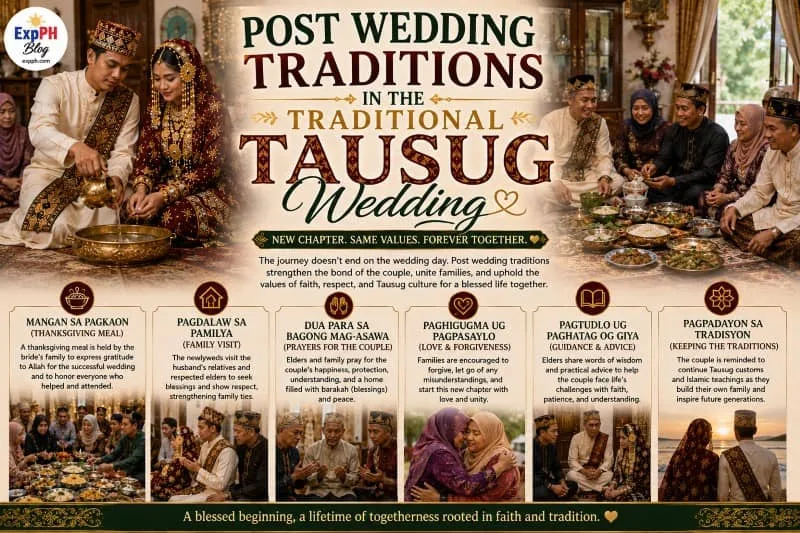
Post wedding traditions in a Traditional Tausug Wedding help strengthen relationships between families after the ceremony. These customs emphasize acceptance, unity, and shared responsibility within the community. Through family visits, gatherings, and symbolic practices, the newlyweds receive guidance, support, and encouragement as they begin their married life together.
Paghatud or Sending Off the Bride
In some communities, the bride is ceremonially escorted to the groom’s home after the wedding. This practice in a Traditional Tausug Wedding symbolizes transition, acceptance, and unity within a new household. Elders, relatives, and neighbors may accompany the procession, offering prayers and guidance, marking the bride’s respectful entry into family life, shared responsibilities, and continued cultural belonging, and communal harmony.
Family Integration
Post wedding visits and gatherings help strengthen family bonds in the community. A Traditional Tausug Wedding does not end with the ceremony but continues through ongoing interaction, shared meals, and mutual support. These visits allow families to build trust, resolve concerns, and reinforce unity, ensuring the couple feels welcomed, supported, and guided as they begin married life together confidently together.
10. Modern Adaptations of the Traditional Tausug Wedding
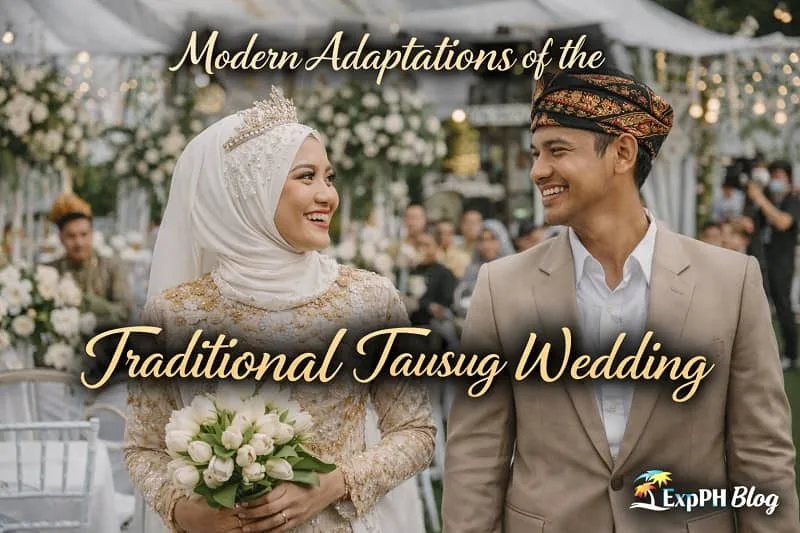
Modern adaptations of the Traditional Tausug Wedding allow couples to celebrate marriage while adjusting to changing lifestyles and contemporary settings. Although some practices are simplified for convenience, important customs and Islamic traditions remain respected. These adaptations help preserve Tausug cultural identity while allowing younger generations to balance heritage, personal preferences, and modern living.
Balancing Tradition and Modern Life
Today, many couples adapt the Traditional Tausug Wedding to fit modern lifestyles and changing circumstances. Some rituals may be simplified for practicality, yet core traditions such as the Nikah, dowry, and family involvement remain intact. This thoughtful balance helps preserve cultural identity while embracing progress, ensuring traditions stay meaningful, relevant, and respected by younger generations in evolving communities today.
Destination and Contemporary Weddings
Some couples choose destination or contemporary venues while still honoring Traditional Tausug Wedding customs. Even in modern settings, traditional attire, rituals, prayers, and family participation remain central. These weddings reflect personal style while respecting heritage, allowing couples to celebrate love meaningfully without abandoning cultural roots, faith based practices, or the values passed down by elders across generations globally.
11. Symbolism and Values Behind the Traditional Tausug Wedding
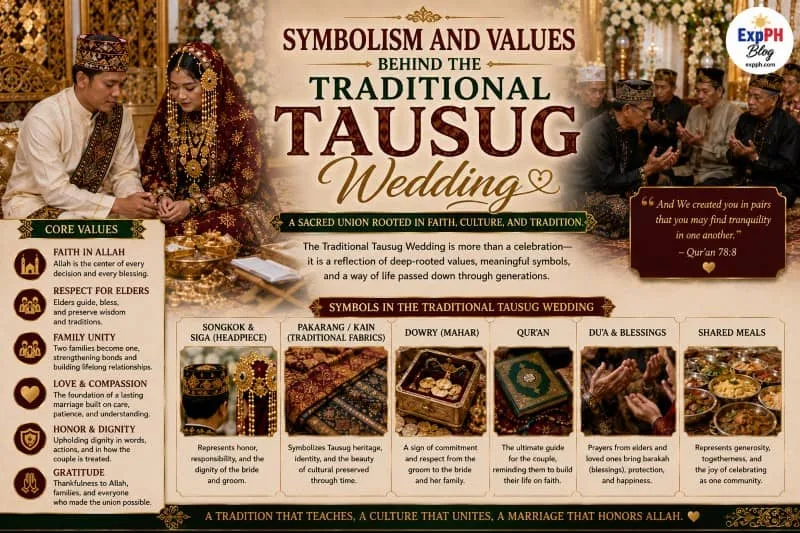
The Traditional Tausug Wedding is rich in symbolism, where every ritual reflects values such as respect, faith, unity, and responsibility. Marriage is viewed as a lifelong commitment supported by family and community, emphasizing moral guidance, shared duties, mutual understanding, cultural continuity, and harmony within Tausug society across generations.
These values are especially important in preserving cultural identity in modern times. Through the Traditional Tausug Wedding, younger generations learn respect for elders, religious principles, and community responsibility. Upholding these traditions helps maintain heritage, strengthen family bonds, and ensure cultural practices remain meaningful despite social change and modernization pressures.
12. Why the Traditional Tausug Wedding Matters Today
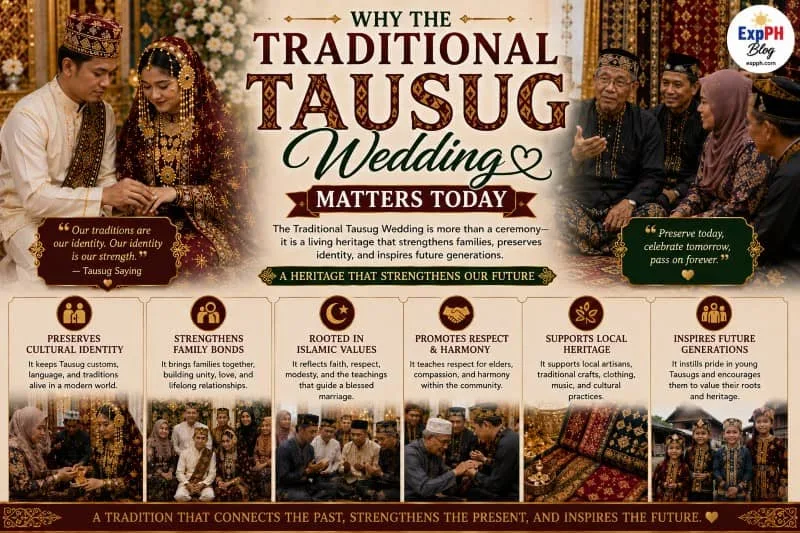
Preserving the Traditional Tausug Wedding is vital for cultural continuity and identity. It teaches younger generations about respect, responsibility, faith, and heritage through meaningful rituals and family involvement. These traditions strengthen community bonds, encourage moral values, and help safeguard Tausug culture from being forgotten amid modern influences and rapid social change.
In a fast changing world, traditions like the Traditional Tausug Wedding remind communities of the importance of family, faith, and identity. They provide stability, belonging, and moral guidance, helping individuals remain connected to cultural roots while adapting to change, fostering pride, understanding, continuity, and resilience for future generations across diverse societies today.
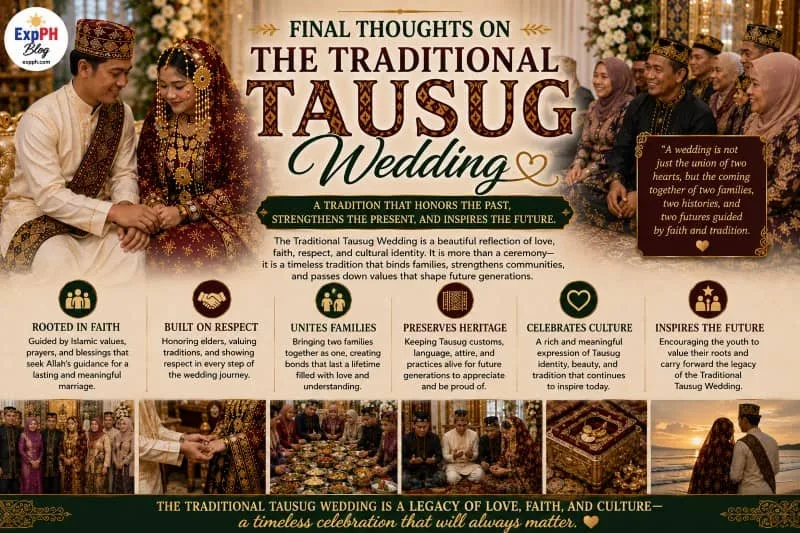
Final Thoughts on the Traditional Tausug Wedding
The Traditional Tausug Wedding is more than a celebration of marriage. It is a meaningful cultural journey that unites families, strengthens community ties, honors Islamic faith, and preserves centuries old customs passed down through generations. Understanding these practices allows readers to appreciate the depth of Tausug values, social structure, and traditions, while recognizing the important role this wedding plays in showcasing Filipino cultural diversity, identity, and heritage in today’s society.
By learning and sharing knowledge about the Traditional Tausug Wedding, individuals help ensure these beautiful traditions continue to thrive for future generations. Education and awareness encourage respect for cultural heritage and inspire younger people to value their roots. Through storytelling, documentation, and cultural appreciation, communities can protect these practices from being forgotten, allowing traditions to adapt responsibly while maintaining authenticity, meaning, and relevance in an ever changing modern world.
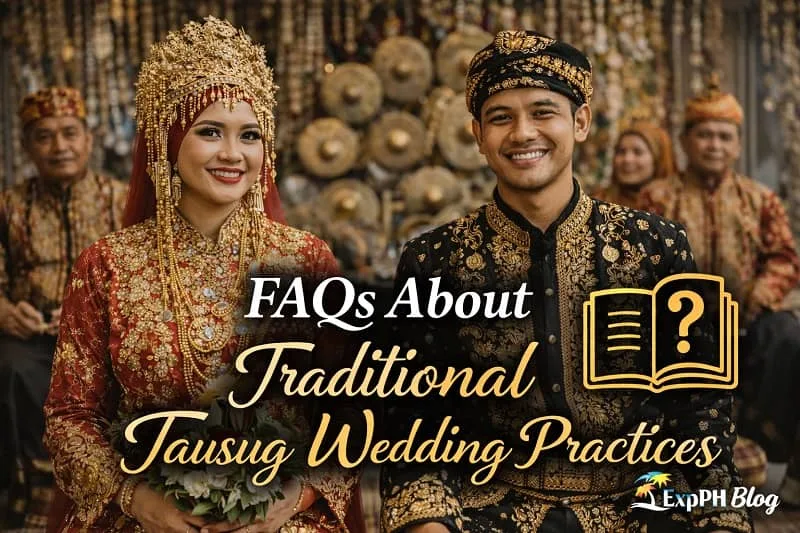
FAQs About Traditional Tausug Wedding Practices
What is a Traditional Tausug Wedding?
A Traditional Tausug Wedding is a cultural and religious marriage ceremony rooted in Islamic teachings, family involvement, and long established Tausug customs practiced mainly in Sulu.
Why is family involvement important in a Traditional Tausug Wedding?
Family involvement ensures respect, guidance, and unity, as marriage is viewed as a bond between families, not just two individuals, in Tausug culture and community traditions.
What role does Islam play in a Traditional Tausug Wedding?
Islam provides the foundation through the Nikah ceremony, dowry requirements, and moral guidance, shaping responsibilities, consent, and spiritual commitment in marriage.
What is the dowry in a Traditional Tausug Wedding?
The dowry, known as mahr or bugay, symbolizes the groom’s sincerity, responsibility, and commitment, and is agreed upon respectfully by both families through careful discussion and consensus.
How long does a Traditional Tausug Wedding usually last?
A Traditional Tausug Wedding can last several days, including pre wedding negotiations, engagement rituals, the Nikah ceremony, and post wedding family gatherings involving extended relatives and friends.
What traditional clothing is worn during a Traditional Tausug Wedding?
The bride wears richly embroidered attire with gold jewelry, while the groom wears formal traditional clothing symbolizing leadership, maturity, and cultural identity.
Are traditional dances part of a Traditional Tausug Wedding?
Yes, cultural dances like Pangalay are sometimes performed to express joy, grace, and cultural pride during wedding celebrations and family gatherings across Tausug communities.
Can a Traditional Tausug Wedding be combined with modern wedding styles?
Yes, many couples blend traditional rituals with modern venues and elements while preserving essential practices like the Nikah, dowry, and cultural attire for meaningful celebrations.
What role do elders play in a Traditional Tausug Wedding?
Elders guide negotiations, uphold traditions, offer blessings, and provide marital advice based on wisdom, experience, and deeply respected cultural values passed down through generations.
Why is the Traditional Tausug Wedding still important today?
It preserves cultural identity, strengthens family bonds, teaches respect and responsibility, and helps younger generations understand and value Tausug heritage.
Want to explore more about Tausug daily life and community traditions?
Read our content pillar, Inside Traditional Tausug Lifestyle and Community Practices, to learn about family values, social customs, community traditions, celebrations, faith, and the unique cultural practices that continue to shape Tausug life in the southern Philippines today.
Related articles you might like are shown below
- Experiencing the Tausug Pag duwaa
- Immersive Pangalay Dance Experience with Tausug Performers
- The Spirit of Ramadan Among the Tausug: Faith, Unity, and Tradition
For approved documents, click the link below
- Bangsamoro Commission for the Preservation of Cultural Heritage (BCPCH)
- Mindanao State University Sulu Research Publications
- UNESCO Philippines
Traditional Tausug Wedding Knowledge Quiz
Test your knowledge about Traditional Tausug Wedding practices
Results


#1. What religion strongly influences Tausug weddings?
#2. What is the Islamic marriage ceremony called?
#3. What is the dowry called?
#4. Who leads wedding negotiations?
#5. Which dance may appear?
#6. What does marriage unite?
#7. What symbolizes groom responsibility?
#8. Where are Tausug weddings common?
#9. What guides the ceremony?
#10. What is highly valued?
Thank you for taking the time to learn about Traditional Tausug Wedding practices
Your interest helps keep Filipino culture alive and appreciated across generations. Share your experience with us in the comments. We would love to hear from you.

A Filipino web developer with a background in Computer Engineering. Founder of ExpPH Blog and ExpPH Business Guide, creating practical content on OFW guidance, business, finance, freelancing, travel, and lifestyle. Passionate about helping Filipinos grow, he shares insights that educate, empower, and inspire readers nationwide.