
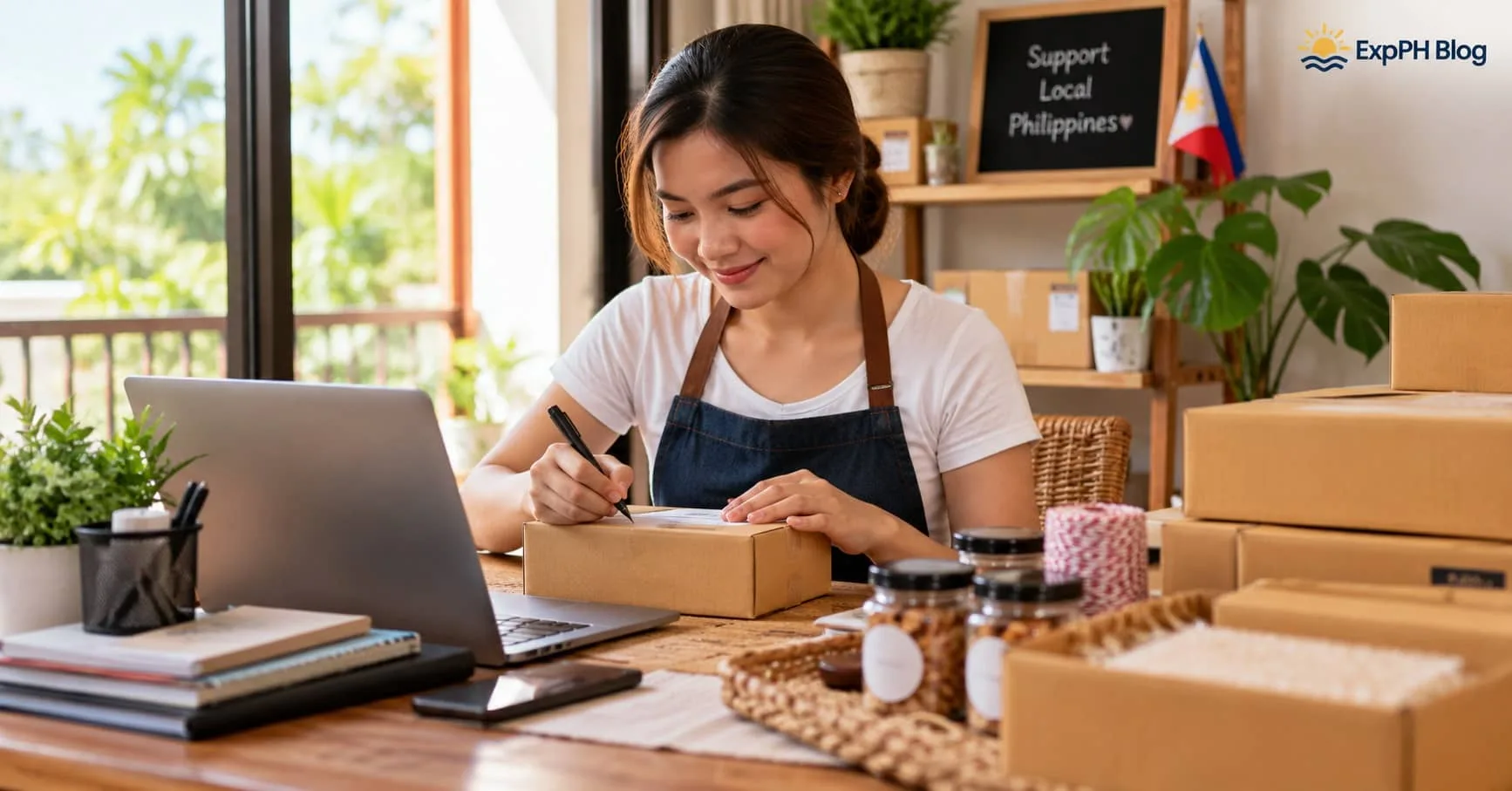
How to Set Up a Home-Based Business in the Philippines
Starting a starting a home business can be a practical way for Filipinos to create an additional source of income while keeping initial operating costs manageable. For many Filipino entrepreneurs, a home-based setup provides an opportunity to test a business idea before committing to a commercial location. It can also be useful for OFWs who want to prepare a small business that family members can help manage in the Philippines.
The key is to approach the business carefully. Instead of spending heavily at the beginning, focus on understanding your customers, controlling expenses, and creating a simple system for handling orders, payments, supplies, and records. A well-organized home setup can give a new business a stronger foundation while allowing the owner to adjust as demand develops.
This guide is part of our complete resource on: How to Start a Home-Based Business in the Philippines
Start Small and Keep Your Setup Simple
One of the advantages of starting a home business is that you may not need a commercial location immediately. Depending on the type of business, you may be able to use an existing room, storage area, kitchen space, or work area at home for basic operations.
Before buying equipment or supplies, determine what you actually need to serve your first customers. A small food business, online selling operation, service business, or handmade product business may require different equipment and materials, so the setup should match the actual business activity.
It is also helpful to establish a simple routine from the beginning. Decide where products or supplies will be stored, how customer orders will be recorded, how payments will be tracked, and when business tasks will be completed. Keeping these activities organized can prevent a small business from becoming difficult to manage as orders increase.
For OFWs, a simple system can also make remote management easier. If a family member is helping operate the business in the Philippines, clear instructions and organized records can help everyone understand what needs to be done.
Practical Tip for Starting a Home Business
Keep separate records for business money and household money from the beginning.
This is one of the simplest habits a new entrepreneur can develop. Record every business sale and every business-related expense separately from household spending. You can use a spreadsheet, notebook, or basic financial application, depending on what is easiest for you to maintain consistently.
For example, if you sell products from home, record the amount received from each sale and the cost of the materials, packaging, delivery, or other expenses connected with that sale. At the end of the week or month, review the records to see how much money came in and how much was spent.
This gives you a clearer picture of the business instead of relying on the amount of cash currently available. It can also help you identify unnecessary expenses and make better decisions about when to purchase additional supplies.
For an OFW managing a business from abroad, organized financial records can be particularly useful. They provide a straightforward way to review business activity with the person helping manage operations locally.
Common Mistake to Avoid
Do not spend heavily on supplies, equipment, or inventory before confirming consistent customer demand.
New entrepreneurs can sometimes become too focused on creating a complete business setup before making enough sales to justify the expense. Buying large quantities of inventory or expensive equipment too early can put pressure on household finances and leave money tied up in items that may not sell quickly.
A better approach is to begin with what is reasonably necessary for the current level of demand. If customers begin placing regular orders, you can gradually increase inventory, improve equipment, or expand the workspace.
This approach also gives you time to learn what customers actually want. Instead of assuming which products, services, packaging, or quantities will sell, you can use real customer feedback and sales activity to guide future decisions.
Conclusion
Starting a home business does not require an overly complicated setup. The most important steps are understanding your customers, controlling initial spending, keeping business finances organized, and allowing the operation to grow according to actual demand.
For Filipino entrepreneurs and OFWs preparing a business in the Philippines, starting small can make the process easier to manage. A practical setup and consistent financial records can provide a stronger foundation for future growth.
If you want a complete roadmap for long-term success, read: Top 10 Small Business Ideas in the Philippines for 2026
Related Guides
- How to Register Your Small Business in the Philippines
- How to Turn Your Hobby into a Profitable Business

A Filipino web developer with a background in Computer Engineering. Founder of ExpPH Blog and ExpPH Business Guide, creating practical content on OFW guidance, business, finance, freelancing, travel, and lifestyle. Passionate about helping Filipinos grow, he shares insights that educate, empower, and inspire readers nationwide.