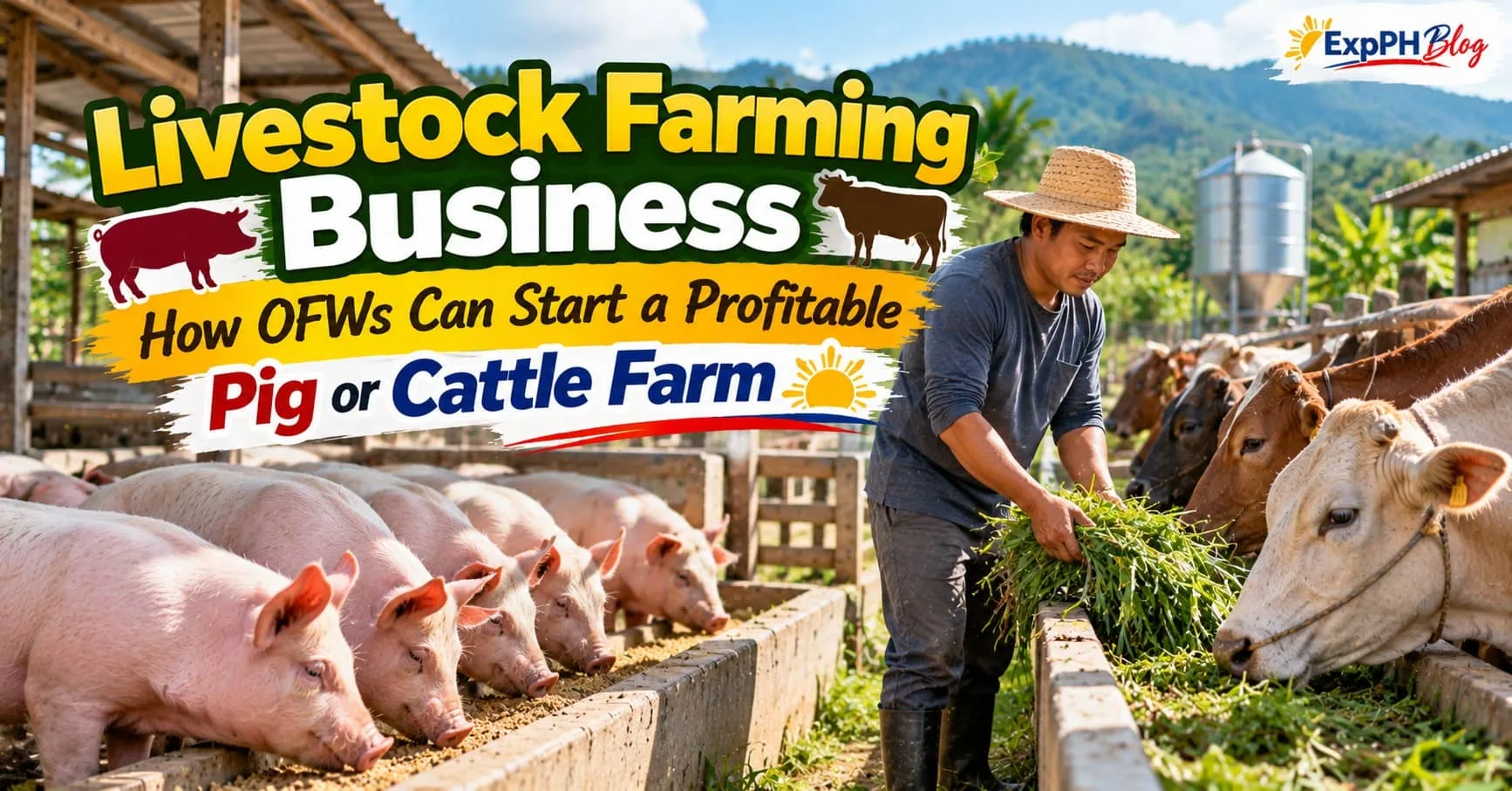
Livestock Farming Business: How OFWs Can Start a Profitable Pig or Cattle Farm
Many Overseas Filipino Workers dream of building a stable business in the Philippines that can support their families long-term. While some choose sari-sari stores, online selling, or franchising, others are now exploring agriculture-based opportunities that provide steady income and long-term growth. One of the most promising options today is the OFW Livestock Farming Business model.
Livestock farming, especially pig and cattle farming, remains an essential industry in the Philippines. Pork and beef are part of daily Filipino meals, which means there is consistent market demand across provinces and cities. For OFWs looking for a practical investment, livestock farming can become a profitable source of income when managed properly.
Unlike trendy businesses that come and go, livestock farming provides real products people consume every day. It also gives OFWs an opportunity to build assets such as farmland, animal inventory, and agricultural infrastructure while creating employment opportunities for relatives back home.
Whether you plan to start small with a backyard piggery or eventually expand into commercial cattle farming, understanding the basics is critical before investing your hard-earned savings.
Want to explore more farming opportunities beyond livestock?
Read our guide on Top 10 Profitable Agribusiness Philippines Ideas for Beginners and OFWs and discover beginner-friendly agribusiness ideas for long-term income and financial growth.
Table of Contents
Quick Summary (TL;DR)
- The OFW Livestock Farming Business model is ideal for long-term income and asset building.
- Pig farming usually generates faster returns because pigs grow and reproduce quickly.
- Cattle farming often requires larger capital but can provide stable long-term profits.
- Proper planning, biosecurity, feeds management, and market research are essential.
- OFWs should start small, monitor cash flow carefully, and avoid rushing expansion.
- Family management systems and trusted caretakers are important for OFWs working abroad.
- Government support and training are available through the Philippine Department of Agriculture.
- Livestock farming works best when treated as a real business, not just a side hobby.
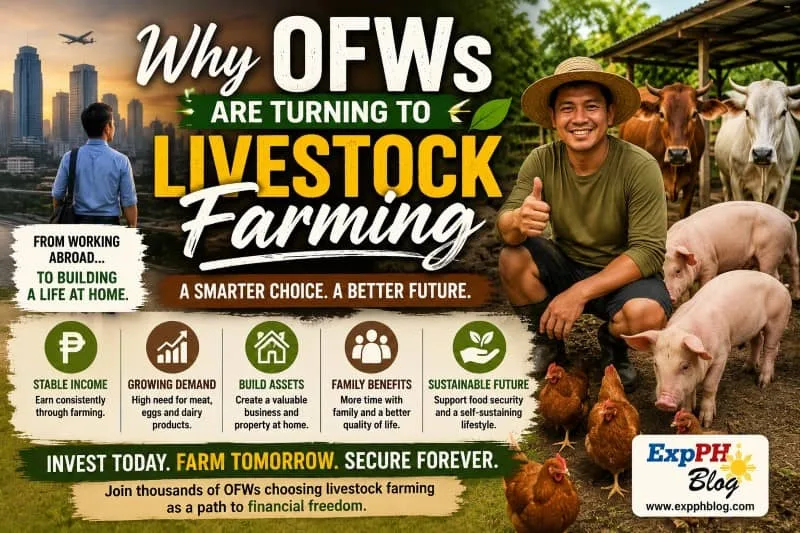
1. Why OFWs Are Turning to Livestock Farming
Many OFWs eventually realize that overseas employment may not provide permanent financial security. Rising living costs, homesickness, job uncertainty, and retirement planning encourage many workers to search for sustainable business opportunities in the Philippines. Livestock farming has become attractive because it offers long-term income potential while helping families build productive assets at home.
Livestock farming attracts OFWs for several reasons:
Strong Demand in the Philippines
Pork remains one of the most consumed meat products in the Philippines, while beef continues to maintain stable demand from households, restaurants, and food businesses. Even during economic changes, people still need food products for daily living. This makes agriculture and livestock farming more resilient compared to seasonal businesses that depend heavily on changing trends or tourism.
Can Start Small
Unlike large factories or expensive franchises, livestock farming can begin on a smaller scale. Many OFWs start with limited capital to reduce financial risk while learning animal care and farm management. Starting small also allows families to adjust gradually to the responsibilities involved in handling livestock and maintaining daily farming operations.
Some OFWs start with:
- 2 to 5 pigs
- 1 breeding sow
- 1 to 2 cattle
- Small backyard farming systems
Over time, profits can be reinvested into additional livestock, improved facilities, better feeding systems, and farm expansion. This gradual approach helps OFWs strengthen their business step by step while gaining valuable farming experience and improving long-term financial stability.
Suitable for Provincial Living
Many OFWs already own inherited land in provincial areas that often remains unused for years. Livestock farming allows families to maximize these available resources instead of leaving valuable land idle. Provincial communities also provide larger spaces, lower operating costs, and practical farming experience, making livestock operations more manageable and sustainable for OFWs working abroad.
Long-Term Asset Building
Animals themselves become income-generating assets that can support long-term business growth. Properly managed breeding systems allow farmers to increase livestock inventory while producing future animals for sale. Over time, a successful livestock farm can provide financial stability for future generations and reduce dependence on overseas employment while creating a lasting family livelihood.
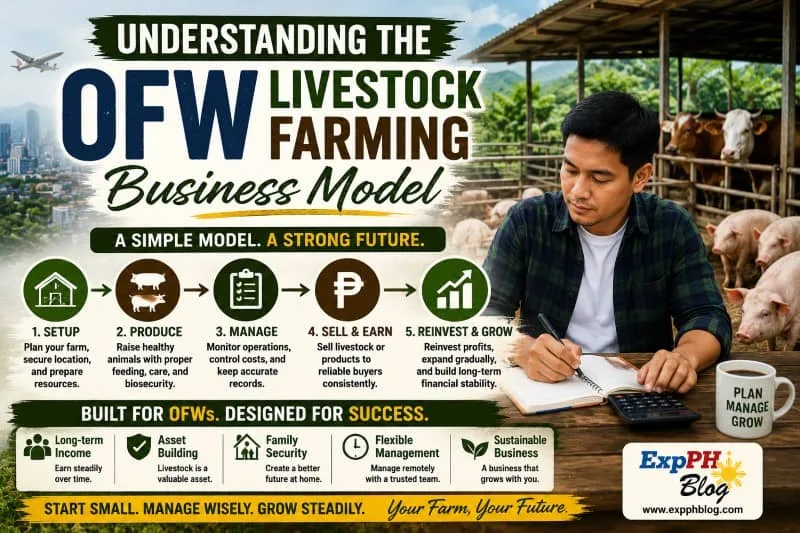
2. Understanding the OFW Livestock Farming Business Model
An OFW Livestock Farming Business works differently from ordinary local farming setups because the owner is often based abroad while family members or caretakers handle daily operations in the Philippines. This setup creates unique opportunities and challenges that require careful planning, proper communication, and reliable systems to keep the farm running smoothly.
This business model creates both advantages and challenges for OFWs who want to invest in livestock farming while continuing overseas employment. Since owners cannot personally supervise operations every day, success often depends on trusted workers, organized management systems, and consistent monitoring of farm expenses, animal health, and business performance.
Advantages for OFWs
Many OFWs develop stronger financial discipline and long-term goals because of their overseas work experience. Compared to new entrepreneurs with limited savings, OFWs may already have access to capital and a stronger desire to create sustainable income sources that can eventually support their family in the Philippines.
OFWs often have:
- access to starting capital
- stronger savings discipline
- motivation to create long-term income
- willingness to invest for family stability
These advantages can help OFWs prepare better for livestock farming investments and long-term business growth. Many overseas workers also become more careful with budgeting and financial planning because they understand the sacrifices required to earn money while working far from their families and home communities.
Challenges for OFWs
Despite the advantages, OFWs also face several challenges when managing livestock farming operations remotely. Since owners are usually abroad, daily farm activities often depend on relatives or hired workers. Without proper supervision and communication, small operational problems can quickly become larger financial and management issues.
Some common challenges include:
- remote management problems
- trust issues with caretakers
- lack of farming knowledge
- unexpected animal diseases
- fluctuating feed prices
These challenges show why planning and reliable systems matter in every livestock farming business. OFWs should invest time in learning farm operations, tracking expenses, and building trustworthy management structures. Strong communication and proper record keeping can help reduce risks while improving business stability and long-term profitability.
Pig Farming vs Cattle Farming
Before investing in an OFW Livestock Farming Business, it is important to understand the differences between pig and cattle farming. Both options can become profitable when managed properly, but they require different levels of capital, space, feeding systems, and daily management. Choosing the right livestock depends on budget, location, and long-term business goals.
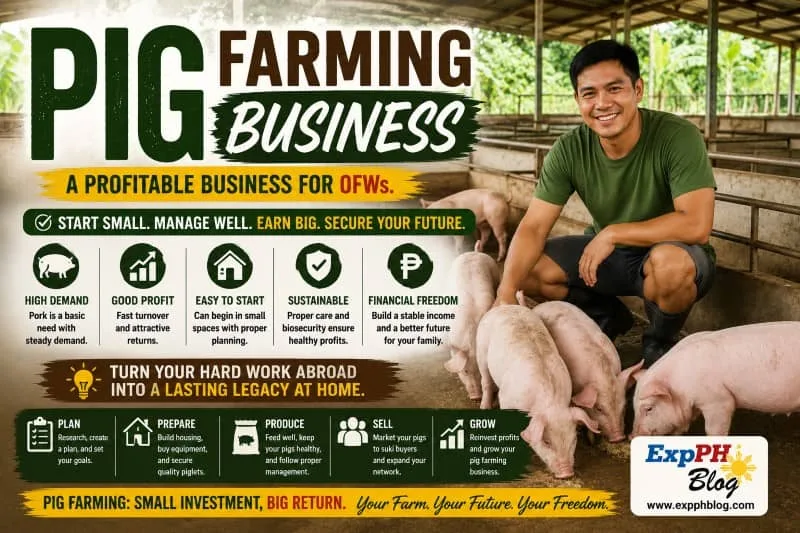
3. Pig Farming Business
Pig farming is one of the most common livestock businesses in the Philippines because pork remains highly consumed across the country. Many OFWs choose pig farming because it can start on a smaller scale and often provides faster returns compared to larger livestock operations that require longer growing periods.
Advantages of Pig Farming
Faster Income Cycle
- Pigs grow relatively fast compared to cattle, making them attractive for OFWs who want quicker returns on investment. Depending on the breed, feeding program, and farm management, pigs may reach market size within several months. This shorter production cycle allows farmers to generate income more frequently throughout the year.
Higher Reproduction Rate
- A healthy sow can produce multiple piglets within one pregnancy cycle, allowing farms to expand livestock inventory faster than many other farming businesses. Proper breeding programs can help farmers increase production steadily while creating additional income opportunities through piglet sales and future livestock expansion.
Strong Market Demand
- Pork remains one of the most consumed meat products in the Philippines, creating strong and consistent demand in local markets, restaurants, and food businesses. Since pork is part of many Filipino meals and celebrations, pig farmers often have steady opportunities to sell their products throughout different seasons and communities.
Challenges of Pig Farming
Disease Risks
- African Swine Fever (ASF) severely affected many pig farms in recent years and caused major financial losses across the livestock industry. Because of this, biosecurity measures are extremely important in pig farming operations. The Philippine Department of Agriculture provides official safety guidance through Department of Agriculture Philippines for livestock disease prevention and farm management.
High Feed Costs
- Feeds are among the largest expenses in pig farming because pigs require consistent nutrition for healthy growth and proper weight gain. Rising feed prices can significantly affect profitability, especially for small-scale farmers. Careful budgeting and efficient feeding management are important for maintaining stable business operations and long-term financial sustainability.
Odor and Waste Management
- Improper waste disposal can create foul odors, environmental problems, and complaints from nearby communities. Pig farms must maintain proper sanitation systems, drainage, and waste management practices to reduce health risks and maintain good relationships with surrounding residents. Responsible waste handling also supports safer and more sustainable farm operations.
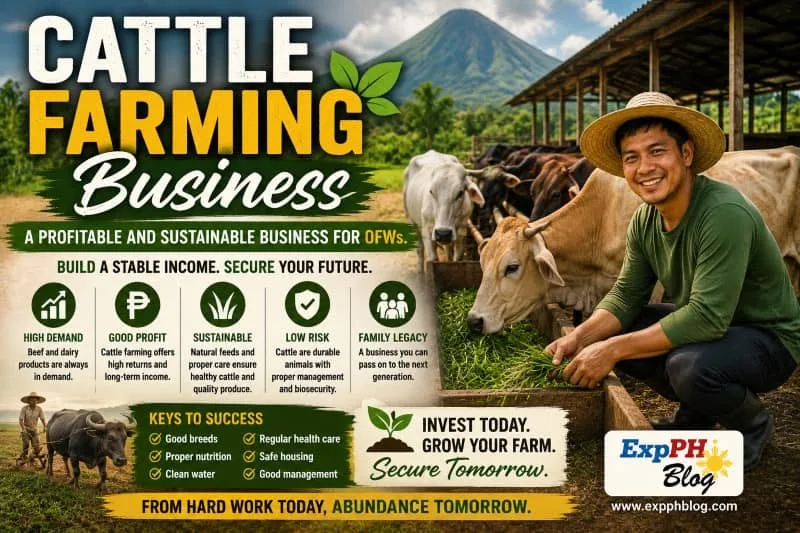
4. Cattle Farming Business
Cattle farming usually requires larger land areas and more patience because cattle take longer to mature compared to pigs. However, many OFWs still consider cattle farming attractive because it can provide stable long-term value, lower daily maintenance requirements, and opportunities to maximize available grasslands in provincial areas.
Advantages of Cattle Farming
Lower Daily Maintenance
- Compared to pig farming, cattle often require less intensive daily management and feeding supervision. Many cattle operations rely on grazing systems that reduce the need for constant feeding schedules. This setup can become more manageable for OFWs who depend on relatives or caretakers to supervise farm operations while abroad.
Long-Term Value
- Cattle prices often remain stable because beef continues to have steady demand from households, restaurants, and food businesses. Healthy cattle may also increase in value over time depending on market conditions and breeding quality. This long-term value makes cattle farming attractive for OFWs planning gradual business growth and asset building.
Land Utilization
- Unused grasslands and open provincial areas can become productive grazing spaces for cattle farming operations. Instead of leaving inherited land idle, OFWs can transform available property into income-generating agricultural assets. Proper land utilization also helps reduce feeding costs when natural grazing resources are available and properly maintained.
Challenges of Cattle Farming
Larger Capital Requirement
- Buying healthy cattle often requires larger starting capital compared to pig farming. Expenses may include animal purchase, fencing, feeding systems, shelter construction, and veterinary care. Because of these higher costs, many OFWs begin with fewer animals while slowly expanding their cattle farming operations over time.
Slower Returns
- Cattle take longer to mature compared to pigs, which means farmers may wait longer before generating significant income. This slower production cycle requires patience, careful financial planning, and realistic expectations. OFWs considering cattle farming should prepare for longer investment periods before seeing consistent business returns.
Land Requirement
- Proper grazing areas or feeding spaces are important for healthy cattle growth and long-term farm sustainability. Limited land can create feeding challenges and increase operational expenses if farmers rely heavily on commercial feeds. Before starting cattle farming, OFWs should carefully evaluate available land size and overall farm capacity.
How Much Capital Do OFWs Need?
The amount of capital needed for an OFW Livestock Farming Business depends on the type of livestock, farm size, location, and overall business goals. Small backyard operations usually require lower startup costs, while commercial farms need larger investments for facilities, equipment, feeds, labor, and long-term operational expenses.
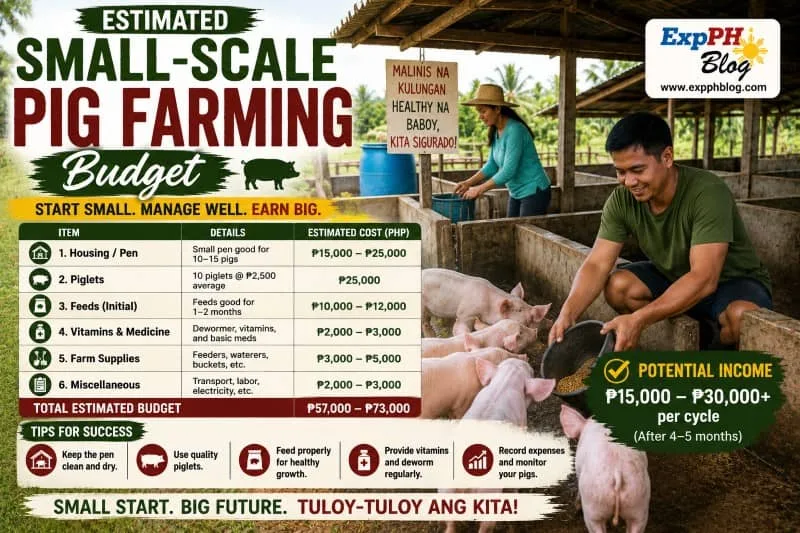
5. Estimated Small-Scale Pig Farming Budget
Pig farming can begin with moderate startup capital, especially for OFWs starting with a backyard setup. Expenses vary depending on the number of pigs, housing quality, feeding program, and farm location. Careful budgeting is important because feeding costs, animal health expenses, and facility maintenance can quickly affect business profitability.
Possible expenses include:
- piglets or breeders
- feeds
- housing materials
- water systems
- electricity
- vaccines and vitamins
- labor
A small backyard pig farming setup may require manageable investment for beginners, while larger commercial operations need significantly higher capital. Many OFWs choose to start small to reduce financial risk and gain farming experience before expanding into bigger livestock farming businesses with larger production capacity.
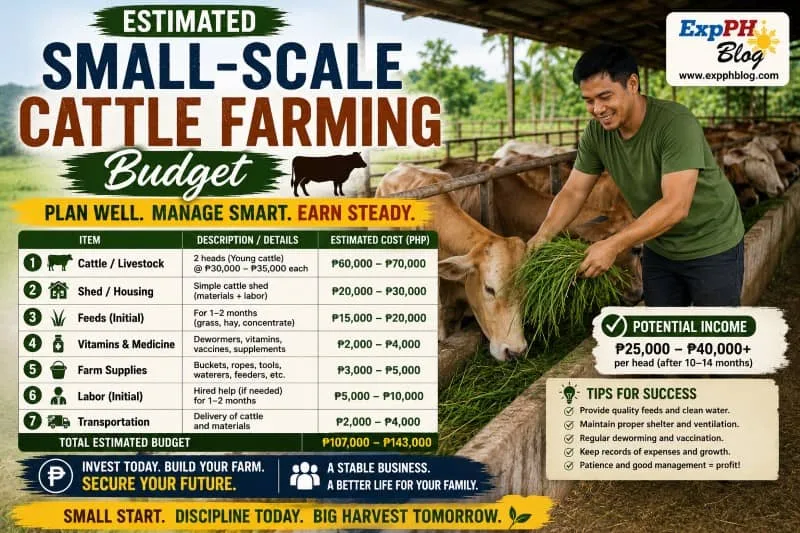
6. Estimated Small-Scale Cattle Farming Budget
Cattle farming often requires higher starting capital because healthy cattle are more expensive to purchase and maintain. Additional expenses may include land preparation, fencing, feeding systems, and transportation. OFWs planning cattle farming should carefully evaluate long-term costs because cattle usually take longer to produce financial returns compared to pigs.
Expenses may include:
- cattle purchase
- fencing
- feeding systems
- pasture preparation
- veterinary care
- transportation
OFWs should avoid spending all their savings immediately when starting livestock farming operations. Emergency funds remain important because unexpected problems such as animal diseases, rising feed prices, natural disasters, or market changes can affect business stability. Careful financial planning helps protect both the farm and family finances.
Building the Right Farm Setup
A proper farm setup plays an important role in the success of an OFW Livestock Farming Business because it helps improve animal health, reduce disease risks, and increase overall productivity. Well-designed facilities also make daily operations easier for caretakers while supporting better sanitation, feeding efficiency, and long-term farm sustainability.
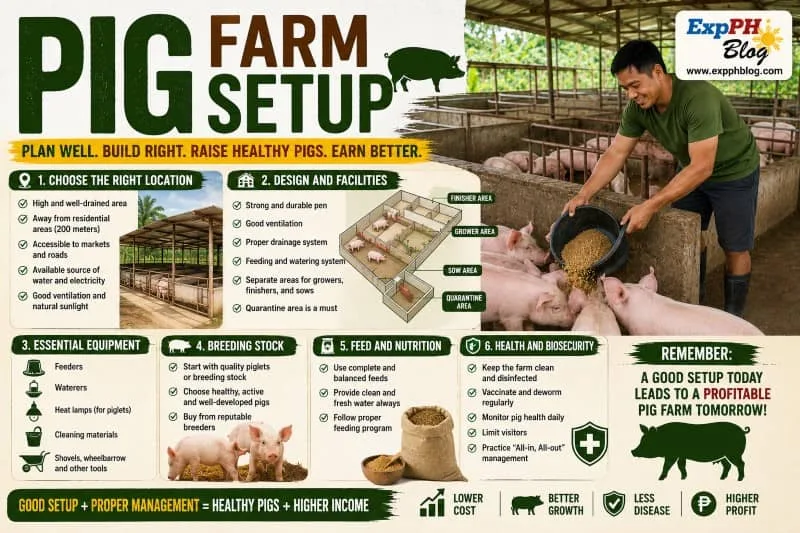
7. Pig Farm Setup
Pig farms require clean and organized facilities to maintain healthy livestock and reduce operational problems. Proper housing design helps improve animal comfort, feeding efficiency, and waste management. Since pigs are sensitive to poor sanitation and extreme temperatures, farm structure and maintenance greatly affect productivity and disease prevention.
Proper Ventilation
Good airflow helps reduce heat stress, moisture buildup, and disease risks inside pig housing facilities. Poor ventilation may create unhealthy conditions that affect pig growth and increase the spread of respiratory illnesses. Proper ventilation systems also help maintain cleaner air and improve the overall comfort of livestock.
Drainage System
Clean and efficient drainage systems help prevent contamination, standing water, and foul odors inside the farm. Poor drainage may increase sanitation problems and attract pests that spread disease. Proper waste flow and regular cleaning are important for maintaining healthier livestock conditions and improving long-term farm hygiene.
Feeding Area Design
Separate feeding areas help maintain cleanliness while reducing feed contamination and unnecessary waste. Organized feeding spaces also make daily operations easier for workers who monitor feeding schedules and animal behavior. Proper feeding area design supports healthier livestock growth and helps farms maintain more efficient feeding management systems.
Biosecurity Measures
Biosecurity measures help reduce the spread of disease within livestock farming operations. Farm owners should limit unnecessary visitors and regularly disinfect equipment, footwear, and transportation vehicles entering the property. Strong biosecurity practices are especially important for pig farming because disease outbreaks can quickly affect large numbers of animals.
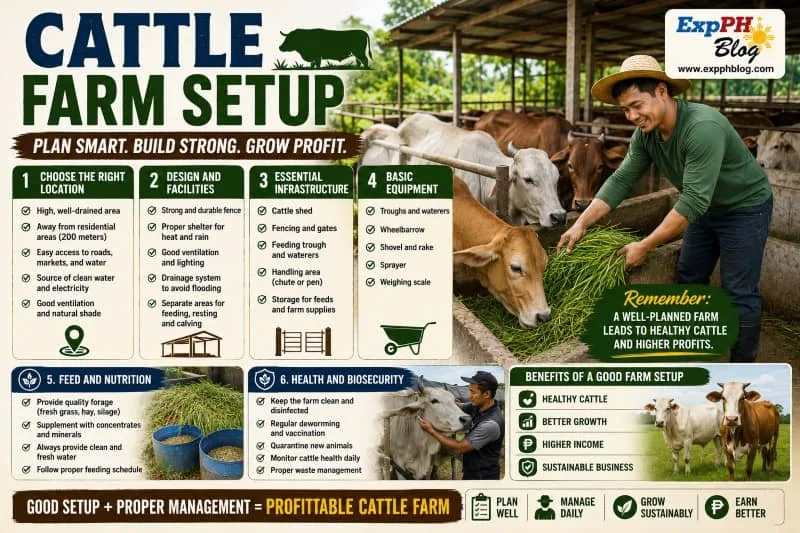
8. Cattle Farm Setup
Cattle farming usually requires larger outdoor spaces and properly managed grazing areas to support healthy animal growth. Farm design should focus on safety, feeding access, shelter protection, and efficient land use. Proper cattle farm setups also help reduce stress on animals while improving long-term productivity and operational management.
Fencing
Secure fencing helps prevent cattle from escaping and protects nearby crops, roads, and neighboring properties. Strong fencing systems also make livestock management safer and more organized for farm workers. Proper boundaries are important because loose cattle can create accidents, property damage, and unnecessary financial losses for farmers.
Shelter Areas
Although cattle spend significant time outdoors, they still need shelter protection from heavy rain, strong winds, and intense heat. Proper shelter areas help reduce stress and support better animal health during extreme weather conditions. Comfortable livestock environments also improve feeding behavior and overall farm productivity.
Grazing Management
Rotating grazing areas helps maintain pasture quality while preventing overgrazing and soil damage. Proper grazing management also supports healthier grass growth and reduces feeding costs for cattle farmers. Organizing grazing schedules carefully allows farms to maximize available land while maintaining more sustainable livestock farming operations over time.
Feeding Management
Feeding management directly affects the profitability of an OFW Livestock Farming Business because feed expenses are often among the largest operational costs in livestock farming. Proper nutrition helps improve animal growth, health, and productivity, while poor feeding practices may slow development and reduce the overall quality of livestock products.
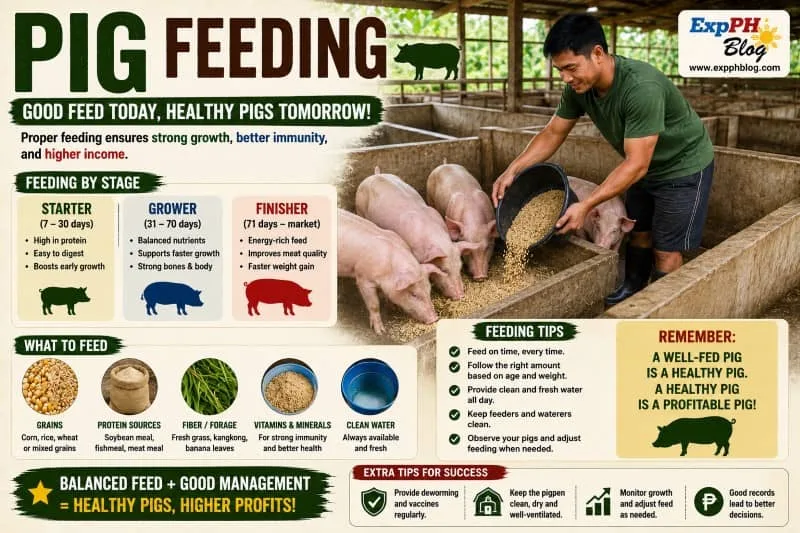
9. Pig Feeding
Pig feeding programs are usually divided into different stages based on the animal’s age, size, and nutritional requirements. Providing the correct type of feed at each growth stage helps improve weight gain, maintain animal health, and support better production efficiency throughout the farming operation.
Pig feeds usually include:
- starter feeds
- grower feeds
- finisher feeds
Feed quality strongly affects pig growth speed, meat quality, and overall farm productivity. Low-quality feeds may reduce weight gain and increase health problems, which can affect profits over time. Farmers should choose balanced feeding programs that support healthy livestock development while controlling unnecessary feeding expenses.
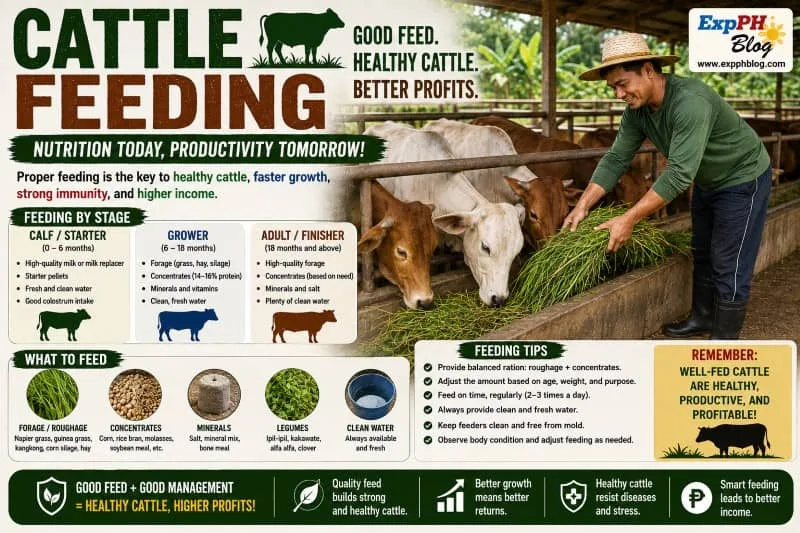
10. Cattle Feeding
Cattle feeding systems often depend on available land, grazing conditions, and overall farm management practices. Some farms rely mainly on natural grazing, while others combine pasture feeding with commercial feeds and agricultural materials to maintain healthy livestock growth and stable production performance.
Cattle may consume:
- grass
- silage
- corn
- commercial feeds
- agricultural by-products
Farmers should monitor feed costs carefully because they significantly affect livestock farming profit margins. Rising feed prices can reduce income if expenses are not managed properly. Careful feeding strategies, proper budgeting, and efficient resource use help improve farm sustainability and long-term business profitability.
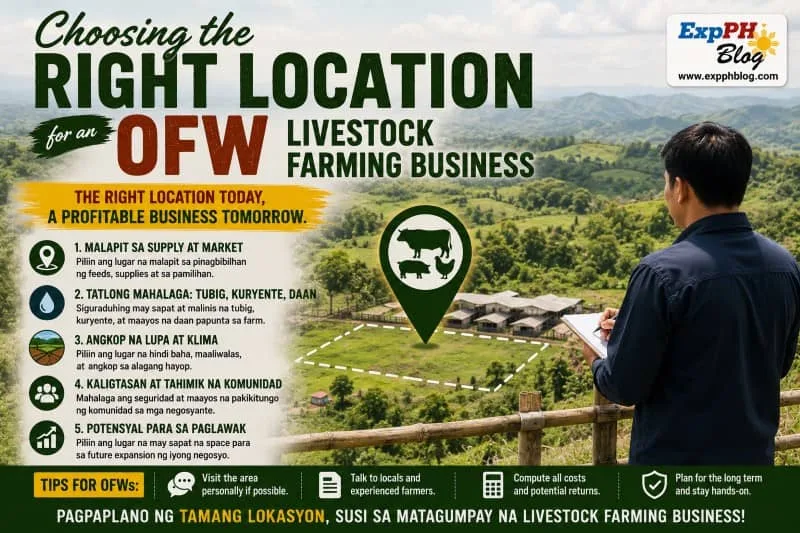
11. Choosing the Right Location for an OFW Livestock Farming Business
Location greatly affects the success of an OFW Livestock Farming Business because it influences animal health, operational costs, transportation, and long-term farm sustainability. Choosing the wrong location can create problems with water access, waste management, community complaints, and disease control, which may reduce productivity and increase business expenses over time.
Important Factors to Consider
Water Supply
- Animals require consistent access to clean water every day for proper growth, feeding, and overall health. Farms without reliable water sources may struggle during dry seasons or operational interruptions. Before starting livestock farming, OFWs should carefully evaluate water availability because poor water supply can affect animal performance and farm productivity.
Accessibility
- Transportation access is important for feed deliveries, veterinary services, equipment transport, and animal sales. Farms located in remote areas may face higher transportation costs and delayed deliveries that can affect daily operations. Accessible roads and nearby market connections help improve efficiency while making livestock farming more practical and sustainable.
Community Regulations
- Some residential and urban areas restrict livestock farming because of noise, odor, waste management, and environmental concerns. Before building a farm, OFWs should coordinate with local government offices and barangay authorities regarding zoning rules and livestock regulations. Following local requirements helps prevent legal problems and future community disputes.
Flood Safety
- Flood-prone areas increase the risk of animal diseases, facility damage, and livestock mortality during heavy rains or typhoons. Poor drainage and standing water can also create sanitation and biosecurity problems that affect farm operations. Choosing elevated and properly drained land helps improve animal safety and long-term business stability.
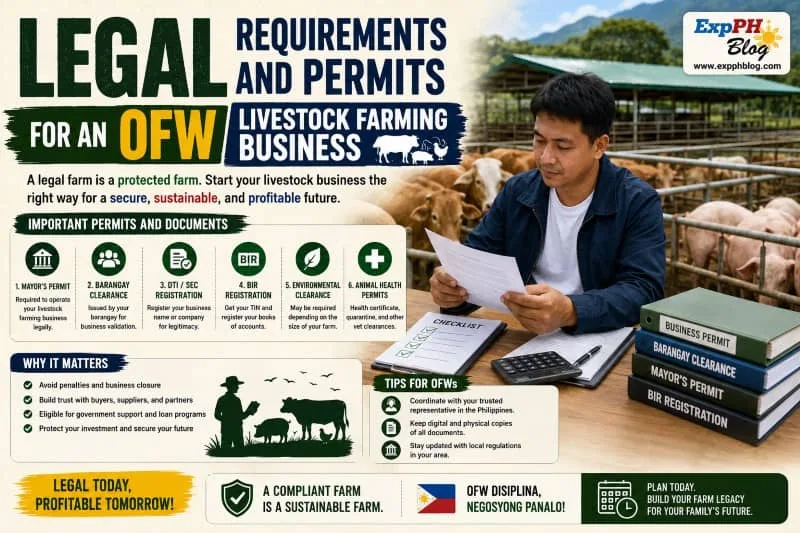
12. Legal Requirements and Permits for a Livestock Farming Business
Starting an OFW Livestock Farming Business legally helps protect the farm from future operational, financial, and regulatory problems. Proper permits also improve business credibility and reduce the risk of penalties or shutdowns. Requirements may vary depending on the farm location, livestock type, and size of the planned farming operation.
Common Requirements
Depending on location and farming scale, requirements may include:
- barangay clearance
- business permit
- environmental permits
- livestock registration
- zoning compliance
OFWs should coordinate with local government units and agricultural offices before starting livestock farming operations. Confirming local regulations early helps avoid unexpected legal issues and ensures the farm follows proper environmental, zoning, and business guidelines required for long-term and sustainable agricultural operations.
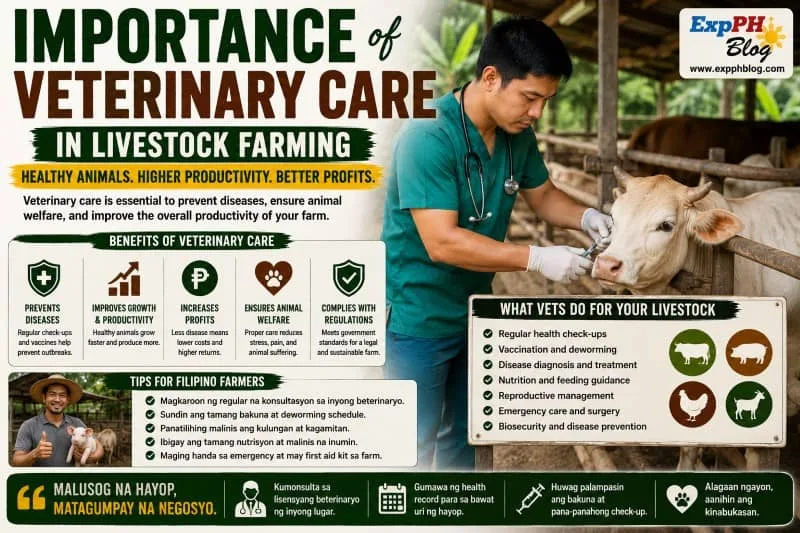
13. Importance of Veterinary Care in Livestock Farming
Healthy animals are essential for a successful OFW Livestock Farming Business because livestock health directly affects productivity, growth, reproduction, and overall profitability. Poor animal care may increase disease risks, mortality rates, and operational expenses. Regular veterinary support and proper health management help farms maintain stable and sustainable livestock operations over time.
Common Health Practices
Proper livestock health management usually includes:
- vaccination
- deworming
- sanitation
- disease monitoring
- quarantine procedures
These health practices help reduce the spread of disease while improving animal performance and long-term farm productivity. Vaccination and regular monitoring allow farmers to identify problems early before they affect larger groups of animals. Maintaining clean facilities and proper quarantine procedures also supports safer and more organized livestock farming operations.
Ignoring animal health can result in major financial losses because disease outbreaks may quickly affect livestock growth, reproduction, and survival rates. Medical treatment costs, animal deaths, and reduced production can significantly lower farm income. Consistent veterinary care helps protect both livestock investments and the long-term stability of the farming business.
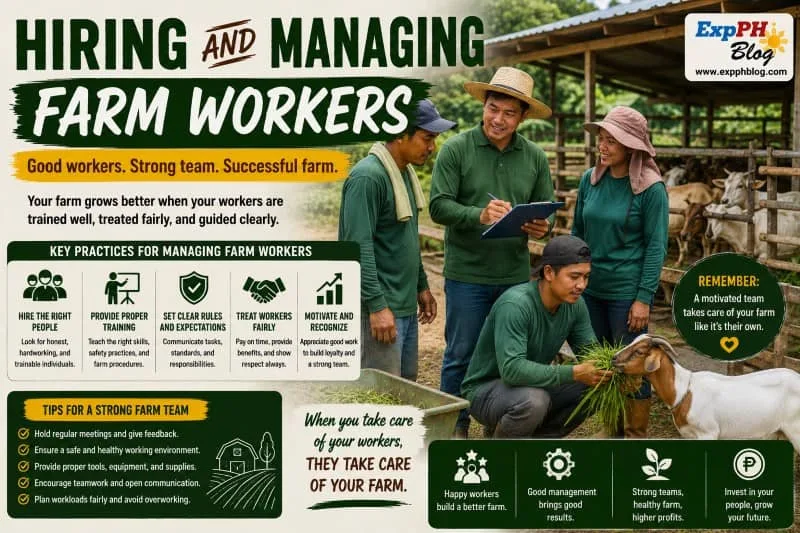
14. Hiring and Managing Farm Workers
Since OFWs are usually working abroad, trusted farm workers play an important role in the success of an OFW Livestock Farming Business. Daily livestock operations often depend on caretakers who handle feeding, cleaning, monitoring, and farm maintenance. Reliable workers help maintain productivity while reducing operational problems and unnecessary financial losses.
Choose Responsible Caretakers
Family members are common choices for livestock farming operations, but trust alone is not enough when managing animals and business finances. Farm workers should also understand responsibility, communication, and proper farm procedures. Choosing capable caretakers helps improve farm stability and supports better long-term management while the owner works abroad.
Workers should also be:
- disciplined
- trainable
- organized
- honest
Responsible workers help maintain feeding schedules, monitor animal health, and report problems immediately. Organized caretakers also improve record keeping and reduce mistakes that may affect farm operations. OFWs should establish clear responsibilities and regular communication systems to ensure workers understand daily expectations and overall business goals.
Create Monitoring Systems
Monitoring systems help OFWs supervise livestock operations remotely while improving accountability and communication with farm workers. Since owners cannot personally inspect the farm every day, technology and organized reporting methods become important tools for tracking expenses, livestock conditions, and overall business performance from abroad.
Use:
- CCTV cameras
- digital expense tracking
- scheduled reporting
- video calls
- inventory logs
Modern technology helps OFWs supervise farms remotely while improving transparency and operational control. CCTV systems, digital reports, and regular video updates allow owners to monitor livestock conditions and worker performance more effectively. Proper monitoring systems also help reduce misunderstandings, financial issues, and management problems within the farming business.
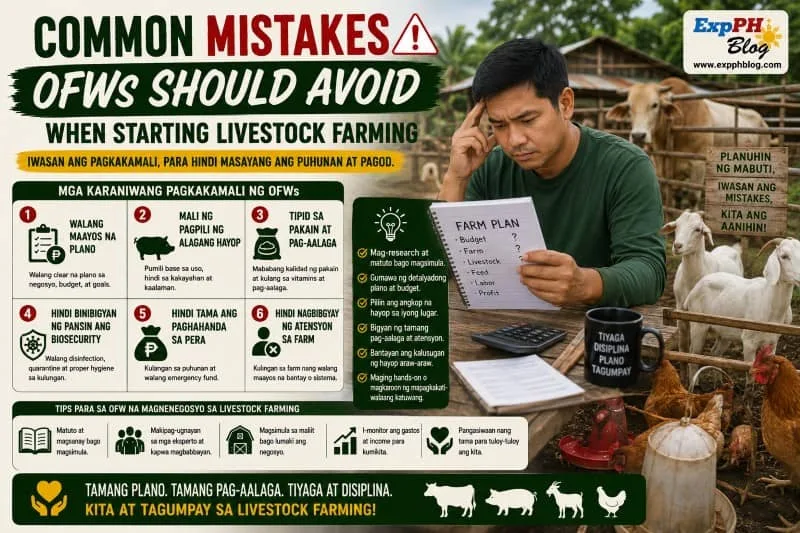
15. Common Mistakes OFWs Should Avoid When Starting Livestock Farming
Many new livestock businesses fail because of avoidable mistakes related to planning, management, and financial decisions. An OFW Livestock Farming Business requires careful preparation and realistic expectations to remain profitable over time. Understanding common mistakes helps OFWs reduce risks while improving the long-term stability and sustainability of their farming operations.
Starting Too Big
Some OFWs invest large amounts of money immediately without enough farming experience or operational knowledge. Expanding too quickly may increase financial risks and management problems, especially during the early stages of the business. Starting with a smaller setup allows OFWs to learn daily farm operations, improve management skills, and reduce costly mistakes with lower financial risk.
Ignoring Biosecurity
Disease outbreaks can wipe out entire livestock farms and create serious financial losses within a short period. Poor sanitation, uncontrolled visitors, and weak health management increase the risk of disease spreading quickly among animals. Strong biosecurity measures such as proper disinfection, sanitation, and quarantine procedures help protect livestock health and improve long-term farm stability.
Poor Record Keeping
Without proper records, farm owners cannot accurately track profits, expenses, livestock performance, or operational problems. Poor documentation often creates confusion regarding actual business income and farm productivity. Organized records help OFWs evaluate business performance, monitor expenses carefully, and make smarter financial and operational decisions for long-term growth.
Mixing Personal and Business Funds
Mixing personal and business finances often weakens financial discipline and creates confusion regarding farm expenses and household spending. Without separate budgeting systems, it becomes difficult to measure actual business profitability. Keeping finances separate helps OFWs maintain better financial control while improving budgeting, investment planning, and long-term business management.
Depending on One Buyer
Relying on only one buyer can create serious business risks if market conditions suddenly change or purchasing agreements stop unexpectedly. Farmers who develop multiple buyers and market connections often have better income stability and selling opportunities. Building relationships with traders, restaurants, meat vendors, and direct consumers helps reduce business dependence on a single customer.
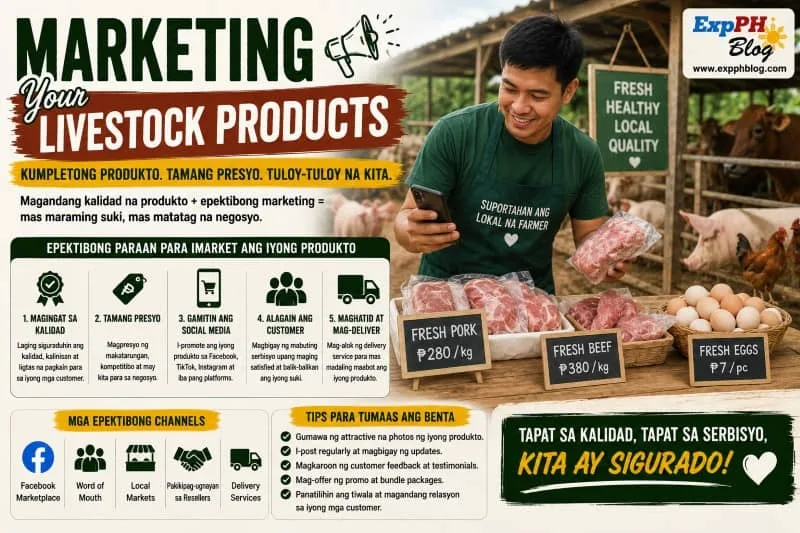
16. Marketing Your Livestock Products
Good production alone is not enough because farmers also need reliable buyers and stable market connections to maintain a profitable OFW Livestock Farming Business. Effective marketing helps farms generate consistent income, reduce the risk of unsold livestock, and build stronger business opportunities within local communities and agricultural markets.
Potential Buyers
Livestock farmers may sell products to different types of buyers depending on their farm size, location, and production capacity. Building multiple buyer relationships helps improve income opportunities while reducing dependence on a single customer or market source.
Potential buyers include:
- meat vendors
- local markets
- restaurants
- processors
- direct consumers
Having several buyers also gives farmers more flexibility during market changes and pricing fluctuations. Diversifying customers helps improve business stability while creating more opportunities for long-term growth and repeat sales within the livestock industry.
Build Local Relationships
Strong relationships with buyers help create repeat business and improve long-term market stability for livestock farmers. Reliable customer relationships often lead to consistent orders, referrals, and better communication regarding future supply needs. Good relationships also help farmers understand local market demand, pricing trends, and customer preferences more effectively while improving business reputation.
Use Social Media
Social media platforms can help livestock farmers promote products, connect with buyers, and increase visibility within local communities. Many consumers and small businesses now search online for livestock suppliers, making digital marketing useful for small and growing farms. Facebook pages and local online groups also help farmers post updates, market available livestock, and communicate with customers more efficiently.
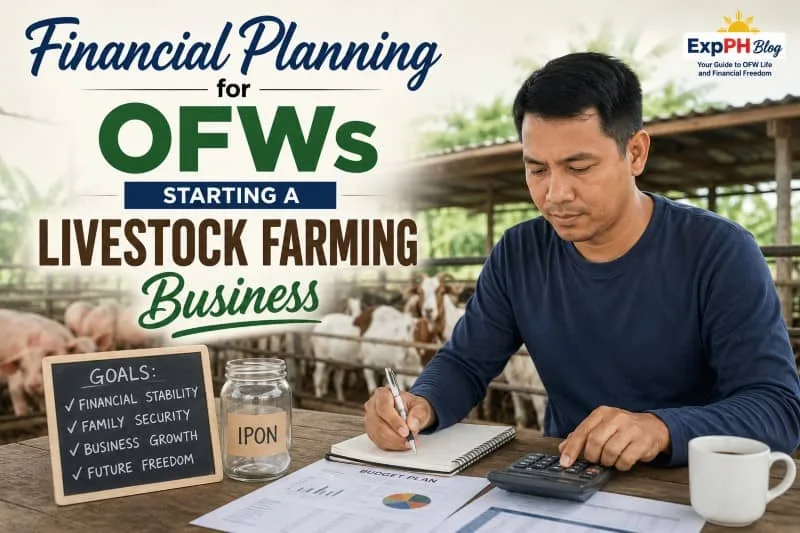
17. Financial Planning for OFWs Starting a Livestock Farming Business
Financial discipline is critical in building a successful OFW Livestock Farming Business because livestock farming involves both regular operational costs and unexpected expenses. Proper financial planning helps OFWs manage risks, maintain stable farm operations, and protect family savings while supporting long-term business growth and sustainability.
Budget for Unexpected Problems
Livestock farming involves several risks that can affect farm productivity, animal health, and overall profitability. Farmers who prepare emergency funds are usually better equipped to handle sudden financial challenges without disrupting daily operations or selling assets during difficult situations.
Livestock farming risks may include:
- disease outbreaks
- rising feed costs
- typhoons
- market fluctuations
Emergency reserves help farms survive difficult periods while maintaining operational stability and livestock care. Unexpected problems can quickly increase expenses and reduce income, especially during disease outbreaks or severe weather conditions. Proper budgeting allows OFWs to protect both the farming business and their long-term financial security.
Reinvest Wisely
Avoid withdrawing all business profits immediately because reinvestment supports sustainable growth and operational improvement. Many successful livestock farmers use part of their earnings to improve facilities, expand livestock inventory, upgrade feeding systems, and strengthen overall farm management. Careful reinvestment helps businesses grow gradually while maintaining stronger long-term financial stability.
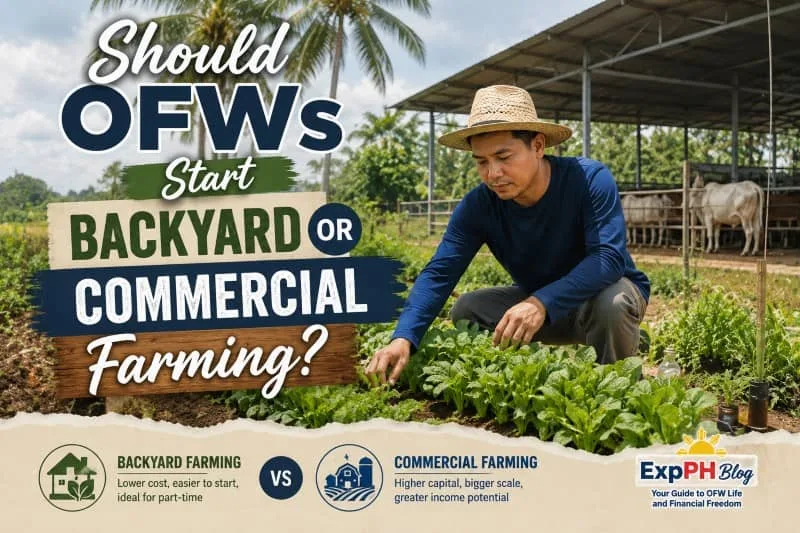
18. Should OFWs Start Backyard or Commercial Farming?
The decision to start backyard or commercial livestock farming depends on several important factors related to finances, experience, and long-term business goals. Choosing the right setup helps OFWs manage risks more effectively while building a sustainable OFW Livestock Farming Business that matches their available resources and management capacity.
The answer depends on:
- available capital
- experience
- land size
- management capacity
- long-term goals
Carefully evaluating these factors helps OFWs choose a farming setup that fits their current situation and future plans. Starting with realistic expectations also reduces financial pressure and improves the chances of building a stable and manageable livestock farming operation over time.
Backyard Farming
Backyard farming is often more suitable for OFWs who want to begin with smaller investments while learning the basics of livestock management. Smaller operations usually require lower capital and simpler facilities, making them more manageable for beginners who are still gaining experience in animal care and farm supervision.
Best for:
- beginners
- limited capital
- learning experience
Backyard farming allows OFWs to understand feeding systems, animal health management, and daily farm operations before investing in larger commercial setups. This gradual approach also helps reduce financial risk while giving families time to adjust to the responsibilities involved in managing livestock farming activities.
Commercial Farming
Commercial farming is generally more suitable for OFWs who already have farming experience, larger financial resources, and long-term expansion goals. Larger operations often require more advanced management systems, bigger facilities, and stronger operational planning to maintain productivity and business stability.
Best for:
- experienced operators
- larger capital
- long-term expansion plans
Commercial livestock farming can provide higher production capacity and greater income potential when managed properly. However, it also involves larger operational expenses and higher risks. Starting small and scaling gradually is often safer because it allows OFWs to build experience, improve systems, and strengthen financial stability before expanding operations.
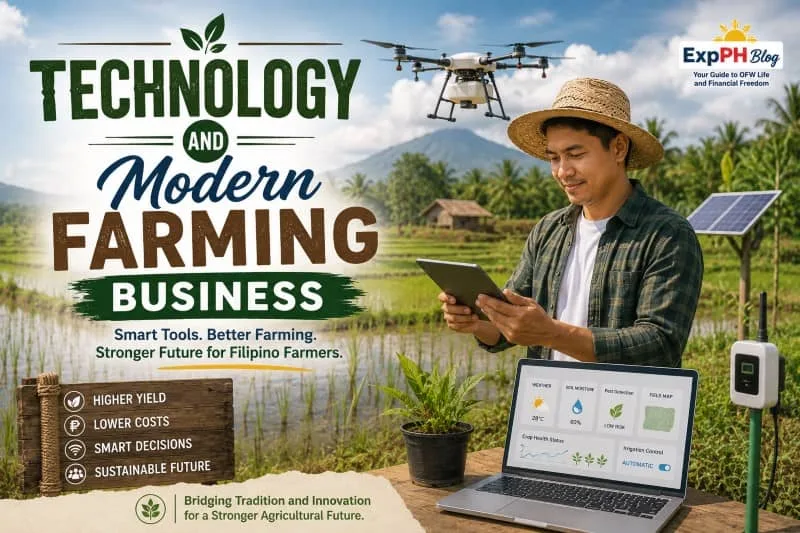
19. Technology and Modern Farming Business
Modern technology helps improve productivity, farm efficiency, and operational management in an OFW Livestock Farming Business. Since many OFWs manage farms remotely while working abroad, modern tools can support communication, monitoring, and daily operations. Technology also helps reduce manual work while improving organization, accuracy, and overall farm supervision.
Useful Technologies
Many livestock farms now use modern tools and systems to improve productivity and simplify farm management. These technologies help farmers monitor livestock conditions, manage expenses, and supervise operations more efficiently even when they are working outside the country.
Useful technologies include:
- automatic feeders
- water systems
- farm monitoring apps
- CCTV systems
- digital accounting tools
Technology can help OFWs manage operations from abroad by improving communication and monitoring capabilities. CCTV cameras, mobile applications, and digital tracking systems allow owners to supervise farm activities more effectively while reducing management problems and improving overall operational transparency.
Helpful Farm Supplies for Beginners
Starting a livestock farm also means investing in practical tools and equipment such as feeders, water containers, weighing scales, boots, disinfectants, and cleaning supplies. Many beginner farmers compare affordable farm materials online before buying, especially for small backyard operations. Some OFWs and their families explore available farming supplies through Shopee Philippines to help organize their initial setup more efficiently.
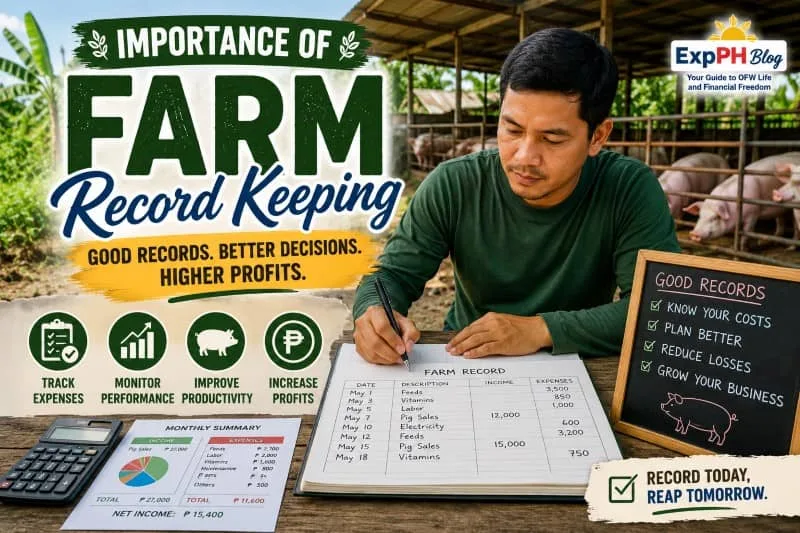
20. Importance of Farm Record Keeping
Proper farm records help farmers make smarter decisions by tracking expenses, livestock performance, and overall business progress. In an OFW Livestock Farming Business, organized documentation is especially important because owners often manage operations remotely. Accurate records improve transparency, reduce confusion, and support better financial planning and long-term farm management.
Important Records to Maintain
Livestock farmers should maintain organized records to monitor farm performance and identify operational problems early. Good documentation helps OFWs understand where money is being spent while evaluating whether the business is generating stable income and maintaining healthy livestock productivity.
Important records to maintain include:
- feed expenses
- medication costs
- breeding records
- animal growth rates
- sales records
- mortality reports
Accurate data helps identify profitable and unprofitable practices within the farming operation. Record keeping also improves budgeting, inventory management, and communication between OFWs and caretakers handling daily farm activities. Organized reports allow farm owners to make better decisions regarding expansion, feeding systems, livestock health, and long-term business planning.

21. Can Livestock Farming Become Passive Income?
Livestock farming cannot become completely passive income because successful farm operations still require supervision, planning, discipline, and constant monitoring. Some social media posts make farming appear easy, but real livestock businesses involve daily responsibilities related to feeding, sanitation, animal health, expenses, and operational management that require consistent attention and decision-making.
Successful livestock farming usually requires:
- supervision
- planning
- discipline
- constant monitoring
However, with good systems, trusted workers, and proper monitoring tools, OFWs can build more manageable farming operations over time. Technology such as CCTV cameras, digital reporting, and farm management applications can help owners supervise activities remotely while improving communication and reducing operational problems within the livestock business.

22. Environmental Responsibility in Livestock Farming Business
Responsible farming helps protect communities, livestock health, and the long-term success of an OFW Livestock Farming Business. Sustainable farm practices reduce environmental problems while improving operational stability and public trust. Farmers who prioritize cleanliness, proper waste handling, and animal welfare often maintain healthier livestock and more organized farming operations over time.
Waste Management
Animal waste should be managed properly to prevent environmental and sanitation problems that may affect nearby communities and farm operations. Poor waste disposal can damage water sources, create unpleasant living conditions, and increase the spread of harmful bacteria and livestock diseases within the farming environment.
Animal waste problems may include:
- water contamination
- foul odors
- disease spread
Proper drainage systems, regular cleaning, and organized waste disposal practices help maintain safer and more sustainable farm operations. Responsible waste management also improves relationships with surrounding communities while reducing environmental risks that may affect livestock health and long-term business stability.
Ethical Animal Care
Healthy and properly treated animals usually perform better and produce higher-quality livestock products. Ethical animal care includes providing proper nutrition, clean living spaces, veterinary support, and protection from unnecessary stress or harm. Farms that prioritize animal welfare often improve productivity while maintaining stronger long-term livestock health and operational performance.
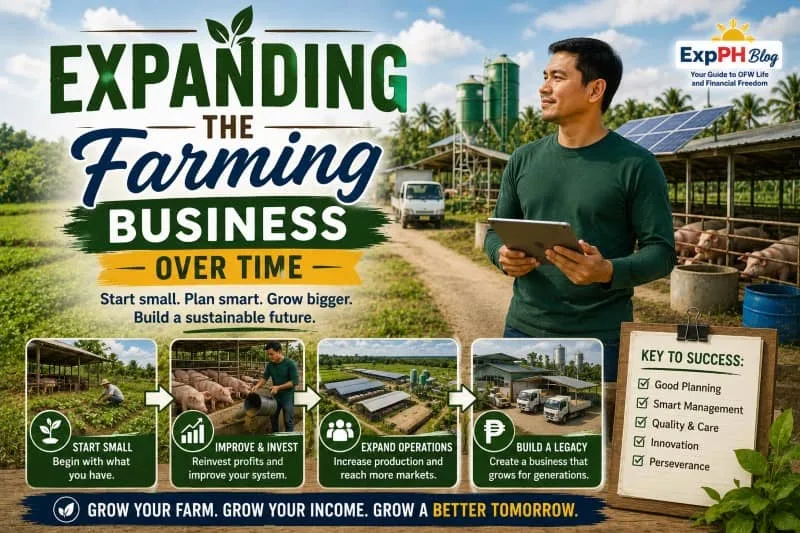
23. Expanding the Farming Business Over Time
Once an OFW Livestock Farming Business becomes stable, farmers may explore expansion opportunities that create additional income sources and improve long-term business growth. Expanding gradually allows farmers to strengthen operations, reduce financial risks, and maximize existing resources while building a more diversified and sustainable agricultural business.
Expansion opportunities may include:
- breeding programs
- meat processing
- feed supply businesses
- direct meat selling
- farm tourism
- organic farming
Diversification can increase income stability by creating multiple revenue sources instead of depending on only one farming activity. Expanding carefully also helps OFWs adapt to changing market conditions while improving long-term business sustainability and growth opportunities within the livestock and agricultural industry.
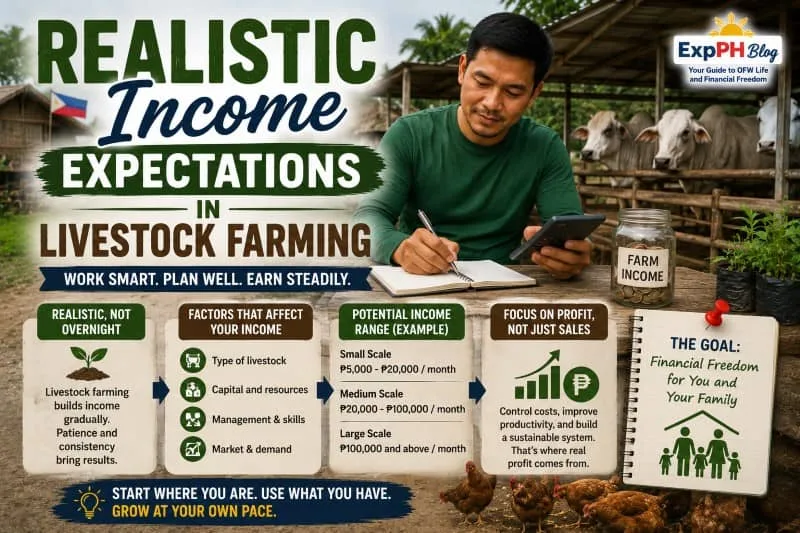
24. Realistic Income Expectations in Livestock Farming
Income in an OFW Livestock Farming Business varies widely depending on farm management, market conditions, and operational efficiency. Livestock farming can become profitable over time, but earnings are not always consistent every month. Understanding realistic income expectations helps OFWs prepare financially while avoiding unrealistic assumptions about quick business success.
Income often depends on factors such as:
- farm size
- feed costs
- disease management
- market prices
- operational efficiency
Some months may produce strong profits while other periods may involve unexpected expenses related to animal health, feed prices, weather conditions, or facility maintenance. Because of these risks, OFWs should treat livestock farming as a long-term investment that requires patience, discipline, and continuous improvement rather than expecting immediate or guaranteed financial returns.
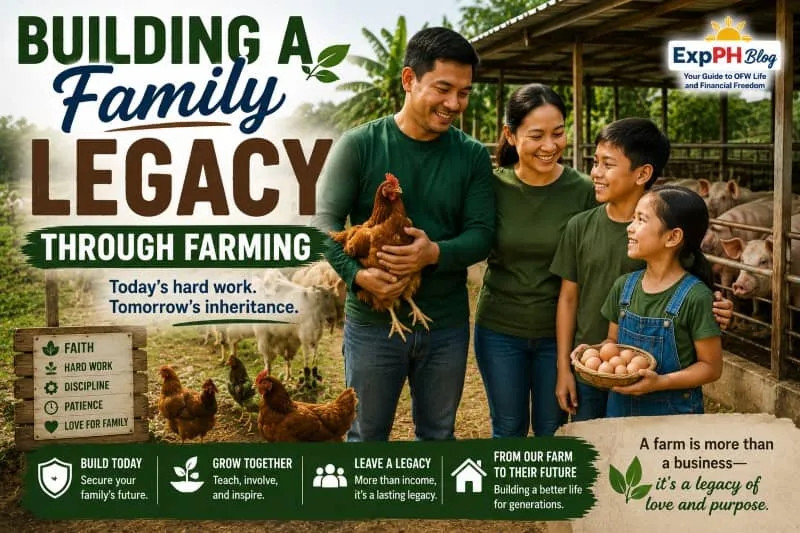
25. Building a Family Legacy Through Farming
One overlooked benefit of an OFW Livestock Farming Business is the opportunity to build a lasting family legacy through sustainable income and long-term agricultural assets. Unlike temporary sources of income, livestock farming can continue supporting families for many years while creating opportunities for future generations in the Philippines.
Many OFWs work abroad for decades but still struggle to create permanent income sources at home. A successful livestock farm can provide stability while helping families become less dependent on overseas employment and uncertain job opportunities abroad.
A successful farm can:
- support future generations
- provide local employment
- reduce dependency on overseas work
- create long-term family stability
Children and relatives may eventually continue and expand the business as the farm grows over time. For many OFWs, livestock farming becomes more than a financial investment because it helps create a long-term source of livelihood, family security, and lasting opportunities for future generations.
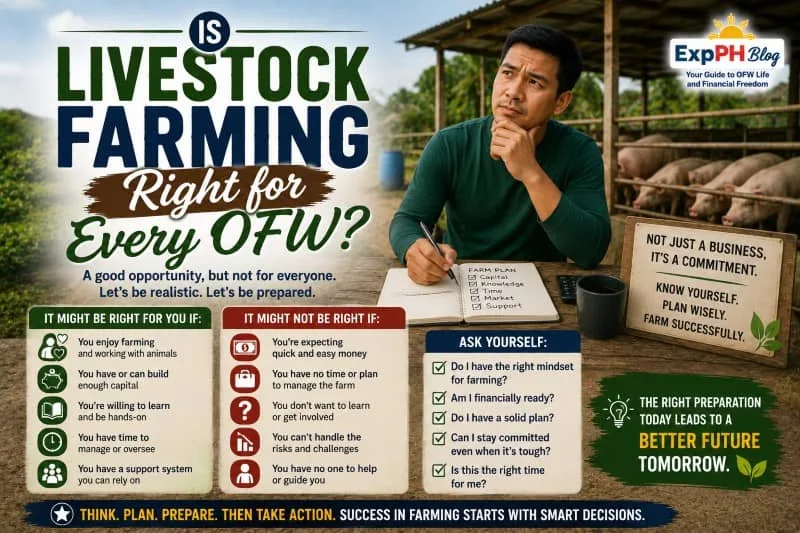
26. Is Livestock Farming Right for Every OFW?
Livestock farming is not necessarily the right business for every OFW because it requires patience, financial discipline, proper planning, and continuous management. While an OFW Livestock Farming Business can become profitable over time, success often depends on the owner’s willingness to learn, manage risks carefully, and build reliable systems for daily farm operations.
Livestock farming works best for OFWs who:
- are patient
- willing to learn
- understand risks
- can manage finances carefully
- have trusted people on-site
Those expecting instant profits may become disappointed because livestock farming involves operational challenges, market risks, and unexpected expenses. Like any real business, success requires time, effort, discipline, and continuous improvement. OFWs who stay committed to learning and responsible farm management usually have better chances of building stable and sustainable livestock operations.
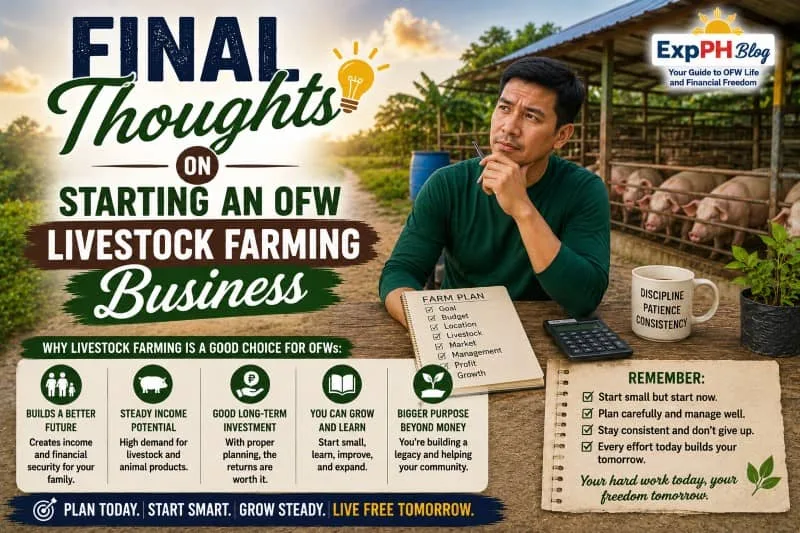
Final Thoughts on Starting an OFW Livestock Farming Business
The OFW Livestock Farming Business model offers a realistic path toward long-term financial growth for overseas workers who want to build sustainable income in the Philippines. Livestock farming also allows families to maximize available land, create productive assets, and establish a more stable source of livelihood beyond overseas employment.
Pig and cattle farming both offer strong opportunities when managed responsibly and supported by proper planning. Challenges such as disease control, rising feed costs, and remote management still exist, but organized systems and careful financial decisions can greatly improve the chances of building a successful and sustainable farming business.
For many OFWs, livestock farming becomes more than a business investment because it represents financial stability, independence, and long-term family security. A well-managed farm can eventually reduce dependence on overseas work while creating opportunities for relatives and future generations to continue and expand the business.
Starting small, learning continuously, building reliable systems, and managing finances wisely are often the most practical steps toward long-term success. OFWs who stay patient and committed to improving farm operations usually have better chances of building profitable livestock businesses that remain sustainable for many years.
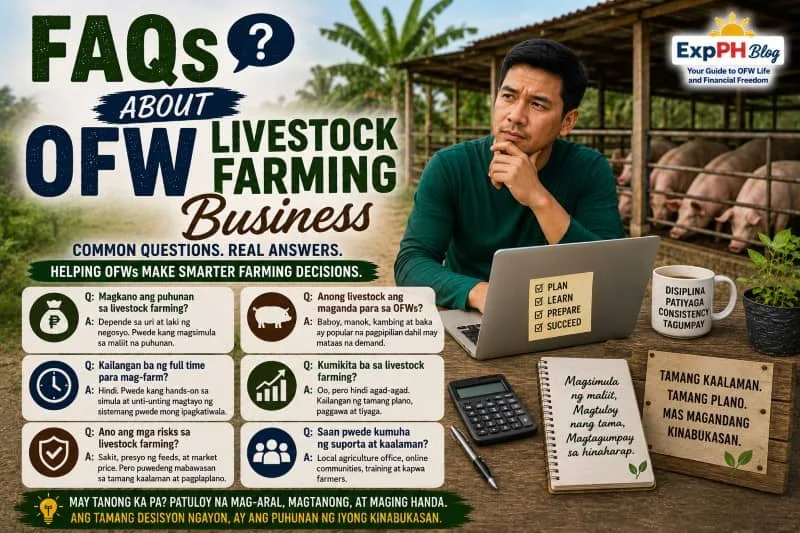
FAQs About OFW Livestock Farming Business
1. Is livestock farming a good business for OFWs?
Yes, livestock farming can provide long-term income for OFWs who plan carefully, manage finances responsibly, and build reliable farm systems with trusted caretakers.
2. Which is better for beginners, pig farming or cattle farming?
Pig farming is often better for beginners because it usually requires lower capital, smaller space, and faster income cycles compared to cattle farming operations.
3. How much capital is needed to start livestock farming?
Startup capital depends on farm size, livestock type, housing, feeds, and equipment. Small backyard operations usually require lower investment than commercial farms.
4. Can OFWs manage livestock farms while working abroad?
Yes, many OFWs manage farms remotely using trusted caretakers, CCTV systems, regular reports, and modern communication tools for daily farm supervision and monitoring.
5. What are the biggest risks in livestock farming?
Common risks include disease outbreaks, rising feed prices, poor farm management, weather damage, and unstable market prices that can affect business profitability significantly.
6. Why is biosecurity important in pig farming?
Biosecurity helps prevent diseases like African Swine Fever from spreading inside farms. Proper sanitation and controlled access protect livestock health and farm productivity.
7. What permits are needed for livestock farming in the Philippines?
Requirements may include barangay clearance, business permits, environmental permits, zoning compliance, and livestock registration depending on the farm location and operation size.
8. How can farmers reduce livestock feeding costs?
Farmers can reduce feeding costs through proper budgeting, efficient feeding schedules, pasture management, and careful monitoring of feed usage and livestock growth performance.
9. Can livestock farming become passive income for OFWs?
Livestock farming is not completely passive because it still requires supervision, planning, monitoring, and responsible management to maintain healthy and profitable farm operations.
10. What helps livestock farms become successful long-term?
Successful livestock farms usually depend on proper planning, financial discipline, healthy animals, reliable workers, strong market connections, and continuous learning and improvement.
Looking for more business opportunities after livestock farming?
Explore our guides on Best Business Ideas for Filipinos in 2026 and Top 10 Small Business Ideas in the Philippines for 2026 to discover practical and profitable ideas for OFWs, beginners, and aspiring entrepreneurs.
Related Articles
- Herbal Farming and Medicinal Plants: Growing a Natural Health Business for OFWs
- Beekeeping and Honey Production: A Unique Agribusiness Idea for OFWs
Livestock Farming Business Quiz
Test your knowledge about starting a profitable pig or cattle farm as an OFW. This quick quiz will help you understand livestock farming basics, risks, planning, and business opportunities in the Philippines.
Results


#1. Which livestock grows faster for selling?
#2. What is a major pig farming risk?
#3. Why is biosecurity important?
#4. What is a common cattle farming advantage?
#5. Which expense affects profits greatly?
#6. Why should OFWs start small?
#7. What helps OFWs monitor farms remotely?
#8. Which buyer can purchase livestock products?
#9. What supports long-term farm success?
#10. Why keep farm records organized?
We appreciate your time taking this quiz
Share your score and comment about your livestock farming experience or future farming plans with us on ExpPH Blog. Your insights may also help fellow OFWs who want to start their own farming business.

A Filipino web developer with a background in Computer Engineering. Founder of ExpPH Blog and ExpPH Business Guide, creating practical content on OFW guidance, business, finance, freelancing, travel, and lifestyle. Passionate about helping Filipinos grow, he shares insights that educate, empower, and inspire readers nationwide.