
Poultry Farming Business for OFWs: Step-by-Step Guide to Starting a Profitable Chicken Farm in the Philippines
Starting a Poultry Farming Business Philippines is one of the most practical and scalable business ideas for Overseas Filipino Workers who want to invest back home. It offers a strong combination of steady demand, manageable startup costs, and the ability to grow over time.
For many OFWs, the biggest challenge is finding a business that can be monitored remotely while still generating consistent income. Poultry farming fits this need when it is planned properly. With the right system, trusted people on the ground, and clear processes, you can build a farm that operates efficiently even while you are abroad.
This guide will walk you through everything you need to know, from planning and budgeting to operations and scaling. Whether you are a beginner or someone looking to diversify your income, this step-by-step guide will help you build a profitable poultry farming business in the Philippines.
If you’re planning to start a business as an OFW,
poultry farming is just one of many profitable options. For more practical and beginner-friendly ideas, check out our main guide on the best business opportunities for Filipinos this year.
1. Why Poultry Farming is a Smart Business for OFWs
The demand for chicken meat and eggs in the Philippines continues to rise as the population grows and eating habits evolve. Chicken remains one of the most affordable protein sources, so it is a regular part of Filipino meals and a dependable market for producers.
High Demand and Daily Consumption
Chicken is eaten every day in homes, small eateries, and large food chains across the country. This steady consumption creates a reliable market for poultry products. Unlike seasonal ventures, poultry farming can provide consistent income throughout the year with proper planning.
Scalable Business Model
You can begin with a small number of chickens and expand as you gain experience and build capital. This gradual growth reduces financial risk and allows you to improve your system over time, making poultry farming a practical option for OFWs starting a business.
Suitable for Remote Management
With clear systems and a trusted caretaker, you can manage daily farm operations even while working abroad. Regular communication, proper record keeping, and simple monitoring tools help ensure that your poultry farming business runs smoothly and stays on track.
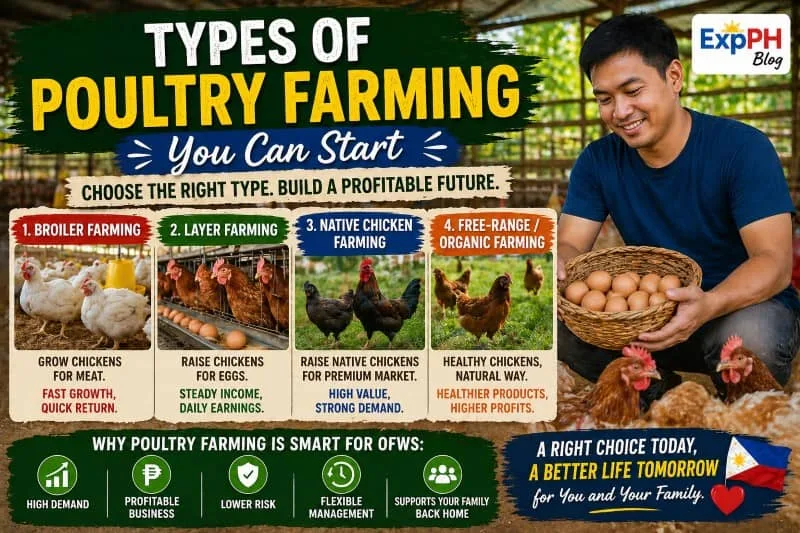
2. Types of Poultry Farming You Can Start
Choosing the right type of poultry farming is a key decision that shapes your costs, daily operations, and long-term income. Each option has its own advantages, so understanding how they work will help you match your goals, budget, and management style.
Broiler Chicken Farming
Broiler chickens are raised for meat production and are known for their fast growth. They typically reach market size within 30 to 45 days, which allows quicker turnover. This makes broiler farming a practical choice for those who want faster returns.
Best for:
- Faster return on investment
- High demand in local markets
Layer Chicken Farming
Layer chickens are raised for egg production and begin laying eggs at around 18 to 20 weeks. They provide a steady supply of eggs over time, which creates consistent income. This setup is ideal for those who prefer daily earnings.
Best for:
- Long-term income
- Daily cash flow from egg sales
Free-Range or Native Chicken Farming
Free-range or native chicken farming allows chickens to grow in a more natural environment with space to move freely. This method often produces healthier and more flavorful meat, which can attract buyers willing to pay higher prices.
Best for:
- Premium pricing
- Health-conscious consumers
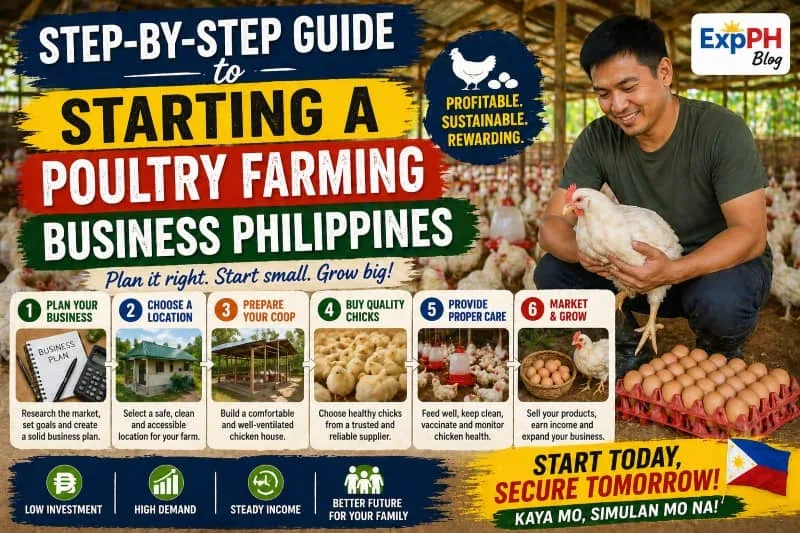
3. Step-by-Step Guide to Starting a Poultry Farming Business Philippines
Starting a Poultry Farming Business Philippines requires careful planning, proper setup, and consistent management. Each step builds a strong foundation that supports long-term growth. With the right approach, you can create a stable and profitable chicken farm even while working abroad.
Step 1: Create a Clear Business Plan
Before investing your money, you need a clear and realistic plan. This serves as your guide for decisions, budgeting, and daily operations. A strong plan helps you stay focused and avoid costly mistakes as your poultry farming business in the Philippines grows.
Your plan should include:
- Type of poultry farming
- Target market
- Budget and capital
- Expected income and expenses
- Marketing strategy
A well-prepared plan improves your chances of building a sustainable and profitable business.
Step 2: Choose the Right Location
Location affects your farm’s performance, operating costs, and long-term success. A well-chosen site supports healthy chickens and smooth operations. It also helps prevent complaints and ensures easier transport for supplies and product delivery.
Consider the following:
- Away from residential areas to avoid complaints
- Accessible to transportation for deliveries
- Availability of clean water and electricity
- Proper drainage and ventilation
Step 3: Register Your Business and Follow Regulations
Running a legal business protects your investment and builds trust with customers and partners. It also ensures that your poultry farming business in the Philippines follows required health and safety standards.
You may need to register with:
- Department of Trade and Industry for sole proprietorship
- Barangay clearance
- Mayor’s permit
For animal health and safety standards, refer to the Bureau of Animal Industry, which provides official guidance on poultry farming and disease control.
Step 4: Build the Right Poultry Housing
Proper housing keeps your chickens safe, healthy, and productive. A well-designed structure supports airflow, protects against harsh weather, and allows easy cleaning. This helps reduce stress and lowers the risk of disease in your poultry farm.
Your chicken house should provide:
- Good ventilation
- Protection from extreme weather
- Adequate space for movement
- Easy cleaning and maintenance
Step 5: Buy Quality Chicks
Healthy chicks are the foundation of a successful poultry farming business in the Philippines. Strong birds grow better and produce more consistent results. Choosing a reliable source helps reduce risks and improves your overall farm performance.
Choose:
- Reputable hatcheries
- Vaccinated chicks
- Strong and active birds
Avoid buying from unknown sellers to prevent disease problems.
Step 6: Prepare Equipment and Supplies
Your farm needs reliable tools to support daily operations and maintain proper care. The right equipment improves efficiency, reduces waste, and helps ensure your chickens receive the attention they need from the beginning.
Essential Poultry Equipment
- Feeders
- Waterers
- Brooder lamps
- Cages or housing materials
- Vitamins and supplements
Where to Buy Affordable Poultry Supplies
Sourcing equipment from trusted online platforms is a practical option, especially for OFWs managing remotely. It allows easier coordination and access to a wide range of products without needing to visit physical stores.
You can find poultry tools and farm essentials on Shopee Philippines, including feeders, drinkers, incubators, and other supplies suitable for both beginners and growing farms.
Step 7: Implement Proper Feeding and Nutrition
Feeding is one of the largest expenses in poultry farming, so it must be managed carefully. Proper nutrition supports healthy growth, improves productivity, and helps prevent common health issues among your chickens.
Types of feed:
- Starter feed for chicks
- Grower feed for developing chickens
- Finisher feed for broilers
Always provide clean water and follow a consistent feeding schedule.
Step 8: Maintain Biosecurity and Disease Control
Disease prevention is essential to protect your farm from major losses. Strong biosecurity practices help maintain healthy chickens and ensure your poultry farming business in the Philippines continues to operate smoothly.
Basic Biosecurity Measures
- Limit visitors inside the farm
- Disinfect equipment regularly
- Use proper clothing and footwear inside the poultry area
- Separate sick chickens immediately
Regular monitoring and vaccination help keep your flock safe.
Step 9: Hire and Train a Reliable Caretaker
As an OFW, you need someone trustworthy to handle daily operations. A reliable caretaker ensures your farm runs smoothly and follows your system even when you are not physically present.
Look for:
- Experience in farming
- Responsibility and honesty
- Willingness to follow instructions
Provide clear guidelines and maintain regular communication.
Step 10: Market Your Poultry Products
Producing quality chickens or eggs is not enough without effective marketing. You need to connect with buyers and maintain steady demand to keep your business profitable.
Potential Buyers
- Local markets
- Restaurants and eateries
- Food stalls
- Neighbors and community
Tips for Better Sales
- Offer competitive pricing
- Maintain consistent quality
- Build relationships with buyers
- Use social media for promotion
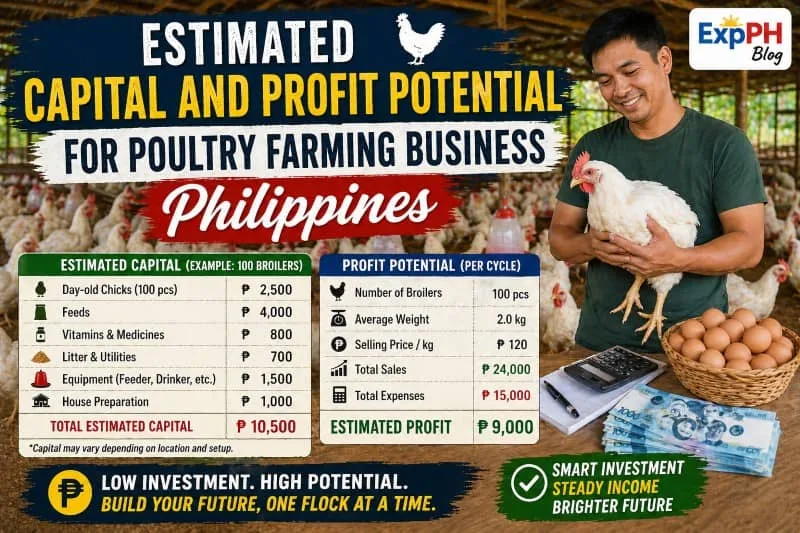
4. Estimated Capital and Profit Potential for Poultry Farming Business Philippines
Starting a poultry farming business in the Philippines depends on your scale, setup, and management approach. Costs and returns vary, but careful planning helps control expenses and improve results. Understanding your budget early allows you to prepare for operations and avoid unexpected financial challenges.
Small-Scale Setup (100 to 500 chickens)
A small-scale setup is ideal for beginners who want to start with lower risk and manageable costs. This level allows you to learn daily operations while building experience. It also helps you test your system before expanding your poultry farming business.
Estimated costs:
- Chicks
- Feed
- Housing
- Equipment
Medium to Large Scale
A medium to large-scale poultry farm requires higher capital but offers greater income potential. This setup suits those who already understand farm operations or are ready to invest more for faster growth and larger production capacity.
Profit depends on:
- Feed costs
- Mortality rate
- Market price
- Farm management efficiency
With proper planning and consistent management, many poultry farmers achieve steady income after a few production cycles.
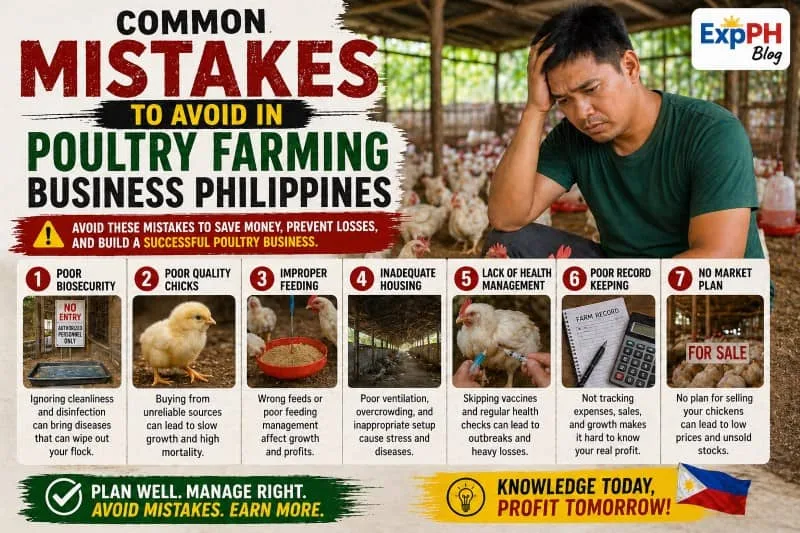
5. Common Mistakes to Avoid in Poultry Farming Business Philippines
Even a promising poultry farming business in the Philippines can fail when basic mistakes are ignored. Early awareness helps you prevent losses and maintain stable operations. By understanding common issues, you can build a stronger system that supports consistent growth and long-term success.
Poor Planning
Starting without proper research or a clear plan often leads to unnecessary losses. Many beginners underestimate costs and daily requirements. A solid plan guides your decisions, controls spending, and prepares you for challenges that may arise as your poultry farm grows.
Overcrowding
Placing too many chickens in a limited space creates stress and increases the risk of disease. Overcrowding also affects growth and overall productivity. Providing enough space allows better movement, improves airflow, and supports healthier conditions for your flock.
Inconsistent Feeding
Irregular feeding or poor-quality nutrition affects chicken growth and production. Chickens need balanced feed and clean water every day. A consistent feeding schedule helps maintain strong health, improves weight gain, and supports reliable output for your poultry farming business.
Lack of Monitoring
Ignoring daily farm activities can lead to small problems becoming serious issues. Regular checks help you spot changes in behavior, health, or environment. Consistent monitoring ensures that your poultry farming business in the Philippines stays efficient and avoids preventable losses.
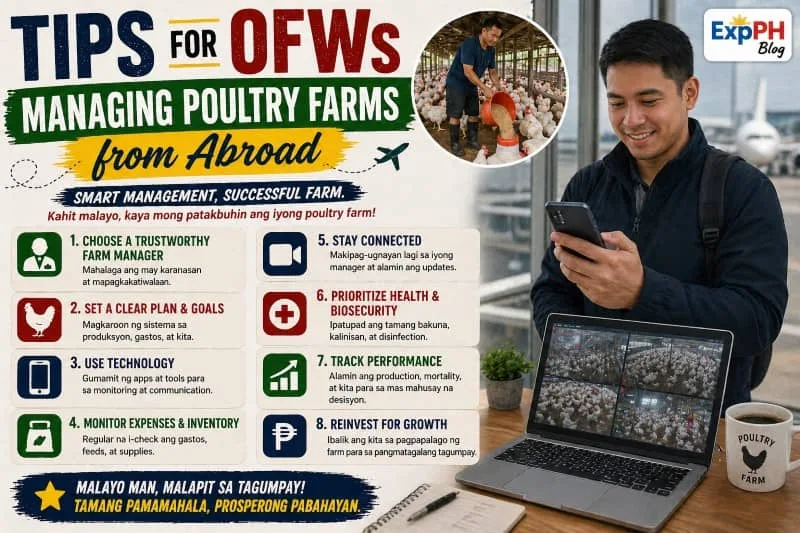
6. Tips for OFWs Managing Poultry Farms from Abroad
Managing a poultry farm while working abroad requires discipline, clear systems, and consistent communication. Since you are not physically present, your success depends on how well your processes are followed. A structured approach helps maintain smooth operations and reduces the risk of costly mistakes.
Use Technology
Technology helps you stay connected with your farm and monitor daily activities even from abroad. Simple tools can improve transparency and make communication easier. Regular updates ensure you remain informed and can respond quickly to any issues that may arise.
- Video calls for regular updates
- Digital records for expenses and sales
- Messaging apps for daily communication
Set Clear Systems
Clear systems guide your caretaker and ensure tasks are done properly each day. Defined routines reduce confusion and improve consistency. When everyone follows the same process, your poultry farming business becomes easier to manage and more efficient.
- Feeding schedules
- Cleaning routines
- Sales tracking
Build Trust with Your Team
Your caretaker plays a major role in your farm’s success, so trust and communication are essential. Treat your team fairly and set clear expectations. Regular check-ins help maintain accountability and ensure your poultry farming business continues to run smoothly

7. Long-Term Growth and Expansion in Poultry Farming Business Philippines
Once your poultry farming business in the Philippines becomes stable, you can focus on growth strategies that increase income and improve efficiency. Expansion should be planned carefully to avoid risks. With the right approach, your farm can grow into a reliable and long-term source of profit.
Increase Chicken Capacity
Expanding your chicken capacity is one of the simplest ways to grow your business. As you gain experience, you can add more batches and improve your system. Gradual expansion helps you manage risks while increasing production and overall earnings.
Diversify Products
Offering different poultry products can increase your income and attract more customers. Diversification allows you to serve different market needs while reducing dependence on a single product. This strategy strengthens your poultry farming business over time.
- Eggs
- Dressed chicken
- Organic or free-range options
Build Partnerships
Building strong partnerships helps ensure consistent demand for your products. Working with restaurants, suppliers, and local businesses creates stable income opportunities. Long-term relationships also improve trust and make it easier to grow your poultry farming business in the Philippines.
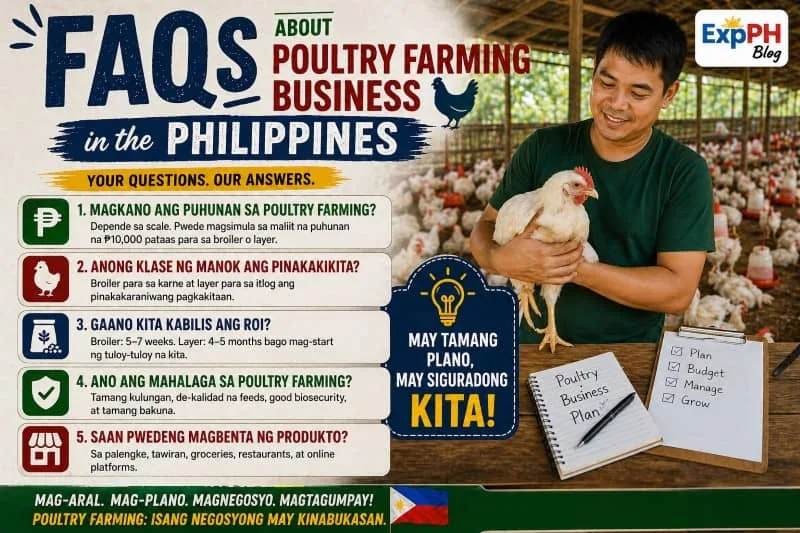
8. FAQs About Poultry Farming Business in the Philippines
What is the best poultry farming option for beginners in the Philippines?
Broiler farming is best for beginners because it requires lower investment, grows quickly, and allows faster income. It is easier to manage compared to long-term egg production.
How much capital is needed to start a poultry farming business?
Startup capital varies by scale, but a small poultry farm may require funds for chicks, feed, housing, and equipment, making careful budgeting very important.
Can OFWs manage a poultry farm while working abroad?
Yes, OFWs can manage poultry farms remotely by hiring a trusted caretaker, using communication tools, and setting clear systems for daily operations and reporting tasks.
How long does it take to earn profit in poultry farming?
Profit can be earned within one to two months for broilers, depending on market prices, feed costs, and farm management efficiency during each production cycle.
What are the common risks in poultry farming?
Common risks include disease outbreaks, high feed costs, poor management, and market price changes, which can affect profit if not properly managed and monitored.
What equipment is needed for a poultry farm?
Basic equipment includes feeders, waterers, brooder lamps, cages, and vitamins. These tools support daily operations and help maintain proper care and growth of chickens.
Where can I buy poultry farming supplies in the Philippines?
You can purchase poultry supplies from local agricultural stores or online platforms that offer feeders, drinkers, and other essential equipment for beginners and growing farms.
How do I prevent diseases in poultry farming?
Prevent diseases by maintaining cleanliness, limiting visitors, disinfecting equipment, vaccinating chickens, and monitoring their health regularly to detect early signs of illness.
What is the best location for a poultry farm?
The best location is away from residential areas, has access to water and electricity, good ventilation, and proper drainage to support healthy and efficient farm operations.
Is poultry farming profitable in the Philippines?
Yes, poultry farming can be profitable due to strong demand for chicken and eggs, especially when managed properly with good planning, cost control, and reliable market access.
Final Thoughts on Poultry Farming Business in the Philippines
Starting a Poultry Farming Business Philippines is a practical opportunity for OFWs who want to build a stable income at home. With careful planning, reliable support, and consistent management, this business can grow into a dependable source of earnings. It also creates long-term value for your family and future.
The key is to build a strong foundation and stay committed to learning and improving your system. Even while working abroad, you can remain involved through clear processes and regular communication. By following this guide, you can move forward with confidence and make informed decisions at every stage.
With patience, discipline, and smart decision-making, your poultry farming journey can develop into a sustainable and profitable business. Over time, your efforts can lead to steady income, business growth, and greater financial security for you and your loved ones.
Discover More Small Business Ideas for 2026?
Poultry farming is a strong starting point, but it is only one of many opportunities you can explore. If you want more practical ideas that match different budgets and skills, check out our guide Top 10 Small Business Ideas in the Philippines for 2026.
Related Guide
- Best Business Ideas for Filipinos and OFWs in 2026
- Top 10 Profitable Agribusiness Philippines Ideas for Beginners and OFWs
Poultry Farming Quiz for OFWs
Test your knowledge about starting a Poultry Farming Business Philippines. This quick quiz will help you review key concepts and check if you are ready to build your own chicken farm.
Results


#1. What is the fastest-growing poultry type?
#2. What is the main product of layer farming?
#3. What is a key requirement for farm location?
#4. What is the purpose of feeders?
#5. What helps prevent poultry diseases?
#6. What is needed for remote farm management?
#7. What improves poultry sales?
#8. What supports farm growth long-term?
#9. What is broiler farming best for?
#10. What is the biggest cost in poultry farming?
Thank you for taking this quiz
Share your quiz score and experience in the comments on ExpPH Blog. We would love to hear from you and support your journey.

A Filipino web developer with a background in Computer Engineering. Founder of ExpPH Blog and ExpPH Business Guide, creating practical content on OFW guidance, business, finance, freelancing, travel, and lifestyle. Passionate about helping Filipinos grow, he shares insights that educate, empower, and inspire readers nationwide.