
How OFWs Can Handle Financial Emergencies From Abroad
Living and working overseas brings opportunity, stability, and hope for a better future. However, even the most prepared Overseas Filipino Workers can face sudden and stressful financial problems. A medical emergency back home, unexpected job loss, delayed salary, or family crisis can quickly turn into an OFW Financial Emergency.
What makes these situations harder is distance. You are far from home, dealing with different laws, currencies, employers, and systems, while your loved ones may be depending on you for immediate help.
This guide is written to help OFWs understand, prepare for, and manage a financial emergency while abroad. It is practical, realistic, and focused on actions you can actually take even if you are thousands of miles away. Whether you are currently facing an emergency or simply want to be ready, this article will help you stay calm, make smarter decisions, and protect your long term financial future.
Understanding an OFW Financial Emergency
An OFW Financial Emergency refers to a sudden situation that requires immediate funds and disrupts normal income or savings. These events often cannot wait for scheduled salaries or remittances, forcing OFWs to act quickly while managing the challenge of being far from home.
What qualifies as an OFW Financial Emergency
An OFW Financial Emergency involves urgent and unexpected expenses that demand fast financial action. These situations often arise without warning and leave little time to prepare. Unlike planned expenses, emergencies require immediate solutions to prevent further financial or personal damage.
Common examples include:
- Sudden hospitalization or medical bills of a family member in the Philippines
- Job termination, contract non renewal, or delayed salary abroad
- Accidents, natural disasters, or urgent home repairs back home
- Legal or documentation issues requiring immediate payment
- Emergency travel expenses due to family or work concerns
The main difference between an emergency and a regular expense is urgency. Emergencies require quick decisions, limited planning time, and immediate access to funds, making preparation and awareness essential for every OFW.
Why OFWs are more vulnerable during emergencies
OFWs face challenges that local workers rarely experience. Physical distance limits personal involvement in emergencies. Dependence on remittance services, family coordination, and foreign employers can slow solutions. Exchange rates, banking delays, and work restrictions often add pressure during already stressful situations.
Emotional stress increases vulnerability. Many OFWs feel strong responsibility toward their families, leading to rushed decisions such as high interest borrowing or using all savings. Recognizing these pressures helps OFWs respond calmly and manage emergencies more wisely.
Common Causes of OFW Financial Emergencies
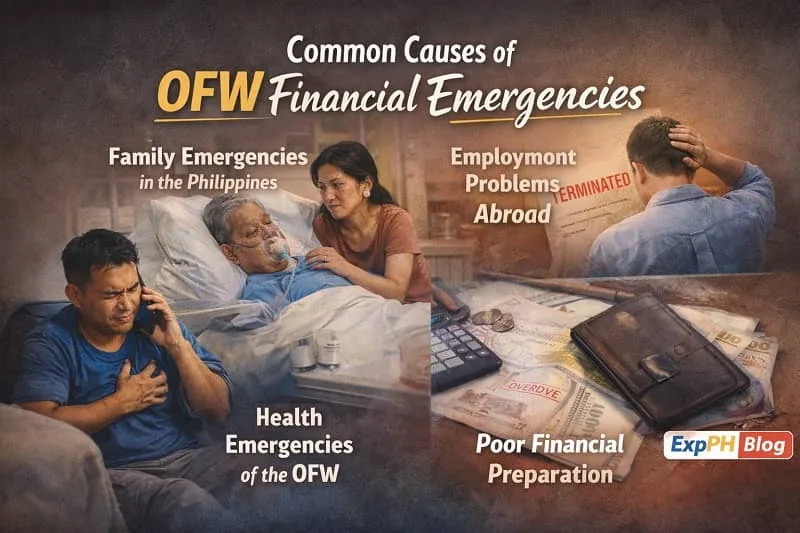
OFW financial emergencies often arise from situations that are sudden and unavoidable. These causes usually affect income stability, family support, or personal safety. Understanding the most common triggers helps OFWs prepare better and respond more calmly when unexpected financial problems occur.
Family emergencies in the Philippines
Many OFW financial crises start at home. A parent may be hospitalized, a child may need urgent tuition, or a family business may fail. Since OFWs are often the main provider, relatives seek immediate help. Without a clear family plan, these emergencies can repeat and grow worse.
Employment related problems abroad
Job loss, reduced work hours, or delayed salaries are common causes of an OFW Financial Emergency. Some OFWs also experience employer disputes or sudden company closures. These situations can leave them without income while still paying rent, food, and visa related expenses.
Health and medical issues of the OFW
Medical care abroad can be costly, especially without proper insurance. Even minor accidents or sudden illness can create serious financial strain. Without preparation, medical emergencies may quickly drain savings and affect an OFW’s ability to support family obligations.
Poor financial preparation
Lack of emergency savings and unclear budgeting increase financial risk. Heavy dependence from family members can worsen the situation. Many OFW emergencies feel overwhelming because there is no financial buffer to absorb unexpected costs or temporary loss of income.
Immediate Steps to Take During an OFW Financial Emergency
When an OFW Financial Emergency happens, your first actions matter. Acting too quickly can worsen the situation. Taking a calm and structured approach helps you protect your finances, avoid costly mistakes, and make decisions that support both short term needs and long term stability.
Pause and assess the situation calmly
Panic often leads to poor choices. Before sending money, borrowing, or selling assets, take time to understand the situation clearly. Focus on facts instead of emotions to avoid unnecessary financial strain.
Ask yourself:
- How much money is truly needed
- How urgent the expense is
- Whether alternative solutions exist
Request clear details, receipts when available, and timelines. This approach protects you from overspending and reduces emotional pressure during stressful moments.
Prioritize essential expenses
During an OFW Financial Emergency, focus only on basic needs and delay all non essential spending. This helps preserve limited funds and ensures money is used where it matters most.
Essential expenses include:
- Medical care
- Food and shelter
- Legal or safety related costs
Postpone lifestyle expenses until your financial situation becomes stable again.
Avoid high interest loans and scams
Financial emergencies attract scammers and predatory lenders who target desperate individuals. Avoid instant loan offers with unclear terms, especially those promoted online or through social media. If borrowing cannot be avoided, choose regulated institutions or trusted cooperatives to reduce long term financial risk.
Managing Remittances During a Financial Emergency
Handling remittances properly during a financial emergency helps ensure money reaches the right person on time. Clear systems reduce delays, misuse, and stress. For OFWs, careful remittance management protects limited funds while supporting urgent needs back home.
Choose reliable and fast remittance channels
During emergencies, speed and reliability are critical. Use trusted remittance providers or your bank’s international transfer services. Always verify recipient details before sending money. This simple step helps prevent delays, errors, or failed transactions when time and funds are limited.
Coordinate clearly with family members
Designate one trusted family member to manage the emergency funds. When multiple people request money, confusion and misuse can occur. Provide clear instructions on how funds should be spent and request updates once payments are completed to maintain accountability.
Keep records of emergency remittances
Record the dates, amounts, and purposes of each emergency transfer. Proper documentation helps you monitor spending, assess remaining funds, and avoid misunderstandings with family members. Clear records also support better financial planning after the emergency is resolved.
Using Government and Institutional Support
Government and institutional support can help ease the burden of an OFW Financial Emergency. These services are designed to protect OFWs during crises. Knowing when and how to access official assistance can provide guidance, temporary relief, and peace of mind during difficult situations.
Assistance available to OFWs
Many OFWs are unaware that government agencies offer help during emergencies. The Philippine government provides welfare assistance, emergency support, and repatriation services for eligible OFWs. These programs can help during job loss, illness, or other serious situations that affect safety and income.
For accurate and updated information, OFWs should check the Overseas Workers Welfare Administration website. It helps confirm eligibility, required documents, and official procedures for emergency assistance. Relying on official sources reduces confusion and protects OFWs from misinformation.
When to seek embassy or consulate help
If an emergency involves job disputes, legal problems, or safety risks abroad, contact the nearest Philippine embassy or consulate. They can provide guidance, connect you to local resources, and in some cases offer temporary assistance while helping you understand your options.
Rebuilding Financial Stability After an OFW Financial Emergency
Recovering from an OFW Financial Emergency takes time and patience. The goal is not only to replace lost money but to strengthen your financial system. Careful review, steady saving, and realistic adjustments help you regain control and reduce the risk of future emergencies.
Review what went wrong
Once the situation stabilizes, take time to reflect honestly. Understanding the cause helps you improve future decisions without placing blame on yourself or others.
Ask yourself:
- What triggered the emergency
- Which decisions helped or caused problems
- What actions could have reduced the impact
This process supports learning, growth, and better preparation.
Rebuild your emergency fund
Your emergency fund is your main protection against future crises. Rebuild it slowly and consistently, even if progress feels small. A practical target is three to six months of essential expenses. Starting with small amounts builds discipline and long term financial security.
Adjust your budget and commitments
If family obligations are draining your income, start an honest conversation. Set clear limits that protect your financial health. Adjust your budget to match your current capacity while maintaining support in a way that does not create another financial emergency. Supporting loved ones is important, but it should not destroy your financial security.
Strengthening Income to Prevent Future OFW Financial Emergencies
Strengthening income is a practical way to reduce the risk of future OFW Financial Emergencies. While saving is important, income growth creates flexibility and security. A stronger income base gives OFWs more options when unexpected expenses or income disruptions occur.
Why increasing income matters more than cutting expenses
There is a limit to how much spending can be reduced. Income growth provides greater control during emergencies. For OFWs, this does not always mean changing jobs. It can involve upgrading skills, qualifying for promotions, or developing reliable side income sources.
Skills as a long term safety net
High demand skills act as a safety net during uncertain times. If one income source stops, another can help sustain you. Digital skills, freelancing abilities, and remote friendly expertise are especially valuable for OFWs seeking financial resilience.

Practical Skill Building Options for OFWs
Skill building helps OFWs prepare for future income disruptions and recover faster from an OFW Financial Emergency. Practical learning options focus on flexibility, relevance, and long term value. Choosing the right skills allows OFWs to strengthen income without sacrificing work responsibilities abroad.
Learning while working abroad
Many OFWs work long hours, so flexible learning is essential. Online education allows you to study at your own pace during rest days or short breaks. This approach helps you improve skills without disrupting your job or daily responsibilities.
Focus on skills that can:
- Increase your salary
- Open freelance opportunities
- Support remote work
- Improve job security
A practical learning platform OFWs can use
One practical option is Udemy, which offers affordable online courses in digital skills, freelancing, business, and career development. Courses are accessible worldwide and beginner friendly. Learning a monetizable skill helps OFWs recover faster from financial emergencies and reduce future risks. This approach is not about quick money, but about building long term resilience.
Helping Your Family Prepare for Emergencies Too
Preparing for emergencies should involve the whole family, not only the OFW. When everyone understands financial limits and responsibilities, emergencies become easier to manage. Shared awareness reduces pressure on the OFW and helps prevent repeated financial strain during difficult situations.
Educating family members about financial limits
Many emergencies worsen because families believe OFWs have unlimited money. Clear and honest communication is important. Explain your income, budget, savings goals, and limits. This helps reduce guilt driven pressure and encourages more responsible financial decisions during emergencies.
Encourage shared responsibility
Emergency preparedness should not depend on one person alone. Encourage family members to take active roles in financial readiness so the household becomes more resilient.
Encourage them to:
- Build small emergency funds
- Get basic insurance if possible
- Avoid unnecessary debts
Shared responsibility strengthens the household and reduces future financial risk.
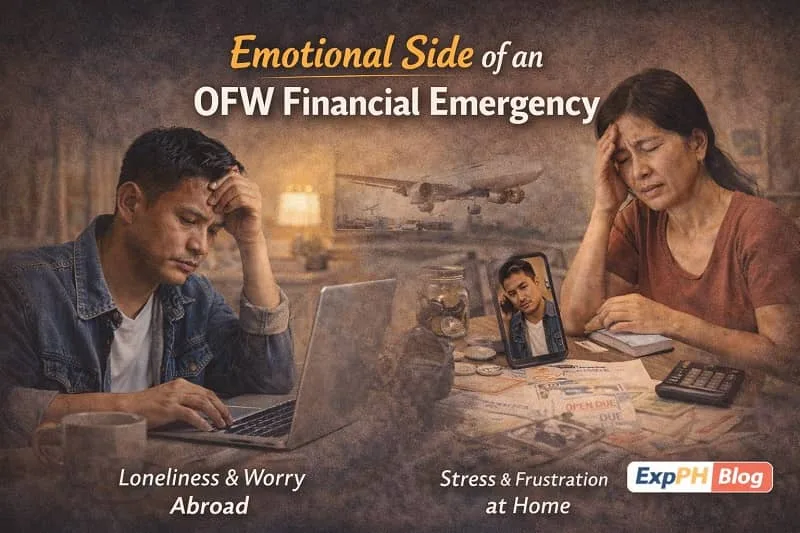
Emotional Side of an OFW Financial Emergency
An OFW Financial Emergency affects more than money. It also impacts emotions and mental well being. Fear, pressure, and responsibility can feel overwhelming. Understanding the emotional side helps OFWs stay grounded, think clearly, and make decisions that protect both finances and personal health.
Managing stress and guilt
Financial emergencies often trigger stress, guilt, and anxiety. These emotions are normal and understandable. What matters is how you manage them. Talk with trusted friends, fellow OFWs, or family members. Sharing the burden helps reduce pressure and supports clearer decision making.
Avoiding burnout and desperation decisions
When stress builds up, desperation can push OFWs toward risky choices. These include illegal work, unsafe loans, or exploitation. Protect your health and legal status at all times. Long term stability is more important than short term solutions that create lasting problems.
Long Term Planning to Avoid Repeating the Cycle
Long term planning helps OFWs break the cycle of repeated financial emergencies. Preparing in advance reduces panic and confusion during crises. A clear plan allows faster action, better decisions, and stronger financial control when unexpected situations arise while working abroad.
Create a simple emergency plan
A simple emergency plan provides structure during stressful moments. Writing key details in advance helps you respond quickly without confusion or emotional pressure.
Write down:
- Emergency contacts
- Preferred remittance methods
- Trusted family handlers
- Backup income options
This preparation saves time and reduces panic during future emergencies.
Make emergency preparedness part of your OFW journey
An OFW Financial Emergency should become a learning experience, not a permanent setback. Each challenge can build knowledge, discipline, and resilience. Treat emergency preparedness as part of your long term OFW journey to stay financially secure and confident abroad.
Conclusion: Turning an OFW Financial Emergency Into a Turning Point
No OFW plans to face a financial crisis, yet preparation often determines the outcome. An OFW Financial Emergency does not reflect failure. It shows responsibility and the reality of supporting a family from afar. What matters most is how you respond once the challenge appears. With awareness, discipline, and patience, emergencies can become moments of learning that strengthen your financial foundation.
By staying calm, prioritizing essential needs, seeking official support when needed, building income related skills, and planning ahead, you can protect both yourself and your family. Distance does not remove your ability to act wisely. Knowledge, preparation, and steady decisions give OFWs control and confidence, wherever they are working.
Explore more topics in the section below.
- How OFWs Can Avoid Debt Traps Abroad
- Debt Management Strategies That Actually Work
- Balancing Family Support and Personal Savings the Smart Way
- Common Money Mistakes New Business Owners Must Avoid
- Digital Tools OFWs Can Use to Track Career Progress
FAQs About OFW Financial Emergency
What is considered a financial emergency for OFWs?
A financial emergency for OFWs includes sudden medical expenses, job loss, delayed salaries, family crises, accidents, or urgent legal costs that require immediate financial action.
Why are financial emergencies harder for OFWs to manage?
Financial emergencies are harder for OFWs because of distance, different banking systems, time delays in remittances, limited local support, and emotional pressure from family expectations.
What should OFWs do first during a financial emergency?
OFWs should pause, assess the situation calmly, confirm the actual amount needed, prioritize essential expenses, and avoid rushing into high interest loans or unsafe financial decisions.
How can OFWs send money quickly during emergencies?
OFWs can use trusted banks or established remittance services, double check recipient details, choose fast transfer options, and coordinate with one responsible family member.
Should OFWs borrow money during a financial emergency?
Borrowing should be a last resort for OFWs, and only from regulated institutions or trusted sources, to avoid high interest, scams, and long term debt problems.
How can OFWs rebuild savings after an emergency?
OFWs can rebuild savings by adjusting budgets, reducing non essential expenses, setting small monthly targets, and consistently restoring their emergency fund over time.
Can OFWs get government help during financial emergencies?
Yes, OFWs may receive assistance from government agencies like OWWA or Philippine embassies, depending on eligibility, documentation, and the nature of the emergency.
How can skill development help OFWs during emergencies?
Skill development helps OFWs increase income, qualify for better jobs, access freelancing opportunities, and reduce financial vulnerability during unexpected situations.
How can OFWs prevent repeated financial emergencies?
OFWs can prevent repeated emergencies by building emergency funds, setting family financial boundaries, increasing income skills, and creating a clear emergency response plan.
How should OFWs involve their families in emergency planning?
OFWs should communicate financial limits, encourage shared responsibility, promote savings habits, and educate family members about realistic expectations during emergencies.
Test your knowledge about How OFWs Can Handle Financial Emergencies From Abroad.
Results


#1. What defines an OFW financial emergency?
#2. Why are OFWs more vulnerable during emergencies?
#3. What should OFWs do first in an emergency?
#4. Which expense should be prioritized first?
#5. What should OFWs avoid during emergencies?
#6. Who should handle emergency funds back home?
#7. What helps prevent future emergencies?
#8. Why is skill development important for OFWs?
#9. When should OFWs seek embassy help?
#10. What mindset helps during financial emergencies?
Thank you for taking your time with us.
We would love to hear from you. Please comment below and share your experience or what you learned today.

A Filipino web developer with a background in Computer Engineering. Founder of ExpPH Blog and ExpPH Business Guide, creating practical content on OFW guidance, business, finance, freelancing, travel, and lifestyle. Passionate about helping Filipinos grow, he shares insights that educate, empower, and inspire readers nationwide.