
How OFWs Can Prepare Emotionally for Life After Overseas Work
Life abroad changes a person. For many Overseas Filipino Workers, working in another country is not only about earning money, it is about sacrifice, identity, growth, and survival. After years of adjusting to foreign cultures, long work hours, and separation from loved ones, the thought of going home can bring mixed emotions.
This guide focuses on Life After Overseas Work for OFWs, especially the emotional preparation needed before returning home permanently. Financial planning is important, but emotional readiness is equally powerful. When OFWs prepare their hearts and minds for reintegration, they transition with confidence instead of confusion.
Whether you are planning to return next year or just beginning to think about it, this article will help you understand the emotional journey ahead and how to navigate it wisely.
Table of Contents
Understanding Life After Overseas Work for OFWs
Returning home is more than boarding a plane back to the Philippines. It marks a serious life transition that affects identity, relationships, and daily routines. Many OFWs expect pure happiness and relief, yet they often encounter emotional adjustments they did not anticipate.
Life After Overseas Work for OFWs includes shifts in identity, family roles, and lifestyle structure. The routine that shaped your days abroad disappears. Your work environment changes. Your income flow may change. Social expectations may also shift. Emotional preparation helps you respond calmly instead of reacting in frustration.
Why Emotional Preparation Matters
Many OFWs concentrate on savings, investments, and future business plans. These goals are important for long term stability. However, strong finances alone cannot guarantee a smooth return. Emotional unpreparedness can disrupt plans and strain relationships despite careful budgeting.
Common emotional struggles after returning include:
- Feeling lost or directionless
- Difficulty adjusting to family roles
- Reverse culture shock
- Loss of independence
- Anxiety about income stability
When these feelings are ignored, they may lead to regret, conflict, or impulsive decisions such as returning abroad without a clear long term plan.
The Emotional Stages of Returning Home
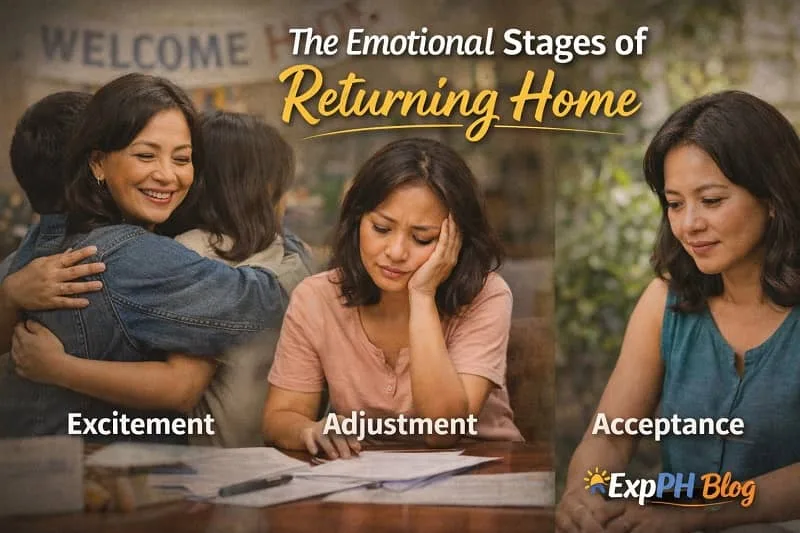
Understanding the emotional stages of reintegration helps normalize your experience during Life After Overseas Work for OFWs. Returning is not a single event but a process. Recognizing each stage allows you to prepare mentally, respond wisely, and avoid unnecessary self doubt.
Stage 1: Excitement and Anticipation
Before returning home, many OFWs feel strong excitement and hope. You imagine simple joys such as family dinners and being present for important milestones. This stage feels uplifting and motivating. However, excitement alone is not preparation. It is important to consider practical realities and daily responsibilities.
Stage 2: Adjustment and Confusion
After several weeks or months, daily life begins to feel different from expectations. You may notice changes such as:
- Children becoming more independent
- A spouse managing routines alone
- Friends living different lifestyles
- Missing your overseas work structure
This adjustment period may feel uncomfortable, yet it is completely normal.
Stage 3: Acceptance and Redefinition
With patience and effort, most OFWs gradually redefine their roles at home. This stage focuses on growth and self awareness. Emotional maturity helps you rebuild your identity based on who you have become through experience rather than who you were before leaving.
Reverse Culture Shock in Life After Overseas Work for OFWs
Many people discuss culture shock when moving abroad, yet few explain reverse culture shock when returning home. During Life After Overseas Work for OFWs, emotional discomfort can appear unexpectedly. Coming back to familiar surroundings may feel unfamiliar after years of adapting overseas.
Reverse culture shock refers to the emotional strain experienced when reentering your home country after long term work abroad. Daily systems, social habits, and expectations may feel different from what you became used to overseas. This reaction is normal and temporary.
The Philippine Commission on Filipinos Overseas offers reintegration support and guidance for returning migrants. You can explore their official resources at https://cfo.gov.ph. Understanding that reverse culture shock is common helps reduce guilt and prevents unnecessary self blame.
Signs of Reverse Culture Shock
You may notice several emotional and behavioral signs during adjustment, such as:
- Feeling impatient with local systems
- Comparing situations to your host country
- Missing your structured overseas routine
- Feeling misunderstood by family
These reactions do not mean you made the wrong decision. They reflect normal adjustment to change.

Rebuilding Your Identity After Years Abroad
One of the most meaningful parts of Life After Overseas Work for OFWs is rebuilding personal identity. Many OFWs connect their self worth to their job title and role as family provider. When overseas work ends, identity questions often surface. You may quietly ask yourself who you are now.
Living abroad shapes discipline, resilience, and independence. Returning home invites reflection on how those traits fit into your new environment. Identity reconstruction takes patience. It involves accepting growth while letting go of labels that no longer define your daily life.
From Breadwinner to Present Parent or Partner
Returning home permanently changes your role within the family. You are no longer only the provider who sends financial support. You are physically present and actively involved in daily life. This shift creates both opportunity and emotional pressure.
You may need to adjust by:
- Learning new parenting dynamics
- Sharing decision making equally
- Accepting your family’s independence
Personal growth requires humility, understanding, and openness to change.
Managing Expectations Before You Return
Unrealistic expectations often create unnecessary emotional stress. To prepare for Life After Overseas Work for OFWs, it is important to clarify both your personal expectations and those of your family. Clear understanding prevents disappointment and supports a smoother emotional transition.

Have Honest Conversations With Your Family
Open discussions create alignment and reduce tension. Before returning, talk about practical and emotional matters such as:
- Income expectations
- Living arrangements
- Household responsibilities
- Business or career plans
Clarity builds mutual understanding. Emotional preparation always includes healthy communication.
Accept That Life Moved Forward
While you were working abroad, your family continued growing and adapting. Children developed independence and routines were formed without you. Accepting this reality prevents resentment. Respect the adjustments they made and approach your return with patience, understanding, and willingness to integrate gradually.
Building Emotional Resilience Before Returning
Emotional resilience is the ability to adapt to change while maintaining inner stability. During Life After Overseas Work for OFWs, resilience helps you respond thoughtfully instead of reacting emotionally. Strengthening this quality before returning home prepares you for challenges and supports long term confidence.
Practice Self Reflection
Self reflection builds emotional awareness and clarity. Before making final decisions, ask yourself meaningful questions such as:
- Why do I want to return
- What fears do I have
- What excites me most
- What worries me
Writing your answers helps organize thoughts and process emotions clearly.
Prepare for Temporary Discomfort
Adjustment is rarely smooth from the beginning. Feeling uncertain or uncomfortable does not mean you failed. Growth often involves temporary difficulty. Remind yourself that change takes time and patience. Accepting discomfort as part of progress builds emotional strength and long term stability.

Preparing for a New Career or Income Path
Financial uncertainty often becomes a major emotional trigger during Life After Overseas Work for OFWs. Even with savings in place, concerns about unstable income can create anxiety. Planning your next income path early helps reduce fear and supports a smoother transition.
Skill Building Before You Return
Developing new skills strengthens confidence and increases emotional stability. When you feel prepared and capable, stress becomes more manageable. Building practical knowledge before returning home allows you to approach opportunities with clarity instead of hesitation.
For OFWs exploring freelancing, entrepreneurship, or career changes, structured online training can provide direction. Platforms such as Udemy offer affordable courses in freelancing, business development, digital marketing, and personal growth that support reintegration planning.
Learning a new skill before returning home creates emotional security because you gain flexible options. Having multiple income possibilities reduces pressure and builds confidence as you enter a new chapter.
Strengthening Mental Health During Transition
Mental health deserves careful attention during Life After Overseas Work for OFWs. Emotional transitions can feel overwhelming if ignored. Protecting your well being helps you manage change with stability and confidence. Prioritizing mental health is a responsible step toward long term reintegration success.
Normalize Seeking Support
Talking to trusted friends, family members, or mentors allows you to process emotions openly. Honest conversations provide reassurance and perspective. Seeking guidance does not show weakness. It reflects maturity and willingness to grow through change instead of facing challenges alone.
Establish Healthy Daily Habits
Before returning home, build routines that support emotional balance such as:
- Regular sleep schedule
- Consistent exercise
- Mindfulness or prayer
- Balanced screen time
Healthy habits improve focus and reduce anxiety during adjustment.

Financial Peace and Emotional Stability
Money and emotions are closely connected. During Life After Overseas Work for OFWs, financial uncertainty can quickly affect confidence and relationships. Emotional preparation must include practical planning. When finances are organized and realistic, stress decreases and decision making becomes clearer.
Create a Reintegration Budget
Before returning home, prepare a simple and realistic budget that includes:
- Emergency funds
- Business startup costs
- Household expenses
- Adjustment period allowance
Clear financial planning reduces emotional pressure and supports smoother reintegration.
Avoid Immediate Big Purchases
Some returning OFWs feel pressure to prove success through large purchases. Avoid rushing into expensive decisions. Give yourself time to adjust emotionally and financially. Stability should come first before making long term commitments that could create unnecessary stress.
Reconnecting With Family on a Deeper Level
Life After Overseas Work for OFWs involves more than career decisions and financial planning. It centers on rebuilding relationships that were maintained from a distance. Returning home provides an opportunity to strengthen emotional bonds and create a deeper sense of belonging within the family.
Spend Intentional Time Together
Avoid rushing immediately into business or work commitments. Prioritize meaningful moments with your loved ones by:
- Eating together regularly
- Having open conversations
- Participating in daily routines
Consistent presence strengthens connection and rebuilds emotional closeness.
Rebuild Trust and Communication
Children and spouses may need time to adjust to your constant presence at home. Be patient and attentive. Listen carefully and respect existing routines. Rebuilding trust requires steady communication, empathy, and willingness to grow together as a family.

Setting a Clear Vision for Your Next Chapter
Life After Overseas Work for OFWs becomes clearer when guided by purpose. Emotional stability grows when you understand where you are heading. Without direction uncertainty increases. A clear vision provides motivation and helps you make thoughtful decisions about career family and personal growth.
Define Your Long Term Goals
Take time to reflect on important questions such as:
- Do I want to start a business
- Do I want to work locally
- Do I want to build passive income
Clear answers create direction and reduce emotional confusion.
Break Goals Into Small Steps
Large goals can feel overwhelming if left undefined. Divide them into monthly or quarterly targets that are realistic and measurable. Small consistent progress builds confidence and keeps motivation strong during transition.
Accepting That Growth Includes Change
You are no longer the same person who first left the Philippines. Years of working abroad shaped your mindset skills and resilience. Life After Overseas Work for OFWs requires embracing this growth. Accepting change allows you to move forward with confidence instead of holding onto outdated expectations.
Growth does not erase your past sacrifices or experiences. It strengthens them and adds deeper understanding to your journey. Every challenge you faced contributed to who you are today. Be proud of your progress and carry those lessons into your next chapter.

Common Emotional Mistakes OFWs Should Avoid
Preparing for Life After Overseas Work for OFWs includes recognizing emotional pitfalls that can slow progress. Awareness helps you respond wisely instead of reacting impulsively. Avoiding common mistakes strengthens stability and supports a healthier transition back into family and community life.
Ignoring Emotional Fatigue
Years of sacrifice often create hidden stress that surfaces during reintegration. Give yourself permission to rest and recover. Do not overload your schedule with commitments immediately. Recovery time allows your mind and body to adjust properly.
Comparing Yourself to Others
Every OFW journey follows a different timeline. Comparing savings business progress or achievements creates unnecessary pressure. Focus on your own goals and circumstances. Personal growth happens at different speeds for everyone.
Making Decisions Out of Fear
Fear can trigger rushed financial or career decisions. Pause before committing to major changes. Reflect carefully and evaluate long term consequences. Thoughtful planning leads to stronger and more stable outcomes.
Creating a Personal Reintegration Plan
A clear structure reduces uncertainty and builds confidence during Life After Overseas Work for OFWs. Without a plan, emotions may feel overwhelming. Creating a personal reintegration plan provides direction and helps you transition from overseas employment into a stable home based routine.
Your reintegration plan can include important elements such as:
- Timeline for returning
- Savings target
- Skill development plan
- Family adjustment period
- Career or business exploration
Writing your plan down increases emotional security and strengthens commitment.

Embracing Gratitude and Closure
Before returning home take time to reflect on your overseas journey. Life After Overseas Work for OFWs becomes healthier when you acknowledge both struggles and achievements. Reflection creates emotional closure and prepares your heart for a new beginning.
Consider writing down meaningful reminders such as:
- Lessons learned
- Skills gained
- Challenges overcome
- Relationships formed
Recognizing these experiences allows you to move forward peacefully with gratitude and confidence.
Final Thoughts on Life After Overseas Work for OFWs
Life After Overseas Work for OFWs is not simply the closing of one chapter. It represents a meaningful transformation shaped by sacrifice growth and resilience. Emotional preparation is not a sign of weakness but a reflection of wisdom and maturity. When you understand the stages of adjustment rebuild your identity protect your mental health develop practical skills and communicate clearly with your family you create a stronger foundation for reintegration.
You worked hard for years to secure a better future for the people you love. Returning home deserves the same level of thoughtful preparation. By investing in your emotional readiness you protect your relationships strengthen your confidence and increase long term stability. The goal is not only to come home but to build a life that feels fulfilling peaceful and truly rewarding.
You may also find these related guides helpful.
- Why Minimalist Living Works for Filipinos
- How to Create a Productive Workspace at Home
- How to Stay Productive When Working from Home
- Top 10 Small Business Ideas in the Philippines for 2026
- 10 Best Freelance Websites for Filipinos
Frequently Asked Questions
What does it mean to prepare emotionally for life after overseas work?
Preparing emotionally means understanding your feelings about returning home, accepting upcoming changes, and developing resilience to handle adjustments in family life, career, and identity.
Why is emotional preparation important for OFWs returning home?
Emotional preparation helps OFWs manage expectations, reduce anxiety, prevent conflicts, and transition smoothly into new routines, relationships, and responsibilities after years of working abroad.
When should OFWs start preparing emotionally for their return?
OFWs should begin emotional preparation months before returning home, allowing enough time to reflect, plan, communicate with family, and mentally adjust expectations realistically.
What emotional challenges do OFWs commonly face after returning?
Common challenges include reverse culture shock, identity confusion, financial anxiety, relationship adjustments, and feeling uncertain about long term direction or purpose.
How can OFWs manage reverse culture shock effectively?
OFWs can manage reverse culture shock by staying patient, avoiding constant comparisons, maintaining open communication, and gradually adapting to local systems and daily routines.
How does communication help during reintegration?
Clear communication reduces misunderstandings, aligns expectations, strengthens relationships, and helps family members adjust together during the transition back to living under one roof.
Can skill development improve emotional confidence?
Yes, learning new skills increases self confidence, provides income options, reduces uncertainty, and gives returning OFWs a sense of control over their future.
How can OFWs rebuild their identity after working abroad?
OFWs can rebuild identity by redefining goals, embracing new roles at home, reflecting on lessons learned overseas, and focusing on personal growth beyond employment.
What role does financial planning play in emotional stability?
Financial planning reduces stress, creates security, supports business or career transitions, and allows OFWs to focus on relationships and personal development.
Is it normal to feel mixed emotions about returning home?
Yes, feeling excited yet anxious is normal. Mixed emotions reflect change, growth, and the importance of this major life transition.
Learning Hub Quiz!
Test your understanding of how OFWs can prepare wisely.
Results


#1. What is a common emotional challenge after returning home?
#2. Why is emotional preparation important for OFWs?
#3. What helps reduce reintegration stress?
#4. What should OFWs clarify before returning?
#5. How can skill building help emotionally?
#6. What is reverse culture shock?
#7. Why avoid major purchases immediately?
#8. What strengthens identity after returning?
#9. What supports mental health during transition?
#10. What is key to long term success after overseas work?
Thank you for taking the time to learn with us.
Share your experience in the comments below. Your story could inspire and guide fellow OFWs who are preparing for their next chapter.

A Filipino web developer with a background in Computer Engineering. Founder of ExpPH Blog and ExpPH Business Guide, creating practical content on OFW guidance, business, finance, freelancing, travel, and lifestyle. Passionate about helping Filipinos grow, he shares insights that educate, empower, and inspire readers nationwide.