
How OFWs Can Evaluate If It Is Time to Change Jobs
Working abroad is not just a career decision. For many Filipinos, it is a life commitment made for family, stability, and long term financial goals. Over time, however, even the most stable overseas job can begin to feel uncertain. This is where the question of an OFW job change becomes serious and deeply personal.
Should you stay because it is safe?
Should you leave because growth has stopped?
Is it the right time financially, emotionally, and professionally?
Many OFWs silently wrestle with these questions while carrying financial responsibilities for their families. This comprehensive guide will help you evaluate your situation clearly and confidently. The goal is not to push you toward resigning. It is to help you make a wise and informed decision that protects your career, your income, and your family’s future.
Table of Contents
Understanding the Reality Behind an OFW Job Change
Changing jobs as an Overseas Filipino Worker is more complex than switching jobs locally in the Philippines. An OFW job change involves visa conditions, employment contracts, recruitment rules, financial responsibilities, and family expectations. Each factor carries real consequences that can affect your legal status and long term stability.
Before making any decision, take time to follow a clear and structured evaluation process. Carefully assess your finances, career direction, health, and legal obligations. A well planned approach reduces risk and helps ensure that your next move supports both your professional growth and your family’s security.
Signs It Might Be Time for an OFW Job Change
Every OFW situation is different, yet certain warning signs often suggest that a transition may be necessary. Recognizing these patterns early helps you avoid rushed decisions. A thoughtful review of your income, health, and work conditions allows you to evaluate whether an OFW job change is reasonable and timely.
Stagnant Salary With No Clear Growth Path
If your salary has not increased for several years and promotion opportunities remain unclear, you may be experiencing long term stagnation. Rising living expenses abroad can slowly reduce your real savings and financial progress, even if your income appears stable on paper.
Ask yourself:
- Has my income improved in the last two years?
- Are there realistic promotion opportunities?
- Is my employer transparent about career growth?
If your honest answer to most questions is no, it may be time to seriously evaluate an OFW job change.
Chronic Burnout and Health Concerns
Your health should never be traded for income. Persistent exhaustion, anxiety, and unmanaged stress can cause lasting physical and mental effects. Burnout is officially recognized by the World Health Organization as an occupational phenomenon, which you can review here:
https://www.who.int/news/item/28-05-2019-burn-out-an-occupational-phenomenon-international-classification-of-diseases
If your job disrupts sleep, weakens focus, or affects emotional stability, this is not weakness. It is a serious warning that deserves attention.
Contract Violations or Unfair Treatment
When an employer violates contract terms, delays benefits, or changes work conditions without agreement, the issue goes beyond dissatisfaction. It becomes a legal and ethical concern that may place your employment security at risk.
For official assistance, OFWs can consult the Department of Migrant Workers through their website:
https://dmw.gov.ph/
In these situations, an OFW job change is not only about career growth. It is about protection, dignity, and long term security.
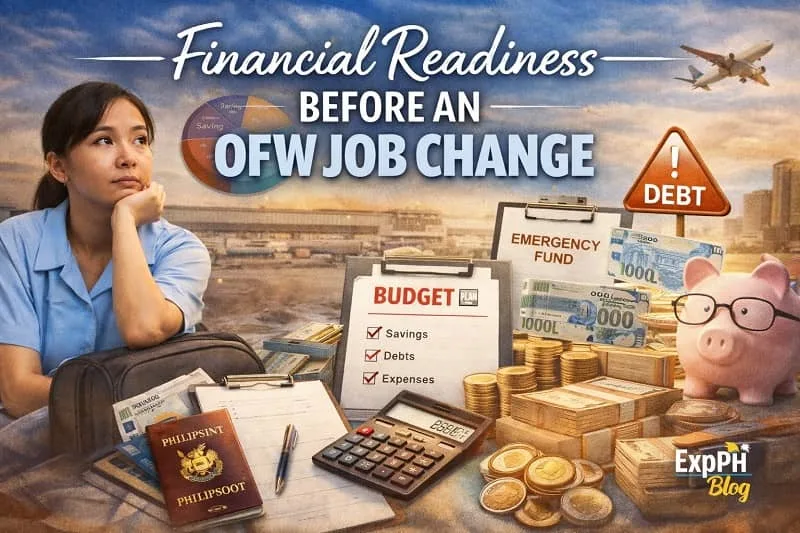
Financial Readiness Before an OFW Job Change
An OFW job change should never begin with emotion alone. Financial preparation is your safety net. Without savings and planning, even a positive opportunity can become stressful. Strong financial readiness gives you confidence, protects your family, and allows you to transition without panic.
Emergency Fund Check
Before resigning, prepare at least three to six months of living expenses. This buffer protects you if job searching takes longer than expected or processing is delayed. For OFWs, essential expenses often include:
- Housing or accommodation
- Visa processing costs
- Agency fees
- Travel expenses
- Family remittances
If your savings cannot cover these during a temporary income gap, focus on building reserves first.
Debt Situation
Outstanding debts increase pressure during career transitions. High interest loans and credit card balances can quickly drain savings if income stops. Before considering an OFW job change, review your financial obligations carefully.
Create a clear summary of:
- Total debt amount
- Monthly repayment
- Interest rates
If possible, reduce or restructure debt first to improve financial stability.
Remittance Responsibilities
Many OFWs provide consistent support to parents, siblings, or children. A sudden income interruption can affect household stability in the Philippines. Evaluate how long your family can manage without full remittances. An OFW job change should be planned carefully when dependents rely heavily on your earnings.

Career Growth Evaluation
Income supports your present needs, but career growth protects your future. A stable salary without development can limit long term progress. When evaluating an OFW job change, look beyond monthly pay and examine whether your current role strengthens your skills and professional value.
Are You Still Learning?
If your tasks feel repetitive and you no longer gain new competencies, your competitiveness may slowly decline. Global industries continue evolving due to automation, digital tools, and remote systems. When your position stops challenging you, future opportunities may shrink. An OFW job change may become necessary to secure growth and long term relevance.
Are Your Skills Still In Demand?
Study current job postings in your host country and in international markets. Compare your qualifications with what employers now require. Focus on the following factors:
- Required certifications
- Salary range
- Skill demand
If your abilities no longer match market expectations, prepare through training before making an OFW job change.
Emotional Readiness for an OFW Job Change
An OFW job change is not only a financial decision. Your emotions influence timing, confidence, and long term satisfaction. When feelings are unclear, decisions may become rushed or delayed. Emotional readiness allows you to act with calm judgment rather than pressure or temporary frustration.
Fear vs Logic
Ask yourself whether you remain in your job because it offers stability or because you fear uncertainty. Fear driven choices often create regret, while planned decisions encourage growth and confidence.
Write down:
- What you gain if you stay
- What you gain if you leave
- What you risk in both scenarios
Clear comparison reduces emotional confusion and supports rational thinking.
Family Alignment
An OFW job change affects your household, not only your career. Speak openly with your spouse or trusted family members about income, timing, and expectations. Their understanding provides emotional stability. Shared planning strengthens unity and ensures that your decision supports both personal and family goals.

Market Conditions and Timing
An OFW job change depends not only on personal readiness but also on market timing. Even qualified professionals can struggle if hiring demand is low. Understanding economic conditions and industry trends helps you move strategically rather than emotionally.
Is the Job Market Strong?
Study current employment patterns in your host country. Some industries hire consistently, while others follow seasonal cycles. Before making any decision, evaluate real demand in your field.
Check the following:
- Are companies actively hiring?
- Are salaries competitive?
- Is visa sponsorship available?
Never resign without confirming strong market demand.
Contract Completion Timing
Leaving before completing your contract may affect future applications and professional references. Review your employment agreement carefully to understand penalties or restrictions. If any terms are unclear, consult official labor support channels. A legally informed decision protects your reputation and long term career opportunities.
Risk Assessment Framework for OFWs
A structured evaluation helps remove guesswork from an OFW job change decision. Instead of relying on emotions alone, use a simple scoring system to measure your current situation objectively. This method allows you to see strengths and weaknesses clearly before making any final move.
Score each category from 1 to 5, where 1 means poor and 5 means excellent:
- Job satisfaction
- Salary competitiveness
- Skill growth
- Health impact
- Financial readiness
- Market opportunity
Add your total score after completing the list.
A low total score may signal strong reasons to consider an OFW job change. A higher score suggests relative stability, though improvement planning may still strengthen your long term security.
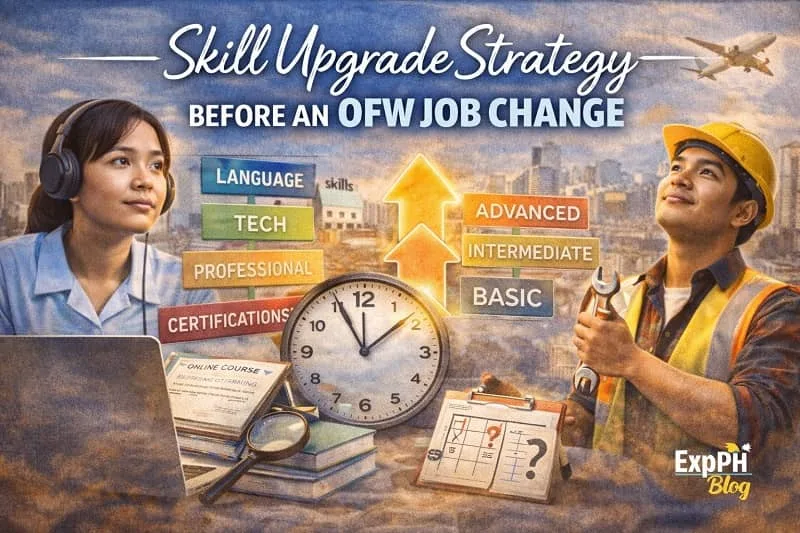
Skill Upgrade Strategy Before an OFW Job Change
Preparation should always come before resignation. Strengthening your qualifications reduces financial risk and improves bargaining power. When you upgrade skills before an OFW job change, you build confidence, widen career options, and prepare yourself for stronger compensation and long term professional security.
Identify Skill Gaps
Begin by reviewing job postings for your target role. Compare employer requirements with your current skills and certifications. Identify areas where you fall short and focus on closing those gaps with practical training.
Common skill gaps for OFWs include:
- Advanced technical certifications
- Digital literacy
- Communication skills
- Leadership training
- Freelancing skills
Clear identification allows you to create a focused improvement plan instead of guessing what to study.
Upgrade Skills Through Structured Learning
Investing in structured learning strengthens your employability and salary negotiation power. Many OFWs improve their qualifications through online professional courses that offer flexible schedules suited for overseas workers.
If you are looking for career focused training in technology, business, freelancing, leadership, or certification preparation, you can explore available courses here: https://www.udemy.com/
Choose programs aligned with your industry rather than random trending topics. Focus on certifications and practical skills that directly support your target position. Strengthening your expertise before an OFW job change makes your transition strategic, stable, and professionally competitive.
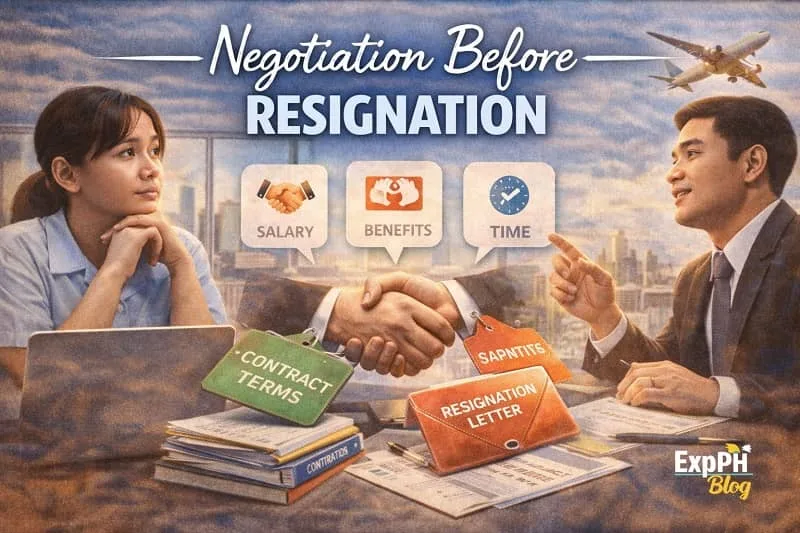
Negotiation Before Resignation
An OFW job change is not always the first solution. In some cases, improvement is possible within your current workplace. Before submitting a resignation letter, explore whether growth, better compensation, or improved conditions can be achieved through professional discussion and clear performance evaluation.
Request Performance Review
Schedule a formal performance review with your supervisor. Prepare clear documentation that shows your value and contribution to the company. Present relevant information such as:
- Your achievements
- Market salary comparison
- Added responsibilities
- Proposed growth path
Professional communication can result in:
- Salary adjustment
- Promotion
- Better schedule
- Additional benefits
Negotiating respectfully may provide progress without requiring an immediate OFW job change.
When an OFW Job Change Is the Right Decision
After careful evaluation, certain conditions clearly justify moving forward with an OFW job change. When risks outweigh benefits and improvement seems unlikely, staying may delay necessary progress. A decision based on facts, not frustration, protects your long term safety and career direction.
Unsafe Working Conditions
If your physical safety or mental well being is at risk, take the situation seriously. No salary justifies unsafe environments. Seek immediate assistance from proper authorities or labor offices. Protecting your health and legal rights should always come before maintaining employment.
Repeated Contract Violations
If your employer repeatedly violates agreed terms despite formal reporting, the issue becomes serious. Ongoing noncompliance signals instability and lack of accountability. In this case, remaining in the same position may only increase long term risk and uncertainty.
Zero Growth After Honest Effort
An OFW job change becomes reasonable when you have genuinely tried to improve your situation. Ask yourself if you have:
- Communicated professionally
- Requested evaluation
- Upgraded your skills
- Waited for opportunities
If progress remains absent despite consistent effort, pursuing better opportunities may be justified.
Creating a Transition Plan
An OFW job change should never begin without a clear transition plan. Careful preparation reduces financial risk and protects your professional reputation. Planning each step allows you to move forward with confidence while safeguarding your legal status and long term career opportunities.
Step 1: Secure Job Offer First
Whenever possible, obtain a confirmed job offer before resigning. A signed contract or official offer letter provides income security and reduces uncertainty. This approach protects you from unexpected unemployment and strengthens your position during negotiations.
Step 2: Review Legal and Visa Requirements
Examine visa conditions and host country regulations before making any transfer. Ensure that your move complies with immigration laws and employer policies. Understanding legal requirements prevents complications that could affect your employment record or future applications.
Step 3: Prepare Financial Buffer
Build sufficient savings before your transition. A financial cushion covers living expenses, processing fees, and possible delays between contracts. Strong preparation reduces stress and allows you to focus on adjusting to your new role.
Step 4: Exit Professionally
Resign respectfully and complete required notice periods. Maintain positive communication with supervisors and colleagues. Professional exits protect your references and preserve valuable overseas connections that may support your career in the future.
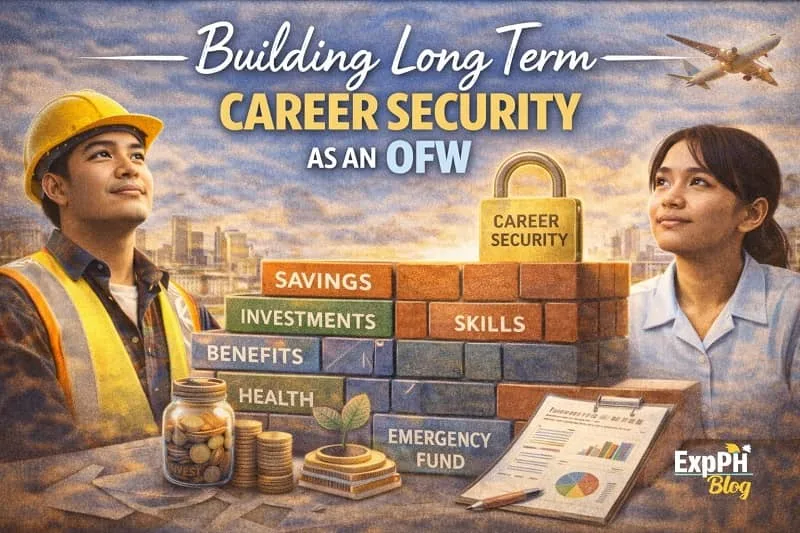
Building Long Term Career Security as an OFW
An OFW job change should not only address current dissatisfaction. It should strengthen your long term stability and future opportunities. Every decision you make abroad should support sustainable income, professional growth, and a clear path toward your personal and family goals.
Diversify Income Skills
Relying on a single employer increases financial risk. Developing additional income skills creates flexibility and security. Consider building capabilities such as:
- Remote work skills
- Freelancing capabilities
- Small online business knowledge
Multiple income streams reduce dependency and provide protection during unexpected career transitions.
Long Term Career Vision
Clear direction prevents impulsive decisions. Before making an OFW job change, reflect on your future plans and professional goals.
Ask yourself:
- Where do I want to be in five years?
- Do I plan to return to the Philippines?
- What industry will remain strong long term?
Your current decision should align with your long term career vision.
Common Mistakes During an OFW Job Change
An OFW job change requires careful planning. Many problems arise not from the decision itself but from avoidable mistakes. Recognizing common errors helps you protect your income, legal status, and professional reputation while making a smoother and more secure transition.
Avoid these errors:
- Ignoring visa regulations
- Underestimating job search timelines
- Resigning emotionally without savings
- Believing promises without written contract updates
- Switching jobs for small salary differences without growth opportunity
Strategic thinking and disciplined planning protect the hard work you built abroad and increase your chances of long term success.
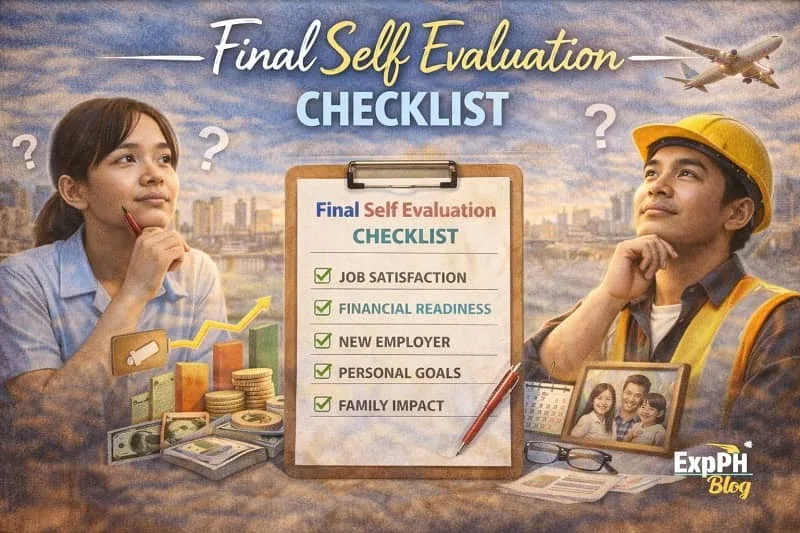
Final Self Evaluation Checklist
Before confirming your OFW job change decision, pause and review your readiness. A final assessment helps ensure that your move is planned, responsible, and aligned with long term goals. Honest answers reduce risk and strengthen your confidence.
Confirm the following:
- I have financial backup
- I upgraded necessary skills
- I discussed plans with family
- I understand visa implications
- I have researched the job market
- I am moving for growth, not fear
If most of your answers are yes, you are likely prepared to move forward with clarity and stability.
Conclusion: Make Your OFW Job Change Decision With Clarity
Changing jobs abroad is never simple. It requires responsibility, careful risk assessment, and personal courage. Yet remaining in the wrong situation can be just as damaging to your income, health, and long term progress. An OFW job change should be grounded in solid preparation and honest evaluation. Consider your financial readiness, skill competitiveness, health protection, legal understanding, and alignment with long term career goals before making a final decision.
Your purpose is not only to work overseas but to build a stable and dignified future for yourself and your family. Every career move should strengthen that foundation. Evaluate your situation wisely, prepare with discipline, and act only when your plan is clear and sustainable. When your decision is based on strategy rather than emotion, your OFW job change becomes a step toward growth, security, and lasting success.
Uncover more helpful posts in the list below
- How OFWs Can Build Multiple Income Streams Safely
- How OFWs Can Maintain Discipline With Money Abroad
- Income Diversification Ideas That Do Not Require Big Capital
- Best Business Niches Returning OFWs Can Focus on in 2026
- Discipline-Building Habits That Improve Financial Stability
Frequently Asked Questions
1. How do I know if it is really time for an OFW job change?
If you feel persistent burnout, no salary growth, contract concerns, or limited career development despite effort, it may signal serious evaluation for an OFW job change.
2. Should I resign before finding another job abroad?
Resigning without a confirmed offer increases financial risk. Whenever possible, secure a new employment contract first to protect income stability and visa status.
3. How much savings should I prepare before changing jobs?
Ideally, prepare three to six months of living expenses, including remittances, accommodation, visa processing, and emergency costs to reduce stress during transition.
4. Can upgrading my skills help before deciding to change jobs?
Yes, improving certifications and in-demand skills increases employability, salary negotiation power, and confidence, making any potential OFW job change more strategic.
5. What if my employer is violating my contract?
Document all incidents, review your signed contract, and contact official labor offices or Philippine authorities for proper guidance before making decisions.
6. Is job hopping bad for my overseas career record?
Frequent unexplained job changes may raise concerns for future employers, so ensure each transition has clear professional reasons and documented achievements.
7. Should I discuss my plans with my family first?
Yes, because an OFW job change affects remittances and household stability. Open discussion helps align expectations and strengthens emotional support.
8. How can I compare my salary with market rates abroad?
Research job listings, recruitment sites, and industry salary reports in your host country to determine if your compensation remains competitive.
9. What risks should I consider before changing jobs overseas?
Consider visa regulations, contract penalties, financial obligations, job market demand, and potential income gaps before finalizing your decision.
10. Can staying too long in one job limit my growth?
Yes, remaining in a stagnant role without skill development may reduce competitiveness and future earning potential in the global labor market.
Learning Hub Quiz!
Test your readiness with this quick quiz. Each question helps you reflect on financial stability, career growth, and smart decision making before taking action.
Results


#1. What is the safest step before resigning abroad?
#2. How many months of savings are ideal before an OFW job change?
#3. What signals career stagnation?
#4. Why upgrade skills before changing jobs?
#5. What should you review before transferring employers?
#6. What is a healthy reason for job change?
#7. What risk must OFWs consider first?
#8. What should influence your decision most?
#9. What should you discuss with family?
#10. When is job change justified?
Thank you for being part of the ExpPH Blog community.
Share your experience in the comments and tell us what stage you are in right now. Your story might help fellow OFWs.

A Filipino web developer with a background in Computer Engineering. Founder of ExpPH Blog and ExpPH Business Guide, creating practical content on OFW guidance, business, finance, freelancing, travel, and lifestyle. Passionate about helping Filipinos grow, he shares insights that educate, empower, and inspire readers nationwide.