

Daily Expenses OFWs Often Underestimate Abroad
Living and working overseas is a life-changing opportunity for many Overseas Filipino Workers. Higher income, international experience, and the chance to support family back home are powerful motivations. However, many OFWs discover too late that their actual spending abroad is much higher than expected.
The biggest challenge is not always rent or airfare. It is the OFW daily expenses abroad that quietly eat into savings. Small costs repeated every day can slowly reduce the money meant for remittances, emergency funds, or long-term goals.
This guide breaks down the most commonly underestimated daily expenses OFWs face abroad. It also explains why these costs matter, how they differ by country, and what practical steps OFWs can take to manage them better. Whether you are a first-time OFW or already years into working overseas, this article will help you budget smarter and avoid financial stress.
Understanding OFW Daily Expenses Abroad
Before examining specific expenses, it helps to understand why daily costs abroad often feel heavier than expected. Many OFWs focus on major expenses while underestimating how everyday spending affects their budget.
Many OFWs prepare for big items like rent, placement fees, and visas. Smaller recurring costs are often ignored at first. Daily food choices, transport habits, communication needs, and lifestyle adjustments slowly accumulate and reduce savings over time.

Why daily expenses feel more expensive overseas
Several factors make daily expenses abroad more challenging than in the Philippines. These challenges are often subtle at first, but they strongly influence daily spending habits and slowly increase overall costs for many OFWs.
- First, currency value plays a role. Even when OFWs earn more abroad, the higher cost of living reduces real purchasing power. Prices that seem affordable locally become expensive once converted to pesos, especially for food and basic services.
- Second, work schedules affect spending. Long hours, night shifts, and split schedules limit time for planning meals or transport. Because of this, many OFWs rely on convenience food, taxis, or paid services, which increases daily expenses.
- Third, emotional spending is common. Homesickness, stress, and isolation can influence spending behavior. Many OFWs spend on food, entertainment, or shopping for comfort, which quietly adds to daily costs over time.
Understanding these patterns helps OFWs take control of their OFW daily expenses abroad before small, repeated costs turn into long-term financial strain.
Food and Daily Meals
Food is one of the most underestimated parts of OFW daily expenses abroad. Many expect higher food prices overseas, yet few realize how quickly small daily choices affect the budget. Regular meals, snacks, and convenience food slowly add up and reduce savings if not monitored early.
Eating out versus home cooking
In many countries, eating out costs much more than cooking at home. A single fast food meal may feel affordable, but frequent dining out can consume a large share of income. Long work hours push many OFWs toward convenience, yet home cooking even a few times weekly can greatly reduce expenses. Batch cooking on rest days is a proven and practical habit.
Work meals and snacks
Snacks, coffee, and drinks during work hours are often overlooked expenses. Daily coffee runs, bottled water, or vending machine snacks seem harmless but add up over time. Preparing snacks and drinks at home is a simple way to control OFW daily expenses abroad while still staying comfortable and energized.
Cultural food adjustments
Many OFWs spend more because they miss Filipino food. Imported ingredients and Filipino restaurants abroad usually cost more than local options. Balancing comfort food with affordable local meals helps control spending while still enjoying familiar flavors that make life abroad feel more like home.
Transportation and Daily Commute Costs
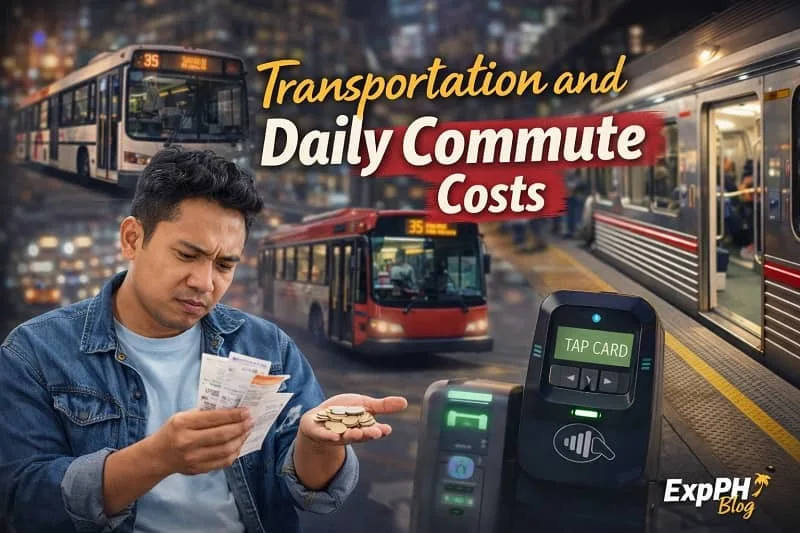
Transportation is another area where OFWs often underestimate daily spending. While commuting seems routine, transport costs quickly accumulate through daily fares, convenience travel, and location choices. Without proper planning, these regular expenses can quietly reduce savings and increase overall OFW daily expenses abroad.
Public transport expenses
Many OFWs expect public transportation to be affordable. In reality, transport costs in cities like Dubai, Hong Kong, London, and Singapore are often high when used daily. Regular fares, reloadable cards, and peak-hour pricing can raise monthly transport expenses more than most workers anticipate.
Taxis, ride-hailing, and convenience travel
After long shifts or during bad weather, taxis and ride-hailing services feel necessary. Frequent use, however, significantly increases OFW daily expenses abroad. Limiting taxis to emergencies and planning routes ahead of time can help control costs without sacrificing safety or comfort.
Work location changes
Some OFWs change job sites or housing without considering transport impact. A cheaper room located farther from work may lead to higher daily commuting costs. Over time, these added expenses can cancel out rent savings and strain the monthly budget.
Communication and Connectivity Costs
Staying connected is essential for OFWs, but communication expenses are often underestimated. Daily use of mobile data, home internet, and international calls can quietly increase monthly spending. Without careful planning, these recurring costs become part of OFW daily expenses abroad that are easy to overlook.
Mobile data and call plans
Many OFWs depend on mobile data for communication, navigation, and entertainment. Choosing the wrong plan can result in high monthly bills. Comparing prepaid and postpaid options helps new arrivals select plans that match actual usage and avoid unnecessary charges.
Internet subscriptions
Shared accommodations often require splitting internet costs. Even when divided, the monthly share becomes a fixed expense. Including internet fees in budgeting helps OFWs manage OFW daily expenses abroad more accurately and prevents unexpected shortfalls.
International calls and messaging
Messaging apps reduce costs, but some OFWs still rely on international calls during emergencies. These calls can be expensive and should be planned in advance. Treating them as regular budget items helps avoid sudden financial pressure.

Personal Care and Daily Necessities
Personal care items and daily necessities often cost more abroad than in the Philippines. These expenses may seem minor, but they are recurring and unavoidable. Without planning, small daily purchases slowly increase OFW daily expenses abroad and reduce monthly savings.
Toiletries and grooming
Shampoo, soap, toothpaste, and grooming services like haircuts are usually more expensive overseas. Because these items are bought regularly, their cost is easy to ignore. Buying in bulk and choosing store brands can reduce spending while maintaining acceptable quality.
Laundry costs
In many accommodations, laundry is not free. Coin-operated machines or paid services add to OFW daily expenses abroad. Washing clothes in batches and air-drying when possible helps lower monthly costs without sacrificing cleanliness or comfort.
Health-Related Daily Expenses
Health-related expenses are essential yet often underestimated, especially by younger OFWs. Small health costs appear manageable at first, but regular purchases add up over time. Planning for basic healthcare needs helps OFWs avoid financial strain and maintain well-being while working abroad.
Over-the-counter medicines
Basic medicines such as pain relievers, vitamins, and cold treatments often cost more abroad. Many OFWs bring supplies from the Philippines, but these eventually run out. Budgeting for regular restocking helps prevent unexpected health expenses and ensures access to needed medication.
Preventive health spending
Small expenses like vitamins, supplements, or healthy food choices are often cut to save money. This can lead to bigger health expenses later.
According to the World Health Organization, preventive health practices significantly reduce long-term healthcare costs and improve worker productivity. This highlights why budgeting for health-related daily expenses is essential for OFWs.
Social Life and Lifestyle Spending
Social life is a significant part of OFW daily expenses abroad, especially in shared housing or busy cities. Regular social activities provide connection and stress relief, but frequent spending on leisure can quietly reduce savings if limits are not clearly set.
Social gatherings and eating out
Invitations from coworkers or friends often involve meals, celebrations, or group activities. Accepting every invitation can strain your budget. Learning when to join and when to decline helps balance social life with long-term financial stability abroad.
Entertainment and subscriptions
Streaming services, gaming subscriptions, and online entertainment offer comfort during rest days. However, multiple subscriptions increase monthly expenses. Reviewing active services regularly helps avoid paying for platforms that are rarely used or no longer needed.
Shopping and impulse buying
Online shopping is convenient overseas, and frequent sales encourage impulse purchases. Small items bought often seem harmless, but repeated spending can quietly drain savings and affect long-term financial goals.

Sending Money Home and Hidden Transfer Costs
Remittances are central to the OFW journey, yet transfer-related costs are often underestimated. Small charges applied regularly can reduce take-home income. Understanding how fees and exchange rates affect remittances helps OFWs protect earnings and manage OFW daily expenses abroad more effectively.
Transfer fees
Even small remittance fees become costly when transfers are made often. Sending money weekly or biweekly increases total expenses over time. Choosing reliable services with reasonable charges helps reduce OFW daily expenses abroad and keeps more money for family support.
Exchange rate differences
Some remittance services advertise low fees but offer weaker exchange rates. This results in less money received at home. Comparing total transfer costs, not just visible fees, allows OFWs to make smarter remittance decisions.
Housing-Related Daily Costs Beyond Rent
Rent is usually planned in advance, but many daily housing-related costs are overlooked. Utilities and shared expenses may seem minor, yet they are recurring. Without budgeting for these items, housing costs can quietly increase OFW daily expenses abroad.
Utilities and shared bills
Electricity, water, and gas costs change by season. Heating or cooling during extreme weather can raise monthly bills significantly. Monitoring usage and sharing costs fairly helps keep utility expenses manageable in shared housing.
Maintenance and shared expenses
Shared housing often requires contributions for cleaning supplies, minor repairs, or common household items. These small payments occur regularly and should be included in monthly budgets to avoid surprise expenses and financial stress.
Skill Development as a Way to Offset Daily Expenses
Managing OFW daily expenses abroad is not only about reducing costs. Increasing earning potential plays an equally important role. Improving skills allows OFWs to strengthen job security, access better opportunities, and maintain a stable lifestyle despite rising daily expenses.
Why skills matter for OFWs abroad
Upskilling opens doors to higher-paying roles, promotions, and additional income opportunities. With stronger skills, OFWs can offset daily expenses more effectively without lowering their quality of life or relying solely on strict budgeting.
Online skill-building for income stability
Many OFWs turn to online learning to improve skills in freelancing, digital work, language training, and career advancement as a way to strengthen income stability abroad.
A practical option is Udemy, which offers online courses in freelancing, remote work skills, personal finance, and career development. These courses can help OFWs increase earning potential and manage financial pressure caused by daily expenses abroad.
OFWs can explore relevant courses on Udemy and choose skills that align with their current work or long-term career goals for better financial balance.

Psychological Costs That Affect Spending
Emotional well-being has a strong influence on OFW daily expenses abroad. Living far from family, adapting to new environments, and handling work pressure can affect spending habits. When emotions guide decisions, daily costs often increase without clear awareness.
Stress and comfort spending
Stress often pushes OFWs to spend on food, shopping, or entertainment as a coping method. These purchases feel comforting at the moment but add to daily expenses over time. Recognizing emotional triggers helps reduce unnecessary spending and encourages healthier financial habits.
Homesickness and lifestyle inflation
Some OFWs spend more to recreate a familiar lifestyle abroad. This may include premium food, gadgets, or frequent trips. While understandable, these choices should be balanced with financial goals to prevent lifestyle inflation from reducing long-term savings.
Practical Strategies to Control OFW Daily Expenses Abroad
Understanding expenses is useful only when paired with action. Awareness alone does not reduce spending. Applying simple and consistent habits helps OFWs control daily costs, build discipline, and protect savings while managing OFW daily expenses abroad more effectively.
Track daily spending honestly
Writing down daily expenses, even for a short time, helps reveal spending patterns and problem areas. This habit creates awareness of where money goes and makes it easier to adjust choices before small costs become long-term financial issues.
Set weekly spending limits
Weekly spending limits feel easier to manage than monthly budgets. They help control impulsive purchases and provide quicker feedback on habits. Adjusting spending weekly allows OFWs to correct mistakes early and stay within their financial plan.
Separate needs from wants
Clearly separating essential expenses from optional spending simplifies decision-making. This distinction becomes especially helpful during stressful weeks when emotions influence choices. Prioritizing needs first helps prevent overspending and keeps daily expenses under control.
Review expenses regularly
What worked before may not work now. Regular reviews help adjust budgets as income, location, or lifestyle changes. Revisiting expenses allows OFWs to stay flexible and maintain control over daily spending abroad.

Building Long-Term Financial Stability Abroad
Daily expenses are only one part of a larger financial picture. How OFWs manage everyday spending affects savings, security, and future plans. Controlling daily costs creates a strong foundation for long-term stability while working and living abroad.
Emergency funds
Unexpected events abroad can be expensive and stressful. An emergency fund protects OFWs from debt and forced borrowing during job loss, health issues, or urgent travel. Setting aside small amounts regularly helps build financial security over time.
Long-term goals
Saving for a business, property, or retirement becomes easier when daily expenses are controlled. Clear goals provide motivation to manage spending wisely and stay focused on long-term financial progress while working overseas.
Financial discipline over perfection
No one manages expenses perfectly at all times. Small mistakes are normal. Consistency in financial habits matters more than strict rules. Steady discipline helps OFWs stay on track and recover quickly from spending setbacks.
Conclusion: Managing OFW Daily Expenses Abroad with Awareness and Balance
Living abroad offers valuable opportunities, yet it also brings financial challenges that many OFWs underestimate. The greatest risk to savings is often not rent or large bills but small daily expenses that repeat and grow over time. Food choices, transport habits, and lifestyle spending may seem minor individually, but together they can quietly reduce income and delay financial goals if left unchecked.
By understanding OFW daily expenses abroad, OFWs can make better financial decisions and reduce unnecessary stress. Awareness helps identify problem areas, while planning creates structure and discipline. Skill development adds another layer of protection by improving earning potential. With the right mindset and practical habits, OFWs can enjoy life overseas and still build a secure future for themselves and their families back home.
These related posts support deeper learning.
- Best Saving Strategies for Filipinos With Overseas Income in 2026
- What Most OFWs Wish They Knew Before Working Abroad
- How to Start Investing with Just ₱1,000 in the Philippines
- How to Connect with a Filipino Community Abroad
- Weekend Relaxation Tips for OFWs
FAQs About Daily Expenses OFWs Often Underestimate Abroad
What are the most common daily expenses OFWs underestimate abroad?
Many OFWs underestimate food costs, daily transport, mobile data, work meals, toiletries, laundry fees, and small lifestyle spending that adds up over time.
Why do daily expenses feel higher for OFWs overseas?
Daily expenses feel higher because of stronger currencies, higher cost of living, work schedules, and frequent convenience spending caused by stress and time limitations.
How can OFWs reduce daily food expenses abroad?
OFWs can reduce food expenses by cooking at home, preparing work meals, buying groceries in bulk, limiting eating out, and choosing affordable local food options.
Is transportation a major part of OFW daily expenses abroad?
Yes, daily commuting, public transport fees, ride-hailing services, and occasional taxis significantly increase OFW daily expenses abroad if not planned carefully.
Do communication costs affect OFW daily budgets?
Communication costs matter because mobile data, internet subscriptions, and international calls are recurring expenses that can quietly increase monthly spending abroad.
Why are personal care items more expensive overseas?
Personal care items often cost more abroad due to higher retail prices, import taxes, and limited access to affordable alternatives compared to similar products in the Philippines.
How do social activities impact OFW daily expenses abroad?
Social activities like dining out, celebrations, and entertainment encourage frequent spending, which can slowly reduce savings if not balanced with financial priorities.
Are remittance fees part of daily expenses for OFWs?
Remittance fees may seem small per transaction, but frequent transfers and exchange rate differences make them a regular expense that affects overall monthly budgeting.
Can improving skills help manage daily expenses abroad?
Yes, skill improvement can increase income opportunities, promotions, or side work, helping OFWs manage daily expenses without sacrificing essential needs or quality of life.
How often should OFWs review their daily expenses?
OFWs should review daily expenses monthly or quarterly to adjust budgets, identify spending habits, and ensure financial goals remain realistic while living abroad.
To reinforce what you learned, test your knowledge below.
Results


#1. Which expense adds up fastest daily?
#2. What transport habit increases costs most?
#3. Which food choice is usually costlier?
#4. What communication cost is often overlooked?
#5. Which daily item costs more abroad?
#6. What causes unplanned spending most?
#7. Which work habit raises expenses?
#8. What social activity increases spending?
#9. Which remittance factor affects costs?
#10. What helps offset daily expenses?
We appreciate you spending time learning with us.
Financial awareness starts with small steps like this. Share your experience in the comments. Which question surprised you the most? Your experience may help fellow OFWs.

A Filipino web developer with a background in Computer Engineering. Founder of ExpPH Blog and ExpPH Business Guide, creating practical content on OFW guidance, business, finance, freelancing, travel, and lifestyle. Passionate about helping Filipinos grow, he shares insights that educate, empower, and inspire readers nationwide.


Pingback: 7 Smart Ways OFWs Can Avoid OFW Lifestyle Inflation Abroad!!
Pingback: 7 Easy Steps to Build an OFW Financial Routine Abroad Today.
Pingback: 7 Proven Ways to Master OFW Work-Life Balance Abroad in 2026