
Experiencing Quranic Recitation Learning with Tausug Teachers
Quranic recitation is more than reading sacred text aloud. It is a spiritual discipline, a cultural heritage, and a lifelong journey of learning and reflection. For many Muslims, especially Filipinos and Overseas Filipino Workers, learning proper recitation becomes a way to stay connected to faith, identity, and community despite distance and daily responsibilities. One deeply respected and often lesser known path is Quranic Recitation with Tausug Teachers, a tradition rooted in discipline, humility, and oral mastery passed down through generations.
The Tausug people of Sulu are known for their strong Islamic foundations and their commitment to preserving traditional forms of Quranic learning. Their approach emphasizes precision, respect for the teacher student relationship, and a deep understanding of pronunciation and rhythm. This article explores what it truly means to experience Quranic recitation learning with Tausug teachers, why it remains relevant today, and how it benefits learners, including OFWs seeking meaningful spiritual growth wherever they are in the world.
To explore more about Tausug traditions, Islamic heritage, family values, and daily life in Sulu, read our Complete Guide to Tausug Culture and Traditional Life in Sulu. Discover how faith, customs, education, and community continue to shape Tausug identity across generations.
Table of Contents
Quick Summary (TL;DR)
- Quranic Recitation with Tausug Teachers is rooted in traditional Islamic learning practices from Sulu.
- Tausug teachers emphasize proper Tajwid, pronunciation, rhythm, and respectful recitation.
- Learning focuses on discipline, patience, oral repetition, and long term mastery instead of rushed memorization.
- Teachers combine firm guidance with compassion, helping students build confidence and accuracy.
- Quranic recitation strengthens faith, spiritual connection, and emotional well being.
- For OFWs, Quranic learning provides comfort, stability, and a sense of connection while living abroad.
- Online classes and community learning groups now make traditional Tausug Quranic education more accessible worldwide.
- The learning process also teaches important values such as humility, respect, responsibility, and self discipline.
- This tradition helps preserve authentic Quranic recitation and strengthens Filipino Muslim cultural identity.
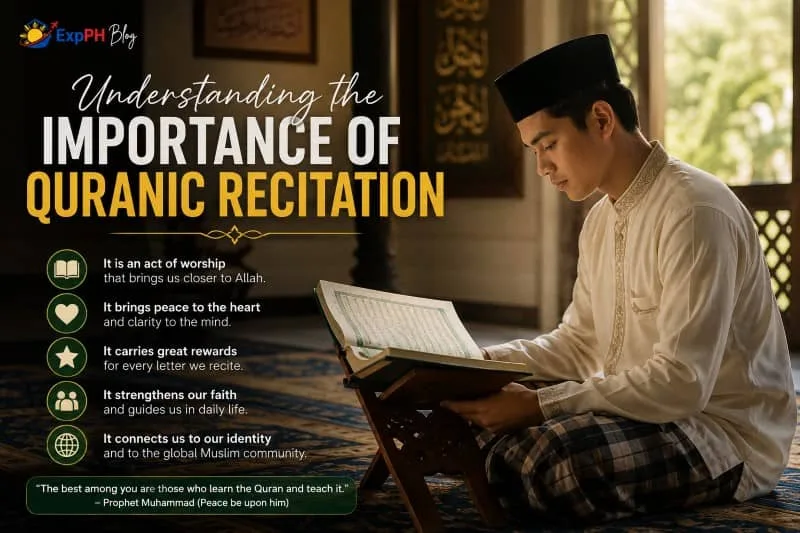
1. Understanding the Importance of Quranic Recitation
Quranic recitation, known as tilawah, is a core part of Islamic worship and everyday life. It goes beyond correct reading of Arabic text. Recitation reflects respect for Allah’s words through proper pronunciation, clear intention, and mindful focus. When done correctly, it becomes an act of devotion that connects the reader to the meaning, message, and spiritual purpose of the Quran.
The Spiritual Role of Recitation
Reciting the Quran strengthens faith, calms the heart, and encourages discipline. Many Muslims find peace and guidance through regular recitation. For OFWs, it offers comfort during hardship and separation from family, helping maintain spiritual balance despite distance and daily challenges.
Proper Quranic recitation carries great spiritual reward. Islamic teachings state that every letter brings blessings. This makes accuracy and consistency important. Guided learning helps ensure correct pronunciation, prevents mistakes, and supports a deeper spiritual connection through respectful and meaningful recitation.
Tajwid as the Foundation of Correct Recitation
Tajwid is the system of rules that guide proper pronunciation, articulation, and rhythm in Quranic recitation. Without correct instruction, learners may form habits that reduce accuracy and clarity, which can affect both meaning and spiritual quality of recitation.
Tausug teachers are respected for their disciplined yet caring approach to teaching Tajwid. They emphasize strong foundations, guiding students to master basic rules before moving forward, ensuring accurate recitation, steady progress, and deep respect for the words of the Quran.

2. Who Are the Tausug and Their Islamic Heritage
The Tausug are an ethnolinguistic group mainly found in Sulu in the southern Philippines. Islam has shaped their society for centuries and influences their education, values, and daily life. Religious learning is central to community identity, with strong emphasis on Quranic study, moral discipline, and preserving Islamic traditions across generations.
Historical Roots of Quranic Education in Sulu
Long before modern institutions, Quranic learning in Sulu took place in homes, mosques, and community spaces. Knowledge was transmitted orally, with students memorizing verses under close supervision.
Teachers served as both educators and moral guides. They emphasized discipline, respect, and patience. This traditional approach continues to influence Quranic education and teaching methods in Sulu today.
Respect for Teachers and Sacred Knowledge
In Tausug culture, Quran teachers are highly respected. Learning is viewed as a sacred trust. Students are taught to approach recitation with humility, focus, and sincerity, recognizing the responsibility that comes with studying the words of the Quran.
This cultural mindset shapes learners who are disciplined, respectful, and committed. It encourages serious study, attentive listening, and consistent practice, helping students develop strong character alongside accurate and meaningful Quranic recitation.

3. What Makes Quranic Recitation with Tausug Teachers Unique
Learning Quranic recitation with Tausug teachers offers a distinctive experience rooted in strong discipline and deep respect for the Quran. Their teaching combines careful attention to Tajwid with cultural values shaped by generations of Islamic learning. Students are guided with patience and firmness, helping them develop accuracy, consistency, and a sincere connection to recitation as both worship and lifelong practice.
Strong Emphasis on Oral Transmission
Tausug teachers place strong importance on listening and repetition. Students carefully listen to each verse, repeat it accurately, and receive immediate correction. This process helps build focus and awareness during recitation.
This method strengthens memory and improves pronunciation. It is especially effective for beginners and for learners who are correcting past mistakes and rebuilding proper Quranic recitation skills.
Discipline Balanced with Compassion
Quranic learning under Tausug teachers is structured and disciplined but never harsh. Teachers understand that mastery develops over time. They guide students with patience, steady encouragement, and clear correction throughout the learning process.
Mistakes are seen as a natural part of growth rather than failure. This approach builds confidence, persistence, and trust, allowing students to progress with motivation and a positive attitude toward continuous improvement.
Focus on Long Term Mastery
Tausug teachers focus on quality rather than speed in Quranic learning. Students progress only after showing consistent accuracy and clear understanding. This method helps build strong foundations instead of rushed memorization.
This approach suits adult learners, including OFWs, who may have limited time. It allows them to achieve steady, meaningful progress while maintaining accuracy, confidence, and respect for proper Quranic recitation.

4. Learning Quranic Recitation as an OFW
For Overseas Filipino Workers, maintaining regular religious practice can be difficult because of demanding work schedules, cultural differences, and periods of isolation. Learning Quranic recitation provides spiritual stability and guidance. It helps OFWs stay connected to their faith, find inner peace, and maintain discipline while living and working far from home.
Staying Connected to Faith Abroad
Regular Quranic recitation brings comfort and familiarity to Muslims living abroad. Learning with Tausug teachers through online sessions or community networks helps OFWs remain connected to their faith. It also supports the preservation of Filipino Islamic traditions, offering spiritual guidance, emotional strength, and a sense of belonging despite distance from home and loved ones.
Flexible Learning Adapted to Busy Schedules
Many Tausug teachers adjust their teaching methods to meet the needs of modern learners. Lessons are often arranged around work hours, making Quranic study accessible even in demanding environments. This flexibility allows OFWs to continue their spiritual growth, maintain regular practice, and stay connected to their faith despite long workdays and physical distance from home.
Building Discipline and Inner Strength
The structured practice of Quranic recitation helps develop strong discipline and self control. For OFWs who face daily stress and heavy responsibilities, this discipline often leads to improved focus and emotional balance. Regular recitation creates a calming routine that supports patience, resilience, and inner strength while managing work, family duties, and life abroad.
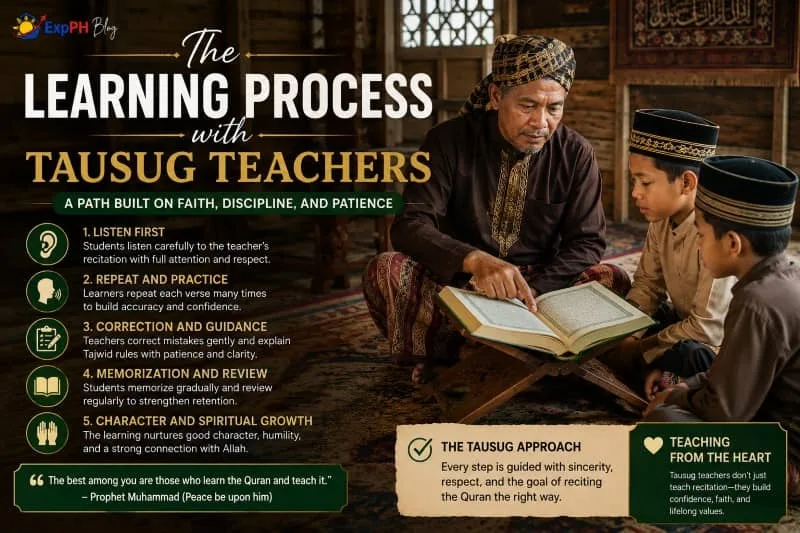
5. The Learning Process with Tausug Teachers
Understanding the learning process with Tausug teachers helps students prepare both mentally and spiritually. It sets clear expectations and builds readiness for disciplined study. Learners become more patient, focused, and committed as they understand that progress requires consistency, respect for guidance, and sincere effort. This awareness supports steady improvement and a deeper connection to Quranic recitation as an act of worship.
Initial Assessment and Foundation Building
Teachers usually begin by assessing each learner’s current level. This includes evaluating pronunciation, knowledge of Arabic letters, and understanding of basic Tajwid rules. Based on the results, lessons are carefully tailored to individual needs. This approach helps correct weaknesses early, build strong foundations, and ensure steady progress before moving on to more advanced recitation skills.
Step by Step Progression
Quranic learning progresses gradually, beginning with short verses before moving to longer passages. Repetition is essential in reinforcing correct pronunciation and rhythm. Students are encouraged to practice daily, even for brief periods. This steady approach builds confidence, improves accuracy, and helps learners maintain consistency without feeling overwhelmed by the pace of study.
Continuous Feedback and Correction
Continuous feedback plays an important role in Quranic learning. Immediate correction prevents mistakes from becoming habits that are difficult to change. Teachers listen carefully to each recitation and offer clear guidance. This close interaction builds trust, improves understanding, and helps students progress more quickly while developing confidence, accuracy, and respect for proper recitation.
6. Cultural Values Embedded in the Learning Experience
Quranic recitation with Tausug teachers goes beyond technical skills and correct pronunciation. The learning experience also passes on cultural and moral values that shape character. Students learn patience, humility, respect, and responsibility alongside recitation. These values strengthen personal discipline and help learners approach the Quran with sincerity, awareness, and a deep sense of purpose in daily life.
Patience and Humility
Students learn that true mastery of Quranic recitation requires patience and steady effort. Progress may be slow at times, but consistency brings lasting results. Teachers emphasize humility, reminding learners that knowledge is a trust from Allah. This mindset helps students remain sincere, focused, and respectful while continuing their learning journey without pride or frustration.
Respect and Responsibility
Respect for the Quran, the teacher, and the learning process is central to Quranic education. Students are taught to approach each lesson with seriousness and sincere intention. This sense of responsibility often extends beyond recitation. It influences daily behavior, encourages self discipline, and strengthens moral awareness in work, family life, and interactions with others.

7. Modern Access to Traditional Learning
Technology has expanded access to Quranic education while preserving traditional teaching values. Through online classes, voice calls, and community platforms, students can learn from experienced teachers regardless of location. This modern access allows learners, especially OFWs, to receive proper guidance, maintain consistent practice, and stay connected to authentic Quranic instruction without sacrificing discipline or respect for tradition.
Online Learning with Tausug Teachers
Many Tausug teachers now offer online lessons that allow learners around the world to benefit from traditional teaching methods. Video calls and recorded recitations help maintain correct pronunciation and rhythm. This setup also creates a personal connection between teacher and student, ensuring guidance remains clear, supportive, and consistent despite physical distance.
Community Based Learning Networks
Filipino Muslim communities abroad often organize study circles guided by Tausug teachers or their trained students. These gatherings create a supportive learning environment where participants encourage one another. Community based learning strengthens motivation, builds accountability, and promotes shared spiritual growth through regular practice and mutual respect.

8. Common Challenges and How to Overcome Them
Every learning journey includes challenges, especially in Quranic recitation. Being aware of these difficulties helps learners respond with patience and confidence. With the right mindset, guidance, and support, challenges become opportunities for growth rather than obstacles that slow progress or weaken commitment.
Time Management
Balancing work, family, and learning requires thoughtful planning. Short and consistent practice sessions are often more effective than long but irregular ones. Even a few minutes each day helps maintain continuity, strengthen memory, and build discipline without adding pressure to a busy schedule.
Fear of Making Mistakes
Many adult learners feel hesitant or self conscious when reciting. Tausug teachers remind students that mistakes are a natural part of learning. Errors are treated as opportunities for correction and growth, not as a source of embarrassment or failure.
Maintaining Motivation
Maintaining motivation requires clear goals and a strong sense of purpose. Remembering that recitation is an act of worship helps sustain commitment. Regular progress, supportive teachers, and personal reflection also encourage learners to continue with patience and sincerity.

9. Why This Tradition Matters Today
In a fast paced world, traditional Quranic learning offers depth, balance, and meaning. It encourages patience, focus, and reflection in contrast to rushed modern routines. This approach helps learners build a lasting connection to the Quran, making recitation a thoughtful practice rather than a task driven by speed or convenience.
Preserving Authentic Quranic Practice
Learning Quranic recitation with Tausug teachers helps preserve authentic pronunciation and rhythm rooted in oral tradition. Their careful guidance ensures accuracy and respect for established recitation methods. This protects the integrity of the Quran and helps learners maintain correct practice across generations, even in modern and distant learning environments.
Strengthening Filipino Muslim Identity
This learning path strengthens Filipino Muslim identity by connecting faith with culture and tradition. It is especially meaningful for younger generations and OFWs raising families abroad. Through structured learning, values, language, and religious practices are preserved, helping families maintain a strong sense of identity and belonging despite living far from home.

10. FAQs About Experiencing Quranic Recitation Learning with Tausug Teachers
What makes Quranic Recitation with Tausug Teachers unique?
It offers structured, tradition based guidance that emphasizes correct pronunciation, Tajwid mastery, discipline, and spiritual connection, passed through generations of respected Filipino Muslim educators nationwide.
Can OFWs learn Quranic recitation with Tausug teachers online?
Yes, many Tausug teachers provide flexible online lessons, allowing learners, including OFWs, to study Quranic recitation consistently despite busy schedules and distance from home abroad.
Is this learning approach suitable for beginners?
Beginners benefit greatly because teachers start with Arabic letters, proper articulation points, and basic Tajwid rules, ensuring strong foundations before progressing to longer verses confidently.
What teaching methods do Tausug teachers commonly use?
Tausug teachers emphasize oral repetition, attentive listening, immediate correction, and respectful discipline, combining technical accuracy with patience to build confidence and long term recitation mastery.
How does Quranic recitation learning support spiritual well being?
Yes, learning Quranic recitation strengthens faith, promotes emotional calm, improves focus, and helps Muslims maintain spiritual balance, especially when facing work pressure or separation challenges.
What should students expect during online recitation lessons?
Online lessons usually involve live recitation, teacher feedback, assigned practice, and recorded references, ensuring students receive close guidance similar to traditional face to face learning.
Why is discipline important in this learning tradition?
Discipline teaches consistency, patience, respect for knowledge, and responsibility, qualities that often positively influence work ethic, personal growth, and decision making beyond religious practice daily.
How can OFWs find qualified Tausug teachers?
OFWs can search Filipino Muslim community groups, mosques, or trusted online networks where qualified Tausug teachers offer structured Quranic recitation programs for learners abroad globally.
What challenges do learners commonly face?
Time management and pronunciation anxiety are common challenges, but short daily practice, patient guidance, and clear spiritual intention help learners progress steadily and confidently forward.
Why is this tradition still relevant today?
It preserves authentic recitation traditions, strengthens Filipino Muslim identity, and provides meaningful spiritual learning that adapts to modern life without losing cultural depth and continuity.
Final Thoughts on Quranic Recitation with Tausug Teachers
Experiencing Quranic recitation with Tausug teachers is more than a learning activity. It is a meaningful journey that strengthens faith, builds discipline, and deepens cultural connection. Shaped by centuries of Islamic tradition, this method offers a balanced approach that combines structure with compassion. Learners are guided patiently toward accurate recitation while developing respect, consistency, and sincere intention. The focus is not only on correct pronunciation but also on character formation and spiritual awareness.
For Overseas Filipino Workers and Filipino Muslims everywhere, this form of learning provides stability and spiritual grounding. It offers comfort during separation, supports personal growth, and fosters a strong sense of belonging. Even in modern times, traditional Quranic education remains relevant and powerful. Choosing this path honors the Quran and preserves a heritage that continues to guide hearts across generations.
Interested in Tausug traditions and community life in Sulu?
Discover the cultural values and daily practices that continue to shape Tausug identity today in our full feature, Inside Traditional Tausug Lifestyle and Community Practices.
Take a look at these related reads next
- A Day in a Traditional Tausug Household and Community Life
- The Spirit of Ramadan Among the Tausug: Faith, Unity, and Tradition
- Experiencing the Tausug Pag duwaa
For your reference copy, click the link below
- BARMM Official Government Portal
- Bangsamoro Government — Sulu Province Page
- Al-Azhar University Official Website
- Muslim World League (MWL)
- Quran.com
Quranic Recitation with Tausug Teachers Quiz
Test your understanding of Experiencing Quranic Recitation Learning with Tausug Teachers.
Results


#1. What is the main focus of this learning experience?
#2. Where do Tausug teachers traditionally come from?
#3. What learning method is strongly emphasized?
#4. Which rule system guides correct recitation?
#5. Why is this approach good for OFWs?
#6. What value is strongly taught by Tausug teachers?
#7. How are mistakes treated during lessons?
#8. What format is now commonly used abroad?
#9. What cultural trait shapes this tradition?
#10. What is the long term goal of learning?
We would love to hear from you
Comment below and share your personal experience or reflections on learning Quranic recitation with Tausug teachers.

A Filipino web developer with a background in Computer Engineering. Founder of ExpPH Blog and ExpPH Business Guide, creating practical content on OFW guidance, business, finance, freelancing, travel, and lifestyle. Passionate about helping Filipinos grow, he shares insights that educate, empower, and inspire readers nationwide.