

Revolutionary Robotics in the Philippines Driving Industry 4.0 Innovation
Robotics in the Philippines: The Philippines is steadily embracing Industry 4.0, a global movement characterized by the integration of digital technologies, automation, and data-driven solutions across industries. Among these technologies, robotics in the Philippines has emerged as a transformative force, reshaping how businesses operate, enhancing productivity, and redefining the roles of workers. From manufacturing plants to hospitals, logistics hubs, and research centers, robotics in the Philippines is being increasingly applied to optimize processes, reduce costs, and improve service quality.
Robotics in the Philippines is not just a technological trend it is a strategic necessity. As global markets demand higher efficiency, precision, and speed, Filipino businesses and institutions are turning to robotics in the Philippines and automation to remain competitive. This shift aligns with the broader goals of Industry 4.0, which emphasizes smart, connected, and flexible production and service systems.
Beyond efficiency, robotics in the Philippines is also enabling companies to innovate in product design, service delivery, and customer experience, creating new business models and expanding market reach. From SMEs to multinational corporations, robotics in the Philippines is increasingly seen as a vital tool to future-proof operations.
See how robotics connects with broader innovations by exploring our complete guide on Future Technology in the Philippines: AI, Robotics, and 5G Trends. Discover how these technologies work together to drive Industry 4.0 and digital transformation.
Table of Contents

1. Historical Context of Robotics in the Philippines
The Philippines began experimenting with robotics in the Philippines in the 1990s and early 2000s, primarily in large-scale manufacturing operations. Early applications were concentrated in electronics and automotive manufacturing, where repetitive tasks such as assembly, welding, and quality inspection could be automated. These implementations allowed companies to reduce labor costs, improve consistency, and enhance worker safety by minimizing human involvement in hazardous or monotonous tasks.
During the early 2000s, robotics in the Philippines slowly expanded to logistics, warehousing, and assembly lines, but adoption remained limited due to high costs, lack of technical expertise, and insufficient infrastructure. However, the 2010s marked a turning point. Universities began offering Industry 4.0 technology, mechatronics, and automation courses, while government research programs and private startups experimented with new solutions. This period laid the groundwork for a domestic robotics in the Philippines ecosystem, enabling more widespread implementation in manufacturing and services.
By the late 2010s, Industry 4.0 pilot programs emerged in key industrial hubs in Luzon and Visayas, integrating robotics in the Philippines with IoT, cloud computing, and artificial intelligence to create smarter production lines and optimized workflows. These initiatives highlighted the potential of robotics in the Philippines to transform industries beyond simple automation, paving the way for innovation-driven growth.
2. Applications of Robotics Across Industries
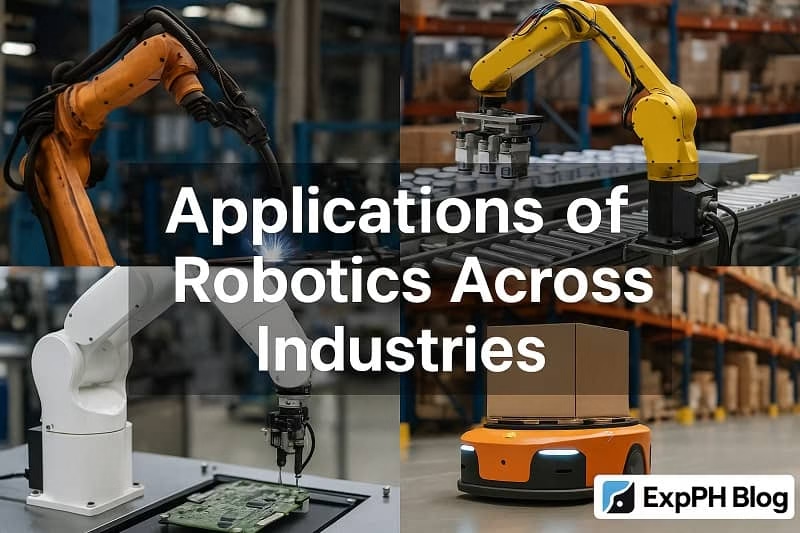
Robotics is transforming key industries in the Philippines by improving efficiency, accuracy, and scalability. From factories to farms, automated systems streamline operations, reduce costs, and support innovation. Businesses adopt robotics to stay competitive while meeting growing demands in local and global markets.
1. Manufacturing
Manufacturing is the sector with the highest adoption of Robot technology in the Philippines. Robotic arms, automated guided vehicles (AGVs), and collaborative robots (cobots) are widely used in electronics, automotive, and consumer goods production.
Assembly Lines
- Robots perform high-speed, repetitive tasks with precision, reducing errors and enhancing efficiency.
Quality Control
- Vision-guided robots detect defects and inconsistencies, ensuring products meet international standards.
Material Handling
- Automated systems transport components, improving workflow and reducing labor-intensive tasks.
The adoption of robotics allows manufacturers to compete globally, embrace customized production, and respond quickly to shifting market demands. Additionally, robotics facilitates lean manufacturing practices, reducing waste and optimizing resource use.
2. Logistics and Warehousing
The logistics industry in the Philippines is undergoing a digital transformation, with robotics playing a critical role in efficiency improvement.
Inventory Management
- Robotic systems track and manage stock levels in real-time, reducing errors and stockouts.
Warehouse Automation
- Robots pick, sort, and transport goods, minimizing human labor for repetitive tasks and improving operational safety.
Last-Mile Delivery
- Some companies are experimenting with autonomous delivery robots and drones to meet the surging demand for e-commerce deliveries.
Automation in logistics improves operational efficiency, enhances customer satisfaction, and reduces costs associated with manual labor. It also allows companies to scale operations quickly in response to fluctuating demand, particularly during peak seasons.
3. Healthcare
Healthcare robotics in the Philippines is an emerging field with significant growth potential.
Robot-Assisted Surgery
- Surgical robots increase precision in minimally invasive procedures, reducing complications and patient recovery time.
Rehabilitation Robots
- Assistive robots help patients regain mobility, providing therapy that is consistent and data-driven.
Medical Logistics
- Automated systems manage supplies, track medications, and optimize pharmacy inventory in hospitals.
These innovations improve patient outcomes, operational efficiency, and staff productivity, particularly in high-volume hospitals in Metro Manila, Cebu, and Davao.
4. Agriculture
Although still nascent, automated systems are slowly being introduced in agriculture, particularly in large-scale plantations and modern farms.
Automated Harvesting
- Robots and drones monitor crop health, assist in harvesting, and reduce labor shortages.
Precision Farming
- Robotics collects data to optimize irrigation, fertilization, and pest control, improving yield and sustainability.
Supply Chain Integration
- Robots facilitate post-harvest processing and logistics, ensuring food quality and reducing spoilage.
Agricultural automation aligns with government goals for sustainable farming and can help address labor shortages in rural areas.
3. Robot as a Service (RaaS) and Cost Considerations
High acquisition and maintenance costs remain a major barrier to robotics adoption, especially for small and medium-sized enterprises in the Philippines. Industrial robots can cost tens of thousands of dollars, excluding installation, training, and maintenance, making full automation difficult for businesses with limited capital.
The Robot as a Service (RaaS) model provides a practical alternative by allowing businesses to lease or subscribe to robotic systems instead of purchasing them outright. This approach lowers financial risk and makes advanced automation more accessible to companies with limited resources.
Scalability
- Companies can adjust robotic capacity based on demand, allowing flexible operations without long-term investment commitments or unused resources during slower periods.
Reduced Technical Burden
- Service providers manage maintenance, updates, and troubleshooting, enabling businesses to focus on core operations instead of handling complex technical requirements.
Cost Flexibility
- Firms avoid large upfront costs and shift to predictable expenses, making budgeting easier while still gaining access to modern robotic technologies.
RaaS is becoming more common in logistics, manufacturing, and healthcare, helping SMEs adopt automation without heavy capital investment. It enables smaller businesses to compete with larger firms by accessing advanced technology that was previously out of reach. and healthcare, allowing SMEs to access state-of-the-art automation previously limited to larger corporations.

4. Skilled Workforce and Education
The success of RaaS (Robot as a Service) depends on a skilled workforce capable of operating, programming, and maintaining robotic systems. As automation expands across industries, workforce development becomes essential to ensure businesses can fully use robotics and sustain long-term growth.
University Programs
- Institutions such as the University of the Philippines, Ateneo de Manila University, and De La Salle University offer courses in robotics, mechatronics, artificial intelligence, and automation, preparing students for Industry 4.0 careers and equipping them with relevant technical knowledge.
Technical Training Centers
- Government-supported programs provide hands-on training and practical experience for technicians. These programs focus on real-world applications, helping participants develop skills needed to install, maintain, and troubleshoot robotic systems across different industries.
Industry Partnerships
- Collaboration between companies and educational institutions supports internships, workshops, and upskilling programs. These partnerships help bridge the gap between academic learning and industry needs, ensuring graduates are job-ready and aligned with current technological demands.
Investing in a skilled workforce strengthens innovation and supports the successful adoption of robotics. It enables businesses to maximize efficiency, improve system reliability, and remain competitive in an increasingly automated and technology-driven economy. ensures sustainable growth and positions the Philippines as a regional hub for robotics expertise.

5. Government Policies and Industry Support
The Philippine government recognizes robotics and automation as essential for Industry 4.0 competitiveness. It has introduced programs and policies that encourage adoption across industries, strengthen innovation, and support businesses in improving productivity while preparing the workforce and infrastructure for a more technology-driven economy.
Incentives for Technology Adoption
- The government offers tax breaks, grants, and subsidies to encourage businesses to invest in robotics and automation. These incentives reduce financial barriers and make it easier for companies, especially SMEs, to adopt advanced technologies and improve operational efficiency.
Industry 4.0 Roadmap
- The Department of Trade and Industry (DTI) promotes integration of robotics, artificial intelligence, and the Internet of Things across key sectors. This roadmap helps guide businesses in digital transformation and supports long-term economic growth.
Research and Development Funding
- Agencies such as the Department of Science and Technology (DOST) provide funding for robotics innovation. This support strengthens academic research and startup development while encouraging collaboration between researchers, institutions, and industry players.
Tech Parks and Innovation Hubs
- The development of technology zones and incubation centers provides businesses with infrastructure, resources, and collaboration spaces. These hubs support startups and established companies in building, testing, and scaling robotics solutions.
These initiatives aim to create a supportive ecosystem for businesses, helping them adopt robotics, improve competitiveness, and contribute to sustainable economic development.
6. Challenges Facing Robotics Adoption
Despite promising growth, robotics adoption in the Philippines still faces several barriers that limit wider implementation across industries. These challenges affect cost, workforce readiness, and infrastructure, making it difficult for many businesses to fully integrate automation into daily operations and long-term strategies.
1. High Costs
- Initial investment in robotics remains expensive for many small and medium-sized enterprises. Equipment, installation, and maintenance costs create financial pressure, slowing adoption and limiting access to advanced automation technologies across smaller industries.
2. Technical Expertise Gap
- There is a shortage of skilled professionals who can program, operate, and maintain robotic systems. This gap makes it harder for companies to deploy automation effectively and sustain long-term performance without investing heavily in training or external support.
3. Infrastructure Limitations
- Inconsistent internet connectivity and unstable power supply can disrupt robotic operations. These issues reduce system reliability and make it challenging for businesses to maintain continuous and efficient automated processes.
4. Workforce Adaptation
- Employees and management must adjust to working alongside robots. This requires reskilling and upskilling, along with cultural changes that support collaboration between human workers and automated systems in the workplace.
5. Regulatory and Safety Concerns
- The integration of robotics requires updated regulations on workplace safety, data privacy, and liability. Clear policies are necessary to ensure safe deployment and protect both businesses and employees.
Addressing these challenges is essential to sustain growth, improve adoption, and strengthen long-term competitiveness in an increasingly automated economy.

7. Case Studies of Robotics in the Philippines
This section presents real-world examples of how robotics is applied across industries in the Philippines, highlighting measurable improvements in efficiency, productivity, and service quality while demonstrating the practical impact of automation in manufacturing, logistics, healthcare, and agriculture.
1. Manufacturing Innovation in Metro Manila and Cebu
Leading electronics firms have implemented robotic arms and AGVs in assembly and quality control. Automation has reduced production defects by up to 30% and increased throughput by 20–25%, demonstrating measurable improvements in efficiency and product quality.
2. Logistics Robotics in E-Commerce
E-commerce companies are experimenting with robotic picking, sorting, and warehouse management systems. These systems reduce labor costs, improve order accuracy, and shorten delivery times, critical in the fast-paced online retail market.
3. Healthcare Robotics in Hospitals
Private hospitals in Metro Manila have adopted robot-assisted surgical systems for cardiovascular and orthopedic procedures. These technologies enhance surgical precision, reduce recovery times, and position the Philippines as a regional leader in medical robotics.
4. Agricultural Robotics in Plantation Farms
Pilot programs in large-scale plantations are using drones and robotic harvesting systems to monitor crop health, optimize yield, and reduce labor dependency. These innovations demonstrate how robotics can improve both productivity and sustainability.

8. Future Outlook of Robotics in the Philippines
The future of robotics in the Philippines is promising, supported by global trends and local initiatives. Businesses are increasing adoption as technology becomes more accessible and practical. Continued investment in innovation, skills development, and infrastructure will help drive long-term growth and strengthen competitiveness across industries.
AI and IoT Integration
- Robotics will increasingly integrate with artificial intelligence and the Internet of Things to create smarter and more autonomous systems. These technologies enable predictive maintenance, real-time data analysis, and improved decision-making across manufacturing, logistics, healthcare, and agriculture.
Expansion of RaaS Models
- Robot as a Service models will continue to grow, making automation more accessible to small and medium-sized enterprises. Leasing options reduce upfront costs and allow businesses to adopt advanced robotics without large capital investment or long-term financial risk.
Remote and Flexible Work Support
- Robotics will support flexible work environments by automating repetitive tasks and allowing human workers to focus on strategic and creative responsibilities. This improves productivity while enabling better workforce allocation and more efficient operations.
Emergence of Local Startups
- Innovation hubs in Manila, Cebu, and Davao are encouraging the growth of local robotics startups. These companies develop cost-effective solutions tailored to local industries, helping expand access to automation and supporting the national technology ecosystem.
Sustainability and Green Robotics
- Robotics will play a key role in promoting environmentally friendly operations. Applications include energy-efficient manufacturing, reduced waste production, and precision agriculture practices that optimize resource use while supporting long-term sustainability goals.
The combination of technological innovation, skilled human capital, and government support will continue to drive robotics adoption, helping businesses grow, improve efficiency, and remain competitive in a rapidly evolving digital economy.

Final Thoughts on Robotics in the Philippines
Robotics in the Philippines is no longer just a futuristic concept it is actively shaping the Industry 4.0 landscape across manufacturing, logistics, healthcare, and agriculture. Despite challenges such as high costs, workforce gaps, and infrastructure limitations, the growth of Robot as a Service (RaaS), supportive government policies, and educational programs is accelerating adoption.
The integration of robotics improves efficiency, reduces human error, and creates new opportunities for skilled labor. By investing in technology, workforce development, and innovation, the Philippines is positioning itself as a competitive, forward-looking player in the global robotics arena, ready to embrace a future of smart, automated, and resilient industries.

FAQs About Revolutionary Robotics in the Philippines
1. What is the role of robotics in Industry 4.0 in the Philippines?
Robotics enhances efficiency, precision, and productivity across industries, aligning with Industry 4.0 goals of smart, connected systems.
2. Which industries in the Philippines are adopting robotics the most?
Manufacturing, logistics, healthcare, and agriculture are leading sectors for robotics adoption.
3. What is Robot as a Service (RaaS)?
RaaS allows businesses to lease or subscribe to robotic solutions, reducing upfront costs and technical burdens while offering scalability.
4. What challenges does robotics face in the Philippines?
High costs, technical skill gaps, infrastructure limitations, workforce adaptation, and regulatory concerns are main challenges.
5. How is the Philippine government supporting robotics adoption?
Through incentives, grants, Industry 4.0 Roadmaps, tech parks, innovation hubs, and research funding to foster adoption and growth.
Want to see how robotics fits into the bigger picture of technology growth in the Philippines?
Read our complete guide on Technology in the Philippines Strong Progress, Key Opportunities, and Future Innovations and discover how innovation is shaping industries and future opportunities.
Explore more technology content, please click the link below.
Learning Hub Quiz!
Test your knowledge on how robotics is transforming industries in the Philippines! Learn, explore, and boost your skills at ExpPH Blog Learning Hub.
Results


#1. What is a major benefit of robotics in the Philippines?
#2. Which sector has the highest robotics adoption?
#3. What does RaaS stand for?
#4. Which challenge affects robotics adoption?
#5. Which technology is combined with robotics for Industry 4.0?
You’ve completed the Quick Quiz on Revolutionary Robotics in the Philippines.
Please comment your experience with us after taking it. Your feedback helps us grow and serve you better.

A Filipino web developer with a background in Computer Engineering. Founder of ExpPH Blog and ExpPH Business Guide, creating practical content on OFW guidance, business, finance, freelancing, travel, and lifestyle. Passionate about helping Filipinos grow, he shares insights that educate, empower, and inspire readers nationwide.