

E-commerce Opportunities in the Philippines
The Philippines is entering a pivotal stage in its digital commerce journey. Wider internet access, strong mobile adoption, and changing consumer habits are reshaping how Filipinos discover and buy products online. These shifts are creating meaningful e-commerce opportunities for entrepreneurs, growing brands, and small businesses that are ready to adapt to digital platforms and customer-focused selling models.
In this article, you will gain a clear overview of the Philippine e-commerce landscape. We examine market growth, key drivers, and major challenges while outlining practical steps to help businesses take advantage of emerging opportunities. The goal is to provide actionable insights that support smarter decisions, sustainable growth, and long-term success in a rapidly evolving digital marketplace.
To better understand the overall landscape, including market trends and key challenges, you can also read our detailed guide on E-commerce in the Philippines: Growth, Challenges, and Opportunities.
Table of Contents
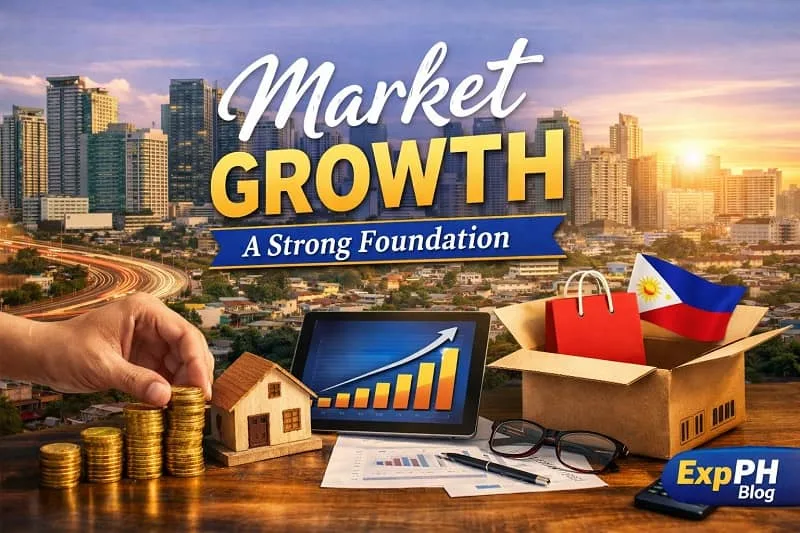
E-commerce Market Growth in the Philippines
Understanding the market size and growth is the first step to tapping into e-commerce opportunities in the Philippines. Strong and consistent growth in recent years shows that online selling is no longer just a trend, but a major part of the country’s economic future.
- The Philippine e-commerce market is expected to expand by nearly 20% in 2024, reaching PHP 1.3 trillion (around USD 24.1 billion) from PHP 1.1 trillion (around USD 20.1 billion) in 2023.
- The projected CAGR for 2024 to 2028 is around 13.2%, with the market expected to reach PHP 2.2 trillion (around USD 39.5 billion) by 2028. This steady growth indicates a stable and expanding environment for both new and existing online businesses.
- Some forecasts also predict growth to USD 33.65 billion by 2030, reflecting a CAGR of about 13.8% from 2025 onwards, further reinforcing the long-term potential of the industry.
These figures align with official data from the Philippine Statistics Authority, which reports that e-commerce continues to play an increasingly important role in the Philippines’ overall digital economy. In 2022, e-commerce accounted for about 20% of the total digital economy, growing by 26.5% from the previous year.
This upward trend highlights the scale of e-commerce opportunities in the Philippines, making it an ideal time for entrepreneurs, OFWs, and small business owners to enter the market, build a strong online presence, and take advantage of the country’s fast-growing digital economy.nefiting new sellers, technology providers, logistics firms, and payment ecosystem players.
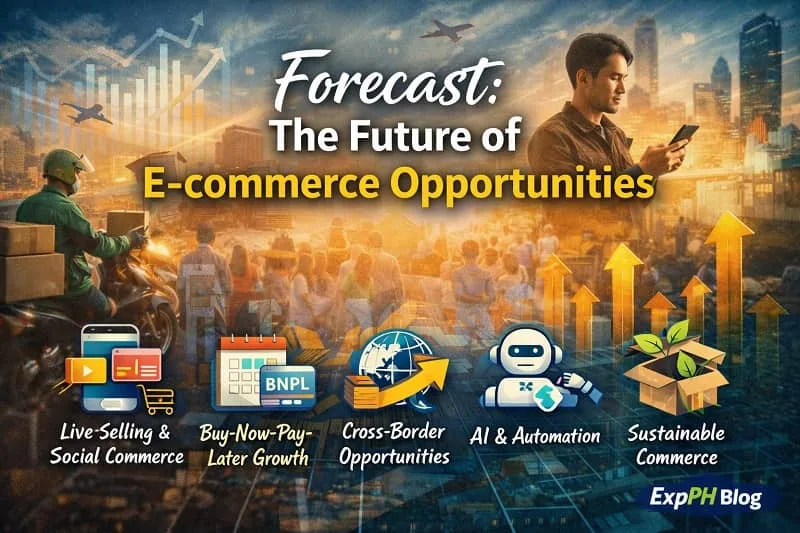
Forecast: The Future of E-commerce Opportunities
E-commerce in the Philippines is expected to evolve rapidly as technology, consumer behavior, and digital infrastructure continue to improve. Businesses that stay ahead of these trends will be better positioned to adapt, compete, and capture long-term growth in an increasingly digital and mobile-driven market.
- Growth in live commerce and social-selling formats
- Expansion of Buy-Now-Pay-Later and subscription models
- Cross-border trade with easier access to regional and global markets
- AI-driven personalization, inventory management, and automation
- Increased logistics investment in rural and provincial hubs
- Sustainability and ethical commerce as key differentiators
Top 4 Key Drivers of E-commerce Opportunities in the Philippines

1. Large Digital Base & Mobile-First Behaviour
The country’s strong digital adoption continues to shape how consumers interact, shop, and engage online, making mobile usage a central driver of e-commerce growth.
The Philippines has one of the highest daily internet usage rates in Southeast Asia:
- 97.5 million internet users
- 90.8 million active on social media
- 96.5% access via mobile devices
Many Filipinos spend several hours each day on mobile devices and social media. This behavior creates strong e-commerce opportunities in the Philippines, particularly through mobile-first platforms, social commerce channels, and content-led selling that align with how consumers discover and buy products online.
- Over 40% of Filipinos have purchased goods online, often starting their search on mobile.
- Smartphone penetration reached 74.1% in 2021, up from the prior year.
This shows that entering e-commerce in the Philippines goes beyond building a simple website. Success increasingly depends on mobile-first experiences, active social engagement, and convenient checkout processes that match how Filipino consumers browse, interact, and complete purchases online.
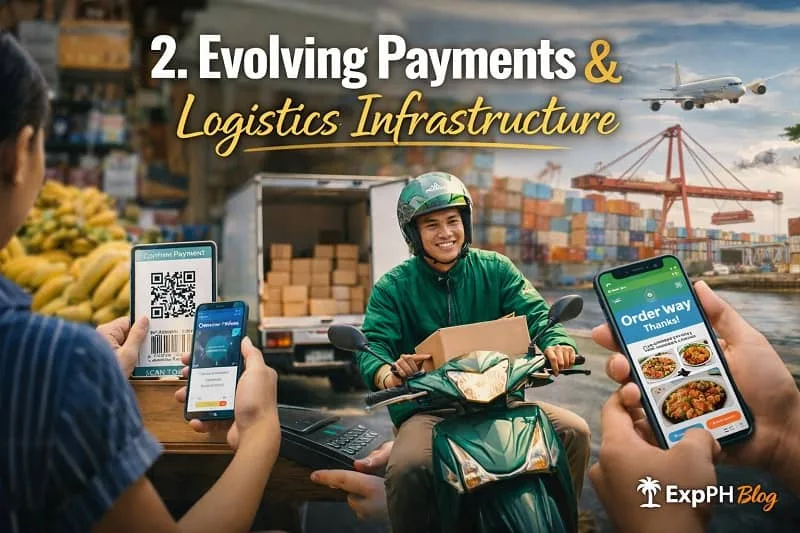
2. Evolving Payments & Logistics Infrastructure
Continuous improvements in digital payments and delivery systems are making online transactions more accessible, efficient, and trustworthy for both buyers and sellers.
Payment options are evolving quickly:
- E-wallets like GCash and Maya accounted for 36.4% of e-commerce payments in 2023.
- Cash-on-delivery (COD) still accounts for over 23% of purchases.
These shifts in payment behavior are monitored by the Bangko Sentral ng Pilipinas, which oversees payment systems and promotes financial stability in the country.
Logistics is improving across the Philippines, with mini-hubs helping shorten delivery routes across the country’s many islands. These upgrades reduce friction for both sellers and buyers, making nationwide e-commerce operations more practical, reliable, and accessible beyond major urban centers.
3. Government Support & Policy Frameworks
Supportive policies and national strategies are helping accelerate digital transformation and encourage more businesses to participate in e-commerce.
Government initiatives are unlocking e-commerce potential:
- The Department of Trade and Industry (DTI) has a roadmap for 2023–2028 recognizing e-commerce as a growth driver.
- Programs for MSMEs, digitalization partnerships, and logistics support help businesses tap into e-commerce opportunities in the Philippines.
These initiatives reflect a coordinated push to strengthen digital trade and MSME competitiveness. Through policy direction, training programs, and infrastructure support, the Department of Trade and Industry helps businesses adopt e-commerce more confidently and operate more efficiently in a growing digital economy.
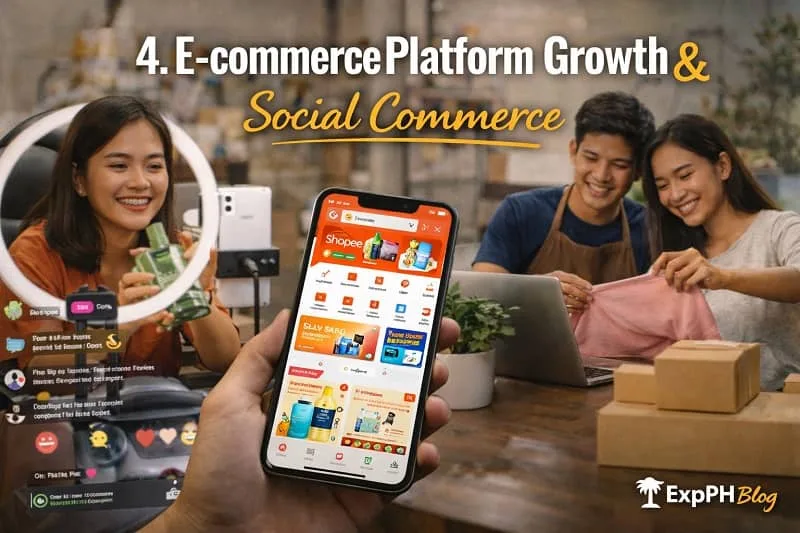
4. E-commerce Platform Growth & Social Commerce
The expansion of online marketplaces and social platforms is reshaping how products are discovered, promoted, and sold in the Philippine market.
Major marketplaces like Shopee and Lazada dominate, but social commerce and live-selling are rapidly gaining traction.
- Social media platforms enable product discovery and purchase.
- Smaller sellers can reach audiences without massive infrastructure, increasing e-commerce opportunities in the Philippines for new entrants, niche brands, and digital-first sellers.
Large platforms such as Shopee and Lazada continue to shape online retail, while social commerce lowers entry barriers. This allows new sellers, niche brands, and digital-first businesses to reach customers and grow without heavy upfront investment.
Top 6 E-commerce Opportunities in the Philippines for 2026 and Beyond
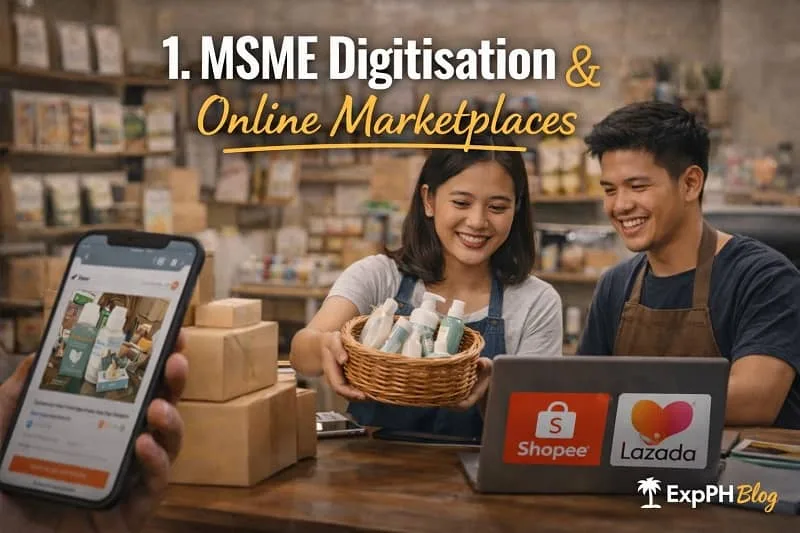
1. MSME Digitisation & Online Marketplaces
MSMEs form the backbone of the Philippine economy and play a major role in employment and local trade. As consumer behavior shifts online, digitising these businesses through marketplaces and digital tools becomes essential for improving reach, efficiency, and long-term competitiveness in the evolving e-commerce landscape.
Many have yet to leverage online channels, creating e-commerce opportunities in the Philippines for:
- Launching online storefronts (marketplaces or own websites)
- Tapping social commerce
- Integrating digital payments
Platforms, logistics providers, and payment integrators also gain from supporting MSMEs as they move online. By offering simple tools, reliable delivery, and secure payment systems, these enablers help small businesses scale while expanding their own reach within the growing Philippine e-commerce ecosystem.
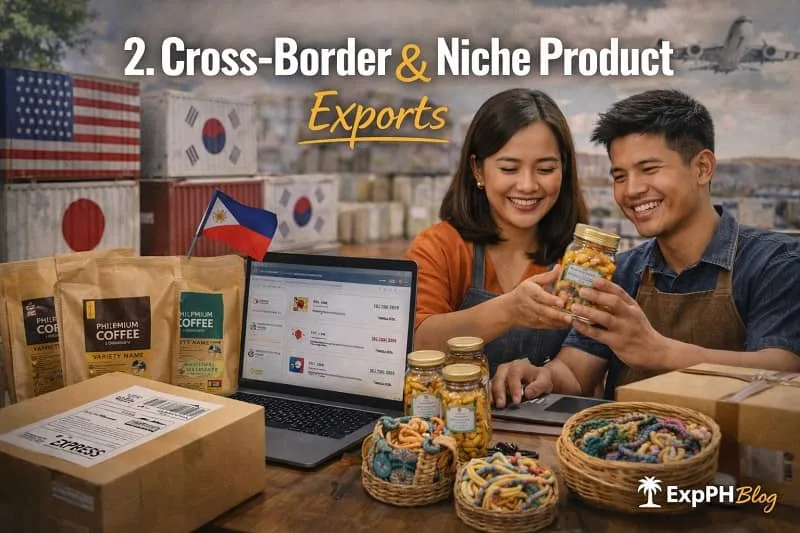
2. Cross-Border & Niche Product Exports
Cross-border and niche product exports offer growing opportunities for Philippine sellers seeking wider markets. Unique local goods such as handicrafts, specialty food items, and wellness products can reach international buyers through e-commerce, supported by improving trade access, logistics services, and rising global demand.
Global interest in Filipino-made products creates strong e-commerce opportunities for exports such as:
- Handicrafts
- Premium agricultural produce
- Beauty and wellness products
Regional trade agreements and changing consumer preferences are making cross-border e-commerce more accessible for Philippine sellers. These factors reduce barriers to entry, improve market access, and support international demand for locally made products sold through online platforms.

3. Social Commerce & Content-Driven Selling
Social commerce and content-driven selling are becoming central to e-commerce growth in the Philippines. High mobile usage and strong social media engagement allow businesses to connect with customers through interactive formats that support discovery, engagement, and purchasing within familiar digital platforms.
High mobile and social engagement creates strong opportunities in social commerce, including:
- Live selling
- Shoppable posts
- Influencer-led campaigns
- Short-form video commerce
Brands and service providers can use these channels to reach wider audiences and increase engagement. By combining content, interaction, and direct purchasing options, social commerce helps businesses build visibility, strengthen customer relationships, and convert interest into measurable sales in a digital-first marketplace.
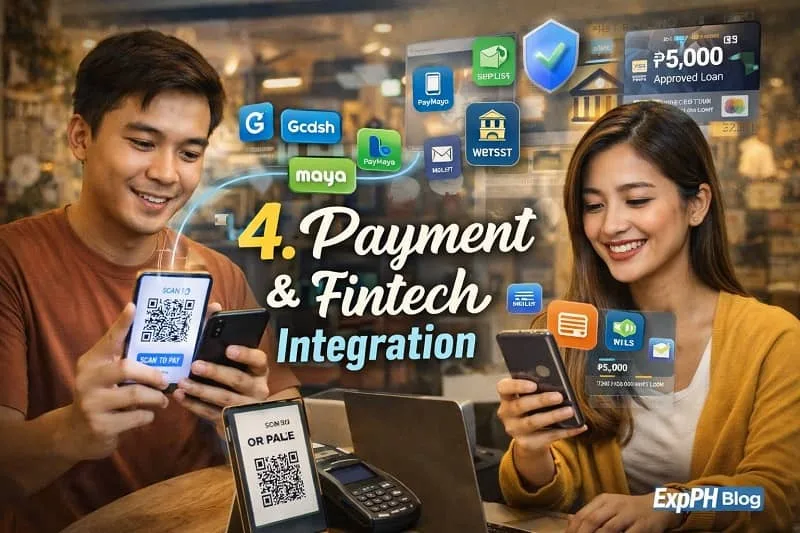
4. Payment & Fintech Integration
Payment and fintech integration plays a vital role in supporting e-commerce growth in the Philippines. Reliable digital payments, fraud prevention tools, and flexible options such as installment plans help improve checkout experiences, build consumer trust, and allow businesses to manage transactions efficiently in a more digital economy.
As e-commerce continues to expand, seamless payment solutions become essential, including:
- Fraud prevention
- Checkout optimization
- Buy-Now-Pay-Later options
Fintech firms have strong e-commerce opportunities in the Philippines as demand grows for secure and efficient payment services. By enabling digital transactions and managing payment risks, these companies support online businesses while strengthening the broader digital commerce ecosystem.
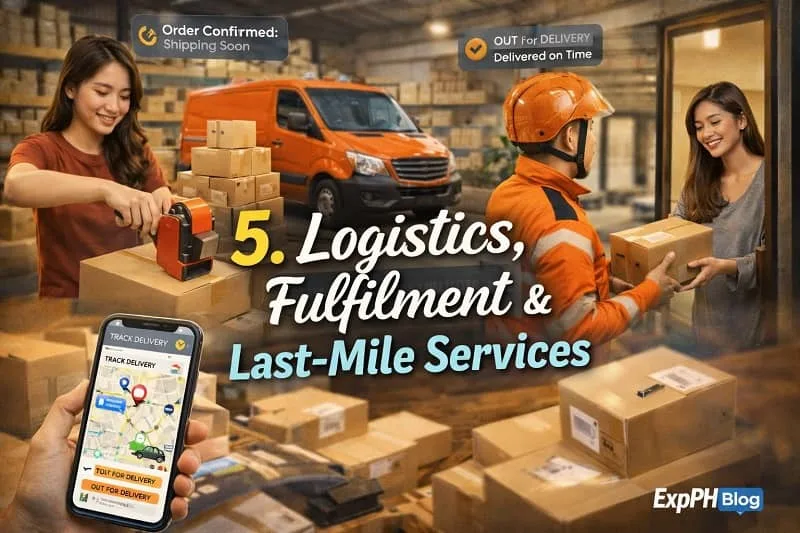
5. Logistics, Fulfilment & Last-Mile Services
Logistics, fulfilment, and last-mile services are essential to e-commerce success in the Philippines. Efficient warehousing, reliable delivery networks, and strong last-mile solutions help businesses reach customers faster, control costs, and serve both urban and provincial markets across the country’s many islands.
The Philippine archipelago presents both challenges and opportunities, including:
- Improving last-mile fulfillment
- Smarter warehouse hubs
- Regional fulfillment centers
Businesses that address logistics challenges effectively will be key enablers of broader e-commerce growth. By increasing delivery speed, lowering costs, and extending reach beyond major cities, they help online sellers serve customers reliably nationwide.
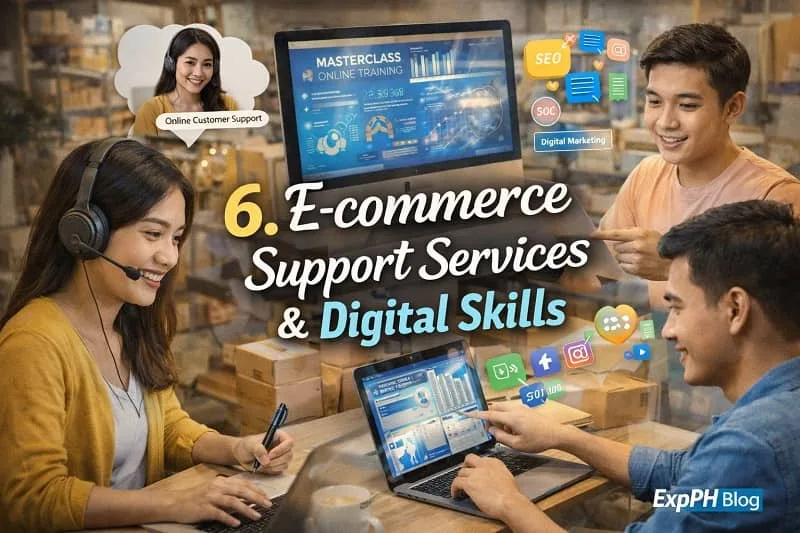
6. E-commerce Support Services & Digital Skills
The growth of e-commerce also creates strong demand for support services and digital skills across the ecosystem. As more businesses move online, they require specialized expertise to manage operations, marketing, customer service, and technical setup, opening opportunities for freelancers, agencies, and service providers.
This creates new opportunities in areas such as:
- E-commerce management and virtual assistance
- Digital marketing and paid advertising
- Website development and optimization
- Customer support and order management
As the industry expands, skilled professionals and service providers play a crucial role in helping businesses succeed online. This not only supports business growth but also creates additional income streams and job opportunities within the Philippine digital economy.
Top 8 How to Tap and Maximise E-commerce Opportunities

1. Choose the Right Platform & Channel Strategy
Selecting the right platform and sales channels is one of the most important first steps in building a successful e-commerce business in the Philippines.
- Marketplaces like Shopee, Lazada or your own website
- Social commerce channels (Facebook, Instagram, TikTok)
- Mobile-first and content-led approach
For many Filipino entrepreneurs and OFW-funded family businesses, online marketplaces remain the easiest entry point into e-commerce. Platforms such as Shopee Philippines lower the barrier to entry by offering built-in logistics, flexible payment options, and immediate access to a large base of local buyers.

2. Offer Multiple Payment Options & Build Trust
Providing flexible and secure payment options helps reduce friction during checkout and increases customer confidence in online transactions.
- Digital payments (e-wallets, cards, installments)
- COD as an option, but reduce reliance gradually
- Secure checkout, visible reviews, fast support
Offering multiple payment options helps build trust and improve conversion rates. While cash-on-delivery remains important, gradually encouraging digital payments can reduce returns, improve margins, and create a smoother checkout experience for both sellers and buyers.
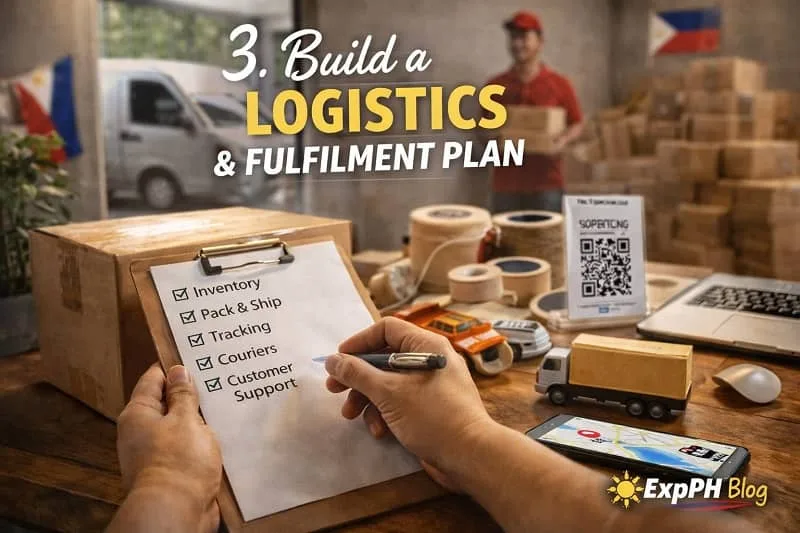
3. Build a Logistics & Fulfilment Plan
A well-structured logistics and fulfilment strategy ensures that orders are delivered efficiently and customer expectations are consistently met.
- Partner with reliable couriers
- Optimize packaging & shipping costs
- Transparent delivery times and return policies
A clear logistics and fulfilment plan supports consistent customer experiences. Reliable delivery partners, efficient packaging, and clear return policies help control costs, reduce disputes, and improve satisfaction as online businesses scale across different regions.
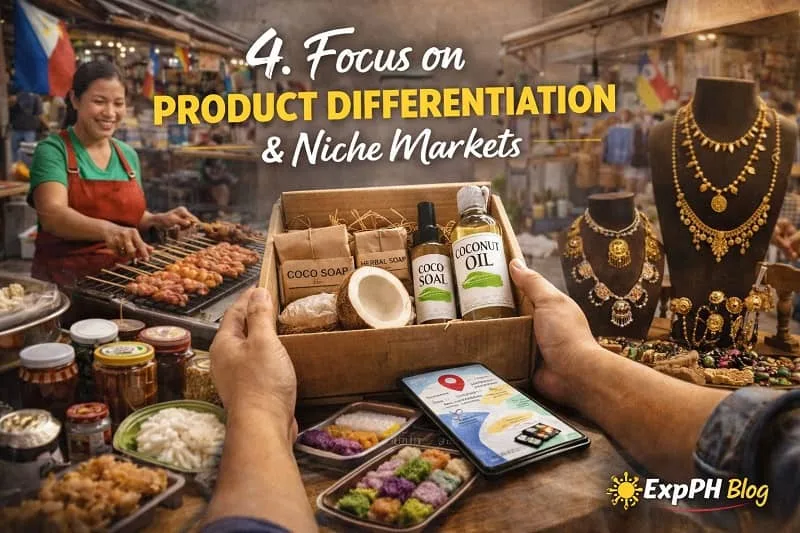
4. Focus on Product Differentiation & Niche Markets
Standing out in a competitive e-commerce environment requires clear positioning and a strong focus on unique product offerings.
- Unique value propositions: local crafts, eco-friendly items
- Superior service, customisation, faster fulfillment
In competitive marketplaces, differentiation is essential. Focusing on niche products, clear branding, and better service allows sellers to stand out, attract loyal customers, and reduce direct price competition with mass-market sellers.

5. Leverage Social Commerce & Content Marketing
Using social media and content-driven strategies helps businesses reach customers more effectively and influence buying decisions.
- Live selling, influencer collaborations, shoppable posts
- Short-form videos and social platform shops
Social commerce allows businesses to meet customers where they already spend time. Content-driven selling builds trust, increases engagement, and shortens the path from discovery to purchase through interactive and familiar digital formats.

6. Monitor Data & Scale Smartly
Tracking performance and using data-driven insights allows businesses to grow strategically and avoid unnecessary risks.
- Track traffic, conversion rates, repeat purchases
- Reinvent top-performing products or channels
Monitoring performance data helps businesses make informed decisions. By understanding which products and channels perform best, sellers can allocate resources efficiently, refine strategies, and scale operations without unnecessary risk.

7. Utilise Government Programmes & Partnerships
Taking advantage of available government support can help businesses accelerate growth and improve operational capabilities.
- Programs by DTI and DICT
- Training, logistics, export support
Government programmes and partnerships can support long-term growth. Access to training, digital tools, and export assistance helps MSMEs strengthen capabilities, reduce operational gaps, and compete more effectively in the expanding e-commerce landscape.

8. Prioritise Customer Experience & Retention
Focusing on customer satisfaction and retention is essential for building long-term profitability and sustainable growth in e-commerce.
- Fast response times and after-sales support
- Loyalty programs and repeat purchase incentives
- Clear communication and consistent branding
Customer experience is a key driver of long-term success in e-commerce. Businesses that focus on building trust, providing reliable support, and encouraging repeat purchases can increase customer lifetime value and create a more sustainable source of revenue over time.
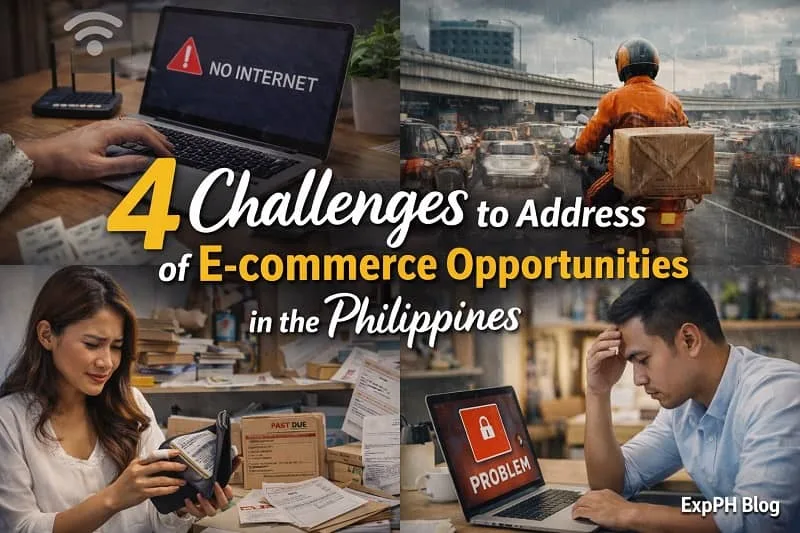
4 Challenges to Address
Despite strong growth, several challenges continue to affect the pace and sustainability of e-commerce in the Philippines. These issues range from payment trust and logistics constraints to competition, consumer confidence, and limited digital skills among MSMEs, all of which require strategic solutions.
Challenge 1: Logistics, Infrastructure & Geography
The Philippines’ geography creates uneven delivery costs and service quality across regions. With thousands of islands to serve, limited infrastructure and logistics inefficiencies can restrict market reach, especially for sellers attempting to expand beyond major urban centers.
Challenge 2: Consumer Trust & Quality Issues
Many Filipino shoppers remain uncertain about product quality when buying online. Clear return policies, transparent product descriptions, reliable fulfillment, and responsive customer support are critical for building trust and encouraging repeat purchases in a competitive digital marketplace.
Challenge 3: Competition & Price Pressure
Large marketplaces dominate the e-commerce space, increasing competition and price sensitivity. Sellers must focus on differentiation through branding, niche products, service quality, or fulfillment efficiency to remain competitive and sustain growth in crowded online marketplaces.
Challenge 4: Digital Skills & Readiness
Many MSMEs still lack the digital skills needed to manage online stores, marketing, fulfillment, and payments effectively. Access to training, tools, and ongoing support is essential to help small businesses adapt and perform well in the evolving e-commerce environment.

Summary & Key Takeaways
Understanding these key insights can help businesses, entrepreneurs, and OFWs make informed decisions and take advantage of the growing digital economy in the Philippines.
The Philippines offers strong e-commerce opportunities driven by several key factors:
- Rapid market growth with high mobile and social media usage
- Improved payment systems and expanding logistics networks
- Supportive government policies and digitalization initiatives
Key opportunity areas include MSME digitisation, niche product exports, social commerce, fintech services, and logistics solutions. While challenges remain, they can be managed through clear strategy, skill development, and consistent execution.
Looking ahead, the next five years present strong potential in social commerce, Buy-Now-Pay-Later adoption, cross-border trade, and rural market expansion, creating new pathways for businesses to grow and compete in the evolving e-commerce landscape.rket expansion, and sustainable e-commerce models that focus on long-term value and customer trust.

Final Thoughts on E-commerce Opportunities in the Philippines
The Philippine e-commerce landscape is positioned for sustained growth, supported by widespread mobile and internet access, changing consumer habits, and an increasingly supportive business environment. Entrepreneurs, MSMEs, and established brands can benefit by digitising operations, adopting social commerce, and improving payment and logistics systems. These developments create practical opportunities for businesses willing to adapt to digital-first selling and evolving customer expectations.
While challenges such as payment trust, logistics complexity, and competitive pressure remain, they can be addressed through clear strategy, skills development, and consistent execution. Businesses that focus on mobile-first experiences, content-driven engagement, and customer trust are better positioned to succeed. The coming years offer strong potential for those ready to act, innovate, and build sustainable e-commerce models in the Philippines.
FAQs About E-commerce Opportunities in the Philippines
1. What is driving the growth of e-commerce in the Philippines?
High internet and mobile penetration, social media usage, improved payment and logistics systems, and government support.
2. Which e-commerce platforms are popular in the Philippines?
Shopee, Lazada, Facebook Shops, Instagram, TikTok Shop.
3. Are MSMEs benefiting from e-commerce opportunities?
Yes, many MSMEs are digitizing, selling online, and tapping social commerce to reach wider audiences.
4. What are the main challenges for e-commerce in the Philippines?
Payment trust, cash-on-delivery reliance, logistics across islands, competition, and limited digital skills.
5. How can businesses build trust with Filipino consumers?
Offer secure payments, transparent delivery, clear return policies, and visible customer reviews.
6. Is social commerce growing in the Philippines?
Yes, live selling, influencer campaigns, and shoppable posts are increasingly popular.
7. Can Philippine businesses sell products internationally?
Absolutely, cross-border trade for Filipino crafts, beauty products, and specialty items is growing.
8. What role does fintech play in e-commerce growth?
Fintech provides payment solutions, BNPL options, fraud prevention, and checkout optimization.
9. How can logistics be improved for e-commerce in the Philippines?
By partnering with reliable couriers, establishing regional hubs, and optimizing last-mile delivery.
10. What trends should businesses watch in the next 5 years?
Live commerce, AI-driven personalization, subscription models, rural market expansion, and sustainable e-commerce.
Read more insights through the links listed right below
- Digital Economy and E-Commerce Growth in the Philippines for 2026
- How to Start Selling on Shopee and Lazada
Learning Hub Quiz!
Test your knowledge about Philippine e-commerce trends and opportunities!
Results


#1. What is the projected Philippine e-commerce market size in 2024?
#2. What percentage of Filipinos access the internet via mobile?
#3. Which payment method still accounts for over 23% of purchases?
#4. What is a major driver of social commerce growth?
#5. Which sector forms the backbone of Philippine e-commerce?
#6. What is a key challenge for e-commerce in the Philippines?
#7. Which platform is NOT a top e-commerce marketplace in the Philippines?
#8. Which opportunity relates to cross-border trade?
#9. Which solution helps reduce last-mile delivery issues?
#10. What trend is expected in Philippine e-commerce?
Keep learning, stay curious, and take action your next big opportunity might be just a click away.

A Filipino web developer with a background in Computer Engineering. Founder of ExpPH Blog and ExpPH Business Guide, creating practical content on OFW guidance, business, finance, freelancing, travel, and lifestyle. Passionate about helping Filipinos grow, he shares insights that educate, empower, and inspire readers nationwide.