

Herbal Farming and Medicinal Plants: Growing a Natural Health Business for OFWs
Many Overseas Filipino Workers (OFWs) dream of building a stable income source back home in the Philippines. While some invest in small stores, food businesses, or transportation services, others are now exploring opportunities connected to health, wellness, and sustainable agriculture. One promising option is starting a Herbal Farming Business for OFWs.
Herbal farming focuses on growing medicinal plants that people use for natural remedies, herbal teas, wellness products, skincare, and organic supplements. As more consumers look for healthier lifestyles and plant-based alternatives, the demand for medicinal herbs continues to grow locally and internationally.
For OFWs who want a business that is practical, sustainable, and connected to Filipino agricultural traditions, herbal farming can become both a source of income and a long-term family investment. It can start small in a backyard garden or expand into a commercial farm supplying local markets, herbal product makers, and wellness businesses.
In this guide, you will learn how a Herbal Farming Business for OFWs works, which medicinal plants are profitable in the Philippines, how to start with a realistic budget, common mistakes to avoid, and strategies for turning herbal farming into a sustainable natural health business.
Looking for more farming and business ideas beyond herbal farming?
Read our guide about Top 10 Profitable Agribusiness Philippines Ideas for Beginners and OFWs to discover practical opportunities that can help build long-term income, financial stability, and sustainable livelihood in the Philippines.
Table of Contents
Quick Summary (TL;DR)
- Herbal farming is a growing opportunity for OFWs who want a sustainable business in the Philippines.
- Medicinal plants such as lagundi, sambong, turmeric, ginger, oregano, and lemongrass have strong market demand.
- A small herbal farm can begin in a backyard or unused family land.
- Herbal products can include teas, oils, powders, soaps, capsules, and fresh herbs.
- Success depends on proper planning, product quality, organic practices, and market connections.
- OFWs can manage herbal farms remotely through family partnerships and digital tools.
- Government agencies like the Department of Agriculture and Department of Trade and Industry provide support programs for agriculture and small businesses.

1. Why Herbal Farming Is Becoming Popular in the Philippines
The herbal industry is no longer limited to traditional healing practices. Today, herbal products are sold in supermarkets, pharmacies, online stores, wellness shops, beauty brands, and health cafés. Consumers are becoming more health-conscious, especially after recent global health concerns.
People now prefer natural alternatives for wellness support, immunity, skincare, digestion, stress management, and healthy living. This shift creates opportunities for small farmers and entrepreneurs who can grow high-quality medicinal plants.
In the Philippines, herbal farming has several advantages:
Strong Local Demand
Filipinos are familiar with medicinal plants because many households already use herbal remedies. Common plants such as lagundi, sambong, and oregano are part of traditional home care practices.
Suitable Climate Conditions
The tropical climate in the Philippines supports year-round cultivation of many medicinal herbs. OFWs with access to family land can maximize this advantage.
Low Starting Capital
Compared to livestock or large-scale commercial farming, herbal farming can start with lower investment. Small spaces can already produce herbs for local selling.
Multiple Income Streams
A Herbal Farming Business for OFWs can earn through:
- Fresh herb sales
- Dried herbal products
- Herbal tea blends
- Essential oils
- Herbal soaps
- Wellness products
- Online selling
- Farm tourism
Long-Term Sustainability
Medicinal plants often require fewer chemicals compared to commercial crops. Organic farming practices can reduce costs and improve product value.

2. Why Herbal Farming Fits OFWs
Many OFWs look for a business that can provide steady income while remaining manageable from abroad. A Herbal Farming Business for OFWs works well because it can start on a small scale and grow gradually over time. Family members can also help operate the farm while the OFW continues working overseas.
It Can Start Small
OFWs do not need to invest in large farmland right away. A backyard garden or a small provincial lot can already support medicinal plant production for local buyers. Starting with a smaller setup also allows beginners to learn farming techniques without facing high financial risks during the early stages.
Family Members Can Participate
Herbal farming can create livelihood opportunities for relatives in the Philippines. Family members may assist with planting, watering, harvesting, drying herbs, packaging products, and handling online orders. This setup allows OFWs to build a business that supports both family income and long-term financial stability.
Growing Health Industry
The wellness industry continues to grow as more consumers choose natural and organic products for daily health needs. Herbal teas, medicinal plants, and plant-based wellness items now attract stronger demand in local and international markets. This trend creates more business opportunities for OFWs interested in herbal farming.
Lower Operational Stress
Compared to restaurants, retail stores, or food businesses, herbal farming may involve fewer daily customer service demands once operations become stable. After proper systems are established, farm activities can follow scheduled routines. This setup makes herbal farming more manageable for OFWs handling business responsibilities from abroad.
Potential for Expansion
A small herbal garden can eventually grow into a larger natural health business with multiple income opportunities. As demand increases, OFWs may expand their operations into different products and services such as:
- Organic herbal products
- E-commerce stores
- Wellness brands
- Herbal cafés
- Agri-tourism businesses
- Herbal processing centers

3. Best Medicinal Plants for OFWs to Grow
Choosing suitable medicinal plants is one of the most important steps in building a successful Herbal Farming Business for OFWs. Some herbs are easier to grow, while others offer stronger market demand and higher profit potential. Selecting the right crops helps improve productivity, product quality, and long-term business sustainability.
Lagundi
Lagundi is one of the most recognized medicinal plants in the Philippines because of its traditional use for cough and respiratory support. It grows well in tropical climates and can adapt to different farming environments. Many herbal businesses continue to use lagundi in teas, syrups, and wellness products.
Why Lagundi Is Profitable
Lagundi remains attractive for herbal farmers because of its strong local demand and commercial value. It is commonly used in wellness products and herbal remedies sold across the country.
- High local awareness
- Demand from herbal manufacturers
- Easy to grow in tropical areas
- Strong market potential for herbal teas and extracts
Growing Tips
Lagundi is relatively easy to maintain when planted in suitable growing conditions. Proper sunlight and soil management can improve leaf production and overall plant health.
- Requires full sunlight
- Thrives in well-drained soil
- Needs moderate watering
- Can be propagated through cuttings
Sambong
Sambong is another popular medicinal plant in the Philippines and is often associated with urinary health support. It grows quickly and can produce a steady supply of leaves for fresh or dried herbal products. Its growing reputation makes it appealing for small and medium herbal farming operations.
Advantages of Growing Sambong
Sambong offers several advantages for OFWs who want a practical medicinal crop with stable market demand and flexible product applications.
- Fast-growing plant
- Suitable for herbal tea production
- Can be sold fresh or dried
- Strong medicinal reputation
Best Practices
Proper maintenance helps sambong plants remain healthy and productive throughout the growing season. Simple farming techniques can improve both yield and product quality.
- Maintain proper spacing
- Avoid waterlogging
- Harvest leaves regularly for better growth
Turmeric
Turmeric continues to gain popularity worldwide because of its use in wellness products, beverages, cooking, and skincare. Many consumers now include turmeric in their daily routines, which increases demand for fresh and processed products. It is also suitable for OFWs interested in long-term herbal business opportunities.
Income Opportunities
Turmeric offers multiple income possibilities because it can be processed into several value-added products for health and wellness markets.
- Fresh turmeric sales
- Turmeric powder
- Herbal drinks
- Skincare products
- Health supplements
Why OFWs Should Consider Turmeric
Turmeric has strong market potential because it stores well after harvest and continues attracting online buyers and wellness businesses. Its versatility also allows farmers to create different products instead of relying only on raw crop sales.
Ginger
Ginger is widely used in Filipino households for cooking and natural wellness practices. It remains one of the most practical crops for small herbal farms because consumers buy it regularly for food preparation, tea products, and herbal remedies. Ginger also grows well in many areas across the Philippines.
Uses of Ginger
Ginger has several commercial uses, making it a flexible crop for herbal entrepreneurs targeting different markets and customer needs.
- Herbal teas
- Wellness drinks
- Cooking ingredients
- Natural remedies
Farming Benefits
Ginger farming is suitable for beginners because the crop has stable demand and can be marketed through local stores, markets, and online selling platforms.
- Easy to market
- High consumer demand
- Suitable for small-scale farming
Lemongrass
Lemongrass is known for its refreshing scent and wide use in herbal teas, wellness products, and aromatherapy items. It grows quickly in tropical climates and requires relatively simple maintenance. Many herbal businesses use lemongrass in products connected to relaxation, health, and natural living.
Business Potential
Lemongrass can support different income streams because it is useful in both fresh and processed herbal products.
- Fresh stalk sales
- Tea production
- Essential oils
- Spa products
Advantages
Many beginner farmers choose lemongrass because it grows fast and does not require highly complicated farming methods.
- Low maintenance
- Fast growth
- Strong aroma attracts buyers
Oregano
Oregano remains a familiar medicinal plant in many Filipino homes because families often use it for simple herbal remedies. It can grow in containers, backyard gardens, or small farms. Oregano also attracts customers who prefer fresh herbs and natural wellness products for home use.
Market Possibilities
Oregano can be sold in different forms depending on customer demand and available production capacity.
- Fresh leaves
- Herbal extracts
- Home gardening kits
- Herbal oils
Aloe Vera
Aloe vera continues to attract strong demand in skincare and wellness industries because of its moisturizing and soothing properties. It is commonly used in beauty products, soaps, and health beverages. Aloe vera also grows well in warm climates, making it suitable for many areas in the Philippines.
Product Opportunities
Aloe vera can be processed into several value-added products that appeal to beauty and wellness consumers.
- Aloe vera gel
- Soap products
- Skincare items
- Juice drinks

4. How to Start a Herbal Farming Business for OFWs
Starting a Herbal Farming Business for OFWs requires proper planning, realistic expectations, and gradual learning. Building the business carefully helps reduce financial risks and prevents unnecessary expenses during the early stages. A strong foundation also improves long-term stability, product quality, and future opportunities for business expansion.
Step 1: Research Your Market
Before planting medicinal herbs, study who will most likely buy your products. Understanding customer demand helps you choose profitable crops and avoid growing herbs with limited market value. Researching buyers also helps improve pricing strategies, product planning, and long-term business direction for your herbal farming operation.
Possible Customers Include:
Different buyers may require different herbal products depending on their target market and business needs.
- Local markets
- Herbal stores
- Wellness shops
- Online buyers
- Tea businesses
- Restaurants
- Health-conscious consumers
Understanding market demand helps OFWs focus on herbs that have stronger sales potential and more stable customer interest.
Step 2: Choose the Right Location
Medicinal plants grow best in areas with healthy environmental conditions that support proper plant development. Before starting your farm, evaluate whether your land can provide the basic needs required for successful herbal cultivation. Choosing the right location can improve crop quality, reduce plant stress, and increase long-term productivity.
Ideal Growing Conditions Include:
Healthy growing conditions help medicinal plants develop stronger roots, healthier leaves, and better harvest quality.
- Good sunlight
- Proper drainage
- Reliable water supply
- Healthy soil
If you already own provincial land, assess whether the environment can support the specific medicinal plants you plan to grow.
Step 3: Start Small
Many beginners experience losses because they invest heavily before gaining enough farming knowledge and market experience. Starting with a smaller operation allows OFWs to learn gradually while controlling expenses. This approach also provides time to improve farming methods before expanding into larger commercial production.
A Smarter Strategy Is To:
Small-scale testing helps identify which medicinal plants perform best under local growing conditions and market demand.
- Test several herbs
- Learn planting techniques
- Study market response
- Improve farming systems gradually
Starting small helps minimize risks while building confidence and practical farming experience over time.
Step 4: Learn Organic Farming Methods
Many consumers now prefer herbal products grown using natural and chemical-free farming practices. Organic farming methods can improve product appeal while supporting healthier soil and long-term sustainability. Learning proper organic techniques also helps herbal farmers build trust with customers who value natural wellness products.
Organic Practices Include:
Organic farming focuses on natural methods that support plant health while reducing dependence on synthetic chemicals.
- Composting
- Natural fertilizers
- Crop rotation
- Organic pest control
- Mulching
The Agricultural Training Institute provides agricultural guidance and educational resources for farmers interested in improving their farming practices.
Step 5: Build a Reliable Supply Chain
A Herbal Farming Business for OFWs becomes more stable when there are consistent buyers and reliable distribution channels. Building strong partnerships helps maintain regular sales and reduces the risk of unsold harvests. A dependable supply chain also improves long-term business growth and customer trust.
Possible Business Partners Include:
Working with different buyers can help herbal farmers expand their market reach and income opportunities.
- Local herbal shops
- Food processors
- Tea sellers
- Wellness brands
- Online marketplaces
Strong partnerships can create repeat business opportunities and improve product visibility in competitive markets.
Step 6: Create a Brand
Branding helps herbal products stand out in growing wellness and health markets. Customers are more likely to trust products that appear professional, organized, and consistent. A strong herbal brand also improves recognition and supports long-term customer loyalty for OFW-owned herbal farming businesses.
Your Herbal Brand Should Focus On:
Good branding improves product presentation and helps customers remember your business more easily.
- Clean packaging
- Clear labeling
- Natural identity
- Trustworthy presentation
- Consistent quality
A professional brand image can increase customer confidence and strengthen the long-term reputation of your herbal farming business.

5. Estimated Startup Costs for a Herbal Farming Business
The startup cost of a Herbal Farming Business for OFWs depends on the size of the farm, production goals, and the type of herbal products you plan to sell. Some OFWs begin with simple backyard gardens, while others invest in larger commercial operations with processing and packaging equipment.
Small Backyard Herbal Farm
A backyard herbal farm is one of the most affordable ways to begin herbal farming in the Philippines. This setup works well for beginners who want to learn planting techniques and test local market demand before making larger investments. Small spaces can already produce herbs for local buyers and online customers.
Estimated Budget Includes:
Basic materials and simple gardening tools are usually enough for small-scale herbal production during the early stages.
- Seeds or seedlings
- Pots or containers
- Organic fertilizer
- Basic tools
- Packaging materials
Approximate Starting Budget
A small backyard herbal farm may require an estimated starting budget of:
- ₱5,000 to ₱20,000
The total cost may vary depending on the number of herbs planted and the quality of materials purchased.
Small Provincial Farm
A small provincial herbal farm requires higher investment because larger land areas need proper preparation and farm management systems. This setup is suitable for OFWs who already own provincial land or plan to supply herbs regularly to local businesses, herbal shops, or wellness product manufacturers.
Estimated Needs Include:
Provincial farming operations may require additional equipment and labor to support larger production capacity and consistent harvest schedules.
- Land preparation
- Irrigation
- Labor
- Planting materials
- Drying equipment
Approximate Starting Budget
A small provincial herbal farm may require an estimated starting budget of:
- ₱30,000 to ₱150,000
Expenses may increase depending on land condition, irrigation systems, and the scale of production.
Expanded Commercial Setup
Commercial herbal farming operations involve larger production systems and more advanced processing requirements. This setup is suitable for OFWs planning to create branded herbal products or supply larger markets. Commercial farms often require stricter quality control, better storage systems, and government product registration processes.
Commercial Operations May Require:
Larger herbal businesses often invest in equipment that improves efficiency, product quality, and long-term production capacity.
- Processing equipment
- Storage facilities
- Packaging machines
- Product registration
Estimated Commercial Budget
Commercial herbal farming operations may require a starting budget that exceeds:
- ₱300,000
The total investment depends on farm size, production goals, processing equipment, and branding requirements.

6. Ways OFWs Can Manage Herbal Farms Abroad
Many OFWs hesitate to start farming businesses because they work overseas and cannot supervise daily operations personally. Fortunately, modern communication tools and reliable family partnerships now make remote farm management more practical. A well-organized Herbal Farming Business for OFWs can operate smoothly even while the owner works abroad.
Assign Trusted Family Members
Family support plays an important role in managing herbal farms successfully from overseas. OFWs should choose relatives who are responsible, trustworthy, and willing to learn farming operations. Proper communication and clear agreements can help avoid misunderstandings while improving teamwork and long-term business stability for the entire family.
Clearly Define:
Setting clear expectations helps family members understand their responsibilities and prevents confusion regarding farm operations and finances.
- Roles
- Expenses
- Profit-sharing
- Daily responsibilities
Written agreements and regular communication can help maintain transparency and strengthen working relationships within the family business.
Use Digital Communication
Technology allows OFWs to monitor herbal farming activities even while living and working in another country. Regular communication helps owners stay updated on farm conditions, harvest schedules, expenses, and customer orders. Digital tools also improve coordination between OFWs and family members handling daily operations in the Philippines.
You Can Monitor Operations Through:
Simple communication methods can help OFWs track farm activities and make faster business decisions when needed.
- Video calls
- Farm progress photos
- Shared expense tracking
- Online bookkeeping
Consistent updates help maintain accountability and ensure farm operations continue running efficiently.
Useful Tools
Several digital platforms can support communication, financial tracking, and business organization for remote farm management.
- Google Sheets
- Messenger groups
- Farm management apps
- Digital payment systems
Using reliable digital tools can improve record keeping and simplify coordination between OFWs and their local farming team.
Schedule Regular Reviews
Regular business reviews help OFWs evaluate farm performance and identify areas that need improvement. Monthly reviews can reveal production issues, financial concerns, or changing customer demand before they become larger problems. Consistent monitoring also supports better planning and long-term decision-making for the herbal farming business.
Track:
Monitoring important farm data helps improve productivity, financial management, and customer satisfaction over time.
- Crop growth
- Sales
- Expenses
- Harvest volume
- Customer demand
Keeping organized records allows OFWs to make informed decisions and manage business operations more effectively from abroad.
Diversify Income Sources
Relying on only one medicinal plant can increase financial risk if market demand changes or crop problems occur. Growing different herbs creates multiple income opportunities and improves business stability. Diversification also allows OFWs to offer more products while adapting to changing customer preferences and wellness market trends.
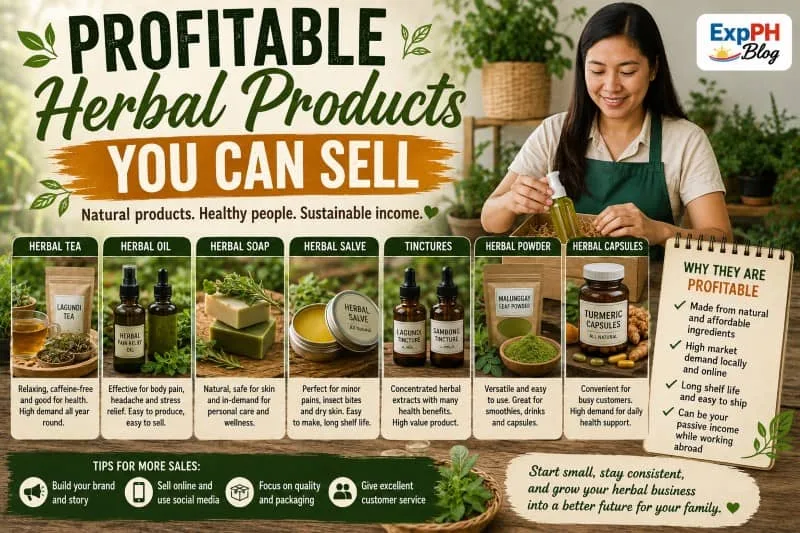
7. Profitable Herbal Products You Can Sell
A Herbal Farming Business for OFWs can become more profitable when raw medicinal plants are processed into value-added products. Instead of selling fresh herbs alone, OFWs can create products with higher market value and longer shelf life. This strategy also helps increase income opportunities and attract more customers.
Herbal Tea Products
Herbal teas are among the easiest products to produce because they require simple processing and packaging methods. Many consumers now prefer herbal drinks for relaxation and wellness support. Herbal tea products also appeal to online buyers looking for natural and convenient health-focused beverages for daily use.
Popular Ingredients
Several medicinal plants are commonly used in herbal tea blends because of their flavor, aroma, and wellness appeal.
- Lemongrass
- Ginger
- Turmeric
- Sambong
- Lagundi
Combining different herbs can help create unique tea products for specific customer preferences and wellness goals.
Advantages
Herbal tea products offer several business benefits for small herbal farming operations and online sellers.
- Longer shelf life
- Higher profit margins
- Easy online selling
Proper packaging and consistent quality can help herbal tea products compete more effectively in growing wellness markets.
Herbal Oils
Essential oils and infused oils continue gaining popularity in wellness, skincare, and aromatherapy industries. These products are often used for relaxation, massage, personal care, and home wellness routines. Herbal oils can also increase product value because processed oils usually sell at higher prices than raw herbs.
Examples
Several medicinal plants can be processed into herbal oils for wellness and personal care markets.
- Lemongrass oil
- Ginger oil
- Oregano oil
High-quality oils with clean packaging and proper labeling can attract customers looking for natural wellness products.
Herbal Soaps
Natural herbal soaps remain popular among consumers who prefer plant-based skincare products with fewer synthetic ingredients. Herbal soaps can appeal to eco-conscious buyers and customers interested in wellness-focused personal care items. These products also allow herbal farmers to create additional income streams from medicinal plant extracts.
Popular Ingredients
Different herbal ingredients can be added to soap products to improve scent, appearance, and skincare appeal.
- Aloe vera
- Turmeric
- Herbal extracts
Using natural ingredients and attractive packaging can improve customer interest and increase product value.
Powdered Herbal Products
Dried and powdered medicinal plants can be used in several food, wellness, and supplement products. Powdered herbs are easier to store and transport compared to fresh crops. This product category also allows herbal farmers to reduce waste by processing excess harvests into longer-lasting products.
Dried and Powdered Herbs Can Be Used For:
Powdered herbal products have flexible uses in wellness and food-related markets.
- Cooking
- Supplements
- Wellness drinks
Proper drying and storage methods help maintain product quality and extend shelf life.
Seedlings and Plant Kits
Some customers prefer growing medicinal herbs at home for personal use or small gardening projects. Selling seedlings and herbal planting kits can create an additional source of income for OFW herbal entrepreneurs. This market also attracts beginners interested in organic gardening and sustainable living practices.
You Can Sell:
Simple gardening products can appeal to customers who want to start growing medicinal plants at home.
- Starter kits
- Seedlings
- Organic soil bundles
Educational planting guides can also improve customer satisfaction and encourage repeat purchases.

8. Online Selling Strategies for Herbal Businesses
Digital selling creates more opportunities for OFWs and their families by helping herbal products reach customers across different locations. Online platforms also make it easier to promote products, communicate with buyers, and build long-term customer relationships. A strong online presence can support the growth of a Herbal Farming Business for OFWs.
Create a Facebook Page
Facebook remains one of the most effective platforms for small businesses in the Philippines because many consumers use it daily for shopping and product discovery. A business page allows herbal entrepreneurs to promote products, interact with customers, and share updates about farming activities and wellness-related content.
Post:
Consistent and useful content can help attract followers and improve customer engagement over time.
- Product photos
- Farming updates
- Health tips
- Customer testimonials
Posting regularly also helps increase visibility and strengthen trust with potential buyers interested in herbal and wellness products.
Sell Through Online Marketplaces
Online marketplaces provide herbal businesses with access to larger customer bases without requiring a physical store. These platforms also offer payment systems, delivery support, and promotional tools that help small businesses expand more quickly. Selling through multiple platforms can increase visibility and improve sales opportunities.
You Can Expand Reach Through:
Popular online marketplaces in the Philippines continue attracting buyers looking for wellness and herbal products.
- Lazada
- Shopee
- TikTok Shop
Using several marketplaces can help diversify income sources and reduce dependence on a single selling platform.
Build a Simple Website
A simple website can improve business credibility and help herbal products appear in search engine results over time. Websites also give OFW entrepreneurs more control over branding, product presentation, and customer communication. A professional website can strengthen trust and support long-term business growth.
Important Pages Include:
Clear and organized website pages help customers find important information more easily.
- Product catalog
- About the farm
- Contact page
- Customer reviews
A user-friendly website can improve customer experience and encourage repeat purchases from online buyers.
Share Educational Content
Educational content helps herbal businesses build trust by providing useful information instead of focusing only on product sales. Customers often appreciate learning about medicinal plants, organic farming, and wellness practices before making purchases. Informative content can also improve online engagement and strengthen brand authority over time.
Examples:
Helpful educational topics can attract health-conscious consumers and encourage more customer interaction.
- Benefits of medicinal plants
- Herbal tea preparation
- Organic farming tips
- Behind-the-scenes farm updates
Sharing valuable information regularly can help establish your herbal business as a trusted source within the wellness community.

9. Common Challenges in Herbal Farming
Every farming business faces risks and operational challenges, including a Herbal Farming Business for OFWs. Understanding these problems early allows OFWs to prepare better strategies and avoid costly mistakes. Proper planning, continuous learning, and good farm management can help reduce risks and improve long-term business stability.
Weather Problems
Typhoons, droughts, heavy rainfall, and flooding can seriously affect medicinal plant production in the Philippines. Extreme weather conditions may damage crops, reduce harvest quality, and interrupt farm operations. OFWs who invest in herbal farming should prepare protective measures to reduce possible losses during unpredictable weather conditions.
Solutions
Preventive farming strategies can help protect crops and improve farm resilience during changing weather conditions.
- Proper drainage systems
- Greenhouses
- Crop diversification
Combining different protective methods can reduce production risks and improve long-term farm sustainability.
Pest Issues
Medicinal plants can still experience pest problems even when grown using organic farming methods. Insects and plant diseases may reduce crop quality and lower harvest yields if left unmanaged. Regular monitoring and proper farm maintenance help prevent pest outbreaks from spreading across herbal farming areas.
Organic Solutions
Natural pest management methods can help control insects while supporting healthier farming practices.
- Neem spray
- Companion planting
- Natural pest repellents
Organic pest control methods may also appeal to customers who prefer chemical-free herbal products.
Inconsistent Buyers
Some herbal farmers struggle with unstable customer demand and inconsistent sales throughout the year. Relying on only a few buyers can increase financial risk if orders suddenly decrease. Building strong customer relationships and expanding product offerings can help improve long-term business stability.
Solutions
Different selling strategies can help maintain more stable sales and customer retention.
- Build repeat customers
- Offer subscriptions
- Diversify products
Developing loyal customers and multiple income sources can reduce dependence on seasonal market demand.
Lack of Farming Knowledge
Many beginners underestimate how much knowledge and practical experience herbal farming requires. Without proper guidance, new farmers may struggle with crop care, soil management, pest control, and harvesting techniques. Continuous learning is important for improving productivity and avoiding common farming mistakes.
Best Approach
Learning from experienced farmers and trusted educational resources can improve farming skills more effectively.
- Attend training seminars
- Watch educational videos
- Join local farming groups
- Learn from experienced growers
Practical experience combined with ongoing education can strengthen long-term farming success.
Product Quality Control
Poor drying, handling, or storage methods can reduce the quality and safety of herbal products. Damaged products may lose their aroma, appearance, or effectiveness, which can affect customer trust. Maintaining proper quality control standards helps improve product consistency and long-term business reputation.
Important Practices
Simple quality control methods can help preserve herbal products and improve customer satisfaction.
- Proper drying techniques
- Clean storage areas
- Airtight packaging
- Accurate labeling
Consistent product quality can strengthen customer confidence and support repeat business opportunities.

10. Legal and Safety Considerations for a Herbal Farming Business
If you plan to sell processed herbal products, it is important to follow local regulations and safety standards carefully. Proper compliance helps protect customers while improving business credibility and long-term sustainability. Following legal requirements also reduces the risk of penalties, product issues, or problems with product distribution and marketing.
The Food and Drug Administration Philippines provides official guidance regarding herbal products, food supplements, product labeling, and safety compliance. OFWs planning to create processed herbal items should review current regulations carefully before selling products in local or online markets.
Important Reminders
Proper safety practices help maintain product quality and build customer trust in herbal farming businesses.
- Avoid making unverified medical claims
- Use proper labeling
- Follow food safety standards
- Maintain cleanliness in production areas
Responsible business practices can strengthen customer confidence and help support the long-term success of a Herbal Farming Business for OFWs.

11. Sustainable Herbal Farming Practices for Long-Term Success
Sustainability plays an important role in building a successful Herbal Farming Business for OFWs because many consumers now prefer environmentally responsible products and farming methods. Sustainable practices can improve soil quality, reduce long-term operating costs, and strengthen business reputation while supporting healthier farming systems for future production.
Composting
Composting allows herbal farmers to convert organic waste into natural fertilizer instead of relying heavily on synthetic products. This method supports healthier soil while reducing farming expenses over time. Composting also helps improve moisture retention and soil structure, which can benefit the growth of medicinal plants.
Benefits Include:
Using compost regularly can improve both farm sustainability and crop productivity.
- Reduced costs
- Healthier soil
- Better plant growth
Natural fertilizers can also appeal to customers who prefer organically grown herbal products.
Water Conservation
Efficient water management helps reduce waste while supporting healthier crop production during dry seasons. Conserving water is especially important for herbal farms located in areas that experience drought or limited water supply. Proper irrigation systems can improve plant growth while lowering unnecessary water consumption.
Examples:
Simple water conservation methods can improve farm efficiency and long-term sustainability.
- Drip irrigation
- Rainwater collection
Using efficient watering systems may also help reduce monthly operating expenses for herbal farmers.
Soil Health Management
Healthy soil is essential for producing strong medicinal plants with good quality and consistent yields. Poor soil conditions can weaken crops and reduce productivity over time. Maintaining soil health through natural farming methods helps support long-term farm sustainability and better harvest performance.
Practices Include:
Good soil management practices can improve plant growth while protecting the environment.
- Crop rotation
- Organic matter application
- Avoiding excessive chemicals
Balanced soil conditions help medicinal plants grow more effectively and remain healthier throughout the farming cycle.
Eco-Friendly Packaging
Many consumers now prefer businesses that use environmentally friendly packaging materials instead of excessive plastic. Sustainable packaging can improve brand image while reducing environmental impact. Eco-friendly packaging also supports the growing demand for natural and wellness-focused products in modern markets.
Options Include:
Different packaging materials can help reduce waste while maintaining product quality and presentation.
- Paper packaging
- Recyclable containers
- Reusable jars
Sustainable packaging choices may also attract environmentally conscious customers who value responsible business practices.
Combining Herbal Farming With Agritourism
Some OFWs expand their herbal farms into agritourism destinations to create additional income opportunities and attract more visitors. Agritourism allows customers to experience herbal farming directly while learning about medicinal plants and natural wellness practices. This approach can also strengthen local tourism and community engagement.
Visitors Enjoy:
Herbal farm attractions can provide relaxing and educational experiences for tourists and wellness enthusiasts.
- Herbal gardens
- Farm tours
- Wellness experiences
- Tea tasting sessions
Agritourism can generate extra income while promoting Filipino culture, sustainable farming, and natural wellness products.

12. Success Traits of OFW Herbal Entrepreneurs
Not every Herbal Farming Business for OFWs becomes successful immediately because farming and business growth both require time, effort, and consistent improvement. However, many successful herbal entrepreneurs share similar habits and mindsets that help them overcome challenges and build sustainable businesses in the long run.
Patience
Herbal farming requires patience because medicinal plants need time to mature and produce quality harvests. Building a customer base also takes consistent effort and trust. OFWs who remain patient during slow periods are more likely to achieve steady business growth and long-term financial stability over time.
Continuous Learning
Agriculture and wellness markets continue changing as new farming methods, consumer trends, and product opportunities develop. Successful herbal entrepreneurs stay informed by learning new skills and improving their farming knowledge regularly. Continuous education helps farmers adapt to challenges while improving product quality and business performance.
Financial Discipline
Careful financial management is important during the early stages of herbal farming because unnecessary spending can reduce business stability. Successful OFW entrepreneurs usually focus on practical investments and gradual expansion instead of rushing into expensive projects. Financial discipline helps businesses survive challenges and maintain steady long-term growth.
Adaptability
Customer preferences and market trends can change over time, especially within the health and wellness industry. Flexible entrepreneurs adjust their products, marketing strategies, and farming methods based on customer demand and industry developments. Adaptability helps herbal businesses remain competitive and responsive to changing market conditions.
Commitment to Quality
Consistent product quality helps build customer trust and encourages repeat purchases over time. Successful herbal entrepreneurs focus on proper farming methods, clean processing practices, and reliable packaging standards. Maintaining high product quality can strengthen business reputation and improve long-term customer loyalty in competitive wellness markets.

13. Future Opportunities in Herbal Farming
The future of herbal farming in the Philippines continues to look promising as more consumers around the world focus on wellness, natural products, and sustainable living. Growing demand for medicinal plants creates new business opportunities for OFWs who want to build long-term income sources connected to health and agriculture.
Possible Future Opportunities Include:
Herbal farming businesses can expand into different industries and income streams as market demand continues to grow.
- Export markets
- Organic certification
- Herbal wellness brands
- Farm tourism
- E-commerce expansion
- Private labeling partnerships
These opportunities can help OFWs increase business value while reaching larger local and international markets.
OFWs who start early and build reliable farming systems may gain stronger advantages as the herbal wellness industry continues expanding. Consistent product quality, proper branding, and smart business planning can help herbal entrepreneurs compete more effectively and create sustainable long-term businesses for future generations.

14. FAQs About a Herbal Farming Business for OFWs
What is a Herbal Farming Business for OFWs?
A Herbal Farming Business for OFWs involves growing medicinal plants and creating wellness products that provide long-term income opportunities for Filipino families in the Philippines.
Which medicinal plants are profitable in the Philippines?
Popular medicinal plants include lagundi, sambong, turmeric, ginger, oregano, lemongrass, and aloe vera because they have strong wellness market demand and practical uses.
How much capital is needed to start herbal farming?
Small backyard herbal farms may start with ₱5,000 to ₱20,000, while larger provincial or commercial operations usually require higher investment and equipment costs.
Can OFWs manage herbal farms while working abroad?
Yes, OFWs can manage herbal farms remotely through trusted family members, digital communication tools, monthly reviews, expense tracking, and organized farm management systems.
Why is herbal farming becoming popular today?
Consumers increasingly prefer natural wellness products, organic farming practices, and plant-based remedies, which continue driving demand for medicinal herbs and herbal wellness businesses globally.
What products can herbal farmers sell besides fresh herbs?
Herbal farmers can sell teas, oils, soaps, powders, seedlings, skincare products, and wellness items to increase profits and create multiple income opportunities successfully.
Is herbal farming suitable for beginners?
Yes, herbal farming is beginner-friendly because many medicinal plants are easy to grow, require manageable maintenance, and can start in small backyard farming spaces.
How can herbal businesses attract more customers online?
Herbal businesses can attract customers through Facebook pages, online marketplaces, educational content, customer reviews, and professional websites that improve credibility and visibility online.
What are the common challenges in herbal farming?
Common challenges include weather problems, pests, inconsistent buyers, limited farming knowledge, and poor product storage practices that can affect product quality and profitability.
What makes herbal farming a good business for OFWs?
Herbal farming offers flexible operations, family involvement, growing wellness demand, manageable startup costs, and long-term opportunities for sustainable income and financial independence for OFWs.
Final Thoughts on Building a Herbal Farming Business for OFWs
Starting a Herbal Farming Business for OFWs is not only about growing medicinal plants for profit. It is also an opportunity to build a healthier and more sustainable future for Filipino families. Herbal farming can provide long-term income while supporting natural wellness, environmental responsibility, and stronger community connections in the Philippines.
Herbal farming combines agriculture, entrepreneurship, wellness, and sustainable business practices into one growing industry. Many successful farms begin with simple backyard gardens before expanding into larger operations with processed products, online selling, and wellness-focused branding. Small beginnings can eventually lead to stable and meaningful business opportunities.
For OFWs who want financial independence and a long-term investment back home, herbal farming offers a practical and flexible business path. With proper planning, patience, continuous learning, and smart marketing strategies, medicinal plants can become the foundation of a stable and rewarding natural health business for the entire family.
The journey may begin with one small herb garden, but steady effort and responsible business practices can transform that small project into a lasting legacy. Over time, a successful Herbal Farming Business for OFWs can provide financial security, family livelihood opportunities, and a sustainable source of pride for future generations.
Want to explore more income opportunities beyond herbal farming?
Read our guides on Best Business Ideas for Filipinos in 2026 and Top 10 Small Business Ideas in the Philippines for 2026 to discover practical startup ideas, profitable business opportunities, and sustainable ventures that can help Filipino families and OFWs build long-term financial growth and stable income in the Philippines.
Related Articles
- Beekeeping and Honey Production: A Unique Agribusiness Idea for OFWs
- Rice Retail and Distribution Business: A Stable Income Opportunity for OFWs
Herbal Farming and Medicinal Plants Quiz
Test your knowledge about herbal farming, medicinal plants, and natural health business opportunities for OFWs. This quiz is perfect for readers who want to learn more about sustainable farming, wellness products, and profitable herbal business ideas in the Philippines.
Results


#1. Which plant is popular for cough support?
#2. Which platform helps online selling?
#3. What improves soil naturally?
#4. Which herb is common in teas?
#5. What helps reduce farming risks?
#6. Which product uses aloe vera?
#7. What supports remote management?
#8. Which farming practice saves water?
#9. Why is branding important?
#10. What attracts eco-conscious buyers?
We appreciate you for taking this quiz and supporting ExpPH Blog
Feel free to share your score and comment about your herbal farming experience or business ideas with us below. Your insights may also inspire fellow OFWs and future herbal entrepreneurs.

A Filipino web developer with a background in Computer Engineering. Founder of ExpPH Blog and ExpPH Business Guide, creating practical content on OFW guidance, business, finance, freelancing, travel, and lifestyle. Passionate about helping Filipinos grow, he shares insights that educate, empower, and inspire readers nationwide.