
Practical Relocation Planning Tips for Returning OFWs
Returning home after years of working abroad is both exciting and overwhelming. Many Overseas Filipino Workers dream of finally reuniting with family, starting a negosyo, or enjoying a more stable life in the Philippines. However, without proper preparation, the transition can become financially and emotionally stressful.
This comprehensive guide shares practical and realistic returning OFW relocation tips to help you prepare before departure, manage your finances wisely, and reintegrate smoothly into Philippine life. Whether you plan to retire, start a business, shift careers, or simply settle down with your family, careful relocation planning will protect your hard earned savings and support long term stability.
Table of Contents

Understanding the Reality of Returning Home
Relocating back to the Philippines is more than booking a flight and packing your belongings. It is a major life transition that affects your finances, career direction, housing plans, family roles, and emotional well being. Careful preparation helps you adjust smoothly and avoid unnecessary stress.
Why Planning Is Crucial for Returning OFWs
Many returning OFWs believe that savings alone will sustain them after coming home. However, expenses often increase faster than expected during the transition period. Costs may include:
- Housing adjustments or renovations
- Business startup capital
- Children’s school fees
- Healthcare needs
- Daily cost of living changes
Practical returning OFW relocation tips always start with preparation instead of emotion. A clear financial plan reduces uncertainty and protects your long term stability.
Setting Clear Relocation Goals
Before resigning or ending your contract abroad, take time to define your relocation objectives clearly. Ask yourself:
- Are you returning permanently or temporarily?
- Do you plan to start a business or seek local employment?
- Will you move to your home province or a new city?
- Do you already have stable income after returning?
Clear answers prevent rushed decisions. Writing down your goals creates direction and supports smarter relocation planning.
Financial Preparation Before Returning
Financial readiness forms the foundation of a successful relocation. Before making any final decisions, evaluate your financial position carefully. Returning without a clear understanding of your resources can create unnecessary pressure. Strong returning OFW relocation tips always emphasize financial discipline and realistic planning.
Assess Your Current Savings and Assets
Begin by reviewing your complete financial picture. This includes:
- Total savings in Philippine peso
- Foreign currency accounts
- Investments
- Insurance policies
- Outstanding loans or obligations
Convert your foreign earnings into realistic Philippine living projections. Consider current exchange rates and local costs. Avoid assuming your savings will last longer than they actually can.
Create a 12 Month Transition Budget
One of the most practical returning OFW relocation tips is preparing a detailed budget for your first year after returning. A structured plan helps you manage expenses responsibly.
Include:
- Housing expenses
- Utilities and groceries
- Transportation
- School tuition
- Medical expenses
- Business capital
- Emergency fund allocation
A one year financial buffer provides stability while you adjust and rebuild income sources.
Build or Maintain an Emergency Fund
Unexpected costs may arise even after careful planning. Medical needs, job delays, or business setbacks can strain your finances. Aim to maintain at least six months of living expenses separate from business or investment funds. This reserve reduces stress and supports smoother transition decisions.

Career Planning and Income Transition
Returning OFWs often face a critical question. What will replace my overseas income once I return home? A stable income plan should be prepared before relocation. Clear career planning reduces uncertainty and protects your savings during the transition period.
Evaluating Employment Opportunities in the Philippines
Study local job market conditions before finalizing your return. Consider:
- Industry demand
- Average salary rates
- Required certifications
- Geographic job availability
You may verify employment programs and labor support services through the Philippine Department of Labor and Employment at https://www.dole.gov.ph for official guidance. Understanding local salary realities helps prevent unrealistic financial expectations.
Exploring Freelancing and Remote Work
Some returning OFWs continue serving international clients while living in the Philippines. This arrangement allows you to earn in foreign currency while benefiting from local living costs. Research reliable platforms, build a professional portfolio, and strengthen digital skills before your relocation date.
Upskilling Before Returning
One of the most practical returning OFW relocation tips is investing in skill development before coming home. If you plan to shift careers or enter freelancing, structured online learning can support your transition.
For example, you can explore practical business, digital marketing, freelancing, and entrepreneurship courses through Udemy, which offers flexible programs suitable for working professionals. Choose courses aligned with your income goals rather than random topics. Strategic learning strengthens your earning potential and long term stability.

Planning for Business Ventures
Many returning OFWs plan to start a negosyo as their primary income source. While entrepreneurship offers opportunity, it also carries risk. Careful research and disciplined planning are essential. Practical returning OFW relocation tips emphasize preparation before investing hard earned savings.
Assessing Business Viability
Before investing capital, evaluate the business idea carefully. Make sure you:
- Conduct market research
- Study competitors
- Understand target customers
- Calculate operational costs
- Project realistic sales
Avoid copying trending businesses without proper analysis. Sustainable enterprises grow from real demand and sound planning, not temporary hype or social influence.
Starting Small and Testing First
Instead of investing your entire savings at once, begin with controlled experimentation. Consider:
- Pilot projects
- Limited inventory
- Small scale operations
Testing the market allows you to gather feedback and adjust strategies. This approach reduces financial risk and helps preserve capital during your transition period.
Separating Personal and Business Funds
Always maintain a separate bank account for business transactions. Mixing personal and negosyo funds creates confusion and weakens financial control. Clear separation improves budgeting accuracy and supports better cash flow management. Financial discipline strengthens long term business sustainability.

Housing and Living Arrangements
Where and how you live after returning plays a major role in your financial stability. Housing decisions can quickly affect your budget and long term savings. Careful evaluation helps prevent unnecessary expenses during your transition back to the Philippines.
Deciding Between Renting and Building
If you already own property, renovation or repair costs may still be required before moving in. If you do not own a home, compare your options carefully:
- Rental costs in your target area
- House construction expenses
- Mortgage obligations
Avoid committing to expensive housing unless your income sources are already stable and predictable.
Temporary Accommodation Strategy
Some returning OFWs choose short term accommodation while finalizing permanent housing plans. This flexible approach prevents rushed decisions and allows time for proper evaluation. Plan temporary stays carefully to control costs and avoid exceeding your relocation budget.
Managing Family and Social Adjustments
Relocation is not only about money or career plans. Emotional and social reintegration plays an equally important role in a successful return. Adjusting to family routines and community life requires patience, understanding, and open communication.
Rebuilding Family Roles
After years of working abroad, family dynamics may have shifted. Responsibilities and routines might already be established. Take time to discuss:
- Financial responsibilities
- Household roles
- Decision making authority
Clear and respectful communication helps prevent misunderstandings and supports smoother adjustment for everyone involved.
Supporting Children’s Transition
If you have children, their adjustment should be a priority. Relocation can affect their education and emotional stability. Consider:
- School enrollment timing
- Curriculum adjustments
- Emotional support
Early preparation minimizes disruption and helps children adapt more confidently to their new environment.

Healthcare and Insurance Considerations
Healthcare expenses in the Philippines can vary widely depending on location and medical needs. Without proper coverage, unexpected illness or emergencies may strain your savings. Careful healthcare planning is essential for financial protection and long term stability after relocation.
Reviewing Existing Insurance Coverage
Before returning, confirm whether your overseas insurance remains valid once you relocate permanently. If coverage ends, explore suitable local options:
- Local health insurance providers
- PhilHealth enrollment
- Private coverage options
Healthcare planning is a key part of responsible returning OFW relocation tips and protects your family from sudden financial burdens.
Legal and Documentation Requirements
Returning permanently to the Philippines may require updating important records and personal information. Keeping your documents accurate ensures smooth transactions with government offices and financial institutions. Proper documentation protects you from delays, penalties, and unnecessary legal complications after relocation.
Updating Government Records
After returning, review and update essential records to reflect your current status. Make sure the following are properly updated:
- Tax identification
- Voter registration
- PhilHealth status
- SSS contributions
Accurate records help maintain eligibility for benefits and prevent administrative issues in the future.

Psychological Preparation for Reverse Culture Shock
Many returning OFWs underestimate the emotional challenges of coming home. While reunion brings joy, adjustment can take time. Mental preparation is just as important as financial planning. Recognizing emotional changes early helps you respond calmly and adapt more smoothly.
Understanding Reverse Culture Shock
After living abroad for years, daily life in the Philippines may feel unfamiliar. Differences in the following areas can cause frustration:
- Work culture
- Efficiency levels
- Infrastructure
- Social interactions
Accepting that adjustment takes time prepares you mentally and reduces unnecessary disappointment during reintegration.
Building a Support Network
A strong support system makes transition easier. Stay connected with:
- Fellow returning OFWs
- Business mentors
- Community groups
Sharing experiences and practical advice helps you adjust faster and feel less isolated during the relocation process.
Creating a Step by Step Relocation Timeline
A clear timeline transforms plans into organized action. Instead of making rushed decisions, you follow a structured schedule that prepares you financially and emotionally. One of the most effective returning OFW relocation tips is breaking preparation into manageable stages.
6 to 12 Months Before Returning
Start planning early to strengthen your financial position and career direction. Focus on the following priorities:
- Save aggressively
- Complete skill development
- Research job or business options
- Evaluate housing plans
Early preparation provides flexibility and reduces pressure as your return date approaches.
3 to 6 Months Before Returning
As your relocation becomes closer, shift your focus to final arrangements. During this stage:
- Confirm income strategy
- Reduce unnecessary liabilities
- Finalize relocation date
- Prepare documents
These actions help secure your transition and prevent avoidable complications.
1 Month Before Departure
In the final month, concentrate on practical logistics and coordination. Make sure you:
- Arrange logistics
- Inform relevant institutions
- Set up temporary living arrangements
Structured timelines reduce last minute panic and ensure a smoother relocation experience.
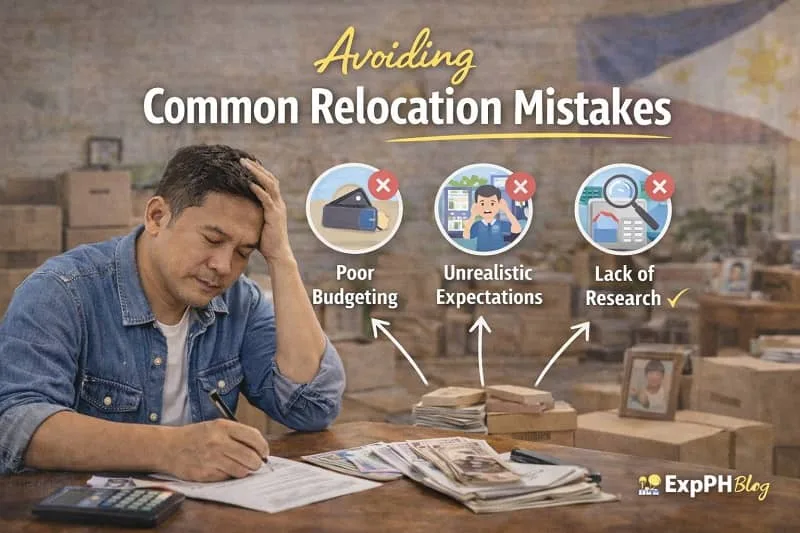
Avoiding Common Relocation Mistakes
Learning from the experiences of other returning OFWs can help you avoid costly errors. Careful planning and realistic expectations protect your savings and reduce stress. Smart returning OFW relocation tips focus on preventing mistakes before they happen.
Rushing Into Large Investments
Avoid committing large amounts of money without thorough research. Be cautious about:
- Unverified business partnerships
- Large scale construction
- High risk ventures
Patience protects your capital and allows you to evaluate opportunities carefully before making major financial commitments.
Ignoring Local Economic Conditions
Before making long term decisions, study current economic conditions. Review inflation rates, local employment data, and industry trends. Understanding the financial environment helps you make informed choices and avoid unrealistic expectations about income and expenses.
Overestimating Social Support
Family support is valuable during relocation, but it should not replace financial planning. Prioritize independence by maintaining your own income strategy and savings buffer. Responsible preparation strengthens both your confidence and your long term stability.
Building Long Term Stability After Returning
Relocation marks the start of a new chapter rather than the final step. Long term stability depends on consistent effort and responsible financial habits. Applying practical returning OFW relocation tips after settling back home helps protect your future and support steady growth.
Diversifying Income Streams
Relying on a single source of income increases financial risk. Strengthen stability by combining:
- Small business
- Freelancing
- Investments
- Part time employment
Multiple income streams create flexibility and provide protection if one source becomes unstable or temporarily unavailable.
Practicing Continuous Financial Discipline
Sustainable success requires disciplined financial management. Make it a habit to maintain:
- Monthly budgeting
- Expense tracking
- Savings contributions
- Emergency fund maintenance
Consistency in these practices strengthens security and supports long term financial confidence.
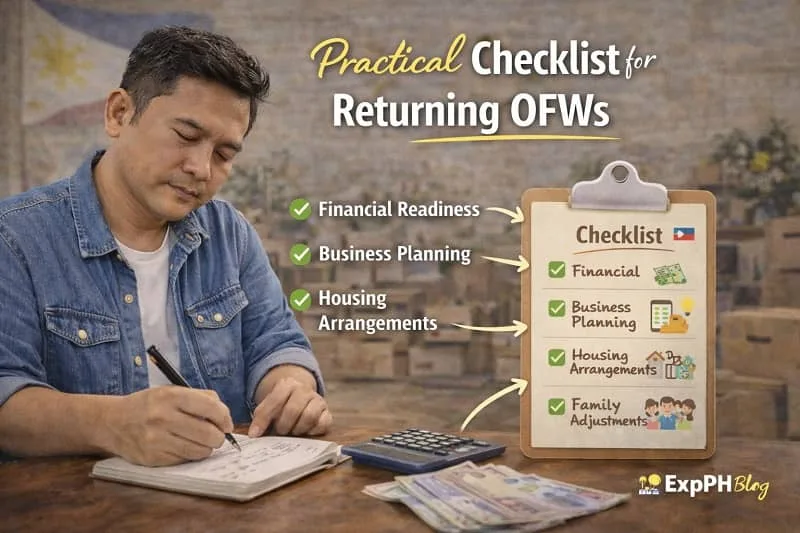
Practical Checklist for Returning OFWs
A structured checklist helps you stay organized and focused during relocation. Reviewing clear action steps reduces confusion and prevents overlooked details. To summarize these returning OFW relocation tips, use the following practical guide as your preparation reference.
- Define relocation goals
- Prepare a 12 month budget
- Secure emergency funds
- Develop income replacement strategy
- Research business or employment options
- Plan housing carefully
- Update documentation
- Prepare emotionally for reintegration
Following this checklist supports a smoother transition and strengthens your long term stability after returning home.
Final Thoughts on Returning OFW Relocation Tips
Relocating back to the Philippines is a meaningful milestone that brings hope and new opportunity for you and your family. However, long term success does not happen by chance. It requires preparation, steady financial discipline, and realistic expectations about income, expenses, and lifestyle adjustments. When you approach your return with a clear plan, you reduce uncertainty and create a smoother transition into your new chapter at home.
By applying these comprehensive returning OFW relocation tips, you can turn your return into a stable and rewarding stage of life. Thoughtful planning protects your hard earned savings, strengthens your family’s security, and builds a strong foundation for sustainable growth. Take your time to research carefully, invest in practical skills, manage your finances responsibly, and move forward with patience and confidence.
Continue learning and planning your next move with these helpful guides:
- Camiguin Island The Island Born of Fire
- 10 Affordable Weekend Getaways Near Manila
- Discovering the Beauty of Mindoro and Palawan
- How OFWs Can Plan a Smooth Transition Back Home
- Top 10 Small Business Ideas in the Philippines for 2026
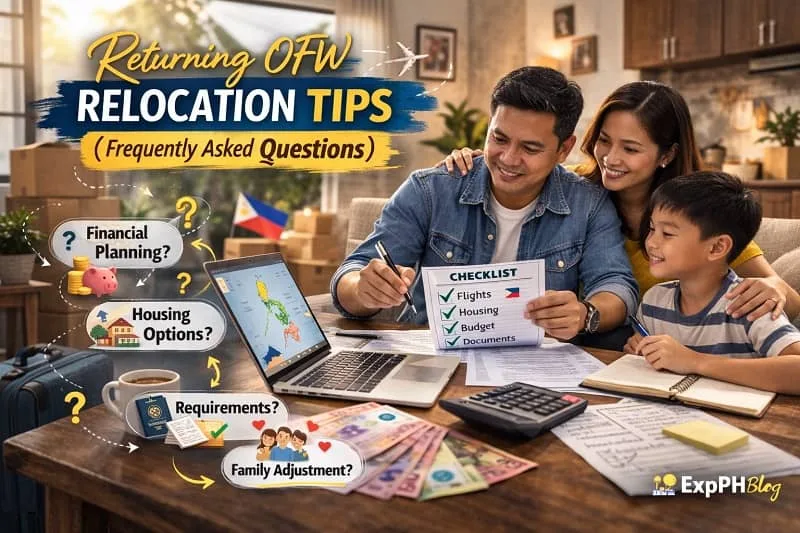
Frequently Asked Questions
What are the most important returning OFW relocation tips before going home?
The most important tips include preparing a one year budget, securing emergency savings, researching income opportunities, updating documents, and planning housing arrangements carefully before departure.
How much savings should a returning OFW prepare before relocating?
A returning OFW should ideally prepare at least six to twelve months of living expenses to cover housing, food, utilities, healthcare, and income transition adjustments.
Is it better to find a job before returning to the Philippines?
Yes, securing employment or confirming income sources before returning reduces financial pressure and helps ensure smoother adjustment during the initial months of relocation.
Should returning OFWs start a business immediately?
It is better to research thoroughly and test small scale operations first before investing large capital to minimize financial risk and protect savings.
How can returning OFWs prepare for income changes?
Returning OFWs can prepare by creating a detailed budget, upskilling for new opportunities, exploring freelancing options, and building alternative income streams early.
What documents should be updated after returning home?
Returning OFWs should update tax records, SSS contributions, PhilHealth membership, voter registration, and other government documents to avoid future administrative complications.
How can families adjust after an OFW returns permanently?
Families can adjust by discussing financial responsibilities, redefining household roles, setting expectations, and maintaining open communication to prevent misunderstandings.
Is healthcare planning necessary before relocation?
Yes, reviewing health insurance coverage and enrolling in local healthcare programs ensures financial protection against unexpected medical expenses after returning.
What are common mistakes returning OFWs should avoid?
Common mistakes include rushing into large investments, overspending on housing, ignoring local job realities, and failing to maintain emergency savings.
How can returning OFWs reduce relocation stress?
Returning OFWs can reduce stress by planning early, setting realistic goals, organizing finances carefully, and seeking support from trusted family members and mentors.
Learning Hub Quiz!
Test your understanding of practical relocation planning with this short quiz designed for returning OFWs.
Results


#1. What should returning OFWs prepare first?
#2. How many months of emergency savings are recommended?
#3. What should OFWs confirm before resigning abroad?
#4. Why create a relocation timeline?
#5. What is a safe business approach after returning?
#6. Why separate business funds?
#7. What helps reduce relocation stress?
#8. What should be updated after returning?
#9. Why consider upskilling before returning?
#10. What protects savings during transition?
We appreciate you taking the time to complete this quiz.
Share your score and relocation experience in the comments. Your journey can inspire and guide fellow OFWs preparing to return home.

A Filipino web developer with a background in Computer Engineering. Founder of ExpPH Blog and ExpPH Business Guide, creating practical content on OFW guidance, business, finance, freelancing, travel, and lifestyle. Passionate about helping Filipinos grow, he shares insights that educate, empower, and inspire readers nationwide.