

Best Productivity Habits Filipinos and OFWs Should Practice in 2026

Productivity is no longer just about working harder. In 2026, productivity is about working smarter, healthier, and more intentionally, especially for Filipinos and Overseas Filipino Workers who juggle demanding schedules, family responsibilities, and long-term financial goals.
For many OFWs, time is the most limited resource. Long shifts, rotating schedules, cultural adjustments, and distance from loved ones can make daily routines feel exhausting rather than empowering. That is why building the right productivity habits for OFWs is not optional anymore. It is essential for career stability, mental well being, and future planning.
This guide focuses on realistic, practical, and sustainable productivity habits that Filipinos and OFWs can apply in real life. These habits are designed for 2026 realities, including remote work, digital learning, side hustles, and mental health awareness. This is not about hustle culture. This is about building a better daily system that supports your goals.
Why Productivity Habits Matter More for Filipinos and OFWs in 2026
Productivity has become more important for Filipinos and OFWs as work demands continue to increase. Long hours, high expectations, and constant adjustments make it harder to stay focused and healthy. Strong productivity habits help individuals manage responsibilities better while protecting energy, well being, and long term personal goals.
The evolving work reality of OFWs
Work environments for OFWs continue to shift as employers expect faster results, flexibility, and digital skills. Despite these rising demands, working hours often remain long and rest time limited. Without intentional productivity habits, many OFWs risk chronic stress, reduced focus, and eventual burnout.
Productivity habits for OFWs create structure within unpredictable schedules. They help reduce wasted effort, protect personal time, and support better planning. With clear routines, OFWs can focus on savings goals, skill development, career transitions, and future plans, including returning to the Philippines with stability.
Productivity is tied to health and safety
Poor productivity habits often lead to sleep deprivation, chronic stress, and health issues. According to guidance from the World Health Organization, long working hours are associated with increased risk of heart disease and stroke, especially when rest and recovery are neglected. This makes healthy productivity systems not just helpful, but necessary.
You can read the official WHO guidance on healthy work practices:
https://www.who.int/japan/news/detail-global/17-05-2021-long-working-hours-increasing-deaths-from-heart-disease-and-stroke-who-ilo
For OFWs, productivity should always support health, not sacrifice it.
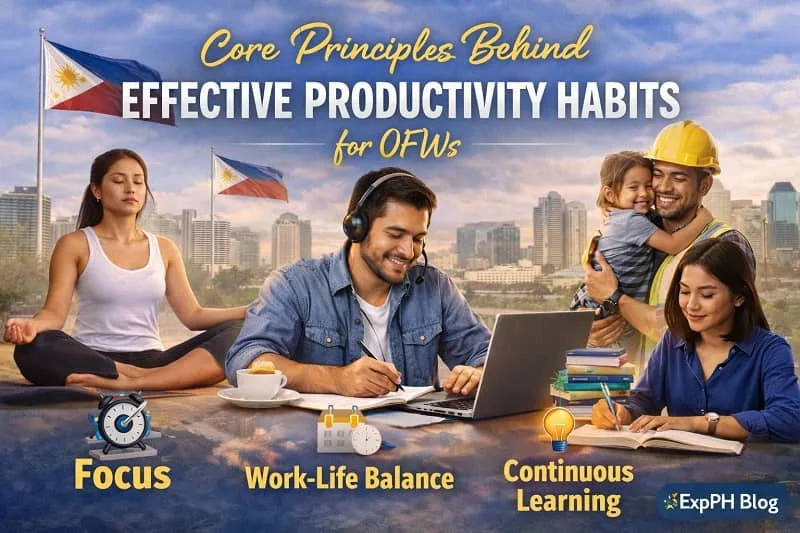
Core Principles Behind Effective Productivity Habits for OFWs
Effective productivity habits are built on simple principles that fit real OFW life. These principles focus on consistency, balance, and purpose rather than pressure or constant motivation. When productivity is guided by clear systems and personal goals, it becomes easier to maintain even during busy or stressful periods.
Productivity is a system, not motivation
Motivation is unreliable and often fades when you feel tired, homesick, or overwhelmed. Productivity habits work best when they rely on simple systems instead of emotions. A clear system helps OFWs stay consistent, complete important tasks, and remain productive even on days with low energy.
Small improvements compound over time
You do not need extreme routines or sudden changes to improve productivity. Small actions repeated daily create meaningful progress over time. This approach is especially important for OFWs who must protect their energy, avoid burnout, and stay consistent despite demanding work schedules.
Productivity should support life goals
Productivity habits for OFWs should always connect to real life outcomes rather than constant busyness. Effective routines support income stability, skill development, family connection, and mental well being. When productivity aligns with personal goals, daily effort feels purposeful and easier to sustain.
Habit 1: Structured Daily Planning That Fits OFW Schedules
Structured daily planning helps OFWs manage demanding schedules without adding pressure. Since work hours often change, productivity habits should adapt to real energy levels rather than fixed routines. A flexible daily structure allows better focus, healthier pacing, and steady progress even during long or unpredictable workdays.
Create a realistic daily structure
Many productivity guides assume a fixed nine to five schedule, which rarely works for OFWs. Instead of planning by clock hours, structure your day based on energy levels. This method supports better focus, reduces fatigue, and helps maintain consistency across changing work shifts.
Identify the following each day:
- High-energy periods for focused tasks
- Low-energy periods for rest or light activities
- Fixed commitments like work shifts and family calls
This approach makes productivity habits for OFWs more realistic and easier to sustain over time.
Use a simple daily planning method
Complex planners often create stress instead of clarity. A simple daily planning method helps OFWs stay focused without feeling overwhelmed. Limiting priorities encourages completion, builds momentum, and keeps productivity manageable even during busy or tiring days.
Use this simple structure:
- One main task for the day
- Two supporting tasks
- One personal or rest activity
This balance supports progress while protecting energy and mental well being.

Habit 2: Clear Weekly and Monthly Goal Setting
Clear weekly and monthly goals give direction to daily effort. For OFWs, goal setting prevents busy work and helps align tasks with long term priorities. When productivity is guided by clear outcomes, time and energy are used more intentionally and with greater purpose.
Connect daily tasks to long-term goals
Productivity without direction leads to activity without progress. OFWs should define weekly and monthly goals that guide daily decisions and actions. Clear goals make it easier to prioritize important tasks and stay focused despite demanding schedules.
Weekly and monthly goals should relate to:
- Financial targets
- Skill development
- Health routines
- Family priorities
This connection keeps productivity meaningful and aligned with real life needs.
Review goals regularly
Regular goal reviews help OFWs adjust plans without guilt or frustration. Weekly check ins allow flexibility when work conditions change suddenly. Reviewing progress also highlights what works well, what needs improvement, and which goals remain most important at the moment.
Habit 3: Focus Management in a Distracted Digital World
Managing focus has become one of the most important productivity habits for OFWs. Constant notifications and digital demands can easily break concentration. Learning how to protect attention helps improve work quality, reduce stress, and create more time for rest, family, and personal development.
Reduce unnecessary digital noise
Phones and social media are major sources of distraction, especially for OFWs who rely on them to stay connected with loved ones. Without boundaries, constant notifications can reduce focus and increase mental fatigue during work hours.
Set clear digital boundaries by:
- Scheduling family calls intentionally
- Limiting social media use during workdays
- Using app timers when necessary
Protecting focus is essential for sustainable productivity.
Practice single-tasking
Multitasking may feel productive but often reduces efficiency and increases stress. Single-tasking allows OFWs to focus fully on one task at a time, complete work faster, and maintain better quality. This approach also frees up time for rest, learning, or personal activities.

Habit 4: Skill-Based Productivity Instead of Just Time Management
Skill based productivity focuses on improving how you work rather than only working faster. For OFWs, developing the right skills leads to better efficiency, higher confidence, and stronger career opportunities. This approach supports long term growth while reducing stress and unnecessary effort.
Productivity increases when skills improve
Working faster has natural limits and often leads to fatigue. Working smarter through better skills creates lasting benefits. Learning skills connected to your current role or future plans improves efficiency, raises income potential, and allows OFWs to complete tasks with less effort and greater accuracy.
Using online learning as a productivity tool
One practical way to support productivity habits for OFWs is through structured online learning. Instead of random tutorials, guided courses help build focused skills efficiently.
Platforms like Udemy offer flexible, self-paced courses in productivity, time management, digital skills, freelancing, and career development, allowing OFWs to learn during rest days or off-hours without pressure.
Learning with structure reduces wasted time and increases confidence, which directly supports long-term productivity.

Habit 5: Energy Management Through Sleep, Nutrition, and Movement
Energy management is essential for sustainable productivity, especially for OFWs with long and demanding schedules. Managing sleep, nutrition, and movement helps protect focus, improve endurance, and prevent burnout. When energy is prioritized, productivity becomes more consistent and easier to maintain over time.
Productivity starts with rest
No productivity habit works without enough rest. OFWs should focus on sleep quality rather than just total hours. Better sleep improves focus, mood, and physical health, which directly supports daily performance and long term productivity.
Simple ways to improve rest include:
- Maintaining a consistent sleep schedule
- Limiting screen use before bedtime
- Taking short naps when schedules allow
Fuel your body properly
Proper nutrition plays a major role in productivity and energy levels. Balanced meals help maintain focus and stamina throughout the day. Skipping meals or relying heavily on fast food can lead to fatigue, poor concentration, and long term health problems.
Move regularly, even briefly
Regular movement supports mental clarity and reduces physical tension caused by long work hours. Short walks, light stretching, or simple exercises can refresh the mind and body. OFWs do not need long workouts to experience the productivity benefits of daily movement.
Habit 6: Setting Boundaries Between Work and Personal Life
Setting clear boundaries helps OFWs maintain balance between professional duties and personal well being. Without limits, work can easily take over rest and family time. Healthy productivity habits include protecting personal space so energy remains steady and burnout is less likely.
Learn to say no when necessary
Many OFWs feel pressure to accept extra tasks to please employers or coworkers. Respectfully saying no when limits are reached is part of healthy productivity. Clear boundaries protect energy, improve focus, and reduce long term stress without harming professional relationships.
Protect personal time
Personal time is essential for recovery and emotional health. OFWs should schedule time for rest, hobbies, and family just like work tasks. Productivity habits for OFWs should support a better quality of life, not consume every hour of the day.

Habit 7: Financial Productivity Through Intentional Money Habits
Financial productivity helps OFWs manage money with less stress and better control. Intentional money habits reduce daily decisions and support long term financial goals. When finances are organized, mental focus improves and productivity in other areas of life becomes easier to maintain.
Automate where possible
Automation helps reduce decision fatigue and financial stress. Setting up automated savings, bill payments, and budgeting systems allows OFWs to manage money consistently. This approach frees mental space for work, family, and personal priorities while ensuring financial responsibilities are handled on time.
Align productivity with financial goals
Productivity habits become more meaningful when they support clear financial goals. When daily actions align with saving, investing, or business plans, motivation feels natural. This connection helps OFWs stay disciplined while making steady progress toward long term financial security.
Habit 8: Mental Resilience and Emotional Productivity
Mental resilience plays a key role in sustainable productivity for OFWs. Emotional pressure, homesickness, and work stress can affect focus and motivation. Building habits that support emotional balance helps maintain clarity, improve decision making, and protect overall well being during demanding work periods.
Manage stress proactively
Stress reduces focus and weakens decision making when left unmanaged. Simple practices such as journaling, breathing exercises, or quiet reflection help regulate emotions. These habits allow OFWs to respond calmly to challenges instead of reacting under pressure, supporting steadier productivity throughout the day.
Stay connected with purpose
Family communication should be intentional and meaningful rather than constant and draining. Purposeful connection supports emotional health while protecting focus. When OFWs set healthy communication boundaries, they stay emotionally grounded without losing energy needed for work and personal responsibilities.
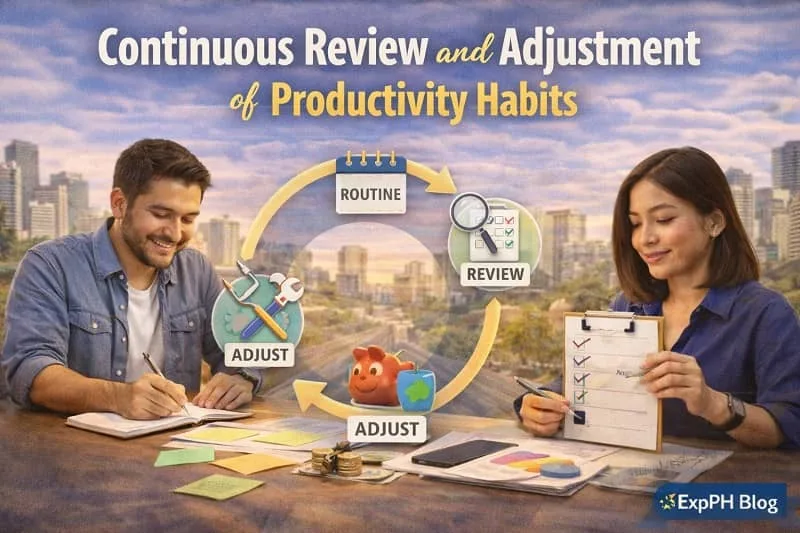
Habit 9: Continuous Review and Adjustment of Productivity Habits
Productivity habits should grow and change with your life situation. For OFWs, routines that work today may not fit future demands. Regular review allows habits to remain helpful, realistic, and aligned with current responsibilities rather than becoming a source of pressure or frustration.
What works now may not work later
OFW life stages change over time, which means productivity habits must also evolve. Regular self checks help refine routines without self criticism and keep habits practical.
Productivity habits should adjust with:
- Job changes
- Family needs
- Health priorities
Track progress, not perfection
Progress is built through consistency rather than perfection. Missing a day does not erase improvement or effort. Tracking small wins helps OFWs stay motivated, recognize growth, and maintain healthy productivity habits without unnecessary guilt or pressure.
Habit 10: Building a Long-Term Productivity Identity
Long term productivity is easier to maintain when it becomes part of who you are. For OFWs, building a productivity identity helps habits feel natural rather than forced. This approach supports consistency, confidence, and steady progress even during stressful or demanding periods.
See yourself as a disciplined person
Productivity habits for OFWs last longer when they are tied to personal identity rather than daily tasks. How you describe yourself influences your actions and choices.
Instead of saying:
- I try to be productive
Say:
- I value structured and balanced living
This mindset shift supports long term success and healthier daily habits.
Common Productivity Mistakes Filipinos and OFWs Should Avoid
Understanding common productivity mistakes helps Filipinos and OFWs build healthier routines. Many productivity issues come from unrealistic expectations or borrowed habits that do not fit real life. Avoiding these mistakes allows productivity habits to support long term goals, energy, and overall well being.
Overloading schedules
Trying to do too much at once often leads to frustration and unfinished tasks. Too many goals reduce focus and increase stress. OFWs benefit from choosing fewer priorities each day so energy can be used effectively and progress feels achievable.
Copying routines from others
What works for influencers or coworkers may not suit OFWs with different schedules and responsibilities. Productivity habits should be personalized based on work demands, energy levels, and life goals. Copying routines without adjustment often creates pressure instead of real improvement.
Ignoring rest and recovery
Many people treat burnout as a sign of dedication, but this mindset is harmful. Sustainable productivity requires proper rest and recovery. Without enough rest, focus declines, health suffers, and long term productivity becomes impossible to maintain.
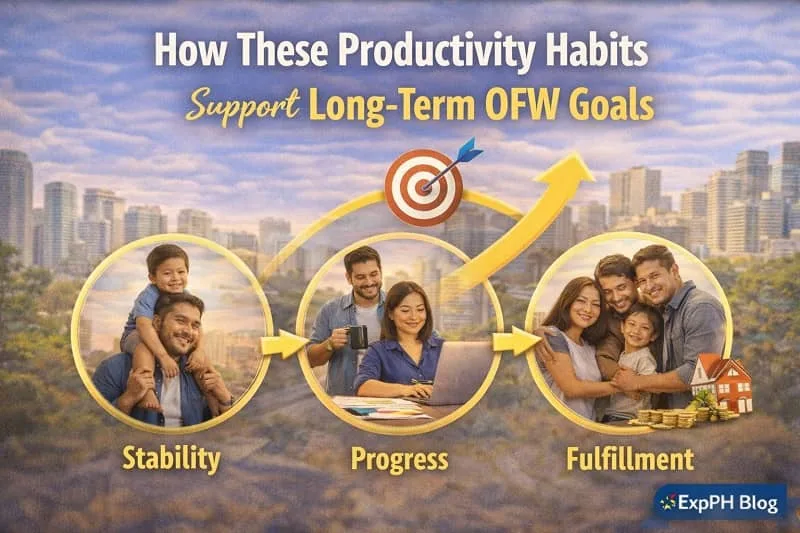
How These Productivity Habits Support Long-Term OFW Goals
Strong productivity habits support long term goals by creating balance between work, health, and personal priorities. For OFWs, consistent routines help manage demanding schedules while supporting growth, stability, and future planning. Productivity becomes a tool for progress rather than constant pressure.
Career growth and stability
Better productivity improves job performance and reliability. When OFWs manage tasks efficiently, they gain trust, reduce errors, and become more adaptable to change. These habits open opportunities for career advancement and create greater stability in both current roles and future job transitions.
Financial security
Using time efficiently allows OFWs to manage income more intentionally. Productivity habits support budgeting, saving, and long term planning by reducing wasted effort. When daily routines align with financial goals, progress toward security becomes steadier and less stressful over time.
Mental and emotional well being
Balanced routines help reduce stress and protect emotional health. Productivity habits that include rest, boundaries, and personal time improve focus and mood. For OFWs, this balance leads to better quality of life and sustained motivation across demanding work periods.
Final Thoughts on Productivity Habits for OFWs in 2026
Productivity in 2026 is not about doing more tasks or filling every hour with work. It is about focusing on what truly matters with intention, balance, and care. For Filipinos and OFWs, productivity habits must respect real life challenges such as long work hours, distance from family, and limited energy. When routines support both work demands and personal well being, productivity becomes sustainable and meaningful.
Building productivity around systems instead of motivation helps OFWs stay consistent even on difficult days. Managing energy rather than time alone allows better focus and healthier routines. Continuous skill improvement adds long term value and confidence. The best productivity habits for OFWs make daily life lighter and more manageable. Start with small steps, stay consistent, and allow your routines to evolve as your goals and circumstances change.
Continue your learning journey with these posts.
- How to Create a Productive Workspace at Home
- How to Stay Productive When Working from Home
- Best Work-Life Balance Tips for Filipinos and OFWs in 2026
- Best Reintegration Plans for Returning OFWs in 2026
- Best OFW Success Habits to Build in 2026
FAQs About Productivity habits for OFWs
What are the best productivity habits Filipinos and OFWs should practice in 2026?
The best habits include structured planning, focus management, continuous learning, proper rest, financial discipline, and routines that support long term career and life goals.
Why are productivity habits important for OFWs?
Productivity habits for OFWs help manage long work hours, reduce stress, protect health, improve income stability, and create time for family and personal growth.
How can OFWs stay productive despite long and irregular work schedules?
OFWs can stay productive by planning around energy levels, prioritizing key tasks, using simple routines, and allowing flexibility instead of rigid schedules.
What productivity habit helps OFWs avoid burnout?
Prioritizing rest, setting work boundaries, managing stress intentionally, and scheduling personal time are essential habits that help OFWs prevent burnout.
How does skill development improve productivity for OFWs?
Improving skills reduces wasted effort, increases efficiency, boosts confidence, and opens better job opportunities, making daily work more focused and rewarding.
Can productivity habits improve an OFW’s financial situation?
Yes, good productivity habits support better budgeting, consistent saving, smarter time use, and income growth by aligning daily actions with financial goals.
What role does mental health play in productivity?
Mental health affects focus, decision making, and motivation, so managing stress, rest, and emotional well being is essential for sustainable productivity.
Are productivity habits different for Filipinos working locally and abroad?
The principles are similar, but OFWs need more flexibility due to long shifts, cultural adjustments, and distance from family, requiring personalized routines.
How can OFWs build productive habits without feeling overwhelmed?
Start with one habit, keep routines simple, focus on consistency, and adjust gradually, instead of trying to change everything at once.
How long does it take to build effective productivity habits?
Most habits begin forming within weeks, but long term productivity develops through continuous practice, regular review, and adapting routines as life changes.
Test your knowledge about the best productivity habits Filipinos and OFWs should practice in 2026.
Results


#1. What is the foundation of productivity for OFWs?
#2. What should OFWs prioritize over multitasking?
#3. What improves productivity more long term?
#4. What helps prevent OFW burnout?
#5. What should productivity habits support first?
#6. What is better than rigid schedules for OFWs?
#7. What habit supports financial productivity?
#8. What reduces digital distractions?
#9. What mindset supports long term productivity?
#10. What makes productivity sustainable?
We appreciate you taking time to improve your productivity knowledge.
Small habits create big changes. Share your experience with us in the comments. Tell us how you scored and which productivity habit you want to improve this year.

A Filipino web developer with a background in Computer Engineering. Founder of ExpPH Blog and ExpPH Business Guide, creating practical content on OFW guidance, business, finance, freelancing, travel, and lifestyle. Passionate about helping Filipinos grow, he shares insights that educate, empower, and inspire readers nationwide.



Pingback: 7 Healthy Routines for OFWs Working Long Hours Overseas Now!