

Best Financial Goals OFWs Should Set for 2026

Overseas Filipino Workers carry a unique financial responsibility. You are earning far from home, often sacrificing comfort, time with family, and long-term stability so that your loved ones can have a better life. As 2026 approaches, it is no longer enough to simply earn more or save harder. Clear planning, intentional decisions, and realistic targets are now essential.
This guide to OFW financial goals 2026 is designed to help you reset, refocus, and rebuild your financial direction. It is written for real OFWs who want security, flexibility, and a future that does not rely on endless contract renewals. Whether you are a new OFW, a long-time worker abroad, or someone preparing for reintegration, these financial goals will help you move forward with clarity and confidence.
Why OFWs Need Clear Financial Goals for 2026
Many OFWs work year after year without a concrete financial roadmap. Money comes in, money goes out, and progress feels slow even with long hours and high sacrifice. Setting clear OFW financial goals 2026 helps you move from survival mode into intentional wealth building.
A financial goal is not just about numbers. It is about freedom, stability, and choices. When you know what you are working toward, every remittance, savings decision, and investment becomes more meaningful.
Clear goals help you:
- Avoid lifestyle inflation
- Reduce unnecessary family dependency
- Prepare for unexpected job changes
- Build income options beyond overseas work
- Plan a realistic return to the Philippines
The Financial Reality OFWs Face Today
Before setting financial goals, OFWs must clearly understand the realities of working abroad. Higher income does not always mean financial security. Living costs, family responsibilities, and job uncertainty can quickly reduce savings, making long-term planning essential for stability and peace of mind.
Common financial realities OFWs experience:
- Income is higher than local wages, but overseas living expenses are also high
- Many OFWs support extended family members, not only immediate dependents
- Employment contracts are temporary and may end unexpectedly
- Health and job-related risks increase as OFWs grow older
- Few OFWs have a clear and realistic exit plan
These realities make OFW financial goals 2026 more important than ever. Without clear direction, income can disappear without progress. Setting practical goals helps OFWs protect earnings, reduce stress, and prepare for a stable future beyond overseas work.

Core Principles Before Setting Your Financial Goals
Before setting specific financial goals, OFWs should align their mindset with practical principles that support long-term stability. Clear thinking helps avoid emotional decisions, protects hard-earned income, and builds habits that lead to consistent progress rather than short-term results.
Key principles every OFW should follow:
- Overseas income is temporary, but financial decisions have lasting effects
- Saving without a clear purpose often leads to unnecessary spending
- Financial security is built through systems, not willpower alone
- Skills and knowledge are long-term assets, not extra expenses
- Today’s choices shape your future financial freedom
With these principles in place, OFW financial goals 2026 become easier to define and achieve. They create structure, guide decisions, and help OFWs stay focused on building security beyond overseas employment.
Build a Strong Emergency Fund
Why an Emergency Fund Is Non Negotiable for OFWs
An emergency fund is an essential safety net for OFWs. Overseas work involves risks such as sudden contract termination, medical issues, or forced return. For OFW financial goals 2026, building this fund should come before investing or lifestyle upgrades.
A strong emergency fund helps OFWs:
- Prevent debt during unexpected situations
- Reduce stress during job or contract changes
- Protect long-term savings from sudden withdrawals
- Gain flexibility and confidence at work
How Much Should OFWs Save for Emergencies
A realistic emergency fund depends on personal responsibilities and risk level. OFWs with families need more protection, while single workers may require less. The goal is stability, not perfection.
Recommended emergency fund targets:
- Six months of living expenses if you have dependents
- Three to four months if you are single with low risk
Your emergency fund should be:
- Easy to access when needed
- Stored in a secure bank or digital savings account
- Kept separate from investment funds
Avoid placing emergency funds in high risk investments, as accessibility and safety matter more than growth.

Eliminate High Interest Debt
Why Debt Slows Down OFW Financial Progress
Many OFWs earn good income yet remain under constant financial pressure because of debt. High interest loans, credit cards, and informal borrowing quietly reduce cash flow. Eliminating debt is one of the most important OFW financial goals 2026 for long-term stability.
Debt limits an OFW’s ability to:
- Save consistently
- Return home with confidence
- Maintain mental and emotional peace
- Build future investment capacity
Smart Debt Reduction Strategy for OFWs
Debt reduction requires focus and discipline, not shortcuts. A clear plan helps OFWs regain control of income and reduce financial stress while working abroad.
Effective debt reduction strategies include:
- Paying off high interest debt first
- Avoiding new loans tied to lifestyle spending
- Consolidating debt when it lowers total interest
- Communicating clear financial limits to family members
Debt freedom creates space for real wealth building and stronger financial decisions.
Establish Consistent and Automated Savings
Why Saving Must Be Automatic for OFWs
Manual saving depends on motivation, which often fails during busy work schedules. Automated saving depends on systems that work quietly in the background. For OFW financial goals 2026, automatic transfers help ensure consistency and reduce emotional spending decisions.
Automated savings help OFWs:
- Remove emotional decision making
- Maintain consistency during demanding work hours
- Build financial discipline without stress
- Reduce temptation to overspend
How to Structure OFW Savings Properly
Savings work best when each amount has a clear role. Separating funds prevents confusion and protects money from being used for the wrong purpose.
OFWs should divide savings into:
- Emergency fund
- Short-term goals
- Long-term investments
- Family obligations budget
When savings have a clear purpose, they are easier to manage, protect, and grow over time.

Start Long Term Investing Early
Why OFWs Should Invest Beyond Savings
Savings protect hard earned money, but investments help it grow over time. OFWs need both to build lasting security. Long-term investing is a key part of OFW financial goals 2026, since overseas income is temporary and cannot support lifelong needs alone.
Investing allows you to:
- Beat inflation
- Grow passive income
- Build retirement security
- Reduce dependence on overseas work
Beginner Friendly Investment Options for OFWs
OFWs can start investing without complex strategies. The right option depends on personal goals, timeline, and comfort with risk. Starting early matters more than starting big.
Beginner friendly investment options include:
- Government backed programs
- Mutual funds and index funds
- Retirement focused savings plans
- Dividend generating investments
For official guidance on Philippine government backed programs and savings protections, you may refer to the Bangko Sentral ng Pilipinas for verified financial education resources: https://www.bsp.gov.ph
Always understand the product before investing. Avoid schemes promising guaranteed high returns.
Increase Your Income Through Skill Development
Why Skills Are the New Financial Security
One of the strongest OFW financial goals 2026 is increasing income through skills. Cost cutting has limits, but income growth offers more flexibility. Skills create long-term security by expanding opportunities beyond one job, location, or contract.
Skills help OFWs to:
- Increase earning potential
- Open remote and freelance opportunities
- Create exit options from overseas work
- Protect you during economic shifts
The global job market values skills more than physical location.
Learning High Income Skills While Working Abroad
Many OFWs think they lack time to learn new skills, but small daily efforts add up. Even thirty minutes a day can lead to meaningful progress over several months.
OFWs should focus on skills related to:
- Remote work opportunities
- Online business support roles
- Technical or digital services
- Freelancing services
Recommended Learning Resource for OFWs
If you want a flexible and practical way to build new income skills while working abroad, structured online learning platforms can help.
Udemy offers thousands of self paced courses on freelancing, digital skills, business, and career development that OFWs can study anytime, anywhere. You can explore relevant courses here: https://www.udemy.com
This type of learning supports OFW financial goals 2026 by preparing you for higher income opportunities without leaving your current job immediately.

Build a Side Income or Transition Plan
Why One Income Source Is Risky for OFWs
Depending on a single employer or contract places OFWs at financial risk. Job loss or contract changes can happen without warning. Income diversification is a key part of OFW financial goals 2026 because it creates stability beyond one source.
A side income helps OFWs to:
- Reduces financial pressure
- Test future business ideas
- Provides backup during job changes
- Builds confidence beyond employment
Side Income Ideas Suitable for OFWs
The best side income options are flexible and realistic. They should fit an OFW’s schedule while avoiding legal or contractual issues.
OFWs should focus on options that:
- Can be managed remotely
- Require low starting capital
- Do not violate work contracts
- Can be delegated to family members if needed
Examples include online services, digital freelancing, and small managed ventures in the Philippines.
Protect Your Income With Proper Insurance
Why Insurance Is Often Ignored by OFWs
Many OFWs delay insurance because it feels less urgent than daily expenses. However, emergencies can happen without warning. As part of OFW financial goals 2026, proper insurance is essential to protect income, savings, and long-term plans from unexpected risks.
Insurance helps protect:
- Your hard-earned savings
- Your family’s financial security
- Your long-term financial plans
Key Types of Insurance OFWs Should Consider
Insurance needs vary based on work conditions, health, and family responsibilities. Choosing the right coverage prevents financial setbacks during emergencies.
OFWs should consider:
- Health insurance
- Life insurance for dependents
- Overseas employment related coverage
- Disability coverage
Always review policy terms carefully and avoid overlapping coverage that increases costs without adding real protection.

Prepare for Retirement Early
Why OFWs Must Plan Retirement Sooner
Many OFWs delay retirement planning because it feels distant, but overseas work becomes more challenging with age. Retirement planning is a vital part of OFW financial goals 2026. Starting early builds stability and reduces pressure later in life.
Early retirement planning helps OFWs:
- Reduce financial pressure in later years
- Make smaller and consistent contributions
- Build confidence about returning home
- Prevents dependence on children
Practical Retirement Planning Steps
Retirement planning works best when it is simple and realistic. Clear structure helps OFWs stay committed without feeling overwhelmed.
Start your retirement plan with:
- A clear target retirement age
- Estimated monthly retirement expenses
- A dedicated retirement savings account
- A conservative long-term investment strategy
Retirement planning is not about stopping work early. It is about gaining choice and control over your future.
Set Clear Financial Boundaries With Family
Why Boundaries Are a Financial Skill
Many OFWs face financial strain not because of low income, but because support has no limits. Setting healthy boundaries is an important part of OFW financial goals 2026. Boundaries protect income while preserving family relationships and long-term stability.
Healthy financial boundaries help OFWs:
- Protect their future plans
- Encourage financial responsibility at home
- Reduce resentment and emotional burnout
- Create sustainable support systems
How to Communicate Financial Limits
Clear communication makes boundaries easier to maintain. When expectations are defined early, misunderstandings decrease and financial pressure becomes manageable.
Effective ways to set financial limits include:
- Setting fixed remittance schedules
- Explaining long-term goals clearly
- Avoiding emergency based spending habits
- Encouraging shared financial responsibility
Supporting family should never require sacrificing your own financial future.

Plan a Realistic Return to the Philippines
Why Exit Planning Is Essential
Every OFW will eventually leave overseas work, whether by choice or circumstance. A clear exit strategy is a key part of OFW financial goals 2026. Planning ahead reduces uncertainty and helps OFWs make smarter financial decisions while abroad.
Exit planning helps OFWs to:
- Reduce fear about returning home
- Improve decision making while working abroad
- Create motivation for saving and investing
- Give clear direction to skill building efforts
Elements of a Strong OFW Exit Plan
A strong exit plan focuses on stability after overseas employment. Clear steps make the transition smoother and less stressful.
A realistic OFW exit plan includes:
- A target return timeline
- An income replacement strategy
- Lifestyle adjustment planning
- A practical housing plan
- Healthcare preparation
An exit plan turns overseas work into a meaningful chapter, not a lifetime sentence.
Review and Adjust Your Financial Goals Regularly
Why Goals Must Evolve
An OFW’s financial situation does not stay the same. Income levels change, family needs shift, and work conditions evolve. For OFW financial goals 2026, regular reviews help ensure your plans stay realistic, relevant, and aligned with your current priorities.
OFWs should review their goals:
- Every six months for savings and investments
- Once a year for long-term goals
- After major life or job changes
Progress is not about perfection. It is built through consistency and timely adjustments.
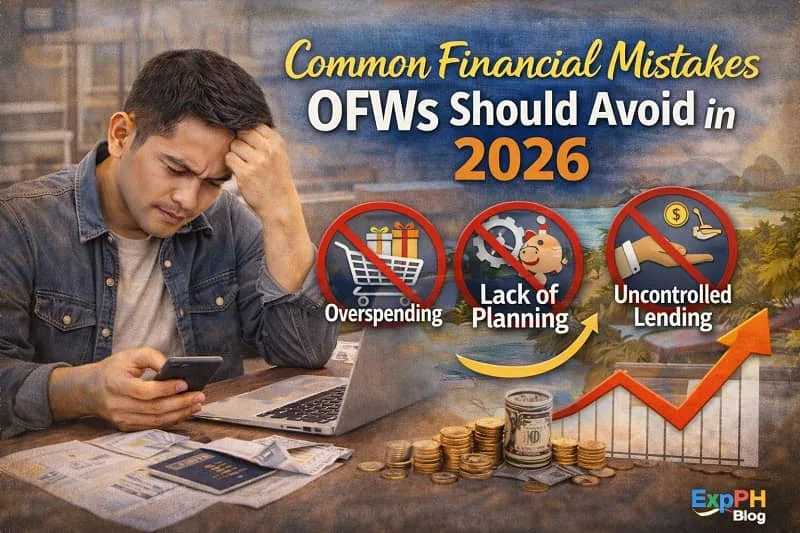
Common Financial Mistakes OFWs Should Avoid in 2026
Many OFWs work hard but still struggle financially because of repeated mistakes. Awareness is the first step toward improvement. Avoiding common errors is just as important as setting strong OFW financial goals 2026 for long-term stability.
Common financial mistakes OFWs should avoid:
- Saving without investing for growth
- Investing without proper understanding
- Supporting family beyond personal capacity
- Ignoring health protection and insurance
- Delaying skill development opportunities
- Avoiding retirement planning altogether
Avoiding these mistakes protects income, reduces stress, and strengthens every financial decision you make for the future.
Final Thoughts on OFW Financial Goals 2026
Overseas work is a tool to improve your life, not a definition of who you are. The long hours, distance from family, and daily sacrifices should lead to a future built on freedom, stability, and dignity. When income has direction, every effort gains meaning and supports a life that goes beyond endless contracts and temporary work abroad.
Setting clear OFW financial goals 2026 helps you take control of your money instead of letting circumstances decide your future. Start with small, realistic steps and build systems that support consistency. Focus on long-term security rather than short-term comfort. The goal is not only to earn abroad, but to return prepared, live well, and create a future where work becomes a choice.
Explore more in-depth guides below to strengthen your financial plan
- Best Investment Options for OFWs in 2026
- Best Passive Income Ideas for OFWs in 2026
- Best Ways for OFWs to Save More Money in 2026
- Best Passive Income Strategies Using Investments in 2026
- Best Home-Based Business Ideas for Returning OFWs in 2026

FAQs About Best Financial Goals OFWs Should Set for 2026
What are the most important financial goals OFWs should focus on in 2026?
The most important goals include building an emergency fund, reducing debt, increasing savings, investing long term, improving skills, and preparing a clear return plan.
Why are financial goals important for OFWs in 2026?
Financial goals give OFWs direction, protect overseas income, reduce stress, prevent dependency, and help prepare for job uncertainty, retirement, and a smoother transition back home.
How much should OFWs save for an emergency fund?
OFWs should aim to save three to six months of living expenses, depending on family responsibilities, job stability, health risks, and overall financial situation.
Should OFWs focus on saving or investing first?
OFWs should start with savings for emergencies, then gradually invest for long term growth once their finances are stable and debts are under control.
What financial mistakes should OFWs avoid in 2026?
OFWs should avoid uncontrolled family support, high interest debt, impulsive investments, lifestyle inflation, delaying retirement planning, and ignoring skill development opportunities.
How can OFWs increase their income while working abroad?
OFWs can increase income by upgrading skills, learning online, freelancing remotely, starting side businesses, or negotiating better work opportunities when contracts renew.
Why is skill development part of OFW financial goals?
Skill development increases earning potential, creates alternative income sources, supports career flexibility, and prepares OFWs for remote work or local opportunities after returning home.
When should OFWs start planning for retirement?
OFWs should start retirement planning as early as possible, ideally during their first contracts, to build long term security with smaller, manageable contributions.
How can OFWs manage family financial expectations better?
OFWs can manage expectations by setting clear budgets, fixed remittances, honest communication, and encouraging shared financial responsibility among family members.
What is a realistic return plan for OFWs?
A realistic return plan includes a target date, savings goal, income replacement strategy, healthcare preparation, and lifestyle adjustments to ensure stability after overseas employment ends.
Test your knowledge about the Best Financial Goals OFWs Should Set for 2026.
Results


#1. What is the top financial priority for OFWs in 2026?
#2. How many months should an OFW emergency fund cover?
#3. Why should OFWs reduce debt early?
#4. Which habit helps OFWs save consistently?
#5. What is the main purpose of investing?
#6. Why is skill development important for OFWs?
#7. What risk comes from one income source?
#8. Why should OFWs plan retirement early?
#9. What helps control family expenses?
#10. What is a strong return plan goal?
Please comment below and share your experience with us.
Your insights help other OFWs learn and grow together. If this guide helped you, share it with fellow OFWs and help them plan a stronger future.

A Filipino web developer with a background in Computer Engineering. Founder of ExpPH Blog and ExpPH Business Guide, creating practical content on OFW guidance, business, finance, freelancing, travel, and lifestyle. Passionate about helping Filipinos grow, he shares insights that educate, empower, and inspire readers nationwide.


Pingback: Best Insurance for OFWs 2026 What Families Should Have Today
Pingback: Best OFW Retirement Planning Tips for Filipinos in 2026 Guide
Pingback: OFW Family Support: Best Ways to Help Families in 2026 Today