
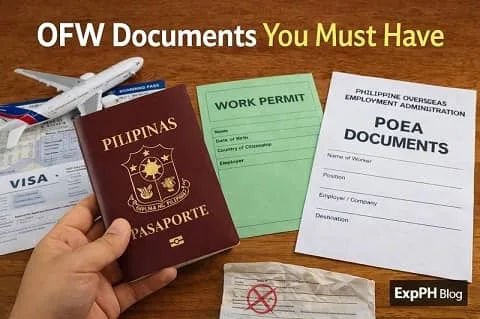
OFW Documents You Must Have
Updated for 2026 to reflect current OFW document requirements and deployment processes.
Working abroad is a life-changing opportunity for Filipinos. To make your journey smooth, safe, and legally compliant, having the right OFW documents is crucial. These documents ensure you can travel safely, work legally, and access essential services abroad.
In this comprehensive guide, we’ll cover all the OFW documents you must have, how to secure them, common mistakes to avoid, tips for keeping them safe, and answers to frequently asked questions. Whether you’re preparing for your first overseas job or renewing your documents for a new contract, this guide will help you stay organized and fully prepared.
Why OFW Documents Are Important
Your OFW documents are more than just papers they are proof of your identity, legal status, and employment abroad. Missing or incomplete documents can lead to travel delays, denied employment, or even legal troubles in a foreign country.
Here are some reasons why OFW documents are essential:
- Legal compliance – Having valid documents ensures you are allowed to work abroad according to the laws of your host country.
- Travel requirements – Airlines and immigration authorities require proper documentation before you can board or enter a foreign country.
- Employment verification – Employers abroad require official OFW documents to verify your credentials and eligibility to work.
- Emergency situations – Having valid documents helps you access consular support, medical care, or legal assistance in emergencies.
For more guidance, check out the POEA official site.
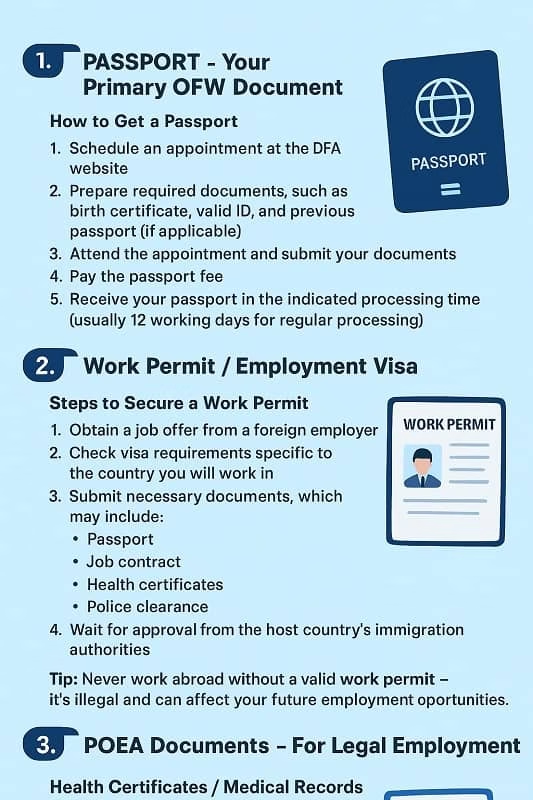
1. Passport as the Primary Identification and Travel Document for OFWs
Why the Passport Is Essential for Overseas Employment
Your passport is the most important document for working abroad. It serves as your official international identification and travel authority. Without a valid passport, you cannot leave the Philippines, enter your host country, apply for a visa, or complete employment related requirements.
Steps to Apply for a Philippine Passport Through DFA
Applying for a passport requires planning and complete documents. Follow these steps to avoid delays and repeated appointments.
- Schedule an appointment through the DFA website (https://dfa.gov.ph/)
- Prepare your birth certificate and valid government ID
- Bring your previous passport if this is a renewal
- Attend your appointment and submit requirements
- Pay the regular or expedited processing fee
- Receive your passport within the stated processing period
Practical Tips to Keep Your Passport Safe and Valid
Protecting your passport helps prevent travel disruptions and legal issues while abroad. Follow these safety and validity reminders.
- Keep a scanned copy saved in secure cloud storage
- Do not surrender your passport for personal holding
- Renew at least six months before expiration
- Choose longer validity options if available for long contracts
How the Passport Connects to Other OFW Requirements
Your passport is required for nearly all overseas employment processes. It is used for visa applications, work permits, and Department of Migrant Workers clearances. Keeping it valid and secure ensures smoother processing and prevents delays during deployment and return travel.
2. Work Permit or Employment Visa as Legal Authorization to Work Abroad
Why a Work Permit or Employment Visa Is Required for OFWs
A work permit or employment visa allows you to work legally in your host country. This document is issued by foreign immigration authorities or embassies and confirms that your job offer is approved. Working without it can lead to fines, deportation, or future travel restrictions.
Key Steps to Secure a Work Permit or Employment Visa
Securing a work permit involves coordination with your employer and compliance with host country rules. Completing each step carefully helps avoid delays and application rejection.
- Receive a confirmed job offer from a foreign employer
- Review visa rules set by the host country
- Prepare required documents for submission
- File your application through the proper embassy or agency
- Wait for approval from immigration authorities
Common Documents Required for Work Permit Applications
Most work visa applications require supporting documents that verify your identity, employment, and eligibility. Requirements may vary depending on the country and profession.
- Valid passport
- Signed employment contract
- Health or medical certificates
- Police or background clearance
- Educational or professional credentials if required
Important Reminders When Applying for a Work Permit
Never accept overseas employment without an approved work permit or visa. Working illegally can cancel your contract and affect future opportunities. Always check official immigration websites for updated requirements and processing timelines before submitting your application.
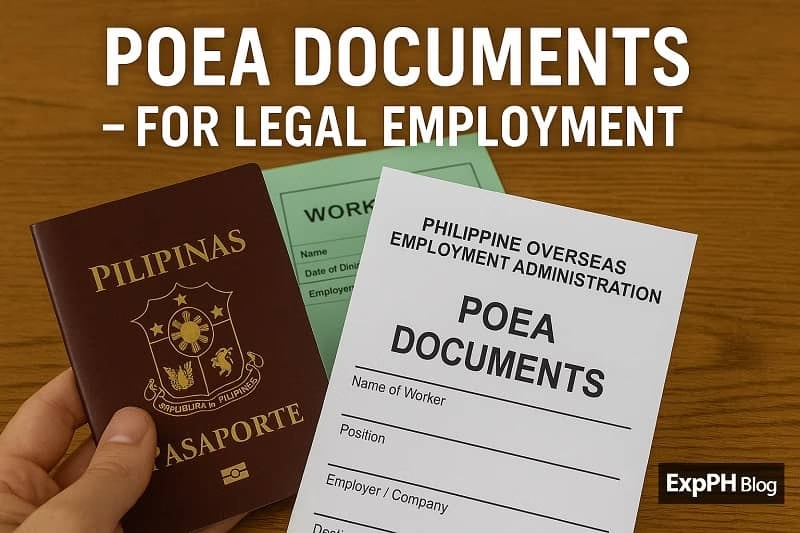
3. DMW Documents Required for Legal Overseas Employment
Why Government Issued Employment Documents Matter for OFWs
The Philippine Overseas Employment Administration, now under the Department of Migrant Workers, manages documents that confirm legal overseas employment. These records protect OFWs by ensuring proper registration, verified employers, and government support while working abroad under approved contracts.
Role of the Department of Migrant Workers in OFW Deployment
The Department of Migrant Workers oversees OFW registration, deployment, and welfare protection. It issues official documents that confirm legal employment status and help prevent illegal recruitment, contract substitution, and labor abuse. These documents also support access to assistance abroad when needed.
Essential DMW Documents Every OFW Must Secure
These documents confirm that your overseas employment is approved and legally registered with the Philippine government.
- Overseas Employment Certificate or OEC as proof of legal deployment
- DMW clearance confirming official registration
- Pre Employment Orientation Seminar certificate showing required training completion
Steps to Obtain Required DMW Employment Documents
Completing these steps before departure ensures compliance and prevents travel issues at immigration checkpoints.
- Register through DMW online services Portal
- Attend the Pre Employment Orientation Seminar online or onsite
- Secure your OEC and related clearances before departure
Important Reminder About the Overseas Employment Certificate
The Overseas Employment Certificate is often called the exit pass for OFWs. Always carry it when traveling to and from your host country. This document helps confirm legal status and protects you from employment related disputes and recruitment violations.
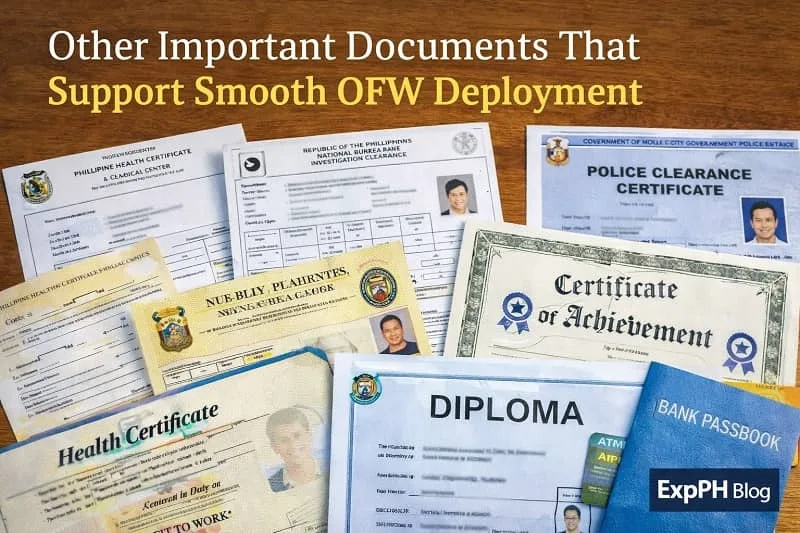
4. Other Important Documents That Support Smooth OFW Deployment
Health Certificates and Medical Records Required by Host Countries
Health documents confirm that you are physically fit to work abroad and meet entry requirements set by your host country. These records are often reviewed during visa processing and deployment to ensure public safety and workplace readiness.
- Medical examination reports from accredited clinics
- Vaccination records required by the host country
- HIV or TB test results when required by profession or location
Educational Credentials / Certificates
Professional jobs like nursing, teaching, or engineering require verified educational credentials. Secure the following OFW documents before deployment:
- Diploma or degree certificate
- Transcript of records
- Professional license (if applicable)
If your overseas employer requires additional certifications or skills, enrolling in structured online courses from Udemy can help you complete required training and strengthen your professional credentials before deployment: https://www.udemy.com
Police Clearance and NBI Clearance as Proof of Good Conduct
Why Clearance Documents Are Required for Overseas Employment
Police clearance or NBI clearance confirms that you have no criminal record. Many host countries and employers require this document before approving work visas or deployment. Submitting a valid clearance helps build trust and avoids delays during immigration and employment screening.
- Police clearance from local authorities
- NBI clearance issued for overseas employment
Bank Account Information Needed for Salary and Remittances
Why Employers Require Verified Banking Details
Bank account information allows employers to process salaries securely and on time. Some companies also request international remittance details before deployment. Preparing these documents early ensures smooth payroll setup and prevents payment issues during your first months of work abroad.
- Local or international bank account details
- Remittance or transfer information if required
Insurance Papers That Provide Financial and Health Protection
Types of Insurance Documents OFWs Should Keep Ready
Insurance documents protect you from medical emergencies, travel risks, and unexpected events abroad. Many employers and host countries require proof of coverage before deployment. Keeping copies ensures quick access when claims or verification are needed.
- Medical insurance policy
- Travel insurance coverage
- Life insurance documents if available
Practical Tip for Organizing Supporting OFW Documents
Store all clearance, banking, and insurance documents in one secure folder. Keep both physical copies and digital backups. Proper organization allows quick access during travel, employer verification, and emergency situations while working overseas.
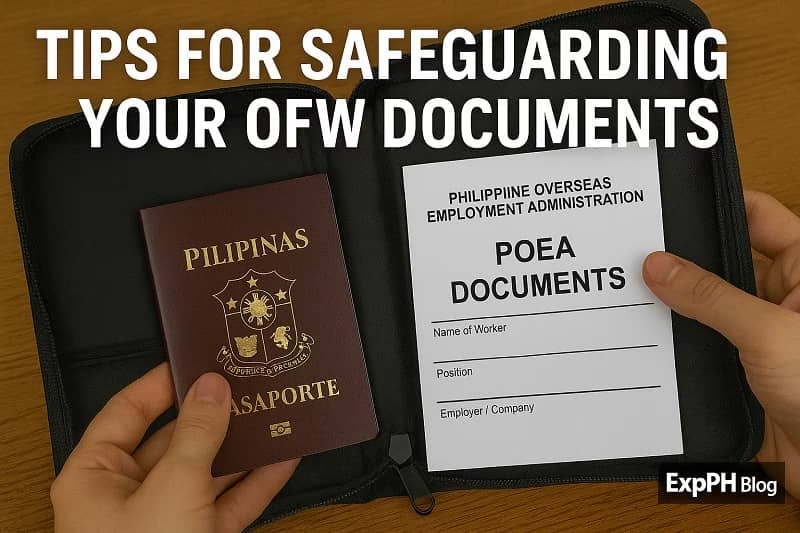
5. Practical Tips for Safeguarding Important OFW Documents
Why Proper Document Protection Is Essential for OFWs
Protecting your documents helps prevent travel delays, legal issues, and stress while working abroad. Lost or damaged papers can interrupt employment and access to services. Taking simple safety steps ensures you always have proof of identity, legal status, and employment.
Effective Ways to Protect Physical and Digital OFW Documents
Using both physical and digital safeguards reduces the risk of permanent loss. These practices help you stay prepared during travel and emergencies.
- Make photocopies and store them separately
- Scan documents and save them in secure cloud storage or USB drives
- Keep original copies in a locked bag or safe
- Use a document organizer for easy access
What to Do When Important Documents Are Lost or Stolen
Quick action helps limit problems if documents are lost. Reporting issues early allows faster replacement and official support.
- Report lost documents immediately
- Contact your embassy or consulate for assistance
Extra Tip for Travel and Emergency Preparedness
Carry a small emergency folder when traveling. Include your passport, Overseas Employment Certificate, and medical records. This helps you respond quickly during inspections, airport checks, or urgent situations abroad.
6. How to Prepare OFW Documents Before Overseas Deployment
Why Early Document Preparation Helps Prevent Delays
Preparing documents in advance helps avoid last minute problems during deployment. Incomplete or expired papers can delay travel and affect job approval. Early preparation allows enough time for corrections, renewals, and verification required by employers and government agencies.
Step by Step Actions to Complete OFW Documents Before Departure
Following a clear process keeps your documents complete and valid throughout your employment period.
- Review the document checklist provided by your employer and DMW
- Check expiration dates of passports, visas, and OECs
- Prepare supporting documents such as IDs, diplomas, and certificates
- Attend required orientations including PEOS and cultural training
- Save digital backups for easy access during emergencies
Final Reminder for Smooth Overseas Deployment
Completing all document requirements before departure ensures legal compliance and smoother airport processing. Proper preparation also helps protect your rights and allows you to focus on adjusting to your new job and life abroad with confidence.
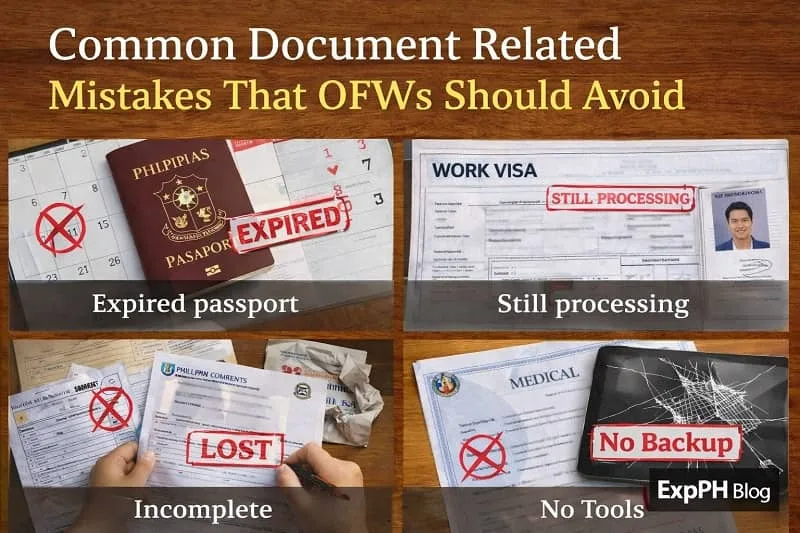
7. Common Document Related Mistakes That OFWs Should Avoid
Why Small Document Errors Can Cause Serious Overseas Problems
Even experienced OFWs can face delays due to simple document mistakes. Expired or missing papers may lead to denied boarding, visa issues, or job cancellation. Understanding these common errors helps prevent legal problems and protects your employment and travel plans abroad.
Frequent Document Mistakes Made by OFWs During Deployment
These mistakes often occur due to lack of review or last minute preparation. Checking documents early reduces stress and avoids costly consequences.
- Traveling with an expired passport
- Missing Overseas Employment Certificate or work permit
- Not keeping backup copies of important documents
- Incomplete registration with the Department of Migrant Workers
- Failing to update records after contract renewal or job change
Simple Steps to Avoid Document Related Issues Before Leaving
Review all documents carefully before departure. Confirm validity dates, completeness, and accuracy. Preparing ahead ensures smooth airport processing, proper legal protection, and fewer complications with employers and immigration authorities.
8. How to Organize OFW Documents for Easy Access and Safety
Why Proper Document Organization Matters for OFWs Abroad
Organized documents help you respond quickly during travel, inspections, or emergencies. Proper storage reduces the risk of loss and damage. Keeping papers arranged also saves time during airport checks, employer verification, and immigration processing while working overseas.
Practical Ways to Organize Physical and Digital OFW Documents
Using both physical and digital systems ensures access even if one copy is lost. These methods keep documents secure and easy to locate.
- Use a document folder with sections for passport, OEC, medical records, and certificates
- Store digital copies in cloud storage and USB drives
- Carry emergency copies when traveling
- Label folders clearly and review expiration dates regularly
Final Tip for Stress Free Document Handling
A well organized set of OFW documents prevents delays at airports and workplaces. Regularly updating and reviewing your files helps maintain legal compliance and allows you to focus on your job and well being abroad.
9. Summary of Essential OFW Documents Needed for Overseas Employment
Core Documents That Allow Legal Travel and Employment Abroad
Every OFW must secure key documents to travel, work legally, and access protection overseas. These papers confirm identity, employment approval, and compliance with host country and Philippine government requirements. Keeping them complete and valid helps avoid delays, penalties, and deployment issues.
- Passport as the primary travel document
- Work permit or employment visa for legal authorization
- DMW documents including OEC, PEOS, and clearance
Supporting Documents That Protect Health, Career, and Finances
In addition to core requirements, supporting documents ensure workplace readiness, financial stability, and personal safety abroad. These records are often checked during visa processing and employer verification.
- Health certificates confirming fitness to work
- Educational credentials and professional certificates
- Police or NBI clearance showing good conduct
- Bank account details and insurance papers
Final Reminder on Organization and Document Safety
Organizing and safeguarding all OFW documents reduces stress and prevents last minute problems. Keep physical and digital copies updated and accessible. Proper document management ensures smoother travel, legal protection, and a more secure overseas employment experience.
10. Conclusion
Preparing your OFW documents properly is the foundation of a smooth and successful overseas career. Documents such as your passport, work visa, DMW clearances, medical certificates, and educational credentials confirm your legal status and readiness to work abroad. Each requirement supports safe travel, lawful employment, and access to assistance while overseas. Completing these documents early helps prevent delays, protects your rights, and allows you to focus on your job and adjustment in a new country.
Missing or incomplete documents can lead to stress, denied boarding, or employment issues. Always review expiration dates, keep your papers organized, and store secure copies both physically and digitally. This guide provides a clear roadmap to help you secure, manage, and protect all essential OFW documents. With proper preparation, you can approach overseas work with confidence, stability, and peace of mind.
Continue learning through the related links below.
- OFW Health and Wellness Guide Maintaining Physical and Mental Well-being Abroad
- Top OFW Banking Apps: Banking, Remittance, Communication & Safety Apps
- Health Tips for OFWs – Maintaining Physical and Mental Well-being Abroad
- How to Prepare for Your First Overseas Job
- Understanding Your Rights as an OFW
For government assistance, check out the following programs.
- DFA Passport Services – For passport applications and renewals.
- Philippine Overseas Labor Office – For OFW support abroad.
- Philippine Embassy / Consulate Locator – Find help abroad in emergencies.
These credible sources validate your content and provide actionable information for OFWs
10. FAQs About OFW Documents
What are the most important OFW documents to secure before working abroad?
The most important OFW documents include a valid passport, work permit or visa, DMW documents such as OEC, medical certificates, police clearance, and educational credentials.
Why is the Overseas Employment Certificate important for OFWs?
The Overseas Employment Certificate proves legal deployment through the Department of Migrant Workers and is required for airport departure, protection benefits, and compliance with Philippine labor regulations.
How long should my passport be valid before overseas deployment?
Your passport should be valid for at least six months beyond your intended travel date to meet airline, immigration, and visa requirements of most host countries.
Can I work abroad while my work visa is still being processed?
No, working abroad without an approved work visa or permit is illegal and may result in deportation, fines, contract termination, and future employment restrictions.
What medical documents are usually required for OFW deployment?
Most countries require medical examination reports, fitness certificates, and vaccination records from accredited clinics to confirm you are physically fit for overseas employment.
Is police or NBI clearance required for all OFWs?
Police or NBI clearance is commonly required to confirm good conduct, especially for work visas, DMW processing, and employer background verification abroad.
Should OFWs keep digital copies of their documents?
Yes, digital copies stored securely online or on USB drives help replace lost documents quickly and provide backup during emergencies or unexpected travel situations.
How often should OFWs update their employment documents?
OFWs should update documents whenever there is contract renewal, employer change, or expiration to avoid confusion during immigration checks and employer verification.
What happens if an OFW loses important documents abroad?
Lost documents should be reported immediately to the nearest Philippine embassy or consulate to receive guidance, certification, and assistance for replacement.
How can OFWs organize documents for easier access?
OFWs can use labeled folders for physical copies and cloud storage for digital backups, ensuring quick access during travel, inspections, and employment processing abroad.
Test your knowledge about essential OFW documents every Filipino worker must prepare before working abroad.
Results


#1. Which document allows an OFW to travel internationally?
#2. Which document proves legal overseas deployment?
#3. Which government agency now handles OFW deployment?
#4. What document allows legal employment abroad?
#5. Which document confirms physical fitness to work?
#6. What clearance confirms no criminal record?
#7. Which seminar prepares OFWs for life abroad?
#8. Why should OFWs keep digital document copies?
#9. When should a passport be renewed?
#10. Which documents support salary payment abroad?
Your preparation today helps ensure a safer, smoother, and more successful overseas employment journey.
We’d love to hear from you. Share your quiz experience, score, or questions in the comments to help fellow OFWs learn with you.

A Filipino web developer with a background in Computer Engineering. Founder of ExpPH Blog and ExpPH Business Guide, creating practical content on OFW guidance, business, finance, freelancing, travel, and lifestyle. Passionate about helping Filipinos grow, he shares insights that educate, empower, and inspire readers nationwide.



Pingback: 10 Easy Ways to Create a Productive Workspace at Home
Pingback: OFW Rights: 10 Powerful Facts to Secure Them Today
Pingback: 5 Powerful Apps Helping OFWs Thrive Abroad for Safer Journey
Pingback: 10 Amazing Ways for OFWs to Manage Finances Abroad Smartly