
How OFWs Can Plan Career Growth While Staying Overseas
For many Overseas Filipino Workers, working abroad starts as a financial decision. It is a way to support family, pay debts, or build savings faster than what is possible at home. Over time, however, a deeper question often appears. What happens next?
This is where OFW Career Growth becomes essential. Career growth is not only about earning more. It is about improving skills, gaining experience, protecting long term employability, and preparing for a better future whether that future is abroad or back in the Philippines.
Many OFWs stay overseas for years without a clear career plan. Others feel stuck in the same role, unsure how to move forward while managing long work hours and family responsibilities. The good news is that career growth does not require leaving your host country, quitting your job, or taking big risks all at once.
This guide explains how OFWs can plan career growth while staying overseas, using practical steps, realistic strategies, and tools that fit real OFW life.
Why OFW Career Growth Matters More Than Ever
Career growth is often delayed by OFWs because daily needs and family support take priority. This is understandable, but postponing career planning can create serious long term risks. Without clear direction, many OFWs remain in the same role for years, with limited progress and fewer future options.
The reality of overseas work today
Global labor markets are changing quickly. Automation, digital systems, and higher skill requirements are reshaping many industries. Jobs that once felt stable can slowly lose value, offer lower pay, or disappear entirely. OFWs must adapt to these changes to remain competitive and secure.
For OFWs, this often means:
- Certain jobs become oversaturated
- Contracts may not always be renewed
- Younger or more skilled workers gain preference
- Physical work becomes harder with age
Without career growth, income can stagnate while living costs and family responsibilities continue to increase.
Career growth protects long term income
OFW Career Growth helps protect financial stability by creating better opportunities over time. When OFWs invest in skills and experience, they reduce dependence on a single job or contract and gain flexibility in their career choices.
OFW Career Growth helps you:
- Qualify for higher paying positions
- Move into less physically demanding roles
- Build skills usable in many countries
- Prepare for work in the Philippines if you return
Career planning is not a luxury. It is a practical form of protection for your future.
Understanding Your Current Career Position as an OFW
Before planning your next move, you need a clear understanding of your current career position. Many OFWs rush into decisions without reviewing where they stand. Knowing your real strengths, limitations, and opportunities helps you create a realistic career growth plan that fits your overseas situation.
Identify your current role and industry
Start by clearly listing your work details to see your actual professional profile. This simple exercise helps reveal experience that often goes unnoticed and builds confidence in your abilities.
Start by writing down:
- Your current job title
- Industry or sector
- Main responsibilities
- Skills you use daily
Many OFWs underestimate their experience. A caregiver may handle healthcare records and patient care. A factory worker may manage quality checks, machine operations, and safety procedures.
Separate job title from real skills
Overseas job titles often fail to show real skill levels. Focus on what you can do rather than what your contract states. Practical abilities matter more than labels when planning career growth.
Ask yourself:
- What tasks do I do independently?
- What problems do I solve regularly?
- What systems or tools do I use?
These answers form the foundation of OFW Career Growth.
Evaluate job stability and future demand
Career planning should also consider long term job security. Some roles offer clear advancement paths while others remain flat. Understanding demand helps you decide whether to grow within your role or prepare for change.
Consider:
- Is this role in demand globally?
- Does it offer promotions or career levels?
- Can it lead to supervisory or specialized work?
If most answers are no, career planning becomes even more important.
Setting Clear Career Goals While Overseas
Career growth without goals is like earning money without direction. You may work hard and save consistently, but progress feels unclear. Clear goals give purpose to your efforts and help you make better decisions about learning, work choices, and long term career direction overseas.
Define short term and long term goals
Setting both short term and long term goals makes career planning more practical. Short goals build momentum, while long goals provide direction. Together, they create a clear roadmap for OFWs working abroad.
Short term goals (1 to 2 years):
- Learn a new job related skill
- Earn promotion or added responsibility
- Complete a relevant certification
- Improve English or technical communication
Long term goals (3 to 5 years or more):
- Move into a higher paying role
- Shift to supervisory or specialist work
- Transition into a new industry
- Prepare for stable work in the Philippines
Clear goals make OFW Career Growth measurable and realistic.
Align goals with personal priorities
A strong career plan must fit your personal situation. Goals that ignore real life limits often lead to stress or burnout. Aligning career growth with personal priorities makes long term success more sustainable.
Consider:
- Family responsibilities
- Health and wellbeing
- Age and physical capacity
- Rules in your host country
Career growth is personal. There is no single path that fits every OFW.
Building Skills That Support OFW Career Growth
Skills are the strongest currency in any country. The more relevant your skills are, the more options you gain for better jobs and stability. For OFWs, skill development creates flexibility, protects long term employability, and opens opportunities beyond a single contract or employer.
Focus on transferable skills
Transferable skills remain useful across different jobs, industries, and countries. These skills help OFWs adapt faster when roles change or when moving to new employers.
Transferable skills include:
- Communication skills
- Leadership and supervision
- Problem solving
- Time management
- Basic digital skills
These abilities increase employability even when you change jobs or work locations.
Upgrade job specific technical skills
Every industry values specialized skills that lead to higher roles and better pay. Improving technical skills related to your current job accelerates growth and strengthens your professional profile.
Examples include:
- Healthcare workers learning advanced caregiving or documentation
- Construction workers improving safety supervision or technical reading
- Hospitality workers studying management or customer relations
- Office staff enhancing software and reporting skills
OFW Career Growth moves faster when skills directly support your current work.
Learning While Working Overseas
A common challenge OFWs face is lack of time. Long work hours and limited rest days make studying difficult, but not impossible. With the right approach, learning can fit into daily routines without causing burnout or affecting job performance.
Use flexible learning formats
Flexible learning allows OFWs to study without fixed schedules. This approach works well for shifting work hours and unpredictable rest days.
Online learning is ideal because:
- You control your study schedule
- Lessons are available anytime
- Learning fits into short time blocks
This flexibility helps maintain consistency even with busy overseas work.
Choose practical and job relevant courses
Learning should support clear career goals. Avoid courses that do not connect to your current or future role, as they waste time and energy.
Focus on:
- Skills that improve your current role
- Skills that support promotion opportunities
- Skills recognized across countries
Using online courses to support OFW Career Growth
Structured learning can greatly support progress when done correctly. Many OFWs use online platforms to build skills while staying employed overseas. One widely used option is Udemy, which offers flexible courses designed for working professionals.
Udemy provides courses in:
- Technical and professional skills
- Leadership and management
- Language and communication
- Freelancing and digital skills
Courses are self paced, making them suitable for OFWs with changing schedules. This learning approach supports OFW Career Growth without leaving your job or country.

Gaining Experience Beyond Your Job Title
Career growth is not only about certificates or formal training. Real work experience plays an equally important role. For OFWs, gaining experience beyond daily tasks helps build confidence, strengthens professional value, and prepares you for higher roles or career changes.
Volunteer for additional responsibilities at work
Taking on extra responsibilities allows you to develop new skills while staying in the same job. Even small tasks can show initiative and leadership over time.
If possible:
- Help train new workers
- Assist supervisors when needed
- Handle reports or documentation
- Join safety or quality checks
These experiences build leadership and specialization, even if your job title remains unchanged.
Document your experience properly
Recording your work experience helps turn daily tasks into career assets. Many OFWs forget details that later become valuable for career growth.
Keep records of:
- Tasks you handled
- Projects you supported
- Problems you solved
- Results or improvements you contributed
Proper documentation helps when updating resumes, applying for promotions, or changing careers.
Career Growth Planning Based on Industry
Different industries offer different career paths and advancement systems. Understanding how your industry works helps you plan realistic career moves. For OFWs, industry based planning makes career growth clearer, more achievable, and aligned with real job opportunities abroad.
OFW Career Growth in healthcare
Healthcare careers often follow clear progression paths supported by training and certification. Many roles allow advancement through experience and formal learning.
Common paths include:
- Caregiver to senior caregiver
- Assistant to licensed professional
- Clinical support to administration
Certifications and continuous training play a major role in healthcare career advancement.
OFW Career Growth in hospitality and services
Hospitality values experience, leadership, and strong communication. Career growth often comes from consistent performance and people management skills.
Typical progression includes:
- Service staff to supervisor
- Frontline worker to coordinator
- Operations staff to management
Customer service skills and clear communication are essential for long term success.
OFW Career Growth in construction and technical work
Construction and technical fields reward skill mastery and specialization. Growth often depends on safety knowledge and technical competence.
Possible paths include:
- Skilled worker to lead technician
- Safety officer roles
- Quality control positions
Additional training and safety certifications greatly improve advancement opportunities.

Preparing for Career Growth When Returning to the Philippines
Many OFWs plan to return home after years abroad. Career growth overseas should support this goal, not work against it. Planning ahead helps ensure your skills remain relevant and valuable in the Philippine job market.
Align overseas skills with Philippine job markets
Before returning, OFWs should check how their overseas experience fits local employment needs. This step reduces the risk of job mismatch and underemployment.
Research:
- In demand skills in the Philippines
- Industries with strong growth potential
- Salary expectations and job requirements
Matching skills early makes career transitions smoother.
Use official labor data for guidance
Reliable data helps OFWs make better career decisions. The Philippine government and international organizations provide useful labor market insights and skills guidance. The International Labour Organization publishes research on employment trends, labor standards, and workforce development at https://www.ilo.org.
Using official data supports informed and realistic career planning.
Common Mistakes OFWs Make in Career Planning
Understanding common mistakes helps OFWs avoid repeating them. Many career problems come not from lack of effort but from unclear planning. Recognizing these errors early allows OFWs to make smarter decisions and build a more secure long term career overseas.
Focusing only on income, not growth
High income today does not guarantee future stability. Some OFWs stay in the same role because pay feels sufficient. However, OFW Career Growth requires balancing income with skill development to stay competitive and prepared for change.
Waiting too long to start
Many OFWs delay career planning until burnout, contract issues, or job loss occur. By then, options are limited and pressure is higher. Starting early allows gradual learning, better choices, and smoother transitions without rushing decisions.
Learning random skills without direction
Learning many unrelated skills often leads to wasted time and money. Without a clear goal, training does not translate into career progress. Skill development should always support a specific role, industry path, or long term career plan.
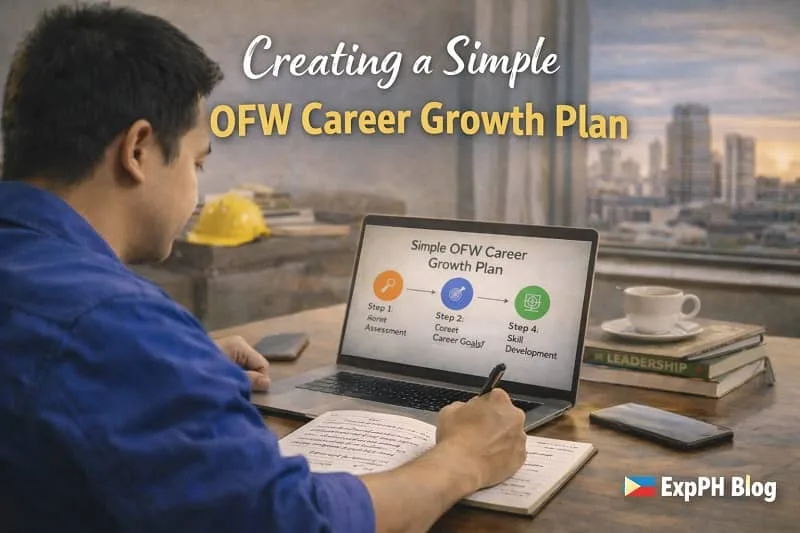
Creating a Simple OFW Career Growth Plan
Career planning does not need to feel overwhelming or complex. For OFWs, a simple and clear plan is often more effective than an advanced one. Small, consistent actions over time create real progress and reduce pressure while working overseas.
Step by step approach
A structured approach helps turn career goals into manageable actions. Following simple steps makes planning easier to sustain alongside work and personal responsibilities.
Follow these steps:
- Assess your current skills and role
- Choose one or two key skills to develop
- Set realistic short term and long term goals
- Learn consistently, even in small time blocks
- Apply new skills at work when possible
- Review progress every six months
Consistency matters more than speed when building OFW Career Growth.
Balancing Career Growth With OFW Life Responsibilities
Career planning should support daily life, not increase stress. OFWs already manage demanding work, family obligations, and emotional pressure. A balanced approach ensures career growth fits naturally into your routine and remains sustainable over the long term.
Manage energy, not just time
Time is limited, but energy matters more. Choose learning schedules that match your focus and rest levels. Even short sessions of 20 minutes can build skills steadily when practiced consistently over several months.
Involve family in your goals
Sharing career goals with family helps create understanding and support. When loved ones know your plans, expectations become clearer and pressure is reduced. OFW Career Growth is strongest when it aligns with personal wellbeing and family priorities.
Long Term Benefits of Planning Career Growth Overseas
Planning career growth while working overseas creates lasting advantages. OFWs who invest in skills and experience gain more control over their future. Over time, these efforts reduce uncertainty, improve work conditions, and open doors to better opportunities both abroad and at home.
OFWs who invest in career growth often experience:
- Higher income stability
- More job options
- Less physical strain at work
- Stronger confidence in career decisions
- A smoother transition back to the Philippines
Career growth is an investment that compounds over time and strengthens long term security.
Final Thoughts on OFW Career Growth While Staying Overseas
Planning career growth while working overseas is not about making sudden or risky changes. It focuses on steady and intentional improvement that protects your future. By understanding your current position, setting realistic goals, and building relevant skills, OFWs can move forward with confidence. Small actions taken consistently create progress over time. Career growth becomes more manageable when it fits your work schedule, health, and family responsibilities rather than competing with them.
OFW Career Growth begins with awareness, continues through learning, and succeeds with consistent action. Whether you plan to stay abroad, work in another country, or return to the Philippines, the skills and experience you build today will shape your opportunities tomorrow. No matter where you are now, growth is possible. Start with clarity, choose practical steps, and commit to learning that supports long term stability and a secure future for you and your family.
Continue exploring related ideas through these articles.
- How OFWs Can Balance Work Pressure and Personal Health Abroad
- Smart Budget Adjustments OFWs Should Make When Costs Increase
- Tech Career Roadmap for Filipinos and OFWs Starting in 2026
- Ultimate OFW Roadmap for a Better Future in 2026
- Best OFW Success Habits to Build in 2026
FAQs About OFW Career Growth
How can OFWs start planning career growth while working overseas?
OFWs can start by assessing current skills, identifying long term goals, researching industry demands, and choosing practical training options that fit their schedule and work conditions.
Why is career growth important for OFWs staying abroad long term?
Career growth helps OFWs increase income stability, avoid job stagnation, stay competitive in global labor markets, and prepare for better opportunities abroad or back home.
What skills should OFWs focus on for long term career growth?
OFWs should focus on transferable skills, industry specific expertise, communication abilities, digital literacy, and leadership skills that support promotion or career transitions.
Can OFWs improve their careers without changing jobs?
Yes, OFWs can grow by gaining new responsibilities, learning relevant skills, completing certifications, and documenting experience while staying in the same job role.
How can OFWs balance work, rest, and career development?
OFWs can balance priorities by using flexible learning schedules, studying in short sessions, setting realistic goals, and protecting rest days to avoid burnout.
Are online courses effective for OFW career growth?
Online courses are effective because they offer flexible schedules, practical skills, and globally relevant training that OFWs can complete without leaving their overseas jobs.
How often should OFWs review their career growth plans?
OFWs should review their career plans every six months to assess progress, update goals, adjust learning strategies, and respond to changes in job markets.
What common mistakes should OFWs avoid in career planning?
Common mistakes include delaying career planning, focusing only on income, learning unrelated skills, ignoring health limits, and failing to document work experience properly.
How does career growth help OFWs who plan to return to the Philippines?
Career growth helps returning OFWs align overseas experience with local job requirements, improve employability, and transition smoothly into sustainable careers in the Philippines.
Is it too late for older OFWs to plan career growth?
It is never too late. Older OFWs can focus on skill specialization, mentoring roles, lighter work options, and experience based positions that value expertise over age.
Before you move on, test what you have learned below.
Results


#1. What is the first step in OFW career growth?
#2. Why is career growth important for OFWs?
#3. Which skills help across many jobs?
#4. What limits many OFWs from learning?
#5. Which learning format suits OFWs best?
#6. How often should OFWs review career plans?
#7. What helps promotion without job change?
#8. Which mistake harms career growth most?
#9. Why document overseas work experience?
#10. Is career growth possible for older OFWs?
Thank you for taking the time to learn and improve your future.
If this quiz helped you, share your experience in the comments and let other OFWs learn from your journey too.

A Filipino web developer with a background in Computer Engineering. Founder of ExpPH Blog and ExpPH Business Guide, creating practical content on OFW guidance, business, finance, freelancing, travel, and lifestyle. Passionate about helping Filipinos grow, he shares insights that educate, empower, and inspire readers nationwide.



Pingback: 7 Powerful Digital Tools for OFWs to Track Career Progress.