

Healthy Routines for Filipinos Working Long Hours Overseas
Working abroad often means long shifts, unpredictable schedules, and constant pressure to perform well. For many Overseas Filipino Workers, daily life revolves around work, remittances, and family responsibilities back home. Health and personal wellbeing are often placed last, not because they are unimportant, but because time and energy feel limited.
This guide is designed to change that mindset in a realistic and practical way. Healthy Routines for OFWs are not about perfection or dramatic lifestyle changes. They are about building small, sustainable habits that fit the real working conditions of Filipinos overseas. Whether you work in healthcare, construction, hospitality, domestic work, or corporate roles, these routines can help protect your body, mind, and long-term productivity.
This article focuses on routines that respect long hours, shift work, and cultural adjustments. Every section is written with real OFW life in mind, not ideal situations that rarely exist abroad.
Understanding the Reality of OFW Work Schedules
Before building healthy routines, it is important to accept the real conditions of overseas work. Many Filipinos abroad face long shifts, changing schedules, and limited rest. Ignoring these realities often leads to routines that look good on paper but fail in daily life.
Healthy Routines for OFWs must work within real limits. They should support demanding jobs, protect energy, and fit unpredictable schedules. When routines respect actual work conditions, they become easier to follow and more effective over time.
Common Challenges Faced by OFWs
Many OFWs share similar challenges that affect their health and daily balance. These realities shape how routines should be designed and followed.
- Long working hours with little flexibility
- Rotating or night shifts that affect sleep
- Physical exhaustion from labor or service jobs
- Emotional stress from homesickness and separation
- Limited access to familiar food and social support
Acknowledging these challenges is not a weakness. It is a practical step toward building routines that last. When OFWs accept their situation honestly, they can create healthy routines that are realistic, flexible, and sustainable even with long hours overseas.

Why Healthy Routines for OFWs Matter More Than Ever
Many OFWs push themselves for years believing they can rest later. Over time, this mindset often leads to fatigue, anxiety, high blood pressure, and burnout. Healthy Routines for OFWs help prevent these problems early by supporting the body and mind before serious health issues develop.
Long-Term Health vs Short-Term Sacrifice
Working harder does not always lead to better results long term. When health declines, medical costs increase, productivity suffers, and job security becomes unstable. Simple daily routines help protect your strength, income potential, and overall quality of life while working overseas.
Mental Health Is Part of the Routine
Mental health is as important as physical strength for OFWs. Consistent routines provide structure in uncertain environments. Even small habits practiced daily can reduce stress, improve focus, and help maintain emotional balance during long periods of overseas work.
Building Healthy Routines for OFWs with Limited Time
Healthy routines do not require long hours or perfect schedules. What matters most is consistency and smart use of short breaks. When routines fit naturally into busy workdays, OFWs are more likely to maintain healthy habits despite long hours overseas.
Start with Micro-Habits
Micro-habits are small actions that take five to ten minutes and are easier to sustain than major lifestyle changes. These habits reduce pressure and help OFWs build routines gradually without feeling overwhelmed by strict plans.
Examples include:
- Stretching for five minutes after waking up
- Drinking water before checking your phone
- Taking three deep breaths before starting work
These habits may feel simple, but when practiced daily, they create steady improvements in energy, focus, and overall wellbeing over time.
Anchor Habits to Existing Activities
Linking new habits to existing activities makes routines automatic and easier to follow. This approach reduces forgetfulness and helps healthy routines blend naturally into daily life without extra effort.
For example:
- Stretch while waiting for coffee to brew
- Practice gratitude during your commute
- Do light exercises before your shower

Sleep Routines for OFWs Working Long or Night Shifts
Sleep is often the most neglected part of OFW life because of long hours and shifting schedules. Despite this, sleep remains the foundation of all healthy routines. Without proper rest, energy drops, focus declines, and both physical and mental health slowly suffer.
Prioritizing Sleep Quality Over Quantity
Not all OFWs can achieve eight hours of sleep each day. In these cases, sleep quality matters more than total hours. A quiet, dark, and cool sleeping space allows deeper rest even during shorter sleep periods caused by night or rotating shifts.
According to guidance from the World Health Organization, consistent sleep schedules and supportive sleep environments help protect mental and physical health, especially for shift workers. Their general sleep and stress guidance can be reviewed here:
https://www.who.int/news-room/fact-sheets/detail/mental-health-strengthening-our-response
Simple Sleep Routine Tips
Small adjustments can greatly improve sleep quality for OFWs working irregular hours. These practical steps support better rest and help the body adjust to demanding schedules.
- Use blackout curtains or eye masks for daytime sleep
- Avoid caffeine at least six hours before sleeping
- Keep phones away from the bed when possible
- Maintain a consistent sleep schedule on workdays
These habits help stabilize the body clock and improve recovery, even when work hours change frequently overseas.
Nutrition Routines for Busy OFWs
Eating well does not require expensive food or complex meal plans. What matters is making smart food choices that match your work environment. Simple nutrition routines help OFWs maintain energy, support health, and avoid exhaustion during long overseas working hours.
Balanced Eating Without Strict Diets
Healthy Routines for OFWs focus on balance rather than restriction. Meals should support energy and recovery without adding stress or guilt. The goal is nourishment that fits daily work demands and available food options.
Aim for meals that include:
- Protein for energy and muscle repair
- Vegetables or fruits for vitamins and digestion
- Carbohydrates for sustained energy
You do not need perfect meals every day. Steady and consistent choices over time matter more than strict dieting.
Practical Food Tips for Overseas Workers
Busy OFWs benefit from simple food habits that reduce effort and improve consistency. These practical tips help support nutrition even with limited time and changing schedules.
- Prepare simple meals in batches on rest days
- Choose grilled, boiled, or steamed options when available
- Keep healthy snacks like nuts or fruits nearby
- Drink water regularly, especially in hot climates
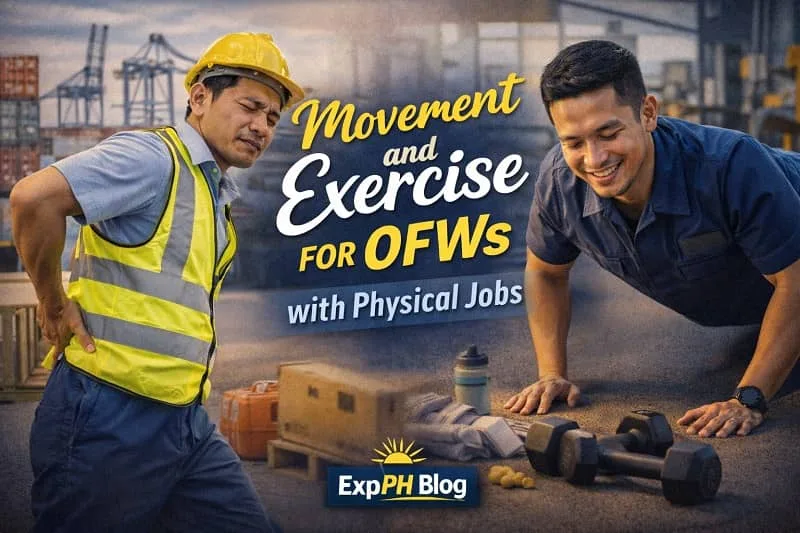
Movement and Exercise for OFWs with Physical Jobs
Many OFWs already perform physically demanding work each day. Exercise routines should support recovery rather than add more strain. The goal is to protect the body, reduce fatigue, and maintain strength without causing additional exhaustion or increasing the risk of injury.
Stretching as a Daily Non-Negotiable
Stretching improves circulation, eases muscle tension, and lowers injury risk for busy OFWs. Five to ten minutes each day is enough to support recovery and flexibility, especially after long shifts or repetitive tasks at work.
Focus on:
- Lower back and hips
- Neck and shoulders
- Legs and calves
Light Exercise for Sedentary OFWs
For OFWs with desk-based or low-movement jobs, light exercise helps prevent stiffness, weight gain, and poor circulation. These simple routines improve mobility without requiring long workout sessions or special equipment.
Simple routines include:
- Walking during breaks
- Bodyweight exercises in your room
- Short mobility routines before bed
Mental Wellness as a Core Part of Healthy Routines for OFWs
Mental wellness deserves the same attention as physical health in any routine. For OFWs, emotional balance supports focus, resilience, and long-term stability. When mental health is ignored, stress builds up and affects work performance, relationships, and overall wellbeing abroad.
Managing Stress Without Avoidance
Stress is part of overseas work, but avoiding it often leads to burnout. Healthy routines help OFWs respond calmly to pressure rather than react emotionally. Simple habits practiced regularly can reduce tension and improve mental clarity over time.
Effective stress-reducing habits include:
- Journaling short thoughts daily
- Practicing breathing exercises
- Listening to calming music before sleep
Staying Emotionally Connected While Abroad
Emotional connection reduces loneliness and anxiety for OFWs living far from family. Staying connected creates support systems that help maintain mental strength during long periods overseas.
Ways to stay connected:
- Schedule regular calls with family
- Join Filipino community groups
- Participate in online support forums for OFWs

Time Management Routines That Reduce Burnout
Time management for OFWs is not about doing more tasks each day. It is about protecting energy and focus. When time is used wisely, routines become easier to maintain, stress levels decrease, and burnout becomes less likely over long overseas work periods.
Setting Boundaries at Work
Not every request requires immediate acceptance. When possible, OFWs should set clear boundaries around rest time and personal limits. Respecting these boundaries helps preserve energy, improves work performance, and supports long-term health while working abroad.
Using Short Breaks Wisely
Short breaks offer valuable chances to restore energy during busy shifts. Instead of endless phone scrolling, using breaks for simple activities can improve focus and reduce fatigue.
Use breaks to:
- Stretch
- Hydrate
- Practice mindful breathing
These actions help the body and mind recover more effectively than passive screen time.
Learning and Self-Improvement as Part of Healthy Routines
Personal growth plays an important role in mental health and career stability for OFWs. Learning creates a sense of progress beyond daily work and helps reduce burnout. When treated as self-care, learning supports motivation, confidence, and long-term wellbeing while working overseas.
Skill Development Without Pressure
Learning does not require long study hours or strict schedules. Short and focused sessions are enough to build useful skills. This approach allows OFWs to grow at a comfortable pace without adding stress or disrupting rest and recovery time.
Online Learning for Stress Management and Productivity
Short courses on time management, stress reduction, and personal development help OFWs handle demanding schedules more effectively. Platforms like Udemy offer self-paced learning that fits irregular hours and time zones. These courses support Healthy Routines for OFWs by improving focus, reducing burnout, and building confidence without pressure.
This resource works best when learning is seen as part of self-care rather than another responsibility.

Creating a Sustainable Weekly Routine
Healthy routines are more effective when planned weekly rather than daily. Weekly planning allows OFWs to balance work, rest, and personal care without pressure. This approach reduces stress and makes routines easier to follow despite changing schedules and long working hours overseas.
Planning Around Energy, Not Just Time
Effective routines consider energy levels, not just available time. OFWs should identify when energy is highest and lowest each day. Important tasks work best during high-energy periods, while rest and recovery should be scheduled during low-energy times.
Weekly Routine Example
A simple weekly structure helps maintain balance without feeling restrictive. This flexible approach supports consistency while allowing adjustments when work demands change.
- One rest-focused day with minimal obligations
- Three to four days with light exercise and proper meals
- Daily short mental wellness practices
Flexibility is essential. Adjust routines as schedules change to keep them realistic and sustainable.
Avoiding Common Mistakes in Healthy Routines for OFWs
Knowing what to avoid is just as important as knowing what to do. Many OFWs struggle with routines not because of lack of effort, but because expectations are unrealistic. Understanding common mistakes helps create routines that are practical, flexible, and easier to maintain long term.
Trying to Copy Other People’s Routines
What works for one OFW may not work for another. Each routine should match your job demands, location, schedule, and physical condition. Copying routines without adjustment often leads to frustration and failure rather than steady progress.
Expecting Immediate Results
Healthy routines produce results gradually. Expecting fast changes can lead to disappointment and quitting early. Focusing on consistency allows habits to grow naturally and deliver lasting improvements in health, energy, and wellbeing over time.
Making Healthy Routines a Long-Term Habit
The goal of healthy routines is not perfection but sustainability. For OFWs, routines should support real working conditions and personal limits. When habits feel manageable and flexible, they are easier to maintain over time and more effective in protecting long-term health.
Track Progress Gently
Tracking progress helps maintain motivation without pressure. Instead of daily tracking, OFWs can reflect weekly on energy levels, mood, and sleep quality. This gentle approach highlights improvement while reducing stress and discouragement from minor setbacks.
Adjust Without Guilt
Missing a routine does not mean failure. OFWs should resume habits without self-criticism or frustration. Adjusting routines based on workload or health needs supports consistency and helps routines remain realistic and sustainable over long overseas work periods.
Healthy Routines for OFWs as an Investment in the Future
Healthy routines are not a luxury for overseas Filipino workers. They are a form of self-respect and long-term planning that supports both health and livelihood. By caring for your body and mind today, you protect your ability to work safely, remain productive, and continue supporting your family. Consistent routines also help prevent burnout and long-term health problems that can affect income and stability while working abroad.
Healthy Routines for OFWs are built step by step, not through sudden changes. Starting small allows habits to grow naturally and remain realistic. Consistency matters more than intensity, especially with demanding schedules. Adjust routines as work conditions change and energy levels shift. Health should never be postponed, because it is something that needs daily care wherever in the world you are working.
Related Guides You May Find Helpful
- How OFWs Can Balance Work Pressure and Personal Health Abroad
- Best Productivity Habits Filipinos and OFWs Should Practice in 2026
- Simple Financial Systems Small Businesses Should Set Up Early
- How OFWs Can Control Spending Despite Rising Living Costs
- How OFWs Can Create Peace of Mind While Living Abroad

FAQs About Healthy Routines for OFWs
What are healthy routines and why are they important for OFWs?
Healthy routines help OFWs manage stress, prevent burnout, maintain energy, improve sleep quality, support long-term health, and sustain productivity despite demanding schedules and overseas conditions.
How can OFWs start building healthy routines with limited time?
Start with small habits like stretching, hydration, and regular sleep times, then build consistency gradually, based on your job demands, energy levels, and rest periods.
How much sleep do OFWs working long or night shifts really need?
OFWs working long or night shifts should prioritize sleep quality by keeping consistent schedules, limiting caffeine, darkening sleep spaces, and protecting rest time whenever possible.
What kind of diet supports healthy routines for OFWs?
Balanced meals, regular hydration, simple food preparation, and mindful portion control help OFWs stay energized, avoid frequent illness, and maintain overall health abroad long term.
Is exercise still necessary for OFWs with physically demanding jobs?
Light exercise, stretching, and daily movement are enough for busy OFWs, especially when routines focus on flexibility, circulation, and injury prevention during long overseas work.
How do healthy routines help with mental health for OFWs?
Mental wellness routines help OFWs manage homesickness, anxiety, and work pressure by creating emotional stability, improving focus, and strengthening resilience abroad over long overseas periods.
Can time management really improve healthy routines for OFWs?
Effective time management routines reduce burnout by protecting rest, improving focus, setting boundaries, and helping OFWs balance work demands with personal wellbeing abroad long term.
Why is learning part of healthy routines for OFWs?
Learning routines support Healthy Routines for OFWs by building confidence, reducing stress, encouraging growth, and preparing overseas workers for better opportunities without overwhelming daily schedules.
What are common mistakes OFWs make when trying to stay healthy?
Common mistakes include copying unrealistic routines, skipping rest, neglecting mental health, and expecting fast results instead of focusing on consistency over long overseas working periods.
How can OFWs maintain healthy routines long term?
Healthy routines become sustainable when OFWs start small, stay flexible, listen to their bodies, track progress gently, and adjust routines as work changes overseas regularly.
Ready to check what you learned?
Take the quick quiz below to reinforce healthy routines for OFWs
Results


#1. What is the main goal of healthy routines for OFWs?
#2. Which habit helps improve sleep quality for OFWs?
#3. What type of habit is easiest to maintain daily?
#4. Why is hydration important for OFWs?
#5. What supports mental wellness overseas?
#6. What is a good exercise focus for busy OFWs?
#7. Which routine reduces burnout most effectively?
#8. Why is learning part of healthy routines?
#9. What common mistake harms healthy routines?
#10. How should OFWs approach healthy routines?
Thank you for taking your time with us.
Your effort to learn and improve matters. Please comment below and share your quiz experience with us. Your feedback helps ExpPH Blog serve OFWs better.

A Filipino web developer with a background in Computer Engineering. Founder of ExpPH Blog and ExpPH Business Guide, creating practical content on OFW guidance, business, finance, freelancing, travel, and lifestyle. Passionate about helping Filipinos grow, he shares insights that educate, empower, and inspire readers nationwide.



Pingback: 7 Proven Ways to Improve OFW Productivity During Long Hours!