
How OFWs Can Balance Work Pressure and Personal Health Abroad
Living and working abroad is a dream for many Filipinos, but for Overseas Filipino Workers, the reality is often more complex. Long working hours, physical exhaustion, emotional stress, and homesickness can slowly take a toll on both mental and physical well-being. While overseas employment offers financial stability and better opportunities, it also introduces challenges that make OFW Work-Life Balance harder to maintain.
Many OFWs accept pressure as part of the sacrifice, but constant stress without proper care can lead to burnout, illness, and declining productivity. The truth is that taking care of personal health is not a luxury. It is a necessity that allows OFWs to perform better at work, support their families longer, and build a more sustainable life abroad.
This guide is designed to help OFWs understand the real sources of work pressure overseas and provide practical, realistic strategies to protect health without sacrificing income or job security. Whether you are a domestic worker, healthcare professional, construction worker, seafarer, or office-based employee, the principles of OFW Work-Life Balance apply to your situation.
Understanding the Real Work Pressure OFWs Face Abroad
Why Overseas Work Is More Demanding Than It Appears
Many people back home view overseas work as financially rewarding, but they often miss the daily strain behind it. OFWs usually handle heavier workloads than local workers, with fewer breaks and limited rest days. Language barriers, cultural expectations, and fear of contract loss can push them to overwork.
In many countries, OFWs feel constant pressure to prove their value at work. This pressure is rarely spoken but strongly felt, especially when job security depends on performance and employer approval. Over time, this mindset can lead to stress, exhaustion, and emotional strain.
Common Sources of Stress for OFWs
Work pressure abroad rarely comes from a single cause. It often builds gradually through long working hours, little control over schedules, physically demanding tasks, and limited emotional support. Separation from family and financial responsibilities back home also add to daily stress.
Recognizing these stressors is an important step toward improving OFW Work-Life Balance. Awareness helps OFWs plan better routines, set healthier limits, and respond to pressure in ways that protect both health and job stability.
Why OFW Work-Life Balance Is Essential, Not Optional
The Long-Term Cost of Ignoring Health
Many OFWs place work and income above health, believing rest can wait. Health problems often develop quietly. Long-term stress may lead to high blood pressure, heart issues, weak immunity, anxiety, depression, and poor sleep, which can affect daily functioning.
Physical exhaustion also raises the risk of workplace accidents, especially in physically demanding jobs. When health declines, medical costs increase, work quality drops, and employment contracts may be placed at risk or ended early.
How Balance Improves Job Performance and Stability
A healthy OFW is more productive and reliable at work. Proper rest, emotional stability, and physical strength help improve focus, reduce mistakes, and manage pressure more effectively during long shifts and demanding tasks.
Maintaining OFW Work-Life Balance supports long-term employment abroad. It helps OFWs sustain consistent performance, build employer trust, and protect their ability to work, earn, and support their families over time.
Recognizing Early Warning Signs of Burnout
Physical Warning Signs You Should Not Ignore
The body often shows signs of stress before the mind reacts. Frequent headaches, muscle pain, constant tiredness, stomach problems, and repeated illness can signal that work pressure is becoming harmful and needs attention.
Sleep problems are another clear warning sign. Difficulty falling asleep or waking up tired even after resting often points to ongoing stress that can affect both health and daily work performance.
Emotional and Mental Health Signals
Mental exhaustion may appear as irritability, low motivation, sadness, anxiety, or emotional numbness. Some OFWs feel disconnected from their work or lose interest in activities they once enjoyed during their free time.
When ignored, these emotional signs can grow worse and affect both personal life and job stability. Early recognition allows OFWs to take action and protect OFW Work-Life Balance before serious problems develop.
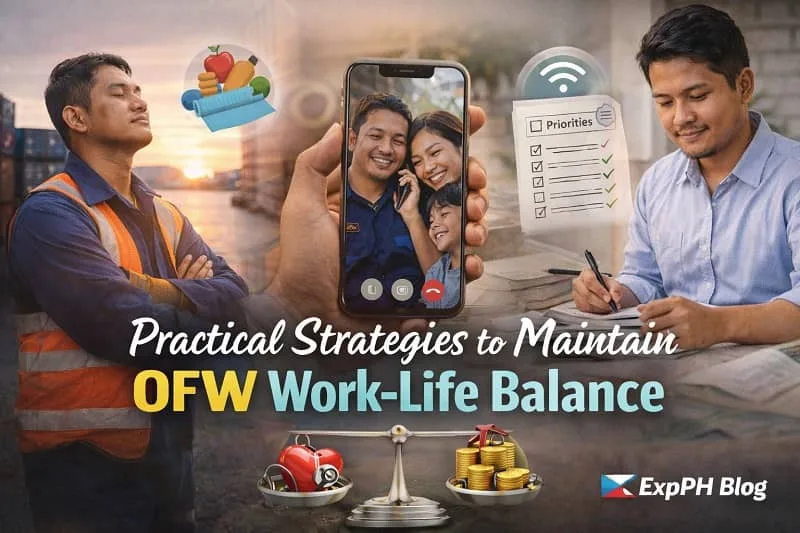
Practical Strategies to Maintain OFW Work-Life Balance
Setting Healthy Work Boundaries Abroad
Setting boundaries is important even when working overseas. Although many OFWs have limited control over schedules, small changes still make a difference. Using rest days properly helps prevent exhaustion and supports long-term work sustainability.
Avoid taking extra shifts continuously without enough recovery time. When possible, agree on clear work hours and respect them. Saying no to additional work does not mean being ungrateful. It means protecting your health and ability to work consistently.
Managing Time More Effectively
Good time management reduces stress and creates space for rest. Planning your day in a simple way helps you feel more in control of tasks and responsibilities while working abroad.
Small habits such as preparing meals ahead, organizing daily tasks, and using reminders can save time and energy. These practices support healthier routines and help maintain a realistic OFW Work-Life Balance.
Taking Care of Physical Health While Working Abroad
Building Simple Exercise Into a Busy Schedule
Exercise does not require a gym or long workouts to be effective. Simple activities such as walking, stretching, or short bodyweight routines can improve strength and energy when done regularly.
Spending ten to fifteen minutes each day moving your body helps reduce stress and improve mood. Regular movement also offsets the effects of long working hours and physical strain.
Eating for Energy and Recovery
Nutrition strongly affects health and work performance. Many OFWs rely on fast food or quick meals because of limited time, but poor eating habits often lead to low energy and fatigue.
When possible, aim for balanced meals with vegetables, protein, fruits, and enough water. Small changes in diet can greatly support energy levels and improve OFW Work-Life Balance.
Protecting Mental and Emotional Health Abroad
Coping With Homesickness and Loneliness
Homesickness is a normal experience, especially during the first months of working abroad. Staying connected with family provides comfort, but too much exposure to problems back home can increase emotional stress and distraction.
Creating healthy communication routines is important. Share updates regularly while also protecting your emotional space. This balance helps reduce loneliness without adding unnecessary emotional pressure to daily life.
Stress Management Techniques That Work Overseas
Simple stress management practices can be done anywhere. Deep breathing, journaling, prayer, meditation, or listening to music can help calm the mind.
According to the World Health Organization, managing stress and prioritizing mental health reduces the risk of long-term health problems and improves overall well-being. You can refer to their official mental health guidance for practical coping strategies and health awareness: https://www.who.int/teams/mental-health-and-substance-use
Building Support Systems Abroad
Connecting With Fellow OFWs
Community support plays an important role in OFW Work-Life Balance. Fellow OFWs understand shared challenges and can offer emotional support, practical advice, and companionship during difficult periods abroad.
Joining Filipino groups, church communities, or online OFW forums helps reduce isolation. These connections create a sense of belonging and provide encouragement while adjusting to life and work overseas.
Knowing Where to Seek Help When Needed
Every OFW should know about local support services, embassy hotlines, and labor assistance programs in their host country. Having this information ready before problems arise offers reassurance and security.
Being informed allows OFWs to respond calmly during emergencies. It also helps protect personal rights and health while navigating challenges in a foreign work environment.
Upskilling as a Path to Better Work-Life Balance
Why Skills Development Reduces Work Pressure
Many OFWs stay in physically demanding or stressful jobs because they lack alternative skills. Upskilling creates opportunities for better-paying roles that are less physically exhausting or more flexible, including remote work options.
Learning new skills builds confidence and adaptability. It expands long-term career options and gives OFWs more control over their work conditions, which directly supports a healthier and more sustainable work-life balance abroad.
Online Learning as a Practical Option for OFWs
Learning Skills That Support OFW Work-Life Balance
Online learning allows OFWs to study at their own pace, even with busy work schedules. Courses on stress management, productivity, freelancing, digital skills, or career development can help reduce long-term work pressure.
A practical and accessible option for OFWs is Udemy. It offers flexible online courses that can be taken anytime and anywhere. Many OFWs use online learning to prepare for career changes or move into less demanding roles while still employed.
This learning option supports OFWs who want to invest in skills that improve income potential while also protecting personal health and overall well-being over time.
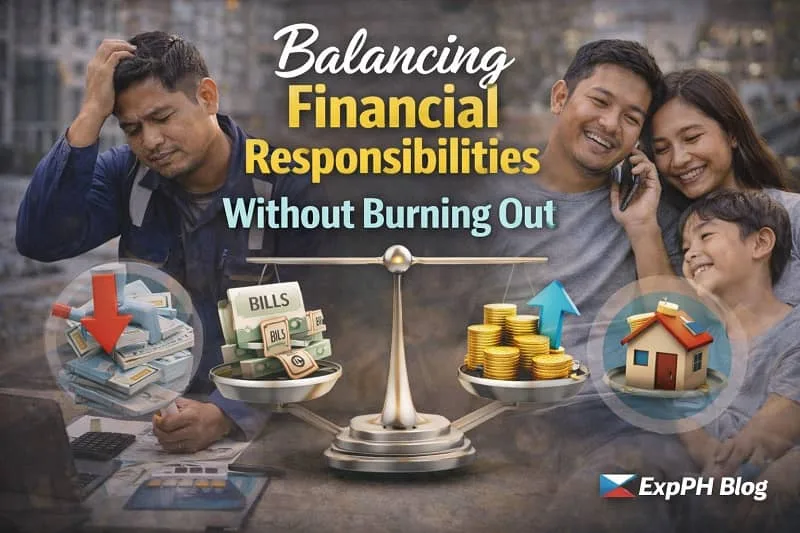
Balancing Financial Responsibilities Without Burning Out
Managing Family Expectations Back Home
Financial responsibility is a major source of pressure for many OFWs. Supporting family matters, but unrealistic expectations can increase stress and emotional strain over time.
Clear communication about income limits, savings goals, and long-term plans helps manage expectations. Setting financial boundaries protects emotional health and supports a more sustainable OFW Work-Life Balance.
Planning for the Future While Protecting Health
Saving and investing are important goals, but they should never come at the expense of personal health. Sustainable work habits allow OFWs to earn consistently while maintaining physical and mental strength.
A healthy OFW is better prepared to reach financial goals. Protecting well-being makes long-term planning more realistic and achievable while working abroad.
Creating Daily Habits That Support OFW Work-Life Balance
Small Habits With Big Impact
Daily habits strongly influence long-term health and work performance. Simple routines such as stretching after work, staying hydrated, limiting screen use before sleep, and taking short mental breaks help OFWs maintain energy, focus, and overall well-being while working abroad.
Consistency is more important than intensity. Small actions practiced daily support balance and recovery more effectively than occasional extreme efforts that often lead to fatigue and burnout.
Making Rest a Priority Without Guilt
Rest plays an important role in productivity and safety at work. Allowing the body and mind to recover improves focus, strength, and emotional stability during demanding workdays.
Letting go of guilt around rest is essential. Protecting personal energy supports responsible overseas work and helps OFWs continue providing long-term support for their families.
Preparing for Long-Term Overseas Success
Viewing OFW Work-Life Balance as a Career Strategy
Balancing work and health is not about doing less. It is about working in a smarter and more sustainable way. Healthy routines help OFWs stay overseas longer, earn steadily, and avoid health problems that disrupt careers.
Viewing OFW Work-Life Balance as part of a career plan encourages long-term thinking. It helps OFWs protect their ability to work, grow professionally, and support their families over time.
Knowing When It Is Time to Adjust or Transition
There may be moments when work pressure becomes greater than the benefits. Recognizing this early allows OFWs to make thoughtful decisions, such as changing jobs, upgrading skills, or preparing to return home.
Paying attention to physical and emotional signals shows strength. Listening to your body and mind helps prevent burnout and supports healthier long-term choices abroad.
Conclusion: Choosing Balance for a Stronger OFW Life Abroad
Being an OFW takes strength, patience, and long-term commitment, but it should never require sacrificing health. Work pressure is part of overseas life, yet it does not need to control every day. By recognizing stress early, setting clear boundaries, and caring for both physical and mental well-being, OFWs can protect their energy and focus. Building support systems and investing in useful skills also create stability. These choices help OFWs work more sustainably, avoid burnout, and continue supporting their families without damaging their health or long-term goals.
OFW Work-Life Balance is not something achieved once and forgotten. It is an ongoing process that changes with work demands, personal growth, and life abroad. Choosing balance today strengthens your future and protects your ability to provide for your family. Health is your most valuable resource. When you protect and nurture it, you give yourself the strength to succeed, grow, and build a better life wherever your overseas journey leads.
Explore more practical guides designed for real OFW life abroad.
- Daily Expenses OFWs Often Underestimate Abroad
- Simple Financial Systems Small Businesses Should Set Up Early
- How OFWs Can Control Spending Despite Rising Living Costs
- What Most OFWs Wish They Knew Before Working Abroad
- How OFWs Can Create Peace of Mind While Living Abroad
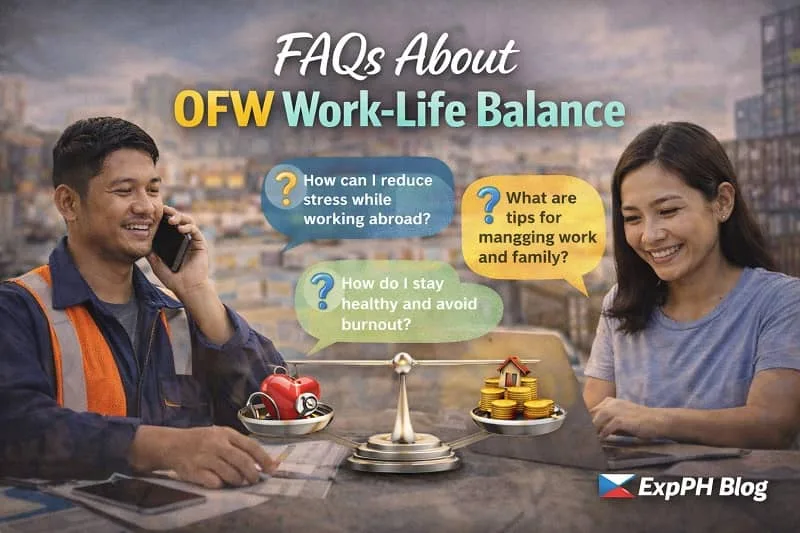
FAQs About OFW Work-Life Balance Abroad
What does OFW work-life balance really mean?
OFW work-life balance means managing job demands while protecting physical, mental, and emotional health, allowing overseas workers to stay productive, healthy, and emotionally stable long-term.
Why is balancing work pressure and health important for OFWs?
Balancing work pressure and health helps OFWs avoid burnout, reduce illness, maintain job performance, and sustain their ability to support families while working abroad.
What are common signs of burnout among OFWs abroad?
Common burnout signs include constant fatigue, sleep problems, irritability, lack of motivation, frequent illness, emotional withdrawal, and reduced work focus or productivity.
How can OFWs manage stress while working long hours?
OFWs can manage stress by setting boundaries, practicing time management, staying physically active, maintaining healthy routines, and using relaxation techniques like breathing or journaling.
Can OFWs improve work-life balance without changing jobs?
Yes, OFWs can improve balance through better routines, healthier habits, improved communication, skill development, stress management, and using rest days more effectively.
How does physical health affect an OFW’s job performance?
Good physical health increases energy, focus, and safety at work, helping OFWs perform tasks efficiently, reduce mistakes, and maintain consistent employment abroad.
What role does mental health play in OFW work-life balance?
Mental health supports emotional stability, decision-making, and resilience, allowing OFWs to handle pressure, avoid burnout, and maintain healthy relationships at work and home.
How can OFWs cope with homesickness and loneliness abroad?
OFWs can cope by staying connected with family, building social support, joining OFW communities, maintaining routines, and engaging in hobbies that provide comfort and purpose.
Does learning new skills help reduce work pressure for OFWs?
Yes, learning new skills opens better job options, increases confidence, reduces physical strain, and helps OFWs transition into less stressful or more flexible roles.
What small daily habits help improve OFW work-life balance?
Small habits include proper hydration, stretching, short exercises, mindful breathing, adequate sleep, limiting screen time, and setting simple daily routines consistently.
Test your understanding of how OFWs can balance work pressure and personal health abroad
Results


#1. What does OFW work-life balance focus on?
#2. Which issue often causes OFW burnout?
#3. Why is rest important for OFWs?
#4. Which habit supports better mental health?
#5. What is a common physical burnout sign?
#6. How can OFWs reduce work stress?
#7. Why is skill learning helpful?
#8. What helps manage homesickness abroad?
#9. What improves long-term overseas success?
#10. What is the main benefit of balance?
We appreciate you taking time to test your knowledge.
Share your quiz experience in the comments and let us know what you learned or struggled with. Your feedback helps us improve future OFW learning content.

A Filipino web developer with a background in Computer Engineering. Founder of ExpPH Blog and ExpPH Business Guide, creating practical content on OFW guidance, business, finance, freelancing, travel, and lifestyle. Passionate about helping Filipinos grow, he shares insights that educate, empower, and inspire readers nationwide.



Pingback: 7 Healthy Routines for OFWs Working Long Hours Overseas Now!
Pingback: 7 Ways OFWs Can Plan OFW Career Growth Overseas Today Smartly