
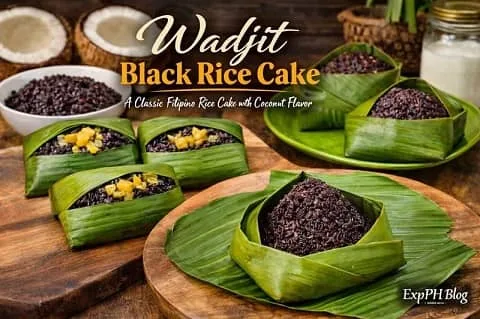
Wadjit (Black Rice Cake): A Classic Filipino Rice Cake with Coconut Flavor
Filipino food is deeply rooted in tradition, memory, and family. Among the many rice-based delicacies found across the Philippines, Wadjit black rice cake holds a special place for those who appreciate slow-cooked sweets made with patience and care. Often associated with Muslim Filipino communities, particularly in Mindanao and Sulu, Wadjit is more than just a dessert. It represents culture, celebration, and heritage passed down through generations.
For Overseas Filipino Workers (OFWs), rediscovering traditional dishes like Wadjit can feel like reconnecting with home. Even from thousands of miles away, the taste and story behind this black rice cake offer comfort and identity. This guide explores everything you need to know about Wadjit, from its origins and ingredients to preparation, variations, and cultural importance.
Wadjit is just one sweet glimpse into the rich culinary heritage of the south.
If you’re curious to discover more traditional dishes, savory specialties, and beloved treats, dive into our complete master guide: Flavors of Sulu: The Ultimate Guide to Authentic Tausug Cuisine.
Table of Contents
Quick Summary (TL;DR)
Wadjit is a traditional Filipino dessert made from black glutinous rice, coconut milk, and sugar. Deeply rooted in Muslim Filipino culture (particularly in Mindanao and Sulu), it is a dense, chewy, and rich treat typically prepared for special occasions like weddings and Eid. For many, especially Overseas Filipino Workers (OFWs), it serves as a comforting connection to home, heritage, and community.
Understanding Wadjit Black Rice Cake
Wadjit is a traditional Filipino rice cake made primarily from black glutinous rice, coconut milk, and sugar. Unlike lighter rice cakes such as puto or bibingka, Wadjit is dense, sticky, and rich in flavor. Its deep purple to nearly black color comes from the natural pigment of black rice, giving it a distinct appearance and taste.
The texture of Wadjit black rice cake is chewy and moist, often compared to a thick rice pudding that has been allowed to set. It is typically cooked slowly over low heat, allowing the flavors of coconut milk and rice to blend fully. This slow process is what gives Wadjit its signature richness.
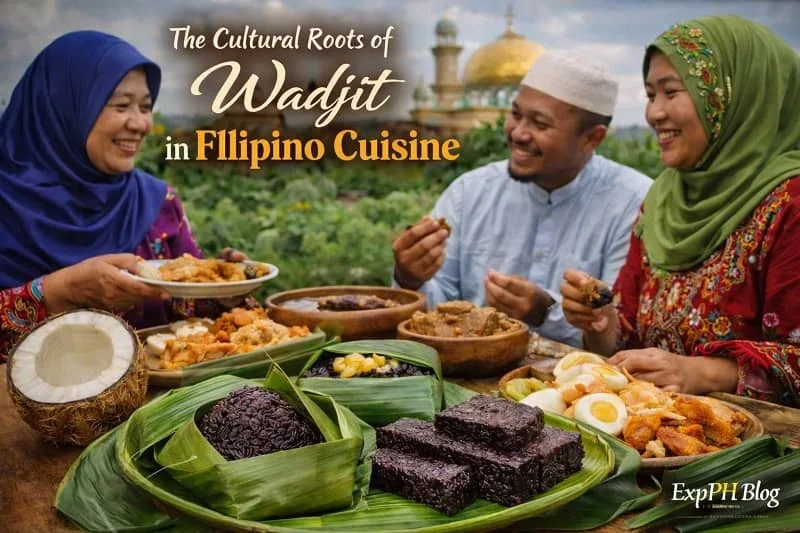
1. The Cultural Roots of Wadjit in Filipino Cuisine
Wadjit has deep roots in Muslim Filipino culture, especially among the Tausug, Sama, and Maranao communities. It is traditionally prepared for special occasions such as weddings, religious gatherings, and family celebrations, where food plays an important role in strengthening social and cultural bonds.
Historically, Wadjit symbolized abundance and hospitality within the community. Its preparation required patience, shared effort, and quality ingredients, which made it suitable only for meaningful events. Even today, many families prepare Wadjit mainly during celebrations, preserving its value as a special dish rather than a daily food.
For Overseas Filipino Workers, learning about dishes like Wadjit helps maintain cultural pride while living abroad. It allows traditions to be shared with younger generations, keeping Filipino identity alive through food, stories, and family memories passed across borders.
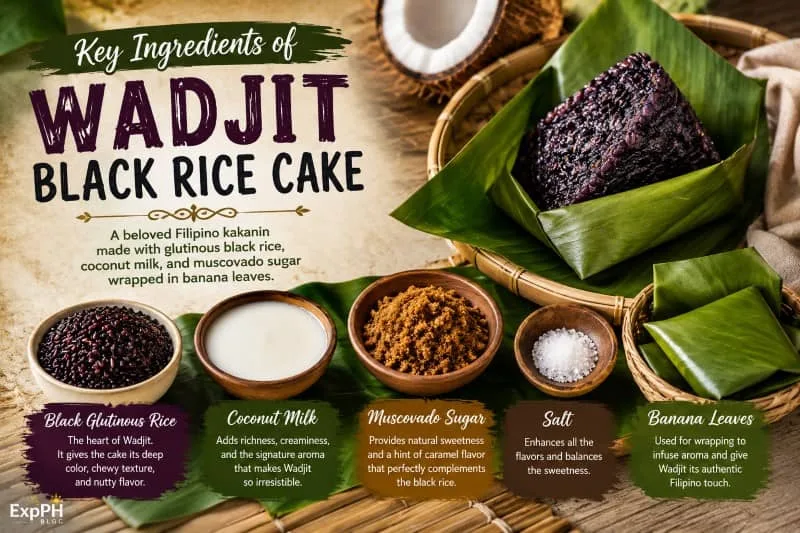
2. Key Ingredients of Wadjit Black Rice Cake
Wadjit black rice cake relies on a few essential ingredients to achieve its signature taste and texture. Black glutinous rice provides a sticky, nutty base, while fresh coconut milk adds rich creaminess. Brown or coconut sugar offers balanced caramel sweetness, occasionally enhanced by aromatic pandan leaves.
Black Glutinous Rice as the Primary Base Ingredient
Black glutinous rice, locally called pirurutong, forms the foundation of Wadjit black rice cake. It becomes naturally sticky when cooked and provides a mild nutty flavor. Its dark color comes from natural antioxidants known as anthocyanins.
- Naturally sticky texture
- Nutty rice flavor
- Rich dark color
Coconut Milk for Richness and Creamy Texture
Coconut milk gives Wadjit its signature richness and smooth mouthfeel. Traditional recipes prefer freshly squeezed coconut milk because it produces a deeper and more authentic flavor compared to canned alternatives.
- Adds creaminess
- Enhances overall flavor
- Supports traditional taste
Sugar or Coconut Sugar for Balanced Sweetness
Wadjit is commonly sweetened with brown sugar or coconut sugar. These sugars provide gentle sweetness with a caramel-like depth that balances the natural earthiness of black glutinous rice.
- Natural sweetness
- Caramel flavor notes
- Complements black rice
Optional Flavor Enhancers for Aroma and Taste
Some versions of Wadjit include pandan leaves or a small amount of salt. These ingredients do not overpower the dish but improve aroma and highlight the natural sweetness of the rice and coconut milk.
- Subtle flavor boost
- Pandan for aroma
- Salt for balance
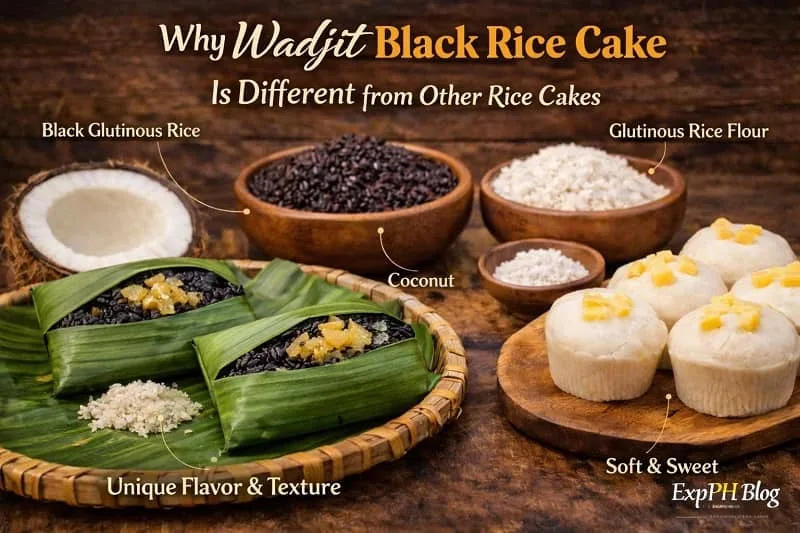
3. Why Wadjit Black Rice Cake Is Different from Other Rice Cakes
Wadjit black rice cake stands out among Filipino rice cakes because of its ingredients, cooking method, and final texture. These differences give it a deeper flavor and a more filling bite compared to lighter steamed rice cakes commonly found in many regions.
- Uses black glutinous rice instead of white rice flour
- Requires long and slow cooking
- Has a denser and chewier texture
- Served in slices or wrapped portions
Unlike most steamed rice cakes, Wadjit is cooked in a pan or pot until the mixture becomes thick and sticky. This slow cooking process allows the coconut milk and rice to blend fully, creating a rich flavor that improves as the cake cools and sets.a deep, concentrated flavor that improves as it cools.
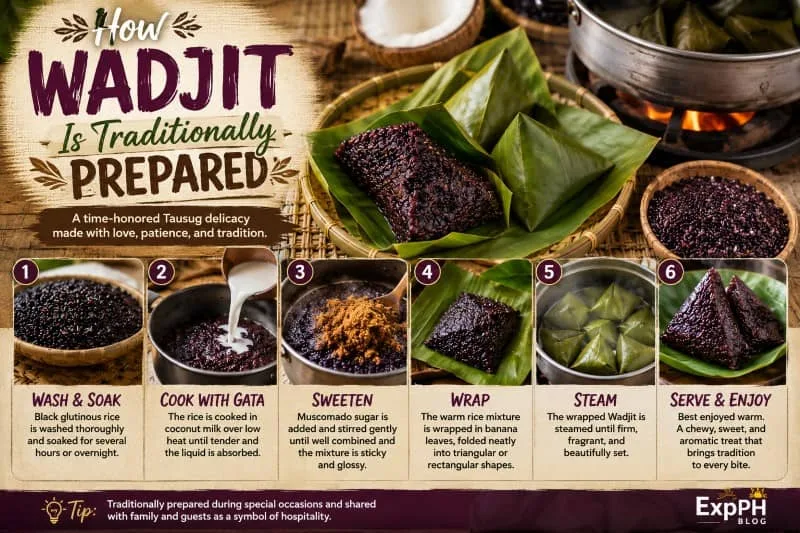
4. How Wadjit Is Traditionally Prepared
Preparing traditional Wadjit requires patience and care. It begins by soaking black glutinous rice, then simmering it until tender. Next, coconut milk and sugar are mixed in and slow-cooked over low heat until thick. Finally, the mixture is cooled and set on banana leaves before slicing.
Soaking and Cooking the Rice to Achieve Proper Softness
Black glutinous rice is soaked for several hours or overnight to soften the grains and ensure even cooking. After soaking, the rice is simmered in water until it becomes tender but not fully cooked.
- Softens rice grains
- Promotes even cooking
- Prevents hard centers
Mixing Coconut Milk and Sugar for Flavor Development
Coconut milk and sugar are added to the partially cooked rice and heated over low flame. The mixture is stirred regularly to prevent sticking and burning while allowing the flavors to blend slowly.
- Adds sweetness
- Builds creamy texture
- Prevents scorching
Slow Cooking Process That Creates the Ideal Texture
The mixture thickens gradually as moisture evaporates during slow cooking. This stage requires patience because rushing the heat can affect texture and cause uneven consistency in the final rice cake.
- Thickens naturally
- Enhances flavor
- Improves texture
Setting and Serving the Finished Wadjit Properly
Once thick, the Wadjit is transferred to a tray or banana leaf-lined container. It is left to cool and set before being sliced or shaped into portions for sharing.
- Improves presentation
- Allows firm setting
- Eases slicing
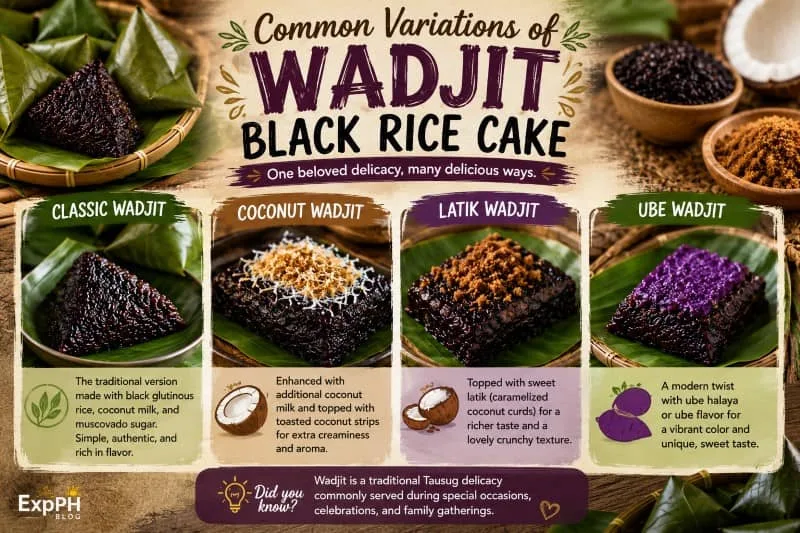
5. Common Variations of Wadjit Black Rice Cake
Wadjit black rice cake offers several variations to suit different tastes. Regionally, it ranges from soft and pudding-like to firm and compact. Modern adaptations often add condensed milk or toasted coconut for extra richness, while health-conscious versions reduce sugar to highlight the nutritious black rice.
Regional Variations
Wadjit varies by region based on texture and sweetness. Some areas prefer a softer pudding-like consistency, while others cook it until firm and compact. Local taste often determines how sweet the dish becomes during preparation and serving.
Modern Adaptations
Modern versions of Wadjit sometimes include condensed milk to add creaminess or toppings such as toasted coconut. These changes are not traditional but make the dessert more appealing to younger audiences and home cooks exploring Filipino food.
Health-Conscious Versions
Health-focused recipes may reduce sugar or replace it with natural sweeteners. Black glutinous rice contains more fiber than white rice, which helps make Wadjit more filling when eaten in moderate portions.
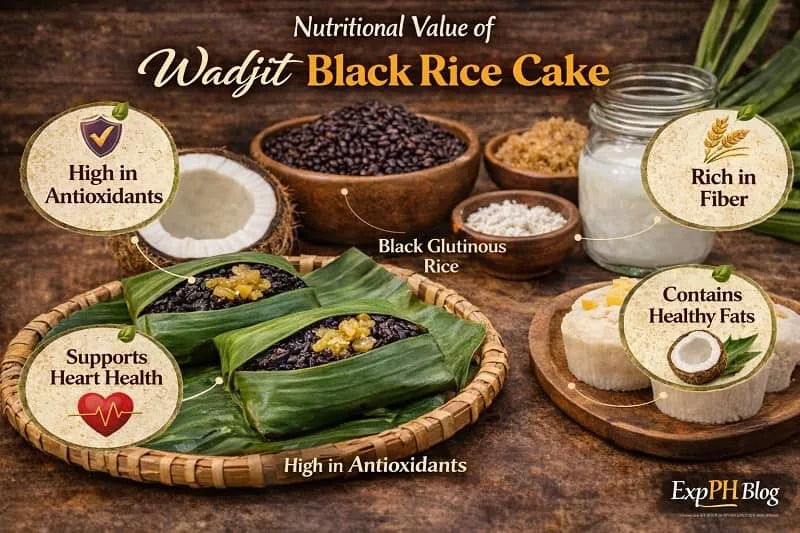
6. Nutritional Value of Wadjit Black Rice Cake
Wadjit black rice cake is not a low-calorie dessert, yet it offers nutritional value when eaten in moderation. It is filling and satisfying, which can help limit overeating. When enjoyed as part of a balanced diet, it can complement traditional meals rather than replace them.
Black glutinous rice provides antioxidants, fiber, and minerals such as iron that support overall nutrition. Coconut milk adds healthy fats that help promote fullness. Because Wadjit contains both sugar and coconut milk, mindful portion control is important to maintain balanced energy intake.
According to the Philippine Department of Science and Technology Food and Nutrition Research Institute, traditional rice-based foods can fit into a balanced diet when consumed mindfully. Pairing them with nutrient-rich foods helps support better nutrition while preserving cultural food practices.

7. When Wadjit Is Commonly Served
Wadjit is traditionally prepared for important gatherings where food represents unity and celebration. It is not an everyday dessert but one reserved for moments that bring families and communities together through shared meals and meaningful traditions.
- Weddings and engagement celebrations
- Eid and other religious events
- Family reunions and community gatherings
- Cultural festivals
Preparing Wadjit is often a shared family activity that encourages cooperation and bonding. For OFWs returning home from work abroad, Wadjit is commonly included in the welcome spread as a symbol of warmth, respect, and homecoming joy.

8. Wadjit and OFW Cultural Identity
For many OFWs, food remains a strong connection to home and family. Preparing or tasting Wadjit black rice cake abroad often brings back memories of childhood, shared meals, and community celebrations that offer comfort and emotional grounding.
Sharing Wadjit with foreign friends or coworkers also helps introduce Filipino culture beyond well-known dishes like adobo or lumpia. It highlights the diversity of Filipino cuisine and brings attention to Muslim Filipino traditions that are less visible internationally.

9. Can You Make Wadjit Abroad?
Wadjit can be prepared abroad with simple ingredient adjustments. Black glutinous rice is widely available in Asian grocery stores and is often labeled as black sticky rice. When fresh coconut is unavailable, canned coconut milk works well as a practical substitute.
Banana leaves may be difficult to find outside the Philippines, but parchment paper or lightly greased trays can be used for setting the cake. The most important requirement remains patience, as slow cooking is essential for achieving the proper texture.
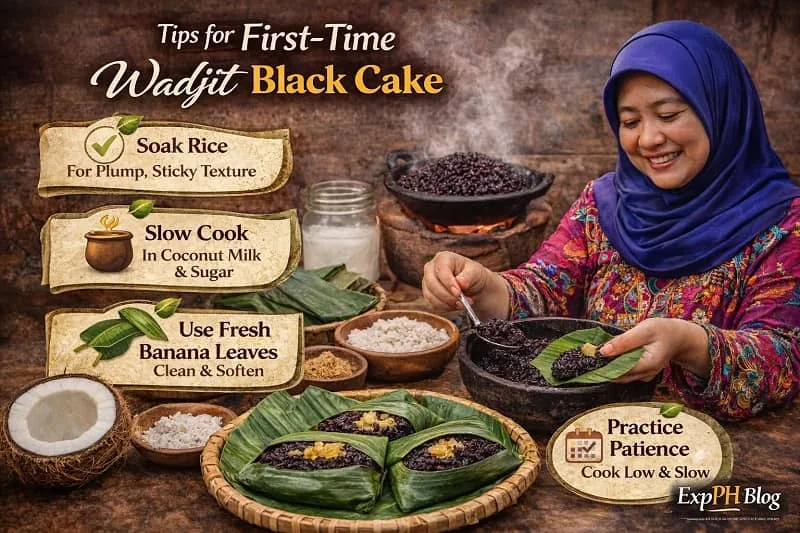
10. Tips for First-Time Wadjit Makers
Preparing Wadjit black rice cake for the first time requires patience and attention rather than advanced cooking skills. Following simple steps helps ensure proper texture and flavor while avoiding common mistakes during the cooking process.
- Soak the rice properly to ensure even cooking
- Use low heat and stir consistently
- Taste as you cook and adjust sweetness gradually
- Allow the cake to cool fully before slicing
Making Wadjit is not complicated, but it rewards careful timing and steady effort. Allowing enough time for slow cooking and proper cooling helps achieve the dense and chewy texture that defines this traditional dessert.
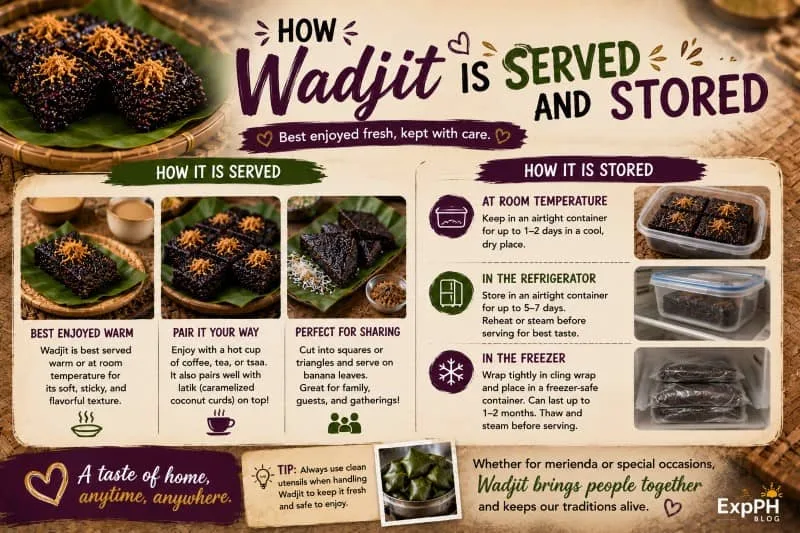
11. How Wadjit Is Served and Stored
Wadjit is best served at room temperature, which allows its texture and flavor to settle properly. It is commonly sliced into square or diamond shapes and may be wrapped individually to make sharing easier during family gatherings and special occasions.
For storage, Wadjit should be kept in an airtight container and placed in the refrigerator when necessary. When stored properly, it can last up to three days. Reheating is optional, since many people enjoy its firm texture when chilled.
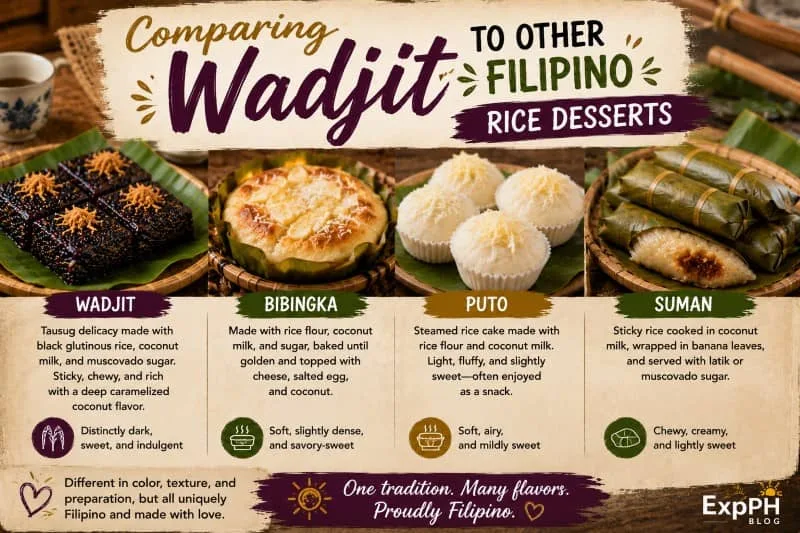
12. Comparing Wadjit to Other Filipino Rice Desserts
Unlike kakanin such as suman or biko, Wadjit uses black glutinous rice and is not steamed or baked. Its cooking method is similar to a thick rice pudding that slowly sets, creating a denser texture and deeper flavor.
Because of this process, Wadjit develops a richer taste and a distinctive mouthfeel. These qualities set it apart from lighter Filipino rice desserts and make it a memorable option for those seeking traditional flavors with depth.

13. Preserving Traditional Foods Like Wadjit
As modern lifestyles grow busier, traditional dishes that require long preparation face the risk of being forgotten. Documenting and sharing recipes for Wadjit black rice cake helps protect Filipino culinary heritage and keeps traditional cooking practices accessible to future generations.
Platforms like ExpPH Blog play an important role in keeping OFWs and younger readers connected to traditional Filipino food knowledge. Through educational content and storytelling, these traditions continue to reach homes and communities across different countries.
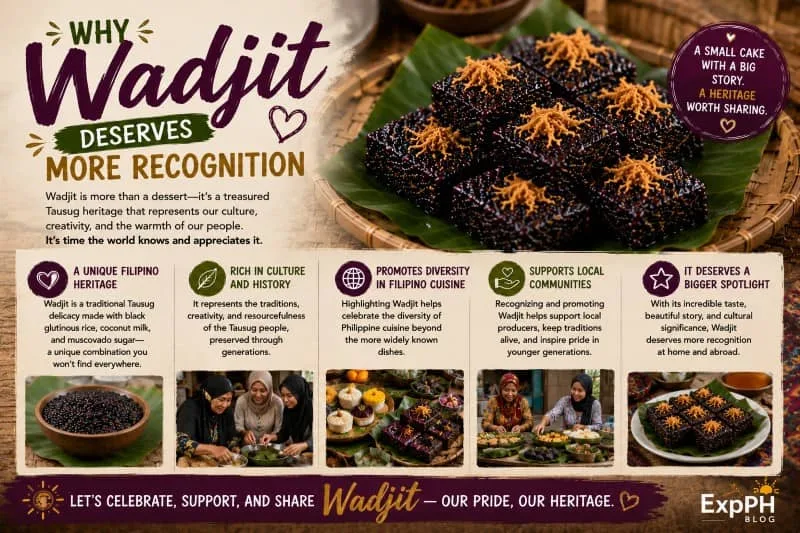
14. Why Wadjit Deserves More Recognition
Wadjit represents an important part of Filipino food history that deserves greater recognition. Its use of black glutinous rice, slow cooking methods, and strong cultural meaning make it a unique dessert that reflects tradition, patience, and community values.
Learning about Wadjit helps readers appreciate the depth and diversity of Filipino cuisine beyond popular dishes. It highlights regional traditions and encourages respect for lesser-known foods that continue to shape Filipino cultural identity.
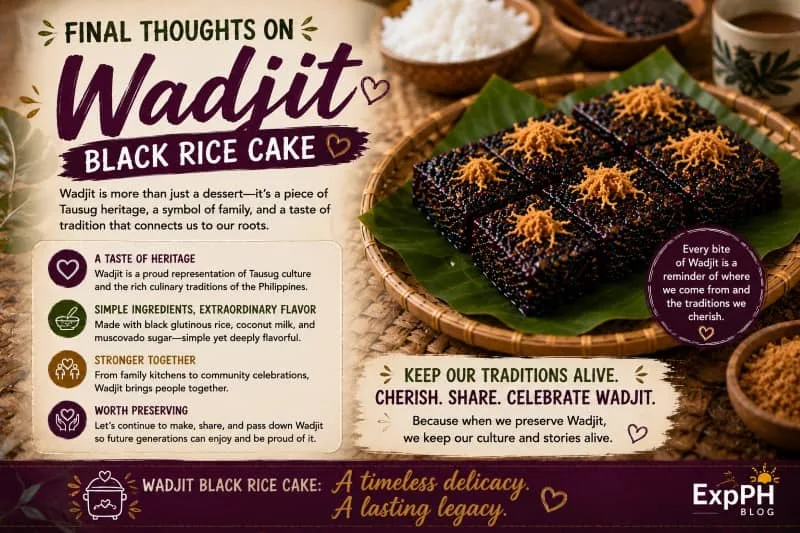
Final Thoughts on Wadjit Black Rice Cake
Wadjit black rice cake is more than a dessert enjoyed for its taste. It reflects tradition, patience, and cultural pride passed down through generations. For Overseas Filipino Workers, it offers a comforting reminder of home, family, and shared moments. For food lovers, it delivers a satisfying experience through its rich coconut flavor, chewy texture, and slow preparation. Each serving shows the importance of time, care, and intention in traditional Filipino cooking.
Preserving and sharing dishes like Wadjit helps Filipino culinary traditions remain strong across generations and borders. When recipes are prepared and passed on, cultural identity stays alive despite changing lifestyles. Whether served during important celebrations or prepared quietly at home, Wadjit continues to reflect heritage, community values, and the lasting role of food in Filipino cultural life.
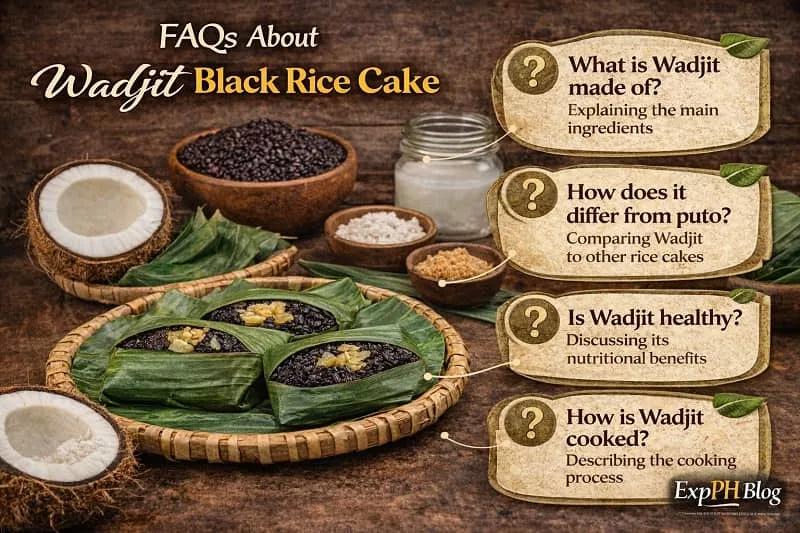
FAQs About Wadjit black rice cake
What is Wadjit (Black Rice Cake)?
Wadjit is a traditional Filipino dessert made from black glutinous rice, coconut milk, and sugar, known for its chewy texture and rich coconut flavor profile.
Where did Wadjit black rice cake originate?
Wadjit black rice cake is commonly linked to Muslim Filipino communities in Mindanao and Sulu, where it is prepared for weddings, celebrations, and family gatherings.
What makes black rice important in Wadjit?
Black glutinous rice gives Wadjit its dark color, chewy texture, and nutty taste, while coconut milk adds creaminess and balances the dessert’s sweetness naturally well.
How is Wadjit different from other Filipino rice cakes?
Wadjit black rice cake differs from biko and suman because it uses black rice, requires slow cooking, and results in a denser, richer final texture.
Can Wadjit black rice cake be made outside the Philippines?
Wadjit can be made abroad using black sticky rice from Asian stores and canned coconut milk, though fresh coconut milk provides a more traditional flavor.
How is Wadjit traditionally served?
Wadjit is traditionally served at room temperature, sliced into portions, and often wrapped in banana leaves, making it easy to share during gatherings with others.
How long does Wadjit black rice cake last?
When stored in an airtight container, Wadjit black rice cake can last up to three days in the refrigerator without losing its texture or flavor.
Is Wadjit black rice cake healthy?
Wadjit black rice cake is considered moderately healthy when eaten in moderation because black rice contains antioxidants, fiber, and minerals that support balanced nutrition goals.
When is Wadjit usually prepared?
Wadjit is often prepared for weddings, Eid celebrations, religious events, and family reunions, reflecting its importance in Filipino cultural and communal traditions across many generations.
Why is Wadjit meaningful for OFWs?
For OFWs, Wadjit black rice cake offers comfort and cultural connection, helping preserve Filipino identity while sharing meaningful traditions with family and friends abroad overseas.
Loved learning about Wadjit?
Your culinary journey doesn’t have to end here! Discover more rich flavors, fascinating stories, and beloved recipes from the South in our complete collection: Traditional Tausug and Sulu Cuisine and Cultural Delicacies.
These related posts help broaden your understanding of Filipino food culture, especially traditional delicacies and experiences from Sulu and Tausug communities.
- Biyaki: A Traditional Tausug Delicacy from Sulu
- Putli Mandi: A Traditional Sulu Delicacy Made from Glutinous Rice and Coconut
- Piyutu: The Traditional Tausug Mashed Cassava Delicacy of Sulu
Test your knowledge about Wadjit (Black Rice Cake): A Classic Filipino Rice Cake with Coconut Flavor
Results


#1. What type of rice is used in Wadjit?
#2. What gives Wadjit its rich flavor?
#3. Which Filipino communities commonly prepare Wadjit?
#4. What texture best describes Wadjit?
#5. When is Wadjit often served?
#6. What natural color does Wadjit have?
#7. Why is Wadjit slow cooked?
#8. What leaf is traditionally used for wrapping?
#9. Why is Wadjit meaningful for OFWs?
#10. Where is black rice commonly found abroad?
We appreciate you taking time to learn about Filipino food heritage with us
Please comment below and share your quiz experience with us. Your feedback helps ExpPH Blog grow better content for you.

A Filipino web developer with a background in Computer Engineering. Founder of ExpPH Blog and ExpPH Business Guide, creating practical content on OFW guidance, business, finance, freelancing, travel, and lifestyle. Passionate about helping Filipinos grow, he shares insights that educate, empower, and inspire readers nationwide.


Pingback: Tausug Apam: 7 Powerful Facts Behind the Traditional Pancake