Cebu: A Comprehensive History of the Queen City of the South
Introduction
Cebu, often referred to as the “Queen City of the South,” is one of the most historically rich and economically dynamic provinces in the Philippines. Located in the Central Visayas region, it comprises the main island of Central Visayas and 167 surrounding islands and islets. This strategic position allowed Cebu to develop into a natural gateway for culture and commerce, shaping its identity long before the arrival of foreign influences.
Known as the oldest province in the Philippines, the province has long been a center of culture, trade, and governance, bridging the ancient and modern history of the nation. Its heritage can be seen in its festivals, architecture, traditions, and the unique blend of local and global customs that have shaped Cebuano life for centuries.
Today, Queen City of the South stands as a thriving hub for business, tourism, education, and technology, but its story began long before Spanish colonization in a time when it was known as Sugbu, a bustling trading port that connected the Philippines to the rest of Asia. Merchants from China, Malaysia, Indonesia, and other neighboring regions visited regularly, bringing goods, ideas, and cultural exchanges that enriched local society.
The evolution of the island from a pre colonial trading settlement to a modern metropolitan province is a testament to the resilience and ingenuity of its people. Each generation contributed to shaping Cebu into a province that honors its past while embracing growth and innovation. This balance of heritage and progress continues to make Cebu a vital part of the nation’s identity.
Pre-Colonial Visayan province: The Trading Hub of Sugbu
Before the arrival of the Spanish, Cebu was known as Sugbu, derived from the old Visayan term sibu or sugbo, meaning “to walk in the water.” This reflected its coastal geography, with shallow shores suitable for docking small boats used for trade and fishing.
A Center of Ancient Maritime Trade
Subgu’s location in the central part of the archipelago made it a natural trading center for merchants from neighboring regions. Traders from China, Siam (Thailand), Borneo, the Malay Peninsula, and Indonesia frequently visited the island, exchanging goods such as porcelain, silk, gold, and spices.
Archaeological excavations have unearthed Chinese ceramics from the Tang and Song dynasties, confirming that long-distance trade had flourished centuries before European contact.
Sugbu’s early communities were led by datus and rajahs, local chieftains who governed independent barangays. Among them were Rajah Humabon of Queen City of the South and Datu Lapu-Lapu of Mactan, both of whom would later play key roles in the arrival of the Spanish.
Cultural and Religious Influences
The people of southern Philippine province practiced animism, a belief system centered around nature spirits and ancestral worship. However, trade and migration also introduced influences from Hinduism, Buddhism, and Islam.
Artifacts such as the Ganesha statue found in Mactan and the gold death masks found in nearby regions indicate that pre-colonial Sugbuanos were part of a vibrant cultural exchange network across Southeast Asia.
Socially, Cebuano society was organized into three main classes:
- Datus (ruling nobles),
- Timawas (freemen and warriors), and
- Oripun (dependents or servants).
This hierarchical yet cooperative structure allowed Cebu’s society to prosper and maintain order even before the formation of a centralized state.
Spanish Contact: The Arrival of Ferdinand Magellan
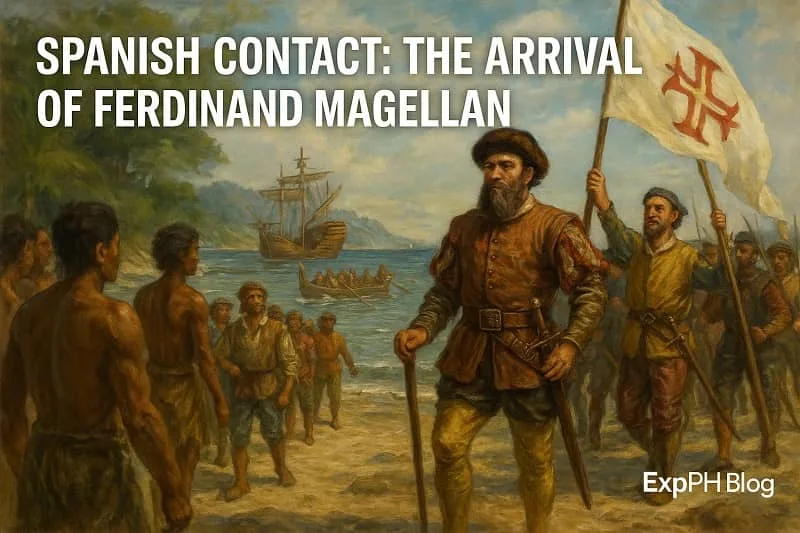
In 1521, Portuguese explorer Ferdinand Magellan, sailing under the Spanish flag, landed on the shores of Cebu during his expedition to find a westward route to the Spice Islands. This marked the first recorded European contact with the Philippines.
Magellan met Rajah Humabon, ruler of the province, and his wife, Hara Amihan (Queen Juana). The two were baptized as Carlos and Juana, respectively, and in honor of this conversion, Magellan presented them with an image of the Santo Niño (Holy Child Jesus) now regarded as the oldest Christian relic in the Philippines.
However, not all local rulers welcomed the Spaniards. Datu Lapu-Lapu of nearby Mactan Island resisted foreign domination, leading to the Battle of Mactan on April 27, 1521, where Magellan was killed. Lapu-Lapu’s victory made him a symbol of Filipino resistance and national pride.
Although Magellan’s expedition failed to colonize the islands, it set the stage for Spain’s later return and long-term influence in Cebu.
The Return of the Spaniards: Miguel López de Legazpi and the Founding of the capital City
Forty-four years later, in 1565, Spanish explorer Miguel López de Legazpi returned to the Philippines, this time successfully establishing a permanent settlement in the Queen City of the South. The Treaty of Cebu, signed with Rajah Tupas, marked the beginning of Spanish rule in the islands.
The Birth of the First Spanish Settlement
The Central Visayas destination became the first Spanish colony in the Philippines, serving as the seat of government before the capital was moved to Manila in 1571.
This urban center originally known as Villa del Santísimo Nombre de Jesús became the center of Spanish administration, religion, and trade in the Visayas.
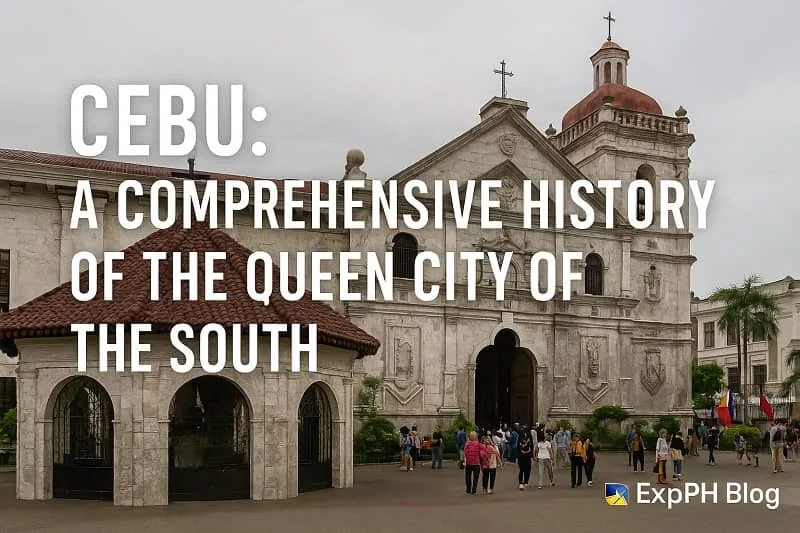
The Basilica del Santo Niño, established in 1565, was built on the site where the image of the Santo Niño was rediscovered. It remains one of the most significant pilgrimage sites in the country today.
Nearby, Fort San Pedro, a triangular stone fortress, was constructed to protect the settlement from pirates and Muslim raiders. It is the oldest fort in the Philippines and now serves as a museum showcasing colonial-era artifacts.
Spanish Colonial Cebu: Faith, Architecture, and Culture
The Spanish brought Catholicism, education, and Western governance, transforming Cebu’s cultural and political landscape. Missionaries spread Christianity across the island and neighboring provinces, establishing schools, convents, and churches.
Religious Influence
The Augustinian friars led the evangelization efforts, and this southern Philippine province quickly became one of the strongholds of Christianity in Asia. The annual Sinulog Festival, which began as a native dance ritual, evolved into a grand Catholic celebration in honor of the Santo Niño.
Architectural Legacy
Cebu’s Spanish heritage is visible in its historical architecture:
- Basilica del Santo Niño – the oldest Catholic church in the country, built in 1565.
- Fort San Pedro – symbolizing Cebu’s strategic military importance.
- Casa Gorordo Museum – a 19th-century ancestral home that showcases the lifestyle of the Cebuano elite.
- Magellan’s Cross – housed in a small chapel near the basilica, representing the introduction of Christianity.
Economic Development under Spain
The Queen City of the South thrived as a port city, facilitating trade between the Spanish Philippines and other Asian regions through the Galleon Trade.
Local industries such as fishing, agriculture, and weaving flourished. Central Visayas also became a center for shipbuilding and sugar production, which sustained the local economy for centuries.
Revolution and the End of Spanish Rule
By the late 19th century, nationalist sentiments were spreading throughout the Philippines. Cebuanos actively participated in the Philippine Revolution against Spanish rule.
Figures like Leon Kilat (Pantaleon Villegas) and General Arcadio Maxilom led uprisings in the province, inspiring others to fight for independence.
The revolution ultimately led to Spain’s defeat in the Spanish-American War (1898), and sovereignty over the Philippines was ceded to the United States through the Treaty of Paris.
Southern Philippine Province Under American Rule
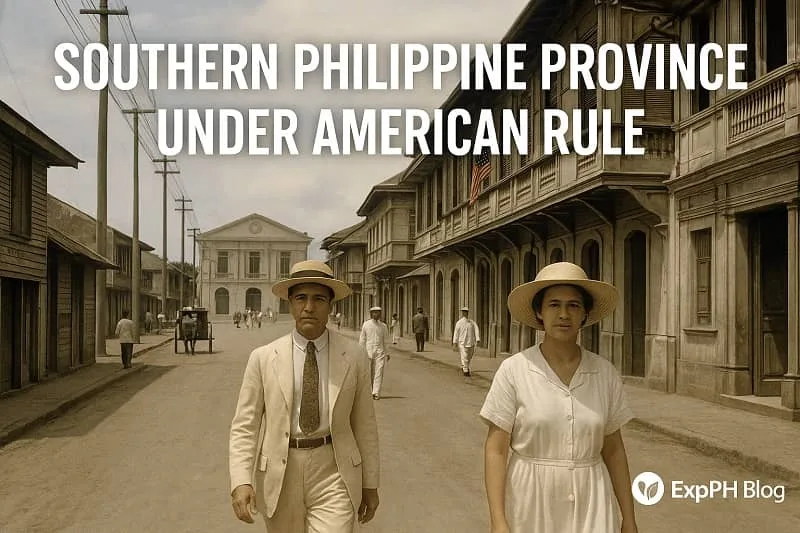
The American colonial period (1898 to 1946) ushered in modernization and education reforms. English became the medium of instruction, and a public school system was established. Cebuano society became more urbanized and connected to global trade as new ideas, technologies, and industries entered the region.
Infrastructure such as roads, bridges, and ports improved transportation and commerce. These developments allowed goods to move faster, encouraged business growth, and linked Cebu more closely with other islands. The Provincial Capitol, completed in 1938, stands as an architectural symbol of this era and remains one of the most recognizable landmarks in the province.
Cebu’s local governance was strengthened, and democratic institutions began to take root, creating a foundation for future leadership. The rise of educated professionals, entrepreneurs, and civic leaders further shaped Cebu’s identity as a progressive center in the South.
World War II and Japanese Occupation
During World War II, Cebu was occupied by Japanese forces from 1942 to 1945. The occupation was marked by hardship, forced labor, and guerrilla warfare. The Cebuano resistance movement, led by figures like Col. James M. Cushing, played a crucial role in liberating the island.
The urban center was heavily damaged during the war, but post-war reconstruction quickly followed with the help of American and Filipino forces. The resilience shown by the people of the city during this period became a defining trait of their identity.
Post-War Reconstruction and Modern Growth
After the Philippines gained independence in 1946, Queen City of the South experienced rapid urbanization. Its central location and skilled labor force made it an attractive destination for investors and industries.
By the late 20th century, southern Philippine province had transformed into a metropolitan hub, second only to Metro Manila in economic importance. The establishment of the Mactan Export Processing Zone (MEPZ) and later the Cebu IT Park marked Cebu’s entry into the global business arena.
Cebu’s Modern Economy and Infrastructure
Today, Cebu is one of the most developed provinces in the Philippines, boasting a diverse economy driven by tourism, manufacturing, IT-BPM (Information Technology-Business Process Management), and real estate.
Tourism and Culture
Cebu’s attractions include:
- Magellan’s Cross and Basilica del Santo Niño for heritage tourism
- Mactan Island and Malapascua for diving and beaches
- Oslob for whale shark watching
- Kawasan Falls and Osmeña Peak for eco-tourism adventures
The Sinulog Festival, held every January, remains one of Asia’s largest religious and cultural events, symbolizing Cebu’s vibrant fusion of faith and festivity.
Economic Innovation
The island province continues to attract investors due to its modern port facilities, international airport, and thriving tech industry. The Cebu-Cordova Link Expressway (CCLEX), inaugurated in 2022, stands as a landmark infrastructure connecting Mactan Island to mainland Cebu.
Cebu’s Cultural Heritage and People
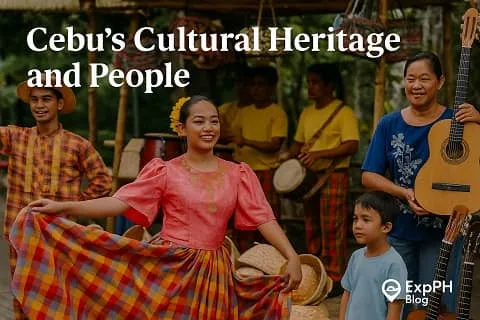
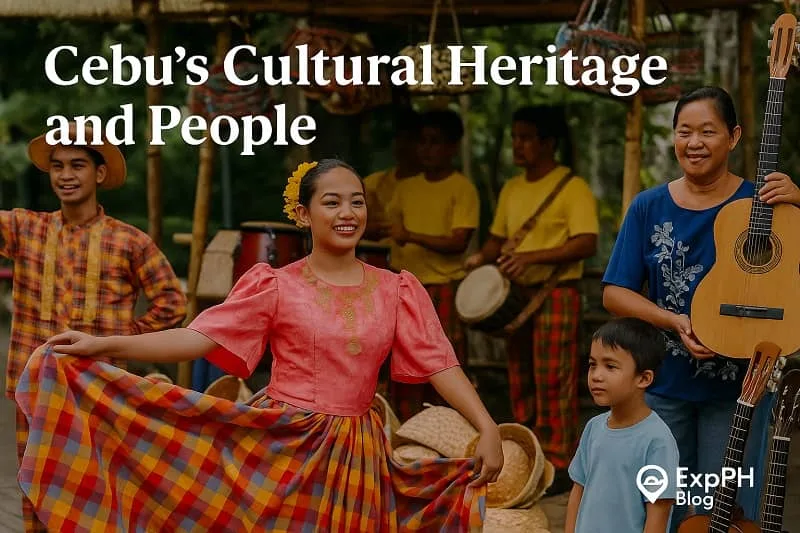
Cebuano culture reflects centuries of local tradition and global influence. The Cebuanos are known for their hospitality, resilience, and strong sense of community. Music, dance, and craftsmanship remain integral to local identity. Families often gather during weekends and religious celebrations, which strengthens their cultural values and deepens their connection to their roots.
Handicrafts such as guitars from Lapu Lapu City, furniture from Mandaue, and shell crafts continue to be exported worldwide. These traditional industries provide livelihood to many communities and help preserve skills that have been passed down through generations. Cebu is also known for its vibrant performing arts scene, with cultural groups showcasing folk dances, rondalla music, and stage performances that highlight local stories.
The local dialect, Cebuano or Bisaya, is spoken by over 20 million Filipinos, making it one of the most widely used languages in the country. The language serves as a bridge among different islands in the Visayas and Mindanao, which helps maintain cultural unity across regions. Cebuano expressions, humor, and storytelling play a significant role in shaping the identity of its people, giving them a strong sense of pride in their heritage.
Conclusion
Cebu’s history is not just a timeline of events, it is a narrative of adaptation, endurance, and progress. From its pre colonial beginnings as the trading port of Sugbu, to the site of the first Catholic mass and settlement, and now as a modern economic powerhouse, Cebu continues to embody the spirit of the Filipino people. Each chapter of its past has shaped the identity of its residents, giving them a strong sense of pride and a deep connection to their heritage.
As the Queen City of the South, Cebu stands as a living museum of Philippine history and a beacon of innovation for the future. Its journey reflects the story of the entire nation, rooted in tradition, enriched by struggle, and strengthened by hope. Cebu also continues to grow in culture, tourism, and business, which proves that its legacy does not remain in the past. It moves forward with every new achievement, showing that progress and heritage can exist together in harmony.
For additional related articles, click the link below:
- Pangasinan and La Union: Trade and Heritage
- Laguna and Batangas Historical Sites: Legacy of Heroes
- Rizal and Cavite History: Cradle of Revolution
- The History of the Sultan of Sulu: Legacy, Power, and Influence in the Southern Philippines
- The Rich History of Northern Luzon: Culture, Heritage, and Local Heroes
For official reference, check the link below:
- National Historical Commission of the Philippines (NHCP)
- Official Cebu Provincial Government Website
- ESCO Intangible Cultural Heritage – Sinulog Dance Info
Frequently Asked Questions
1. What is the province known for in Philippine history
The island province is recognized as the oldest in the Philippines and the birthplace of Christianity in the country. It served as a major trading hub during pre colonial times and became the first Spanish settlement after the arrival of Miguel Lopez de Legazpi.
2. Why is it called the Queen City of the South
The Queen City earned this title because of its strong influence in culture, trade, politics, and economic growth across the Visayas and Mindanao. It remains one of the most progressive areas outside Metro Manila.
3. What was the island called before Spanish colonization
Before the Spaniards arrived, the area was known as Sugbu, a thriving coastal community and a major center of maritime trade that connected the archipelago to China, Siam, Borneo, and other Asian kingdoms.
4. Who were the important leaders of the pre colonial Visayan province
Key leaders included Rajah Humabon of the main settlement and Datu Lapu Lapu of Mactan. Rajah Humabon welcomed Magellan while Lapu Lapu resisted foreign intrusion and defeated Magellan in the Battle of Mactan.
5. Why is the Battle of Mactan significant
The Battle of Mactan marks the first recorded resistance to foreign rule in the Philippines. Lapu Lapu’s victory remains a symbol of bravery and independence for the entire nation.
6. What was the first Spanish settlement in the Philippines
The first Spanish settlement was established in the island province in 1565 after Miguel Lopez de Legazpi arrived. The settlement was named Villa del Santisimo Nombre de Jesus and later became the foundation of Spanish rule in the country.
7. What are some major Spanish era landmarks that still exist in the region
Important landmarks include the Basilica del Santo Niño, Magellan’s Cross, Fort San Pedro, and Casa Gorordo Museum. These sites reflect centuries of religious, cultural, and architectural influence.
8. How did American rule affect the province
During American rule, the southern hub experienced improvements in education, transportation, and infrastructure. English became the medium of instruction and new roads, bridges, and government buildings were constructed including the iconic Provincial Capitol.
9. What role did the island play during World War II
The region was occupied by Japanese forces from 1942 to 1945. Many residents joined guerrilla groups that fought for liberation. The area suffered heavy damage but quickly rebuilt after the war.
10. What makes the modern Visayan capital an important economic center today
The Queen City is now a major hub for tourism, technology, manufacturing, and business outsourcing. Its international airport, large port facilities, modern expressways, and booming real estate industry make it one of the most developed provinces in the Philippines.
Test your knowledge about Cebu and its rich history as the Queen City of the South.
Results


#1. What was Cebu called before Spain arrived
#2. Who defeated Magellan in Mactan
#3. What image did Magellan give the ruler
#4. What is Cebu known as today
#5. Who met Magellan in 1521
#6. What is the oldest church in Cebu
#7. What fort did the Spaniards build
#8. What era modernized Cebu
#9. Who led Cebu guerrillas in WWII
#10. What makes Cebu a top hub today
Thank you for reading and taking this quiz!
Keep exploring and keep learning with ExpPH Blog.

A Filipino web developer with a background in Computer Engineering. Founder of ExpPH Blog and ExpPH Business Guide, creating practical content on OFW guidance, business, finance, freelancing, travel, and lifestyle. Passionate about helping Filipinos grow, he shares insights that educate, empower, and inspire readers nationwide.