

Fish Farming Business in the Philippines: Beginner’s Guide for OFWs Investing in Aquaculture
Starting a Fish Farming Business Philippines is one of the most practical and sustainable ways for Overseas Filipino Workers (OFWs) to invest their hard-earned savings. With rising demand for fish, limited natural supply, and increasing food consumption across the country, aquaculture offers a stable and scalable opportunity.
For many OFWs, the goal is clear: build a reliable income source back home that can eventually replace overseas work. Fish farming answers that goal by combining food security, steady demand, and manageable startup requirements.
This beginner’s guide will walk you through everything you need to know, from planning and setup to costs, risks, and profitability. Whether you are still abroad or preparing to return to the Philippines, this guide is designed to help you make informed decisions.
If you are exploring more opportunities beyond fish farming,
check out our guide on Top 10 Profitable Agribusiness Philippines Ideas for Beginners and OFWs. Discover practical business ideas you can start with low to moderate capital and build into a sustainable income back home.
Table of Contents

1. Why Choose Fish Farming Business Philippines as an OFW Investment
Fish farming is a practical business that offers steady income potential for both small households and larger operations. It supports food production while creating long-term opportunities. For OFWs, it provides a reliable way to invest earnings into a sustainable livelihood back home.
High Demand for Fish in the Philippines
Fish remains a daily staple in Filipino meals, making it one of the most consistently consumed food products nationwide. Demand continues to rise as the population grows, while natural fishing sources decline. This gap creates strong opportunities for aquaculture businesses to supply fresh and affordable fish.
The government supports aquaculture through the Bureau of Fisheries and Aquatic Resources, which promotes responsible fish farming practices and assists new entrepreneurs. You can explore official programs and guidelines here:
https://www.bfar.da.gov.ph
Because of this support and strong market demand, the Fish Farming Business Philippines remains both profitable and sustainable for long-term investment.
Ideal for OFW Passive and Semi-Passive Income
Fish farming offers flexibility, which makes it suitable for OFWs who are still working abroad. With proper planning and trusted people on the ground, you can manage operations without being physically present every day.
As an OFW, you can:
- Start with a small setup while working abroad
- Hire a caretaker or partner to manage daily tasks
- Monitor progress through regular updates and communication
- Expand gradually as your income and experience grow
With the right system in place, fish farming can operate smoothly even with minimal supervision.
Low to Moderate Startup Cost
Compared to many other businesses, fish farming allows you to start with a manageable budget. This makes it ideal for OFWs who want to test a business idea before committing larger capital.
You can begin with:
- Backyard ponds for simple setups
- Fish tanks for controlled environments
- Small-scale fish cages in suitable water areas
Starting small helps reduce risk while allowing you to learn the process. As you gain experience, you can scale your operations with better planning and higher investment.
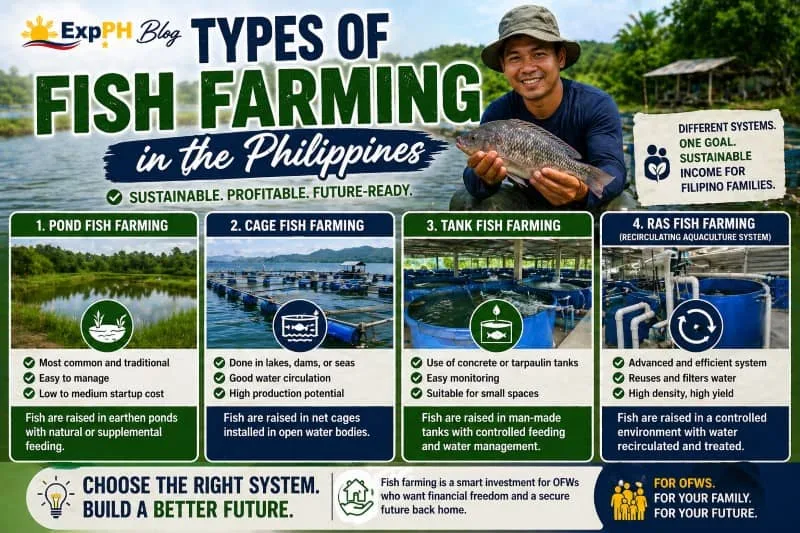
2. Types of Fish Farming in the Philippines
Choosing the right setup is a key decision when starting a Fish Farming Business Philippines. Each method has different requirements, costs, and risks. Your choice should match your budget, available space, and long-term goals to ensure steady production and manageable operations.
Pond Fish Farming
Pond fish farming is the most widely used method in the Philippines. Fish are raised in natural or man-made ponds, which provide a stable and controlled environment. This setup works well for long-term production and is commonly used in rural areas with enough land.
Best for:
- Rural areas with available land
- Larger spaces for expansion
- Long-term fish production
Common species:
- Tilapia
- Bangus (milkfish)
Fish Cage Farming
Fish cage farming involves placing cages in natural bodies of water such as lakes, rivers, or coastal areas. This method allows higher production since fish grow in flowing water. It is suitable for areas with strong water access and proper environmental conditions.
Best for:
- Locations near lakes, rivers, or coastal waters
- Higher production capacity
- Areas with stable water conditions
Considerations:
- Requires permits from local authorities
- Water quality must be monitored regularly
- Exposure to weather and environmental changes
Tank or Backyard Fish Farming
Tank or backyard fish farming is ideal for beginners and OFWs who want to start small. Fish are raised in tanks or compact systems, making it easier to control feeding and water conditions. This setup is suitable for limited spaces and urban environments.
Advantages:
- Easy to manage and monitor
- Lower startup risk
- Suitable for urban or semi-urban areas
- Flexible and scalable for future expansion
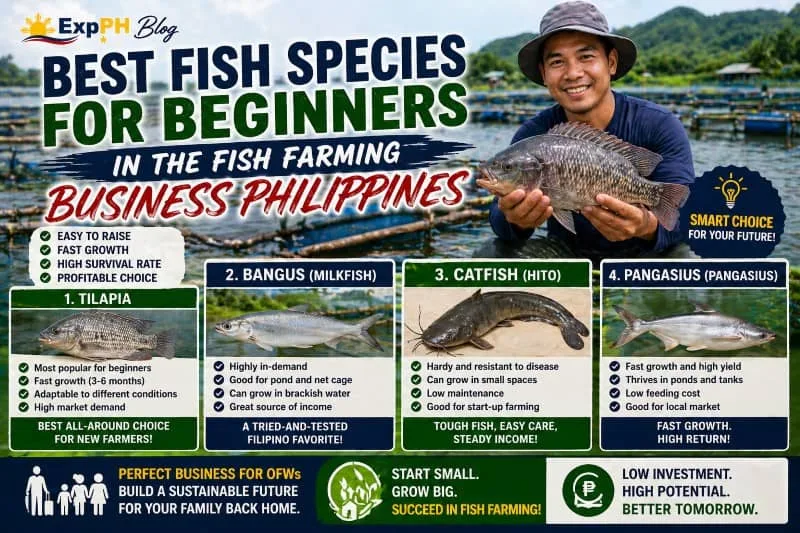
3. Best Fish Species for Beginners in the Fish Farming Business Philippines
Choosing the right species is a major factor in building a successful Fish Farming Business Philippines. Beginners should focus on fish that grow quickly, adapt well to local conditions, and have strong market demand. This helps reduce risk while improving your chances of earning consistent income.
Tilapia
Tilapia is one of the best choices for beginners because it grows quickly and adapts well to different environments. It is widely consumed across the Philippines, making it easy to sell in both local markets and communities.
Key advantages:
- Fast growth rate
- Easy feeding and maintenance
- Strong and consistent market demand
Bangus (Milkfish)
Bangus is a popular fish in the Philippines and is often preferred for larger operations. It requires more space and proper water conditions but offers good income potential when managed correctly.
Key advantages:
- High demand in local markets
- Suitable for large-scale production
- Established market and pricing stability
Catfish (Hito)
Catfish, locally known as hito, is a hardy species that is ideal for beginners who want a resilient option. It can survive in challenging conditions, which makes it easier to manage compared to other fish.
Key advantages:
- Strong resistance to harsh conditions
- Can survive in low-oxygen environments
- Good option for small-scale setups
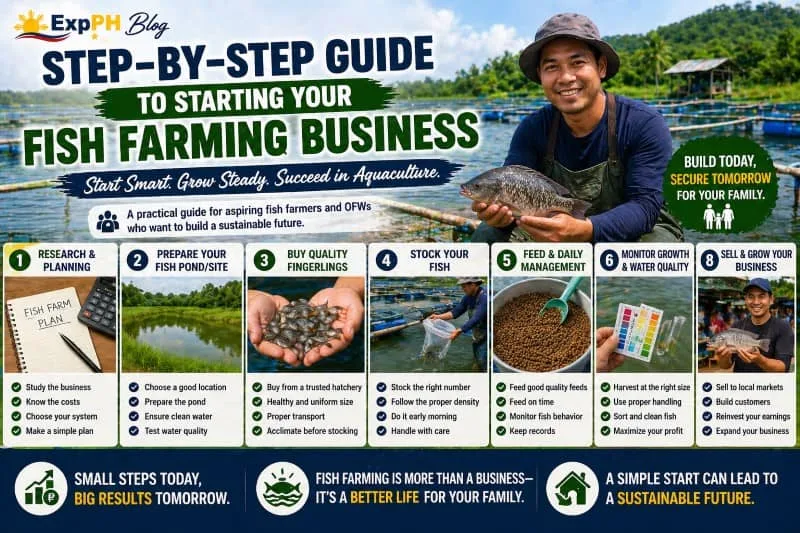
4. Step-by-Step Guide to Starting Your Fish Farming Business
Starting a Fish Farming Business Philippines requires careful planning and consistent execution. Each step builds a strong foundation for long-term success. By following a clear process, beginners can reduce risks, avoid costly mistakes, and develop a stable aquaculture operation over time.
Step 1: Conduct Basic Research
Before investing, take time to understand the local market and industry conditions. Research helps you choose the right approach and avoid common beginner mistakes. It also allows you to align your plans with realistic demand and available resources in your chosen area.
Before investing, understand:
- Market demand in your area
- Suitable fish species for your location
- Local regulations and requirements
Step 2: Choose the Right Location
The success of your fish farm depends heavily on location. A good site ensures proper fish growth, easier maintenance, and efficient operations. Poor location choices can lead to water problems, higher costs, and lower productivity over time.
Your location should have:
- Clean and reliable water supply
- Proper drainage to prevent flooding
- Easy access for transport and distribution
Step 3: Prepare Your Setup
Your setup will depend on the type of fish farming you choose. Proper preparation ensures a stable environment for fish growth and reduces the chances of early losses. Investing in the right equipment improves efficiency and long-term sustainability.
You will need:
- Pond or tanks based on your setup
- Water filtration system for cleanliness
- Aerators to maintain oxygen levels
- Fish nets for handling and harvesting
Step 4: Buy Quality Fingerlings
Starting with healthy fingerlings is essential for achieving good survival rates and faster growth. Poor-quality stock can lead to disease, slow development, and financial losses. Always choose trusted suppliers with a proven track record in aquaculture.
Step 5: Feeding and Maintenance
Consistent care is necessary to ensure healthy fish and steady growth. Proper feeding and regular maintenance help prevent disease and improve yield. Monitoring your system daily allows you to address issues before they become serious problems.
Best practices:
- Feed fish two to three times daily
- Monitor water quality regularly
- Remove waste and maintain cleanliness
Step 6: Harvest and Sell
Harvesting is the stage where your effort turns into income. Timing is important to ensure fish reach the ideal market size. Selling through the right channels helps maximize profit and build long-term buyers for your business.
Harvest timeline:
- 3 to 6 months for tilapia
- 4 to 8 months for bangus
You can sell to:
- Local markets
- Restaurants
- Direct consumers
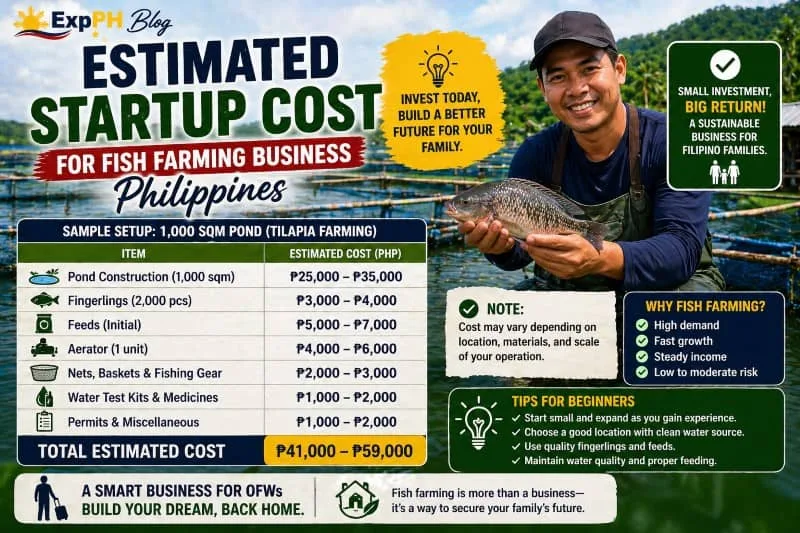
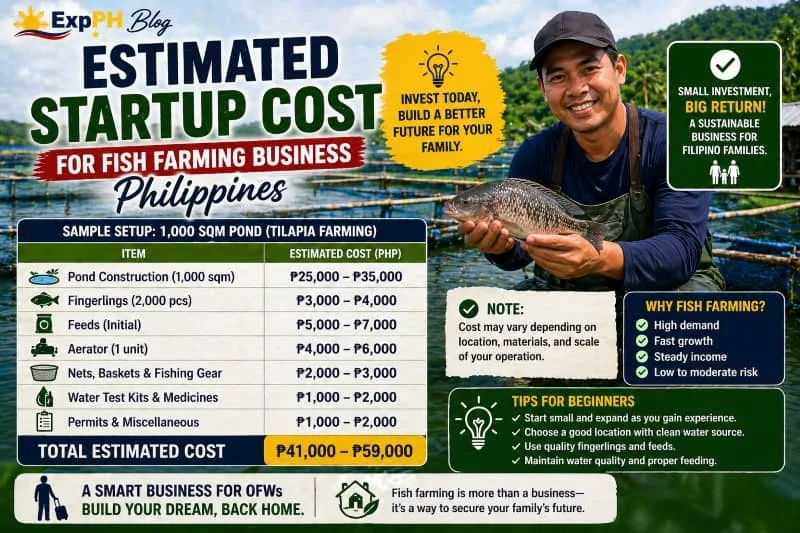
5. Estimated Startup Cost for Fish Farming Business Philippines
The cost of starting a Fish Farming Business Philippines depends on your chosen scale, setup, and location. Beginners can start with a small budget and expand over time. Proper planning helps control expenses and ensures that your investment is used efficiently from the beginning.
Small-Scale Setup (Backyard)
A small-scale setup is ideal for beginners who want to test the business with minimal risk. This approach allows you to learn daily operations while keeping costs manageable. It is suitable for OFWs who prefer to start small before committing larger capital.
Estimated costs:
- Fish tanks or small pond: PHP 10,000 to PHP 30,000
- Fingerlings: PHP 2,000 to PHP 5,000
- Feeds: PHP 5,000 to PHP 10,000
- Equipment: PHP 5,000 to PHP 15,000
Estimated total:
- PHP 20,000 to PHP 60,000
Medium-Scale Setup
A medium-scale setup requires a larger investment but offers higher production and income potential. This option is suitable for OFWs who are ready to expand or have more available capital. Proper management is important to ensure consistent returns and avoid unnecessary losses.
Estimated costs:
- Pond construction: PHP 50,000 to PHP 150,000
- Equipment and supplies: PHP 30,000 to PHP 80,000
This setup provides better capacity and allows you to supply larger markets once operations become stable.

6. Profit Potential and ROI in the Fish Farming Business Philippines
A well-managed Fish Farming Business Philippines can generate steady income over time. Profit depends on survival rate, feed management, and market pricing. Beginners who focus on proper care and efficient operations often see better returns as they gain experience and improve their production process.
Example for Tilapia Farming
This simple example shows how small-scale production can generate income. Actual results may vary depending on conditions, but it provides a clear picture of how earnings are calculated in a basic fish farming setup.
Sample computation:
- 1,000 fish stocked
- Average harvest weight: 200 grams each
- Total yield: 200 kilograms
Selling price:
- PHP 120 per kilo
Estimated gross income:
- PHP 24,000
After deducting costs for feeds, fingerlings, and maintenance, you can still earn a reasonable margin. As you scale your operations and improve efficiency, your profit potential increases significantly.
7. Common Challenges in a Fish Farming Business and How to Avoid Them
Every Fish Farming Business Philippines faces challenges, especially during the early stages. Understanding these problems helps you prepare and avoid costly mistakes. With proper planning and consistent monitoring, most issues can be managed effectively, allowing your fish farm to grow steadily and remain profitable over time.
Poor Water Quality
Water quality directly affects fish health and growth. Poor conditions can lead to stress, slow development, and higher mortality rates. Maintaining clean and balanced water is essential for keeping your fish active and healthy throughout the production cycle.
Solutions:
- Conduct regular water testing
- Use proper filtration systems
- Replace or refresh water when needed
Fish Diseases
Disease outbreaks can quickly damage your fish population if not controlled early. Preventive measures are more effective than treatment, especially for beginners who are still learning proper farm management practices.
Solutions:
- Avoid overcrowding in tanks or ponds
- Maintain a clean farming environment
- Observe fish behavior for early warning signs
Inconsistent Feeding
Irregular feeding schedules can affect fish growth and overall production. Fish need consistent nutrition to grow at a steady rate and reach market size on time. Poor feeding habits often result in uneven sizes and lower harvest value.
Solutions:
- Follow a strict daily feeding schedule
- Use high-quality and appropriate feeds
- Adjust feeding based on fish size and growth
Lack of Knowledge
Lack of proper knowledge is one of the main reasons beginners struggle in fish farming. Without a clear understanding of the process, mistakes can lead to unnecessary losses. Learning the basics before starting helps build confidence and improves decision-making.
Recommended Learning Resource for Beginners
If you want to succeed in the Fish Farming Business Philippines, investing time in learning is a smart step. Structured guidance helps you understand key processes and avoid common errors that many beginners experience.
Platforms like Udemy provide beginner-friendly aquaculture courses that cover essential topics in a clear and practical way.
You can learn about:
- Fish farming basics
- Pond and water management
- Proper feeding techniques
- Disease prevention methods
You can explore available courses here:
https://www.udemy.com
Learning before investing improves your confidence and helps you build a more stable and profitable fish farming business.
8. Legal Requirements and Permits for Fish Farming Business Philippines
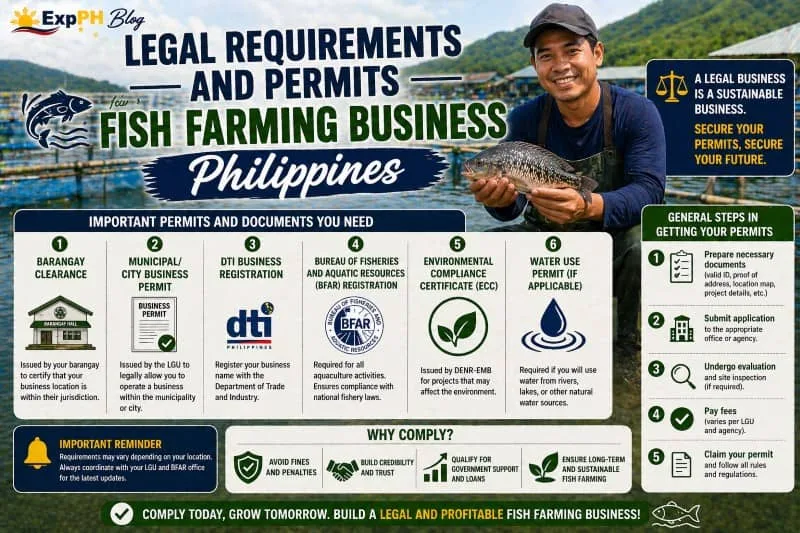
Starting a Fish Farming Business Philippines requires compliance with local regulations to ensure safe and legal operations. Requirements may vary depending on your location and farm size, so it is important to coordinate with your local government before beginning your setup.
You may need:
- Barangay clearance to confirm local approval
- Business permit from your municipality or city
- Environmental compliance for larger or commercial operations
For proper guidance and updated policies, you can consult the Bureau of Fisheries and Aquatic Resources, which provides support and information for aquaculture businesses.
Always verify requirements with your local government unit to avoid penalties and ensure your fish farming operations run smoothly from the start.
9. Tips for OFWs Managing Fish Farming Remotely
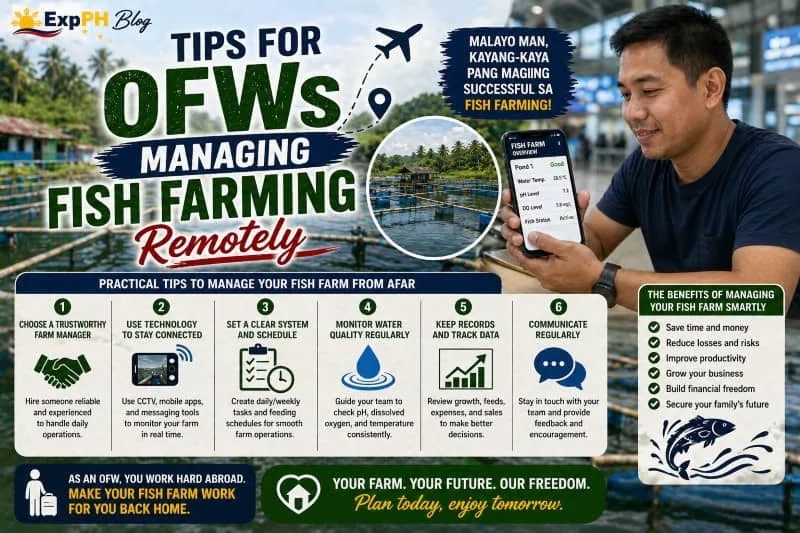
Managing a Fish Farming Business Philippines while working abroad can be challenging, but it is possible with proper systems and planning. OFWs can maintain control and ensure steady operations by focusing on trust, communication, and simple monitoring methods that support daily farm activities.
Hire a Trusted Caretaker
A reliable caretaker is essential for managing daily operations while you are abroad. This person should understand basic fish farming tasks and follow your instructions carefully. Choosing someone trustworthy helps prevent losses and ensures your farm runs smoothly even without your physical presence.
Use Simple Monitoring Systems
Technology can help you stay connected to your fish farm even when you are far away. Simple tools allow you to monitor activities and respond quickly to any issues that may arise during daily operations.
You can:
- Install cameras to observe the farm remotely
- Maintain regular communication through calls or messages
- Request updates, photos, or videos of daily activities
Start Small First
Starting small allows you to test your system without risking all your savings. It gives you time to learn, adjust, and improve your operations before expanding. This approach reduces pressure and helps you build confidence in managing your fish farming business.
Keep Records
Keeping accurate records is important for tracking performance and making better decisions. It allows you to identify problems early and improve your operations over time. Organized data helps you understand how your business is growing.
Track the following:
- Expenses and costs
- Fish growth rate
- Sales and income
Consistent record keeping helps you manage your fish farm more effectively and supports long-term success.
10. Scaling Your Fish Farming Business Philippines
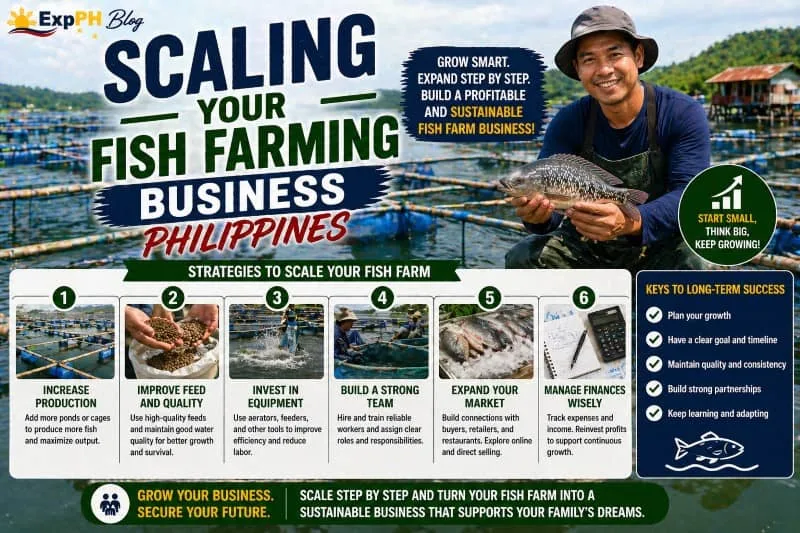
Once your Fish Farming Business Philippines becomes stable, the next step is expansion. Scaling should be done gradually to maintain quality and avoid unnecessary risks. A well-planned growth strategy helps increase production, improve income, and build long-term sustainability for your fish farming operations.
You can expand by:
- Increasing pond size to raise more fish
- Adding more fish species to diversify income
- Supplying to bigger markets such as wholesalers or distributors
Explore Additional Income Streams
Expanding your business is not only about producing more fish. You can also increase profitability by creating new income sources that add value to your existing products and reach more customers.
You can explore:
- Value-added products such as dried or processed fish
- Direct selling through online platforms or social media
These strategies help you maximize your earnings while strengthening your position in the market.
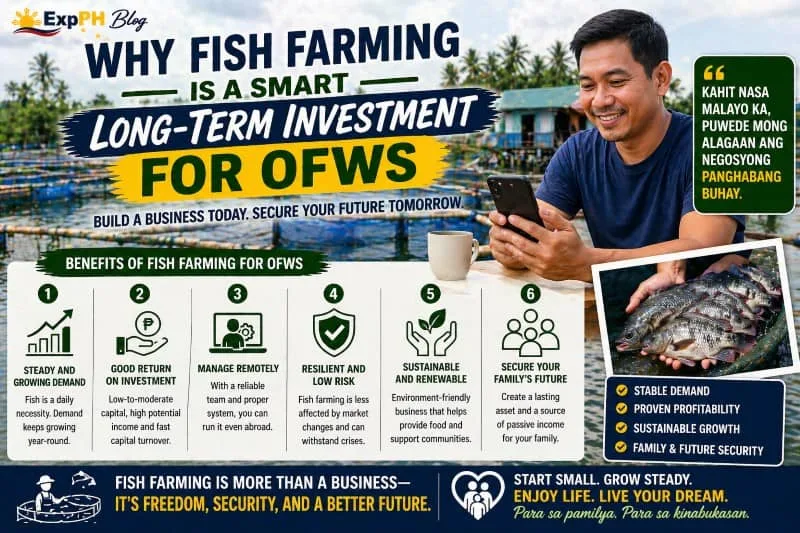
11. Why Fish Farming is a Smart Long-Term Investment for OFWs
Building a Fish Farming Business Philippines offers long-term value for OFWs who want a stable livelihood back home. It combines consistent demand with practical operations, making it easier to manage and grow over time while creating a dependable source of income.
Fish farming provides:
- Food security for local communities
- Stable income with regular harvest cycles
- A scalable business model that grows with experience
Fish farming produces tangible goods that people need every day, which keeps demand steady even during economic changes. Unlike other investments, it is not purely dependent on market trends, making it a more reliable option for long-term financial planning.
For OFWs who plan to return home, this business can become a sustainable source of livelihood. It helps reduce dependence on overseas work while allowing you to build a future that supports both your family and your local community.

12. FAQs About Fish Farming Business Philippines for OFWs
What is fish farming and how does it work in the Philippines?
Fish farming involves raising fish in controlled environments such as ponds, cages, or tanks. Farmers manage feeding, water quality, and harvesting to produce fish for local markets.
Is fish farming a good investment for OFWs?
Yes, fish farming offers steady demand, flexible management, and scalable growth. OFWs can start small, monitor remotely, and build a long-term income source in the Philippines.
How much capital is needed to start fish farming?
Startup costs vary based on scale. Small backyard setups may start around PHP 20,000, while larger operations require higher investment for ponds, equipment, feeds, and fingerlings.
What is the best fish species for beginners?
Tilapia is ideal for beginners due to its fast growth and easy maintenance. Bangus and catfish are also good options depending on your location and setup.
How long does it take to harvest fish?
Harvest time depends on the species. Tilapia usually takes three to six months, while bangus may take four to eight months before reaching market size.
Can OFWs manage fish farming while working abroad?
Yes, OFWs can manage fish farms remotely by hiring a trusted caretaker, using communication tools, and monitoring operations through regular updates, photos, and simple tracking systems.
What are the common challenges in fish farming?
Common challenges include poor water quality, fish diseases, and inconsistent feeding. These issues can be avoided through proper management, regular monitoring, and maintaining a clean farming environment.
Do I need permits to start a fish farming business?
Yes, you may need barangay clearance, a business permit, and environmental compliance for larger setups. Requirements vary, so always check with your local government unit first.
Where can I sell my harvested fish?
You can sell fish in local markets, restaurants, or directly to consumers. Building relationships with buyers helps ensure consistent sales and better pricing for your harvest.
How can I increase profits in fish farming?
Increase profits by improving feeding practices, maintaining water quality, reducing fish mortality, and expanding gradually. You can also explore value-added products and direct selling strategies.
Conclusion: Fish Farming Business Philippines for OFWs
Starting a Fish Farming Business Philippines is a practical and rewarding choice for OFWs who want a stable future at home. With proper planning, clear knowledge, and consistent management, you can grow from a small backyard setup into a reliable source of income that supports your family over time.
Success depends on making smart decisions from the beginning and improving your skills through experience. Focus on steady growth and careful expansion instead of rushing into large investments. Fish farming is not only about production, it is about creating long-term financial stability and independence.
If you are ready to invest in aquaculture, this is a good time to take action. With the right approach, your fish farming business can become a strong foundation for your future and a sustainable livelihood that continues to grow.
Ready to Explore More Business Opportunities?
If you want to build a stable income in the Philippines, go beyond fish farming. Check out Best Business Ideas for Filipinos in 2026 and Top 10 Small Business Ideas in the Philippines for 2026 to find the right opportunity for you.
Related Guides
- Poultry Farming Business for OFWs: Step-by-Step Guide to Starting a Profitable Chicken Farm in the Philippines
- Vegetable Farming and Organic Produce: A Sustainable Business Idea for OFWs Returning Home
Fish Farming Business Philippines Quiz
Test your understanding of fish farming basics and OFW investment strategies. This quick quiz will help reinforce what you learned and guide you toward smarter decisions in building your aquaculture business.
Results


#1. What is the main goal of fish farming?
#2. Which fish is best for beginners?
#3. What is a common fish farming setup?
#4. Why is fish farming profitable?
#5. What is needed for fish growth?
#6. How long does tilapia grow?
#7. What is a key feeding practice?
#8. What should OFWs use for management?
#9. Where can fish be sold?
#10. What is a scaling strategy?
Have you tried fish farming or planning to start soon?
Comment your experience and insights with us. Your story can help other OFWs learn and succeed too.

A Filipino web developer with a background in Computer Engineering. Founder of ExpPH Blog and ExpPH Business Guide, creating practical content on OFW guidance, business, finance, freelancing, travel, and lifestyle. Passionate about helping Filipinos grow, he shares insights that educate, empower, and inspire readers nationwide.